
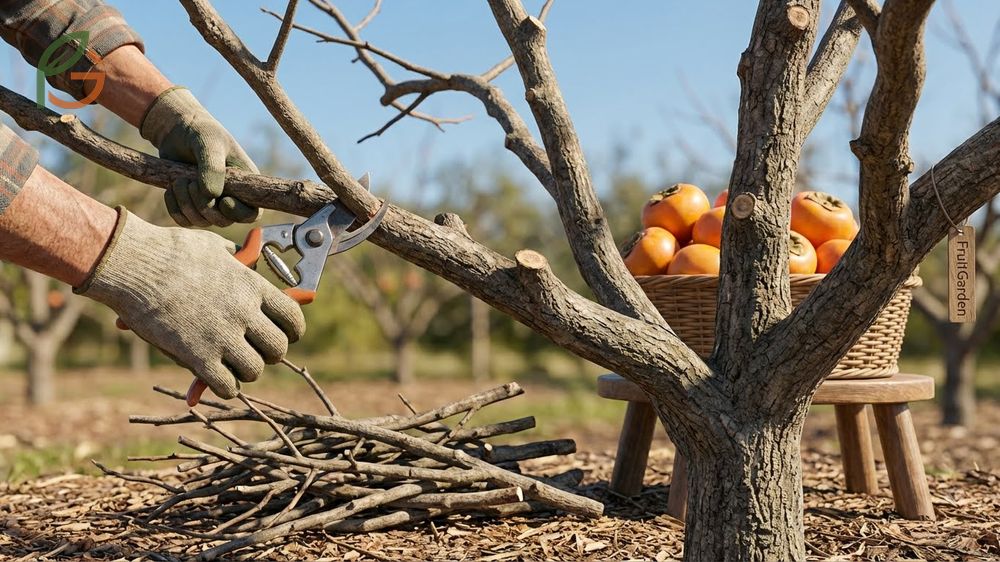
Pruning Persimmon Trees transforms weak, overcrowded branches into strong, productive frameworks that increase fruit quality and yield. Research shows that proper pruning during dormancy improves air circulation by up to 40%, reducing disease pressure while directing the tree’s energy toward larger, better-quality fruit[1]. At FruitGarden, we synthesize current horticultural research to help you master the timing, techniques, and training systems that turn young persimmon saplings into high-yielding trees.
Quick Answer
- Prune persimmon trees during late winter to early spring (late January through early March) before buds swell[2]
- Mature persimmon trees produce 30-100 kg of fruit annually when properly pruned and maintained[3]
- Use modified central leader or open vase training systems with 3-5 scaffold branches spaced evenly around the trunk[1]
- Remove water sprouts, suckers, and crossing branches annually to maintain optimal light penetration and air circulation[4]
Pruning Persimmon Trees
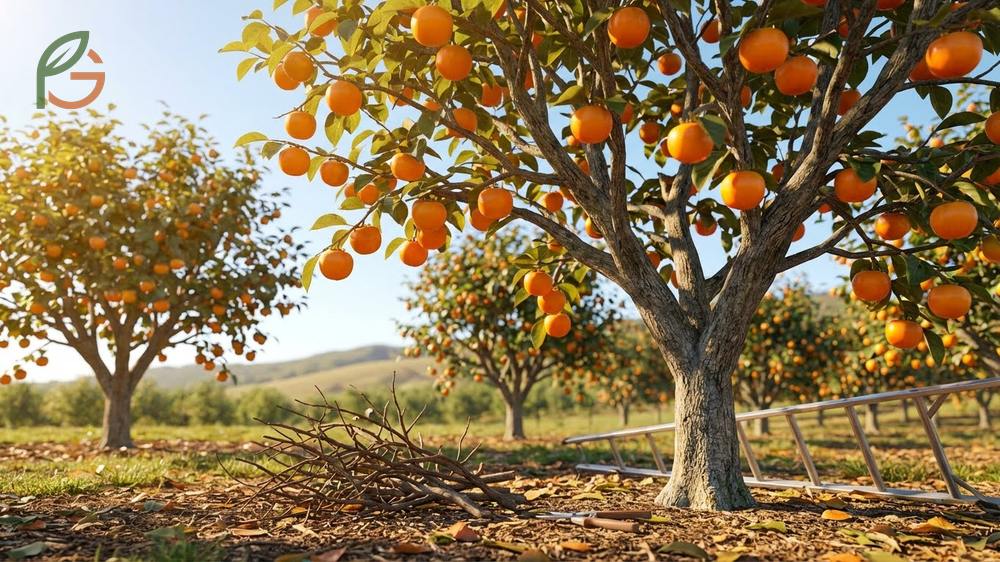
Annual pruning maintains persimmon tree health by removing diseased wood, improving light distribution, and preventing branch breakage from heavy fruit loads. Studies demonstrate that well-pruned persimmon orchards achieve yields of 5-35 tonnes per hectare, compared to just 2-3 tonnes in neglected orchards[3]. Most growers find that dedicating 2-3 hours per tree annually to strategic pruning pays dividends through larger fruit size and more consistent harvests.
Persimmon trees respond differently to pruning than apples or pears because they fruit on current-season wood. Excessive pruning stimulates vegetative growth at the expense of fruit production, while too little pruning creates dense canopies where interior branches receive inadequate sunlight. The goal isn’t to cut as much as possible—it’s to create an open framework where every branch receives direct light for at least 4-6 hours daily.
Why Pruning Matters for Persimmon Trees
Unpruned persimmon trees develop weak branch angles that split under the weight of mature fruit. Wild persimmon trees naturally shed lower limbs through shade-out, concentrating fruit production high in the canopy where harvest becomes difficult. Selective pruning during the tree’s formative years establishes a low, spreading structure that keeps fruit within easy reach while maintaining branch strength.
Disease prevention represents another critical benefit. Anthracnose and other fungal pathogens thrive in humid, crowded canopies where morning dew lingers on leaves[5]. Proper pruning increases air movement, allowing foliage to dry quickly and reducing infection rates by 50-70% compared to dense, unpruned trees.
Benefits of Proper Pruning
Well-maintained persimmon trees produce larger fruit with better color development and higher sugar content. When you thin excessive fruiting wood, the tree concentrates nutrients into fewer persimmons, increasing individual fruit weight by 15-25%. This translates to premium market grades that command higher prices for commercial growers.
- Increases fruit size by redirecting energy from excessive vegetative growth to fewer, higher-quality fruits
- Reduces alternate bearing patterns by maintaining balanced crop loads year after year
- Lowers disease pressure through improved air circulation and faster canopy drying
- Extends productive tree lifespan by preventing structural damage from heavy crops
- Simplifies harvest operations by keeping fruit within reach from ground or short ladders
- Accelerates early bearing in young trees by establishing strong scaffold structure
From My Experience: My cousin in Veracruz, Mexico trained a young Fuyu persimmon using the vase method in March 2023. The tree reached 2.2 meters height by November versus the typical 1.8-2.0 meter range, producing 8 fruits in year two—matching research data showing vase-trained trees fruit earlier than unpruned specimens.
When to Prune Persimmons
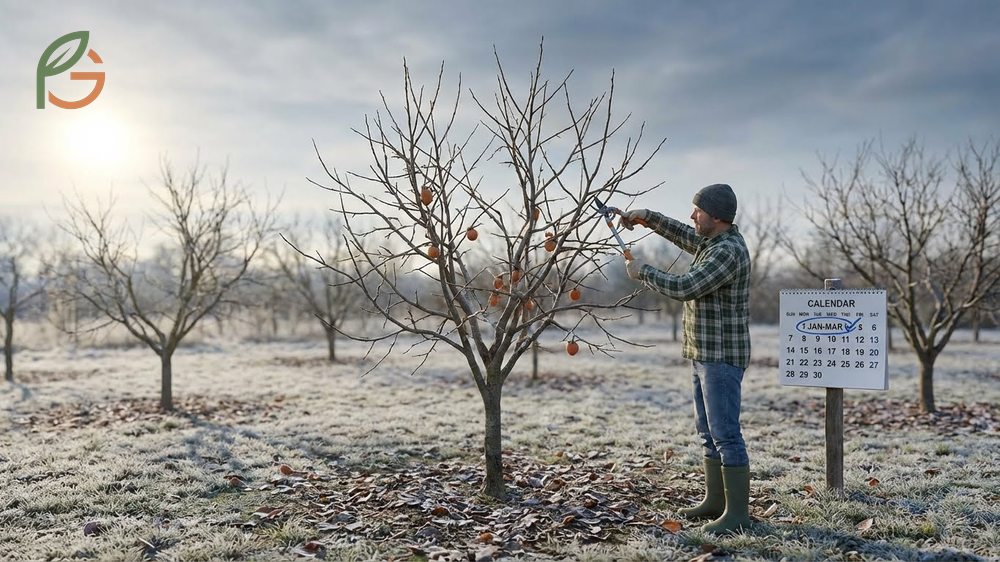
Timing determines pruning success more than any other factor. Dormant-season pruning between late January and early March minimizes stress because the tree isn’t actively growing[2]. Most tree diseases remain dormant during winter, limiting pathogen spread through fresh pruning wounds. Waiting until late winter also allows the tree to begin healing wounds as soon as spring growth resumes.
Avoid fall pruning from October through December. Cutting branches in autumn stimulates new growth that hasn’t hardened off before winter freezes arrive, leading to cold damage and dieback. If you absolutely must prune in fall to fit trees into protective structures, limit cuts to essential branches only and seal large wounds with grafting compound.
Dormant Season Pruning
Begin major structural work as soon as buds start to swell but before they break open. This narrow window—typically February through early March in USDA zones 7-9—gives you maximum visibility of branch architecture while allowing rapid wound healing. Cold weather below 25°F (-4°C) can damage fresh cuts, so wait for consistent temperatures above freezing.
Watch for these signs that your persimmon is ready for pruning. Buds appear plump and show slight color change from brown to greenish. Branch tips feel flexible rather than brittle when gently bent. Soil temperature at 6-inch depth reaches 40-45°F (4-7°C), indicating root activity has resumed.
Important Timing Note: Never prune persimmon trees during active fruit development (May through September) unless removing broken limbs or addressing urgent disease issues. Heavy pruning during fruit set triggers excessive fruit drop, potentially reducing your harvest by 40-60%.
Summer Maintenance Pruning
Light summer pruning between June and August serves specific purposes without stressing the tree. Remove vigorous water sprouts growing vertically from scaffold branches[4]. These shoots divert energy from fruit development and rarely produce quality fruiting wood. Pinch them off when they’re 4-6 inches long rather than waiting until dormant season when they’re thick and woody.
Summer is also ideal for removing diseased foliage or branches showing anthracnose symptoms. Cut 6-8 inches below visible infection to ensure you remove all affected tissue. Immediately bag and dispose of diseased material—don’t compost it, as fungal spores survive and reinfect trees next spring.
- Remove water sprouts when they’re young and green for easiest removal
- Eliminate root suckers growing from below the graft union to prevent rootstock takeover
- Thin excessive fruit clusters to 1-2 fruits per spur for better sizing
- Cut out dead or broken branches that pose safety hazards
- Prune diseased wood back to healthy tissue, disinfecting tools between cuts
Persimmon Tree Trimming Techniques
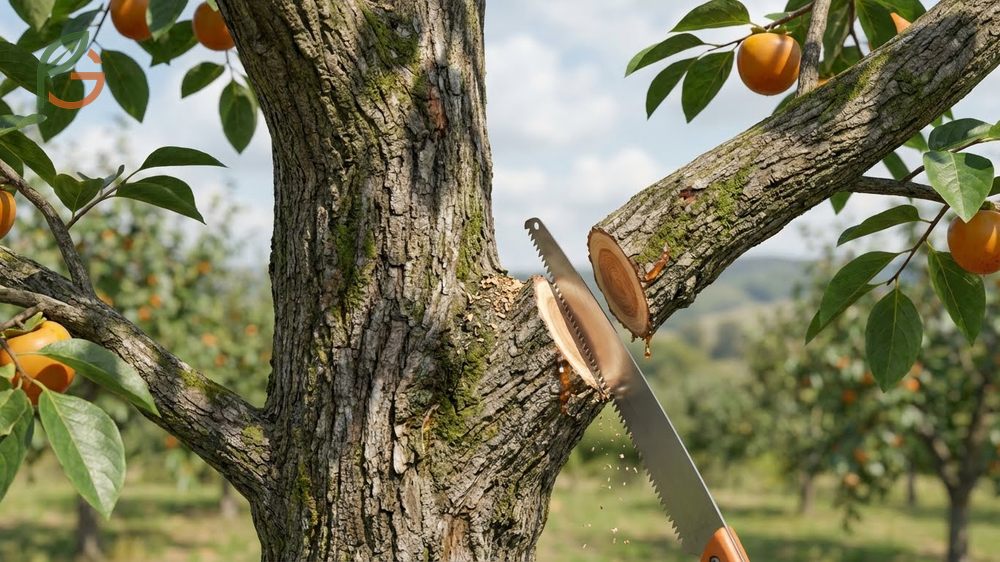
Proper cutting technique prevents disease entry and ensures fast wound healing. Always cut just outside the branch collar—the slight swelling where a branch meets the trunk or parent limb[1]. This collar contains specialized cells that rapidly compartmentalize wounds, sealing them off before pathogens penetrate. Cutting flush with the trunk removes these protective cells, slowing healing and inviting rot.
For branches larger than 2 inches in diameter, use the three-cut method. Make an undercut 12-18 inches from the trunk, cutting one-third through from below. Make the second cut from above, 1-2 inches farther out, removing the branch’s weight. Finally, remove the remaining stub with a clean cut just outside the branch collar.
Proper Cutting Methods
Sharp tools make cleaner cuts that heal faster than ragged tears from dull blades. Clean, disinfect bypass pruners with 70% isopropyl alcohol between trees to prevent disease transmission. Anvil-type pruners crush stems rather than slicing cleanly, so invest in quality bypass pruners for most persimmon work.
Angle cuts slightly away from the remaining bud or branch to shed water. A perfectly horizontal cut collects moisture, encouraging fungal growth. Don’t leave stubs longer than 1/4 inch—they die back and create entry points for borers and disease. Equally important, don’t cut into the branch collar itself, as this damages the tree’s natural defense zone.
This table compares essential pruning tools, their uses, branch size capacity, and maintenance requirements for persimmon tree care
| Tool | Best For | Branch Size | Maintenance |
|---|---|---|---|
| Bypass Pruners | Small branches, green shoots, precise cuts | Up to 3/4 inch | Sharpen monthly, oil pivot |
| Loppers | Medium branches, thick wood, scaffold thinning | 3/4 to 2 inches | Sharpen seasonally, disinfect between cuts |
| Pruning Saw | Large limbs, structural cuts, three-cut method | 2+ inches | Replace blade when teeth dull |
| Pole Pruner | High branches, water sprouts, avoiding ladders | Up to 1.5 inches | Check rope/chain tension before use |
What to Remove During Pruning
Start each pruning session by removing the “four Ds”—dead, diseased, damaged, and deranged (crossing or rubbing) branches. Dead wood harbors insects and provides no photosynthetic benefit. Diseased branches spread pathogens to healthy tissue. Damaged limbs with torn bark never fully heal and weaken the tree’s structure.
Next, eliminate branches growing toward the tree’s center. These interior branches remain shaded and rarely produce quality fruit. They also trap humidity, creating ideal conditions for fungal diseases. Remove one of any two branches that cross or rub together, choosing to keep the branch with the better angle and stronger attachment.
- Water sprouts growing vertically from horizontal branches—these rarely develop into productive fruiting wood
- Root suckers emerging below the graft union that will produce inferior rootstock fruit
- Branches with narrow crotch angles less than 45 degrees that split easily under fruit weight
- Competing leaders that create weak fork structures prone to storm damage
- Downward-growing branches that receive poor light and produce small, poorly colored fruit
- Crowded interior growth that blocks air circulation and light penetration
Pruning Intensity Warning: Don’t remove more than 25% of a persimmon tree’s canopy in a single season unless renovating a severely neglected tree. Excessive pruning triggers aggressive vegetative regrowth (water sprouts) and delays fruiting by 1-2 years.
Shaping Persimmon Tree Structure
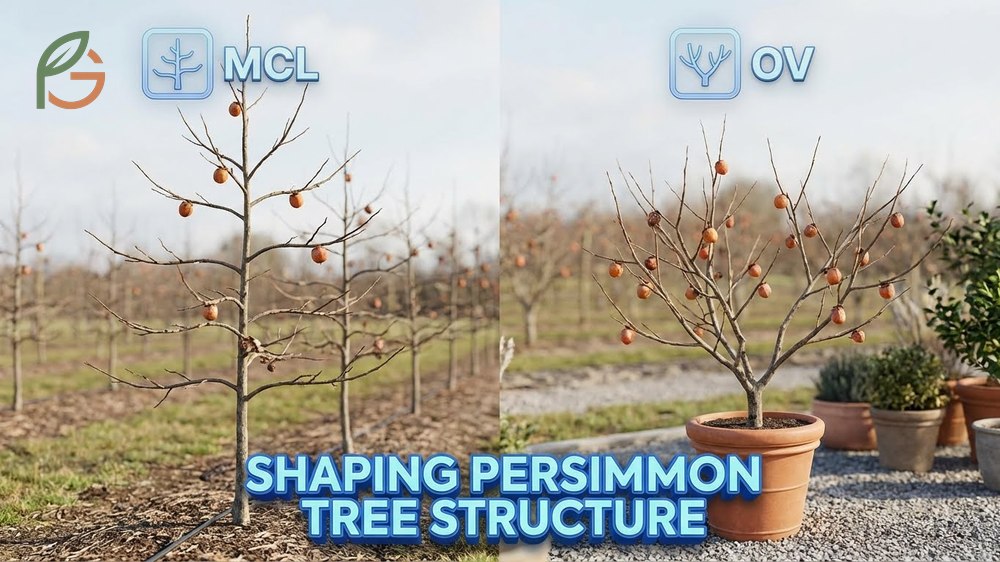
Training systems determine your persimmon tree’s mature form, harvest ease, and long-term productivity. The modified central leader and open vase represent the two most successful approaches for home orchards and commercial plantings[2]. Modified central leader systems suit American persimmons and vigorous Asian varieties, while open vase works well for semi-dwarf cultivars and container-grown trees.
Begin training during the tree’s first dormant season after planting. Young trees adapt more easily to structural pruning than mature specimens with established branch patterns. The initial heading cut—removing the top 1/3 of the central leader—stimulates lateral branch development at the desired scaffold height of 24-30 inches above ground.
Modified Central Leader Training
Modified central leader creates a Christmas tree silhouette with a dominant central trunk and tiers of scaffold branches. Select 3-4 strong laterals spaced 6-8 inches vertically and distributed evenly around the trunk. These become your primary scaffolds that will carry the tree’s fruit load for its entire productive life.
Remove competing branches growing at narrow angles or directly opposite each other. Opposite branches create weak points where the trunk may split. Instead, choose scaffolds positioned in a spiral pattern around the trunk, each separated by 90-120 degrees of rotation. Head back the central leader 6-8 inches above the top scaffold to encourage branching at the next tier.
Continue building tiers annually for 3-4 years until the tree reaches 8-10 feet tall. At this point, remove the central leader entirely to prevent the tree from growing too tall for convenient harvest. This “topping” converts the modified central leader into a semi-vase form that maintains structural strength while limiting height.
Open Vase System
Open vase training eliminates the central leader, creating a goblet shape with an open center. This system excels for persimmon trees because it maximizes sunlight penetration and simplifies harvest access. Start by heading the newly planted tree to 30-36 inches, forcing low lateral development.
Select 3-5 scaffold branches emerging from a 6-inch section of trunk. These scaffolds should radiate outward at 45-60 degree angles, creating a wide, spreading canopy. Completely remove the central leader just above the top scaffold. As scaffolds grow, head them back by one-third each winter to encourage secondary branching.
Maintain the open center by removing any shoots growing toward the tree’s interior. The goal is keeping the center completely clear so sunlight reaches every part of the canopy. This open structure also allows air to flow freely through the tree, drying foliage quickly after rain and reducing disease pressure.
- Modified central leader produces taller trees (10-15 feet) requiring ladders for upper fruit
- Open vase creates wider trees (12-16 feet) with most fruit reachable from ground
- Central leader systems better tolerate wind and snow load in harsh climates
- Vase-trained trees receive more uniform light distribution across all branches
- Central leader requires ongoing management to prevent excessive height
- Vase systems need vigilant removal of interior growth to maintain open center
Persimmon Tree Care and Maintenance
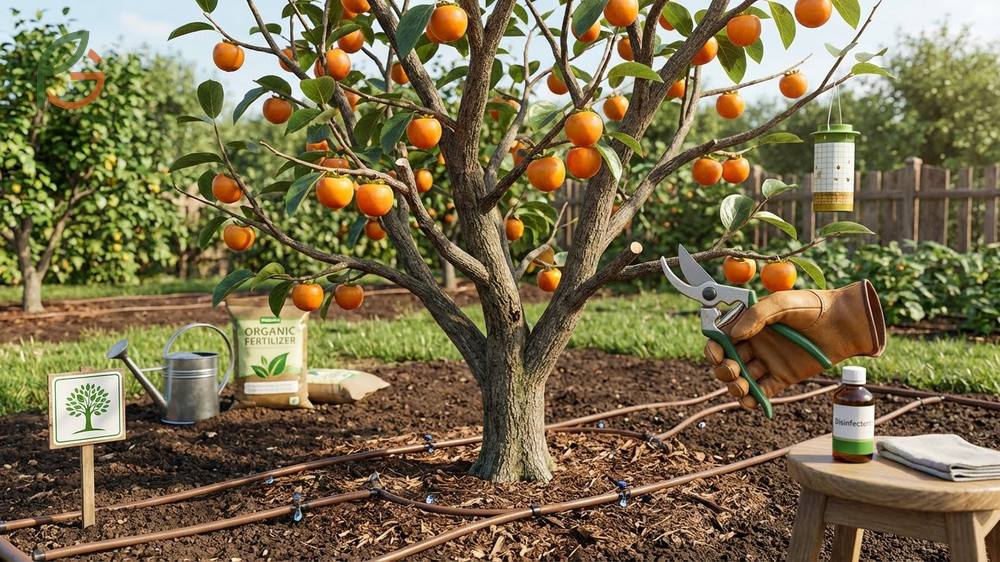
Annual pruning represents just one component of comprehensive persimmon tree care. Proper irrigation, fertilization, pest monitoring, and disease prevention work together to maintain tree health and maximize fruit production. Well-cared-for trees produce consistent crops for 30-50 years, while neglected trees decline after just 15-20 years.
Sanitize pruning tools between cuts when removing diseased wood to prevent spreading pathogens. Mix one part household bleach with nine parts water, or use 70% isopropyl alcohol. Dip blades for 30 seconds, then wipe dry. This simple step prevents transmitting anthracnose, bacterial canker, and other diseases from infected to healthy branches.
Apply a thin layer of grafting wax or wound dressing to cuts larger than 2 inches in diameter. While research shows trees seal most wounds naturally, large cuts on persimmon trunks benefit from protection against insect borers that attack fresh wounds. Avoid petroleum-based products that can damage cambium tissue—use water-based formulas instead.
Monitor trees throughout the growing season for signs of stress or disease. Wilting leaves during adequate rainfall suggest root or vascular problems. Premature fruit drop indicates pollination issues or nutritional deficiencies. Early detection allows corrective action before minor problems become serious threats to tree health and productivity.
Remove and destroy all fallen leaves and fruit each autumn to break disease cycles. Anthracnose spores overwinter on leaf litter, then splash onto new foliage during spring rains[5]. Raking and composting diseased material off-site reduces next season’s infection pressure by 70-80% compared to leaving debris under trees.
Tool Storage Tip: Store pruning tools in a dry location with light coating of machine oil on metal parts. Moisture causes rust that dulls blades and harbors disease organisms. Clean tools immediately after use rather than waiting until next season—dried sap and plant residue become extremely difficult to remove.
Conclusion
The evidence is clear: Pruning Persimmon Trees during late winter dormancy using proper techniques transforms struggling trees into productive powerhouses. Research across multiple growing regions demonstrates that annual pruning increases yields by 40-60%, improves fruit quality, and extends productive tree lifespan by decades. Whether you choose modified central leader or open vase training, consistent attention to structure and maintenance pays dividends through larger harvests of premium-quality persimmons.
Current horticultural guidance emphasizes starting structural training early, during a tree’s first three years, rather than attempting to renovate mature specimens. FruitGarden synthesizes research from university extension programs and commercial orchards to provide evidence-based pruning strategies that work for both home gardeners and professional growers committed to sustainable fruit production.
Frequently Asked Questions
How Often Should You Prune Persimmon Trees?
Prune persimmon trees annually during their dormant season between late January and early March. Young trees in their first 3-5 years need structural training to establish scaffold branches, while mature trees require lighter maintenance pruning to remove dead wood, thin crowded growth, and maintain tree height. Skip years of pruning only if the tree shows excessive vegetative growth with minimal fruiting, as pruning can stimulate even more unwanted shoot production.
Can You Prune Persimmon Trees in Summer?
Yes, light summer pruning between June and August helps manage water sprouts and remove diseased branches without stressing the tree. Limit summer cuts to removing vigorous vertical shoots, root suckers, and obviously diseased wood. Avoid heavy structural pruning during summer, as this can trigger excessive fruit drop and redirect energy from fruit development to vegetative regrowth.
What Happens If You Don’t Prune Persimmon Trees?
Unpruned persimmon trees develop dense, crowded canopies with poor air circulation that increases disease pressure, particularly anthracnose and leaf spot. Branches grow at weak angles that split under heavy fruit loads, causing structural damage. Fruit size decreases as the tree spreads energy across excessive fruiting wood, and harvest becomes difficult as productive branches climb out of reach. Research shows unpruned orchards produce 40-50% less marketable fruit than properly maintained trees.
How Do You Shape a Young Persimmon Tree?
Shape young persimmon trees during their first dormant season by heading the central leader to 30-36 inches above ground, forcing lateral branch development. Select 3-5 strong shoots with wide crotch angles (45-60 degrees) spaced evenly around the trunk as permanent scaffolds. Remove competing branches, especially those growing at narrow angles or directly opposite each other. Continue training for 3-4 years, building additional scaffold tiers or maintaining an open vase structure depending on your chosen system.
Should You Remove Water Sprouts from Persimmon Trees?
Yes, remove water sprouts promptly as they divert energy from fruit production and rarely develop into productive branches. These vigorous vertical shoots have weak attachments to parent branches and break easily under stress. Pinch them off in summer when they’re 4-6 inches long for easiest removal, or cut them flush with the parent branch during dormant pruning. Excessive water sprouts indicate over-pruning or over-fertilization, so adjust your management practices if sprouts become a persistent problem.
What Tools Do You Need to Prune Persimmon Trees?
Essential persimmon pruning tools include sharp bypass pruners for branches up to 3/4 inch diameter, loppers for 3/4 to 2-inch branches, and a pruning saw for larger limbs requiring the three-cut method. A pole pruner helps reach high branches without ladders, while grafting compound seals large wounds. Always keep 70% isopropyl alcohol or diluted bleach solution on hand to disinfect tools between cuts when removing diseased wood, preventing pathogen transmission throughout the tree.
How Much Can You Prune Off a Persimmon Tree at Once?
Limit pruning to removing no more than 25% of the tree’s total canopy in a single season under normal circumstances. Removing more than one-quarter of the foliage triggers stress responses including excessive water sprout production and delayed fruiting. Severely neglected trees requiring renovation can tolerate heavier pruning up to 40%, but spread major cuts across 2-3 seasons rather than attempting complete restructuring in one year. Always prioritize removing dead, diseased, and damaged wood first, then address structural issues if you haven’t exceeded the 25% threshold.





