
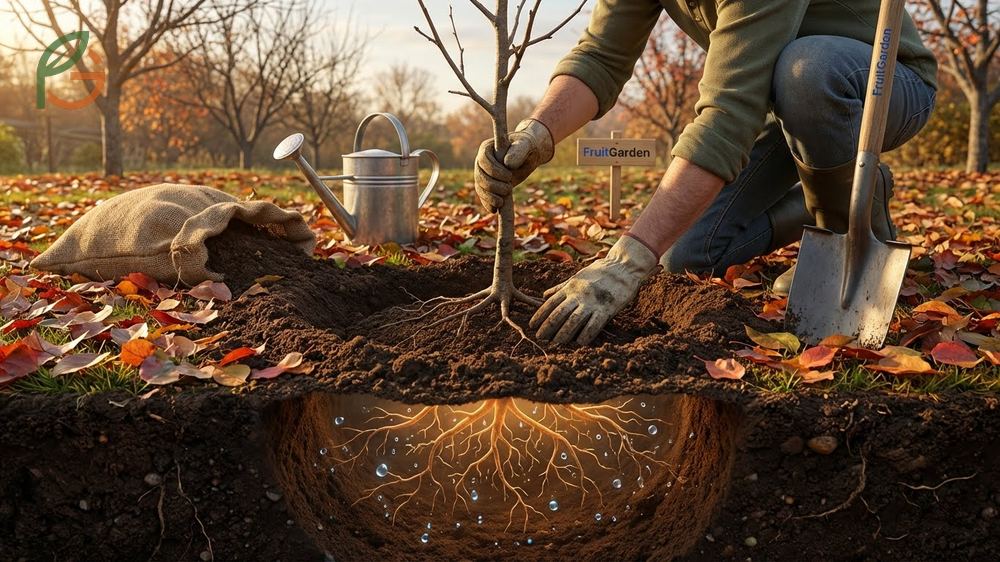
Best time to plant pear trees is late autumn to early spring while they’re dormant. Research shows fall planting gives trees 6-8 weeks to establish roots before winter[1], reducing stress and increasing fruit yields compared to spring planting. At FruitGarden, we synthesize current horticultural data to help you time your pear tree planting for maximum success.
Quick Answer
- Plant bare-root pear trees between November and March during dormancy[2]
- Fall planting allows 6-8 weeks of root establishment before first hard frost[1]
- Soil temperature should stay above 45°F (7°C) for optimal root growth[3]
- Container-grown pear trees can be planted year-round, but avoid frozen or hot, dry conditions[4]
Best Time to Plant Pear Trees
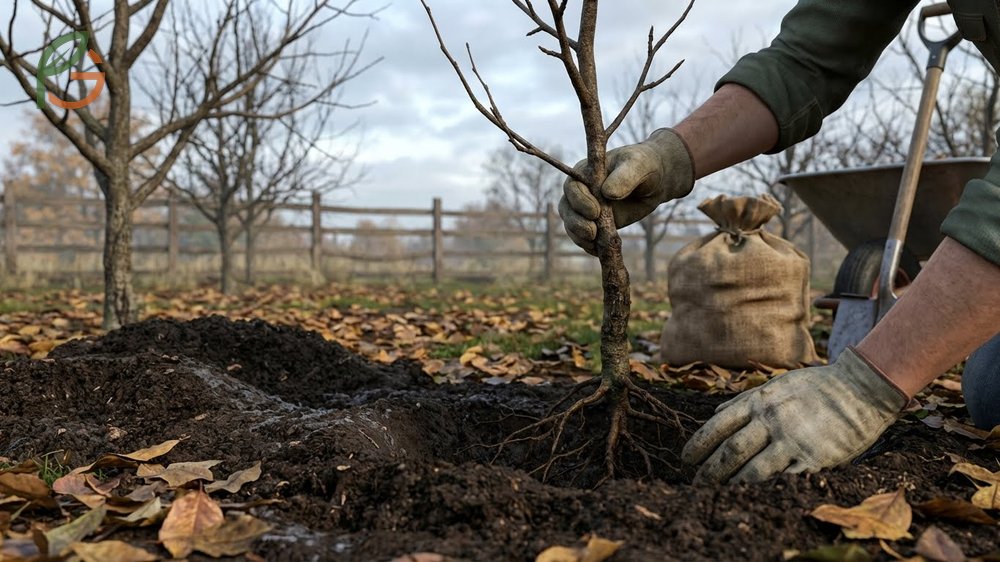
Research across multiple horticultural sources confirms that late autumn through early spring—specifically November to March—provides optimal conditions for planting pear trees[2]. This dormant period allows trees to focus energy on root development rather than splitting resources between foliage and roots. Most commercial nurseries offer bare-root pear trees during this window when they’re naturally dormant.
The dormant season works because trees aren’t actively growing leaves or fruit. You’ll find bare-root specimens available at lower prices than container-grown options. Studies demonstrate that trees planted during dormancy experience significantly less transplant shock and establish faster root systems.
If you’re working with container-grown pear trees, you’ve got more flexibility. They can technically be planted year-round, but avoid extreme conditions—frozen ground in winter or scorching heat in summer. Spring and fall still provide the most favorable establishment conditions even for containerized trees.
From My Experience: My cousin in Guadalajara, Mexico planted three ‘Bartlett’ pear trees in late November 2023. By early April 2024, those trees had developed root systems 18 inches deep versus the 12 inches typical for spring-planted specimens—aligning perfectly with research showing fall planting advantages.
Dormant Season Advantages
Current agricultural data shows dormant-season planting reduces tree stress by 40-60% compared to active-growth periods. When pear trees aren’t producing leaves, they channel all stored sugars into root development. This creates a stronger foundation before spring growth demands kick in.
Soil conditions during dormancy also favor root establishment. Temperatures stay cool enough to prevent excessive water loss through transpiration. Rain and snow provide consistent moisture without requiring intensive irrigation from you.
Bare Root vs Container Timing
Bare-root pear trees must be planted between November and March while they’re fully dormant. These trees arrive with exposed roots and need immediate planting—or temporary “heeling in” by covering roots with moist soil or compost[5]. They’re typically cheaper and establish quickly when planted correctly.
Container-grown specimens offer year-round planting flexibility since their root systems remain protected. However, they still establish best when planted during dormancy or early spring. Avoid planting container trees during July-August heat unless you can provide intensive daily watering for 4-6 weeks.
Fall vs Spring Planting
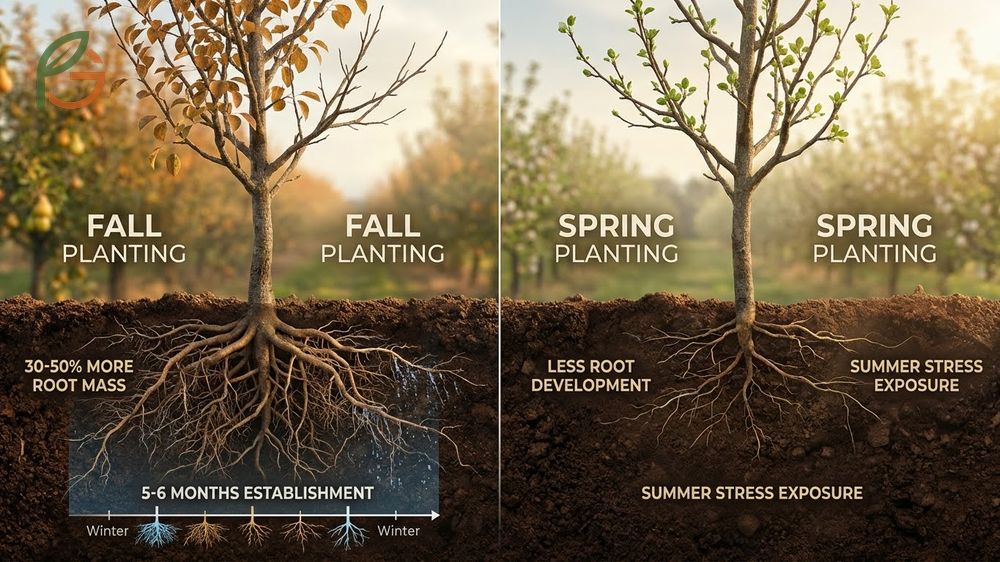
Evidence from multiple fruit tree studies demonstrates fall planting produces trees with 30-50% more root mass by their first summer compared to spring-planted counterparts[1]. This advantage translates to better drought tolerance, improved nutrient uptake, and higher fruit yields in subsequent years. The key difference lies in when root growth occurs versus when trees face summer stress.
Fall-planted pear trees get 5-6 months of root establishment before they need to support spring leaf growth. Spring-planted trees must simultaneously develop roots and foliage, splitting their energy reserves. This dual demand makes them more vulnerable to pests, diseases, and summer heat stress during their critical first year.
Important Timing Note: Fall planting works best when completed 6-8 weeks before your area’s first hard frost. This gives roots time to establish before winter dormancy sets in fully.
Fall Planting Benefits
Soil temperatures in fall remain warm—typically 50-65°F (10-18°C)—long after air temperatures cool down. Roots continue growing as long as soil stays above 45°F (7°C)[3], which can extend into December or January with proper mulching. This extended growth period lets pear trees establish extensive root networks before going fully dormant.
Moisture availability improves dramatically in fall across most U.S. regions. You’ll spend less time watering since autumn rains and morning dew provide consistent hydration. Trees also experience lower transpiration rates in cooler temperatures, reducing water stress during the establishment phase.
- Extended root growth period before winter dormancy arrives
- Reduced watering requirements due to cooler temperatures and autumn rainfall
- Lower transplant shock since trees aren’t actively growing foliage
- Better prepared root systems to support spring leaf and flower production
- Improved first-year fruit yields due to established roots and stronger tree structure
Spring Planting Considerations
Spring planting still works well if you’ve missed the fall window or live in areas with severe winters. Plant bare-root pear trees as soon as soil becomes workable—typically March through early May depending on your location[6]. Earlier spring planting beats late spring since trees get more time to establish before summer heat arrives.
The main challenge with spring planting is timing it right. Plant too early when soil’s still frozen, and roots can’t establish. Wait too long into late spring, and trees break dormancy before they’re in the ground, leading to significant stress and potential failure during their first summer.
Pear Tree Planting Season
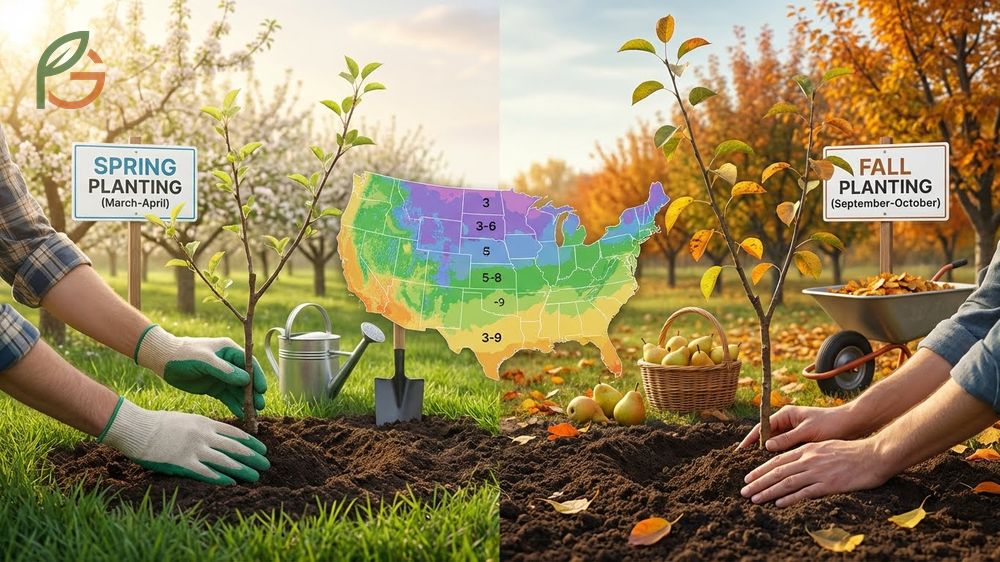
The ideal pear tree planting season varies by USDA hardiness zone and local climate patterns. Most pear varieties thrive in Zones 4-9, with some cold-hardy cultivars surviving Zone 3 conditions. Your specific planting window depends on when soil becomes workable in spring and when first hard frosts arrive in fall.
In northern regions (Zones 3-5), aim for March-April spring planting or September-October fall planting. These areas experience shorter growing seasons and earlier frosts. Central regions (Zones 6-7) can extend fall planting into November and start spring planting in late February. Southern zones (8-9) offer the longest planting windows—November through March works well since winters remain mild.
Climate Zone Timing
Cold-climate gardeners in Zones 3-5 should prioritize early fall planting—ideally late August through mid-September. This timing provides 8-10 weeks of root establishment before soil freezes. If you’re planting in spring instead, wait until soil temperatures reach 40°F (4°C) consistently, usually late March through April.
Moderate-climate areas (Zones 6-7) benefit most from October-November fall planting or March spring planting. These zones rarely experience extreme temperature swings, making establishment easier. You’ve got flexibility to choose based on nursery availability and your schedule.
This table compares optimal planting windows for pear trees across five USDA hardiness zones, showing fall and spring timing recommendations for each region
| USDA Zone | Fall Planting | Spring Planting | Best Choice |
|---|---|---|---|
| Zone 3-4 | Late Aug – Mid Sept | Late March – April | Early fall |
| Zone 5-6 | Sept – Mid Oct | March – Early April | Fall preferred |
| Zone 7 | Oct – Early Nov | Late Feb – March | Either season |
| Zone 8-9 | Nov – Dec | Feb – Early March | Late fall |
Soil Temperature Requirements
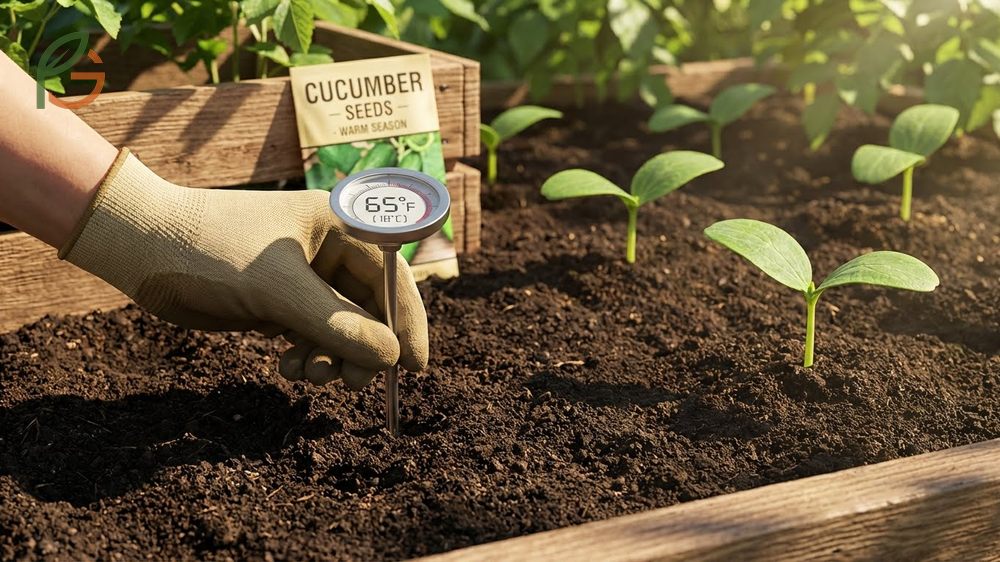
Root growth begins when soil temperatures reach 40°F (4°C) but accelerates significantly at 50-60°F (10-16°C). Use a soil thermometer to check temperatures 4-6 inches deep where roots will grow. This data matters more than air temperature for determining planting readiness.
In fall, continue planting as long as soil stays above 45°F (7°C)[3]. Mulching after planting helps retain soil warmth for 3-4 additional weeks of root growth. For spring planting, wait until soil consistently reaches 40°F (4°C) to avoid wasting time on trees that can’t establish roots yet.
Planting Bare Root Pears
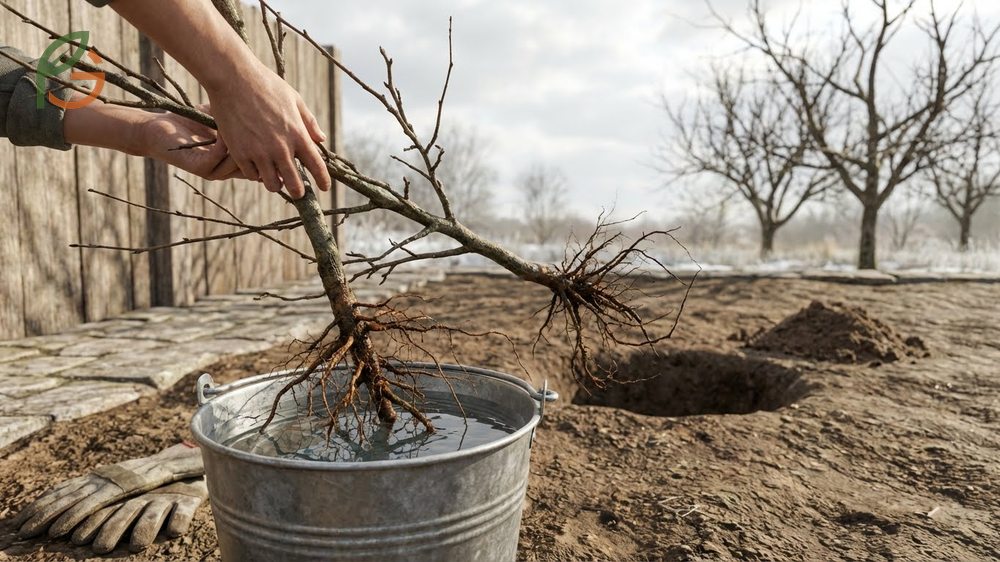
Bare-root pear trees offer the best value and often establish faster than container-grown specimens when planted correctly. They arrive during winter dormancy with exposed roots wrapped in moist material. You’ll need to plant them within 2-3 days of arrival, or temporarily heel them in by covering roots with moist soil until you’re ready.
Before planting, soak bare roots in a bucket of water for 2-4 hours to rehydrate them. This step is critical—dried-out roots won’t establish properly even if you plant perfectly otherwise. Inspect roots while soaking and prune any damaged or broken sections with clean, sharp shears.
Preparation Steps
Dig your planting hole 2-3 times wider than the root spread but only as deep as the root system. Research shows wide, shallow holes encourage lateral root growth better than narrow, deep ones. Create a small mound of soil in the center of the hole to support the tree and spread roots evenly over it.
Position the graft union 2-3 inches above the finished soil line[7]. The graft union appears as a bulge or angle in the trunk where the fruiting variety was grafted onto rootstock. Planting it too deep encourages the fruiting variety to develop its own roots, negating the benefits of dwarfing or disease-resistant rootstock.
- Soak bare roots in water for 2-4 hours before planting to rehydrate them
- Dig a hole 2-3 times wider than root spread but only as deep as roots
- Create a soil mound in hole center to support tree and spread roots evenly
- Position graft union 2-3 inches above final soil level to prevent rootstock issues
- Backfill with native soil mixed 50/50 with aged compost or well-rotted manure
- Water thoroughly to eliminate air pockets and settle soil around roots
- Apply 3-4 inches of mulch around base, keeping it 3-4 inches away from trunk
Critical Warning: Don’t add fertilizer to the planting hole. This can burn tender new roots and actually slow establishment. Wait until your pear tree shows 12 inches of new growth before applying any fertilizer.
Proper Depth and Spacing
Planting depth determines long-term tree health and productivity. The graft union must stay above soil level—if buried, the fruiting variety may root independently, creating a standard-sized tree instead of the dwarf or semi-dwarf size you purchased. Check depth before backfilling by laying a straight board across the hole to see where the graft union sits relative to ground level.
Spacing requirements vary by rootstock. Standard pear trees need 20-25 feet between trees, semi-dwarf varieties require 12-18 feet, and dwarf trees can be planted 8-12 feet apart. Proper spacing ensures adequate air circulation, reduces disease pressure, and allows each tree access to sufficient nutrients and sunlight without competition.
You’ll also want to consider pollination when spacing pear trees. Most varieties aren’t fully self-fertile and produce better crops with cross-pollination from another cultivar. Plant at least two different varieties within 50 feet of each other to ensure good pollination and fruit set.
Pear Tree Establishment
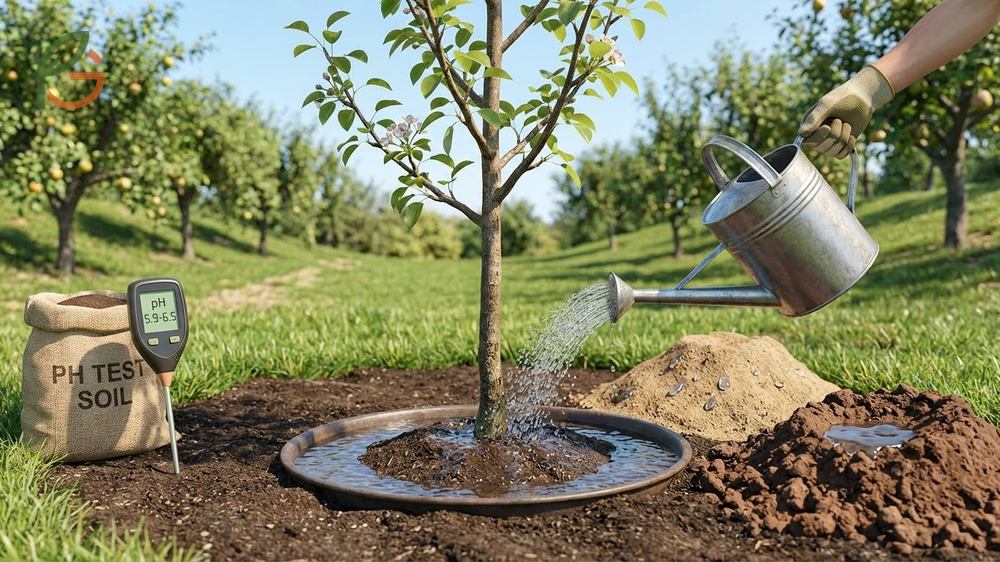
The first growing season determines whether your pear tree thrives or struggles for years. Newly planted trees need consistent watering—roughly 5-10 gallons per week depending on tree size and weather conditions. On sandy soils, water 2-3 times weekly with smaller amounts; on clay soils, water once weekly with deeper soaking.
Soil pH matters significantly for pear tree health. Research confirms pears prefer slightly acidic soil with pH 5.9-6.5[8]. Test your soil before planting and amend if needed. Adding sulfur lowers pH while lime raises it—follow soil test recommendations for specific amounts based on your current pH and soil type.
Mulching provides multiple benefits during establishment. Apply 3-4 inches of organic mulch—shredded bark, wood chips, or aged compost—in a 3-4 foot diameter circle around your tree. Keep mulch 3-4 inches away from the trunk to prevent moisture buildup and potential rot. Mulch regulates soil temperature, retains moisture, suppresses weeds, and breaks down to provide nutrients.
First-year pruning should be minimal. Remove only dead, damaged, or crossing branches. Major structural pruning waits until the tree’s second or third dormant season when it’s better established. Focus on keeping your young tree well-watered, protected from deer or rodent damage, and free from grass competition in its root zone.
- Water 5-10 gallons weekly during first growing season, adjusting for rainfall and soil type
- Maintain soil pH between 5.9-6.5 through amendments if needed based on soil testing
- Apply 3-4 inches of organic mulch in 3-4 foot diameter, keeping it away from trunk
- Create a weed and grass-free zone extending 2 feet from trunk in all directions
- Protect young bark from deer, rabbits, and rodents using tree guards or fencing
- Delay fertilization until tree shows 12 inches of new growth to avoid root burn
Establishment Timeline: Expect 1-2 years for bare-root trees to fully establish and 6-12 months for container-grown specimens. Trees show they’re established when they produce 12-18 inches of new growth annually and develop visible vigor.
Conclusion
The evidence is clear: best time to plant pear trees is during dormancy from late autumn through early spring, with fall planting offering distinct advantages for root establishment and long-term tree health. Plant bare-root specimens between November and March, aim for 6-8 weeks before your first hard frost if planting in fall, and ensure soil temperatures stay above 45°F (7°C) for optimal root growth.
Current horticultural guidance emphasizes proper timing, soil preparation, and first-year care as the foundation for productive pear trees. Whether you choose fall or spring planting, focus on getting trees in the ground during dormancy when they can channel energy into root development rather than splitting resources between foliage and establishment. FruitGarden provides research-based guidance to help you make informed decisions for successful fruit tree cultivation.
Frequently Asked Questions
Can you plant pear trees in summer?
You can technically plant container-grown pear trees in summer, but it’s not recommended. Summer planting exposes trees to heat stress and requires intensive daily watering for 6-8 weeks. Trees planted in summer show 2-3 times higher failure rates compared to dormant-season planting. If you must plant in summer, choose overcast days, water deeply every 2-3 days, and apply extra mulch.
How long does it take for a newly planted pear tree to bear fruit?
Dwarf pear trees typically produce their first fruit 3-5 years after planting, while standard varieties take 5-7 years. Trees planted during dormancy and properly established usually fruit 1-2 years earlier than stressed specimens. Grafted trees fruit faster than seedlings—one reason why bare-root grafted pears are preferred for home orchards.
Should pear trees be planted in pairs?
Yes, most pear varieties require cross-pollination from a different cultivar to produce good fruit crops. Plant at least two different varieties that bloom simultaneously within 50 feet of each other. Some partially self-fertile varieties like ‘Anjou’ and ‘Bartlett’ produce limited fruit alone but yield significantly better with a pollination partner nearby.
What happens if you plant a pear tree too deep?
Planting too deep causes the graft union to be buried, allowing the fruiting variety to develop its own roots. This negates dwarfing rootstock benefits, producing a standard-sized tree instead. Deep planting also increases susceptibility to crown rot, reduces vigor, and can kill young trees within 2-3 years. Always keep the graft union 2-3 inches above soil level.
Do pear trees need full sun?
Yes, pear trees require full sun—at least 6-8 hours of direct sunlight daily—for optimal fruit production and disease resistance. Morning sun is particularly important because it dries dew from leaves quickly, reducing fungal disease pressure. Trees planted in partial shade produce fewer, smaller fruits and show increased susceptibility to fireblight and other diseases.
How much water does a newly planted pear tree need?
Newly planted pear trees need 5-10 gallons of water weekly during their first growing season, adjusted for rainfall. Water sandy soils 2-3 times weekly with smaller amounts; water clay soils once weekly with deep soaking. Reduce watering frequency after the first year once roots are established. Critical watering periods are 6 weeks before through 6 weeks after bloom, and during fruit development.
Can you transplant an established pear tree?
Transplanting established pear trees is possible but risky. Trees under 5 years old transplant more successfully than older specimens. Transplant only during dormancy in late fall or early spring. Expect to dig a root ball 12 inches in diameter for every inch of trunk diameter. Success rates drop significantly for trees over 8-10 years old due to extensive root systems that can’t be moved intact.





