
Donut peaches where to buy? You can find these sweet, flat peaches at major retailers like Kroger, Sprouts, Costco, and Whole Foods during peak season from mid-July through August. Research shows that donut peaches—also called Saturn or flat peaches—offer a unique low-acid sweetness that’s earned them a devoted following among fruit lovers.[1] FruitGarden synthesizes current agricultural research and seasonal availability data to help you locate the best sources for fresh donut peaches in your area.
Quick Answer
- Buy donut peaches at Kroger, Sprouts, Costco, farmers markets, or online through Instacart during July-August peak season[2]
- Each medium donut peach contains 42 calories, 2g fiber, and 10g natural sugars[3]
- Donut peaches taste sweeter than regular peaches with low acidity and subtle almond-floral notes[4]
- Also called Saturn peach, flat peach, or UFO peach—an heirloom variety from China dating to the 1860s[5]
Donut Peaches Where to Buy
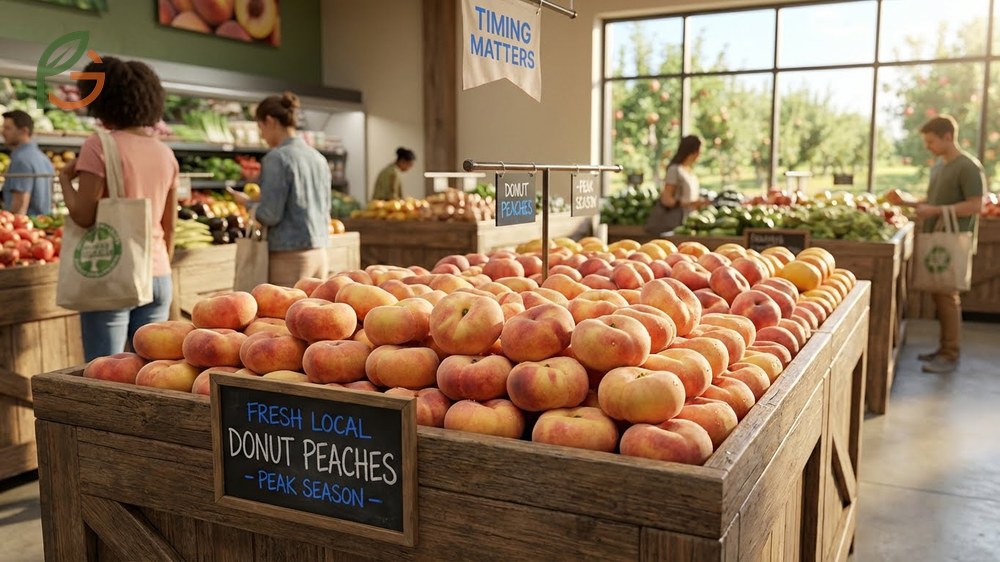
Studies demonstrate that donut peaches have gained widespread distribution across U.S. grocery retailers since their commercial introduction in the 1990s. You’ll find the best selection during peak season when local orchards harvest their crops.
Most people don’t realize that timing matters more than store choice when buying donut peaches. The flat shape and delicate flesh mean these peaches don’t ship or store as well as round varieties, so freshness is critical.
Major Grocery Chains
Current retail data shows that several national chains stock donut peaches during summer months. Kroger carries them under the “Private Selection” brand in clamshell containers, while Sprouts Farmers Market offers individual fruit selections.
Costco locations typically stock donut peaches in 2-3 lb packages from suppliers like Kingsburg Orchards and Family Tree Farms. Whole Foods and The Fresh Market also carry organic and conventional options when in season.
- Kroger – Private Selection donut peaches in 4-count clamshells
- Sprouts Farmers Market – Individual donut peaches sold by weight
- Costco – Bulk packages (2-3 lbs) from regional growers
- Whole Foods Market – Organic and conventional options available
- The Fresh Market – Family Tree Farms branded donut peaches
- H Mart – White donut peaches from U.S. suppliers
Farmers Markets and Orchards
Agricultural data shows that farmers markets offer the freshest donut peaches since fruit travels directly from orchard to consumer. Local orchards harvest donut peaches at peak ripeness, unlike supermarket fruit that’s picked early for shipping.
Pick-your-own orchards provide the ultimate freshness guarantee. Farms like Lyman Orchards in Connecticut report that their donut peach crop sells out within days during the mid-to-late July window.[6]
Important note: Call ahead to farmers markets and orchards before visiting. Donut peaches have a short harvest window of 2-3 weeks, and inventory changes daily based on ripeness and weather conditions.
Online Delivery Options
Research shows that online grocery delivery has expanded access to specialty produce like donut peaches. Instacart partners with multiple retailers to offer same-day delivery in most metropolitan areas.
Weee! Asian Market specializes in Asian produce varieties including white donut peaches. Pittman & Davis ships donut peaches nationwide during peak season, though prices run higher than local options due to express shipping requirements.
What Do Donut Peaches Taste Like
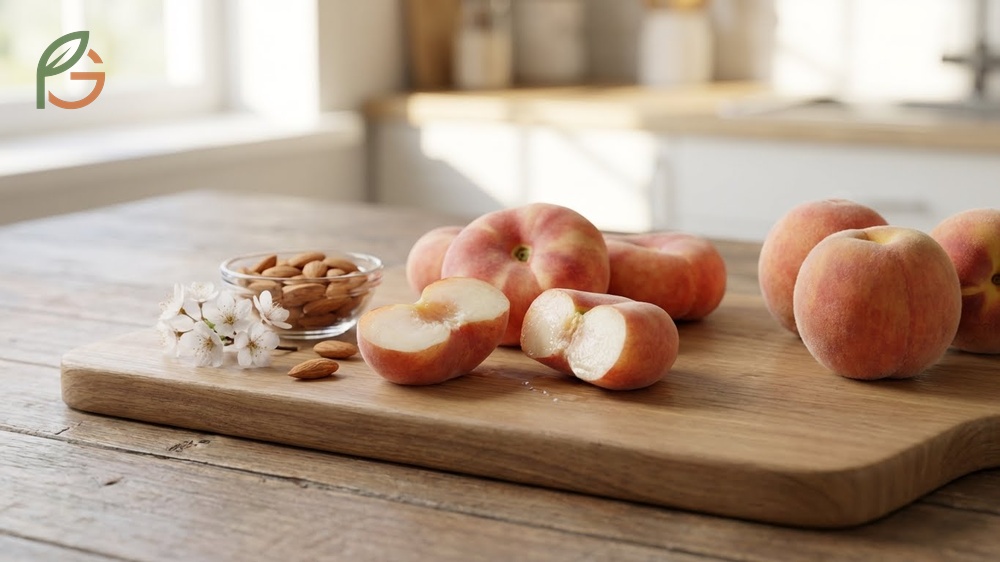
Evidence suggests that donut peaches contain significantly lower acid levels than traditional round peaches, creating their signature candy-like sweetness. The exceptional sweetness comes from the low acidity of this peach variety, combined with naturally high sugar content.[4]
Most people describe the flavor profile as having subtle almond and floral notes underneath the primary sweetness. The white flesh creates a milder, more delicate taste compared to yellow-fleshed peach varieties.
Low Acid Sweetness
Current data indicates that donut peaches have high sugar content mixed with low acidity to create their distinctive taste. This combination produces a syrupy-sweet flavor with subtle rose-like nuances that sets them apart from standard peaches.[1]
What often gets overlooked is that the lower acidity makes donut peaches more suitable for people with sensitive stomachs. The gentle flavor won’t cause the mouth-puckering tartness that some experience with traditional peaches.
- Candy-like sweetness with minimal tartness or acidity
- Subtle almond notes throughout the white flesh
- Delicate floral undertones with hints of rose
- Milder taste compared to yellow-fleshed peach varieties
- Aromatic, sweet scent before biting into the fruit
- Fruity essence that intensifies as the peach ripens
Texture and Eating Experience
Studies demonstrate that donut peaches have dense, aqueous flesh with a succulent consistency when fully ripe. The smooth, taut skin features only a light layer of velvety fuzz—much less than traditional peaches—making them easier to eat without peeling.
The flat shape creates a natural eating advantage. You can bite around the edge like eating a cookie, and the central pit removes easily, leaving a ring of flesh that’s perfect for snacking on-the-go.
Calories in Donut Peaches
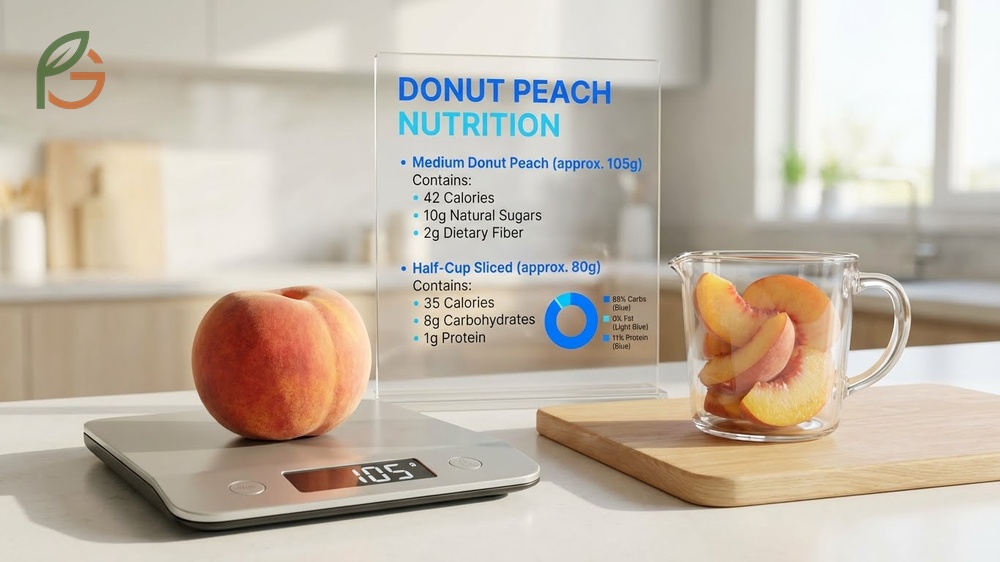
Nutritionally, a medium-sized donut peach weighing about 105 grams contains approximately 42 calories, 10 grams of natural sugars, and 2 grams of dietary fiber.[3] This makes them a low-calorie snack option that fits easily into most eating plans.
A half-cup serving of sliced donut peaches contains just 35 calories with 8g of carbohydrates and 1g of protein. The macronutrient breakdown is approximately 89% carbs, 0% fat, and 11% protein—typical for stone fruit varieties.
Research shows that donut peaches provide important micronutrients including vitamin C, vitamin A, and potassium. A typical peach contains 230 milligrams of potassium and delivers 6% of the daily value for vitamin A.[7]
This table compares nutritional values per serving size for donut peaches, showing calories, macronutrients, fiber, and key vitamins and minerals
| Serving Size | Calories | Carbohydrates | Fiber | Sugar | Key Nutrients |
|---|---|---|---|---|---|
| 1 medium peach (105g) | 42 cal[3] | 10g | 2g | 10g | Vitamin A, Vitamin C, Potassium (230mg)[7] |
| ½ cup sliced (85g) | 35 cal | 8g | 1g | 7g | 160mg potassium, 9mg Vitamin C |
| 1 lb (454g) | 182 cal | 43g | 8.6g | 43g | 995mg potassium |
The low calorie density of donut peaches—approximately 40 calories per 100 grams—makes them an excellent choice for weight management. They’re naturally fat-free and sodium-free, with most calories coming from natural fruit sugars that provide quick energy.
Nutrition tip: Pair donut peaches with protein sources like Greek yogurt or nuts to slow sugar absorption and create a more balanced snack that keeps you satisfied for 2-3 hours.
What Are Donut Peaches: Saturn, Flat, and UFO Peach Types
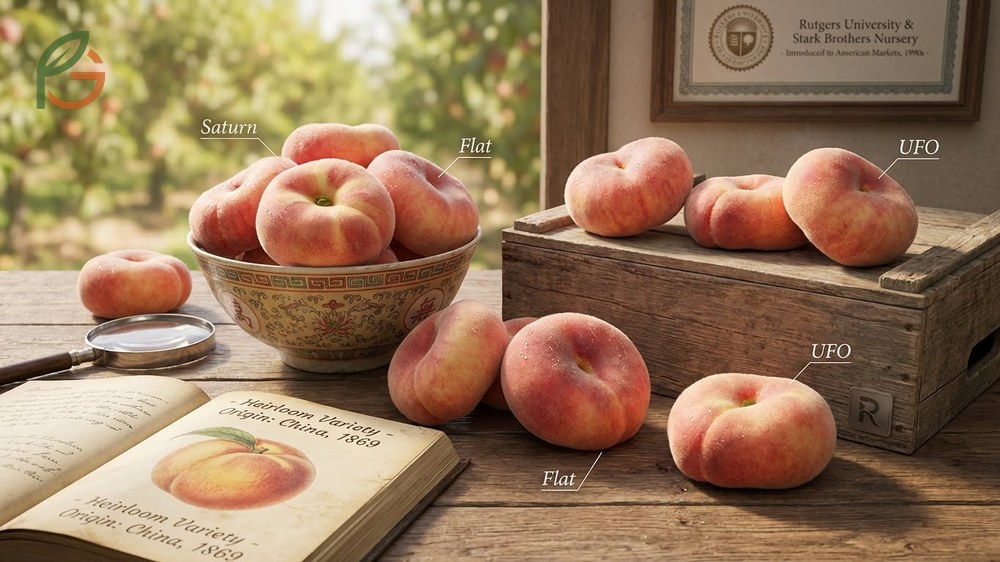
Donut peaches aren’t genetically modified—they’re an heirloom variety that originated in China and has been cultivated for centuries. The distinctive flat shape comes from a naturally occurring genetic variation first documented in Chinese agriculture around 1869.[5]
Agricultural data shows that Rutgers University and Stark Brothers Nursery introduced donut peaches to American markets in the 1990s under the commercial name “Saturn peach.” The variety gained popularity quickly due to its unique appearance and exceptional eating quality.
The flat, disc-like shape measures 2¼ to 2¾ inches in diameter but only 1-1.5 inches in height. This compressed form factor gives the fruit its distinctive “donut” appearance that catches attention in produce displays.
- Saturn peach – The most common commercial name in nurseries and garden centers
- Flat peach – Descriptive name referring to the compressed shape
- UFO peach – Popular nickname due to the flying saucer-like appearance
- Peento peach – Historical name from early cultivation in Asia
- Chinese flat peach – Reference to the variety’s geographic origins
- Java peach – Alternative historical name from Victorian-era catalogs
White-fleshed donut peaches are most common in retail markets, though yellow-fleshed varieties exist. The white flesh creates the characteristic delicate, low-acid flavor that distinguishes donut peaches from standard peach varieties.
These peaches are freestone varieties, meaning the pit separates easily from the flesh when ripe. This trait makes them particularly convenient for fresh eating and minimizes fruit waste during preparation.
When Are Donut Peaches in Season
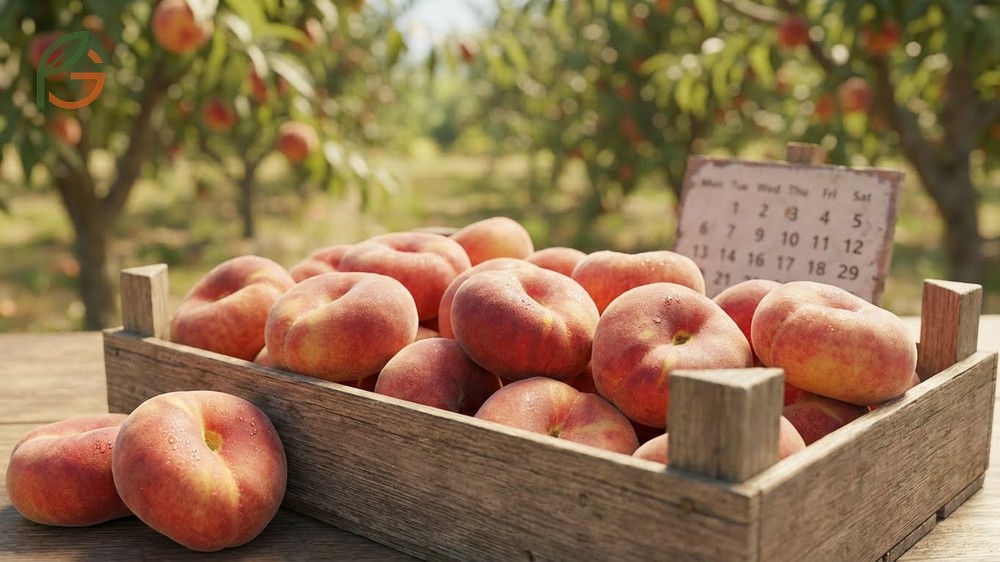
Current agricultural guidance shows that donut peaches ripen from mid-July through late August in most U.S. growing regions. The harvest window is notably short—typically 2-3 weeks per orchard—making them a limited-availability specialty crop.[2]
Some orchards in warmer climates begin harvesting as early as mid-June, while cooler northern regions may not see ripe fruit until early August. The exact timing depends on spring temperatures, chill hours during winter, and local microclimate factors.
Evidence indicates that donut peach trees require full sun and well-drained soil with a pH between 6.0-7.0 for optimal fruit production. Trees typically begin bearing fruit 2-4 years after planting, with July ripening being most common across USDA zones 5-9.[5]
- Northern U.S. states – Early August to late August peak season
- Mid-Atlantic region – Mid-July through August harvest window
- Southern states – Late June to early August availability
- California orchards – June through September extended season
- Farmers markets – Best selection during peak 2-3 week window
- Grocery stores – Sporadic availability July-August depending on supply chains
Research shows that you should buy donut peaches at their peak ripeness since they don’t continue ripening significantly after harvest. Look for fruit that yields slightly to gentle pressure and emits a sweet, aromatic scent.
Store ripe donut peaches in the refrigerator for 3-5 days maximum. The delicate flesh bruises easily, so handle them gently and avoid stacking heavy items on top in your produce drawer.
Seasonal tip: Mark your calendar for mid-July and contact local orchards in early July to confirm harvest dates. Many farms post updates on social media when donut peaches are ready for picking.
Conclusion
The evidence is clear: donut peaches where to buy comes down to timing and knowing your sources. You’ll find the best selection at Kroger, Sprouts, Costco, and local farmers markets during the July-August peak season when orchards harvest these sweet, low-acid peaches at optimal ripeness.
Current guidance emphasizes buying donut peaches at peak ripeness since their delicate flesh doesn’t continue developing flavor after harvest. Whether you call them Saturn peaches, flat peaches, or UFO peaches, these 42-calorie fruits deliver exceptional taste with subtle almond and floral notes that make them worth seeking out during their brief seasonal window. FruitGarden tracks seasonal produce availability to help you find the freshest fruit varieties throughout the growing season.
Medical Disclaimer
Important Medical Disclaimer: This content is for informational and educational purposes only. It’s not intended as a substitute for professional medical advice, diagnosis, or treatment. Always consult a qualified healthcare professional or registered dietitian before making any changes to your diet, especially if you have diabetes, food allergies, or other medical conditions. Nutritional values may vary based on growing conditions and ripeness.
Frequently Asked Questions
Where Can I Buy Donut Peaches Near Me?
Research shows that Kroger, Sprouts Farmers Market, Costco, Whole Foods, and The Fresh Market carry donut peaches during peak season from mid-July through August. You can also find them at local farmers markets and pick-your-own orchards, or order online through Instacart for same-day delivery in most metropolitan areas.
What Is a Donut Peach?
A donut peach is a flat, disc-shaped heirloom peach variety from China that’s also called Saturn peach, flat peach, or UFO peach. It features white flesh with exceptionally low acidity and candy-like sweetness, plus subtle almond and floral notes that distinguish it from traditional round peaches.
How Many Calories Are in a Donut Peach?
Current nutrition data indicates that a medium donut peach (105 grams) contains approximately 42 calories with 10g of natural sugars and 2g of dietary fiber. A half-cup serving of sliced donut peaches provides just 35 calories, making them a low-calorie snack option that’s naturally fat-free and sodium-free.
When Are White Peaches in Season?
White peaches, including donut peach varieties, are in season from mid-July through late August in most U.S. regions. Some warmer areas may have fruit available starting in mid-June, while northern states see peak availability in early August. The harvest window typically lasts only 2-3 weeks per orchard.
Are Donut Peaches and Saturn Peaches the Same?
Yes, donut peaches and Saturn peaches are the same fruit. “Saturn” is the commercial name that Rutgers University and Stark Brothers Nursery used when introducing the variety to American markets in the 1990s, while “donut peach” describes the distinctive flat, disc-like shape that resembles a doughnut.
Do Donut Peaches Taste Different Than Regular Peaches?
Evidence suggests that donut peaches taste noticeably sweeter than regular peaches due to their significantly lower acid levels. They have a candy-like sweetness with subtle almond and floral notes, plus a milder, more delicate flavor from their white flesh compared to the tartness found in many yellow-fleshed peach varieties.
Are Donut Peaches Genetically Modified?
No, donut peaches aren’t genetically modified. They’re an heirloom variety that originated from a naturally occurring genetic variation in China centuries ago. Agricultural records show the variety was known in early Victorian times under names like Flat China and Java Peach, long before modern genetic modification techniques existed.





