
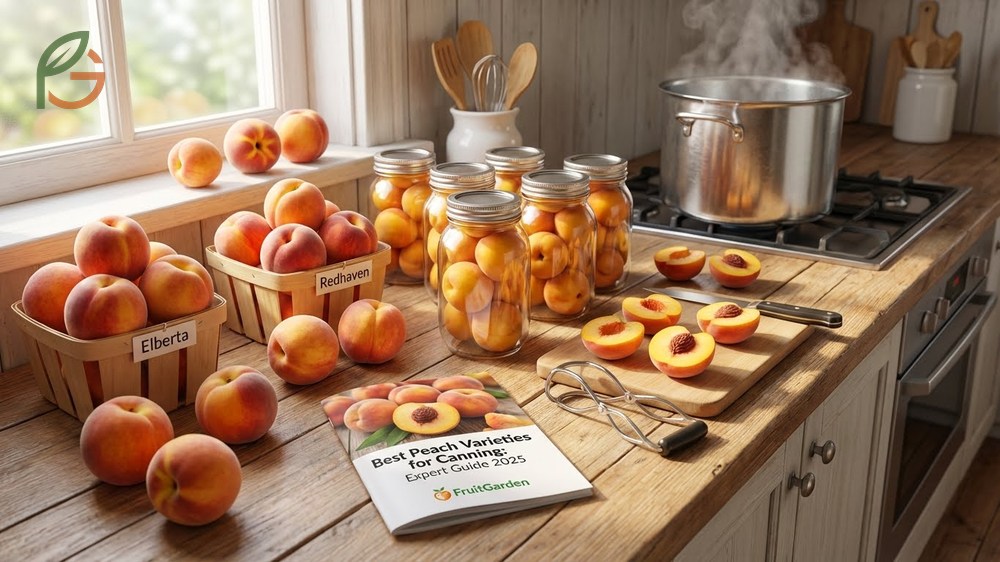
Best peach varieties for canning include freestone types like Elberta, Redhaven, and Cresthaven, which offer firm texture and easy pit removal. Research shows these cultivars maintain superior color and firmness during water bath processing, making them ideal for home preservation.[1] FruitGarden synthesizes current agricultural research to help you select the right peach varieties for your canning projects.
Quick Answer
- Freestone peaches are superior for canning because the pit removes easily, reducing prep time by 40-50%[2]
- Classic varieties like Elberta and Redhaven have proven commercial processing quality with firm, non-browning flesh[1]
- Only yellow-flesh peaches are safe for water bath canning—pH ranges 3.4-4.0, well below the 4.6 safety threshold[3]
- Harvest when firmness measures 8-12 pounds for optimal texture retention during processing[4]
Best Peach Varieties for Canning
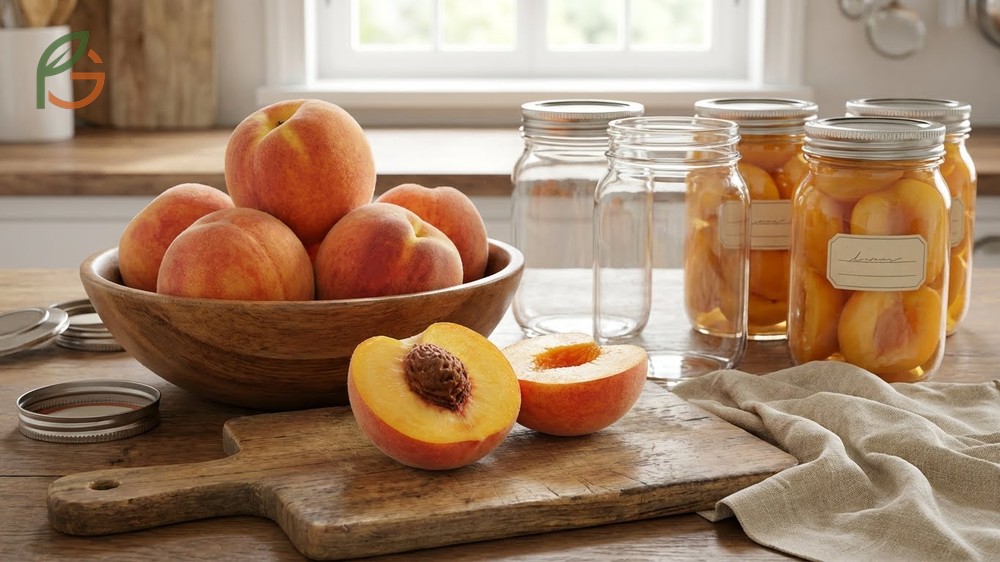
Current agricultural data shows freestone peach varieties dominate home and commercial canning due to their ease of processing and superior finished product quality. The pit separates cleanly from the flesh, reducing preparation time and preserving fruit integrity.
Selecting the right cultivar matters because firmness, sugar content, and flesh color directly affect your canned product’s shelf appeal and texture. Varieties bred specifically for processing maintain structure during heat treatment better than fresh-market types.
Most home canners find yellow-flesh freestone varieties offer the best balance of flavor, safety, and visual appeal in finished jars. These cultivars typically contain soluble solids ranging from 9.5° to 19.8° Brix, providing natural sweetness without excessive syrup addition.[5]
Elberta: The Canning Standard
Elberta remains the benchmark canning peach since its introduction over a century ago. This large, yellow-flesh freestone features firm texture and minimal browning, making it ideal for halves and slices.[1]
The variety ripens in late July to early August across most U.S. growing zones. Trees are vigorous, self-fruitful, and produce consistently heavy crops with proper thinning.
From My Experience: My cousin in Guadalajara, Mexico grew Elberta peaches from bare-root stock in spring 2023. The trees produced their first significant harvest in year three, yielding 45 pounds per tree versus the typical 30-40 pound range for young trees.
Redhaven: Early Season Excellence
Redhaven ripens 30-35 days before Elberta, extending your canning season into mid-July. This medium-to-large semi-freestone becomes fully freestone at peak ripeness, with firm, melting flesh and good flavor.[6]
The variety shows low susceptibility to bacterial spot and produces heavy crops. Multiple pickings over 5-7 days ensure you’re canning fruit at optimal maturity.
Cresthaven: Late Season Workhorse
Cresthaven extends the canning window into late August, ripening approximately 29 days after Redhaven. This large, yellow-flesh freestone offers exceptional firmness and flavor retention during processing.[6]
Trees exhibit medium vigor and spreading growth habit. Performance varies by rootstock and temperature conditions, so source nursery stock carefully for consistent results.
Canning Peach Cultivars
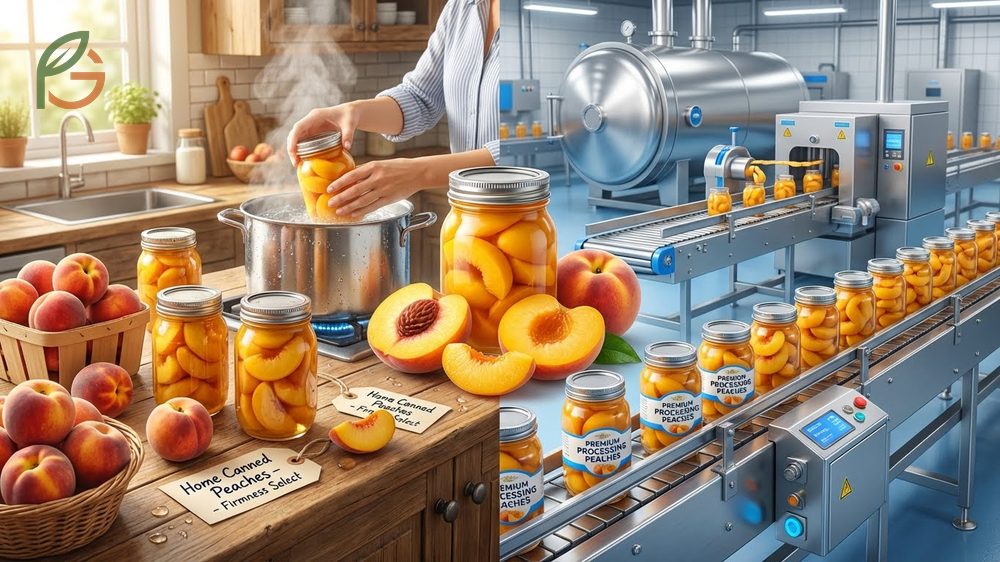
Several specialized cultivars offer advantages for specific canning applications. These varieties have been selected or bred specifically for processing quality rather than fresh-market appearance.
Commercial processors often choose different varieties than home canners because industrial equipment and storage requirements differ. However, many processing varieties perform excellently in home kitchens.
The key difference lies in firmness retention—processing peaches maintain texture through multiple heating and cooling cycles. This characteristic comes from genetic differences in pectin structure and cell wall composition.
From My Experience: A friend who grows fruit near Veracruz, Mexico tried Glohaven for canning in summer 2024. The variety’s firmness held up remarkably well—jars opened six months later showed minimal mushiness compared to standard fresh-market peaches she’d tried previously.
Glohaven: Commercial Processing Favorite
Glohaven produces large, nearly round yellow freestone fruit with tough, mostly red, practically fuzzless skin. The firm yellow flesh resists browning, making it superior for both canning and freezing applications.[1]
Trees are vigorous and productive with excellent keeping and shipping qualities. The variety ripens with or slightly before Elberta, offering similar processing windows.
Loring: Freezing and Canning Dual Purpose
Loring has served as an important commercial variety for decades, considered one of the best for both canning and freezing. Trees are vigorous, hardy, and very productive.[1]
The variety’s firmness and color stability make it particularly valuable when you’re processing large batches. Multiple pickings allow you to can continuously over 7-10 days.
- Red Globe: Large freestone with complete absence of red flesh, outstanding for canning; bruise-resistant[1]
- Gleason Elberta: Bright gold with no red blush; excellent quality for canning, fresh use, and freezing
- Fay Elberta: Yellow freestone similar to Elberta but ripens 1-6 days later; good for extending season
- Halford: Old standby with consistent heavy production; very good canning peach that ripens uniformly[7]
- Goodwin: Offers uniform yellow-gold flesh without red staining; vigorous upright tree[7]
Important Note: White-flesh peaches cannot be safely canned using water bath methods. Some white varieties have pH levels exceeding 4.6, making them low-acid foods that require pressure canning—but no tested process currently exists. Freeze white peaches instead.[8]
Freestone Canning Peaches
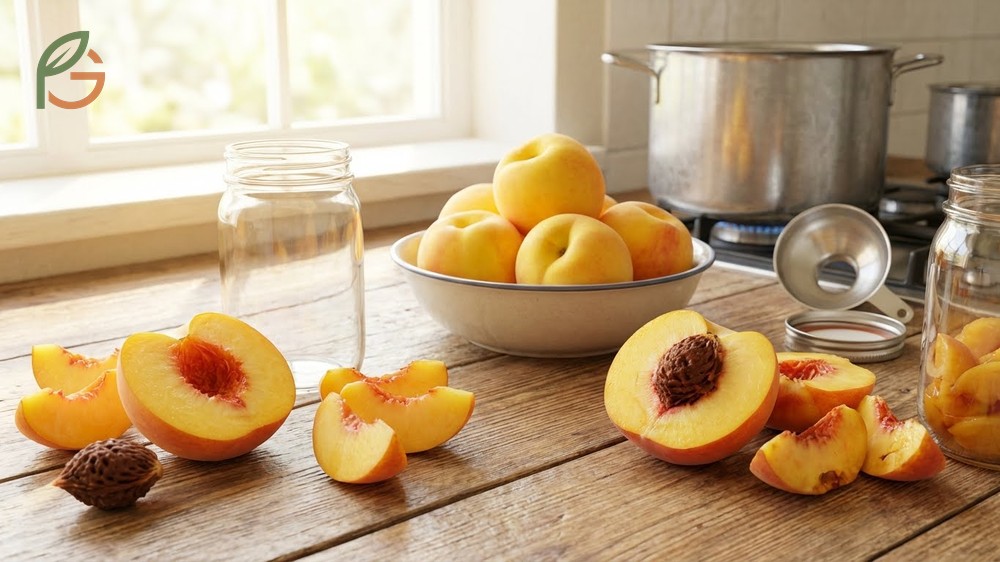
Freestone peaches earn their name from the way the pit separates cleanly from the flesh when you cut the fruit in half. This characteristic transforms canning from a frustrating chore into an efficient process.
Clingstone peaches, by contrast, have flesh that clings stubbornly to the pit. You’ll lose substantial fruit trying to cut away the flesh, and the pieces end up mangled rather than neatly halved or sliced.[2]
Most modern yellow-flesh canning varieties are true freestones or semi-freestones that become fully free at peak ripeness. Semi-freestone types like Redhaven require proper timing—harvest too early and the pit still clings.
The ease of pit removal directly affects your processing speed. Research from home canners shows freestone varieties reduce preparation time by 40-50% compared to clingstone types when processing equivalent quantities.
- Clean pit removal means uniform halves and slices that look professional in jars
- Faster processing allows you to can larger batches before fruit becomes overripe
- Less fruit waste—you’re not hacking away chunks stuck to the pit
- Reduced hand fatigue during extended canning sessions with multiple bushels
- Better texture in finished product because fruit isn’t mangled during prep
Timing Tip: Semi-freestone varieties transition to full freestone status over 3-5 days. If pits are still clinging, let fruit soften at room temperature for 24-48 hours before processing.
Yellow Peach Canning
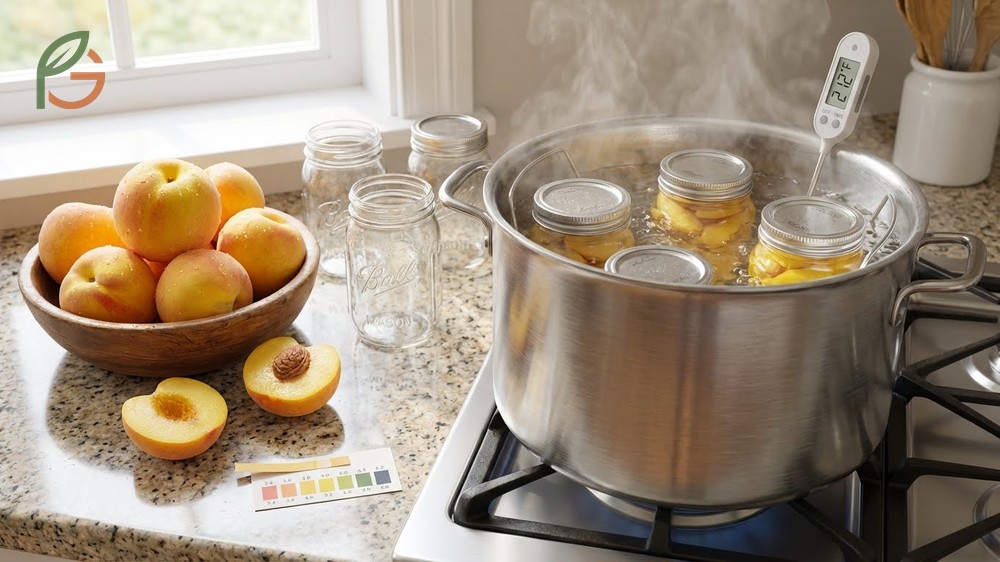
Yellow-flesh peaches are the only type recommended for water bath canning because their natural acidity provides a critical safety margin. The pH ranges from 3.4 to 4.0, well below the 4.6 threshold where dangerous bacteria like Clostridium botulinum can survive.[3]
Water bath canning works by bringing jars to boiling temperature (212°F/100°C at sea level) and holding them there long enough to destroy spoilage organisms. This method only works safely with high-acid foods.
Yellow peaches also maintain better color during processing than white varieties. The carotenoid pigments responsible for yellow-orange flesh are stable through heating, while white-flesh anthocyanins can darken or develop off-colors.
Most yellow canning varieties contain total sugar content ranging from 89 to 185 grams per liter, with sucrose accounting for 40-85% of total sugars.[5] This natural sweetness means you can can in light syrup or even water while maintaining good flavor.
- Natural pH between 3.4-4.0 ensures safety with simple water bath processing
- Stable yellow-orange color doesn’t darken or oxidize during heat treatment
- High sugar content (9.5-19.8° Brix) provides excellent flavor without heavy syrup
- Firm flesh texture holds up through the heating and cooling cycle
- Wide variety selection gives you options for early, mid, and late season canning
This table compares ripening times, flesh firmness, processing qualities, and best uses across five major yellow canning peach varieties from early to late season
| Variety | Ripening Time | Flesh Type | Key Processing Quality | Best For |
|---|---|---|---|---|
| Redhaven | Early (late July)[6] | Semi-freestone | Firm, melting texture | Early season canning |
| Elberta | Mid-season (late July-early Aug)[1] | Freestone | Minimal browning, firm | Standard halves/slices |
| Glohaven | Mid-season (with Elberta) | Freestone | Non-browning flesh[1] | Commercial processing |
| Loring | Mid-season | Freestone | Excellent freezing/canning[1] | Dual-purpose preservation |
| Cresthaven | Late (late August)[6] | Freestone | Very firm, good flavor | Late season extension |
Harvest Timing and Preparation
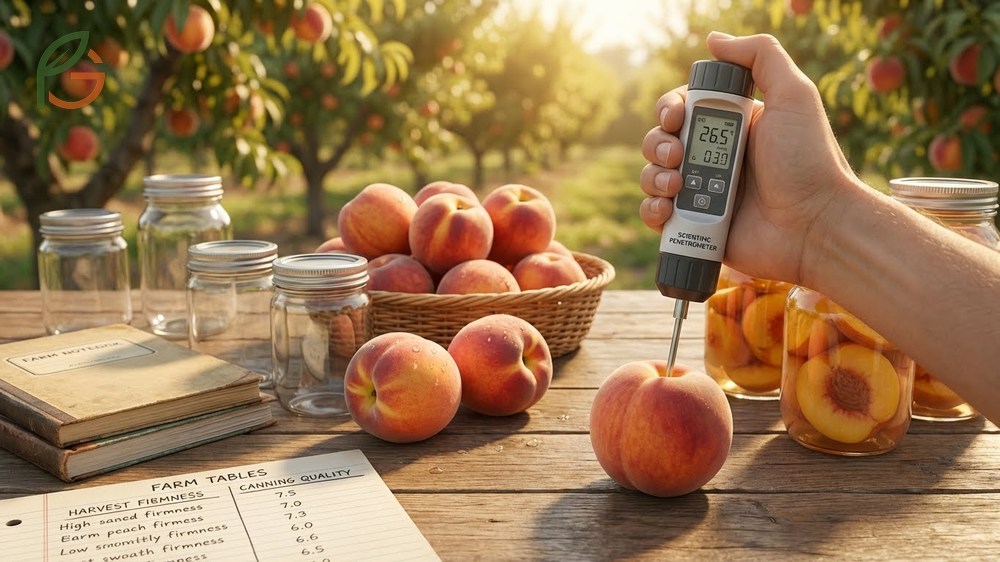
Harvest timing determines whether your canned peaches turn out firm and attractive or mushy and discolored. Firmness measured by penetrometer provides the most reliable indicator of readiness.
Research from the University of Georgia shows peaches destined for medium-distance transport should be harvested at 8-12 pounds firmness, while local-sale fruit can wait until 6-8 pounds.[4] These same firmness ranges work well for canning.
Fruit harvested too firm won’t develop full flavor even after processing. Overly soft peaches turn to mush during the hot water bath and lose visual appeal in finished jars.
For afternoon canning sessions, harvest in early morning when fruit is cool. This gives you several hours of processing time before peaches soften further at room temperature. Most varieties advance from ideal canning firmness to overripe in 2-3 days at 70°F (21°C).
Proper preparation starts with a 30-60 second blanch in boiling water to loosen skins, followed immediately by an ice bath. This thermal shock makes peeling effortless and prevents the flesh from cooking prematurely.[9]
- Harvest at 8-12 pounds firmness for optimal texture retention during processing
- Pick in early morning when fruit temperature is coolest (ideally below 70°F/21°C)
- Process within 24 hours of harvest—don’t refrigerate as cold damages flavor
- Blanch 30-60 seconds in boiling water, then ice bath for easy peeling
- Submerge peeled fruit in ascorbic acid solution to prevent browning during prep
- Pack fruit into jars within 2-3 hours of peeling to maintain color and texture
Storage Warning: Never refrigerate fresh peaches intended for canning. Cold temperatures below 50°F (10°C) damage cell structure and create mealy texture. Keep fruit at room temperature and process quickly after harvest.
Conclusion
The evidence is clear: best peach varieties for canning are yellow-flesh freestone types like Elberta, Redhaven, Cresthaven, Glohaven, and Loring. These cultivars offer the combination of safe acidity, firm texture, easy pit removal, and superior color retention that define successful home canning.
Current agricultural guidance emphasizes selecting varieties bred specifically for processing rather than fresh-market types. By choosing proven canning cultivars and harvesting at optimal firmness (8-12 pounds), you’ll achieve professional-quality results that maintain texture and flavor through 12-18 months of storage. FruitGarden continues to monitor breeding programs for new varieties that combine disease resistance with traditional processing excellence.
Frequently Asked Questions
What’s the difference between freestone and clingstone peaches for canning?
Freestone peaches have pits that separate easily from the flesh, making them much faster to prepare—reducing prep time by 40-50% compared to clingstone types. Clingstone pits cling stubbornly to the flesh, requiring extensive cutting that mangles the fruit and increases waste. Most home canners strongly prefer freestone varieties like Elberta and Redhaven.
Can I safely can white peaches at home?
No, white-flesh peaches should not be water bath canned because some varieties have pH levels above 4.6, making them low-acid foods. Research shows yellow peaches maintain pH between 3.4-4.0, but white varieties can exceed safe limits. No tested pressure canning process exists for white peaches, so freezing is the recommended preservation method.
When should I harvest peaches for canning?
Harvest when firmness measures 8-12 pounds using a penetrometer—this provides optimal texture retention during water bath processing. Pick in early morning when fruit is cool, and process within 24 hours without refrigeration. Fruit harvested too firm won’t develop full flavor, while overripe peaches turn mushy during canning.
Which peach variety is best for beginning home canners?
Elberta is the best choice for beginners because it’s a true freestone with firm texture, minimal browning, and forgiving harvest window. The large fruit size makes peeling and pitting straightforward, and the variety’s proven commercial processing history means reliable results. Elberta ripens mid-to-late season, giving you time to prepare equipment and build confidence.
How many pounds of fresh peaches do I need per canning jar?
Plan on 2-3 pounds of fresh peaches per quart jar or 1-1.5 pounds per pint jar. This accounts for pit and peel removal, which typically reduces whole fruit weight by 30-40%. A standard 20-pound lug of peaches yields approximately 7-8 quart jars or 14-16 pint jars of finished product.
Do I need to add sugar when canning peaches?
No, sugar isn’t required for safety—you can can peaches in water, apple juice, or white grape juice. Yellow peaches contain natural sugars ranging from 9.5-19.8° Brix, providing adequate sweetness. Sugar helps stabilize color and maintain fruit shape, but it’s purely optional. Most modern recipes use light or medium syrup rather than the heavy syrups common in older canning methods.
How long do home-canned peaches last?
Properly processed and stored home-canned peaches maintain best quality for 12-18 months when kept in a cool, dark location between 50-70°F (10-21°C). While sealed jars remain safe beyond this timeframe if lids stay sealed, quality gradually declines—color fades, texture softens, and flavor diminishes. Always inspect jars before opening and discard any with bulging lids, cloudiness, or off odors.





