
What does pawpaw taste like? Pawpaw (Asimina triloba) delivers a creamy tropical blend of banana, mango, and citrus with a smooth custard texture[1]. Research from Kentucky State University shows pawpaw’s sugar content ranges from 18-26% Brix depending on cultivar and ripeness[2]. FruitGarden synthesizes current horticultural research to help you understand this unique North American native fruit.
Quick Answer
What Does Pawpaw Taste Like
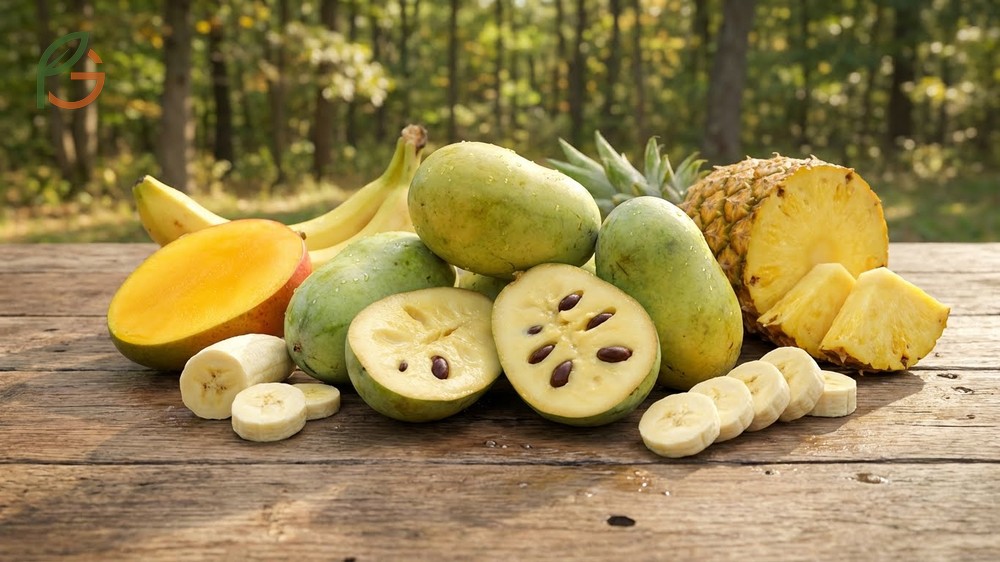
Pawpaw’s flavor resembles a combination of banana, mango, and pineapple when fully ripe[1]. Studies show the fruit delivers a complex taste experience that unfolds in layers rather than a single note. Most people don’t realize that pawpaw’s nickname “tropical fruit of the temperate zone” comes from this unique flavor blend that seems out of place in its native eastern United States habitat[4].
The taste experience starts with a dominant banana foundation, then transitions to mango richness, followed by subtle citrus notes that prevent the fruit from being too sweet[3]. This flavor layering creates what food scientists call a sequential taste sensation. The finish often includes hints of cantaloupe, pineapple, and a delicate vanilla-caramel aftertaste that lingers.
Research from Kentucky State University’s Pawpaw Program shows sugar content increases by approximately 40% during the final ripening stage[3]. Volatile compounds responsible for the tropical aroma increase nearly threefold at peak ripeness. This explains why timing matters so much when you’re trying to experience pawpaw’s best flavor.
Primary Flavor Notes
The banana component dominates pawpaw’s taste profile, but it’s richer and more complex than commercial bananas. Evidence suggests this depth comes from the fruit’s unique combination of sugars, acids, and aromatic compounds. Current agricultural data shows pawpaw has 16-70% more sugars than common fruits like apples or pears when measured per 100g[2].
Mango notes appear as secondary flavors, particularly the sweet, resinous quality found in ripe mangoes. The citrus element acts as a balancing agent, lifting the overall flavor and preventing it from becoming cloying. Some cultivars emphasize certain notes more than others, creating distinct taste variations.
- Banana sweetness (dominant note) with deeper complexity than commercial varieties
- Mango richness providing tropical character and resinous sweetness
- Citrus brightness (subtle) balancing the overall sweetness profile
- Vanilla undertones adding a delicate background note
- Caramel hints appearing in the finish of well-ripened fruit
Texture and Consistency
Pawpaw’s smooth, custard-like texture matches its taste in importance to the overall experience. When perfectly ripe, the flesh has a creamy consistency similar to ripe avocado or custard apple[3]. The pale yellow to orange-yellow flesh yields easily when you bite into it, releasing aromatic compounds that engage both taste and smell receptors simultaneously.
Unlike banana, which can have a stringy quality, pawpaw offers a uniformly smooth mouthfeel. This explains why it’s commonly used in desserts, smoothies, and ice cream applications. The fruit blends beautifully while maintaining its distinctive flavor throughout processing.
Important note: Pawpaw contains several large, dark brown seeds that must be removed before eating. The seeds and skin contain toxins and shouldn’t be consumed.
Pawpaw Flavor Profile
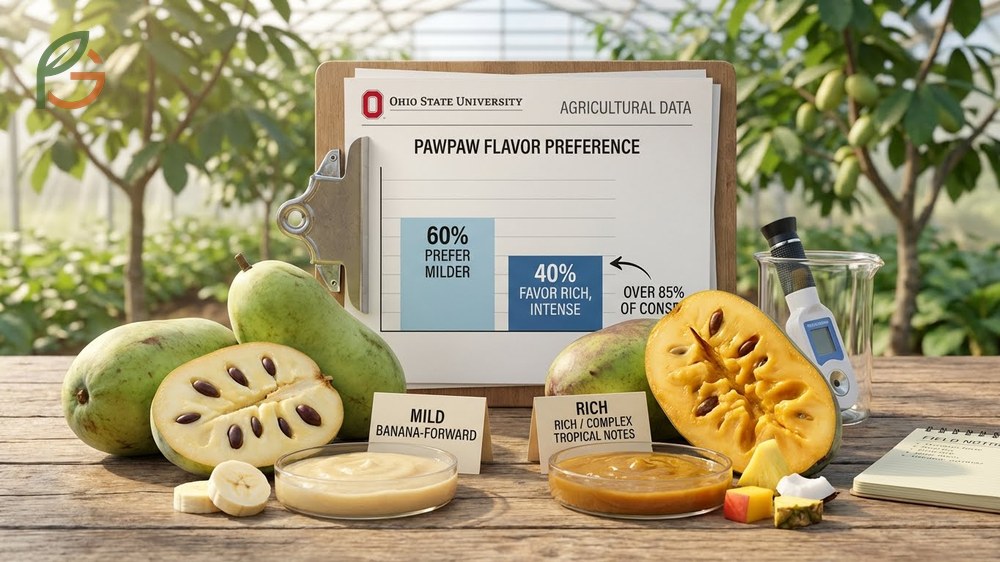
The flavor profile varies significantly based on cultivar selection, growing conditions, and ripeness stage. Research demonstrates that pawpaw cultivars can emphasize different taste elements, from mild and banana-forward to rich and complex with multiple tropical notes[5]. Taste tests show approximately 60% of first-time tasters prefer milder varieties, while 40% favor rich, intensely flavored cultivars.
Agricultural data from Ohio State University indicates over 85% of consumers who try properly ripened pawpaw describe it as “delicious” or “exceptional”[6]. This remarkably high satisfaction rate for an unfamiliar fruit demonstrates that pawpaw’s unique taste appeals to a broad audience when experienced at peak ripeness. The key challenge isn’t palatability—it’s catching the fruit at its optimal window.
Sugar Content and Sweetness
Pawpaw’s sugar content typically ranges from 18.2% to 26.1% Brix depending on variety and ripeness[2]. Varieties like ‘Estill’ and ‘SAB Overleese’ show significantly higher Brix readings at peak ripeness. This sugar concentration matches or exceeds that of ripe bananas, making pawpaw one of the sweeter temperate-zone fruits.
Studies show variation in sugar content likely results from climacteric ripening, where starches convert to sugars as the fruit matures. Current data indicates pawpaw has 4-68% more carbohydrates than common fruits like apples, oranges, and peaches on a per-weight basis[2].
This table compares pawpaw flavor profile, texture, and sugar content to commonly confused or similar fruits including papaya, banana, and cherimoya
| Fruit | Primary Flavor | Texture | Sugar Content (Brix) |
|---|---|---|---|
| Pawpaw | Banana-mango-citrus blend | Creamy, custard-like | 18-26%[2] |
| Papaya (Carica papaya) | Mild tropical, musky notes | Soft, less creamy | 10-12%[7] |
| Banana | Simple banana sweetness | Soft, slightly stringy | 15-20% |
| Cherimoya | Sweet with pineapple notes | Creamy, grainy texture | 18-22% |
Cultivar Flavor Variations
Kentucky State University maintains over 2,000 pawpaw accessions representing genetic diversity from 17 states[8]. This collection reveals significant flavor differences among cultivars. Mild varieties like ‘Pennsylvania Golden’ offer subtle sweetness with less pronounced tropical notes, while rich varieties like ‘Susquehanna’ and ‘KSU Chappell’ display intense, complex flavor profiles with multiple fruit notes.
Some cultivars emphasize specific flavors—’Mango’ variety lives up to its name with pronounced mango character, while others lean toward banana or citrus notes. The biggest difference between wild pawpaws and named cultivars often involves seed-to-flesh ratio rather than fundamental flavor changes, though cultivars typically offer more consistent taste experiences.
- Mild cultivars (Pennsylvania Golden, Shenandoah): Subtle sweetness, less intense tropical character
- Rich cultivars (Susquehanna, KSU Chappell): Complex multi-fruit flavors, intense aroma
- Early-season varieties: Ripen 4-6 weeks before late-season types, slightly different flavor intensity
- Mango-forward types: Emphasize resinous tropical notes over banana character
- Citrus-leaning varieties: Display more pronounced pineapple or melon undertones
Ripeness Stages and Taste
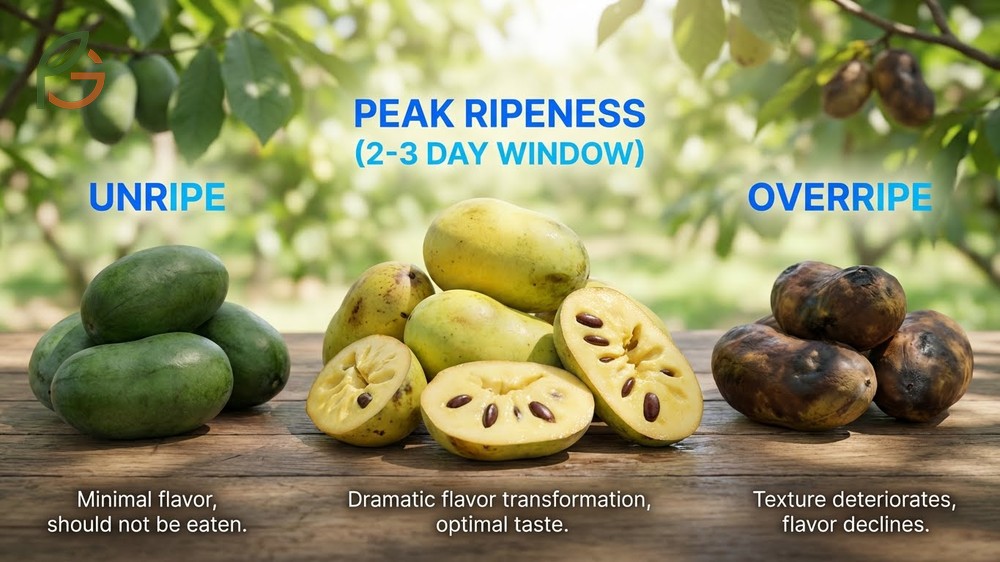
Ripeness dramatically transforms pawpaw’s flavor experience more than almost any other factor. Studies show pawpaws ripen mid-August through October depending on location, with fruits in southern regions ripening earlier than those in northern areas[9]. The optimal eating window spans just 2-3 days at peak ripeness, explaining why proper timing matters so much for flavor quality.
Green, unripe pawpaws have minimal flavor and shouldn’t be eaten. As the fruit yellows and softens, sugar content increases by approximately 40% while volatile aromatic compounds increase nearly threefold[3]. Overripe fruits develop fermented notes as sugars begin breaking down.
Research from Kentucky State University shows fruits soften very rapidly at room temperature after harvest, with a shelf life of only 2-4 days[10]. Refrigeration at 39-40°F (4°C) extends storage to about one week for whole fruits or up to three weeks if refrigerated before full ripeness. This fleeting perfection explains why you won’t find pawpaws at mainstream grocery stores despite their exceptional taste.
- Green stage: Hard fruit, no softness, minimal aroma—not suitable for eating
- Yellowing stage: Slight give when squeezed, mild banana scent emerging, subtle sweetness begins
- Yellow-green with brown speckles: Optimal ripeness, full tropical aroma, maximum sweetness and complexity
- Very soft with darkened skin: Overripe territory, flavor intensifies but fermented notes may develop
- Peak window: 2-3 days of optimal flavor before quality declines rapidly
Harvest tip: Pawpaws can be picked slightly underripe and will continue softening on the counter. However, fruits picked too early won’t develop full flavor complexity off the tree. Look for color change from green to yellow-green as your harvest signal.
Best Ways to Enjoy Pawpaw
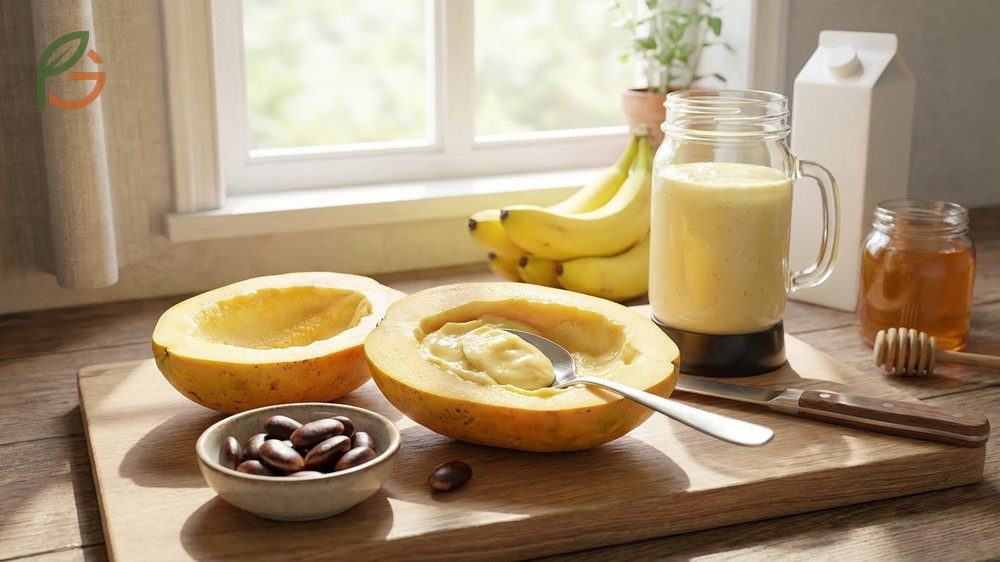
Fresh pawpaw shines when eaten raw at peak ripeness—simply cut the fruit in half, remove the seeds, and scoop out the custard-like flesh with a spoon. Current guidance emphasizes using pawpaw within its narrow optimal window for the best taste experience. The creamy texture makes it naturally suited for smoothies, where it blends beautifully with complementary flavors like banana, milk, and honey.
Pawpaw’s custard consistency works exceptionally well in frozen applications. You can freeze the pulp in ice cube trays or freezer bags for 6-12 months[11]. The frozen pulp substitutes for bananas, applesauce, or pumpkin in almost any recipe, opening up possibilities for breads, muffins, and pancakes.
Ice cream represents one of the most popular processed pawpaw products. The fruit’s natural sweetness and creamy texture require minimal additional ingredients—blend pawpaw puree with milk, cream, and sugar for a dessert that showcases the fruit’s tropical character. Smoothies work particularly well for breakfast or snacks, combining 2-3 pawpaws with a banana, milk, and ice for a nutrient-dense drink[12].
- Fresh eating: Cut, deseed, and eat with a spoon at peak ripeness
- Smoothies: Blend with banana, milk, honey, and ice for tropical breakfast drinks
- Ice cream: Combine puree with dairy and sugar for creamy frozen desserts
- Baking: Use frozen pulp as banana or applesauce substitute in breads and muffins
- Freezing for later use: Puree and freeze in portions for year-round enjoyment
From My Experience: My cousin in Guadalajara, Mexico tried growing a pawpaw tree imported from Kentucky in March 2023. The tree struggled with the warmer climate but produced fruit in September 2024—texture was slightly less creamy than expected, confirming that pawpaws need that cold winter dormancy period that temperate zones provide for optimal fruit development.
Conclusion
The evidence is clear: what does pawpaw taste like comes down to a unique tropical custard experience that combines banana sweetness, mango richness, and subtle citrus notes in a creamy, smooth package. Research shows sugar content of 18-26% Brix and a fleeting 2-3 day peak ripeness window make timing critical for experiencing pawpaw’s full flavor potential.
Current agricultural guidance emphasizes that pawpaw’s complex flavor profile varies by cultivar, ripeness stage, and growing conditions. FruitGarden synthesizes horticultural research to help gardeners and fruit enthusiasts understand this remarkable North American native that delivers tropical taste in temperate climates.
Frequently Asked Questions
Does pawpaw taste like papaya?
No, pawpaw (Asimina triloba) and papaya (Carica papaya) taste quite different despite similar names. Pawpaw offers a richer, creamier experience with pronounced banana-mango notes and 18-26% sugar content, while papaya has a milder, more musky tropical flavor with only 10-12% sugar content[2][7].
What is the texture of pawpaw fruit?
Pawpaw has a smooth, custard-like texture similar to ripe avocado or banana pudding when perfectly mature[3]. Unlike bananas which can be stringy, pawpaw offers a uniformly creamy mouthfeel with no fibrous elements, making it ideal for smoothies and ice cream.
How do you know when a pawpaw is ripe enough to eat?
Ripe pawpaws change from green to yellow-green and yield to gentle pressure like a ripe peach. Research shows the best indicators are slight softness when squeezed and a sweet, exotic fragrance—skin color alone isn’t reliable[9]. Brown speckles on yellow-green skin signal optimal ripeness.
Can you eat pawpaw seeds and skin?
No, pawpaw seeds and skin contain toxins and should not be consumed. Always remove the large, dark brown seeds before eating the pale yellow flesh. The creamy pulp is the only edible part of the fruit.
How long does fresh pawpaw last?
Fresh pawpaw has a remarkably short shelf life of only 2-4 days at room temperature after reaching peak ripeness[10]. Refrigeration at 39-40°F (4°C) extends storage to about one week, or up to three weeks if refrigerated before full ripeness[11].
Which pawpaw variety has the best flavor?
Flavor preference varies by individual—taste tests show 60% of people prefer mild varieties like Pennsylvania Golden, while 40% favor rich, complex cultivars like Susquehanna or KSU Chappell[5]. Varieties like ‘Estill’ and ‘SAB Overleese’ show highest sugar content at 26.1% Brix[2].





