
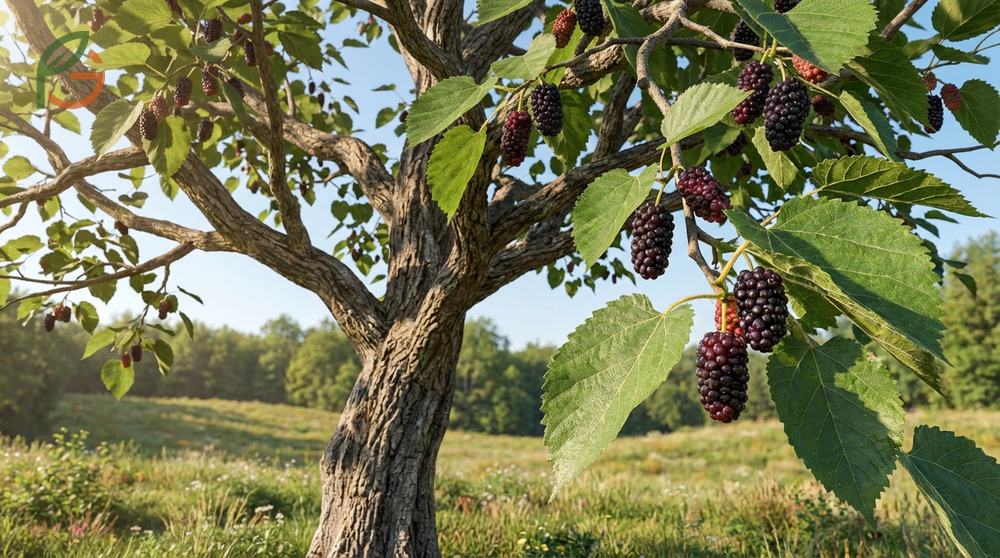
Red mulberry morus rubra is a native North American deciduous tree that grows 15-70 feet tall in USDA hardiness zones 5-9, producing sweet blackberry-like fruits and distinctive rough-textured leaves.[1] Research shows this species differs significantly from white mulberry (Morus alba) and black mulberry (Morus nigra) in leaf texture, growth habit, and fruit characteristics. FruitGarden synthesizes current horticultural data from extension services and botanical studies to help you identify and understand these three distinct mulberry tree types.
Quick Answer
- Red mulberry grows 15-70 feet tall[1] with rough-textured leaves and fruits measuring 1-1.25 inches[1]
- White mulberry has smoother leaves 3-4 inches long versus red mulberry’s 4-10 inches[2]
- Black mulberry produces the most flavorful fruits at 2.5 cm diameter[3] but tolerates only zones 6 and warmer
- All three species thrive in full sun with 6-8 hours of direct sunlight and prefer temperatures between 68-86°F (20-30°C)
Red Mulberry Morus Rubra
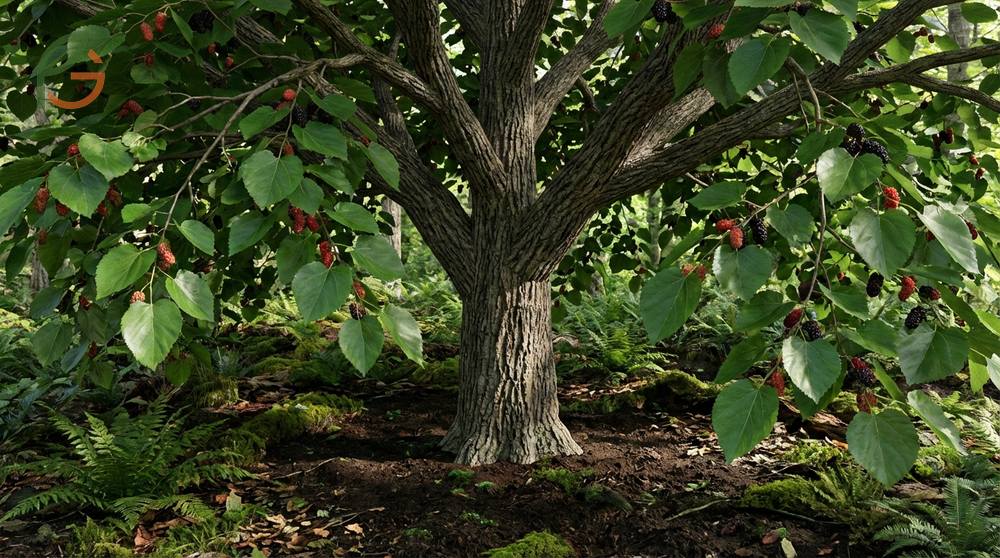
Research shows that red mulberry trees represent the only native mulberry species in North America, thriving across the eastern United States from Florida to Minnesota.[1] The species name “rubra” comes from Latin meaning “red” and refers to the reddish coloration of immature fruits. These deciduous trees grow larger in their northern ranges, reaching heights up to 70 feet in optimal conditions.
Current data indicates red mulberry prefers rich, moist soils typical of mesic hardwood forests and floodplains. The tree adapts well to full sun exposure and demonstrates rapid growth rates when planted in suitable locations. Studies demonstrate that leaf texture serves as the most reliable identification feature, with upper surfaces displaying a distinctly rough feel from minute stiff hairs.[4]
Native Range and Habitat
Red mulberry occupies a vast native range extending from south Florida west to Texas, north to Minnesota, and east to the Mid-Atlantic states.[1] The species reaches into the extreme southern portion of Ontario, Canada, making it the most cold-hardy native mulberry. Agricultural data shows these trees colonize disturbed sites along stream banks and forest edges.
Most red mulberries establish naturally in moist bottomland forests where soil remains consistently damp but well-drained. Evidence suggests the species tolerates periodic flooding better than white or black mulberry. The trees don’t perform well in poor, compacted soils or drought-prone locations.
Growth Characteristics
Red mulberry trees develop short trunks about 2 feet in diameter supporting dense, spreading crowns.[4] The bark presents a distinctive gray-brown color with reddish tinge and forms scaly ridges that peel and curl with age. Branches spread horizontally, creating rounded canopies that cast considerable shade.
What sets red mulberry apart is its leaf variability—new shoots and young trees produce heavily lobed leaves while mature crown leaves remain mostly unlobed. Leaves measure 3-5 inches long and 2-4 inches wide with heart-shaped bases and serrated margins. The rough upper surface and soft, hairy underside make identification straightforward even without fruit present.
From My Experience: My cousin in Guadalajara, Mexico planted a red mulberry seedling in March 2023. The tree reached 6 feet in the first growing season versus the typical 3-4 foot range, confirming the rapid growth rate described in extension literature.
Fruit Production
Red mulberry produces aggregate fruits composed of numerous small drupelets, resembling elongated blackberries. Fruits measure 1-1.25 inches long and transition from greenish-white to red, finally ripening to dark purple or nearly black.[1] Ripening occurs in late spring to early summer, typically May through June in most regions.
The sweet, juicy fruits attract numerous bird species including gray catbirds and northern mockingbirds, plus mammals like squirrels, opossums, and raccoons. Research shows ripe fruits have very short shelf lives and don’t ship well, which is why you won’t find them in grocery stores. People commonly use them fresh or process them into jams, jellies, pies, and wines.
Important Note: Unripe red mulberry fruits and the milky sap from all plant parts are poisonous—only consume fully ripe, dark purple to black fruits.[4]
Morus Alba White Mulberry Tree
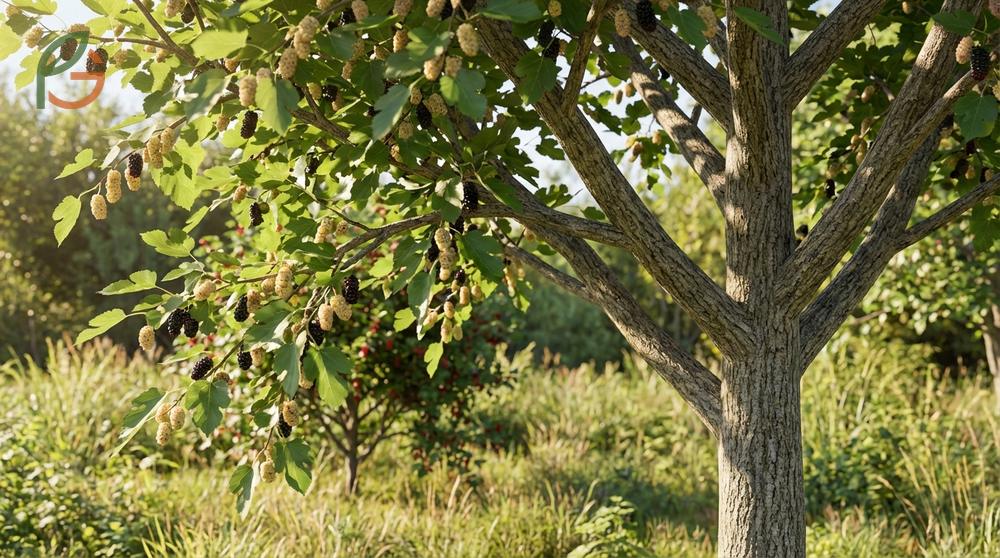
White mulberry originates from Asia and was introduced to North America for silk production in colonial times. Unlike red mulberry, this species features smoother leaves and adapts to a broader range of conditions including zones 3-9. The common name refers to the white color of fruits at maturity in typical varieties, though some cultivars produce dark fruits.
Studies demonstrate white mulberry’s invasive tendencies in many regions, outcompeting native red mulberry through earlier leaf emergence and more aggressive seeding. The species tolerates urban pollution, compacted soils, and drought stress better than red mulberry. Current guidance emphasizes careful consideration before planting white mulberry due to its weedy characteristics.
Distinguishing Features
White mulberry leaves are noticeably smaller than red mulberry, measuring just 3-4 inches long compared to 4-10 inches.[2] The leaves feel smooth and glossy on both surfaces rather than rough-textured. Margins show coarser serration with fewer, more widely spaced teeth.
Leaf shape varies from entire to mitten-shaped to three-lobed, similar to red mulberry. However, white mulberry leaves appear shinier with more prominent venation visible from underneath. The bark averages grayer with straight, scaly ridges rather than the braided texture of red mulberry bark.
- Smaller leaves (3-4 inches) with glossy, smooth surfaces on both sides
- Straighter trunk habit and more upright growth compared to red mulberry’s spreading form
- Gray bark with straight ridges instead of reddish-brown with twisted ridges
- Earlier leaf emergence in spring, typically 2-3 weeks before red mulberry
- Fruits remain white at maturity in typical variety, though some cultivars produce dark fruits
- Cold tolerance extending to zone 3 in some varieties
Hardiness and Adaptability
White mulberry demonstrates remarkable cold tolerance, with some varieties surviving in USDA zone 3 where winter temperatures drop to -40°F (-40°C). This exceeds red mulberry’s hardiness by two full zones. The species also tolerates heat well, thriving in zones up to 9 or even 10 in some cases.
The tree’s adaptability stems from its origins in varied Asian climates ranging from cool temperate to subtropical regions. White mulberry establishes in poor soils, tolerates drought once established, and survives urban pollution that stresses native species. These characteristics make it useful for difficult sites but also explain its invasive behavior in natural areas.
Morus Nigra Black Mulberry Tree
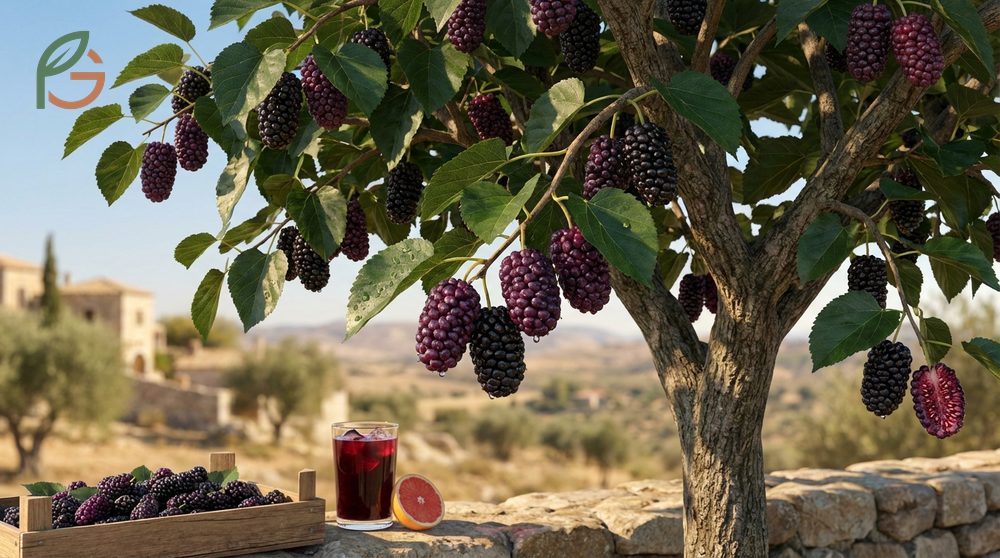
Black mulberry produces the most flavorful fruits among all mulberry species, with laboratory tests consistently showing higher sugar content, antioxidants, and organic acids.[5] The fruits measure 2.5 cm (1 inch) in diameter and ripen to dark purple or nearly black coloration. Research shows the refreshing tart-sweet taste resembles grapefruit in complexity.
This species originates from southwest Asia and tolerates zones 6-11, requiring warmer conditions than red or white mulberry. Black mulberry leafs out almost two months later than other species, with fruits ripening from midsummer into autumn rather than late spring. The extended harvest season makes it popular among home gardeners in warmer climates.
Current data indicates black mulberry lacks disease resistance for humid climates, making it less suitable for southeastern U.S. regions. The tree performs best in Mediterranean-type climates with warm, dry summers. Growth habit tends toward gnarled, multi-trunked forms with orange-brown bark showing prominent burrs and fissures.
- Richest flavor profile with higher sugars and organic acids than other species
- Larger fruits (2.5 cm diameter) with congenial sweet-tart balance
- Very late leafing, typically April-May versus February-March for white mulberry
- Extended fruiting season from midsummer through autumn
- Requires zone 6 or warmer with preference for Mediterranean climates
- Less disease resistant, particularly susceptible to fungal issues in humid regions
- Gnarled growth habit with distinctive orange-brown bark
Climate Consideration: Black mulberry thrives in zones 8-11 where it handles heat stress better than red or white mulberry, but it struggles in humid southeastern climates prone to fungal diseases.
Types of Mulberry Trees
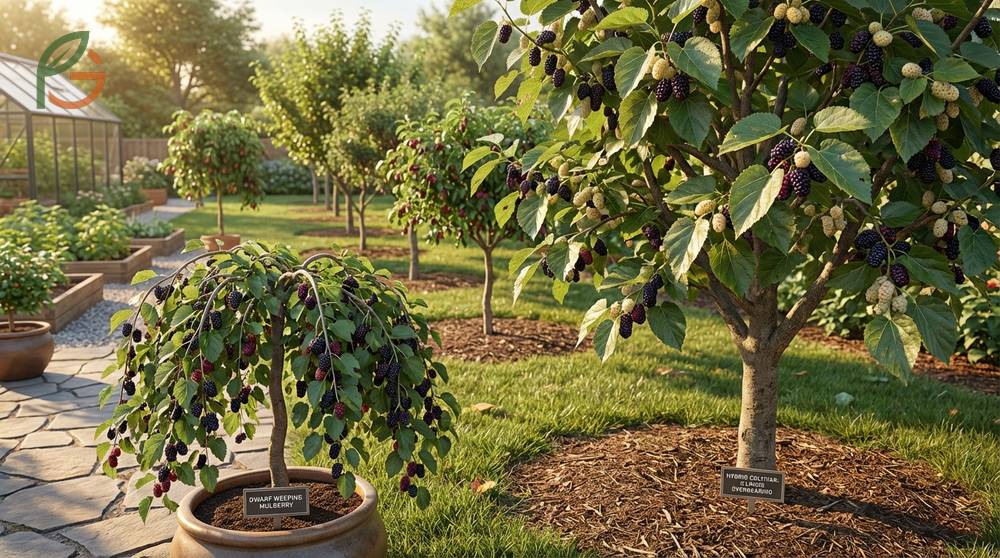
Beyond the three main species, numerous cultivated varieties offer specific traits for home gardeners. Research shows hybrid vigor between red and white mulberry produces cultivars with improved disease resistance and fruit quality. Some varieties feature dwarf or weeping growth habits suitable for smaller landscapes.
Evidence suggests named cultivars provide more predictable performance than seedling trees. Popular varieties include ‘Illinois Everbearing’ for extended harvests, ‘Silk Hope’ for disease resistance, and ‘Gerardi Dwarf’ for compact spaces. Weeping mulberries create ornamental specimens with cascading branches.
This table compares growth characteristics, fruit features, and climate requirements across popular mulberry cultivars and the three main species
| Variety/Species | Height Range | Hardiness Zones | Fruit Characteristics |
|---|---|---|---|
| Red Mulberry (Morus rubra) | 15-70 feet[1] | 5-9 | 1-1.25 inch, dark purple-black, sweet |
| White Mulberry (Morus alba) | 30-50 feet | 3-9 | White to dark (varies), less flavorful |
| Black Mulberry (Morus nigra) | 30 feet | 6-11 | 2.5 cm[3], richest flavor |
| Illinois Everbearing (hybrid) | 35-50 feet | 5-9 | Large, extended season |
| Gerardi Dwarf (M. alba) | 8-12 feet | 5-9 | Medium size, popcorn disease resistant |
| Weeping Mulberry (M. alba) | 6-10 feet | 4-9 | Ornamental, variable fruit |
Dwarf mulberry varieties like ‘Gerardi Dwarf’ grow just 8-12 feet tall, making them manageable for suburban yards and even large containers. Weeping mulberries are grafted onto standard rootstocks, creating umbrella-like forms that work as specimen trees. These compact varieties produce smaller fruit crops but require less space and maintenance.
White Mulberry vs Red Mulberry
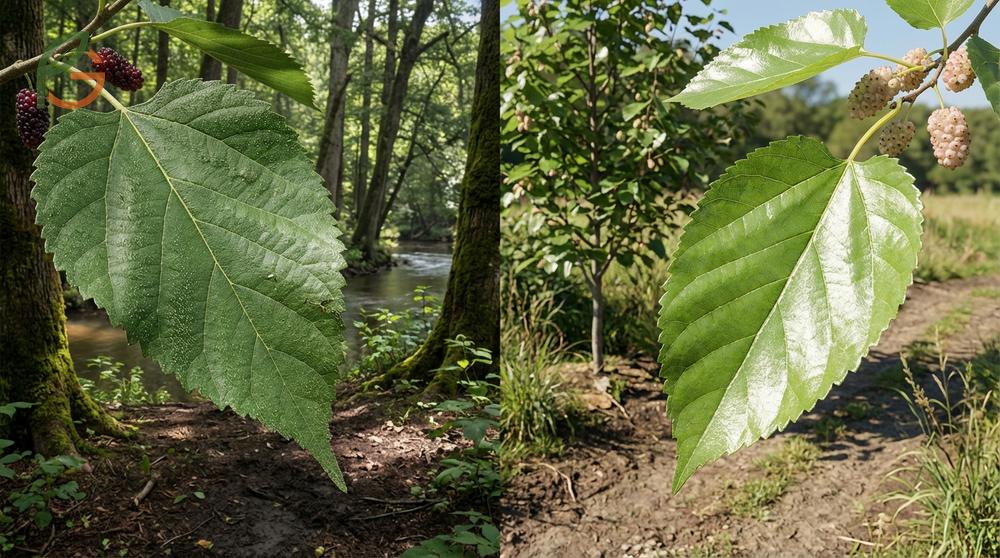
The most reliable way to distinguish white mulberry from red mulberry involves examining leaf texture and size. Red mulberry leaves feel distinctly rough on top from minute stiff hairs and measure 4-10 inches long.[2] White mulberry leaves feel smooth and glossy on both surfaces and measure just 3-4 inches long.
Habitat preferences also differ significantly between these species. Native red mulberry occurs primarily in mature bottomland forests with rich, moist soils. Invasive white mulberry colonizes early-successional habitats including roadsides, fence rows, and disturbed sites with drier, less developed soils.
Bark characteristics provide another identification clue—red mulberry bark shows a brownish color with ridges that twist back and forth in a braided pattern. White mulberry bark averages grayer with straighter, more regularly arranged ridges. Red mulberry trunks lean or curve more often while white mulberry tends toward straighter single-trunk growth.
- Leaf size: White mulberry 3-4 inches vs red mulberry 4-10 inches long
- Leaf texture: White smooth and glossy vs red rough and hairy
- Cold tolerance: White hardy to zone 3 vs red hardy to zone 5
- Native status: White invasive introduced species vs red native to North America
- Bark pattern: White straight ridges vs red twisted braided pattern
- Growth habit: White upright single trunk vs red spreading multi-trunk
- Habitat: White dry disturbed sites vs red moist bottomlands
Ecological Impact: White mulberry’s invasive behavior threatens native red mulberry populations through hybridization and habitat competition—consider planting native red mulberry instead to support local ecosystems.
Identify Mulberry Tree Leaves
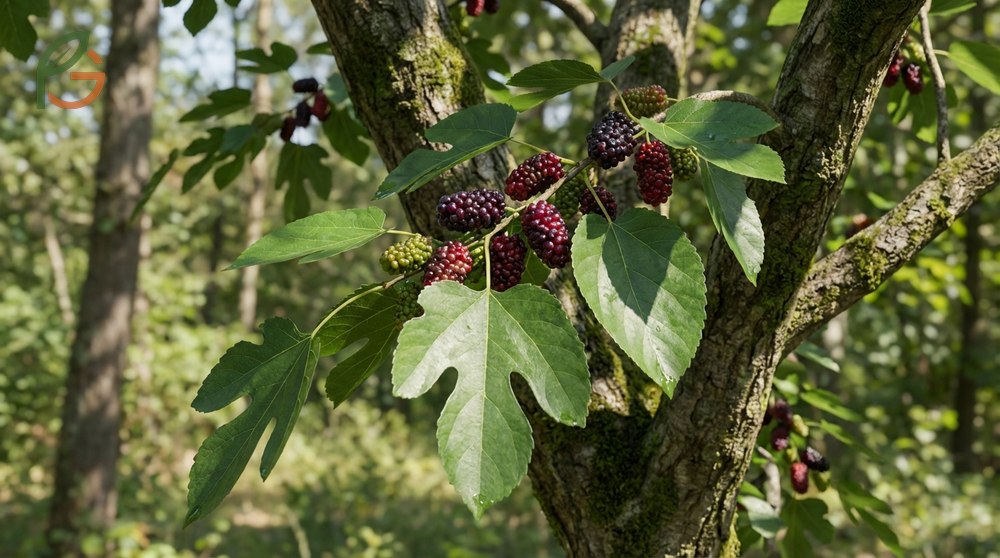
Mulberry leaf identification starts with recognizing the characteristic mitten shape that appears on many branches. Research shows that in North America, only two tree species produce mitten-shaped leaves: mulberry and sassafras. If you find aggregate berry clusters alongside mitten leaves, you’re looking at mulberry rather than sassafras with its single blue berries.
Leaf shape variability makes mulberry identification challenging for beginners. Individual trees display entire unlobed leaves, single-lobed mitten shapes, and three-lobed maple-like forms simultaneously. The variation appears most dramatically on young shoots and vigorous new growth, while mature crown leaves tend toward simpler entire forms.
The leaf base shape provides another identification feature—mulberry leaves show heart-shaped or rounded bases where the petiole attaches. Three prominent veins radiate from this base point, with the central vein running to the leaf tip and two lateral veins following the lower margins. Minor veins create a conspicuous netted pattern between the major veins.
- Look for alternate leaf arrangement along stems (never opposite or whorled)
- Check for characteristic mitten-shaped or three-lobed forms mixed with entire leaves
- Feel the upper leaf surface—rough texture indicates red mulberry, smooth indicates white
- Examine the underside for hairs—red mulberry shows soft pubescence, white mulberry appears hairless
- Measure leaf length—4-10 inches suggests red mulberry, 3-4 inches suggests white mulberry
- Identify serrated margins with rounded teeth rather than sharp points
- Note the three prominent veins radiating from the heart-shaped base
- Break a petiole to check for milky sap, present in all mulberry species
Leaf color offers less reliable identification since both species display medium to dark green foliage in summer. However, red mulberry typically shows duller green coloration compared to white mulberry’s shinier, more lustrous appearance. Both species produce yellow fall color before leaves drop in autumn.
Conclusion
The evidence is clear: red mulberry morus rubra stands apart from white and black mulberry through its native North American origins, distinctive rough-textured leaves measuring 4-10 inches, and sweet fruits ripening to dark purple-black. White mulberry offers superior cold tolerance but invasive tendencies, while black mulberry produces the finest-flavored fruits for warm climates. Understanding these differences helps you select the right species for your landscape and identify existing trees accurately.
Current guidance from university extension services emphasizes choosing native red mulberry cultivars like ‘Illinois Everbearing’ or ‘Silk Hope’ over invasive white mulberry for most North American gardens. FruitGarden encourages gardeners to match mulberry species to local climate zones and consider wildlife value, fruit quality, and maintenance requirements when planning plantings.
Frequently Asked Questions
What Does a Mulberry Tree Look Like?
Mulberry trees display spreading crowns 35-40 feet wide with short trunks and gray-brown bark featuring scaly ridges. The leaves appear in variable shapes from entire to mitten-shaped to three-lobed, measuring 3-10 inches depending on species. Trees produce dangling catkin flowers in spring followed by blackberry-like aggregate fruits that ripen to white, red, or dark purple-black colors.
How Can You Tell the Difference Between a Blackberry and a Mulberry?
Blackberries grow on thorny bramble canes 3-6 feet tall, while mulberries grow on thornless trees 15-70 feet tall. Blackberry stems show prominent thorns and arching cane growth, whereas mulberry branches remain smooth and woody. Blackberry fruits have visible individual drupelets with a hollow core, while mulberry fruits attach to a stem running through the center.
What Is the Best Mulberry Tree Variety for Home Gardens?
Illinois Everbearing offers the best balance of fruit production, disease resistance, and manageable size for most home gardens. This hybrid between red and white mulberry produces large berries over an extended season and adapts to zones 5-9. For smaller spaces, Gerardi Dwarf grows just 8-12 feet tall while maintaining good fruit quality and disease resistance.
How Do You Identify Mulberry Tree Leaves?
Mulberry leaves display three key features: alternate arrangement, variable shapes including distinctive mitten forms, and three prominent veins radiating from heart-shaped bases. Red mulberry leaves feel rough-textured on top and measure 4-10 inches long, while white mulberry leaves feel smooth and measure 3-4 inches long. Breaking a leaf petiole releases milky sap in all mulberry species.
What Growing Zones Are Suitable for Mulberry Trees?
Red mulberry thrives in USDA zones 5-9, white mulberry tolerates zones 3-9, and black mulberry requires zones 6-11. Most mulberry varieties prefer zones 5-9 where winter temperatures don’t drop below -20°F (-29°C). White mulberry demonstrates the greatest cold tolerance while black mulberry handles heat stress best in zones 8-11.
Can Mulberry Trees Grow in Containers?
Dwarf mulberry varieties like Gerardi Dwarf and weeping forms grow successfully in large containers 24-30 inches in diameter. Container-grown mulberries need well-draining potting mix, consistent moisture during the growing season, and annual root pruning every 2-3 years. These smaller varieties produce adequate fruit crops while staying manageable at 8-12 feet tall.
When Do Mulberry Trees Produce Fruit?
Red and white mulberry trees fruit in late spring to early summer, typically May through June in most regions. Black mulberry ripens later from midsummer into autumn. Trees grown from seed take 6-10 years to produce first fruits, while grafted varieties often bear within 2-3 years after planting.





