
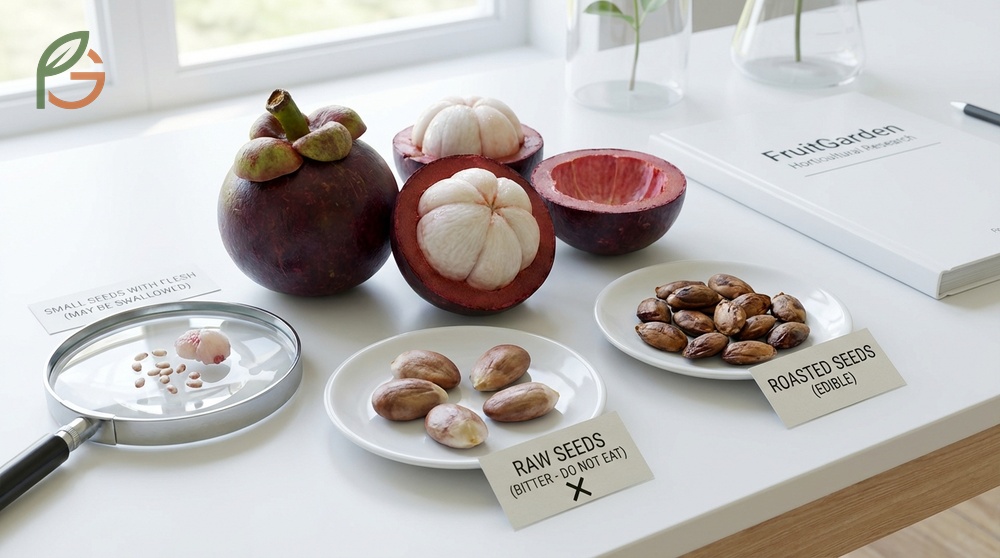
Can you eat mangosteen seeds? Generally no—mangosteen seeds aren’t edible raw due to their bitter, unpalatable taste. Research shows larger seeds are particularly bitter unless roasted, though very small seeds may be swallowed with the flesh. FruitGarden synthesizes current horticultural research to help you understand which parts of this tropical fruit are safe to consume.
Quick Answer
- Mangosteen seeds are not recommended for raw consumption due to bitter taste[1]
- Seeds are similar in size to almonds and are unpalatable unless roasted[2]
- When processed, seeds contain 10.05% fat and 15.81% fiber per 100g dry weight[3]
- No part of the fruit is toxic, but only the white flesh is edible when consumed fresh[1]
Can You Eat Mangosteen Seeds
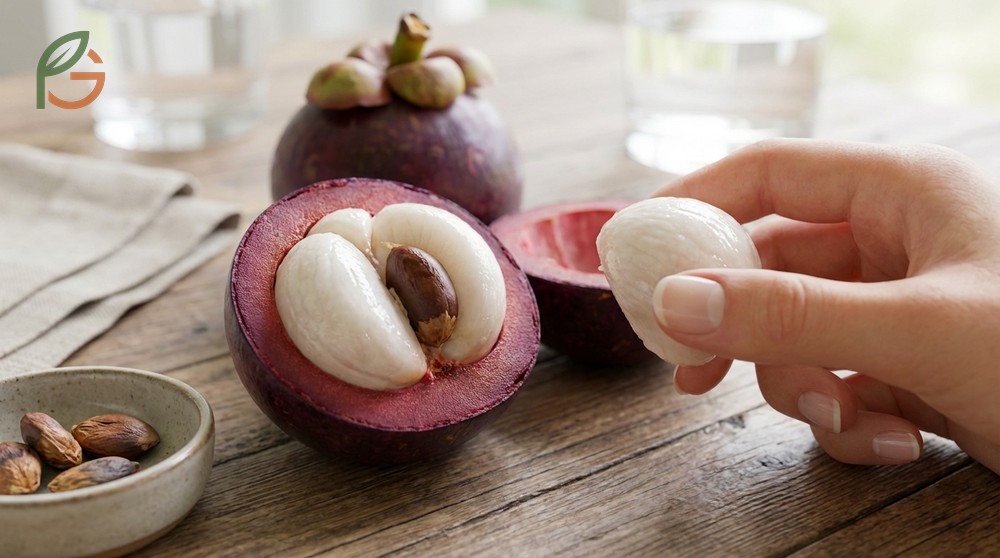
Mangosteen seeds aren’t typically eaten raw because they’re bitter and unpalatable. Current data from horticultural studies indicates that larger seeds within the fruit segments are particularly unappetizing unless they undergo roasting or processing[1]. Most people simply enjoy the juicy white flesh and discard the seeds.
The edible portion of mangosteen is the endocarp—the white, fragrant flesh that surrounds each seed. Research shows this flesh makes up 20.6-30% of the fruit’s total weight[3]. The fruit contains 4-8 segments, with larger segments harboring the apomictic seeds that are unpalatable unless roasted[2].
While very small seeds may be swallowed with the flesh without harm, no part of the mangosteen is toxic. The thick purple rind isn’t edible due to its tough, bitter nature and can cause digestive discomfort if consumed raw[1].
Raw Seed Consumption
Studies demonstrate that raw mangosteen seeds have a bitter taste profile that most consumers find objectionable. Agricultural data shows that as the fruit ages, seeds transition from white to brown, with older seeds becoming increasingly bitter[3]. This natural bitterness serves as a deterrent to raw consumption.
Evidence suggests that some individuals who consume fresh mangosteen may accidentally swallow very small seeds embedded in the flesh. These small seeds typically pass through the digestive system without issue, but they don’t provide a pleasant eating experience.
Seed Size and Structure
Mangosteen seeds are comparable to almonds in both size and shape. The seeds develop within the larger fruit segments, with smaller seedless segments being more common in certain varieties[2]. Each seed is enclosed within the white flesh, making separation somewhat finicky during consumption.
Current horticultural guidance emphasizes that seed size directly correlates with palatability. Larger seeds contain higher concentrations of bitter compounds, while smaller, immature seeds have milder flavor profiles but still aren’t considered a desirable food component.
Important Note: If you’re growing mangosteen from seed, fresh seeds germinate best. Seeds stored at room temperature lose viability within days, so plant them immediately after extraction from ripe fruit.
Mangosteen Seeds Edible
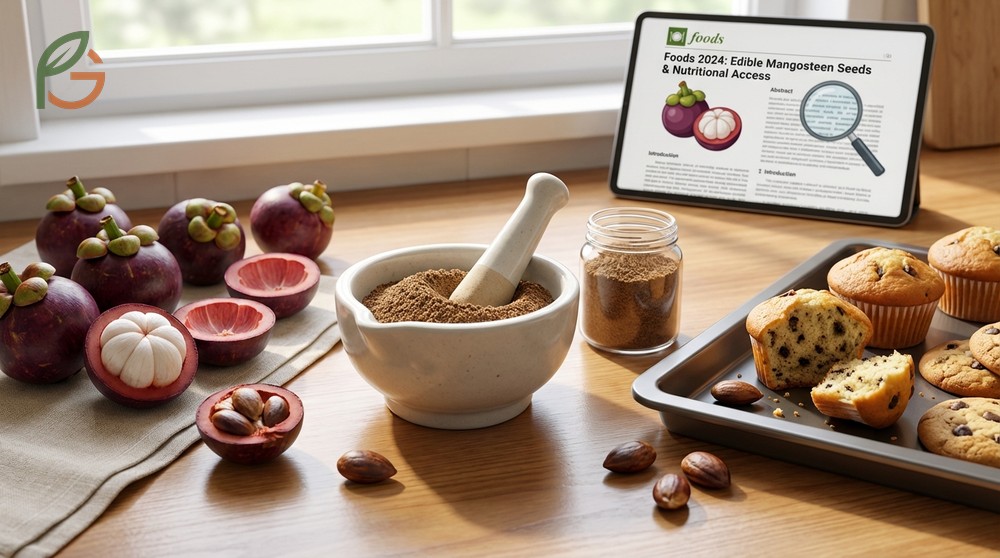
Research shows mangosteen seeds become edible when properly processed through roasting or grinding. A 2024 study published in the journal Foods demonstrated that whole mangosteen fruit pulp including seeds (MFS) can be ground and incorporated into food products[3]. This processing method reduces bitterness and makes the nutritional content accessible.
When ground at high speed and incorporated into baked goods, mangosteen seeds contribute beneficial nutrients. Studies demonstrate that crackers containing 23% ground mangosteen pulp with seeds showed increased fiber content to 5.66% compared to control products[3]. This suggests processing methods can transform inedible seeds into functional food ingredients.
Agricultural data indicates that some traditional preparation methods involve roasting seeds until they develop a milder flavor. Evidence from various Southeast Asian regions shows roasted mangosteen seeds are occasionally consumed as snacks, though this practice isn’t widespread.
Roasted Seed Preparation
Roasting reduces the bitter compounds that make raw seeds unpalatable. Current data suggests roasting at moderate temperatures (around 200°C or 392°F) for 10-15 minutes can improve seed palatability. However, detailed nutritional studies on roasted mangosteen seeds specifically are limited in published literature.
The roasting process likely triggers chemical changes similar to those observed in other bitter seeds. These changes include the breakdown of tannins and phenolic compounds that contribute to astringency and bitterness.
Processed Seed Uses
Recent research demonstrates that ground mangosteen seeds with pulp can serve as functional ingredients. Studies show this combination provides omega-6 fatty acids (linoleic acid at 1.77% dry weight) and omega-9 fatty acids (oleic acid at 1.58% dry weight)[3]. These beneficial fats offer potential health advantages when consumed in processed form.
Evidence indicates that mangosteen seeds contain approximately 21.68% oil content, making them potentially valuable for industrial extraction. The seeds are rich in stearic acid (57.9%), which has applications in food and pharmaceutical products.
- Ground seed flour for baked goods and crackers
- Seed oil extraction for fatty acid supplements
- Functional food ingredients to increase fiber content
- Mineral supplementation in processed snack products
- Roasted seeds as occasional traditional snacks in Southeast Asia
Mangosteen Seed Safety
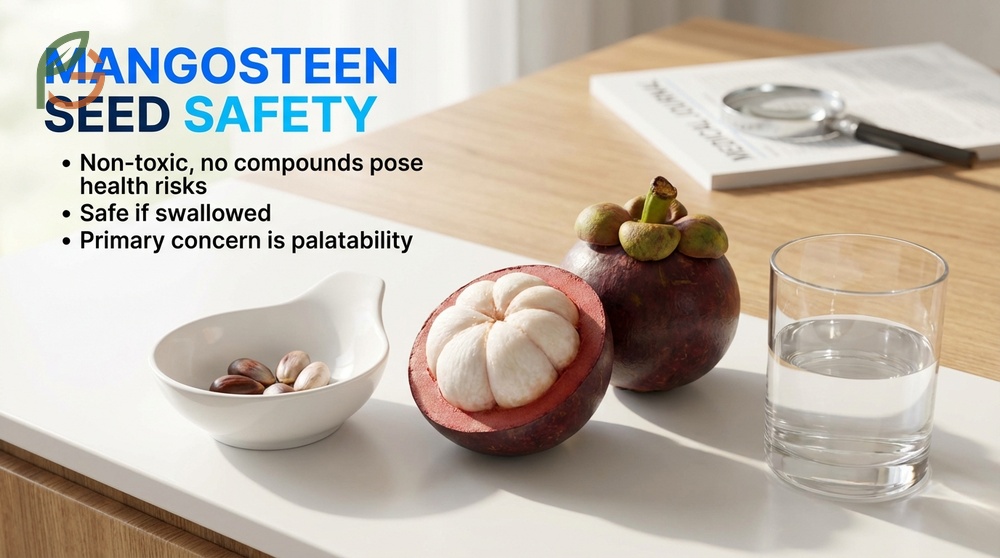
Mangosteen seeds aren’t toxic, and no documented cases of poisoning from seed consumption exist in published medical literature. Research confirms that the entire fruit, including seeds, contains no toxic compounds that would pose health risks[1]. The primary concern is palatability rather than safety.
Studies demonstrate that small seeds swallowed accidentally pass through the digestive tract without complications. Current guidance emphasizes that while seeds won’t harm you, they don’t provide meaningful nutritional benefits when consumed whole and unprocessed. The human digestive system can’t effectively break down the seed’s tough outer coating to access internal nutrients.
Evidence from traditional medicine practices in Southeast Asia shows no historical warnings or contraindications regarding accidental seed consumption. However, deliberately eating large quantities of bitter, unprocessed seeds isn’t recommended due to potential digestive discomfort from the high fiber and bitter compound content.
Safety Tip: If you’re trying mangosteen for the first time, focus on the white flesh only. Discard the purple rind and seeds to avoid digestive discomfort from bitter compounds.
Nutritional Profile
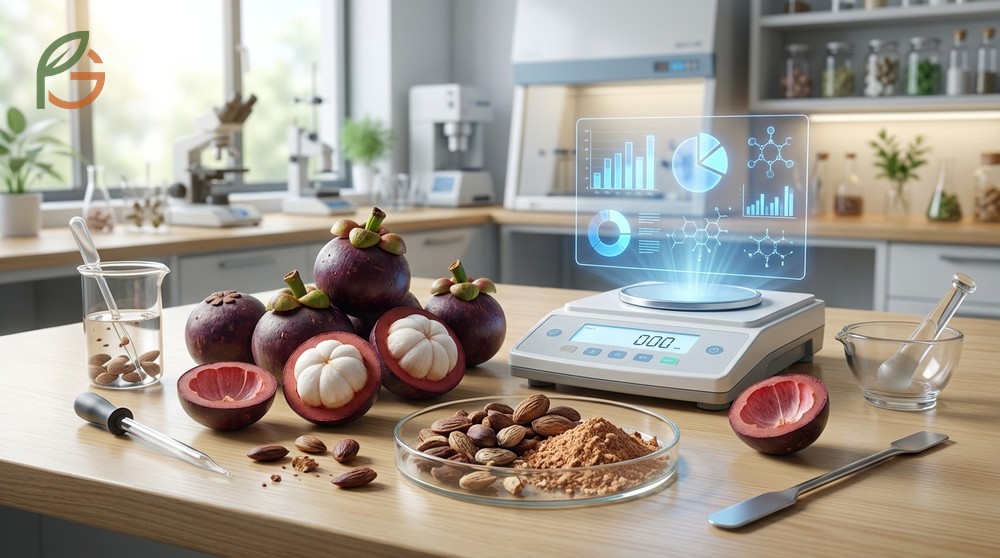
Research shows mangosteen seeds contain notable nutritional components when analyzed in dry weight form. Studies demonstrate that fresh mangosteen pulp with seeds contains 1.25g protein and 10.05g fat per 100g dry weight[3]. The seeds are particularly high in dietary fiber at 15.81g per 100g dry weight.
Mineral analysis reveals impressive content. Current data indicates seeds contain potassium at 395.94mg per 100g, magnesium at 111.03mg, phosphorus at 68.98mg, and calcium at 63.31mg in dry weight measurements[3]. These minerals support various bodily functions including bone health and metabolism.
The edible white flesh that most people consume offers different nutritional benefits. Studies from USDA FoodData Central show mangosteen flesh contains 73 calories, 18g carbohydrates, 1.8g fiber, and provides about 12% of daily recommended vitamin C per 100g serving[4].
This table compares nutritional components between fresh seeds and edible flesh per 100g serving, showing protein, fat, fiber, and key mineral differences
| Component | Seeds (per 100g dry weight) | Flesh (per 100g fresh) |
|---|---|---|
| Protein | 1.25g[3] | 0.41g[4] |
| Fat | 10.05g[3] | 0.58g[4] |
| Dietary Fiber | 15.81g[3] | 1.8g[4] |
| Potassium | 395.94mg[3] | 48mg[4] |
| Vitamin C | Not significant | 2.9mg[4] |
- Omega-6 fatty acids (linoleic acid) support normal growth and development
- Omega-9 fatty acids (oleic acid) provide anti-inflammatory properties
- High dietary fiber content aids digestive health when properly processed
- Potassium and magnesium support cardiovascular function
- Calcium and phosphorus contribute to bone health
Eating Whole Mangosteen
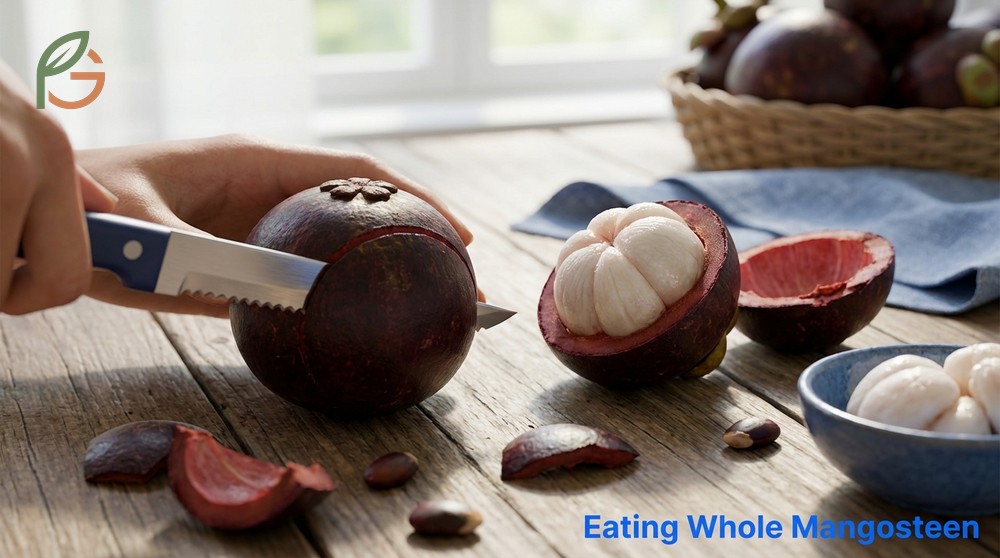
Evidence suggests most people eat only the white flesh segments and discard both the rind and seeds. Studies show the fruit’s edible portion—the white endocarp—is juicy, soft, and has a mildly sweet-sour taste that makes it highly desirable[3]. The non-edible peel constitutes 62.2% of the fruit’s total weight.
To properly eat mangosteen, score the thick purple rind with a knife around the middle, then twist the two halves apart. Current guidance recommends using a serrated knife to cut through the tough outer layer without damaging the delicate flesh inside. The white segments lift out easily once the rind is removed.
Research shows that mangosteen doesn’t ripen further after harvest—it’s a non-climacteric fruit. This means you must consume it shortly after harvest or purchase for optimal flavor and texture[2]. Store fresh mangosteens at room temperature for 2-3 days or refrigerate for up to one week.
Agricultural data indicates the fruit is entirely safe to eat when prepared correctly. Studies confirm that health benefits come primarily from the flesh, which contains powerful antioxidants like xanthones, plus vitamin C and manganese[5]. Just avoid eating the bitter rind and large seeds to prevent digestive discomfort.
- Select fruits with smooth, dark purple outer rind for optimal ripeness
- Score the rind horizontally around the middle with a serrated knife
- Twist the two halves gently to separate the rind
- Lift out the white flesh segments carefully
- Consume the white flesh and discard any large seeds
- Eat fresh within 2-3 days for best flavor
Storage Warning: The purple rind can stain clothes and surfaces. Handle carefully and wash hands immediately after opening the fruit to avoid persistent purple stains.
Conclusion
The evidence is clear: mangosteen seeds aren’t meant for raw consumption due to their bitter, unpalatable taste. While seeds aren’t toxic and can be processed into edible forms through roasting or grinding, most people should simply enjoy the delicious white flesh and discard the seeds. Research demonstrates that the nutritional benefits of mangosteen come primarily from its antioxidant-rich flesh rather than the bitter seeds.
Current horticultural guidance emphasizes that proper fruit preparation enhances your eating experience—focus on selecting ripe fruits with dark purple rinds, and remove seeds during consumption. For gardeners interested in growing mangosteen, FruitGarden provides resources on tropical fruit cultivation that align with USDA agricultural research standards.
Medical Disclaimer
Important Medical Disclaimer: This content is for informational and educational purposes only. It isn’t intended as a substitute for professional medical advice, diagnosis, or treatment. Always consult a qualified healthcare professional before making changes to your diet, especially if you have allergies, digestive conditions, or other medical concerns. Individual responses to foods can vary significantly.
Frequently Asked Questions
Are mangosteen seeds poisonous or toxic?
No, mangosteen seeds aren’t poisonous or toxic. Research confirms that no part of the mangosteen fruit contains toxic compounds. The seeds are simply bitter and unpalatable when eaten raw, which is why most people discard them. If you accidentally swallow a small seed, it’ll pass through your digestive system without harm.
What happens if you swallow a mangosteen seed whole?
Swallowing a small mangosteen seed whole typically causes no problems—it’ll pass through your digestive tract naturally. Studies show that whole seeds can’t be broken down by digestive enzymes, so they provide no nutritional benefit when swallowed intact. However, they won’t cause harm unless you’re experiencing other digestive issues or swallow an unusually large seed.
Can you roast mangosteen seeds to make them edible?
Yes, roasting mangosteen seeds reduces their bitterness and makes them more palatable. Current data suggests roasting at around 200°C (392°F) for 10-15 minutes can improve flavor. Some traditional preparation methods in Southeast Asia involve roasting seeds until they develop a milder taste, though this practice isn’t widespread and detailed nutritional studies on roasted seeds are limited.
What nutritional benefits do mangosteen seeds provide?
Research shows processed mangosteen seeds contain 10.05% fat and 15.81% dietary fiber per 100g dry weight. They’re rich in minerals including potassium (395.94mg), magnesium (111.03mg), and phosphorus (68.98mg). Seeds also contain omega-6 and omega-9 fatty acids. However, these nutrients are only accessible when seeds are ground or extensively processed—whole raw seeds pass through digestion intact.
How do you know if a mangosteen seed is too old to eat?
Mangosteen seeds transition from white to brown as they age, with older brown seeds becoming increasingly bitter. Studies demonstrate that yellow or brown discoloration in the flesh around seeds indicates aging and increased sourness. If you’re considering eating seeds (roasted), choose fresh white seeds from recently harvested fruits rather than brown aged seeds from older fruits.
Can you grow mangosteen from the seeds you eat?
Yes, you can grow mangosteen from fresh seeds, but they must be planted immediately after extraction. Current horticultural guidance emphasizes that seeds lose viability within just a few days when stored at room temperature. Plant fresh seeds in well-draining soil in a warm, humid environment (above 80°F or 27°C) for best germination results. Seeds from ripe fruits have the highest success rates.
What parts of mangosteen fruit are safe to eat?
Only the white flesh (endocarp) is safe and pleasant to eat raw. This flesh makes up 20.6-30% of the fruit’s total weight and has a sweet-sour flavor. Research confirms the thick purple rind isn’t edible—it’s tough, bitter, and can cause digestive discomfort. Large seeds should be discarded due to bitterness, though very small seeds swallowed with flesh won’t harm you.





