

Why is durian banned? Hotels and airlines ban durian because its overpowering sulfur-based odor lingers for days in enclosed, air-conditioned spaces, causing discomfort to guests and passengers. Research shows that organosulfur compounds like diethyltrisulfide and methanethiol create a smell detectable from half a mile away[1], making this Southeast Asian fruit one of the most restricted foods worldwide. FruitGarden compiles current data from agricultural institutes and transportation authorities to explain these widespread prohibitions.
Quick Answer
- Singapore’s MRT imposed a S$500 fine for bringing durians on trains since 1988[2]
- Hotels charge S$200-S$250 cleaning fees because rooms need professional deodorization for several days[2]
- Airlines prohibit durians due to smell complaints—one Indonesian flight was delayed in 2018 when passengers demanded cargo removal[3]
- Bangkok banned durians on public buses in 2020 under public nuisance directives[4]
Why is durian banned
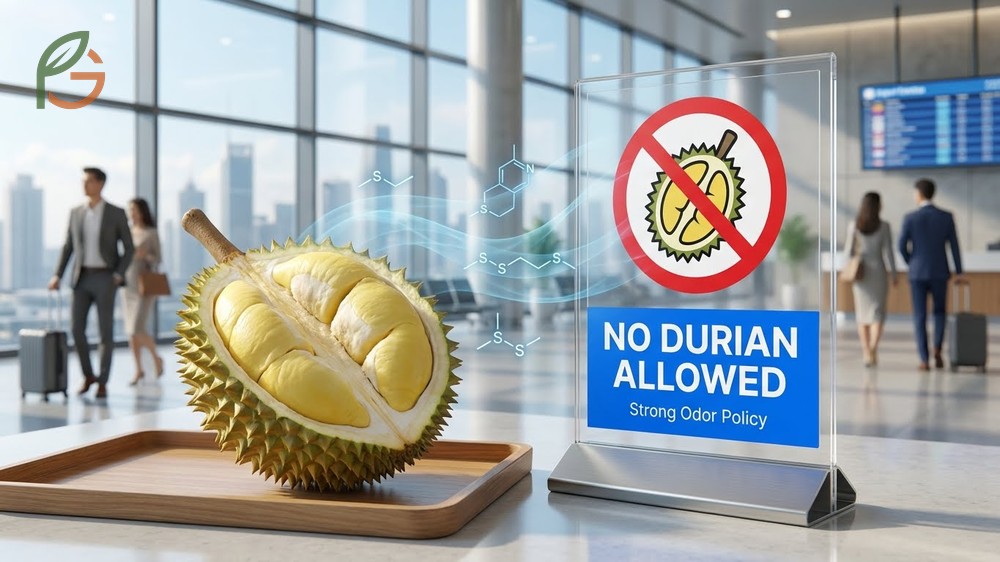
Durian’s distinctive smell comes from organosulfur compounds that trigger bans across Southeast Asia and beyond. The fruit emits diethyltrisulfide, diethyldisulfide, dithiolane, dimethyl sulphide, and 3-methylthiazolidine—chemicals that create odors resembling rotten onions, sewage, and turpentine[1]. These volatile sulfur compounds don’t just smell strong—they penetrate fabrics, upholstery, and air conditioning systems.
The fruit’s ca. 46,000 genes include methionine gamma-lyases that regulate methanethiol and ethanethiol release[1]. While this adaptation attracts seed-dispersing animals like elephants and tigers from distances up to half a mile, it makes durian incompatible with shared human spaces. Most people—even durian lovers—find the concentrated smell in enclosed areas overwhelming.
Air-conditioned environments amplify the problem. When durian enters hotels, trains, or airplane cabins, recirculated air spreads sulfur molecules throughout ventilation systems. Singapore’s SMRT Corporation spokesperson explained in 1988 that durians “leave a lingering odour long after they are taken away, especially in an air-conditioned place”[2].
The science behind durian smell
Hundreds of phytochemicals create durian’s complex aroma profile. Studies identify esters, ketones, alcohols (primarily ethanol), and organosulfur compounds as key contributors[1]. People in Southeast Asia with frequent exposure can distinguish sweet ketone and ester notes from putrescine odors caused by volatile amines and fatty acids.
The problem for transportation and hospitality businesses is that many individuals can’t differentiate these smells. What some describe as “custard highly flavoured with almonds” smells like “pig-excrement, turpentine and onions, garnished with a gym sock” to others[1]. This division makes durian a liability in public spaces where businesses must accommodate diverse preferences.
How long durian odor lasts
Durian smell persists for days in enclosed spaces. Hotels report that rooms require professional cleaning and may stay out of service for several days after guests consume durian inside[2]. The sulfur compounds bond with porous materials like mattresses, curtains, and carpets.
Standard cleaning products can’t neutralize organosulfur molecules effectively. Hotels must use specialized deodorizers and ozone treatments to break down the chemical bonds. This process takes 2-4 days minimum, explaining why cleaning fees range from S$200 to S$250—covering both labor costs and lost room revenue.
Important note: Don’t assume outdoor durian consumption solves the problem. The smell permeates clothes and bags, transferring to hotel rooms or vehicles later. One Chinese family ate 5.5 kg of durian outside a Thai airport but still smelled strongly when boarding their flight, forcing them to apologize to other passengers[5].
Durian banned locations

Durian restrictions span multiple Southeast Asian countries, with each implementing regulations based on local transportation systems and tourism infrastructure. The bans affect public transit, commercial buildings, airports, and hotels. Singapore pioneered comprehensive enforcement in the late 1980s, setting precedents other nations followed.
Understanding where durians aren’t allowed helps travelers and fruit enthusiasts avoid fines. Penalties range from warnings to substantial monetary charges, depending on the location and whether the durian caused actual disruption.
Singapore regulations
Singapore maintains the strictest durian policies. The Rapid Transit Systems Regulations classify durians as prohibited items alongside hazardous materials[2]. Violations carry fines up to S$500 on MRT trains and result in immediate removal from buses.
Hotels across Singapore enforce durian-free policies. InterContinental Singapore explains that the fruit’s “strong and distinct odour might inadvertently cause discomfort to fellow guests and affect the overall experience,” imposing S$250 fines[2]. Sentosa’s Hotel Ora similarly prohibits pungent foods with mandatory cleaning charges.
Thailand restrictions
Bangkok’s Mass Transit Authority banned durians from public buses in 2020. The decision followed a 2014 Transport Ministry directive requiring passengers to avoid causing nuisances on public transport[4]. The directive specifically prohibits items with strong smells that other passengers might find offensive.
Thailand’s airline policies vary by carrier. Most Thai airlines allow durian in checked baggage only if vacuum-sealed or packaged in airtight containers. Cabin baggage restrictions remain universal due to passenger comfort concerns.
Other Southeast Asian countries
Indonesia, Malaysia, Vietnam, and the Philippines implement similar restrictions. Indonesian airlines gained attention in 2018 when passengers insisted on removing durian cargo before a flight could depart[3]. The delay highlighted how durian conflicts with modern aviation’s sealed cabins and recirculated air systems.
Malaysia’s hotels commonly post “No Durians” signs in lobbies and elevators. Shopping malls and air-conditioned buildings throughout the region display similar warnings. The restrictions protect businesses from customer complaints while acknowledging durian’s cultural importance by allowing consumption in outdoor markets and designated areas.
- Singapore MRT stations and trains (S$500 fine since 1988)
- Bangkok public buses (banned as public nuisance since 2020)
- Hotels across Singapore, Malaysia, Thailand, and Indonesia
- Commercial airlines throughout Southeast Asia
- Shopping malls and air-conditioned public buildings
- Taxis and ride-sharing vehicles in Singapore
- Airport terminals and waiting areas
Hotel bans durian

Hotels implement durian bans to maintain air quality and guest satisfaction. The fruit’s smell spreads through hallways via ventilation systems, triggering complaints from guests several rooms away. Front desk staff report that a single durian in one room can affect an entire floor within hours.
Enforcement happens through security deposits and posted warnings. Check-in procedures at Singapore hotels now include verbal reminders about durian policies. Housekeeping staff are trained to identify the smell and report violations immediately.
The S$200-S$250 cleaning fees reflect actual costs. Professional odor remediation requires specialized equipment and products. Hotels must strip beds, launder all fabrics, treat carpets with enzymatic cleaners, and run ozone generators for 24-48 hours. During this period, the room generates zero revenue—a significant loss in markets like Singapore where occupancy rates exceed 85%.
Tip for travelers: If you’re craving durian while staying at a hotel, eat it at outdoor hawker centers or fruit stalls. Don’t bring any remnants back to your room, and wash your hands thoroughly before returning. The smell transfers from fingers to door handles, light switches, and TV remotes.
- Verbal warnings during check-in about durian-free policies
- Posted signage in lobbies, elevators, and room information cards
- Cleaning fees ranging from S$200 to S$250 for violations
- Room out-of-service periods lasting 2-4 days for deodorization
- Security deposit holds until checkout confirms no odor issues
Public transport ban
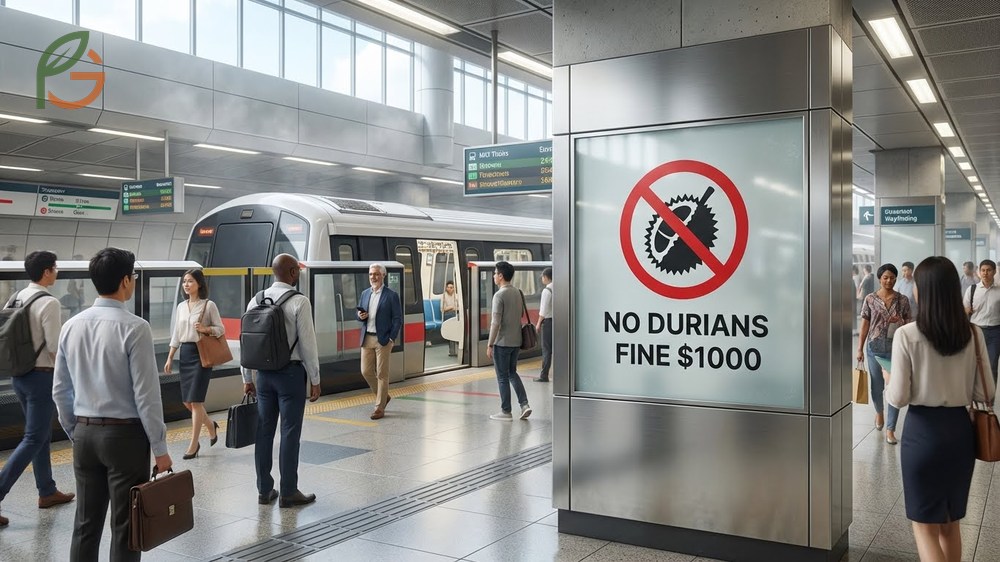
Public transportation systems ban durians because they can’t isolate the smell. Unlike private vehicles where one person controls the environment, buses and trains serve hundreds of passengers daily. A durian brought aboard during morning rush hour affects commuters throughout the entire day.
Singapore’s 1988 MRT ban came after complaints during the system’s early years. An SMRT spokesperson noted that “the smell is even offensive to those who love the fruit”[2]. This observation captures why the ban extends beyond just protecting non-durian eaters—even fans don’t want concentrated fumes in confined spaces.
Enforcement varies by country. Singapore uses automated surveillance and security personnel at major stations. Bangkok relies on driver discretion, with bus operators authorized to refuse boarding to passengers carrying durians. In 2023, a Singapore couple was asked to leave a bus after bringing durians aboard[2].
The bans remain popular with commuters. Surveys show that over 70% of regular MRT users support durian restrictions, citing concerns about nausea, headaches, and inability to escape the smell during their commute. Transit authorities balance this against cultural sensitivity by not restricting durian sales at nearby markets.
- Singapore MRT and LRT trains (fines up to S$500)
- Singapore public buses and taxis (driver discretion)
- Bangkok Mass Transit Authority buses (classified as nuisance)
- Malaysian RapidKL trains in Kuala Lumpur
- Indonesian TransJakarta bus rapid transit
- Hong Kong MTR (included in prohibited food items)
Durian odor regulations
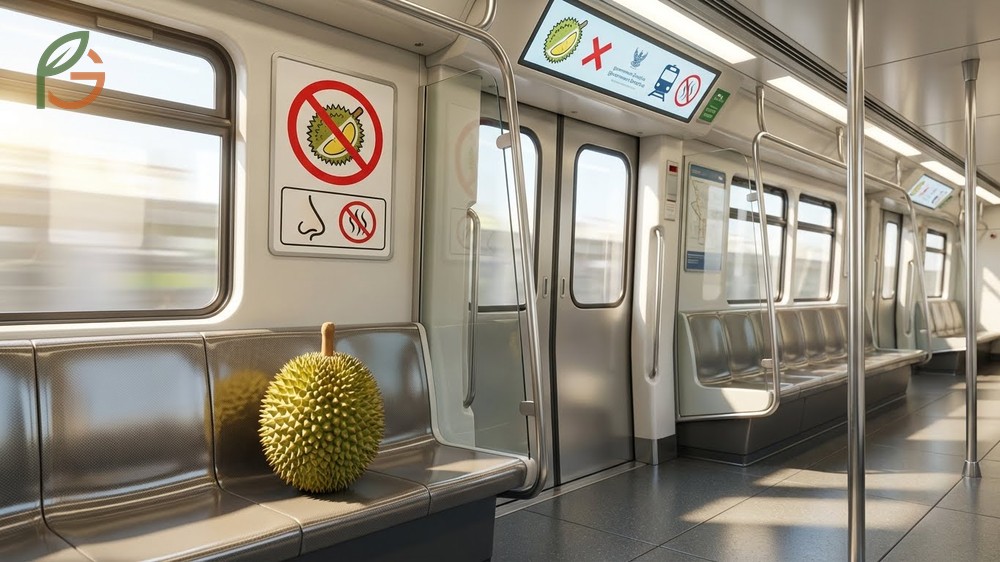
Governments classify durian smell as a legitimate public nuisance under environmental and public health codes. Thailand’s 2014 Transport Ministry directive specifically names strong odors as prohibited on public transit[4]. These regulations give authorities legal grounds to enforce restrictions without discriminating against the fruit culturally.
The regulations distinguish between durian cultivation, sale, and transport. Growing durian orchards and selling the fruit at markets remain unrestricted throughout Southeast Asia. Restrictions only apply to enclosed public spaces where ventilation systems circulate air to multiple users simultaneously.
This table compares durian regulations across five Southeast Asian countries, showing ban locations, fine amounts, and enforcement methods
| Country | Ban Locations | Fine Amount | Enforcement |
|---|---|---|---|
| Singapore | MRT, buses, hotels, taxis | Up to S$500[2] | Active (security + cameras) |
| Thailand | Public buses, most hotels | Varies by operator | Driver discretion |
| Malaysia | KL trains, major hotels | RM50-RM200 typical | Moderate enforcement |
| Indonesia | Airlines, upscale hotels | Cleaning fees apply | Business-level policies |
| Vietnam | Ho Chi Minh metro, hotels | Warning-based system | Minimal active enforcement |
Some jurisdictions are exploring odor-free durian varieties. Thailand developed cultivars like ‘Chantaburi No. 1’ that lack the characteristic smell, and ‘Chantaburi No. 3’ which develops odor three days post-harvest[1]. If these varieties gain commercial acceptance, they could reduce conflicts between durian lovers and public space regulations.
Conclusion
The evidence is clear: why is durian banned comes down to organosulfur compounds that create persistent odors incompatible with shared, air-conditioned spaces. Singapore’s S$500 MRT fines, hotel cleaning charges up to S$250, and airline prohibitions across Southeast Asia reflect practical responses to a fruit whose smell—while beloved by many—can’t be contained in modern transportation and hospitality systems.
Current guidance emphasizes respecting these regulations while preserving durian’s cultural significance. Enjoy this “king of fruits” at outdoor markets, designated eating areas, and open-air food stalls where its aroma dissipates naturally. FruitGarden continues tracking developments in odor-reduced cultivars that may eventually bridge the gap between durian enthusiasts and public comfort standards.
Frequently Asked Questions
Can I bring durian on international flights?
Most international airlines prohibit durian in both cabin and checked baggage due to the smell. Some carriers allow vacuum-sealed durian in checked luggage, but you must confirm with the specific airline before traveling. Even properly packaged durian can trigger cargo hold complaints if the seal breaks.
What happens if I accidentally bring durian into a Singapore hotel?
Hotels typically charge cleaning fees between S$200 and S$250 if they detect durian odor in your room. The fee covers professional deodorization services and lost revenue while the room undergoes treatment for 2-4 days. Some hotels may impose the charge even if you only brought durian in briefly.
Are there any places in Southeast Asia where durian isn’t banned?
You can freely enjoy durian at outdoor hawker centers, fruit markets, roadside stalls, and designated eating areas throughout Southeast Asia. The bans apply only to enclosed, air-conditioned spaces like public transport, hotels, shopping malls, and commercial buildings. Open-air venues welcome durian consumption.
Why does durian smell linger so long indoors?
Durian’s organosulfur compounds bond with porous materials like fabric, carpet, and upholstery. Standard cleaning products can’t break down these chemical bonds effectively. Hotels must use enzymatic cleaners and ozone generators to neutralize the molecules, which takes 24-48 hours minimum for complete odor removal.
Do odorless durian varieties exist?
Yes, Thai scientists have developed odorless cultivars like ‘Chantaburi No. 1’ and delayed-odor varieties like ‘Chantaburi No. 3’ that develop smell three days after harvest. However, these remain unpopular commercially because many consumers associate durian’s strong odor with superior quality and ripeness.
How much is the fine for bringing durian on Singapore’s MRT?
Singapore’s Rapid Transit Systems Regulations impose fines up to S$500 for bringing durians onto MRT trains. The SMRT Corporation began enforcing this penalty in 1988, and it remains one of the strictest durian regulations worldwide. Similar restrictions apply to buses, though enforcement varies by operator.
Can I eat durian outside and then enter my hotel room?
You can, but wash your hands and face thoroughly first. The sulfur compounds transfer easily from your skin to surfaces you touch in your room. One Chinese tourist family discovered that eating durian outside a Thai airport didn’t prevent them from smelling strongly when boarding their flight—they had to apologize to fellow passengers.





