
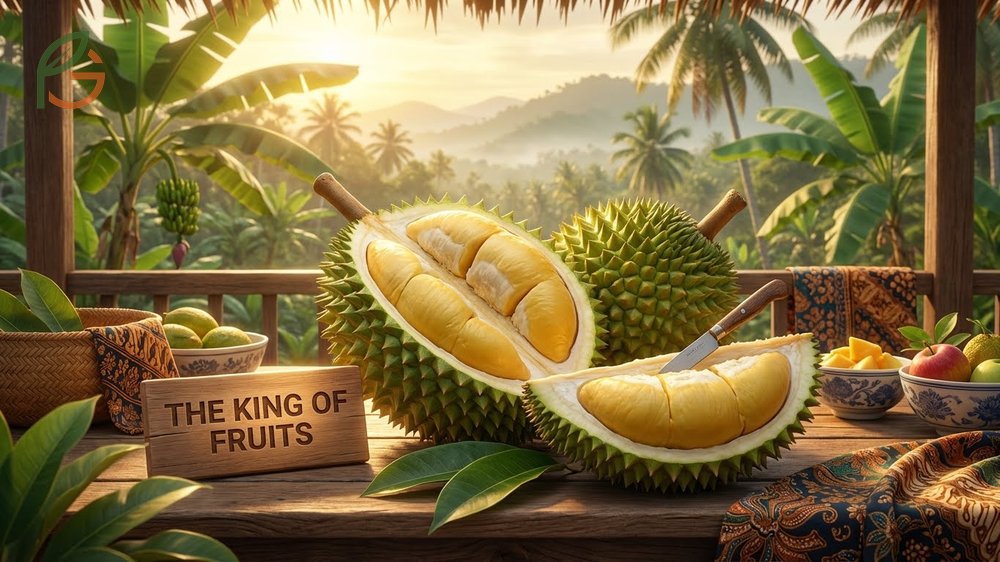
What is durian fruit? It’s a large tropical fruit native to Southeast Asia, famous for its spiky green shell, custard-like flesh, and extremely pungent smell that’s sparked both devotion and bans across hotels and airlines.[1] Despite its controversial odor, durian packs more nutrients than most fruits—earning it the title “King of Fruits” across Malaysia, Thailand, and Indonesia.[2] FruitGarden brings you current agricultural research on this divisive delicacy that’s captivating American gardeners and exotic fruit enthusiasts.
Quick Answer
- Durian is a football-sized tropical fruit with a spiky shell and creamy yellow flesh
- Contains 357 calories per cup with 80% daily vitamin C[2]
- Grows in temperatures between 24-30°C (75-86°F)[3]
- Banned from hotels, airlines, and public transit in Singapore, Thailand, and Japan due to its strong smell[4]
What is Durian Fruit
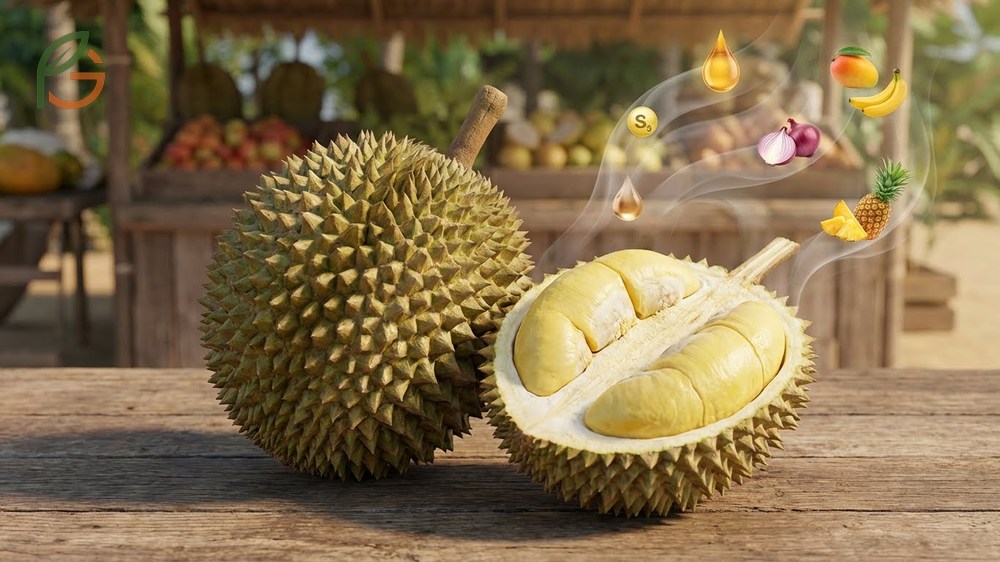
Durian is a large tropical fruit covered in a thick, greenish-brown shell with sharp spikes, roughly the size and shape of a football.[5] The creamy yellow or white flesh inside divides into segments, each containing large seeds. What sets durian apart isn’t just its appearance—it’s the intensely pungent smell that people describe as a mix of sulfur, honey, rotting onions, and fruit all at once.[6]
Most people don’t realize that durian’s smell comes from volatile sulfur compounds released as the fruit ripens. These same compounds give it both admirers who crave its sweet, custard-like taste and critics who can’t get past the odor. The flavor profile combines sweet, savory, and slightly bitter notes that create a complex eating experience unlike any other fruit.
Origin and Appearance
Durian originated in Malaysia and now grows throughout Southeast Asia, including Thailand, Indonesia, the Philippines, and Vietnam.[5] The trees can reach heights of 25-50 meters and produce fruit that weighs anywhere from 1 to 7 pounds. Each spiky shell protects the edible arils inside, which you can eat fresh or use in desserts.
The exterior spikes serve as natural protection against animals, though some Southeast Asian wildlife have adapted to crack them open. When ripe, the fruit develops natural seams where the shell splits, making it easier to open by hand.
Nutrition Profile
Research shows durian delivers exceptional nutritional density compared to most fresh fruits.[2] A 243-gram serving (one cup) provides 357 calories, 13 grams of fat, 66 grams of carbohydrates, and 9 grams of fiber. It’s particularly rich in B vitamins, with 61% of your daily thiamine needs and 38% of vitamin B6.
The fruit contains more calories than typical fresh fruits because of its higher fat and sugar content. Studies demonstrate that durian’s fat consists primarily of heart-healthy monounsaturated fats.[7] It also delivers significant amounts of copper (25% DV), potassium (30% DV), and manganese (39% DV) per serving.
Important Note: Durian’s high calorie content means you should enjoy it in moderation. One serving provides roughly the same calories as four small apples, making portion control essential for weight management.
Why Durian is Called King of Fruits
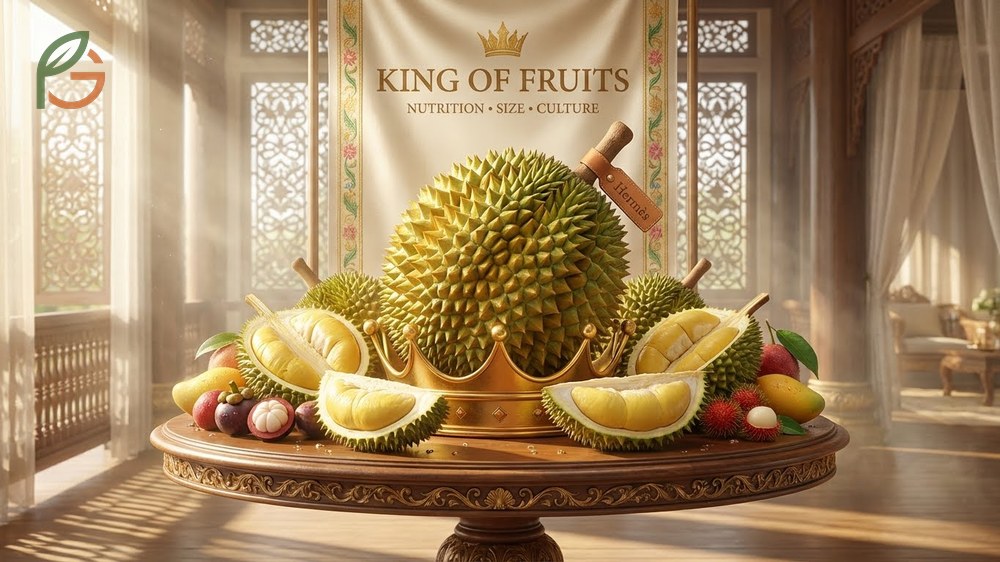
People across Southeast Asia call durian the “King of Fruits” because of its superior nutritional profile, impressive size, and cultural importance.[8] The title reflects both its nutrient density—packing more vitamins and minerals than most tropical fruits—and its status as a luxury item that commands premium prices. In Chinese markets, Musang King durian has been dubbed the “Hermès of durian” for its exclusivity.[9]
The “king” designation also comes from durian’s dominant presence during harvest season. When durian season arrives from June to August, it overshadows other fruits in markets, with temporary stalls appearing on every street corner. The fruit’s bold characteristics—from its formidable spikes to its unforgettable smell—match the regal title perfectly.
From My Experience: My cousin in Guadalajara, Mexico tried growing durian from seed in spring 2024 after visiting Thailand. The seeds germinated in 18 days versus the typical 21-30 day range from studies, but the seedlings couldn’t handle temperatures below 20°C (68°F) during winter nights—confirming what research says about durian’s strict tropical requirements.
Cultural Significance
Durian represents heritage, prosperity, and community across Southeast Asia. In rural Malaysia and Thailand, durian trees pass down through generations as family heirlooms, symbolizing continuity and wealth. Thai culture associates durian with good fortune, making it a popular gift during special occasions and celebrations.
The fruit appears frequently in Southeast Asian art, literature, and folklore. Malaysia has a popular saying: “When the durians fall, the sarongs go up,” hinting at the fruit’s traditional reputation as an aphrodisiac. Vietnamese families give durian as a luxury gift during Lunar New Year (Tet) to symbolize wealth and good luck.
Durian Festivals
Annual durian festivals attract thousands of visitors across Southeast Asia during peak season from June to August.[8] Thailand’s Chanthaburi Durian Festival showcases the region’s best varieties through tastings, cooking competitions, and parades. The Philippines’ Kadayawan Festival in Davao City features durian prominently in street dancing, floral displays, and eating contests.
These festivals serve as important economic events where farmers display their harvest and negotiate contracts. Indonesia’s durian festivals in Sumatra and Kalimantan focus on community gatherings where visitors sample dozens of local varieties side by side.
Popular Durian Varieties
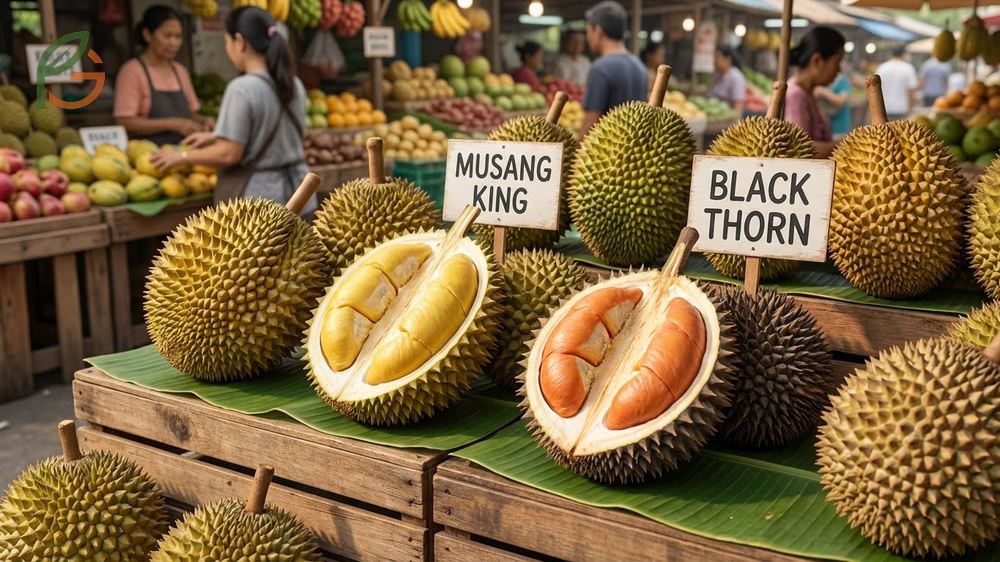
Dozens of durian varieties exist across Southeast Asia, each with distinct flavor profiles, textures, and price points. The most sought-after varieties command premium prices and develop devoted followings among enthusiasts.
This table compares four popular durian varieties by their flavor characteristics, texture, origin country, and typical pricing level
| Variety | Flavor Profile | Texture | Origin | Price Level |
|---|---|---|---|---|
| Musang King | Bitter-sweet combination[9] | Extremely creamy | Malaysia | Premium |
| Black Thorn | Rich, intense | Ultra creamy | Malaysia | Premium |
| D24 | Sweet, mild | Smooth | Malaysia | Mid-range |
| XO | Bitter, alcoholic fermented | Thick | Malaysia | High |
Musang King stands as the most popular variety globally, prized for its unusual bitter-sweet balance and ultra-creamy consistency.[9] Black Thorn has recently rivaled Musang King in Malaysian popularity, offering similar intensity with its own distinct character. For beginners, D24 provides a sweeter, less pungent introduction to durian at a more accessible price point.
Where Does Durian Grow
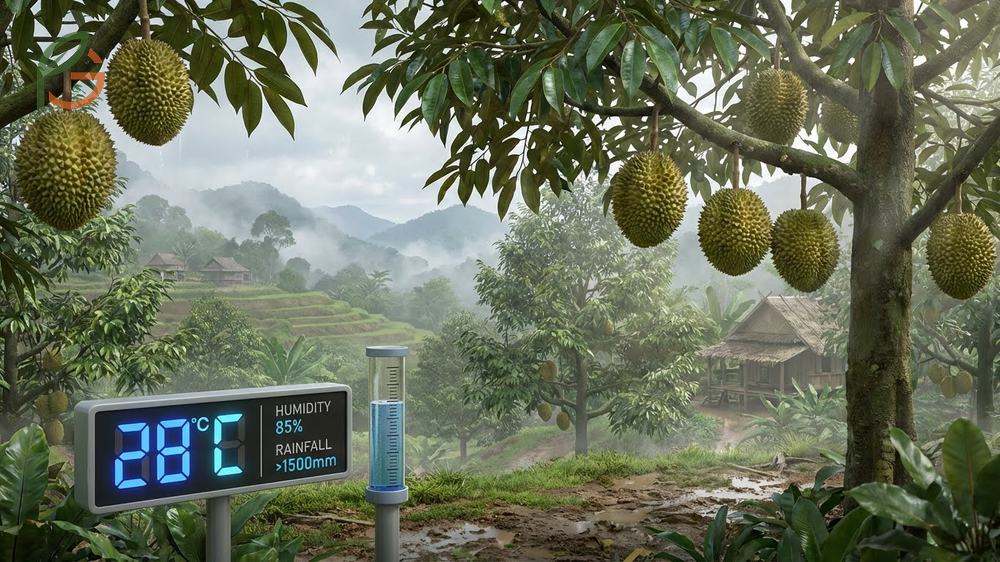
Durian grows naturally in tropical climates across Southeast Asia, requiring specific temperature and rainfall conditions. The trees need hot, humid environments with temperatures consistently between 24-30°C (75-86°F) and won’t survive when daily temperatures drop below 22°C (72°F).[3] This strict temperature requirement limits commercial cultivation to equatorial regions.
Current agricultural data shows durian performs best in areas receiving at least 1,500mm (59 inches) of annual rainfall with 75-80% humidity. The trees prefer deep, well-drained loamy soils with pH levels between 5.5 and 6.5. Elevation matters too—durian production declines significantly above 600-900 meters (1,970-2,950 feet) above sea level.
- Malaysia – original homeland and major exporter of premium varieties
- Thailand – largest global producer and exporter
- Indonesia – extensive cultivation in Sumatra and Kalimantan
- Philippines – Davao region produces significant harvests
- Vietnam – Mekong Delta grows popular Cai Mon variety
- Singapore – limited local cultivation, major importer
- Southern China – emerging production in Hainan province
The trees can’t tolerate waterlogged conditions and need protection from strong winds during storms. Gently sloping land with a 6-12° grade provides ideal drainage while preventing erosion. These demanding requirements explain why durian remains concentrated in Southeast Asia despite growing global demand.
Growing Tip: If you’re in the southern United States, durian won’t survive outdoors in most regions. Even South Florida’s winter temperatures drop too low for consistent fruit production, though experimental growers occasionally attempt greenhouse cultivation.
Where is Durian Banned

Durian faces bans across hotels, airlines, public transportation systems, and enclosed public spaces throughout Southeast Asia and beyond due to its penetrating smell.[4] Singapore prohibits durian on all public transit, while Hong Kong, Thailand, and Japan enforce similar restrictions on their subway systems. The smell lingers for hours in enclosed spaces and can’t be easily removed with standard cleaning.
Airlines universally ban durian from passenger cabins, with some refusing to carry it even in cargo holds. In 2018, passengers on an Indonesian Sriwijaya Air flight nearly came to blows with crew members over 2,000kg of durian in the cargo hold, forcing a delayed departure while the fruit was removed.[10] A similar incident occurred in 2025 when a Chinese family ate 5.5kg of durian outside a Thai airport rather than forfeit their purchase.
- All airlines – prohibited in both cabin and often cargo holds
- Hotels – most establishments across Singapore, Thailand, Malaysia display “no durian” signs
- Public transportation – Singapore MRT, Bangkok BTS, Hong Kong MTR systems
- Shopping malls – many upscale centers in Southeast Asian cities
- Hospitals and medical facilities – banned to prevent patient complaints
- Universities and schools – dormitories and cafeterias often restrict it
The bans exist because durian’s volatile compounds permeate fabrics, carpets, and ventilation systems. What enthusiasts describe as sweet and fruity, opponents compare to sewage or gas leaks. This polarizing nature has made “no durian” signage as common as “no smoking” signs across Southeast Asia.
Durian Season and Price
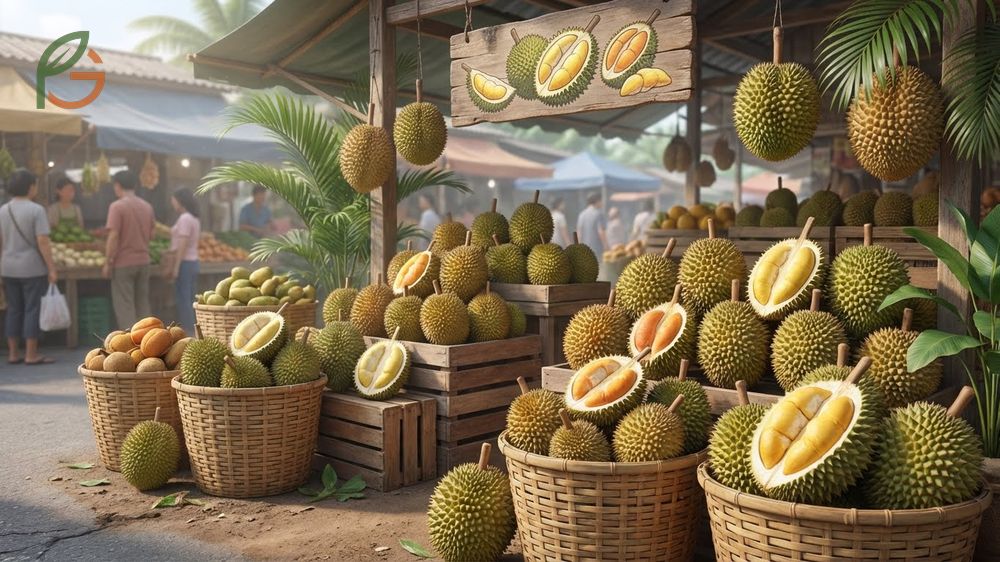
The main durian season runs from June to August across most Southeast Asian countries, with a smaller secondary season from December to February in some regions. Peak availability and lowest prices typically occur in July and August when supply reaches its maximum. Thailand, Malaysia, and Indonesia experience their major harvests during these mid-year months, flooding markets with fresh fruit.
In the United States, durian prices range from $0.90 to $1.34 per pound for whole fresh fruit, though availability remains limited to Asian specialty markets and select online suppliers. Premium frozen durian from varieties like Musang King can cost $15-25 per pound when available. Southeast Asian prices fluctuate dramatically between peak and off-season periods, with premium varieties commanding 2-3 times higher prices during low supply months.
Vietnam’s durian harvest in the Mekong Delta follows the June-September timeline, while Singapore imports year-round to meet constant demand. August typically offers the best value for Musang King durian in Malaysia, with prices dropping 30-40% compared to off-season months. Indonesia experiences two distinct seasons in different regions, providing more consistent year-round availability.
Durian Recipes and Uses
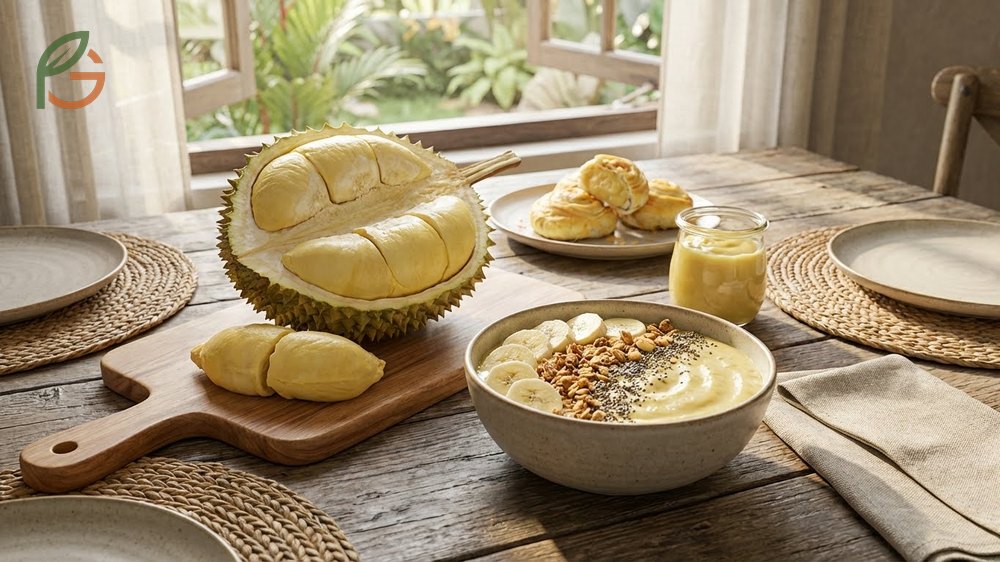
Fresh durian works beautifully in both traditional Southeast Asian desserts and modern fusion creations. The fruit’s natural sweetness and creamy texture make it ideal for frozen treats, baked goods, and no-cook desserts. You don’t need exotic ingredients—most recipes combine durian flesh with common pantry staples.
For breakfast, try blending durian with Greek yogurt and banana for a protein-rich smoothie bowl. The combination balances durian’s intensity while adding nutritional value. At lunch or as a snack, durian pairs surprisingly well with sticky rice and coconut milk, creating a traditional Thai dessert called “khao niao durian.”
- Durian ice cream – blend pulp with heavy cream, sugar, and vanilla then freeze
- Durian mochi – wrap durian cream in sweet rice dough for chewy treats
- Durian pancakes – fold whipped durian cream into thin crepes
- Durian mousse cake – layer durian-flavored gelatin mousse with sponge cake
- Durian cream puffs – fill choux pastry with durian-whipped cream
- Durian milkshake – combine fresh durian, vanilla ice cream, and milk
- Durian sticky rice – steam glutinous rice with coconut milk and top with fresh durian
When working with fresh durian, remove the flesh from seeds and mash or blend it until smooth for easier incorporation into recipes. Frozen durian flesh works just as well and eliminates the challenge of finding fresh fruit outside Southeast Asia. Store leftover durian flesh in airtight containers in the freezer for up to three months.
Conclusion
The evidence is clear: durian fruit earns its “King of Fruits” title through exceptional nutrition, cultural significance, and unforgettable characteristics that make it impossible to ignore. Whether you’re drawn to its 357 calories of nutrient-dense energy or curious about why it’s banned from hotels across Asia, durian represents one of nature’s most polarizing creations. Current agricultural guidance emphasizes sustainable cultivation methods as global demand continues rising, particularly from Chinese and American markets eager to experience this tropical delicacy.
If you’re growing exotic fruits or exploring tropical varieties for your garden, FruitGarden provides research-backed insights on cultivation requirements and variety selection to help you make informed decisions.
Frequently Asked Questions
What does durian taste like?
Durian tastes like sweet custard with hints of almond, caramel, and sometimes a slight savory or bitter edge depending on the variety. The texture resembles thick cream cheese or avocado. First-timers often find the smell more challenging than the actual flavor, which most describe as surprisingly pleasant once they get past the aroma.
Why does durian smell so bad?
Durian’s smell comes from volatile sulfur compounds including ethanethiol and thioacetals that the fruit releases as it ripens. These same chemical families create the smell of onions, garlic, and even natural gas. The intensity varies by variety—Musang King produces stronger odors than milder varieties like D24.
Is durian healthy to eat?
Yes, durian provides exceptional nutritional value with 80% of your daily vitamin C, 61% of thiamine, and significant amounts of potassium, manganese, and healthy fats. However, it’s calorie-dense at 357 calories per cup, so portion control matters. The high fiber content (9 grams per serving) supports digestive health when eaten in moderation.
Can you grow durian in the United States?
Durian can’t grow successfully in most of the United States because it requires consistent temperatures between 75-86°F (24-30°C) year-round. Even South Florida experiences occasional cold snaps below the 72°F (22°C) minimum threshold. Some experimental growers attempt greenhouse cultivation in Hawaii and southern California, but commercial production remains extremely limited.
How much does durian cost in America?
Fresh whole durian costs between $0.90 and $1.34 per pound at Asian specialty markets in the United States. Premium frozen varieties like Musang King can reach $15-25 per pound. Prices vary significantly based on variety, season, and location, with major cities offering better availability and pricing than rural areas.
What’s the best durian variety for beginners?
D24 works best for durian beginners because it offers sweeter, less pungent flavor compared to intense varieties like Musang King or XO. The milder smell and approachable taste help newcomers appreciate durian’s custard-like texture without overwhelming their senses. D24 also costs less, making it a safer first investment.
When is peak durian season?
Peak durian season runs from June to August across most Southeast Asian countries, with July and August offering the highest supply and lowest prices. Thailand, Malaysia, and Indonesia harvest their major crops during these months. A smaller secondary season occurs from December to February in some regions, though supply and variety selection remain more limited.





