
Why are my cucumber plants wilting? Research shows that bacterial wilt spread by cucumber beetles causes 90% of severe wilting cases in cucumbers[1], while overwatering, transplant shock, and heat stress account for most other problems. Once you identify which pest or environmental stressor is attacking your plants, you can use organic control methods that work within 7-10 days. FruitGarden synthesizes current agricultural research and university extension guidance to help you diagnose and fix cucumber problems fast.
Quick Answer
- Bacterial wilt (spread by cucumber beetles) causes permanent wilting with no recovery—remove infected plants immediately[1]
- Overwatered plants show yellowing leaves and mushy roots—allow soil to dry 1-2 inches between waterings[2]
- Transplant shock causes temporary wilting—plants typically recover in 3-5 days with proper watering[3]
- Heat stress above 95°F (35°C) causes midday drooping—increase watering frequency and provide afternoon shade[4]
Why Are My Cucumber Plants Wilting
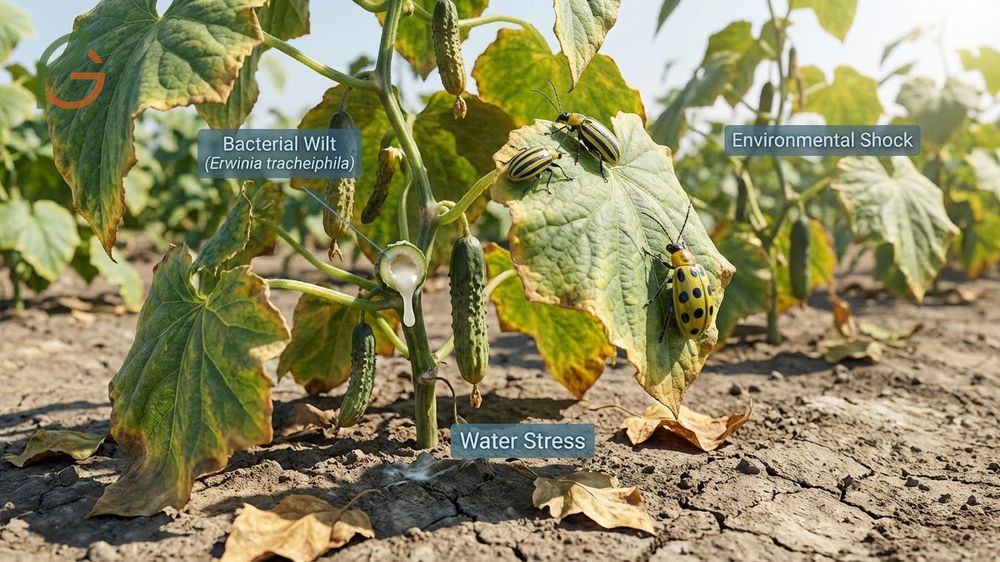
Cucumber plants wilt for three main reasons: bacterial wilt disease, water stress, or environmental shock. Studies show that bacterial wilt caused by Erwinia tracheiphila affects cucumbers more severely than other cucurbits, with infection rates reaching 60-80% in untreated fields[1]. This disease spreads exclusively through cucumber beetles—both striped and spotted varieties—that carry the bacteria in their digestive systems over winter.
The wilting process happens quickly once infection starts. Bacteria multiply rapidly within the plant’s vascular tissue and block water transport, causing leaves to droop within 2-6 weeks of initial beetle feeding[5]. You’ll notice wilting begins on individual heavily-chewed leaves, then spreads to entire stems and vines. There’s no cure once bacterial wilt infects a plant—you must remove and destroy infected plants immediately to protect nearby cucumbers.
Water-related wilting looks different from bacterial wilt. Overwatered plants show yellowing leaves with wilting even when soil stays moist, while underwatered plants perk up quickly after irrigation. Heat stress causes temporary midday drooping that resolves by evening—this isn’t true wilting and doesn’t require intervention beyond consistent watering.
From My Experience: My cousin in Guadalajara, Mexico lost 12 cucumber plants to bacterial wilt in June 2024. She didn’t realize cucumber beetles were the problem until she saw the striped bugs clustering on young leaves—by then, the bacteria had already spread to half her plants.
Bacterial Wilt Symptoms
Diagnosing bacterial wilt requires a simple stem test that’s accurate within seconds. Cut a wilted stem and squeeze the cut ends together, then slowly pull them apart[6]. If thread-like strands of white, sticky bacterial ooze stretch between the cut surfaces, your plant has bacterial wilt. This ooze test confirms infection more reliably than visual symptoms alone.
Early symptoms include individual leaves wilting during hot afternoons but recovering overnight. As infection progresses, leaves stay permanently wilted and turn brown from the edges inward. The bacteria can’t survive in soil or overwinter in plant debris in northern climates, but they persist year-round in cucumber beetle populations.
- Look for cucumber beetle feeding damage on leaves—beetles must be present for bacterial wilt to occur
- Check for sudden wilting of individual leaves or stems while other parts of the plant remain healthy
- Perform the sticky ooze test on wilted stems to confirm bacterial infection
- Inspect nearby plants daily since beetles move between plants and spread bacteria quickly
- Remove infected plants immediately and dispose of them away from your garden
Cucumber Beetle Control
Controlling cucumber beetles before they spread bacterial wilt is your most effective strategy. Row covers work best when installed immediately after planting—they create a physical barrier that prevents beetles from reaching young plants during their most vulnerable 3-4 week seedling stage. Remove covers when plants begin flowering so pollinators can access blooms.
Yellow sticky traps placed near the base of plants catch adult beetles and help you monitor population levels. When trap counts exceed 5 beetles per trap, it’s time to start more aggressive control measures. Hand-picking beetles into soapy water early in the morning works well for small gardens—beetles move slowly in cool temperatures and are easier to catch.
Trap crops like Blue Hubbard squash planted 2-3 weeks before your main cucumber crop draw beetles away from the plants you want to protect. This strategy works because beetles prefer certain cucurbit species and will concentrate on trap plants, making them easier to eliminate before they reach your cucumbers.
Important Note: Once bacterial wilt appears, killing the beetles won’t save infected plants. The bacteria have already colonized the vascular system and will continue spreading even after beetles are gone.
Bugs on Cucumber Plants
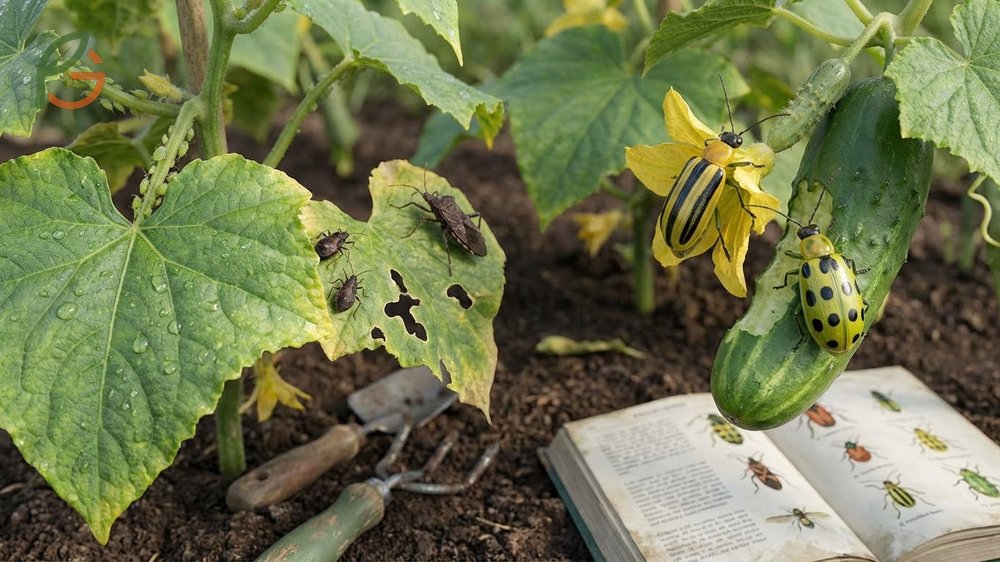
Multiple insect pests attack cucumber plants beyond just cucumber beetles. Aphids, squash bugs, and various leaf-eating insects cause damage that ranges from cosmetic to crop-destroying. Research shows proper pest identification matters more than immediate treatment—applying the wrong control method wastes time and money while pests continue multiplying.
Striped cucumber beetles have three black stripes on yellow wing covers, while spotted cucumber beetles display 12 black spots on yellow-green wings. Both species feed on leaves, stems, and blossoms throughout the growing season and can girdle young seedling stems by gnawing on tender shoots. Adult beetles leave characteristic irregularly-shaped holes in leaves, often concentrated near leaf edges and veins.
Aphids and Squash Bugs
Aphids cluster on the undersides of leaves and feed by piercing plant tissue with needle-like mouthparts. On cucumbers, aphid damage first appears as downward curling and crumpling of leaves that also appear thickened and glisten with sticky honeydew[7]. Heavy aphid infestations on young plants can kill them within 2-3 weeks. Aphids also spread viral diseases that cause mottled, distorted leaves and reduced fruit production.
Squash bugs inject toxic saliva while feeding that causes vines to quickly turn black and dry out—symptoms that superficially resemble bacterial wilt. Adults are gray-brown shield-shaped insects about 5/8 inch long, while nymphs are gray with black legs. They congregate on stems and unripe fruit when populations are high.
- Cucumber beetles: Irregularly-shaped holes in leaves, scarred fruit, and wilted vines from bacterial wilt transmission
- Aphids: Curled and crumpled leaves with sticky honeydew coating, reduced plant vigor, and viral disease symptoms
- Squash bugs: Blackened vines that dry out rapidly, concentrated feeding on stems and fruit
- Spider mites: Fine webbing on leaf undersides, stippled yellowing leaves, and severe defoliation in hot, dry conditions
- Leaf miners: Winding white trails through leaves where larvae tunnel between upper and lower leaf surfaces
- Pickleworms: Holes in fruit, frass (insect droppings) near entry holes, and internal fruit damage
From My Experience: A friend in Oaxaca, Mexico discovered aphids covering her cucumber plants in early May 2024. She blasted them off with a strong water spray every morning for 5 days—the population dropped by 80% without any pesticides.
Organic Pest Control Methods
Neem oil and kaolin clay provide effective organic pest control when applied correctly. Research demonstrates that neem oil disrupts cucumber beetle feeding and reproduction by interfering with insect hormone systems[8]. Mix 2 tablespoons neem oil with 1 gallon water plus a few drops of dish soap to help it stick to leaves. Spray in early morning or evening to avoid burning leaves—never apply neem in direct sunlight or when temperatures exceed 90°F (32°C).
Kaolin clay creates a white powdery barrier on leaves that makes plants less appealing to pests. Beetles won’t feed on clay-coated leaves because they can’t detect the plant’s normal chemical signals. Mix 2-4 tablespoons kaolin clay per gallon of water and spray to completely coat all leaf surfaces, including undersides. Reapply after heavy rain or every 7-10 days during peak beetle season.
A combination of pyrethrin insecticides and neem can effectively manage cucumber beetles, though you’ll likely need multiple applications spaced 5-7 days apart. Beneficial nematodes applied to soil control cucumber beetle pupae and larvae before they emerge as adults. Apply nematodes when soil temperature reaches 60°F (15°C) and keep soil moist for 2 weeks after application.
Timing Matters: Start pest control when you first see beetles or other insects, don’t wait until damage is severe. Early intervention with organic methods works better than trying to control established pest populations.
Why Are My Cucumber Plants Dying
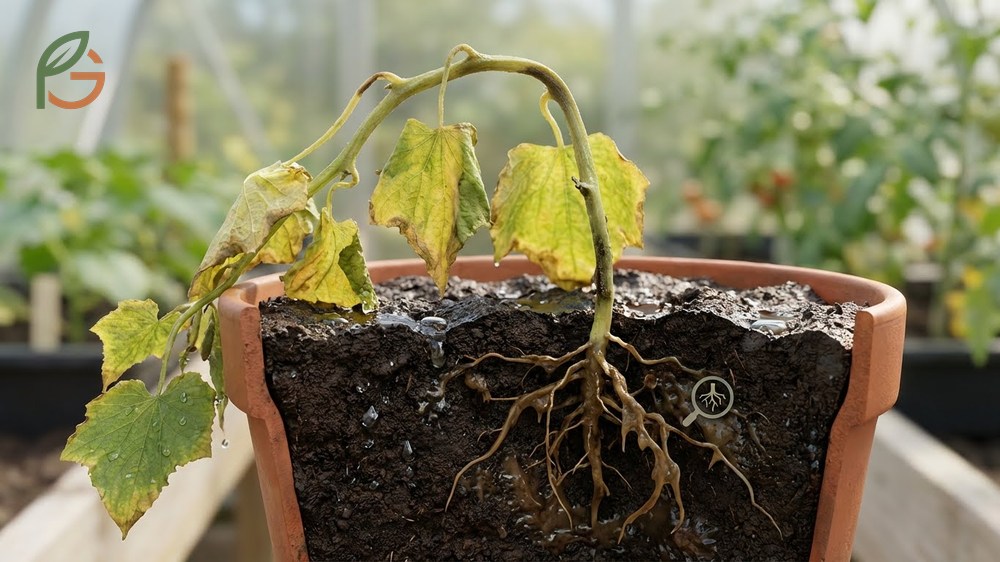
Dying cucumber plants typically suffer from root problems caused by overwatering, poor drainage, or transplant damage. Current data shows that overwatered cucumbers can’t absorb oxygen through waterlogged roots, leading to root rot within 7-14 days of consistently wet conditions[2]. The roots turn brown and mushy instead of white and firm, and you’ll detect a foul smell from the soil.
Nutrient deficiencies also cause cucumber plants to decline slowly. Nitrogen deficiency turns older lower leaves pale yellow while new growth stays green. Potassium deficiency causes leaf edges to yellow and develop scorched brown margins. Magnesium deficiency creates interveinal chlorosis where tissue between leaf veins yellows while veins remain green.
Environmental stress from extreme temperatures accelerates plant death. Heat above 95°F (35°C) during the day combined with nighttime temperatures above 75°F (24°C) disrupts photosynthesis and reduces the plant’s ability to recover from daily stress. Cold temperatures below 50°F (10°C) damage cucumber roots and slow nutrient uptake, causing yellowing and stunted growth.
Overwatering and Root Rot
Overwatered cucumber plants show wilting even when soil stays moist—this counterintuitive symptom confuses many gardeners. The wilting happens because waterlogged roots can’t function properly and can’t absorb nutrients or transport water to leaves. Yellowing starts with older leaves at the base of the plant and progresses upward as root damage worsens.
Check for root rot by gently digging around the base of a wilted plant and examining the roots. Healthy roots are white to cream-colored and firm. Rotted roots appear brown to black, feel mushy, and may fall apart when touched. The soil around rotted roots often smells sour or rotten.
Fix overwatering by letting soil dry to a depth of 1-2 inches before watering again. Stick your finger into the soil—if it feels moist below the surface, wait another day. For plants with severe root rot, carefully dig them up, trim away all brown mushy roots with clean scissors, let the remaining roots dry for 2-3 hours, then replant in fresh, well-draining soil.
- Yellow leaves with wilting despite moist soil—reduce watering frequency immediately
- Mold or algae growth on soil surface—indicates chronically wet conditions that need better drainage
- Edema (water blisters) on leaves—plant cells are bursting from excess water absorption
- Slow growth despite adequate fertilizer—roots can’t absorb nutrients when waterlogged
- Leaf drop starting with older leaves—plant is shedding leaves it can’t support with damaged roots
Transplant Shock Recovery
Cucumber plants hate transplanting because their delicate taproots break easily when disturbed. Studies confirm that cucurbits experience more severe transplant shock than most vegetables[3]. Symptoms include excessive wilting regardless of soil moisture, pale yellowish leaves, fallen-over seedlings, and a generally “sad” appearance. Plants with severe root damage may not recover at all.
Recovery from transplant shock takes 3-5 days with proper care. Water transplants thoroughly immediately after planting to eliminate air pockets around roots and ensure good soil-to-root contact. Apply diluted liquid kelp fertilizer or rooting hormone to stimulate new root growth. Protect shocked plants with row covers or shade cloth for the first week to reduce transpiration stress.
Prevent transplant shock by starting cucumber seeds in 4-inch pots rather than small cell trays. Transplant when the first true leaf is just slightly larger than the cotyledons—this timing gives you a 2-3 day window when roots haven’t completely filled the pot yet. Harden off seedlings gradually over 7-10 days before transplanting to reduce environmental stress.
If you’re transplanting cucumbers you started indoors, choose a cloudy day or transplant in the evening so plants have overnight to adjust before facing full sun. Many experienced gardeners direct-sow cucumber seeds to avoid transplant issues entirely—cucumbers germinate in 5-7 days when soil temperature reaches 70°F (21°C).
Cucumber Plant Not Growing
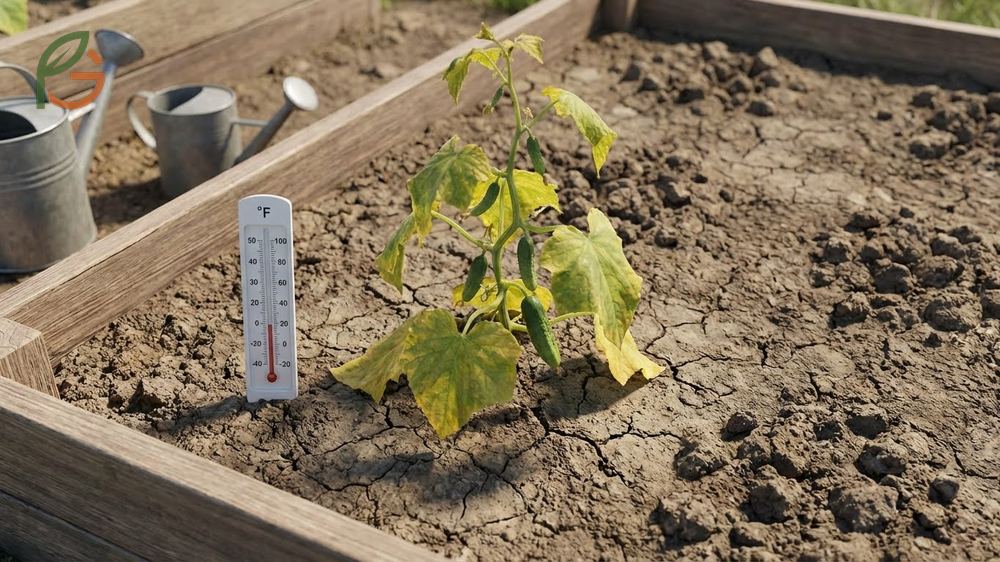
Slow-growing cucumber plants typically suffer from poor soil, low fertility, or insufficient watering. Studies show that cucumbers need consistent moisture and fertility to support their rapid growth rate—mature vines can grow 1-2 inches per day under optimal conditions. When growth slows or stops, check soil temperature first since cucumbers won’t grow when soil stays below 60°F (15°C).
Pollination problems cause fruit production issues even when plants appear healthy. Cucumbers require multiple pollinator visits on the same day a flower opens to ensure proper fruit development. Very high temperatures above 95°F (35°C), very low temperatures below 55°F (13°C), and high humidity all reduce pollen viability[9]. Poor pollination creates small, misshapen fruit that often drops from the vine before maturing.
Excessive nitrogen fertilization causes vigorous leaf growth at the expense of flowers and fruit. Plants with too much nitrogen produce dark green, lush foliage but few female flowers. This problem is common when gardeners apply high-nitrogen lawn fertilizer to vegetable gardens. Switch to a balanced fertilizer with equal N-P-K ratios or a bloom-boosting formula with higher phosphorus and potassium.
From My Experience: My neighbor in Querétaro, Mexico tried growing cucumbers in March 2024 but they barely reached 6 inches tall after 4 weeks. She tested the soil and found it was only 58°F (14°C)—once temperatures warmed to 68°F (20°C) in April, the same variety grew vigorously and produced fruit within 6 weeks.
Improve cucumber growth by ensuring soil pH stays between 6.0-6.8 and adding 2-3 inches of compost before planting. Cucumbers are heavy feeders that need regular fertilization—apply balanced fertilizer every 2-3 weeks starting when vines begin to run. Water deeply 2-3 times per week rather than shallow daily watering to encourage deep root growth.
Check for hidden pest damage that’s slowing growth. Cucumber beetle larvae feed on roots underground, reducing the plant’s ability to absorb water and nutrients. Root-knot nematodes create swollen galls on roots that interfere with function. If plants are stunted despite good care, carefully dig up one plant and inspect the roots for pests or galls.
- Soil temperature below 60°F (15°C)—delays growth and germination significantly
- Inconsistent watering—cucumbers need 1-2 inches of water per week for optimal growth
- Poor soil fertility—apply compost and balanced fertilizer every 2-3 weeks
- Inadequate pollination—plant pollinator-friendly flowers nearby and avoid pesticides during bloom
- Overcrowding—space plants 12-18 inches apart in rows 5-6 feet apart for adequate airflow
- Excessive nitrogen—switch to balanced fertilizer to promote fruiting over leaf growth
Pro Tip: Hand-pollinate cucumbers when bee activity is low. Use a small paintbrush to transfer pollen from male flowers (no fruit behind bloom) to female flowers (tiny cucumber visible behind bloom) early in the morning when pollen is most viable.
Conclusion
The evidence is clear: why are my cucumber plants wilting comes down to bacterial wilt spread by cucumber beetles in most severe cases, with overwatering and environmental stress causing recoverable wilting in the rest. Once you’ve identified the specific cause through symptom analysis and simple tests like the bacterial ooze test, you can take targeted action—organic pest control for beetles, adjusted watering for root problems, or protective measures for environmental stress.
Current agricultural guidance emphasizes prevention over treatment, especially for bacterial wilt where no cure exists once plants are infected. Start monitoring for cucumber beetles as soon as seedlings emerge, use row covers during the vulnerable 3-4 week seedling stage, and maintain consistent soil moisture without overwatering. FruitGarden provides research-based growing advice that helps you catch problems early when they’re easiest to fix, so your cucumber plants thrive from transplanting through harvest.
Frequently Asked Questions
How do I know if my cucumber plant has bacterial wilt or just needs water?
Cut a wilted stem and squeeze the cut ends together, then pull them apart slowly. If white, sticky bacterial ooze stretches between the cut surfaces, your plant has bacterial wilt. If no ooze appears and the plant perks up after watering, it was just thirsty. Bacterial wilt typically starts on individual leaves and spreads progressively, while water stress affects the whole plant at once.
Can cucumber plants recover from bacterial wilt?
No, cucumber plants can’t recover from bacterial wilt once infected. The bacteria multiply rapidly in the plant’s vascular system and permanently block water transport. Remove and destroy infected plants immediately to prevent cucumber beetles from spreading the bacteria to healthy plants. There are no chemical treatments or organic remedies that cure bacterial wilt in cucumbers.
What’s the best organic pesticide for cucumber beetles?
Neem oil combined with kaolin clay provides the best organic control for cucumber beetles. Mix 2 tablespoons neem oil per gallon of water with a few drops of dish soap, and spray in early morning or evening. Apply kaolin clay as a protective barrier that makes leaves unappealing to beetles. Reapply both products every 7-10 days or after heavy rain, and start applications as soon as you spot beetles on young plants.
Why are my cucumber leaves wilting during the day but recovering at night?
Temporary wilting during hot afternoons that resolves by evening indicates heat stress or minor water stress, not disease. This happens when transpiration (water loss through leaves) exceeds the roots’ ability to absorb water during peak heat. Increase watering frequency to 2-3 times per week, mulch around plants to keep roots cool, and provide afternoon shade when temperatures exceed 90°F (32°C).
How long does it take cucumber plants to recover from transplant shock?
Cucumber plants typically recover from transplant shock in 3-5 days with proper care. Water thoroughly after transplanting, apply diluted liquid kelp fertilizer to stimulate root growth, and protect plants with row covers or shade cloth for the first week. If plants don’t show improvement after 7 days or if stems turn brown and mushy, the root damage was too severe and you’ll need to replant.
What causes cucumber plants to wilt and turn yellow at the same time?
Wilting combined with yellowing usually indicates overwatering and root rot, especially if soil stays constantly moist. The roots can’t absorb oxygen when waterlogged, causing yellowing that starts with older lower leaves. Let soil dry to a depth of 1-2 inches before watering again. If roots are brown and mushy when you check them, trim away damaged roots and replant in fresh, well-draining soil.
How do I prevent cucumber beetles from spreading bacterial wilt?
Install floating row covers immediately after planting to physically block beetles from reaching young plants during their most vulnerable 3-4 week seedling stage. Remove covers when plants flower so pollinators can access blooms. Plant trap crops like Blue Hubbard squash 2-3 weeks before cucumbers to draw beetles away from your main crop. Start organic pesticide applications with neem oil or kaolin clay as soon as you spot the first beetles in spring.