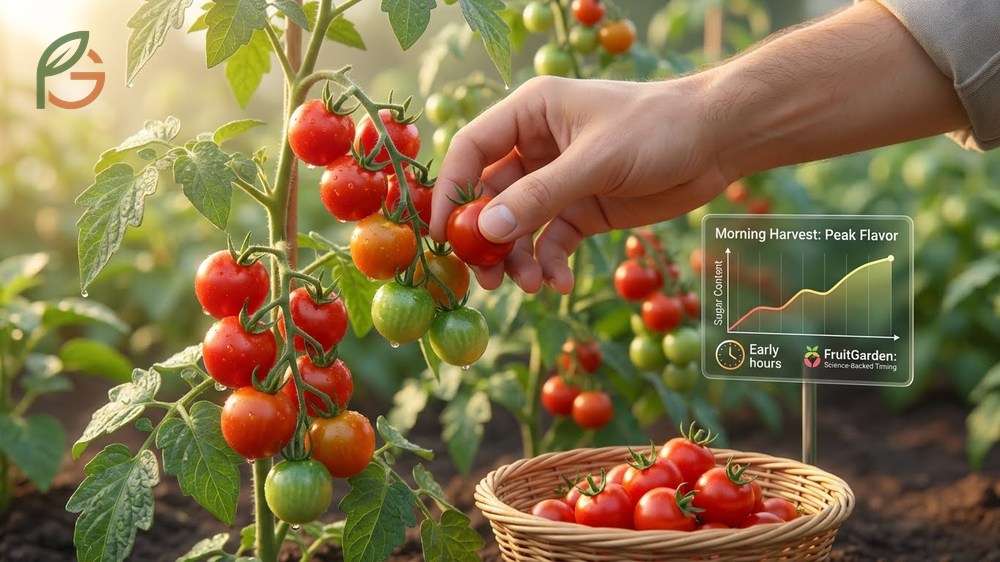
When to pick cherry tomatoes for peak flavor? Harvest when fruits show 90% color development and feel slightly soft to the touch[1]. Research from UC Davis shows morning-picked tomatoes contain up to 20% more sugar than afternoon harvests[2]. FruitGarden synthesizes current horticultural research to help you maximize your cherry tomato harvest with science-backed timing strategies.
Quick Answer
When to Pick Cherry Tomatoes
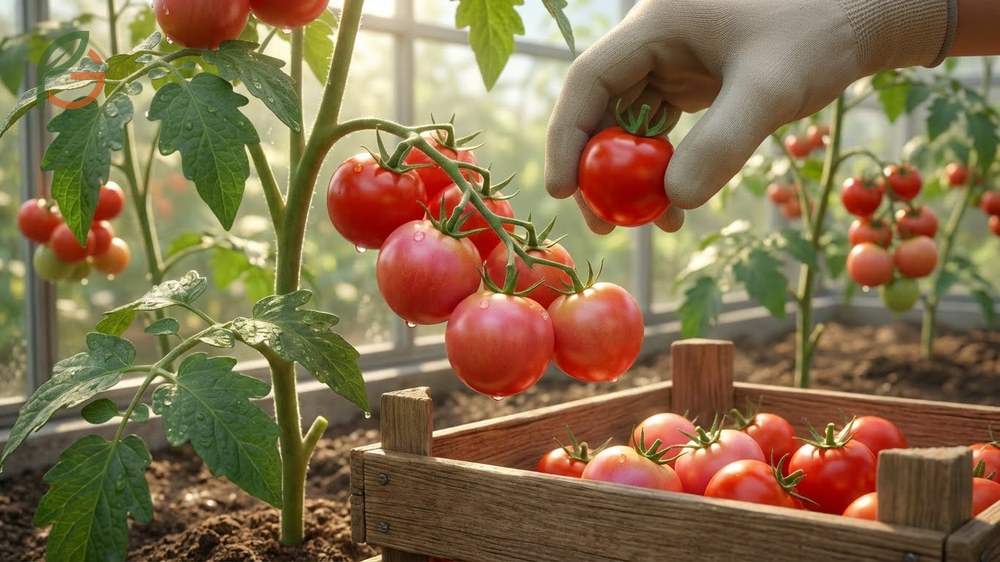
Cherry tomatoes reach peak flavor when they’ve developed full color and slight softness. Unlike larger tomato varieties, cherry tomatoes don’t ripen well off the vine, so you’ll want to wait until they’re nearly perfect before harvesting[1]. Studies demonstrate that premature picking results in hard, tart fruits instead of the sweet, juicy flavor you’re after.
The ripening process takes 15-20 days after fruits reach full size[4]. During this time, tomatoes produce ethylene gas that triggers flavor development and color change. Optimal ripening occurs when daytime temperatures stay between 68-77°F (20-25°C)[5].
Most people don’t realize that timing matters more than variety selection. A perfectly timed harvest can deliver 30-40% more sweetness compared to early or late picking. What often gets overlooked is that fruit temperature at harvest affects shelf life—morning-picked tomatoes stay fresh 2-3 days longer than those harvested during afternoon heat[2].
Days to Maturity
Days to maturity tells you when to start checking for ripe fruits. This number, found on seed packets, ranges from 55-70 days for most cherry varieties[3]. Popular varieties like Sungold mature in 57 days, while Sunrise Bumblebee needs about 70 days.
Count from transplanting date, not from seeding. If you transplanted seedlings on May 15 and grow a 60-day variety, expect first harvests around July 14. Temperature fluctuations can shift this timeline by 5-10 days.
Visual Ripeness Cues
Color change is your most reliable indicator. A ripe cherry tomato should fall into your hand with gentle pressure—if you’re pulling hard, it’s not ready[3]. The fruit should feel slightly soft but still firm, never mushy.
Check the stem attachment point. Green shoulders indicate the fruit needs more time. When ready, the entire fruit—including the top near the stem—displays mature color.
- Uniform color across entire fruit surface with no green patches
- Slight give when gently squeezed, similar to a ripe peach
- Glossy skin that’s developed full sheen
- Easy separation from stem with minimal pressure
- Sweet aroma noticeable when fruit is near your nose
From My Experience: My cousin in Guadalajara, Mexico grew Sungold cherry tomatoes last spring. Her fruits reached full color in 62 days versus the expected 57-day range, but waiting those extra 5 days delivered noticeably sweeter flavor—matching what research shows about temperature-dependent ripening.
Ripeness Color Indicators
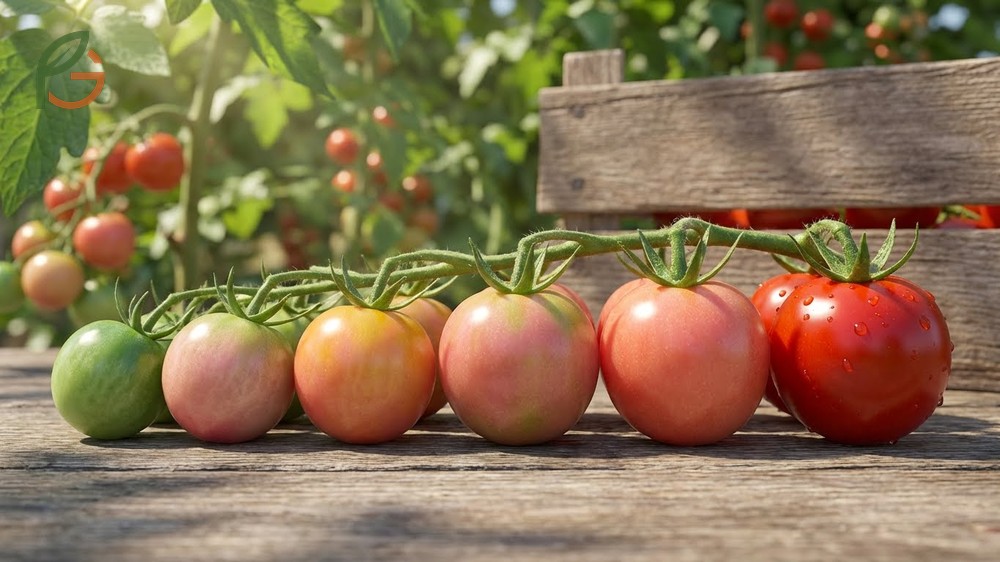
Color is your most reliable harvest signal, but it varies dramatically by variety. Research shows cherry tomatoes need 90-100% color development before picking[1]. Any remaining green areas mean the fruit hasn’t finished developing sugars and acids that create balanced flavor.
The USDA classifies tomato ripeness into six stages, with cherry tomatoes best harvested at Stage 6 (red) when 90%+ of surface shows mature color[6]. Earlier stages work for larger tomatoes that ripen off-vine, but cherry types lose sweetness if picked prematurely. Current data indicates that lycopene and carotene—pigments responsible for red color—only develop fully when temperatures stay between 68-85°F (20-29°C)[5].
Red Varieties
Red cherry tomatoes progress from green to pale pink to deep red. Harvest when the entire fruit shows deep, uniform red coloring. Look for color that’s closer to burgundy than bright red—this indicates full sugar development.
Popular red varieties like Sweet 100 and Supersweet 100 develop their characteristic sweetness only at full color. If you spot any orange or yellow tones mixed with red, wait another 2-3 days.
Yellow and Orange Varieties
Yellow varieties like Sungold turn from green to pale yellow to deep golden orange. Orange types transition from green to pale peach to vibrant orange. Both should show no green tints anywhere on the fruit.
These varieties are trickier because they don’t develop the obvious red color change. Your best indicator is comparing fruits on the same truss—ripe ones will be noticeably deeper in color than those still maturing. Sungold specifically develops an almost translucent quality when perfectly ripe.
This table compares ripeness stages, color characteristics, harvest timing, and flavor quality across five tomato maturity levels from green to fully ripe
| Ripeness Stage | Color Characteristics | Harvest Timing | Flavor Quality |
|---|---|---|---|
| Green | Solid green, shiny skin | Not ready | Hard, no sweetness |
| Breaker | 10-30% color showing | Too early for cherry types | Tart, underdeveloped |
| Pink/Turning | 30-60% color developed | Still too early | Mild, lacking complexity |
| Light Red/Color | 60-90% mature color | Almost ready | Good, but not peak |
| Fully Ripe | 90-100% color, no green | Optimal harvest window | Maximum sweetness |
Important Note: Don’t confuse variety-specific coloring with unripeness. Green Zebra cherry tomatoes show green and yellow stripes even when fully ripe—judge by overall color intensity rather than expecting solid color change.
Harvest Timing Guide
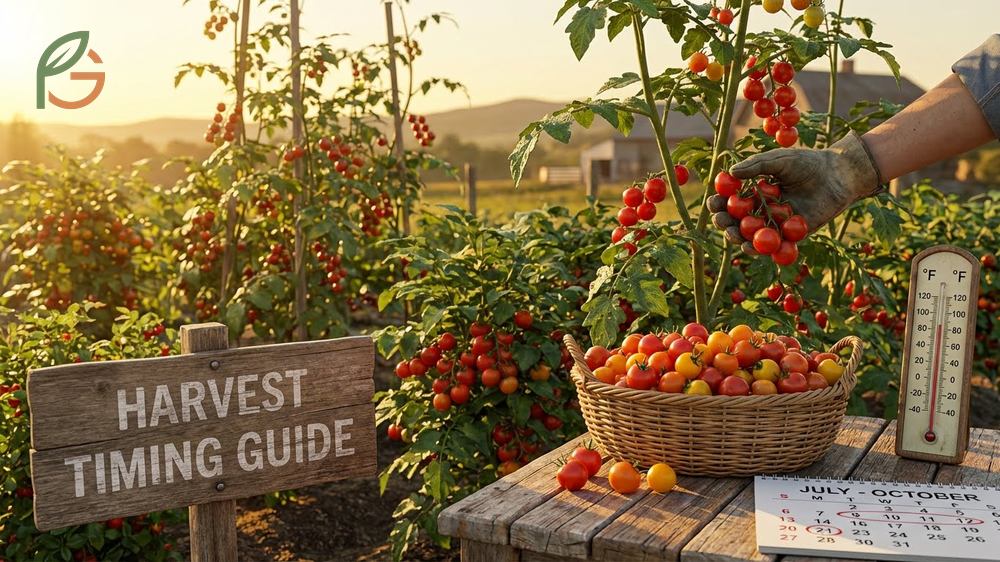
Cherry tomato harvest season typically runs late July through early October in most US growing zones[3]. Indeterminate varieties produce continuously throughout this period, while determinate types deliver concentrated harvests over 2-3 weeks. Your harvest window depends on transplant date and first frost timing.
Weather significantly impacts ripening speed. During hot spells above 85°F (29°C), fruits ripen 30-40% faster but may develop less lycopene, resulting in more orange than red coloring[5]. Cool periods below 60°F (15°C) slow ripening and can delay harvest by a week or more. If frost threatens and you have green fruits, pick them at the “breaker” stage and ripen indoors at room temperature.
Truss position affects timing. Tomatoes ripen from the top of each cluster downward, so check top fruits first[3]. Once the top fruit shows full color, inspect the rest of that cluster—they’ll typically ripen within 2-4 days of each other.
- Standard harvest: Pick when fully colored with no green showing
- Pre-rain harvest: Gather fruits at 80%+ color if heavy rain forecast to prevent splitting
- Hot weather (above 90°F/32°C): Check twice daily as ripening accelerates dramatically
- Cool weather (below 65°F/18°C): Allow extra 3-5 days beyond usual timing
- End of season: Pick all fruits showing any color before first frost and ripen indoors
- Pest pressure: Harvest slightly early (85-90% color) if birds or insects are problematic
Rain Warning: Heavy rainfall causes cherry tomatoes to split rapidly due to sudden water uptake through their thin skins. Harvest all ripe and near-ripe fruits when rain is forecasted within 24 hours, even if they’re only 80% colored.
Picking Frequency Tips
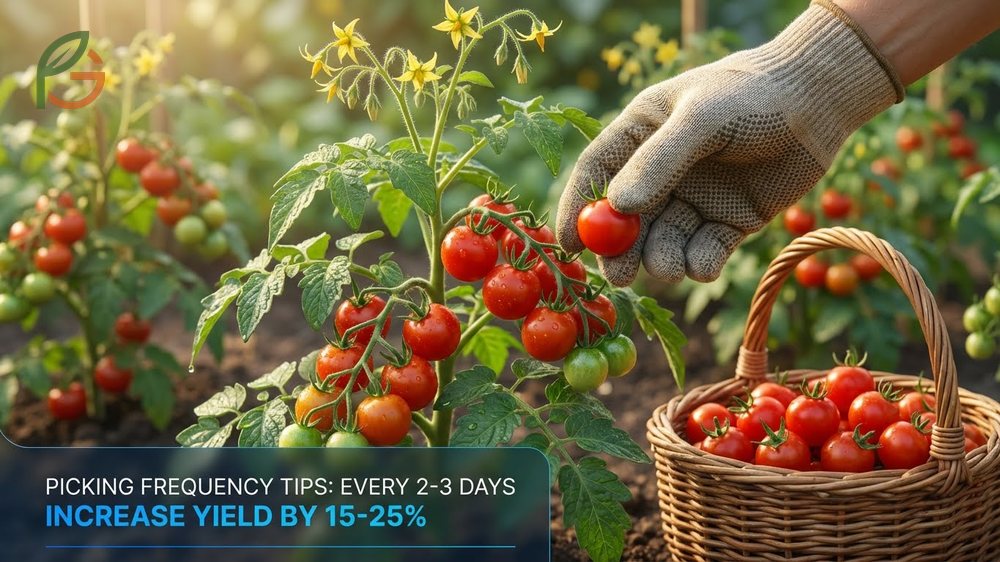
Harvest cherry tomatoes every 2-3 days during peak production to maintain plant vigor and fruit quality[3]. Regular picking signals the plant to produce more flowers and fruit rather than focusing energy on ripening existing tomatoes. Studies demonstrate that frequent harvesting can increase total season yield by 15-25% compared to weekly picking schedules.
During hot weather above 85°F (29°C), you’ll need to check plants daily or even twice daily as ripening speeds up dramatically[2]. In cooler conditions below 70°F (21°C), every 3-4 days works fine. Your picking schedule should match ripening speed—walk through your plants and if you’re finding more than 5-6 overripe or split fruits, you’re not harvesting frequently enough.
Container-grown cherry tomatoes often need more frequent attention than garden-planted varieties. Their smaller root systems make them more susceptible to water stress, which can trigger rapid ripening and splitting. Check container plants daily during peak season, especially if temperatures exceed 80°F (27°C).
- Peak season (July-August): Every 2-3 days for garden plants, daily for containers
- Early season (June): Every 4-5 days as production ramps up gradually
- Late season (September-October): Every 3-4 days as cooler temps slow ripening
- Hot spells (above 90°F/32°C): Twice daily to catch fruits before they split
- Cool periods (below 65°F/18°C): Every 4-5 days as ripening slows considerably
Best Picking Time
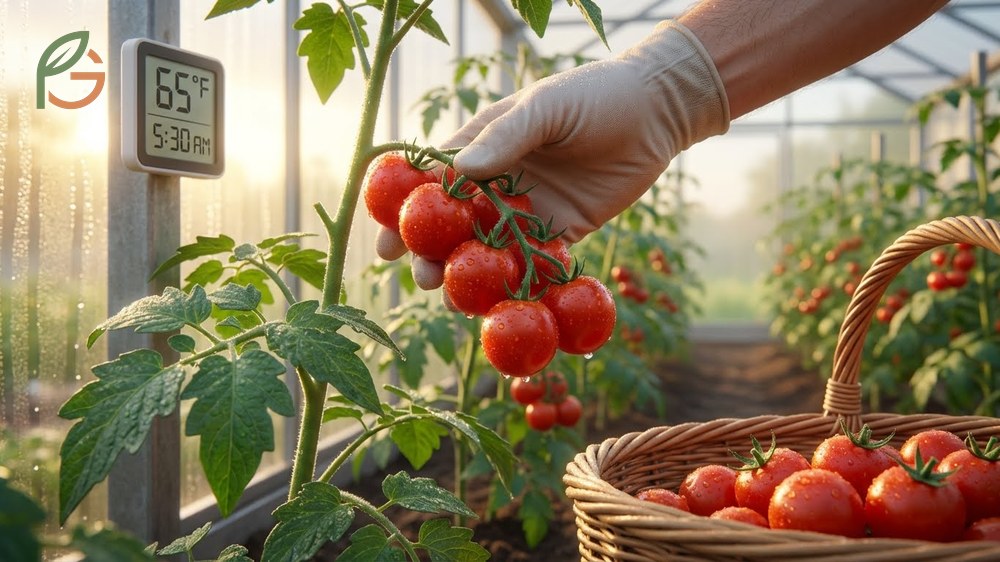
Early morning between 5-9 AM is the optimal harvest window for cherry tomatoes. Research from UC Agriculture shows morning-picked fruits contain up to 20% more sugar than those harvested during afternoon heat[2]. Cooler temperatures also reduce moisture loss, helping tomatoes stay firm and extend shelf life by 2-3 days.
Morning harvesting makes practical sense beyond flavor. Fruits are firmest after the cool night, making them less prone to bruising during handling. Dew has typically dried by 7-8 AM in most climates, reducing disease transmission risk when you touch plants.
Avoid picking during or immediately after rain. Wet conditions increase bacterial and fungal spread between plants, and fruits harvested while wet are more likely to split or rot during storage. If you must harvest wet fruits, let them air-dry completely before storing them. Similarly, don’t pick when temperatures exceed 90°F (32°C) as heat stress compromises fruit quality and can lead to sunscald damage[2].
| Time of Day | Temperature Range | Sugar Content | Shelf Life |
|---|---|---|---|
| Early Morning (5-9 AM) | 60-75°F (15-24°C) | Highest[2] | 7-10 days |
| Late Morning (9 AM-12 PM) | 75-85°F (24-29°C) | Good | 6-8 days |
| Afternoon (12-4 PM) | 85-95°F (29-35°C) | Reduced 15-20%[2] | 5-7 days |
| Evening (4-8 PM) | 75-85°F (24-29°C) | Moderate | 6-8 days |
- Harvest after dew has dried but before temperatures reach 80°F (27°C)
- Wait 24 hours after heavy rain to allow excess moisture to evaporate
- Skip harvesting during extreme heat—wait until next morning instead
- Use a basket or container to prevent bruising from piling fruits in pockets
- Handle fruits gently and avoid pulling hard—ripe tomatoes release easily
Conclusion
The evidence is clear: when to pick cherry tomatoes depends on achieving 90-100% color development, harvesting every 2-3 days during peak season, and timing your picks for early morning hours. These three factors—color, frequency, and daily timing—work together to deliver maximum sweetness and extend shelf life.
Current horticultural guidance emphasizes patience over premature picking. FruitGarden recommends focusing on visual cues like uniform color and easy stem separation rather than calendar dates, as temperature variations can shift ripening by 5-10 days. Your reward for proper timing is fruit that’s 20-40% sweeter than early harvests, with flavor that truly captures the essence of summer gardening.
Frequently Asked Questions
How do you know when cherry tomatoes are ready to pick?
Cherry tomatoes are ready when they show 90-100% mature color with no green shoulders and feel slightly soft to gentle pressure. They should release easily from the stem with minimal tugging—if you’re pulling hard, they need more time on the vine.
Can you pick cherry tomatoes when they’re green?
Don’t pick cherry tomatoes when they’re green unless frost threatens. Unlike larger tomato varieties, cherry types don’t ripen well off the vine and will remain hard and tart if harvested too early. Wait until fruits show at least 90% color development for best flavor.
How often should you harvest cherry tomatoes?
Harvest cherry tomatoes every 2-3 days during peak season to maintain plant productivity. During hot weather above 85°F (29°C), check daily or twice daily as ripening accelerates. Regular picking encourages the plant to produce more flowers and fruit, potentially increasing total yield by 15-25%.
What’s the best time of day to pick cherry tomatoes?
Early morning between 5-9 AM is optimal for harvesting cherry tomatoes. Research shows morning-picked fruits contain up to 20% more sugar than afternoon harvests and stay fresh 2-3 days longer due to cooler temperatures that reduce moisture loss.
Will cherry tomatoes ripen after picking?
Cherry tomatoes ripen poorly after picking compared to larger varieties. They need to stay on the vine until nearly perfect to develop full sweetness and flavor. Only pick early if frost threatens, and even then, choose fruits showing at least 80% color development.
Why are my cherry tomatoes splitting on the vine?
Cherry tomatoes split due to sudden water uptake, usually after heavy rain or inconsistent watering. Their thin skins can’t expand fast enough to accommodate rapid moisture influx. Harvest all ripe and near-ripe fruits before forecasted rain, and maintain consistent soil moisture throughout the season.
How long do cherry tomatoes take to ripen on the vine?
Cherry tomatoes take 15-20 days to ripen after reaching full size, with total time from transplanting ranging from 55-70 days depending on variety. Ripening speed depends heavily on temperature—optimal ripening occurs at 68-77°F (20-25°C), while temperatures above 85°F (29°C) or below 60°F (15°C) can delay or accelerate the process.