
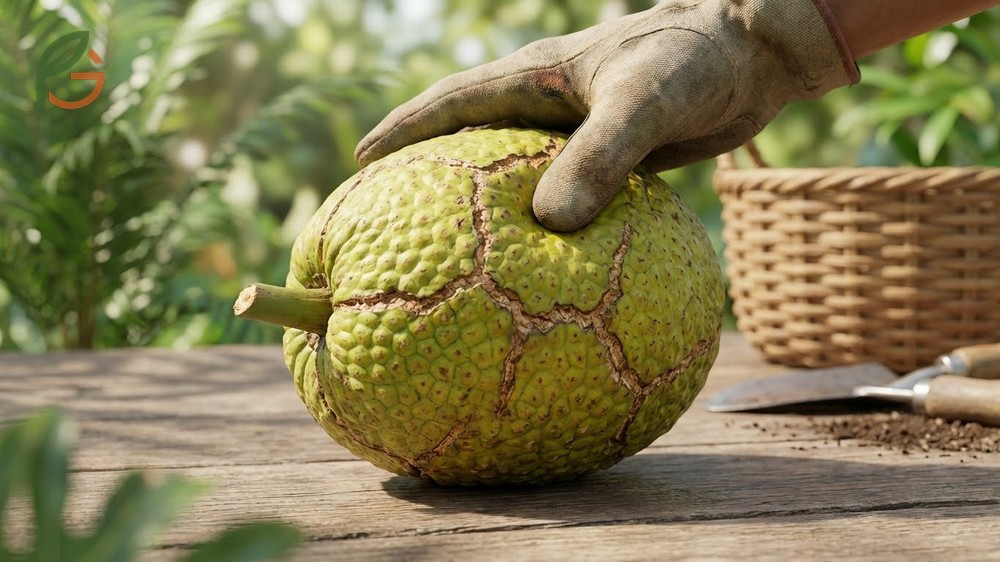
How to tell if breadfruit is ripe? Look for greenish-yellow skin color, brown cracking between surface segments, and slight softness when gently squeezed. Research shows skin color and intersegment space color classify mature breadfruit with 90% accuracy[1]. At FruitGarden, we help home gardeners and tropical fruit enthusiasts identify perfect ripeness stages for optimal flavor and texture.
Quick Answer
- Mature breadfruit develops in 12-16 weeks from fruit emergence[2]
- Skin changes from bright green to greenish-yellow with brown cracking between segments[3]
- Firm texture indicates starchy stage; slight softness means ready to eat within 1-3 days[4]
- Store at 55°F (13°C) with 85-95% humidity to extend shelf life beyond 3-5 days[5]
How to Tell if Breadfruit Is Ripe
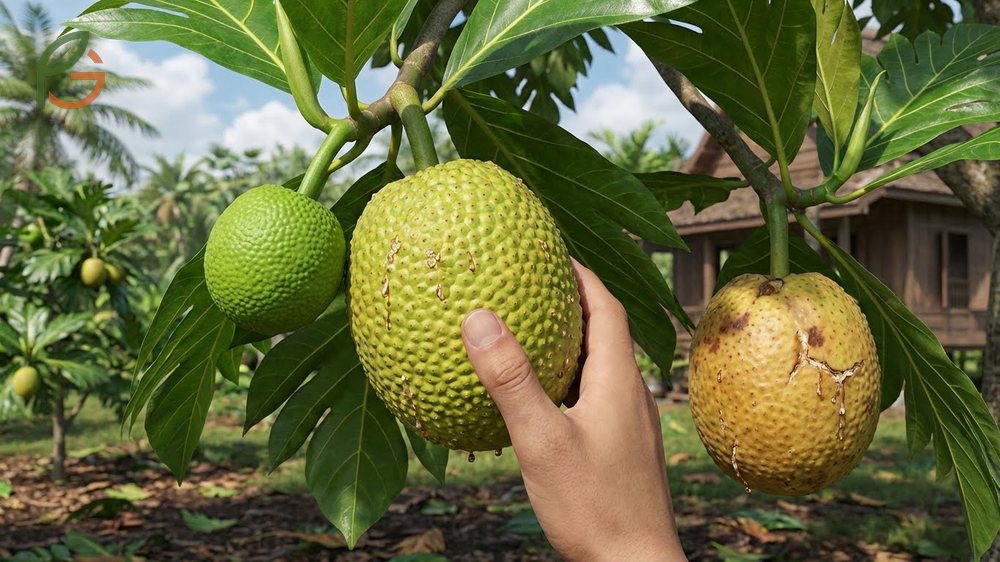
Breadfruit reaches harvest maturity approximately 3 months after flowering[6]. The fruit transitions through distinct stages from immature to fully ripe, with visual and tactile cues guiding proper selection timing. Most people don’t realize that harvesting too early results in poor flavor development, while waiting too long causes rapid overripening within 24-48 hours.
Current agricultural research identifies three primary ripeness stages: mature-green (starchy vegetable use), mature (optimal eating quality), and fully ripe (dessert stage). Each stage serves different culinary purposes and requires different handling techniques. The mature stage offers the longest shelf life and best versatility for cooking applications.
Studies demonstrate that breadfruit follows a climacteric ripening pattern with dramatic respiratory rise and rapid ethylene production after harvest. This explains why proper timing matters so much—you’re working with a narrow harvest window before rapid deterioration begins.
Understanding Breadfruit Development
Breadfruit size generation follows a single sigmoidal growth curve while weight accumulation follows a double-sigmoidal pattern[1]. This means fruit reaches full size before achieving maximum starch content. The development includes an initial growth phase, intermediate lag phase, and final rapid mass accumulation period.
Research tracking Ma’afala breadfruit at 13, 15, 17, and 19 weeks of development found fruit reaches optimal maturity at 15 weeks[1]. At this point, internal quality stabilizes with maximum starch levels, creamy texture, and full flavor development. Earlier harvests yield inferior taste and texture.
From My Experience: My cousin in Guadalajara, Mexico grows breadfruit trees in his backyard. He harvested fruit at 14 weeks last summer, but the texture was rubbery and flavor bland—exactly matching research findings about early harvest. Waiting the full 15-16 weeks made all the difference.
The Maturity Window
Growers have a 2-4 week window during which individual mature fruit can be harvested[2]. This flexibility allows strategic harvest timing based on intended use. For export or extended storage, harvest at the earlier end of this window when fruit is mature but very firm.
Temperature affects development timing—breadfruit in cooler environments requires longer than 16 weeks to reach maturity. Tropical conditions with consistent warmth accelerate development. You’ll notice trees in warmer microclimates produce harvest-ready fruit several weeks earlier than shaded or cooler locations.
Ripeness Indicators for Breadfruit
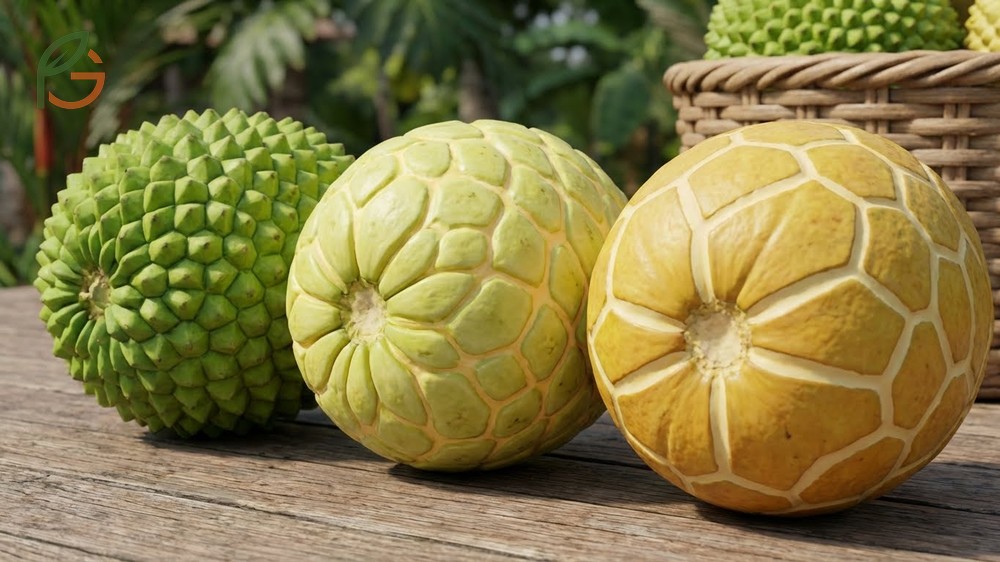
Multiple visual and physical characteristics indicate breadfruit ripeness, but not all indicators prove equally reliable. Research confirms skin color and intersegment space color as the most accurate maturity markers[1]. Growers must rely on combinations of cues rather than single indicators for best results.
The surface pattern of breadfruit consists of irregular polygon-shaped segments that flatten and enlarge upon maturity. These segments transition from angular and ridged (immature) to smoother and flatter (mature). Brown staining from latex exudation appears as maturity progresses, intensifying as fruit approaches full ripeness.
- Skin color shifts from deep bright green to lighter greenish-yellow or golden tones
- Intersegment spaces develop brown coloration when less than 50% of fruit remains green[7]
- Surface segments flatten noticeably with smooth texture replacing angular ridges
- Small brown stains from latex drops appear on fruit surface indicating harvest readiness
- Overall skin luster diminishes as fruit matures from glossy to matte finish
Reliable vs Unreliable Indicators
Some commonly cited maturity indicators prove unreliable or inconsistent. White sticky latex sap can appear before fruit reaches maturity or may not appear at all on some varieties[7]. The stem (peduncle) color change occurs well after harvest rather than indicating optimal picking time.
Fruit size varies significantly even within the same variety, so small fruits can be fully mature while large fruits remain immature. Don’t rely on size alone as a maturity indicator. My friend in Oaxaca, Mexico learned this the hard way—she consistently harvested the largest fruits thinking they’d be ripest, but found smaller fruits often had better flavor and texture.
Important Note: Breadfruit varieties differ in maturity indicators. Ma’afala, Puou, and other cultivars show subtle variations in color changes and timing. Always learn your specific variety’s characteristics for most accurate assessment.
Color Changes and Ripeness
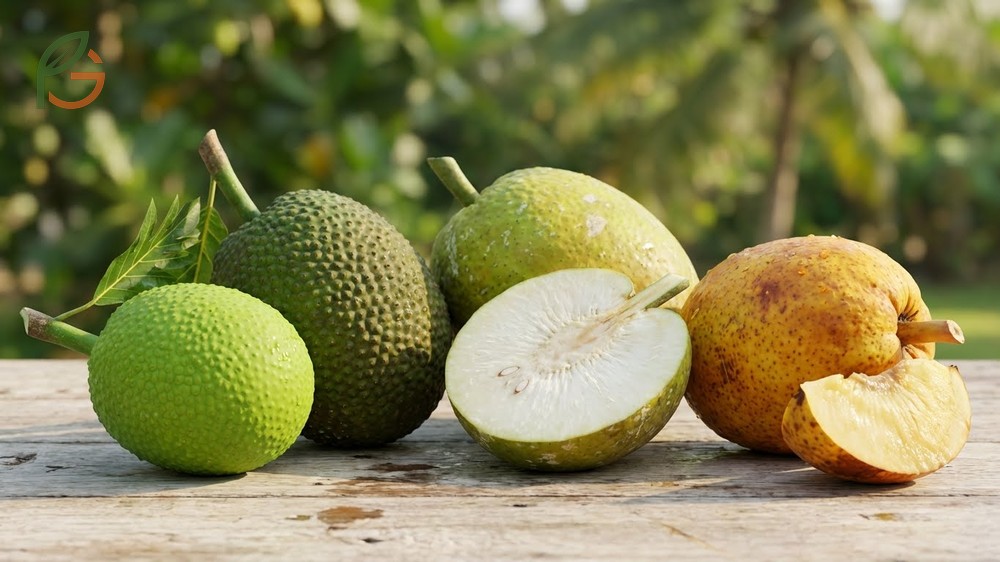
Skin color transitions provide the most visible maturity indicator. Immature breadfruit displays bright, vibrant green coloration. As maturity approaches, this shifts to darker green, then progressively lightens to greenish-yellow. Fully ripe fruit can develop golden yellow to rusty orange tones depending on variety.
The flesh color also indicates maturity stage. Mature but unripe breadfruit has white, starchy, somewhat fibrous flesh. Fully ripe breadfruit develops pale yellow flesh color with softer, creamier consistency. When selecting fruit, consider which stage matches your intended preparation method.
Research identifies specific color values for optimal Ma’afala breadfruit maturity: a* greater than -7.5, b* less than 39, and L* less than 62 on the color scale[8]. These technical measurements confirm the visual shift from bright green to subdued greenish-yellow that indicates harvest readiness.
Intersegment Space Color
The spaces between surface segments provide crucial maturity information. In immature fruit, these spaces remain entirely green. As breadfruit matures, brown coloration develops in the intersegment spaces first.
When at least 50% of intersegment spaces show brown color rather than green, fruit has reached optimal maturity[7]. This indicator works consistently across varieties and proves more reliable than overall skin color alone. Check multiple areas around the fruit since ripening can progress unevenly.
Texture and Firmness Test
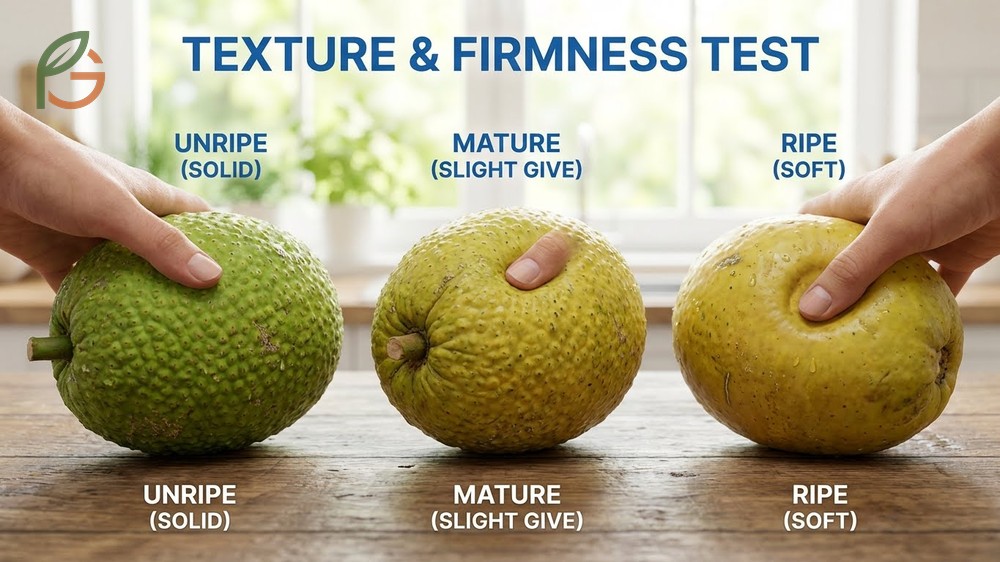
Firmness assessment complements visual indicators for complete maturity evaluation. Apply gentle pressure with your thumb to test resistance. Unripe starchy breadfruit feels solid and doesn’t yield at all when squeezed. Mature fruit suitable for cooking shows slight give but remains predominantly firm.
Ripe dessert-stage fruit becomes noticeably softer and yields more readily to gentle pressure. This stage arrives rapidly—typically 1-3 days after harvest under ambient conditions[4]. If you’re selecting fruit for immediate use, softer texture works well. For meal planning several days out, choose firmer mature fruit.
The surface texture transitions from rough and angular when immature to smoother with flattened segments at maturity. Run your hand over the fruit surface—you’ll feel the difference between sharp ridges (not ready) and gentle contours (mature). Brownish cracking or crusting around individual segments confirms proper maturity.
- Very firm, no give – immature, will not develop good flavor if harvested
- Slight give under gentle pressure – perfect for harvesting and cooking within 3-5 days
- Moderate softness – mature and beginning to ripen, use within 1-2 days
- Soft throughout – fully ripe dessert stage, consume immediately or within 24 hours
- Very soft with dark spots – overripe, quality declining rapidly
Storage Tip: Refrigeration extends breadfruit shelf life to 7-10 days but causes skin blackening at temperatures below 39°F (4°C). Store at 55°F (13°C) with 85-95% humidity for optimal preservation[5].
Selecting Ripe Breadfruit at the Market
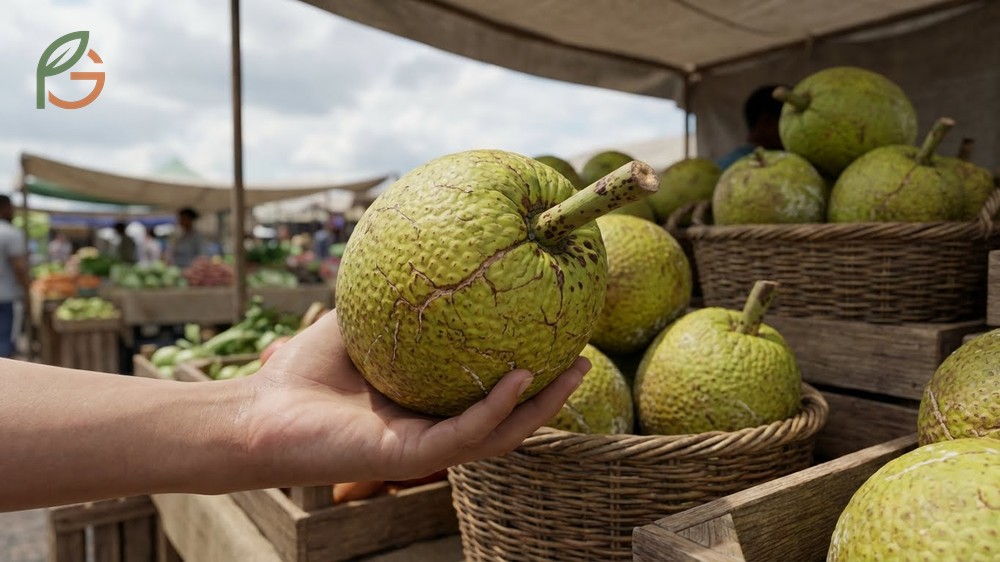
When purchasing breadfruit at farmers markets or specialty stores, apply the same visual and tactile assessment methods. Look first at overall skin color—avoid bright green fruit unless you can wait 2-3 weeks for maturity. Choose fruit showing greenish-yellow tones with visible brown cracking between segments.
Inspect the stem end for latex staining, which appears as small brown spots or streaks. This indicates natural latex exudation during development—a positive maturity sign. Check for a few scattered brown stains rather than extensive dark areas, which suggest overripeness.
Smell doesn’t provide reliable ripeness information for breadfruit at the mature stage. Unlike some tropical fruits, breadfruit develops its characteristic sweet, bread-like aroma only during cooking. Fresh mature breadfruit has a mild, slightly vegetal scent that doesn’t change significantly with ripeness until the overripe stage.
Ask vendors about harvest date if possible. Breadfruit harvested within the past 1-2 days offers maximum flexibility—you can cook it immediately or let it ripen further. Fruit harvested 3-4 days prior is likely at peak ripeness and should be used quickly. Plan your purchase timing based on when you intend to prepare the fruit.
- Greenish-yellow skin color with brown intersegment spaces covering at least half the fruit surface
- Smooth, flattened surface segments rather than sharp angular ridges
- Few small brown latex stains rather than extensive dark discoloration
- Slight firmness with minimal give when gently squeezed for 3-5 day storage window
- No dark soft spots, which indicate bruising or decay starting
- Matte surface finish rather than glossy sheen characteristic of immature fruit
Conclusion
The evidence is clear: how to tell if breadfruit is ripe relies primarily on skin color changes from bright green to greenish-yellow, brown cracking between surface segments, and slight softness developing under gentle pressure. Research confirms these indicators achieve 90% accuracy when used together, giving you confidence in selecting perfectly mature fruit.
Current agricultural guidance emphasizes harvesting breadfruit during the 2-4 week maturity window when internal quality peaks. FruitGarden recommends combining multiple indicators rather than relying on single cues, and adjusting timing based on whether you need immediate use or several days of storage. With these proven techniques, you’ll consistently select breadfruit at its flavorful best.
Frequently Asked Questions
How long does breadfruit take to ripen after picking?
Breadfruit ripens in 1-3 days after harvest under ambient conditions[4]. This extremely short post-harvest life makes timing crucial. Store at 55°F (13°C) to slow ripening and extend shelf life to 7-10 days.
Can you eat breadfruit when it’s green?
You can cook green breadfruit, but it won’t have developed full flavor or ideal texture yet. Breadfruit should be harvested when mature-green (greenish-yellow with brown cracking) rather than immature bright green. Mature-green fruit has white starchy flesh perfect for savory preparations like roasting, frying, or boiling.
What does ripe breadfruit look like inside?
Mature breadfruit has firm, creamy white to pale yellow flesh inside. As ripening progresses, the flesh color deepens to yellow and texture becomes softer and sweeter. The flesh should be free of brown discoloration or stringiness, which indicate overripeness or poor quality.
Why does my breadfruit have brown spots?
Small brown spots or stains from latex exudation are normal maturity indicators showing the fruit is ready for harvest. These appear as dried sap between segments and on the surface. Extensive dark brown areas or soft spots indicate overripeness or decay and should be avoided.
How do you keep breadfruit from ripening too fast?
Store breadfruit at 55°F (13°C) with 85-95% humidity to slow ripening[5]. Avoid temperatures below 39°F (4°C) which cause skin blackening. Keep fruit away from ethylene-producing produce like bananas or apples. Handle gently to prevent bruising which accelerates deterioration.
What’s the difference between mature and ripe breadfruit?
Mature breadfruit has reached full size and starch development but remains firm and starchy—ideal for cooking as a vegetable. Ripe breadfruit has begun softening with increased sweetness as starches convert to sugars, better suited for dessert preparations. Most culinary uses call for mature rather than fully ripe fruit.
Can breadfruit ripen off the tree?
Yes, breadfruit continues ripening after harvest as a climacteric fruit with rapid ethylene production. However, it must reach maturity on the tree first to develop proper flavor and texture. Harvesting immature fruit results in poor quality that won’t improve during post-harvest ripening.





