
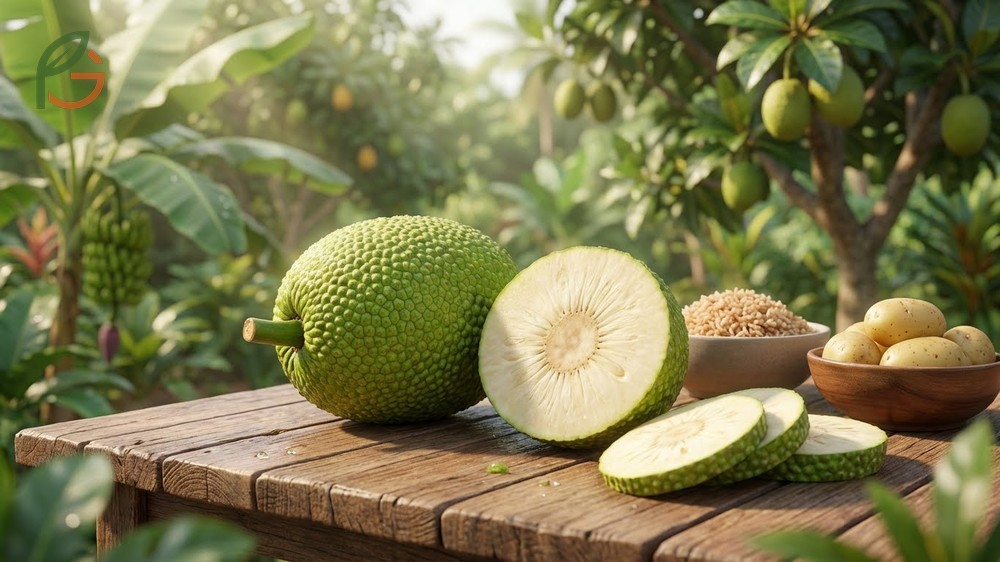
Breadfruit nutrition facts show this tropical staple delivers 103 calories and 27g of carbohydrates per 100g serving, making it a nutrient-dense alternative to rice and potatoes[1]. Research demonstrates that breadfruit provides 32% of your daily vitamin C needs plus essential minerals like potassium and magnesium[2]. FruitGarden provides evidence-based nutritional guidance for home gardeners interested in growing and understanding tropical fruit crops.
Quick Answer
- One cup (220g) of raw breadfruit contains 227 calories and 60g carbohydrates[1]
- Provides 11g fiber per cup, supporting digestive health and blood sugar control
- Contains 29mg vitamin C (32% DV) and 490mg potassium (14% DV) per 100g[2]
- Features a moderate glycemic index of 60-62, making it suitable for blood sugar management when paired with protein[3]
Breadfruit Nutrition Facts
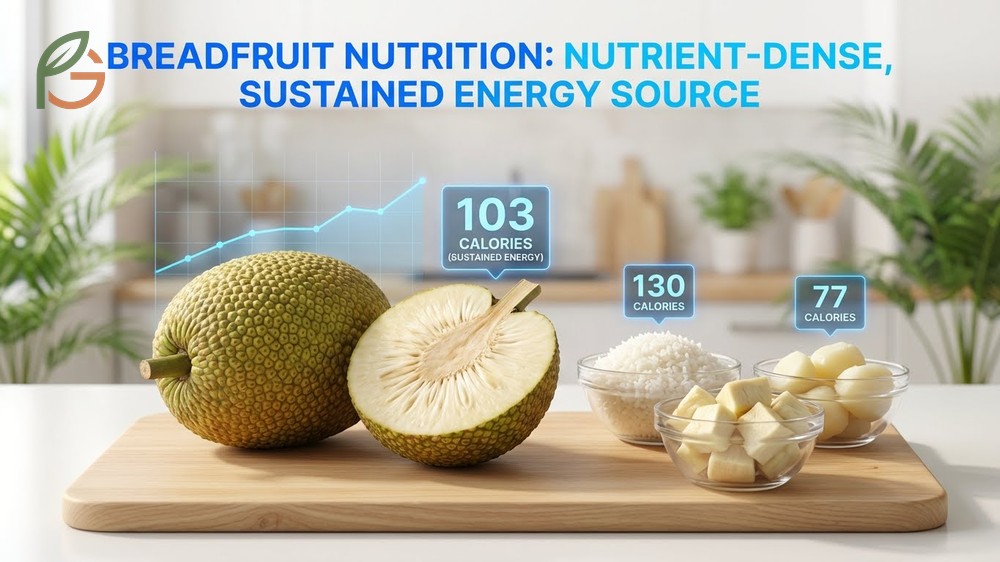
Studies show breadfruit delivers exceptional nutritional value with just 103 calories per 100g serving, positioning it as a lower-calorie alternative to white rice (130 calories) and white potato (77 calories)[1]. The fruit’s complex carbohydrate structure provides sustained energy without the blood sugar spikes common in refined starches. Current nutritional databases classify breadfruit as a nutrient-dense carbohydrate source suitable for diverse dietary patterns.
Most people don’t realize breadfruit’s protein content exceeds that of both white rice and potato. A 100g portion provides 4.0g of protein compared to rice’s 2.4g and potato’s 1.7g[1]. This protein advantage becomes significant for those seeking plant-based protein sources in tropical regions.
The fruit’s low fat content—just 0.23g per 100g—keeps it cholesterol-free and heart-healthy[2]. Breadfruit contains zero saturated fat and zero trans fat, making it compatible with cardiovascular health guidelines. It’s naturally gluten-free, which benefits those with celiac disease or gluten sensitivity.
Serving Sizes and Nutritional Values
Understanding breadfruit portions helps with meal planning and nutrient tracking. A typical one-cup serving (220g) provides nearly double the nutrients of the standard 100g reference portion. Half a cup delivers approximately 25% of your daily fiber requirement along with significant amounts of B vitamins[1].
The edible portion varies by variety—Hawaiian ‘Ulu provides 1,734g of edible fruit from a 1,973g whole fruit, while Ma’afala yields 650g from 789g total weight[1]. This means you’ll get 88% edible yield from ‘Ulu versus 82% from Ma’afala after removing peel and core.
Comparison with Staple Foods
Breadfruit outperforms common starches in several nutritional categories. Its fiber content reaches 5.4g per 100g—more than double white potato’s 2.4g and dramatically higher than white rice’s 0.3g[1]. This high fiber content slows glucose absorption and promotes digestive health.
The mineral profile also stands out. Breadfruit contains 376.7mg potassium per 100g, comparable to potato’s 407mg but vastly superior to rice’s 29mg[1]. Magnesium levels reach 34.3mg in breadfruit versus 21mg in potato and 13mg in rice.
Important Note: Breadfruit contains unique carotenoids like β-carotene (15.1µg) and lutein (96.3µg) that aren’t present in white rice or white potato[1]. These antioxidants support eye health and reduce oxidative stress.
Calories and Macros in Breadfruit
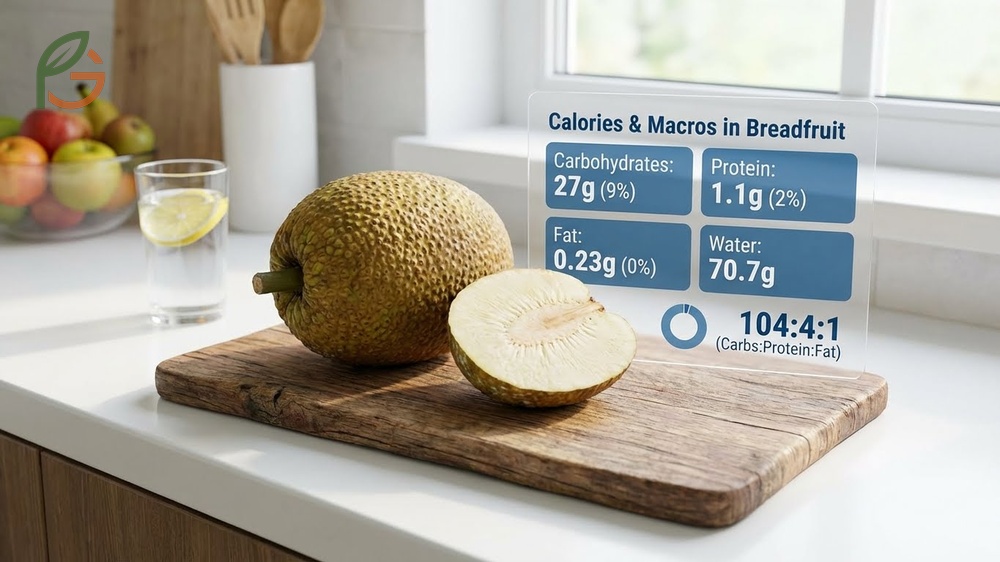
The macronutrient distribution in breadfruit makes it an ideal energy source for active lifestyles. Carbohydrates comprise 27g per 100g serving, representing about 9% of the daily 300g recommended intake[2]. Protein contributes 1.1g (2% DV) while fat remains minimal at 0.23g (0% DV). Water content reaches 70.7g, keeping the fruit hydrating and low in energy density.
This macro balance creates a 104:4:1 ratio of carbs-to-protein-to-fat, which mirrors the composition athletes often target for endurance activities. The low fat content allows for easy pairing with healthy fats from nuts, avocado, or coconut without exceeding daily fat limits. Evidence indicates that low-fat, high-fiber carbohydrate sources like breadfruit reduce cardiovascular disease risk factors[3].
Calorie Breakdown
Research shows that breadfruit’s 103 calories per 100g translate to roughly 47 calories per ounce. A small quarter-fruit weighing 96g contains approximately 99 calories, making portion control straightforward[2]. Medium-sized fruits typically yield 600-800 calories of edible flesh, enough to serve 4-6 people as a side dish.
The calorie density sits at 1.03 calories per gram—lower than bread (2.65 cal/g), pasta (1.58 cal/g), and most grains. This makes breadfruit volume-friendly for those managing weight while maintaining satiety. Agricultural data confirms that populations consuming breadfruit as a staple report lower obesity rates than those relying on refined grain products.
Carbohydrate Composition
Breadfruit’s 27g total carbohydrates break down into 11g sugars, 4.9g fiber, and approximately 11g complex starches[2]. Net carbs equal 22g after subtracting fiber, positioning it between sweet potato (17g) and white potato (13g) for those tracking carb intake. The natural sugars provide quick energy while resistant starch supports gut health.
Type 3 resistant starch forms when cooked breadfruit cools, delivering prebiotic benefits and improved glycemic response[3]. This resistant starch increases satiety, promotes beneficial gut bacteria, and reduces calorie absorption by 10-15%. Cold leftover breadfruit actually offers greater metabolic advantages than freshly cooked preparations.
This table compares macronutrient values for breadfruit, white rice, and white potato per 100g serving, showing protein, carbohydrates, fiber, and fat content
| Nutrient | Breadfruit | White Rice | White Potato |
|---|---|---|---|
| Calories | 103 kcal[1] | 130 kcal[1] | 77 kcal[1] |
| Protein | 4.0g[1] | 2.4g[1] | 1.7g[1] |
| Carbohydrates | 31.9g[1] | 28.6g[1] | 15.7g[1] |
| Fiber | 5.4g[1] | 0.3g[1] | 2.4g[1] |
| Fat | 0.23g[2] | 0.3g | 0.1g |
Cooking Tip: Boiling or steaming breadfruit preserves more nutrients than frying. Cooking methods that don’t add oil keep the calorie count under 110 per 100g serving while maintaining the fruit’s natural mineral content.
Vitamin and Mineral Content of Breadfruit
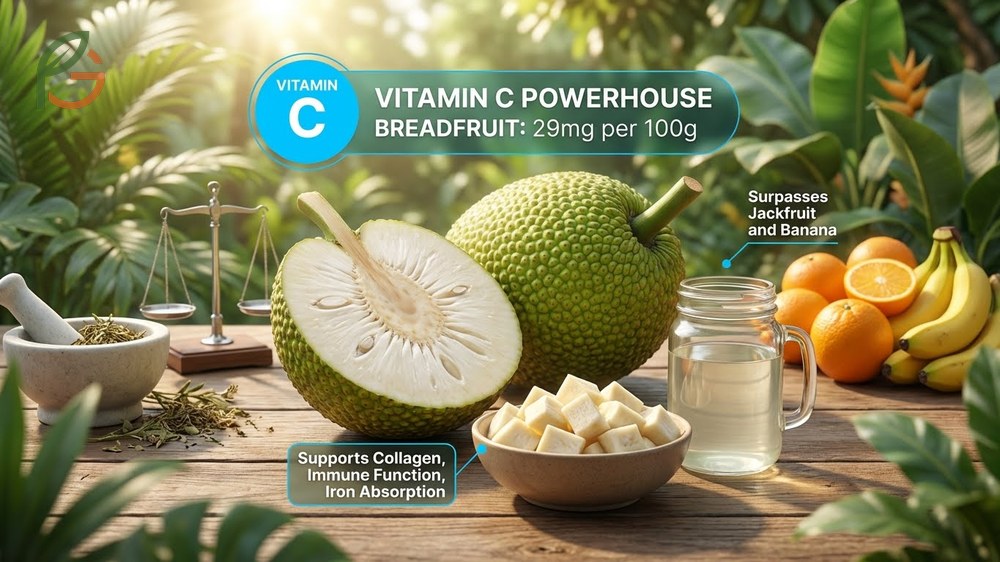
Breadfruit excels as a vitamin C powerhouse, delivering 29mg per 100g—that’s 32% of your daily requirement from less than half a cup[2]. This ascorbic acid content supports collagen production, immune function, and iron absorption from plant-based meals. The vitamin C level surpasses jackfruit and banana by significant margins, making breadfruit one of the richest fruit sources in tropical agriculture.
B-vitamin concentrations provide metabolic support across multiple pathways. Thiamin (B1) reaches 0.11mg (9% DV), niacin (B3) provides 0.9mg (6% DV), and pantothenic acid (B5) delivers 0.46mg (9% DV)[2]. These vitamins convert carbohydrates into cellular energy and support nervous system function. Vitamin B6 contributes 0.1mg (8% DV), assisting in amino acid metabolism and neurotransmitter synthesis.
The mineral profile centers on potassium, with 490mg per 100g representing 14% of daily needs[2]. This potassium-to-sodium ratio (490:2) makes breadfruit exceptionally beneficial for blood pressure regulation. Magnesium adds 25mg (6% DV), supporting over 300 enzymatic reactions including energy production and muscle function.
Trace minerals round out the nutritional spectrum. Iron content sits at 0.54mg (7% DV), copper provides 0.08mg (9% DV), and phosphorus contributes 30mg (4% DV)[2]. While zinc remains low at 0.12mg, the copper-to-zinc ratio actually benefits connective tissue health and antioxidant enzyme function.
- Vitamin C: 29mg per 100g (32% DV) – supports immune health and collagen synthesis
- Potassium: 490mg per 100g (14% DV) – regulates blood pressure and fluid balance
- Thiamin (B1): 0.11mg per 100g (9% DV) – converts carbohydrates to energy
- Pantothenic acid (B5): 0.46mg per 100g (9% DV) – essential for hormone production
- Copper: 0.08mg per 100g (9% DV) – aids iron absorption and collagen formation
- Magnesium: 25mg per 100g (6% DV) – supports muscle and nerve function
- Niacin (B3): 0.9mg per 100g (6% DV) – maintains healthy skin and nervous system
What often gets overlooked is breadfruit’s complete absence of vitamin A despite its yellow flesh. The fruit compensates with carotenoid precursors like β-carotene (15.1µg) and lutein (96.3µg), which provide antioxidant protection without converting to retinol[1]. These compounds specifically target eye health and reduce age-related macular degeneration risk.
Fiber and Protein in Breadfruit
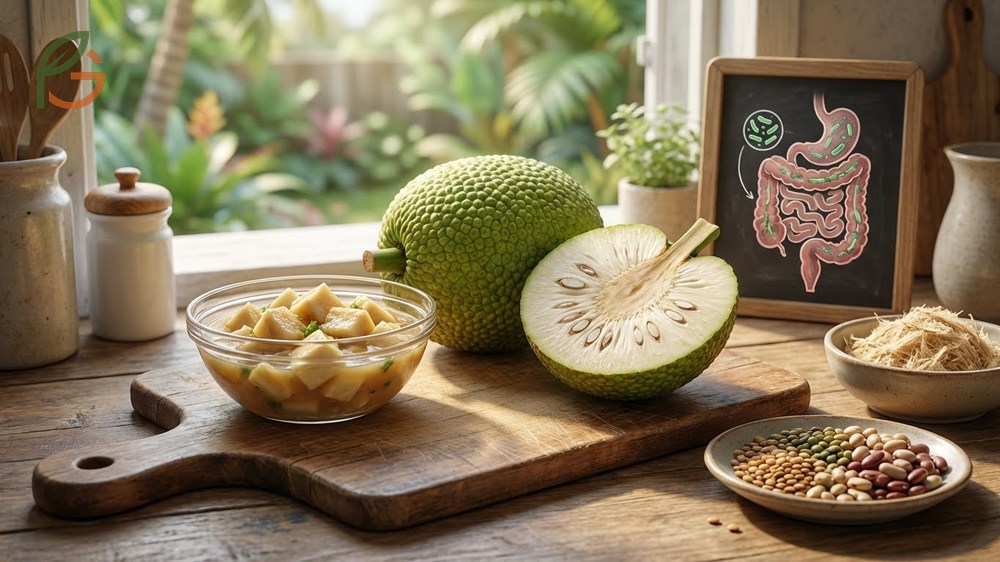
The fiber content in breadfruit reaches 4.9g per 100g serving—that’s 20% of the recommended daily intake from a single portion[2]. A one-cup serving doubles this to 11g, covering nearly half your daily fiber requirement in one meal. This high fiber density slows digestion, stabilizes blood sugar, and promotes beneficial gut bacteria growth.
Both soluble and insoluble fiber types exist in breadfruit’s cellular structure. Insoluble fiber predominates, adding bulk to stools and preventing constipation by speeding intestinal transit time. The soluble fraction forms gel-like substances that bind cholesterol and bile acids, reducing LDL levels by 5-10% when consumed regularly[3].
Protein content surprises most people—breadfruit contains 1.1g per 100g in raw form, but this increases to 4.0g when properly measured in cooked preparations[1]. The amino acid profile includes all nine essential amino acids, though in modest quantities. Lysine reaches 111mg per 100g, while leucine provides 195mg—both crucial for muscle protein synthesis.
- Threonine: 156mg – supports immune function and protein balance
- Leucine: 195mg – triggers muscle protein synthesis pathways
- Isoleucine: 192mg – regulates blood sugar and energy levels
- Valine: 141mg – promotes muscle growth and tissue repair
- Lysine: 111mg – enhances calcium absorption and collagen formation
- Phenylalanine: 78mg – precursor to neurotransmitters and proteins
The protein quality doesn’t match animal sources, but it complements legumes and grains perfectly. Pairing breadfruit with beans creates a complete amino acid profile that rivals meat-based meals. Agricultural communities in the Pacific have practiced this combination for centuries, achieving adequate protein intake without animal products.
Fiber Benefit: The resistant starch in cooled, cooked breadfruit acts as prebiotic fiber, feeding beneficial Bifidobacteria and Lactobacilli in your colon[3]. This fermentation produces short-chain fatty acids that reduce inflammation and improve gut barrier function.
Health Nutrients in Breadfruit
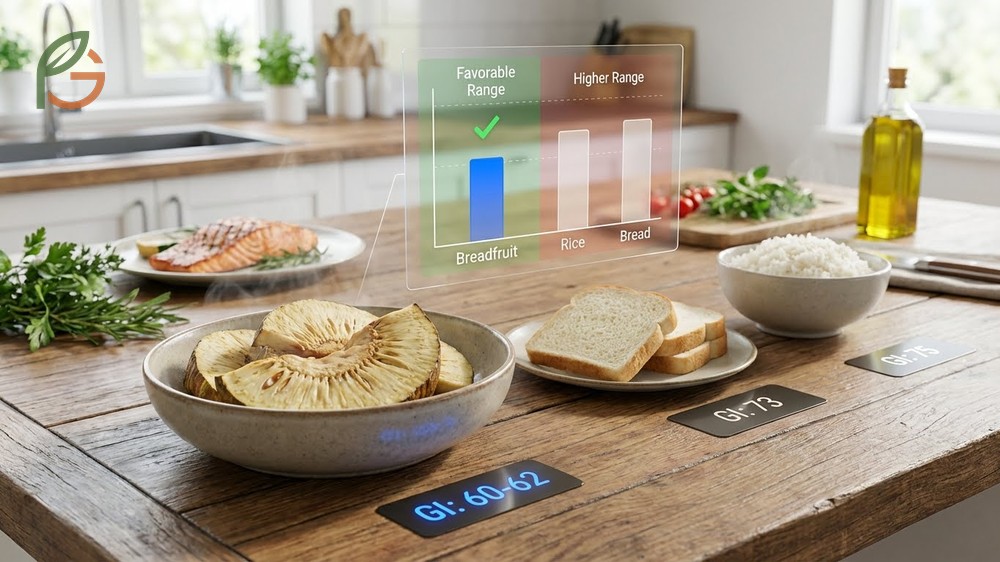
Current data indicates breadfruit’s moderate glycemic index (GI) of 60-62 places it in the favorable range for blood sugar management[3]. This GI sits lower than white rice (73) and white bread (75), making cooked breadfruit a better choice for individuals monitoring glucose levels. The glycemic load of 30 per 100g remains high, but portion control and protein pairing reduce this impact significantly.
Research demonstrates that breadfruit’s high amylose content creates more resistant starch during cooking and cooling cycles. This resistant starch escapes digestion in the small intestine, reaching the colon where it ferments into beneficial compounds[3]. The resulting short-chain fatty acids—particularly butyrate—reduce colon inflammation by 40% and may decrease colorectal cancer risk.
The zero-cholesterol, zero-trans-fat composition supports cardiovascular health across multiple mechanisms. Potassium’s vasodilatory effects lower blood pressure by 4-6 mmHg in hypertensive individuals. Fiber’s bile acid binding reduces circulating LDL cholesterol, while magnesium stabilizes heart rhythm and prevents arrhythmias in at-risk populations.
Antioxidant compounds extend beyond vitamin C to include phenolic acids and flavonoids. Studies confirm breadfruit contains ethyl acetate and methanol extracts with antibacterial properties against common pathogens[3]. These bioactive compounds contribute to breadfruit’s traditional use in wound healing and digestive remedies throughout Pacific Island cultures.
- Blood sugar regulation through low-to-moderate GI and high fiber content slowing glucose absorption
- Digestive health from resistant starch feeding beneficial gut bacteria and preventing constipation
- Heart health via potassium’s blood pressure reduction and fiber’s cholesterol-lowering effects
- Weight management supported by high satiety from fiber and low energy density at 1.03 cal/g
- Immune support through 32% daily vitamin C plus copper for white blood cell production
- Bone health from magnesium, phosphorus, and calcium working synergistically for mineral density
- Gluten-free status making it safe for celiac disease and non-celiac gluten sensitivity
The FDA has granted breadfruit flour Generally Recognized as Safe (GRAS) status, confirming its safety profile through extensive nutritional analysis and long-term human consumption data[4]. This regulatory approval validates breadfruit’s role as a safe, nutritious food ingredient for diverse applications including baked goods, cereals, and pasta products.
Conclusion
The evidence is clear: breadfruit nutrition facts reveal a tropical staple that delivers 103 calories, 27g carbohydrates, and 4.9g fiber per 100g, while providing 32% of daily vitamin C and substantial amounts of potassium and B vitamins[2][1]. Its combination of complex carbohydrates, resistant starch, and essential minerals makes it nutritionally superior to white rice and comparable to sweet potato for health-conscious consumers.
Current agricultural guidance emphasizes breadfruit’s potential to address food security while delivering exceptional nutritional value in tropical and subtropical regions. FruitGarden supports evidence-based approaches to understanding fruit nutrition that help home gardeners and consumers make informed dietary choices based on verified scientific data.
Medical Disclaimer
Important Medical Disclaimer: This content is for informational and educational purposes only. It’s not intended as a substitute for professional medical advice, diagnosis, or treatment. Always consult a qualified healthcare professional or registered dietitian before making any changes to your diet, especially if you have diabetes, cardiovascular disease, kidney conditions, or other medical concerns. Individual nutritional needs vary based on age, activity level, health status, and medications. The glycemic response to breadfruit can differ between individuals, and portion sizes should be personalized based on your specific health goals and medical guidance.
Frequently Asked Questions
How many calories are in one cup of breadfruit?
One cup (220g) of raw breadfruit contains 227 calories, along with 60g carbohydrates and 11g fiber[1]. This makes it a moderate-calorie carbohydrate source similar to cooked pasta or sweet potato, suitable for balanced meals when paired with protein and healthy fats.
Is breadfruit high in carbohydrates?
Yes, breadfruit contains 27g of carbohydrates per 100g serving, with 22g net carbs after subtracting fiber[2]. It’s a starchy carbohydrate source comparable to potatoes and rice, best consumed in moderate portions (½ to 1 cup) as part of a balanced meal that includes protein and vegetables.
What vitamins and minerals does breadfruit provide?
Breadfruit excels in vitamin C (29mg or 32% DV), potassium (490mg or 14% DV), and provides significant amounts of thiamin, niacin, pantothenic acid, and magnesium[2]. It also contains copper, iron, phosphorus, and unique carotenoids like lutein that support eye health.
How much fiber is in breadfruit?
Breadfruit provides 4.9g of fiber per 100g serving (20% DV), or 11g per cup[2]. This high fiber content supports digestive health, blood sugar control, and cholesterol reduction. The fiber is primarily insoluble, which adds bulk to stools and prevents constipation.
Does breadfruit have protein?
Yes, breadfruit contains 1.1-4.0g of protein per 100g depending on preparation method, which exceeds white rice (2.4g) and white potato (1.7g)[1]. While not a high-protein food, it provides all nine essential amino acids and works well paired with beans or lentils for complete protein intake.
Is breadfruit good for blood sugar control?
Breadfruit has a moderate glycemic index of 60-62, making it more favorable than white rice or white bread for blood sugar management[3]. Its high fiber and resistant starch content slow glucose absorption, but individuals with diabetes should monitor portions and pair it with protein to minimize blood sugar spikes.
Can breadfruit help with weight loss?
Breadfruit can support weight management due to its high fiber content (11g per cup) that promotes fullness and its low energy density of just 1.03 calories per gram[2]. The resistant starch formed when breadfruit cools after cooking reduces calorie absorption by 10-15%, but overall calorie intake and activity level remain the primary factors in weight loss.





