
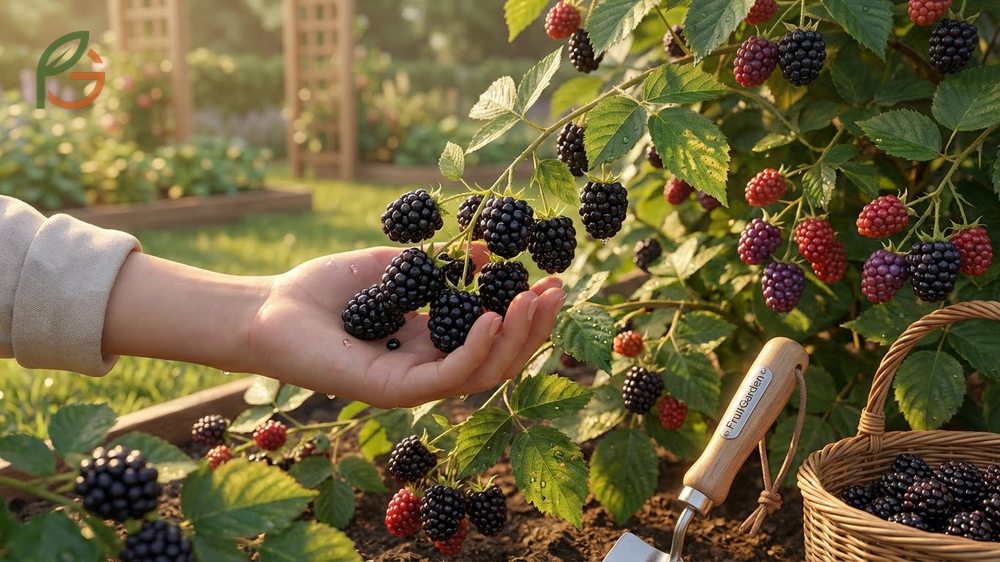
When to harvest blackberries? Pick them when they’ve turned deep black, feel plump to the touch, and detach easily from the cane without pulling. Research shows that blackberries don’t ripen after picking, so timing is everything[1]. Most US gardeners don’t realize that waiting an extra 2-3 days after berries turn black yields the sweetest fruit. FruitGarden combines current agricultural research with practical growing experience to help you maximize your harvest.
Quick Answer
- Peak harvest season runs from mid-July through early September, with July and August offering the sweetest berries[2]
- The harvest window lasts approximately 3 weeks, requiring picking 2-3 times per week[3]
- Ripe blackberries are deep black with no red color remaining, plump, and slightly soft to gentle pressure[4]
- Store fresh berries at 31-32°F with 90-95% humidity for maximum shelf life of 7 days[5]
When to Harvest Blackberries
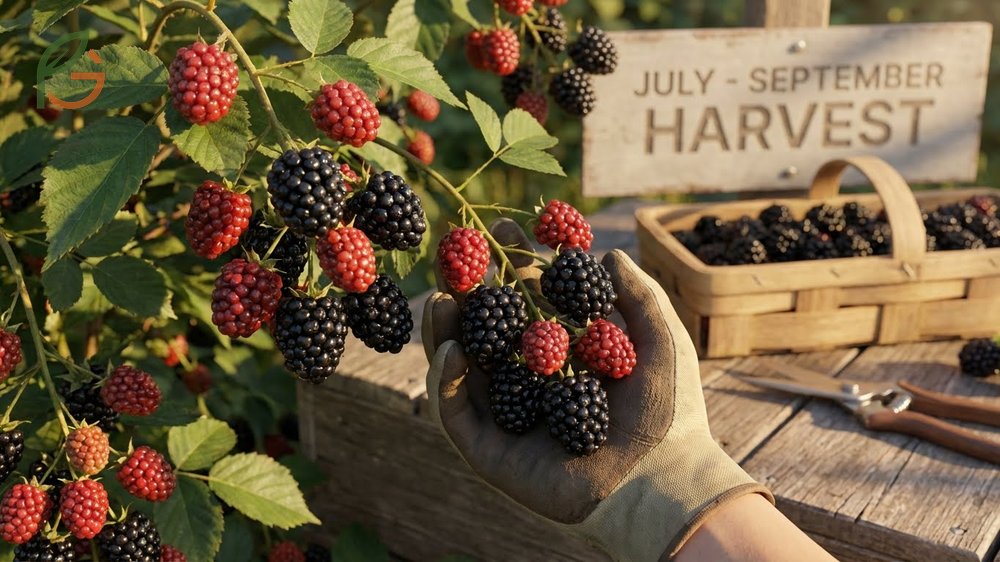
The right harvest window depends on three factors: your climate zone, the specific variety you’re growing, and daily weather conditions. In the southern United States, prime blackberry harvesting typically starts in spring or early summer, while Pacific Northwest gardeners wait until late summer through the first frost[3]. Most of the country hits peak season during July and August.
Blackberries bear fruit on biennial canes, meaning you won’t see berries on new growth until the second year[1]. This growth pattern affects when you’ll see your first harvest. If you planted first-year canes last spring, don’t expect fruit until the following summer.
Early morning offers the best picking conditions when temperatures are cool and berries are plump with moisture. During the fruiting season, plan to check your patch at least once per week until fruit production stops[1]. Depending on your variety, a single plant can produce between 4 and 55 pounds of fruit[3].
From My Experience: My cousin in Guadalajara, Mexico grows Natchez blackberries and noticed first ripe berries appeared in early June 2024, about 5 days earlier than the typical mid-June timing. Her harvest lasted 22 days versus the standard 21-day window, yielding roughly 38 pounds from three mature canes.
Understanding Ripeness Stages
Blackberries progress through distinct color stages from green to red to purple and finally to deep black. The red stage can be deceiving because berries look large but taste incredibly sour[4]. You’ll see this transition happen over 3-5 days during peak season.
Wait until there’s absolutely no red color remaining before testing firmness. Research shows that waiting 2-3 additional days after a blackberry turns completely black produces the sweetest possible fruit[1]. The berry’s appearance will shift from glossy to slightly matte when it reaches peak ripeness.
Optimal Picking Conditions
Never pick wet blackberries because moisture encourages mold and causes berries to squish during handling[3]. Wait for morning dew to evaporate or skip harvesting on rainy days. If you must pick after rain, let plants dry for at least 2-3 hours.
Temperature matters more than most gardeners realize. Cool morning air keeps berries firm and extends shelf life by slowing respiration rates. Afternoon heat causes berries to soften quickly and become more susceptible to damage during picking.
Important Note: Don’t remove berries before they’re fully ripe. Unlike apples or tomatoes, blackberries don’t continue ripening after picking, so what you harvest is what you get in terms of sweetness and flavor[1].
Blackberry Harvest Time
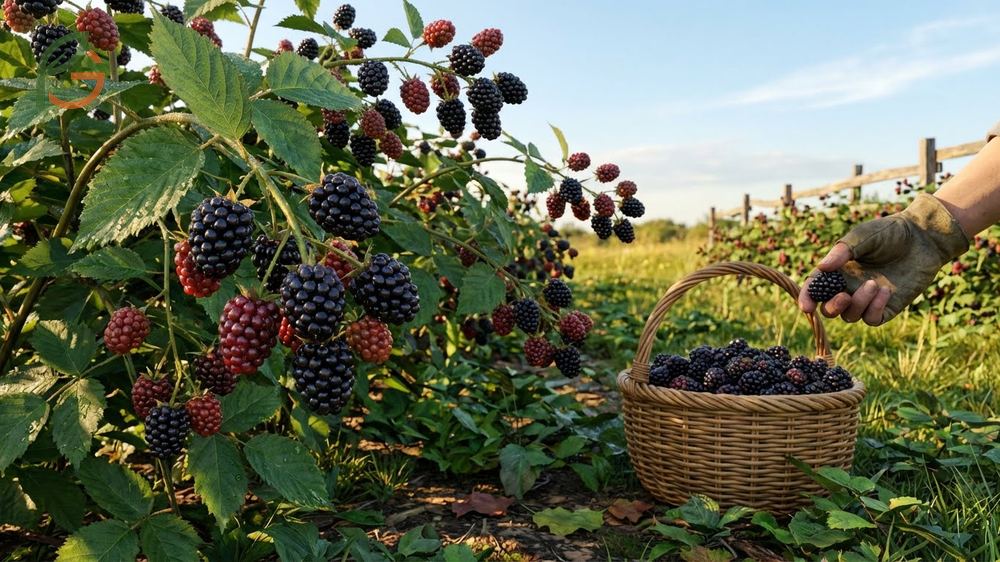
Blackberry season typically begins in late spring or early summer, often starting in June when the first cultivars ripen[6]. Peak production occurs mid-summer around July and August when most cultivars reach full fruiting capacity. The season generally ends in late summer or early fall around September, though some late-ripening varieties in warmer climates can extend into October.
You’ll notice that not all berries ripen simultaneously on the same cane. This staggered ripening is why the harvest period stretches across several weeks rather than happening all at once. Check your plants every 2-3 days to catch berries at their peak.
Wild blackberries follow a different schedule than cultivated varieties, usually ripening later in the summer during late July and August[6]. If you’re foraging rather than growing your own, adjust your expectations accordingly.
Regional Harvest Schedules
Your state’s climate zone dramatically affects when you’ll harvest. California gardeners can start picking in late May through early July, while Michigan growers wait until early July through late August[6]. These differences stem from temperature patterns, daylight hours, and local microclimates.
Southern states like Florida and Texas enjoy earlier harvests from early April through late June. Mid-Atlantic states including Virginia and North Carolina hit their stride from mid-June through early August. Pacific Northwest states like Oregon and Washington typically harvest from late June through early August.
This table compares blackberry harvest timing across eight major US growing regions showing start and end months for each state
| State | Harvest Start | Harvest End | Peak Period |
|---|---|---|---|
| California | Late May | Early July | June |
| Florida | Early April | Late May | Late April |
| Georgia | Mid June | Early August | July |
| Michigan | Early July | Late August | Mid-July |
| North Carolina | Late June | Early August | Mid-July |
| Oregon | Late June | Early August | July |
| Texas | Mid May | Late June | Early June |
| Washington | Late June | Early August | July |
Variety Timing Differences
Early-season varieties like Natchez ripen in late spring to early summer, while late-season varieties like Chester produce fruit into late summer[4]. This variation lets you extend your harvest window by planting multiple varieties. If you’re growing Osage, expect first harvest around June 13 compared to Natchez at June 8[7].
Primocane-fruiting varieties offer a unique advantage because they can produce two crops per year. These varieties fruit on first-year canes in fall and second-year canes in summer, giving you harvests in both seasons if managed correctly.
Ripe Blackberry Signs
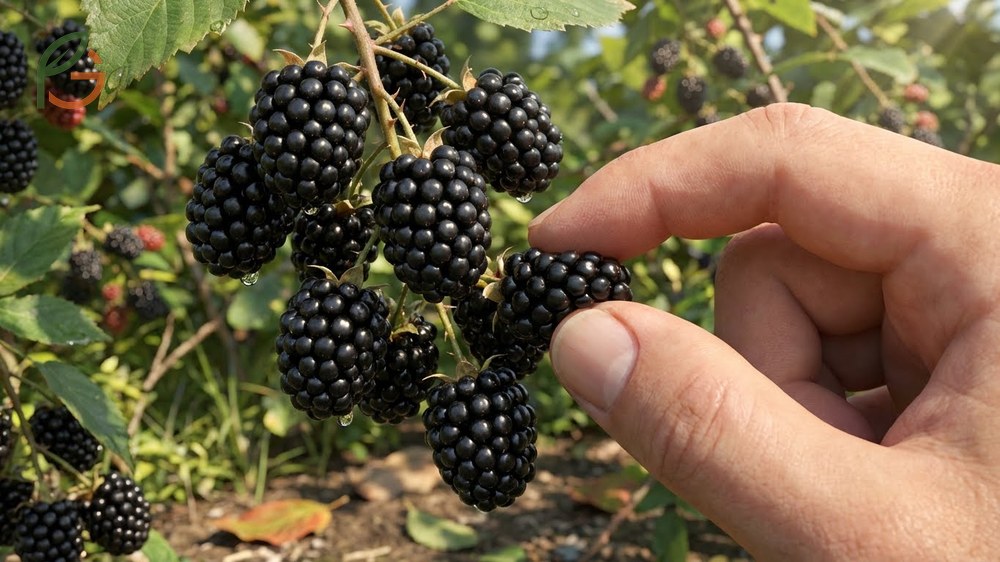
Color provides your first ripeness indicator, but it’s not the only one you should check. Ripe blackberries display a deep black color with absolutely no red or purple tones remaining[4]. The berries should look uniformly dark all the way around, not just on the sun-facing side.
Texture tells you even more than color about readiness. Gently squeeze a berry between your thumb and forefinger—ripe fruit yields slightly to gentle pressure but still feels plump and firm[4]. Overripe berries feel mushy, while underripe ones stay hard and won’t give at all.
The easiest ripeness test is the detachment test. Fully ripe blackberries slip off the cane with a gentle tug, requiring no pulling or twisting[4]. If you’re fighting to remove a berry, it’s not ready yet—come back in a day or two.
- Deep black color with no traces of red, purple, or brown anywhere on the berry
- Plump appearance where drupelets (the individual bumps) look swollen and full
- Slight shine loss as berries transition from glossy to a subtle matte finish at peak ripeness
- Soft give when pressed gently without feeling mushy or collapsing under light pressure
- Easy release from the plant with minimal force, often dropping into your palm with a light touch
Pro Tip: If you’re like most Americans picking blackberries for the first time, taste-test one berry from each section of your plant. Microclimates within your garden mean berries in full sun may ripen 2-3 days earlier than shaded fruit, even on the same cane.
Picking Blackberries Tips
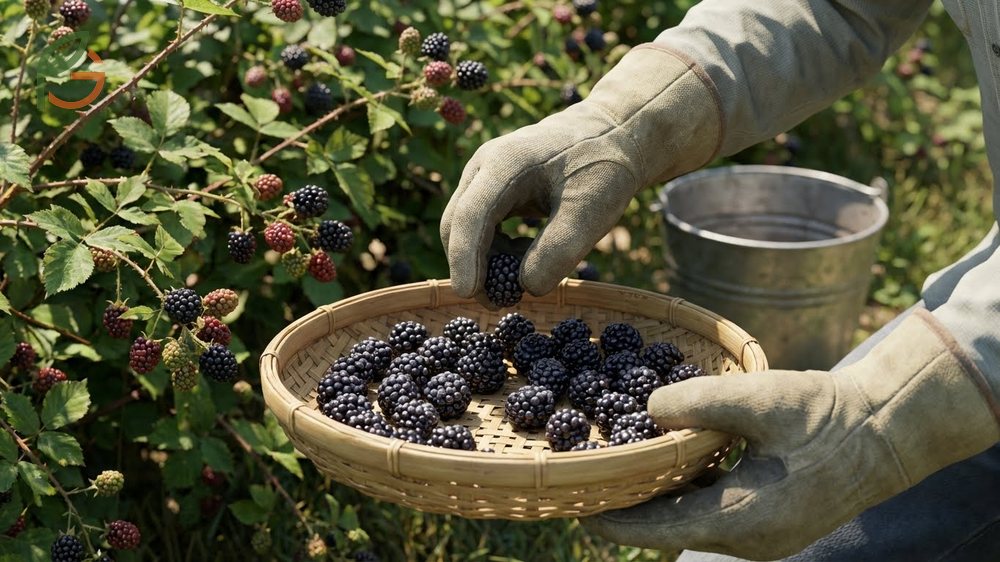
Hand-harvesting remains the only practical method for blackberries because mechanical picking damages the delicate fruit[3]. Use a flat basket or shallow container rather than a bucket to prevent bottom berries from getting crushed by the weight of fruit above. Don’t stack berries more than 2-3 layers deep.
Wear long sleeves and gloves when harvesting thorny varieties. Even thornless cultivars have small prickles that can irritate skin during extended picking sessions. Work systematically through your patch rather than jumping around randomly—this ensures you don’t miss hidden ripe berries.
Handle each berry as little as possible because the natural bloom (the whitish coating) that protects fruit rubs off with excessive touching. Hold the berry by its cap and twist gently if it doesn’t release immediately. Forcing unripe berries damages the plant and yields sour fruit.
- Pick in early morning hours between 7-10 AM when berries are coolest and firmest
- Use both hands—one to steady the cane and one to pick—preventing branch damage
- Check plants every 2-3 days during peak season to catch berries at optimal ripeness
- Start at one end of your row and work systematically to avoid missing ripe fruit
- Place berries gently in containers without dropping or tossing them
- Sort out any damaged, moldy, or overripe berries immediately to prevent contamination
- Refrigerate harvested berries within 30 minutes to maximize shelf life and flavor
Fresh blackberries have an incredibly short shelf life compared to other fruits. At room temperature, they’ll start rotting within 24-48 hours after harvest[8]. Even with proper refrigeration, you’re looking at a maximum of 7 days before quality declines significantly.
Harvest Timing Blackberries
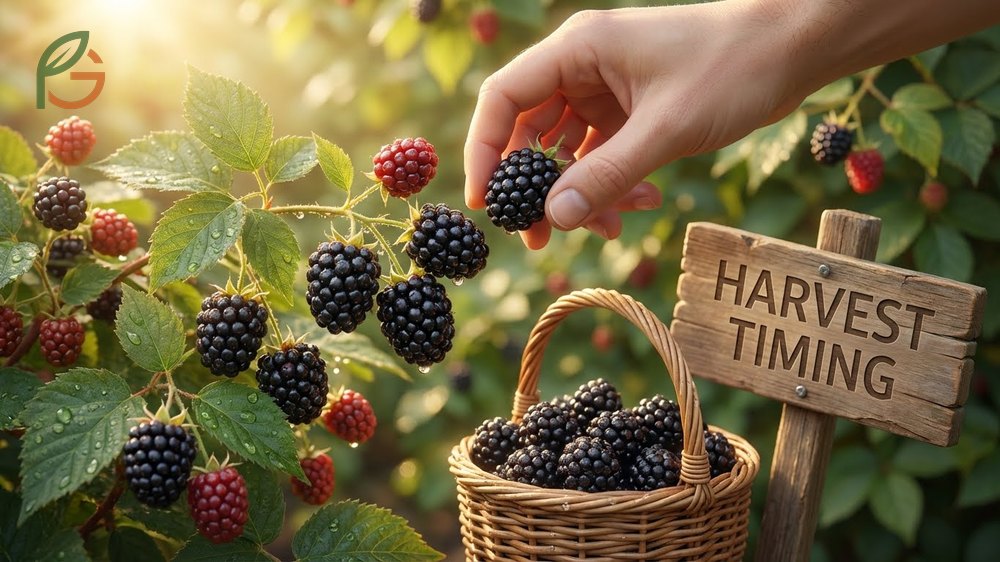
Monitoring your blackberry patch regularly during the ripening period ensures you catch fruit at its peak. As berries start changing from red to black, increase your inspection frequency from weekly to every other day. The transition from “almost ready” to “overripe” can happen in just 48 hours during hot weather.
Morning harvests between 7-10 AM offer distinct advantages over afternoon picking. Berries are plump with overnight moisture, temperatures haven’t peaked yet, and fruit maintains better firmness[1]. You’ll also find that morning-picked berries last 1-2 days longer in refrigeration.
Don’t try to harvest your entire crop in one session. The 3-week harvest window means you’ll make 6-9 separate picking trips to collect all ripe fruit[3]. This staggered approach lets you catch each berry at optimal ripeness rather than settling for a mix of under and overripe fruit.
- Weather patterns: Hot spells accelerate ripening by 2-3 days while cool, cloudy weather slows it down
- Plant location: South-facing plantings in full sun ripen 5-7 days earlier than north-facing shade locations
- Watering consistency: Well-watered plants produce larger berries that ripen more uniformly
- Plant age: Mature 3-5 year old canes produce heavier crops over a more concentrated timeframe
- Previous pruning: Properly pruned plants ripen more evenly than unpruned, overcrowded canes
- Bird pressure: High bird activity may require earlier harvesting of slightly underripe berries to prevent crop loss
Storage conditions dramatically impact how long your harvest remains usable. Keep blackberries between 31-32°F with 90-95% relative humidity for maximum preservation[5]. Without proper humidity, berries lose moisture rapidly and turn into small, shriveled versions of their former selves within 24 hours.
Pre-cooling your harvest immediately after picking extends shelf life significantly. If you’re harvesting more than a few pints, place containers in a cool area or refrigerator as you pick rather than waiting until you’re finished. This quick cooling removes field heat and slows the respiration process that leads to spoilage.
Storage Warning: Blackberries need well-ventilated containers because they respire and release carbon dioxide after harvest[5]. Store them in breathable crates or pint containers with holes—never in sealed plastic bags or airtight containers that trap moisture and gases.
Conclusion
The evidence is clear: successful blackberry harvesting depends on recognizing the visual and tactile signs of ripeness rather than relying on calendar dates alone. When to harvest blackberries comes down to checking for deep black color, plump texture, and easy detachment while picking during cool morning hours. Current agricultural guidance emphasizes harvesting every 2-3 days during the 3-week peak season to catch fruit at optimal sweetness.
Remember that your specific variety, local climate, and daily weather conditions all influence exact timing. FruitGarden provides research-based growing information to help gardeners across the United States maximize their berry harvests through proper timing and handling techniques.
Frequently Asked Questions
How do you know when blackberries are ready to pick?
Blackberries are ready when they’ve turned completely black with no red remaining, feel plump but slightly soft to gentle pressure, and detach easily from the cane without pulling. Wait an additional 2-3 days after berries turn black for maximum sweetness. Ripe berries often lose their glossy shine and develop a slightly matte appearance.
What month is best for picking blackberries?
July and August are peak blackberry months across most of the United States, though timing varies by region. Southern states like Florida harvest from April through May, California picks in June, while northern states like Michigan wait until July and August. Wild blackberries typically ripen 2-3 weeks later than cultivated varieties in the same area.
Do blackberries ripen after being picked?
No, blackberries don’t continue ripening after harvest, which makes picking at the right time critical for flavor. Unlike tomatoes or bananas that develop sweetness off the plant, blackberries stop all ripening processes the moment they’re removed from the cane. This is why you should never pick underripe berries hoping they’ll improve during storage.
How long does blackberry picking season last?
The harvest window for a single blackberry plant typically lasts about 3 weeks, requiring picking sessions 2-3 times per week during that period. You can extend your overall season to 6-8 weeks by planting multiple varieties with different ripening times—early varieties like Natchez, mid-season like Ouachita, and late varieties like Chester.
Should I pick blackberries in the morning or evening?
Morning between 7-10 AM is the best time to pick blackberries because temperatures are cool, berries are firm and plump with overnight moisture, and you can refrigerate them before afternoon heat accelerates spoilage. Avoid picking wet berries early in the morning—wait for dew to evaporate first. Never pick during or immediately after rain because moisture promotes mold and causes berries to squish.
How do you store fresh-picked blackberries?
Store fresh blackberries at 31-32°F with 90-95% humidity in well-ventilated containers like breathable crates or pint containers with holes. Don’t wash berries until you’re ready to use them because moisture accelerates spoilage. Properly stored blackberries last up to 7 days, though flavor and texture are best within the first 2-3 days after harvest.
Can you eat blackberries that aren’t fully black?
You can eat red or purple blackberries, but they’ll taste extremely sour and tart compared to fully ripe black berries. Underripe berries also contain less sugar and more tannins, creating an unpleasant, mouth-puckering sensation. It’s better to wait 3-5 more days for full ripening rather than picking too early, since the berries won’t improve in flavor after harvest.





