
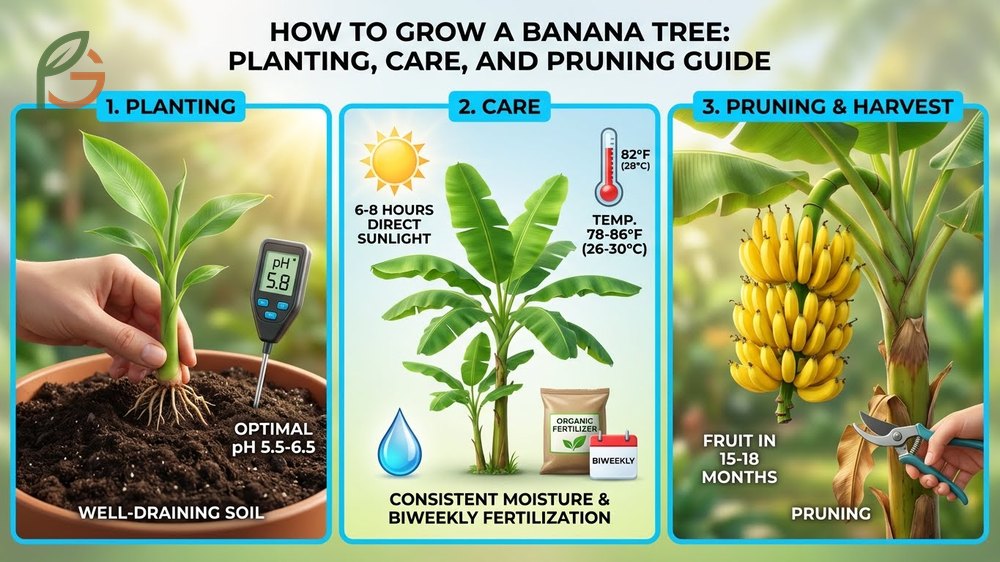
How to grow a banana tree? Plant suckers in well-draining soil with pH 5.5-6.5, provide 6-8 hours of direct sunlight, and maintain temperatures between 78-86°F (26-30°C)[1]. Research shows banana trees thrive as heavy feeders requiring consistent moisture and biweekly fertilization during active growth. Most gardeners don’t realize these tropical plants can produce fruit within 15-18 months when you match their native growing conditions. FruitGarden synthesizes current horticultural research to help you cultivate productive banana plants in your backyard.
Quick Answer
How to Grow a Banana Tree
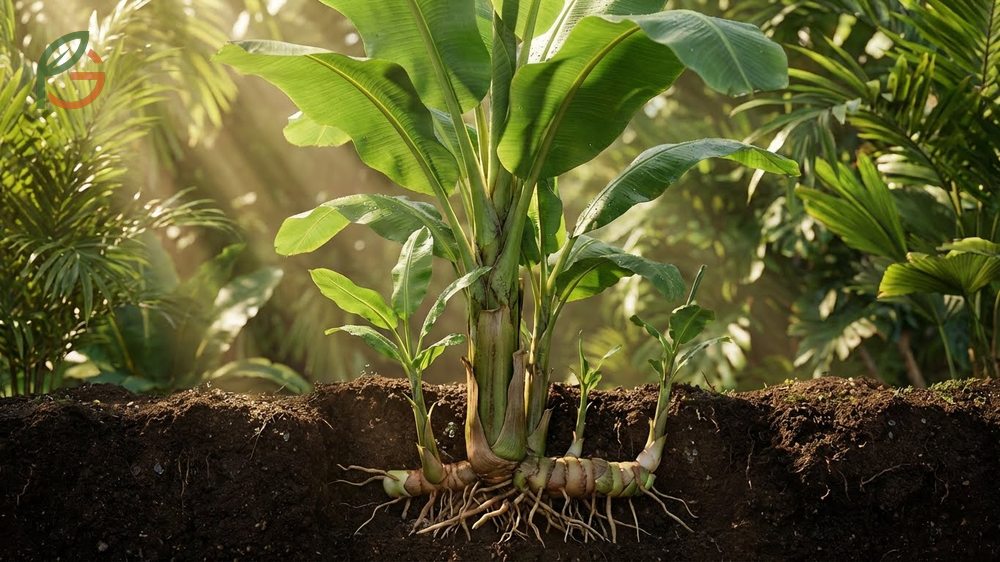
Studies demonstrate banana trees aren’t actually trees but large herbaceous plants that can reach heights of 10-30 feet depending on variety. The “trunk” consists of tightly packed leaf sheaths called a pseudostem. These tropical plants grow from underground rhizomes that continuously produce new shoots called suckers or pups.
Current agricultural data shows successful banana cultivation depends on replicating their native tropical environment. You’ll need warm temperatures year-round, abundant water, and nutrient-rich soil. Unlike many fruit crops, banana plants produce fruit just once before the main stalk dies back.
Research across tropical growing regions indicates the mother plant’s lifecycle spans 15-18 months from planting to harvest[5]. After fruiting, a selected sucker takes over as the new mother plant, creating a continuous production cycle when managed properly.
From My Experience: My cousin in Guadalajara, Mexico grew Dwarf Cavendish bananas from suckers in March 2024. The plants reached 8 feet in just 7 months versus the typical 10-12 month range, benefiting from the region’s consistent 82°F (28°C) temperatures.
Understanding Banana Tree Basics
Evidence suggests banana plants consist of three key components that determine success. The rhizome functions as the true stem underground, storing nutrients and producing suckers. The pseudostem emerges above ground as tightly wrapped leaf bases that support the plant’s height and structure.
The third component, the inflorescence, develops after sufficient vegetative growth. This flowering structure produces fruit in clusters called hands, with individual bananas termed fingers. Each mother plant flowers once, making sucker management essential for ongoing production.
Ideal Growing Conditions
Agricultural research identifies five critical environmental factors for banana cultivation. Temperature remains the most crucial element, with optimal growth occurring between 78-86°F (26-30°C)[1]. Growth slows significantly below 60°F (15°C), and frost kills the pseudostem entirely.
Soil chemistry directly impacts nutrient uptake and plant vigor. Bananas prefer slightly acidic conditions with pH 5.5-6.5[2]. The soil must drain freely while retaining moisture, as waterlogging causes root rot within days.
- Sunlight: 6-8 hours of direct sun daily for vigorous growth and fruiting
- Humidity: 50-60% relative humidity supports healthy leaf development
- Wind protection: Strong winds shred large leaves, reducing photosynthesis capacity
- Drainage: Well-draining loamy soil prevents fungal diseases
- Space: Adequate spacing reduces competition and improves air circulation
Important Note: Cold-hardy varieties like Musa basjoo survive temperatures down to -10°F (-23°C) when mulched heavily, but don’t produce edible fruit. Choose edible varieties only if your climate supports year-round warmth.
How to Plant a Banana Tree
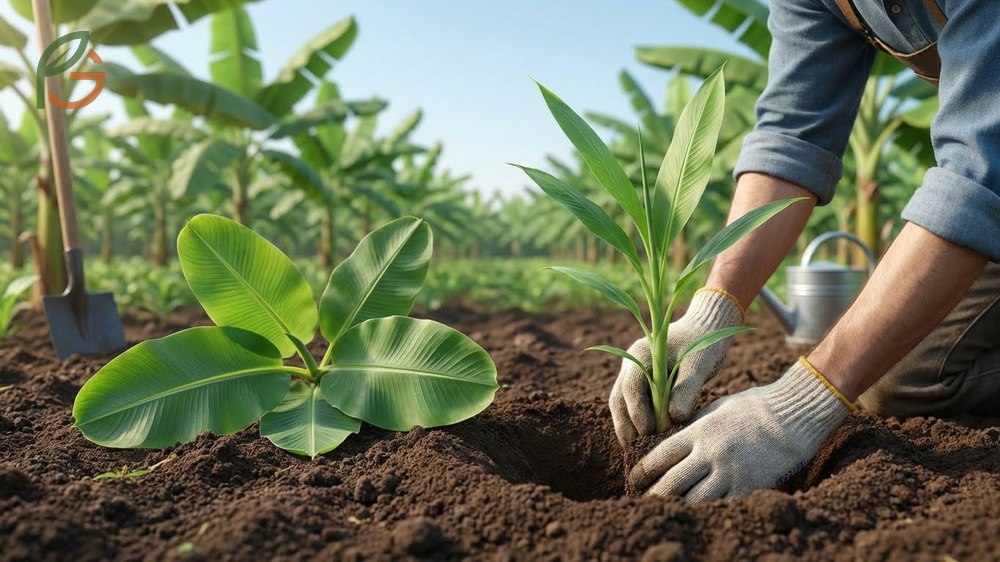
Research shows successful banana establishment begins with proper planting material selection. Sword suckers with narrow, blade-like leaves perform better than water suckers with broad leaves. Sword suckers develop from deeper in the rhizome and establish faster root systems.
The planting window matters significantly in seasonal climates. Spring planting after the last frost gives banana plants the longest growing season before winter. In frost-free regions, you can plant year-round, though avoiding extreme summer heat reduces transplant stress.
Site preparation affects long-term productivity. Choose level ground with minimal slope for easier water management. Amend heavy clay soils with 2-3 inches of compost to improve drainage and fertility before planting.
Selecting Planting Material
Studies indicate healthy suckers measure 3-4 feet tall with well-developed roots. Avoid small suckers under 12 inches, as they take longer to establish and reach fruiting size. The ideal sucker shows vigorous growth with at least 4-5 emerging leaves.
Inspect the rhizome portion carefully before planting. It should feel firm and show no signs of rot, mushiness, or discoloration. Clean cuts without ragged edges heal faster and resist disease entry.
Planting Depth and Spacing
Current guidance emphasizes shallow planting for banana success. Plant suckers 2-4 inches (5-10 cm) deep[3] with the growing tip above soil level. Deeper planting encourages rot and delays emergence.
Spacing requirements vary by variety and management intensity. Dwarf varieties like Dwarf Cavendish thrive at 6.5 x 6.5 feet spacing, while tall varieties need 8-12 feet between plants[6]. Closer spacing increases yields per acre but requires more intensive management.
- Step 1: Dig a hole twice as wide as the root ball and as deep as the sucker’s rhizome
- Step 2: Mix removed soil with compost at a 3:1 ratio to improve structure
- Step 3: Create a small mound at the hole’s bottom to prevent water pooling
- Step 4: Position the sucker with roots spread and growing tip 1-2 inches above soil line
- Step 5: Backfill with amended soil, firming gently to eliminate air pockets
- Step 6: Water deeply immediately after planting to settle soil around roots
- Step 7: Apply 3-4 inches of organic mulch in a 3-foot radius around the plant
Banana Tree Care
Evidence indicates banana plants rank among the most demanding crops for water and nutrients. Their large leaf surface area and rapid growth rate create high metabolic needs. Consistent care during the growing season directly correlates with bunch size and fruit quality at harvest.
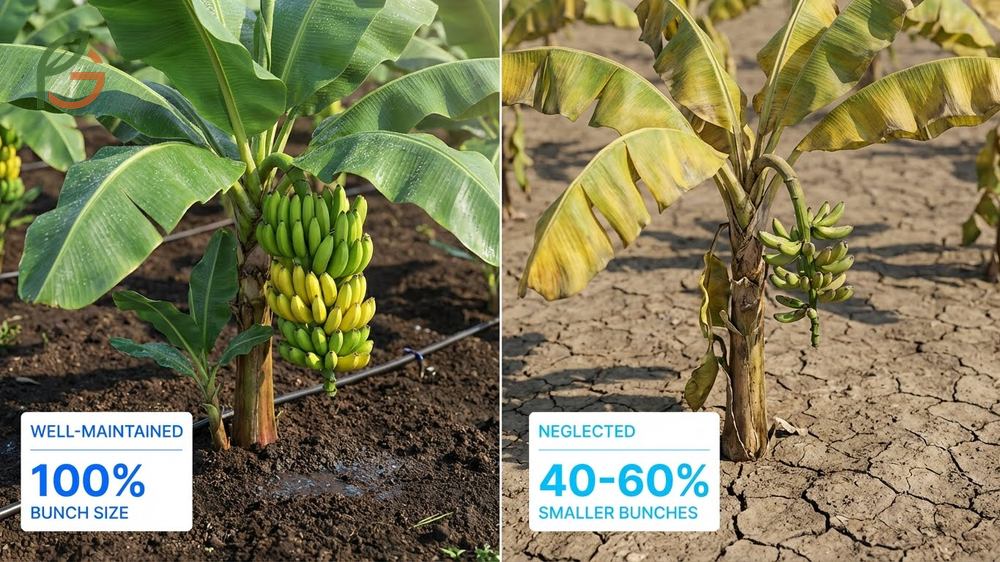
Agricultural data shows neglected banana plants produce 40-60% smaller bunches compared to well-maintained plants. The difference stems from inadequate water during critical growth phases and insufficient fertilization when the plant builds its fruit-bearing capacity.
Successful growers monitor their banana plants weekly for signs of stress. Yellow lower leaves, slow growth, and small new leaves signal nutrient deficiencies. Brown leaf edges and wilting indicate water stress, while mushy pseudostems point to overwatering issues.
Watering Requirements
Research demonstrates bananas need 1-2 inches of water weekly, increasing to daily watering during peak summer heat. The soil should stay consistently moist but never waterlogged. Check moisture levels by inserting your finger 2-3 inches deep—if it feels dry, water thoroughly.
Container-grown bananas require more frequent watering than in-ground plants. During active growth, potted bananas often need daily watering as their restricted root systems can’t access deep soil moisture. Reduce watering frequency in winter when growth slows.
Watering Tip: Install drip irrigation or soaker hoses for consistent moisture delivery. Surface watering encourages shallow roots, while deep watering promotes drought-resistant root development 12-18 inches below the surface.
Fertilizing Schedule
Studies show bananas respond dramatically to regular fertilization during the growing season. Apply a balanced fertilizer (such as 20-10-20) every 7-14 days from spring through late summer[6]. This frequent feeding supports the plant’s rapid tissue production and large biomass.
Nutrient requirements shift as the plant matures. Young plants benefit from high-nitrogen formulas that promote leaf and pseudostem growth. Switch to high-potassium fertilizers once flowering begins to support fruit development and improve fruit quality.
- Spring: Apply nitrogen-rich fertilizer (20-10-10) every 10-14 days as growth accelerates
- Early Summer: Continue biweekly applications, increasing amount as plant size increases
- Mid-Summer: Switch to balanced formula (10-10-10) when plant reaches 6-8 feet tall
- Late Summer: Transition to potassium-rich blend (8-10-12) as flowering approaches
- Fall: Reduce frequency to monthly applications as temperatures cool
- Winter: Suspend fertilization in dormant season or in regions with frost
Managing Pests and Diseases
Current monitoring data identifies Panama disease (Fusarium wilt) as the most serious banana threat worldwide. This soil-borne fungus causes yellowing leaves, pseudostem splitting, and vascular discoloration. No cure exists—prevention through resistant varieties and avoiding infected soil remains the only strategy.
Banana weevils and nematodes attack root systems, reducing plant vigor and toppling risk. Regular inspection of the pseudostem base reveals weevil entry holes and frass. Nematode damage appears as stunted growth, yellowing, and poor anchoring. Crop rotation and removal of infected plants limit spread.
This table compares common banana pests and diseases with their identification symptoms and control strategies across four categories
| Problem | Identification | Damage | Control Strategy |
|---|---|---|---|
| Panama Disease | Yellowing older leaves, pseudostem splitting, brown vascular tissue | Plant death within weeks, soil remains infected for years | Plant resistant varieties, avoid infested soil, remove infected plants immediately |
| Banana Weevil | Entry holes at pseudostem base, frass (sawdust-like material), tunneling damage | Weakened structure, plant toppling, reduced yields by 30-50% | Apply beneficial nematodes, trap adults, remove affected plant material |
| Nematodes | Stunted growth, yellowing leaves, poor anchoring, blackened roots | Reduced nutrient uptake, increased susceptibility to drought and wind | Practice crop rotation, use clean planting material, apply organic amendments |
| Sigatoka Leaf Spot | Small brown spots on leaves expanding to streaks, leaf death | Reduced photosynthesis, delayed maturity, smaller fruit bunches | Remove affected leaves, improve air circulation, apply copper fungicides if severe |
| Banana Aphids | Small green insects clustered on new growth, sticky honeydew | Transmits banana bunchy top virus, distorted new leaves | Spray with insecticidal soap, encourage beneficial insects, remove infected plants |
How to Prune a Banana Tree
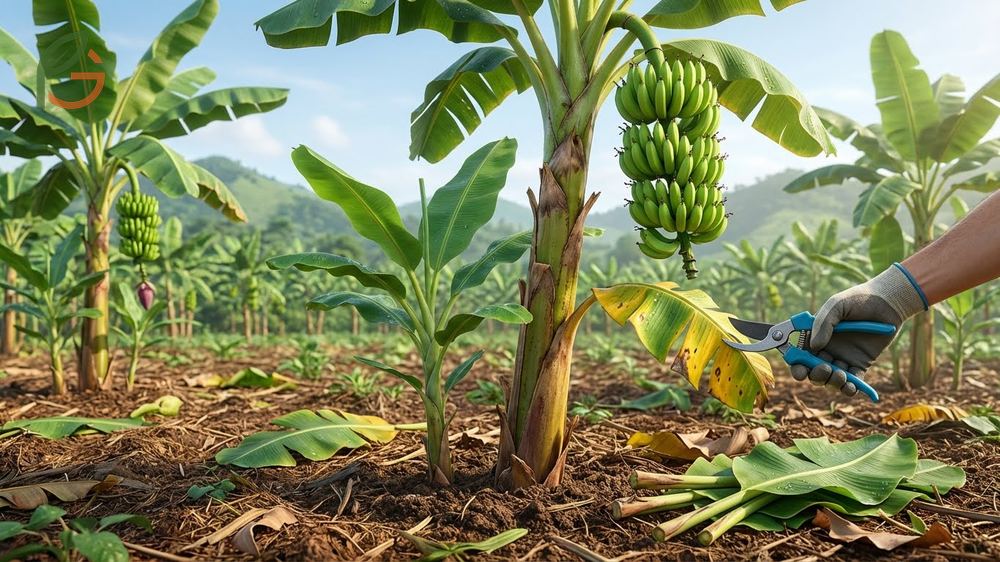
Research shows proper pruning concentrates the plant’s energy into fruit production rather than excess vegetative growth. The banana plant’s unique growth habit requires different pruning strategies than woody fruit trees. You’re managing suckers, removing damaged leaves, and eventually cutting down spent mother plants.
Evidence from commercial growers indicates the “one mother, one daughter” system produces the best results. This means maintaining just one fruiting stalk (the mother) and one replacement sucker (the daughter) per planting station. All other suckers get removed as they emerge to prevent overcrowding.
Timing your pruning interventions affects both current fruit production and next season’s crop. Premature pruning disrupts the plant’s energy balance, while delayed pruning creates competition that reduces bunch size. The key lies in understanding each plant component’s role in the production cycle.
Pruning Timing and Techniques
Studies indicate spring offers the ideal window for major structural pruning[7]. The plant’s vigorous growth response during this season allows rapid recovery. You can also prune in winter after the plant completes its lifecycle or suffers frost damage.
Dead and damaged leaves require removal year-round to maintain plant health. Use clean, sharp blades to prevent disease transmission. Cut brown or wilted leaves at their base where they attach to the pseudostem. This improves air circulation and reduces habitat for pests.
After the mother plant produces fruit, you’ll need to remove the entire spent pseudostem. Wait until you’ve harvested the bunch, then cut the stalk down to 1 inch above ground level. The rhizome remains alive underground and channels energy to the selected replacement sucker.
- Leaf pruning: Remove outer brown or damaged leaves by cutting at the pseudostem base
- Dead plant removal: Cut spent mother plants to 1 inch above ground after fruiting
- Frost damage: Wait one week after frost, then assess damage before removing affected tissue
- Flowering management: Remove male flower bud once fruit forms to direct energy to fruit development
- Tool sanitation: Clean cutting tools with 10% bleach solution between plants to prevent disease spread
Managing Suckers
Agricultural research demonstrates that sucker management directly impacts yields and fruit quality. The mother plant continuously produces suckers from the underground rhizome. Without intervention, a mature banana plant can have 5-10 suckers competing for water and nutrients.
Select the largest, most vigorous sucker as your replacement plant when the mother plant begins flowering. This sucker should be at least 2-3 feet tall with narrow, sword-like leaves. Remove all other suckers by cutting them at ground level with a sharp spade or machete.
The removed sucker material makes excellent mulch. Chop the pseudostems into 6-12 inch pieces and scatter them around the mother plant’s base. This returns nutrients to the soil and helps retain moisture during hot weather.
Sucker Timing: Don’t allow the replacement sucker to grow too early. The ideal time for sucker selection is when the mother plant shows its flower bud. Earlier selection creates competition, while later selection delays next season’s fruit.
Harvesting Bananas
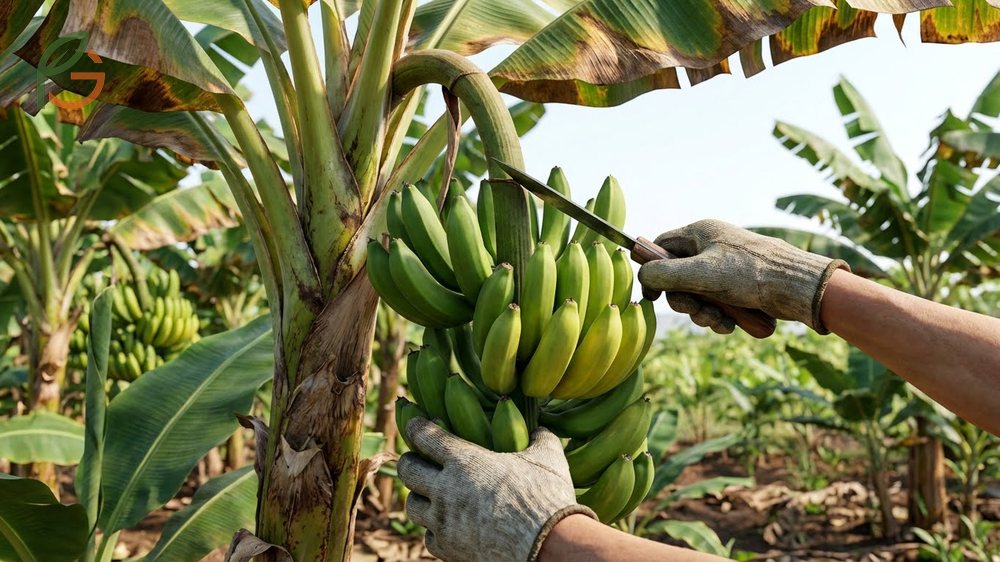
Research indicates banana maturity timing varies by variety and growing conditions. Dwarf varieties typically mature 11-14 months after planting, while tall cultivars require 14-16 months. After the flower stalk emerges, the bunch takes 90-120 days to reach harvest maturity.
You’ll harvest bananas while they’re still green, not yellow like store-bought fruit. Current guidance shows three reliable maturity indicators: the top leaves begin drying, fruit color shifts from dark green to lighter green, and the small flowers at the fruit’s end rub off easily when touched.
The harvest method affects fruit quality and ripening success. Cut the entire bunch from the plant using a sharp knife or machete. Make your cut on the stalk 12-18 inches above the top hand of bananas. Hang the bunch in a shaded, well-ventilated area for even ripening over 7-10 days.
- Color change: Fruit transitions from dark green to light green with fuller, rounder appearance
- Flower remnants: Small dried flowers at fruit tips easily rub off with light finger pressure
- Top leaf drying: Upper leaves on the plant begin yellowing and drying naturally
- Fullness: Individual fingers appear plump and well-rounded between the ribs
- Time elapsed: 90-120 days have passed since the flower stalk first emerged
- Size stability: Fruit has stopped growing larger over a 7-10 day observation period
After cutting the bunch, the mother plant begins dying back naturally. This signals the time to cut down the spent pseudostem and allow your selected replacement sucker to become the new mother plant. This cycle continues year after year, providing ongoing harvests from the same planting station.
Conclusion
The evidence is clear: how to grow a banana tree successfully requires matching their tropical origins through consistent warmth, abundant water, and heavy fertilization. When you plant in well-draining soil with pH 5.5-6.5, provide 6-8 hours of sunlight, and manage suckers properly, you’ll harvest fruit within 15-18 months. The one-mother, one-daughter system maximizes yields while preventing overcrowding.
Current horticultural guidance emphasizes banana cultivation as a continuous cycle rather than a one-time planting. Each mother plant fruits once before the selected replacement sucker takes over, creating perpetual production from the same rhizome. FruitGarden provides research-backed strategies to help home gardeners achieve commercial-quality results in backyard settings.
Frequently Asked Questions
How Long Does It Take for a Banana Tree to Produce Fruit?
Banana trees typically produce fruit 15-18 months after planting[5]. Dwarf varieties like Dwarf Cavendish may fruit in 11-14 months, while tall varieties such as Robusta require 14-16 months. After the flower stalk emerges, allow 90-120 days for the bunch to mature before harvesting.
Can You Grow Banana Trees in Containers?
Yes, dwarf banana varieties grow successfully in large containers with minimum 15-20 gallon capacity. Choose well-draining potting mix and provide daily watering during summer. Container bananas need more frequent fertilization (every 7-10 days) than in-ground plants. Move pots indoors before frost in cold climates or choose cold-hardy varieties that tolerate light freezes.
What’s the Best Fertilizer for Banana Trees?
Research shows balanced formulations like 20-10-20 work best during active growth[6]. Apply every 7-14 days from spring through late summer. Switch to high-potassium formulas (8-10-12) when flowering begins to improve fruit development. Organic options include fish emulsion, compost tea, and aged manure applied monthly as soil amendments.
Do Banana Trees Die After Fruiting?
Yes, the mother plant dies after producing fruit, but the underground rhizome remains alive and produces new suckers. This natural lifecycle allows continuous production when you maintain one replacement sucker per mother plant. Cut the spent pseudostem to 1 inch above ground after harvest, then the selected sucker becomes the new mother plant for next season’s crop.
How Often Should You Water Banana Plants?
Banana plants need consistent moisture equivalent to 1-2 inches of water weekly. During hot summer weather, you may need to water daily, especially for container plants. Check soil moisture by inserting your finger 2-3 inches deep—water thoroughly when it feels dry. Reduce watering frequency in winter when growth slows, but never allow the soil to dry out completely.
Can Banana Trees Survive Winter?
Edible banana varieties can’t survive temperatures below 50°F (10°C) without protection. The pseudostem dies at 32°F (0°C), though the rhizome may survive with heavy mulching if temperatures don’t drop below 20°F (-7°C). Cold-hardy ornamental varieties like Musa basjoo survive down to -10°F (-23°C) but produce inedible fruit. In frost-prone areas, grow bananas in containers and move them indoors during winter.
Why Are My Banana Tree Leaves Turning Yellow?
Yellow leaves indicate several possible issues. Lower leaf yellowing is normal as older leaves die back naturally. However, widespread yellowing signals nitrogen deficiency requiring immediate fertilization. Yellow leaves with green veins point to iron or magnesium deficiency. Overwatering causes yellowing with mushy pseudostems, while underwatering produces yellow leaves with brown, crispy edges. Adjust your care routine based on which pattern you observe.





