
How much protein in a banana? A medium-sized banana (118g) contains approximately 1.3 grams of protein[1]. While bananas aren’t protein powerhouses, they’re technically complete proteins containing all nine essential amino acids, and they shine when paired with protein-rich foods like Greek yogurt or nut butter. FruitGarden combines USDA nutritional data with practical garden-to-table guidance for fruit enthusiasts across the United States.
Quick Answer
How Much Protein in a Banana
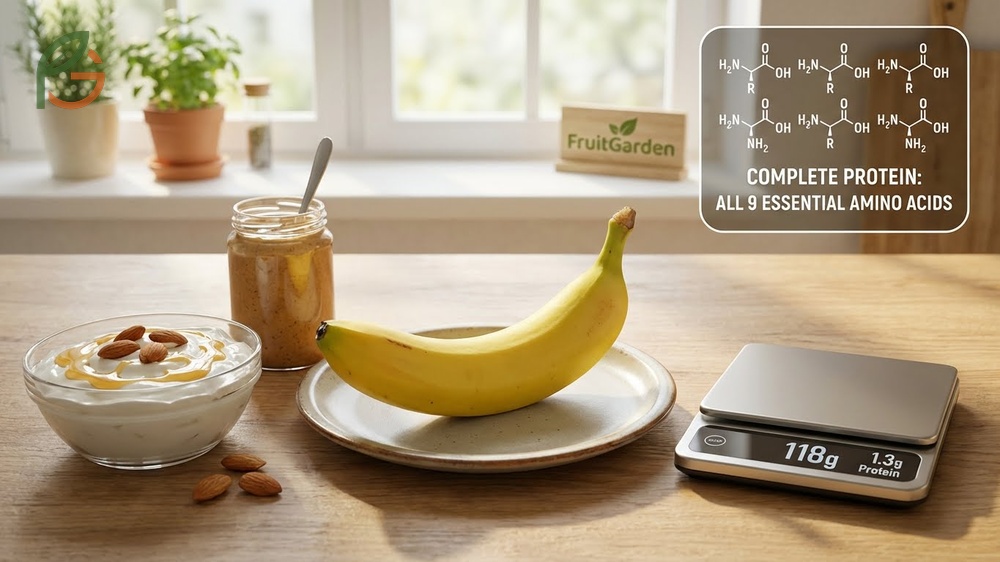
Research shows that a medium-sized banana weighing 118 grams delivers 1.29 grams of protein along with 105 calories[1]. This amount represents about 3% of the daily value for protein for most adults. The protein content varies based on ripeness and size, but it stays relatively modest compared to traditional protein sources.
Studies demonstrate that protein makes up only about 1% of a banana’s total weight[3]. Most people don’t realize that timing matters when eating bananas—consuming them with protein-rich foods amplifies their nutritional benefits. Greek yogurt, nuts, or protein powder transforms a banana from a simple snack into a more balanced meal.
Current nutritional guidance emphasizes that bananas aren’t meant to be your primary protein source. They’re carbohydrate powerhouses with 26.9 grams of carbs per medium fruit, alongside valuable fiber and potassium. The combination works well for athletes needing quick energy plus a modest protein boost.
Protein Content by Banana Size
Current data indicates that banana size directly affects protein content across five common categories. A small 100-gram banana contains 1.1 grams of protein, while an extra-large 152-gram banana provides roughly 1.6 grams[5]. This linear relationship means you can estimate protein intake based on banana weight.
Research from USDA databases shows that most Americans consume medium to large bananas in their daily routine. The standard medium banana (118g) sits right in the middle at 1.3 grams of protein, making it easy to calculate macros for meal planning. Larger bananas (136g) bump that up to 1.5 grams[5].
This table compares protein content and calories across five banana sizes from small to extra large
| Banana Size | Weight | Protein Content | Calories |
|---|---|---|---|
| Small | 90-100g | 1.1g[5] | 89 kcal |
| Medium | 118g | 1.3g[1] | 105 kcal |
| Large | 136g | 1.5g[5] | 121 kcal |
| Extra Large | 152g | 1.6g[5] | 135 kcal |
Protein per Cup Measurements
USDA clarifies that one cup of mashed bananas contains 2.45 grams of protein, while one cup of sliced bananas provides 1.64 grams[3]. The difference comes from how densely packed the banana pieces are in each measurement. Mashed bananas compress more tightly, fitting more fruit per cup volume.
This measurement distinction matters for recipes requiring precise macronutrient calculations. Smoothie makers often use sliced frozen bananas, which measure closer to the 1.64-gram mark per cup. Bakers using mashed bananas get slightly more protein density at 2.45 grams per cup, though it’s still a modest contribution to total protein intake.
Important Measuring Tip: Don’t rely on banana protein for post-workout recovery. You’d need to eat approximately 15-20 medium bananas to match the protein in a single chicken breast, which isn’t practical or recommended due to the high sugar content.
Banana Amino Acid Profile
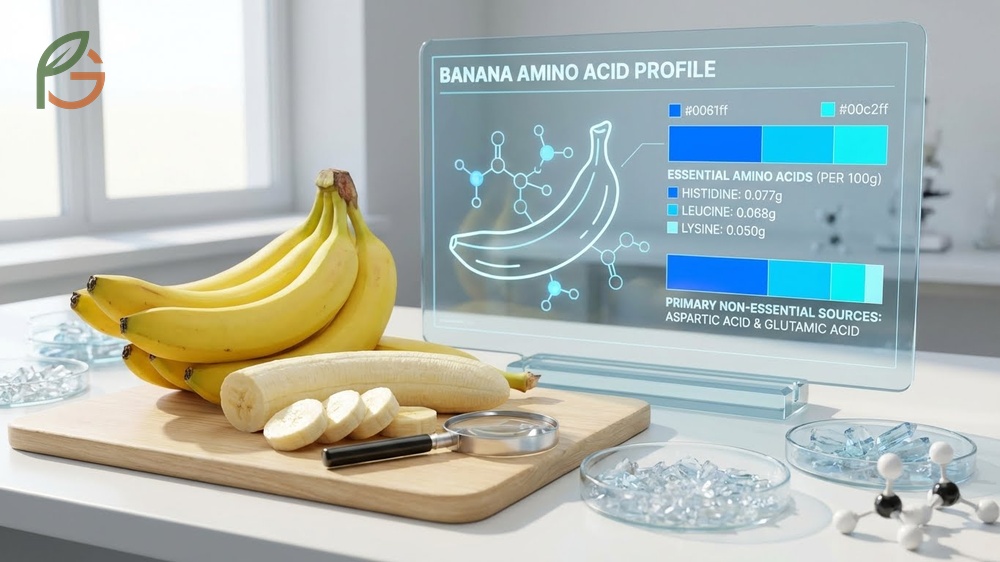
Agricultural data shows that bananas contain all nine essential amino acids your body can’t produce on its own. For every 100 grams of banana, histidine leads at 0.077 grams, followed by leucine at 0.068 grams and lysine at 0.050 grams[3]. These amounts seem tiny compared to animal proteins, but they technically qualify bananas as complete proteins.
Research demonstrates that most banana protein comes from two non-essential amino acids: aspartic acid and glutamic acid. A 150-gram banana provides 186 milligrams of aspartic acid and 228 milligrams of glutamic acid[6]. These acids play roles in neurotransmitter function and muscle recovery, though the quantities remain modest.
Essential Amino Acids Breakdown
Studies show that a medium 118-gram banana delivers varying amounts of each essential amino acid. Histidine reaches 0.091 grams (14.4% of RDV), while isoleucine provides just 0.033 grams (3.8% of RDV)[7]. The imbalance means you can’t rely on bananas alone to meet amino acid requirements.
Current nutritional analysis reveals that methionine and tryptophan sit at the bottom of the banana amino acid spectrum. Methionine contributes only 0.008 grams per 100g, while tryptophan provides 0.009 grams[3]. These “limiting amino acids” explain why pairing bananas with complementary proteins improves overall amino acid balance.
- Histidine: 0.077g (supports growth and tissue repair)
- Isoleucine: 0.028g (muscle metabolism and immune function)
- Leucine: 0.068g (protein synthesis and muscle recovery)
- Lysine: 0.050g (calcium absorption and collagen formation)
- Methionine: 0.008g (detoxification and metabolism)
- Phenylalanine: 0.049g (neurotransmitter production)
- Threonine: 0.028g (fat metabolism and immune function)
- Tryptophan: 0.009g (serotonin production and mood regulation)
- Valine: 0.047g (muscle growth and energy production)
Is Banana a Complete Protein
Evidence suggests that bananas qualify as complete proteins because they contain all nine essential amino acids. However, the quantities are so small that you’d need to consume massive amounts to meet daily requirements. A typical adult needs about 50-60 grams of protein daily, which would require eating roughly 40-50 medium bananas[1].
Research shows that pairing bananas with complementary proteins creates more practical complete protein meals. Combining one banana with Greek yogurt provides a better amino acid profile than either food alone. The banana contributes carbohydrates and potassium while the yogurt supplies the bulk of protein and essential amino acids.
Protein in Banana vs Egg
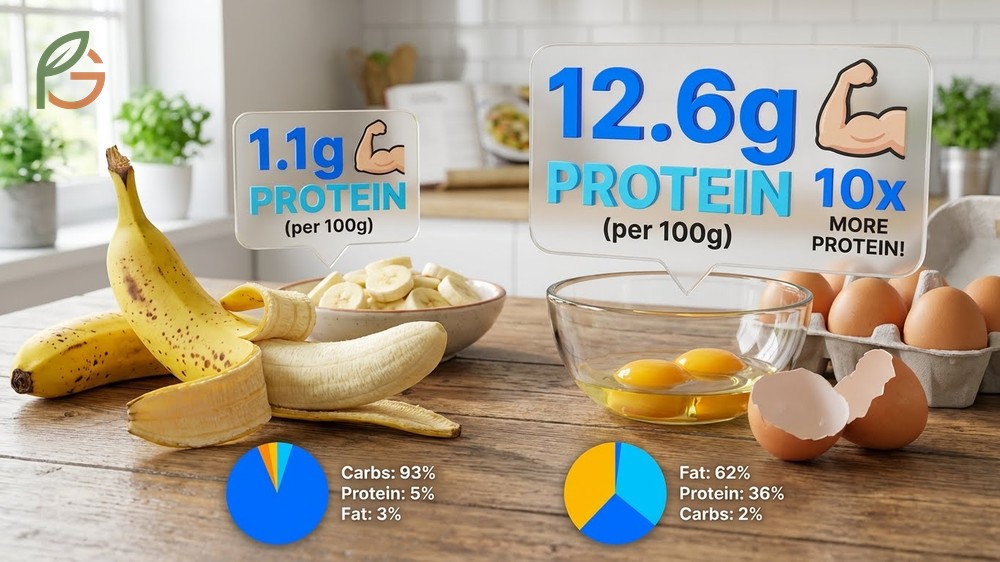
Comparative nutrition data reveals that eggs contain approximately 10 times more protein than bananas per 100 grams. Eggs deliver 12.6 grams of protein per 100g, while bananas provide just 1.1 grams[4]. This dramatic difference makes eggs the clear winner for protein-focused meals.
Studies demonstrate that the macronutrient ratios differ dramatically between these two foods. Eggs show a 36:2:62 ratio for protein, carbohydrates, and fat, while bananas display a 5:93:3 ratio[4]. Bananas are carb-dominant energy sources, whereas eggs are protein-and-fat-dominant muscle-building foods.
What often gets overlooked is that combining eggs and bananas creates a balanced breakfast profile. Two eggs (100g) with one medium banana provide roughly 14 grams of protein, 27 grams of carbs, and sustained energy for 4-5 hours. This pairing works well for pre-workout meals or recovery breakfasts.
- One large egg (50g) matches the protein of approximately 5 medium bananas
- Eggs provide all essential amino acids in optimal ratios (high biological value)
- Bananas contribute quick-digesting carbs alongside their modest protein
- Eggs contain 26.9 times less saturated fat than you’d think—bananas have only 0.11g per 100g[4]
- For weight management, eggs keep you fuller longer due to higher protein and fat content
High Protein Fruits List
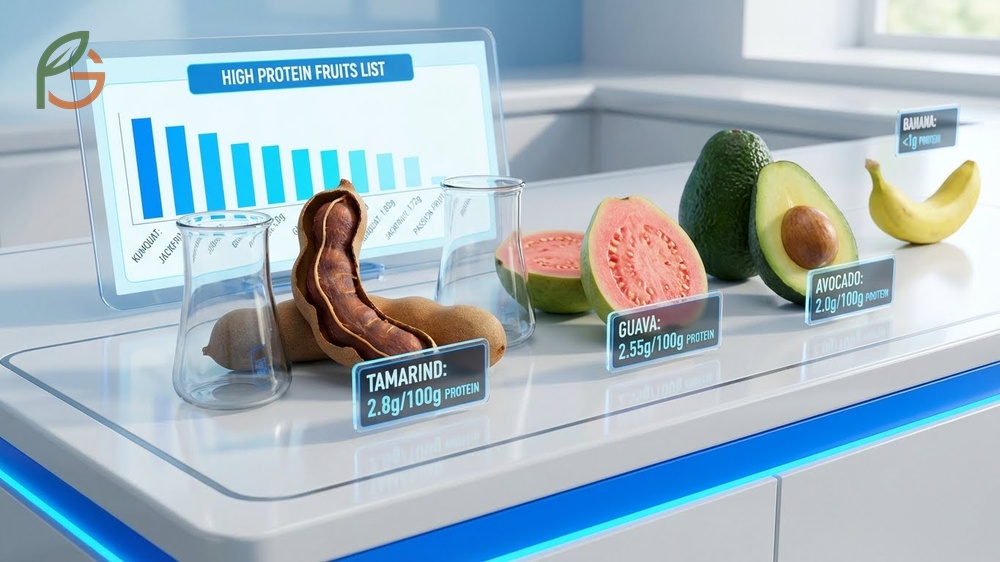
Research across fruit databases shows that several fruits outperform bananas in protein content. Tamarinds lead with 2.8 grams per 100g, followed by guavas at 2.55 grams and avocados at 2.0 grams[8]. These fruits still don’t match animal proteins but offer more than double what bananas provide.
Agricultural data indicates that kumquats, jackfruit, and passion fruit round out the top six protein-rich fruits. Kumquats contain 1.88 grams per 100g, jackfruit provides 1.72 grams, and passion fruit delivers 2.20 grams[8]. Most Americans haven’t tried these tropical options, but they’re increasingly available in specialty grocery stores.
| Fruit | Protein (grams) | vs Banana |
|---|---|---|
| Tamarinds | 2.8g[8] | 2.5x higher |
| Guavas | 2.55g[8] | 2.3x higher |
| Passion fruit | 2.20g[8] | 2x higher |
| Avocados | 2.0g[5] | 1.8x higher |
| Oranges | 1.2g[5] | 1.1x higher |
| Bananas | 1.1g[2] | Baseline |
| Apples | 0.3g[5] | 3.7x lower |
Plantain Comparison: Plantains contain 0.79g protein per 100g, actually less than regular bananas[9]. Don’t assume starchy plantains provide more protein—they’re primarily a carbohydrate source like their banana cousins.
Banana Protein Smoothie
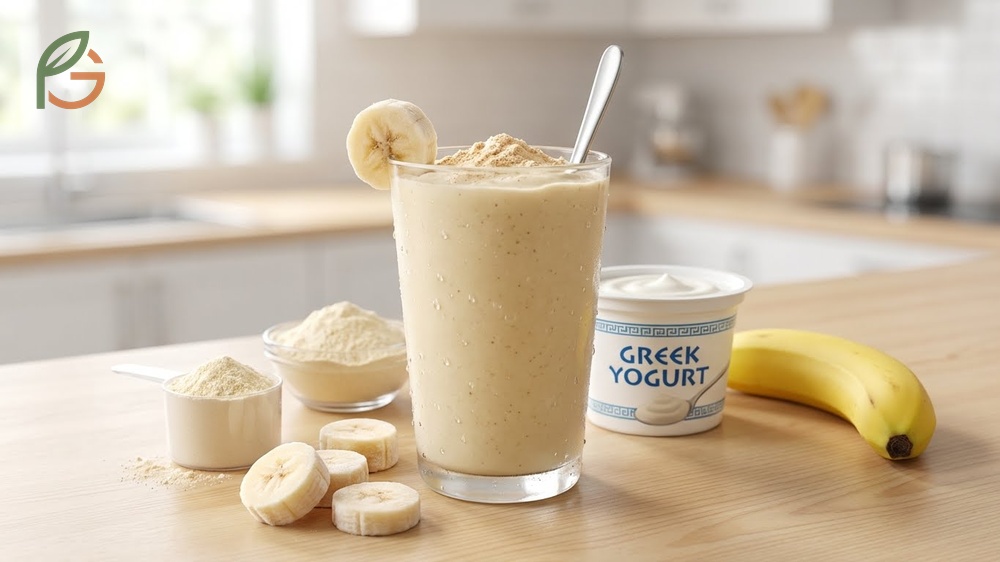
Current recipe trends show that banana protein smoothies multiply protein content by combining frozen banana with Greek yogurt and protein powder. A standard recipe using one medium banana (1.3g protein), one scoop vanilla protein powder (20-25g protein), and 1/2 cup Greek yogurt (10-12g protein) delivers approximately 32-38 grams of protein total. This transforms a low-protein fruit into a legitimate meal replacement.
Research shows that frozen bananas create creamier texture than fresh ones without adding dairy or ice cream. The freezing process breaks down cell walls, releasing natural sugars and creating smoother consistency. Most nutrition experts recommend adding almond butter or flaxseeds for healthy fats, which slow digestion and extend satiety for 3-4 hours.
- 1 frozen banana (broken into chunks): 1.3g protein, natural sweetness, creamy texture
- 1 scoop vanilla protein powder (25g): 20-25g protein, primary protein source
- 3/4 cup milk or almond milk: 6-8g protein (dairy) or 1g protein (almond)
- 1/4 cup plain Greek yogurt: 5-6g protein, probiotics, tangy flavor balance
- 1 tablespoon almond butter: 3.5g protein, healthy fats, thickness
- 1/2 tablespoon chia or flax seeds: 1-2g protein, omega-3 fatty acids, fiber boost
Evidence suggests that consuming this smoothie 30-60 minutes before workouts provides sustained energy without digestive discomfort. The banana contributes quick-digesting carbs for immediate energy, while the protein powder and yogurt supply amino acids for muscle protection during exercise. Post-workout timing works equally well for recovery purposes.
Macronutrients in Banana
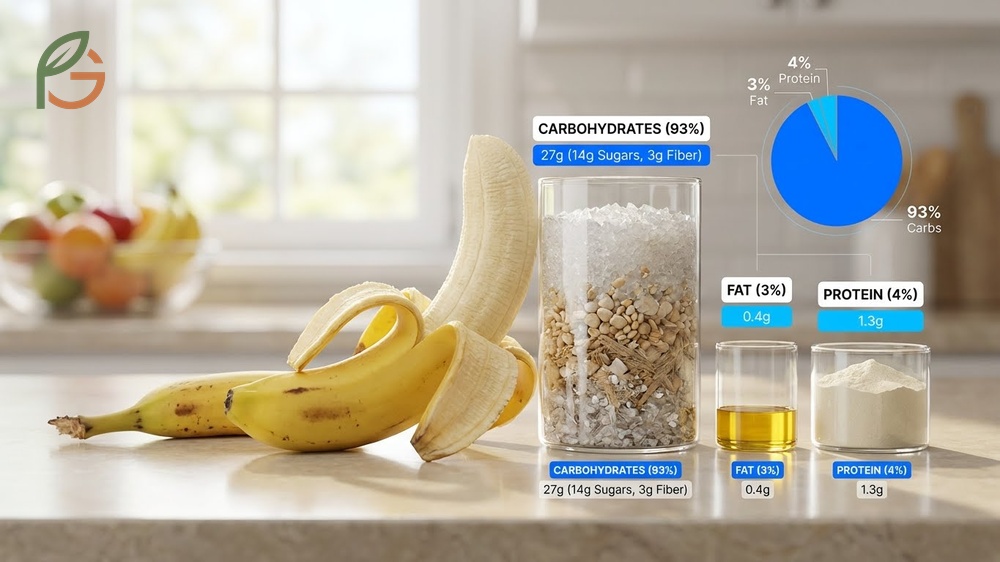
Nutritional analysis reveals that bananas are carbohydrate-dominant foods with a 93% carb, 3% fat, and 4% protein macronutrient breakdown[10]. A medium 118-gram banana contains 27 grams of carbohydrates, 0.4 grams of fat, and 1.3 grams of protein. This ratio makes bananas ideal for pre-workout energy rather than protein supplementation.
Current data indicates that banana carbohydrates consist of 14 grams of natural sugars (fructose, glucose, sucrose) and 3 grams of dietary fiber[1]. The remaining 10 grams come from starch, which converts to sugar as the banana ripens. This explains why yellow-brown bananas taste sweeter than green ones—the starch-to-sugar conversion progresses with ripening.
Studies demonstrate that the 422 milligrams of potassium per medium banana exceeds 9% of the daily value, making bananas more valuable for electrolyte balance than protein intake[10]. Athletes who sweat heavily during training benefit from this potassium concentration, which prevents muscle cramps and supports heart rhythm. The modest protein content becomes a bonus rather than the main attraction.
Conclusion
The evidence is clear: how much protein in a banana matters less than how you use bananas within a balanced diet. At 1.3 grams per medium fruit, bananas contribute minimal protein but excel as carbohydrate sources paired with Greek yogurt, nut butters, or protein powder. Their complete amino acid profile remains technically impressive, yet practical nutrition requires combining them with denser protein sources.
Current guidance emphasizes recognizing bananas for what they are—convenient, potassium-rich, pre-workout fuel that happens to contain trace amounts of all essential amino acids. FruitGarden synthesizes USDA nutritional data with practical garden-to-table strategies, helping fruit enthusiasts maximize both cultivation success and nutritional benefits from homegrown produce.
Medical Disclaimer
Important Medical Disclaimer: This content is for informational and educational purposes only. It’s not intended as a substitute for professional medical advice, diagnosis, or treatment. Always consult a qualified healthcare professional or registered dietitian before making any changes to your diet, especially if you have allergies, diabetes, kidney conditions, or other medical concerns. Individual nutritional needs vary based on age, activity level, health status, and medications. The protein and nutrient values cited represent general USDA data and may vary based on banana variety, ripeness, and growing conditions.
Frequently Asked Questions
Do Bananas Have Protein?
Yes, bananas contain protein, though in modest amounts. A medium 118-gram banana provides approximately 1.3 grams of protein, which represents about 3% of the daily value for most adults. While this qualifies bananas as complete proteins containing all nine essential amino acids, the quantities are too small to rely on bananas as a primary protein source.
How Many Grams of Protein in a Banana?
The protein content varies by banana size: small (100g) contains 1.1g, medium (118g) provides 1.3g, large (136g) offers 1.5g, and extra-large (152g) delivers 1.6g. Per 100 grams, bananas contain roughly 1.1 grams of protein, making size the determining factor in total protein intake.
Does Banana Have Protein Compared to Eggs?
Bananas have significantly less protein than eggs—approximately 10 times less per 100 grams. Eggs deliver 12.6 grams of protein per 100g, while bananas provide just 1.1 grams. One large egg (50g) matches the protein content of about five medium bananas, making eggs the superior choice for protein-focused meals.
How Much Protein Does a Banana Have for Muscle Building?
Bananas don’t provide enough protein for muscle building on their own. With only 1.3 grams per medium fruit, you’d need to consume 15-20 bananas to match the protein in a single chicken breast. However, bananas work well as pre-workout carb sources when paired with protein shakes or Greek yogurt, providing quick energy while the paired protein supports muscle recovery.
Is There Protein in Bananas Before Workout?
Yes, but the 1.3 grams of protein in a medium banana isn’t significant for pre-workout purposes. Research shows that bananas excel as pre-workout foods because of their 27 grams of carbohydrates, not their protein. Eating a banana 30 minutes before exercise provides quick-digesting energy, and the modest protein becomes a minor bonus alongside the carbs and 422mg of potassium for muscle function.
How Much Protein in One Banana Compared to Other Fruits?
One medium banana (1.3g protein) sits in the middle range for fruit protein content. Higher-protein fruits include guavas (2.55g per 100g), avocados (2.0g), and passion fruit (2.20g). Lower-protein options include apples (0.3g per 100g) and oranges (1.2g). Among commonly eaten fruits, bananas offer moderate protein that’s best supplemented with nuts or yogurt.
Does Banana Contain Enough Protein for Weight Loss?
Bananas alone don’t provide sufficient protein for weight loss goals, which typically require 0.8-1.0 grams per pound of body weight. A 150-pound person needs 120-150 grams daily, which would mean eating 90-115 bananas. Instead, use bananas as healthy carb sources within a balanced diet that includes lean proteins, achieving satiety through the combination rather than relying on banana protein alone.





