
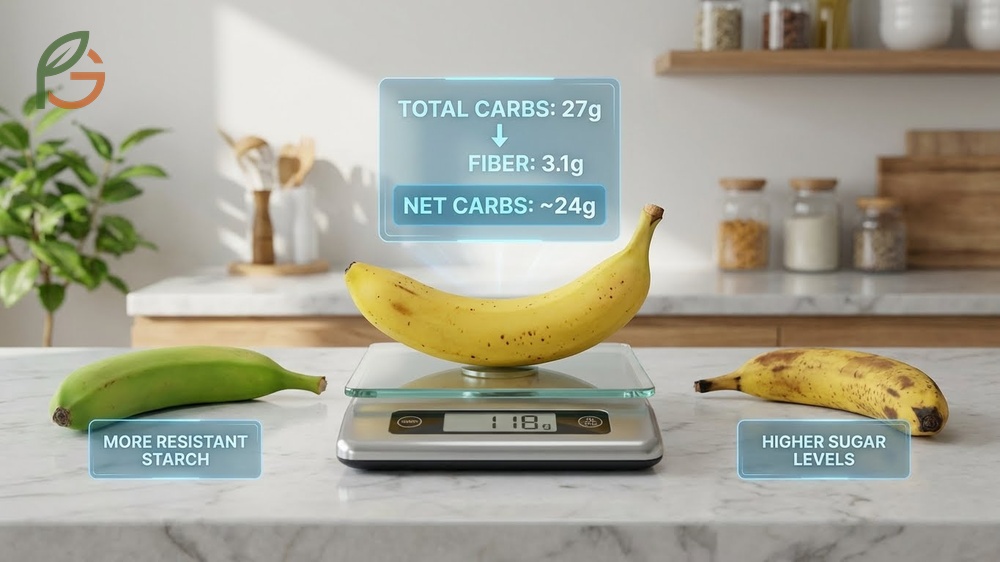
How many carbs in a banana? A medium banana (118g) contains 27g of total carbohydrates and 3.1g of fiber[1], giving you approximately 24g of net carbs. Research shows that carb content varies significantly by size and ripeness—green bananas contain more resistant starch while yellow ones have higher sugar levels[2]. Understanding these differences helps you make informed choices whether you’re managing blood sugar, following a low-carb diet, or simply tracking your daily nutrition through resources like FruitGarden.
Quick Answer
How Many Carbs in a Banana
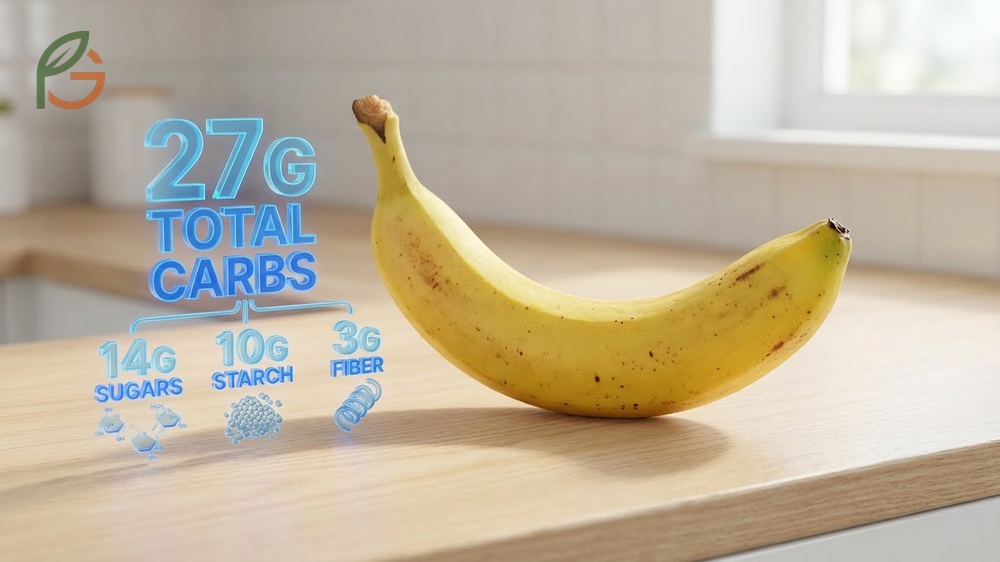
The standard medium banana weighing 118g delivers 27g of total carbohydrates[1]. This represents about 9% of the recommended daily carbohydrate intake for most adults following a 2,000-calorie diet.
Current nutritional data shows that bananas provide three types of carbohydrates: sugars (14g), fiber (3g), and starch (10g)[3]. The sugar content consists primarily of sucrose, fructose, and glucose, which increase as the fruit ripens.
Most people don’t realize that banana size dramatically affects carb intake. What looks like a “medium” banana at your grocery store might actually qualify as large, adding 4-8g more carbs than you expect.
Carbs by Banana Size
Size variations create significant differences in carbohydrate content. Studies demonstrate that weight correlates directly with carb content across all banana sizes[3].
This table compares total carbohydrates, fiber content, and net carbs across five banana sizes from extra small to extra large
| Size | Weight | Total Carbs | Fiber | Net Carbs |
|---|---|---|---|---|
| Extra Small | 81g | 19g[3] | 2.1g | 16.9g |
| Small | 101g | 23g[3] | 2.6g | 20.4g |
| Medium | 118g | 27g[1] | 3.1g | 23.9g |
| Large | 136g | 31g[3] | 3.5g | 27.5g |
| Extra Large | 152g | 35g[3] | 4g | 31g |
Important Note: If you’re tracking carbs for diabetes management or weight loss, weigh your bananas. Visual estimation often underestimates size by 15-20%, leading to inaccurate carb counts.
Net Carbs Calculation
Net carbs represent the carbohydrates your body can digest and convert to glucose. The calculation subtracts fiber from total carbohydrates because fiber passes through your digestive system largely undigested[5].
For a medium banana: 27g total carbs minus 3.1g fiber equals 23.9g net carbs. This formula works for whole foods with naturally occurring fiber.
- Check the nutrition label or USDA database for total carbohydrates
- Find the dietary fiber content for the same serving size
- Subtract fiber grams from total carb grams
- The result shows digestible carbohydrates that affect blood sugar
- Remember this applies only to natural fiber, not added fiber in processed foods
How Much Fiber in a Banana
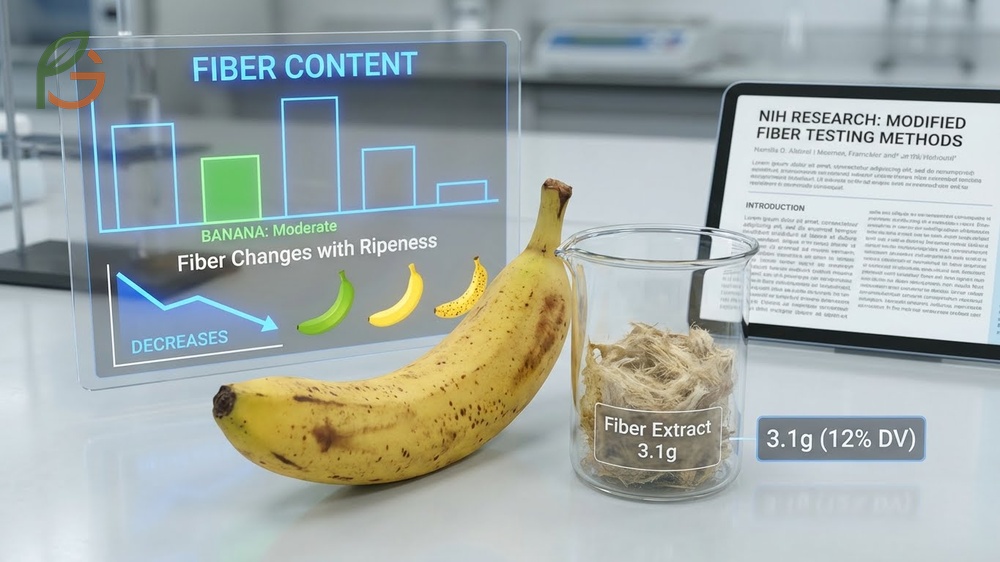
A medium banana provides 3.1g of dietary fiber[1], contributing roughly 12% of the daily recommended intake. This places bananas in the moderate fiber category compared to other fruits.
The fiber content varies not just by size but also by measurement method. Recent NIH research using modified testing methods found significantly higher fiber levels than previously reported[2].
Fiber Changes with Ripeness
Studies demonstrate that fiber content decreases dramatically as bananas ripen. Overripe bananas contain just 2.2g of fiber per medium fruit, while slightly ripe ones pack 5.9g[2]. The yellow sweet banana most people eat falls in the middle at 4.4g.
This happens because resistant starch converts to simple sugars during ripening. What often gets overlooked is that this transformation doesn’t just reduce fiber—it fundamentally changes how your body processes the banana’s carbohydrates.
- Green/unripe: Contains highest fiber and resistant starch levels
- Slightly ripe (greenish-yellow): 5.9g fiber per medium banana, optimal for fiber content
- Ripe (yellow): 4.4g fiber, balanced sweetness and digestibility
- Very ripe (yellow with brown spots): 3-3.5g fiber, maximum sweetness
- Overripe (mostly brown): 2.2g fiber, lowest resistant starch
Resistant Starch Explained
Green bananas contain up to 70-80% starch by dry weight, with resistant starch reaching 48.99g per 100g[6]. This represents the highest resistant starch content among all fruits.
Resistant starch functions similarly to fiber in your digestive system. Your small intestine can’t break it down, so it travels to your colon where beneficial bacteria ferment it. This process produces short-chain fatty acids that support gut health and may improve insulin sensitivity.
Evidence suggests that green bananas maintain a glycemic index below 40 due to their high resistant starch content, compared to 51-62 for ripe yellow bananas[6]. This makes unripe bananas potentially better for blood sugar management.
Pro Tip: If you find green bananas too starchy and bland, try slicing them into smoothies or cooking them. Cooking doesn’t eliminate all resistant starch benefits while improving palatability.
Banana Glycemic Index and Blood Sugar Impact
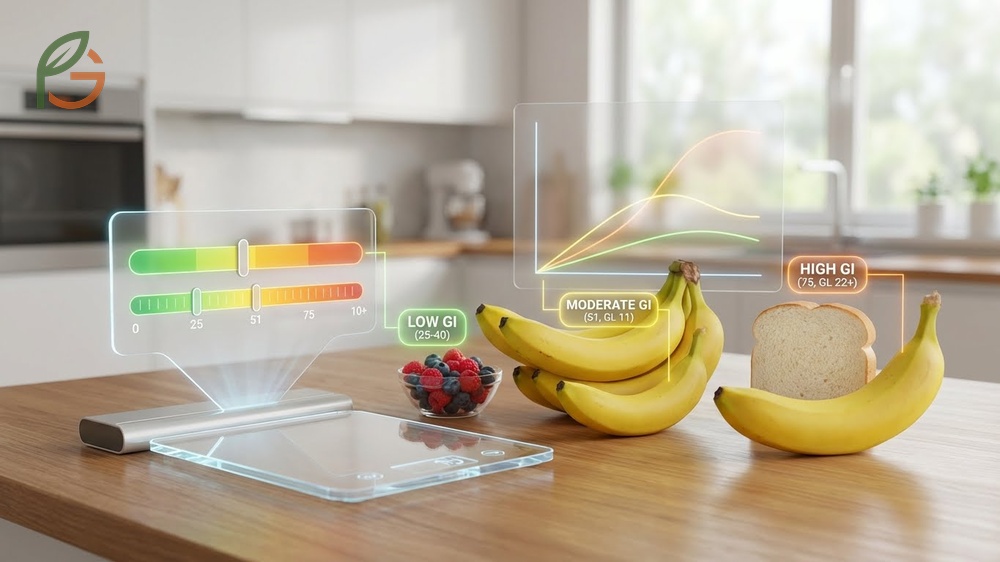
Bananas score 51 on the glycemic index, placing them at the upper end of low-GI foods[4]. This means they cause a moderate rise in blood sugar compared to high-GI foods like white bread (75) or low-GI foods like berries (25-40).
The glycemic load matters more than GI alone for practical purposes. A medium banana has a glycemic load of 11, which falls into the moderate category[3]. Larger bananas can reach a GL of 22, entering the high category.
Research shows that pairing bananas with protein or healthy fats significantly blunts blood sugar spikes. Greek yogurt with banana, or peanut butter on banana slices, reduces the overall glycemic response by 30-40% compared to eating the fruit alone.
- Choose smaller bananas (under 100g) to keep net carbs below 21g
- Eat bananas with protein sources like nuts, cheese, or yogurt
- Time banana consumption around physical activity when insulin sensitivity peaks
- Select slightly underripe bananas for lower sugar and higher resistant starch
- Avoid eating bananas on an empty stomach if you’re managing diabetes
- Monitor your individual blood glucose response since reactions vary by person
Are Bananas High in Carbs
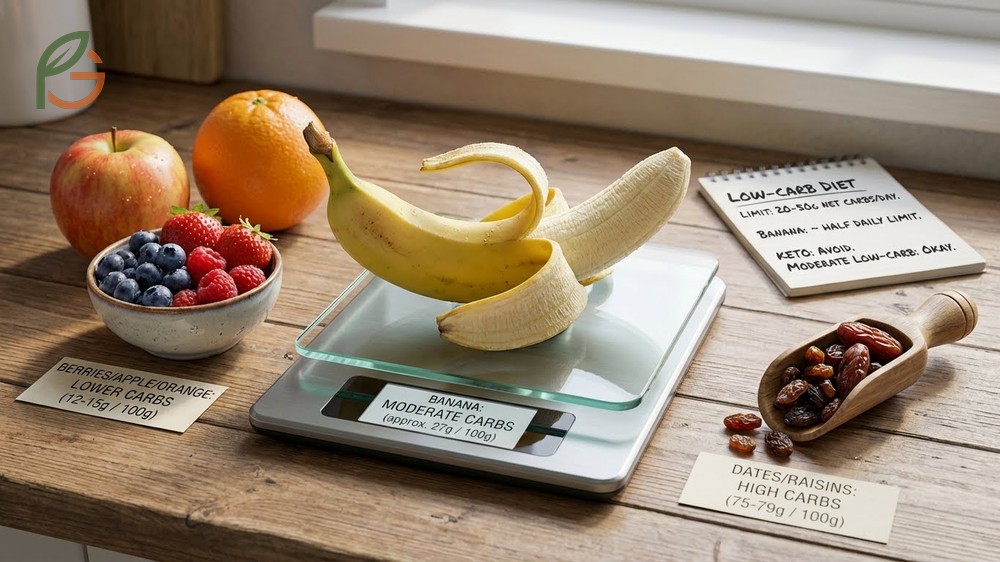
Compared to other fruits, bananas contain moderately high carbohydrates. They provide more carbs per 100g than apples (14g), berries (14-15g), or oranges (12g), but significantly less than dried fruits like dates (75g) or raisins (79g).
For low-carb diets limiting intake to 20-50g daily net carbs, a single medium banana consumes nearly half the daily allowance. This makes bananas incompatible with strict ketogenic diets but workable for moderate low-carb approaches that allow 50-100g daily.
| Fruit | Total Carbs | Fiber | Net Carbs |
|---|---|---|---|
| Banana | 22.8g | 2.6g | 20.2g |
| Apple | 13.8g | 2.4g | 11.4g |
| Blueberries | 14.5g | 2.4g | 12.1g |
| Strawberries | 7.7g | 2.0g | 5.7g |
Current dietary guidance emphasizes that carb content alone doesn’t determine food quality. Bananas deliver potassium (358mg per 100g), vitamin C, vitamin B6, and prebiotics that support gut health. The combination of nutrients makes them valuable despite higher carbs.
Athletes and active individuals benefit most from banana carbohydrates. The quick-digesting sugars provide immediate energy, while the fiber and resistant starch offer sustained fuel. Many endurance athletes consume bananas during long workouts for this balanced energy profile.
- Standard diet (2000 calories): 1-2 medium bananas daily fits most nutrition plans
- Moderate low-carb (50-100g daily): One small banana works when paired with protein
- Strict keto (under 20g net carbs): Bananas don’t fit, choose berries instead
- Pre-workout nutrition: Half a medium banana 30-60 minutes before exercise optimizes energy
- Diabetes management: One small banana with meals, not as standalone snack
Conclusion
The evidence is clear: how many carbs in a banana depends critically on size and ripeness, ranging from 19g in extra-small fruits to 35g in extra-large ones. With 3.1g of fiber in a medium banana, you’re looking at roughly 24g of net carbs that impact blood sugar—a moderate amount that fits most eating patterns when consumed mindfully.
Current nutritional guidance emphasizes that bananas offer more than just carbohydrates. The potassium, resistant starch, and prebiotic fiber justify their place in balanced diets despite higher carbs than some fruits. Whether bananas work for you depends on your individual goals, activity level, and how your body responds to their moderate glycemic load. Resources like FruitGarden can help you track nutritional data and make informed decisions about incorporating bananas into your daily routine.
Medical Disclaimer
Important Medical Disclaimer: This content is for informational and educational purposes only. It’s not intended as a substitute for professional medical advice, diagnosis, or treatment. Always consult a qualified healthcare professional or registered dietitian before making significant changes to your diet, especially if you have diabetes, metabolic disorders, or other medical conditions. Individual nutritional needs and blood sugar responses vary considerably, and what works for most people may not suit your specific situation.
Frequently Asked Questions
Do Bananas Have Carbs That Are Good or Bad?
Bananas contain “good” carbs in the form of natural sugars, resistant starch, and fiber. These complex carbohydrates provide sustained energy rather than the quick spike-and-crash pattern from refined sugars. The 3.1g of fiber per medium banana slows digestion and helps regulate blood sugar, making banana carbs more beneficial than those in processed foods.
How Many Carbs in One Banana vs a Sliced Cup?
One medium banana (118g) contains 27g of carbs, while one cup of sliced banana (150g) contains approximately 34g of carbs. The sliced measurement includes more fruit by weight, which explains the higher carb content. If you’re measuring for recipes or precise tracking, weighing your banana portions provides more accuracy than volume measurements.
How Many Grams of Fiber Are in a Banana?
A medium banana provides 3.1g of dietary fiber, which represents about 12% of the daily recommended intake. Fiber content varies by ripeness—slightly underripe bananas can contain up to 5.9g while overripe ones may have only 2.2g. The fiber includes both soluble fiber (which helps lower cholesterol) and insoluble fiber (which aids digestion).
Are Bananas High in Carbs for Keto Diet?
Yes, bananas are too high in carbs for strict ketogenic diets. With 24g of net carbs in a medium banana, eating just one would consume most or all of the 20-50g daily limit that keto requires. Even small bananas with 20g net carbs make it extremely difficult to maintain ketosis. Berries like strawberries or raspberries work better for low-carb diets, providing only 5-7g net carbs per 100g serving.
How Many Carbohydrates in One Banana Affect Blood Sugar?
The 27g of carbohydrates in one medium banana will raise blood sugar moderately due to its glycemic index of 51 and glycemic load of 11. The actual impact varies based on banana ripeness, your metabolic health, and what else you eat with it. Pairing the banana with protein or fat (like peanut butter) significantly reduces the blood sugar spike. People with diabetes should monitor their individual response and consider limiting portions to half a banana per sitting.
What’s the Net Carbs in Banana Calculation?
Net carbs equal total carbohydrates minus fiber. For a medium banana: 27g total carbs minus 3.1g fiber equals 23.9g net carbs. This calculation matters because fiber doesn’t raise blood sugar like other carbohydrates. Net carbs give you a more accurate picture of how the banana will affect glucose levels and whether it fits your dietary restrictions.
How Does Fiber in One Banana Compare to Other Fruits?
With 3.1g of fiber, one medium banana provides moderate fiber compared to other fruits. Raspberries lead with 6.5g per 100g, apples offer 2.4g per 100g, and oranges provide 2.4g per 100g. While bananas don’t rank as the highest-fiber fruit, they deliver more fiber than grapes (0.9g), watermelon (0.4g), and most citrus fruits. The fiber content makes bananas more filling than low-fiber fruit options.





