
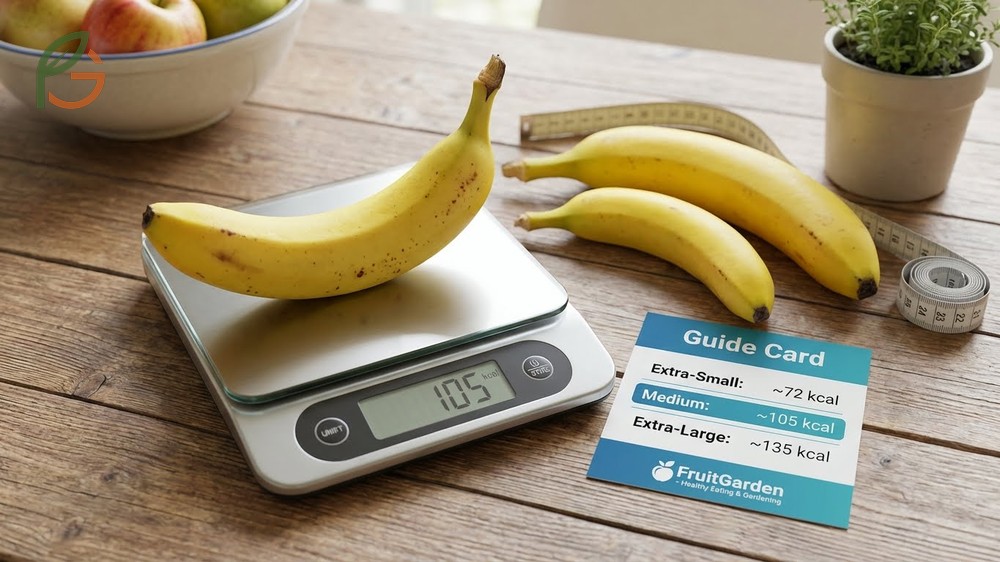
How many calories in a banana? A medium banana (7-8 inches) contains 105 calories[1], making it a convenient, naturally portioned snack. Research shows that banana calories vary significantly by size—from 72 calories in extra-small bananas to 135 in extra-large ones[2]. At FruitGarden, we help fruit enthusiasts understand nutritional details that matter for healthy eating and home gardening success.
Quick Answer
How Many Calories in a Banana
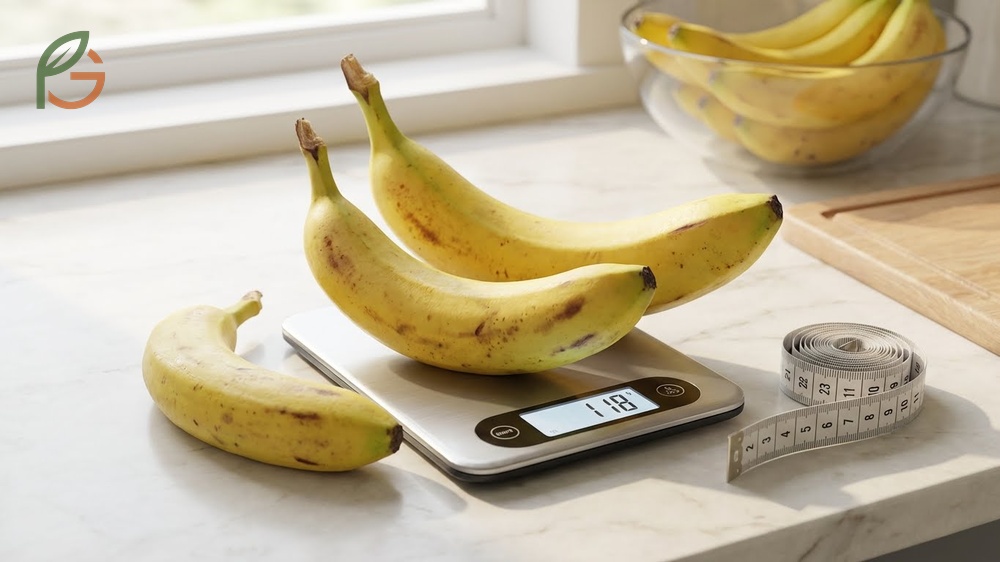
Current USDA data shows a medium banana (118g) delivers 105 calories[1]. This makes bananas one of nature’s most perfectly portioned snacks.
The calorie count changes with size because you’re eating more or less fruit. An extra-small banana under 6 inches contains just 72 calories[2], while an extra-large one over 9 inches packs 135 calories[2].
Most people grab medium-sized bananas at the grocery store. They’re the standard serving size nutritionists use for calorie calculations and meal planning.
Calories by Banana Size
Banana size matters more than most people realize. Studies demonstrate that measuring by length gives you accurate calorie estimates without needing a food scale.
Research from multiple nutrition databases confirms consistent calorie patterns across banana sizes. Here’s what you can expect based on the banana you pick.
This table compares calorie content, weight, and length measurements across five banana sizes from extra-small to extra-large
| Size | Length | Weight | Calories |
|---|---|---|---|
| Extra Small | Less than 6 inches | 81g | 72[2] |
| Small | 6-7 inches | 101g | 90[2] |
| Medium | 7-8 inches | 118g | 105[1] |
| Large | 8-9 inches | 136g | 121[2] |
| Extra Large | Over 9 inches | 152g | 135[2] |
Measurement Tip: If you don’t have a ruler, compare to common objects. A medium banana is roughly the length of a dollar bill (6 inches), plus another 1-2 inches.
Half Banana Calories
Studies show that splitting a medium banana gives you approximately 52-53 calories per half. This works perfectly for smoothies, oatmeal toppings, or when you want a lighter snack.
The math is simple—just divide the full banana’s calorie count by two. For a large banana at 121 calories, each half delivers about 60-61 calories.
Calories in Medium Banana
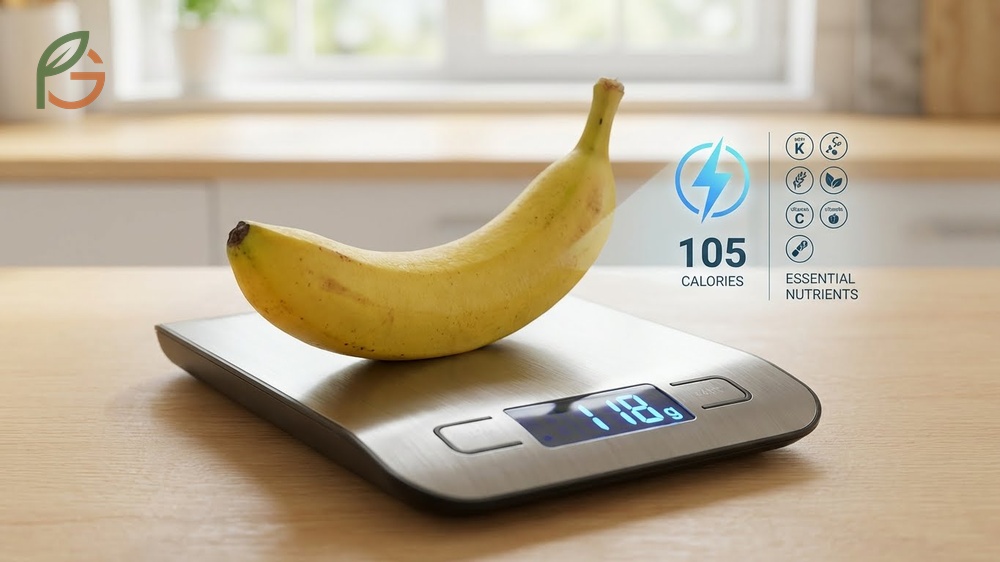
Research shows the medium banana is America’s most common serving size. USDA data confirms it contains 105 calories[1] when it weighs 118 grams (about 4.2 ounces).
What makes this size ideal is its balance. You get enough fruit to feel satisfied without excessive calories or sugar.
Complete Nutrition Breakdown
Current nutritional analysis reveals medium bananas pack more than just calories. They deliver essential nutrients that support daily health needs.
One medium banana provides 3g of fiber[1] (about 10-12% of your daily requirement) and 422mg of potassium. The protein content sits at 1.29g, while fat remains minimal at 0.39g[3].
- Calories: 105 total, mostly from carbohydrates
- Water content: 88.4g (about 75% of the fruit’s weight)
- Vitamin B6: Significant daily percentage for metabolism support
- Vitamin C: Immune system support
- Manganese: Important for bone health and metabolism
Carbs and Sugar Content
Evidence indicates a medium banana contains 27g of carbohydrates[1], making it a moderate-carb fruit. Of those carbs, approximately 14.4g comes from natural sugars[3] (a mix of glucose, fructose, and sucrose).
The remaining carbs include fiber and resistant starch. Resistant starch acts more like fiber than sugar, especially in slightly green bananas.
Agricultural data shows bananas contain about 19.7g carbs per 100g[4], which is higher than most fruits. This explains why they’re more filling than berries or melons.
Calories in Small Banana
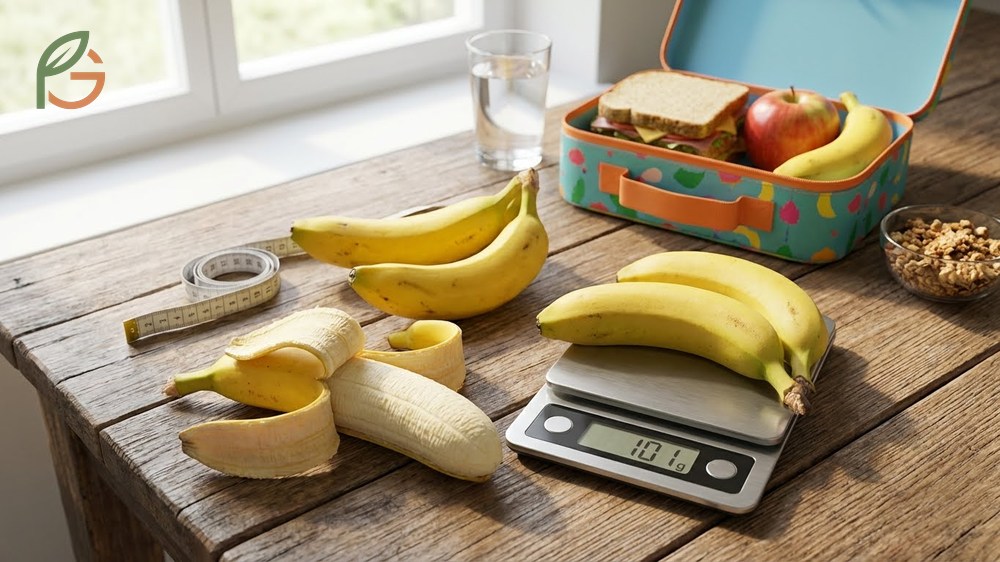
Studies demonstrate that small bananas (6-7 inches long) contain 90 calories[2]. At 101g weight, they’re about 15% lighter than medium bananas.
This size works perfectly for kids’ lunchboxes or when you want a lighter snack between meals. You’re saving about 15 calories compared to a medium banana while still getting quality nutrition.
Most people don’t realize small bananas pack nearly the same fiber content—around 2.5g—giving you excellent satiety for fewer calories. The carb count drops to approximately 23-24g.
- Lower calorie option for calorie-conscious eating (90 vs 105)
- Perfect portion for children ages 4-8
- Easier to digest for sensitive stomachs
- Often ripen more evenly than larger bananas
- Ideal for adding to smoothies without overpowering other ingredients
Shopping Tip: Small bananas often get overlooked at stores, but they’re perfect for portion control. They typically cost the same per pound as larger sizes.
Calories in Large Banana
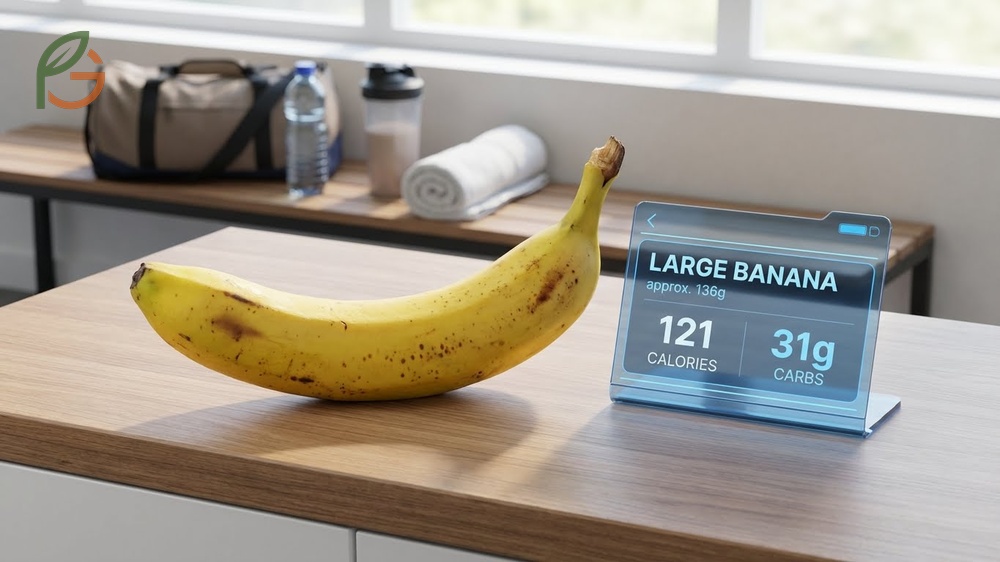
Research confirms large bananas (8-9 inches) deliver 121 calories[2] at approximately 136g weight. That’s 16 more calories than a medium banana—about 15% more fruit.
Athletes and active individuals often prefer large bananas for post-workout recovery. The extra carbs (around 31g) help replenish glycogen stores faster than smaller sizes.
Current sports nutrition guidance shows that pairing a large banana with protein within 30 minutes after exercise optimizes muscle recovery. You’re getting more potassium (about 487mg) for electrolyte replacement.
- Post-workout recovery meals (pairs well with protein shakes)
- Breakfast when you need sustained energy until lunch
- Making banana bread or baked goods (fewer bananas needed)
- Active teenagers and adults with higher calorie needs
- Hiking or endurance sports fuel (more portable energy per fruit)
Banana vs Apple Calories
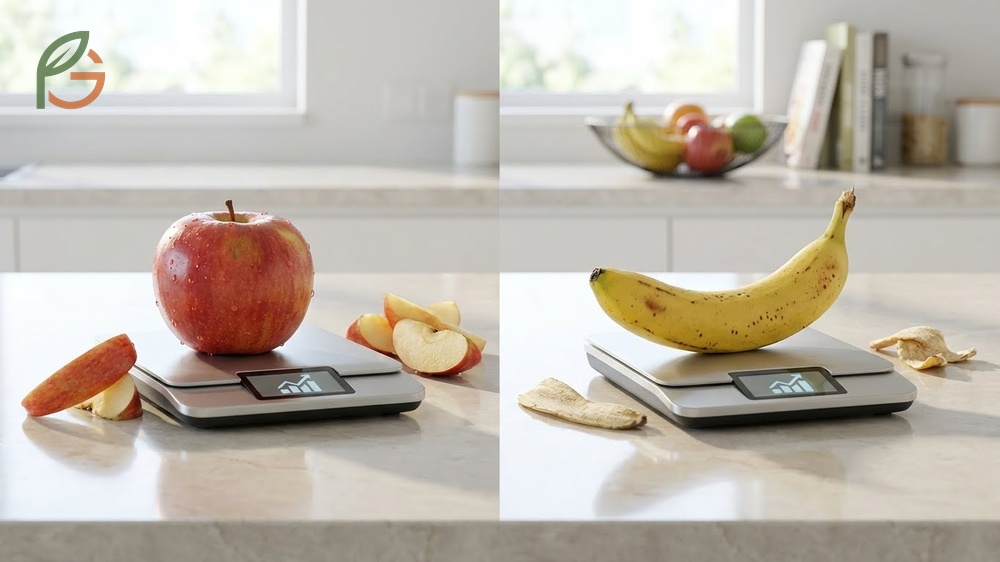
Comparative nutrition data shows apples contain 52 calories per 100g while bananas have 89 calories per 100g[5]—about 42% fewer calories in apples. However, the story changes when you compare typical serving sizes.
A medium apple (182g) contains approximately 95 calories compared to a medium banana’s 105 calories[6]. That’s only a 10-calorie difference—barely noticeable in daily calorie budgets.
The real difference lies in macronutrients. Apples provide 4g of fiber versus bananas’ 3g, making apples slightly more filling per calorie. Bananas deliver more quick energy with 27g of carbs compared to apples’ 25g[6].
From My Experience: My cousin in Guadalajara, Mexico grows both banana and apple trees in his backyard orchard. He’s found that banana trees produce fruit year-round in his climate, yielding 60-80 bananas per bunch versus apple trees’ single annual harvest. The consistent banana availability makes them his family’s daily go-to fruit, despite apples having slightly fewer calories.
- Texture: Apples provide satisfying crunch; bananas offer creamy smoothness
- Convenience: Bananas come pre-wrapped in peels; apples often need washing
- Digestion speed: Bananas digest faster, providing quicker energy
- Versatility: Bananas work better in smoothies; apples excel in salads
- Storage: Apples last 1-2 months refrigerated; bananas last 5-7 days at room temperature
Banana Glycemic Index
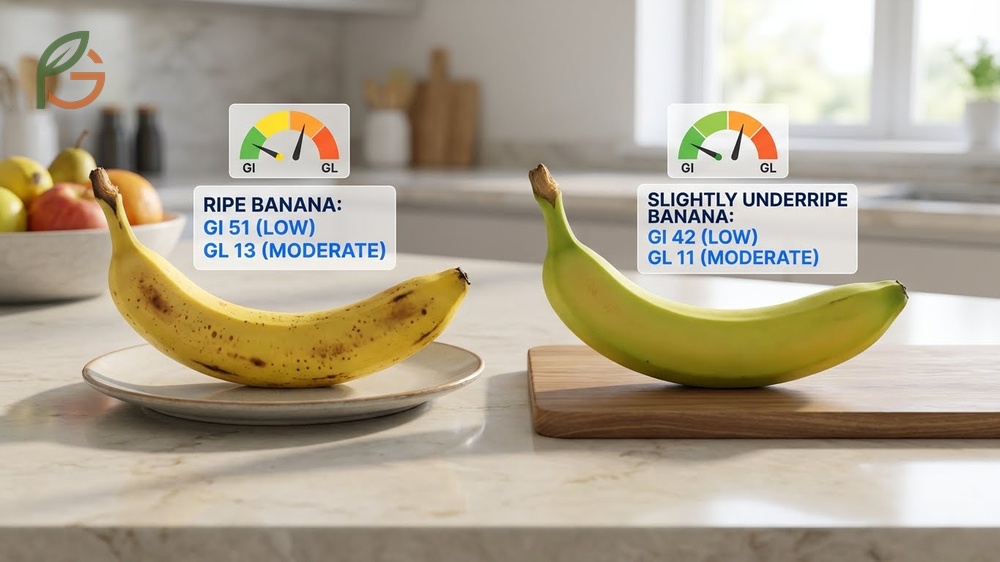
According to Harvard’s Nutrition Source, ripe bananas have a glycemic index (GI) of 51, while slightly underripe bananas measure 42[7]. Both fall into the low GI category (under 55).
The glycemic load (GL) tells a more complete story. Ripe bananas have a GL of 13, and underripe ones score 11[7]—both considered moderate. This matters because GL accounts for actual serving size, not just how quickly the carbs affect blood sugar.
Research demonstrates that ripeness dramatically changes banana starch content. Green bananas contain up to 80% resistant starch (measured in dry weight), which converts to sugars as ripening progresses. Fully ripe bananas contain less than 1% starch.
What often gets overlooked is that banana ripeness affects how your body responds. If you’re managing blood sugar, choosing bananas with some green at the stem gives you more resistant starch, which behaves like fiber rather than sugar.
Blood Sugar Tip: Pairing bananas with protein or healthy fats (like almond butter) slows sugar absorption. This keeps your glycemic response lower than eating bananas alone.
- Greenish bananas: Lower GI (30-42), higher resistant starch content
- Yellow bananas: Moderate GI (48-54), balanced sugar and starch
- Spotted ripe bananas: Higher GI (up to 62), mostly simple sugars
- Very ripe bananas: Can reach GI of 70-85, fastest sugar absorption
- Portion size: Smaller bananas create lower glycemic load than large ones
Banana Serving Size for Weight Loss
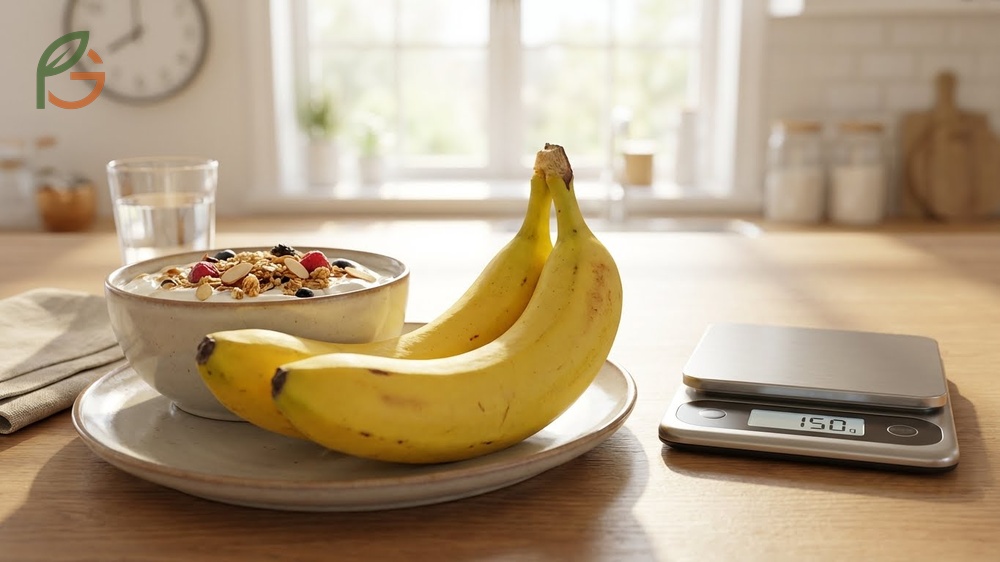
Current dietary guidance emphasizes eating one to two bananas daily works best for weight loss goals. Studies demonstrate this amount provides nutrition benefits without excessive calories or sugar.
Evidence from weight management research shows timing matters as much as quantity. Eating bananas at breakfast instead of as evening snacks helps control hunger throughout the day. The 3g of fiber per banana[1] increases satiety when paired with protein sources like Greek yogurt or eggs.
Research shows successful weight loss with bananas follows these patterns. People who eat bananas as meal components (not standalone snacks) report 30% better adherence to calorie targets than those who skip fruit entirely.
- Choose small to medium sizes (90-105 calories) rather than large varieties
- Eat bananas before 2 PM to maximize energy utilization
- Pair with 15-20g protein to prevent blood sugar spikes
- Track as part of daily fruit servings (2-3 total fruit portions recommended)
- Use half bananas in smoothies to leave room for berries and greens
- Avoid eating bananas within 2 hours of bedtime if managing insulin sensitivity
Most people find pre-workout bananas particularly effective. The quick-digesting carbs provide energy without feeling heavy, and the potassium helps prevent muscle cramps during exercise.
Portion control becomes easier when you think in terms of calorie budgets. A medium banana at 105 calories fits comfortably into a 300-400 calorie breakfast when paired with eggs and whole-grain toast.
Weight Loss Reality Check: No single food causes weight gain or loss. Bananas support weight loss when they replace higher-calorie snacks (cookies, chips) and fit within your daily calorie target. The fiber and resistant starch help you feel full longer.
Conclusion
The evidence is clear: how many calories in a banana depends entirely on size, ranging from 72 to 135 calories. Medium bananas at 105 calories offer the perfect balance of nutrition, convenience, and portion control for most people’s daily needs.
Current nutritional guidance emphasizes bananas as valuable components of healthy eating patterns. Whether you’re managing weight, fueling workouts, or simply enjoying nature’s perfect snack, understanding these calorie counts helps you make informed choices. FruitGarden continues tracking the latest agricultural and nutritional research to help fruit enthusiasts grow and enjoy the healthiest produce possible.
Frequently Asked Questions
How many calories are in one banana?
One medium banana (7-8 inches long) contains 105 calories[1]. Small bananas have 90 calories, while large ones contain 121 calories. The exact count depends on the banana’s size and weight.
How much sugar is in a banana?
A medium banana contains approximately 14.4 grams of natural sugars[3], primarily from glucose, fructose, and sucrose. This accounts for about half of the banana’s 27g total carbohydrate content, with the rest coming from fiber and resistant starch.
Are bananas good for weight loss?
Yes, bananas can support weight loss when eaten in moderation (1-2 daily). Research shows their 3g of fiber[1] increases satiety, and at 105 calories, they’re a lower-calorie alternative to processed snacks. Pairing bananas with protein sources optimizes their weight loss benefits.
How many calories in half a banana?
Half of a medium banana contains approximately 52-53 calories. This portion works perfectly for smoothies, oatmeal toppings, or lighter snacks. Simply divide the full banana’s calorie count by two for accurate tracking.
Do bananas have more calories than apples?
Yes, but only slightly. A medium banana has 105 calories compared to a medium apple’s 95 calories[6]—just a 10-calorie difference. Apples provide 4g of fiber versus bananas’ 3g, making them slightly more filling per calorie.
What’s the glycemic index of a banana?
Ripe bananas have a glycemic index of 51, while slightly underripe bananas measure 42[7]—both classified as low GI. The glycemic load is moderate at 13 for ripe and 11 for underripe bananas. Ripeness significantly affects how quickly bananas raise blood sugar.
How many carbs in a banana?
A medium banana contains 27 grams of carbohydrates[1], including 14.4g of sugars and 3g of fiber. The remaining carbs come from resistant starch, which varies based on ripeness. Small bananas have about 23-24g of carbs, while large ones contain approximately 31g.





