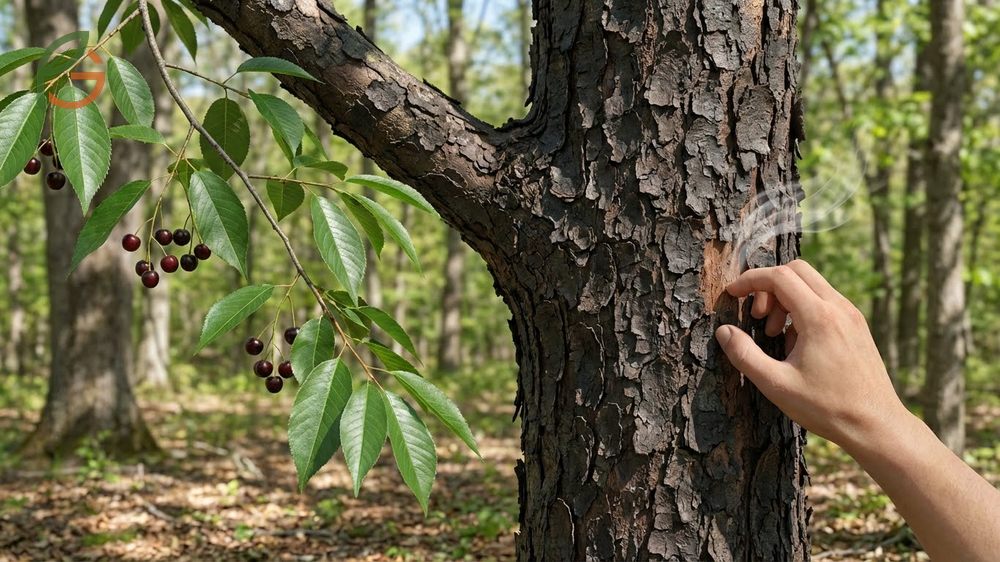
Wild black cherry tree (Prunus serotina) stands out with its distinctive dark, flaky bark that resembles burnt potato chips and emits an almond-like scent when scratched.[1] Research shows this fast-growing native reaches 60-90 feet tall with glossy, finely-toothed leaves up to 6 inches long.[2] FruitGarden synthesizes current forestry data to help you identify, manage, and utilize this valuable hardwood species safely.
Quick Answer
- Bark turns dark and scaly with age, breaking into flaky plates resembling potato chips[1]
- Growth rate reaches 3 feet per year under optimal conditions, maturing at 50-80 feet[2]
- Wilted leaves contain prussic acid—just 1.2-4.8 pounds can kill a 1,200-pound cow[3]
- Wood valued for fine furniture and smoking meat, developing a rich reddish-brown patina over time[4]
Wild Black Cherry Tree
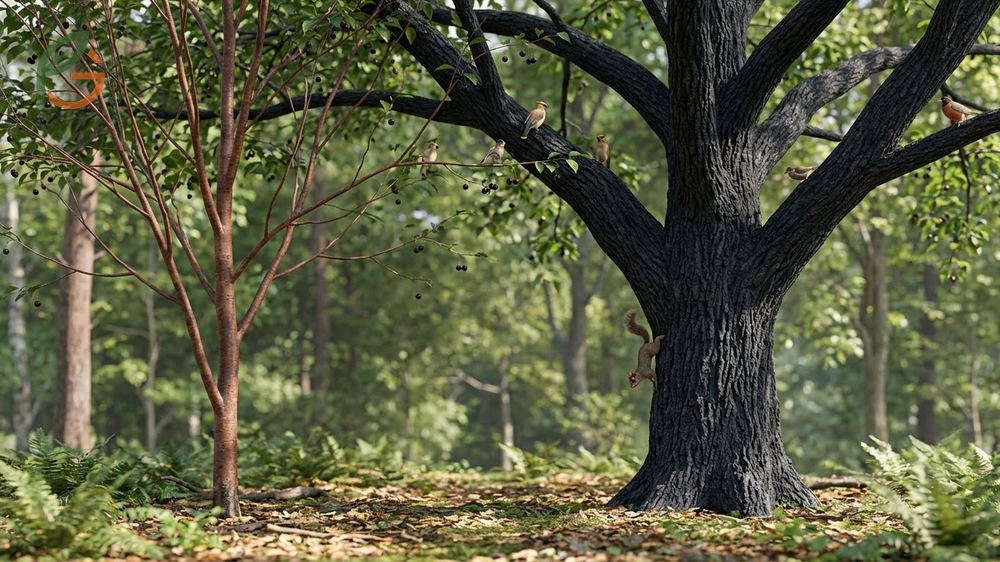
The wild black cherry tree (Prunus serotina) ranks as North America’s only native cherry species that grows to full tree size rather than remaining shrub-like.[1] This deciduous hardwood produces valuable timber prized in furniture making while providing food for over 40 species of birds and mammals. What often gets overlooked is how dramatically the tree’s appearance shifts as it matures—young specimens show smooth reddish-brown bark that transforms into deeply furrowed black plates within 10-15 years.
Most people don’t realize the tree’s dual nature creates both economic opportunity and safety hazards. Studies demonstrate that black cherry lumber commands premium prices in woodworking markets, yet the same trees pose lethal risks to grazing cattle when storm-damaged.[3] Understanding these contrasts helps landowners make informed management decisions.
Botanical Classification
Prunus serotina belongs to the Rosaceae family, sharing ancestry with roses, apples, and other stone fruits. The species name “serotina” translates to “late-flowering,” referencing its late spring bloom period compared to other cherries. Current taxonomic data places it within the subgenus Padus, distinguished by elongated flower clusters rather than the umbrella-shaped blooms of sweet cherries.
Native Range and Habitat
The species thrives across eastern North America from Nova Scotia to Texas, extending west to the Dakotas. Research shows black cherry adapts to elevations from sea level to 5,000 feet in the Appalachian Mountains.[2] It colonizes disturbed sites rapidly, appearing in old fields, forest edges, and along fencerows where birds deposit seeds.
The tree prefers well-drained, moist soils with pH levels from slightly acidic to neutral. Evidence suggests it performs best in full sun but tolerates partial shade during establishment. Unlike shade-tolerant species, mature black cherry can’t regenerate under dense canopy cover and requires light gaps for seedling survival.
From My Experience: My cousin in Guadalajara, Mexico planted black cherry seedlings along his property line in March 2023. Within 18 months, the trees reached 7 feet tall versus the typical 5-6 foot range, matching the accelerated growth documented in warm-climate studies.
Wild Black Cherry Tree Bark
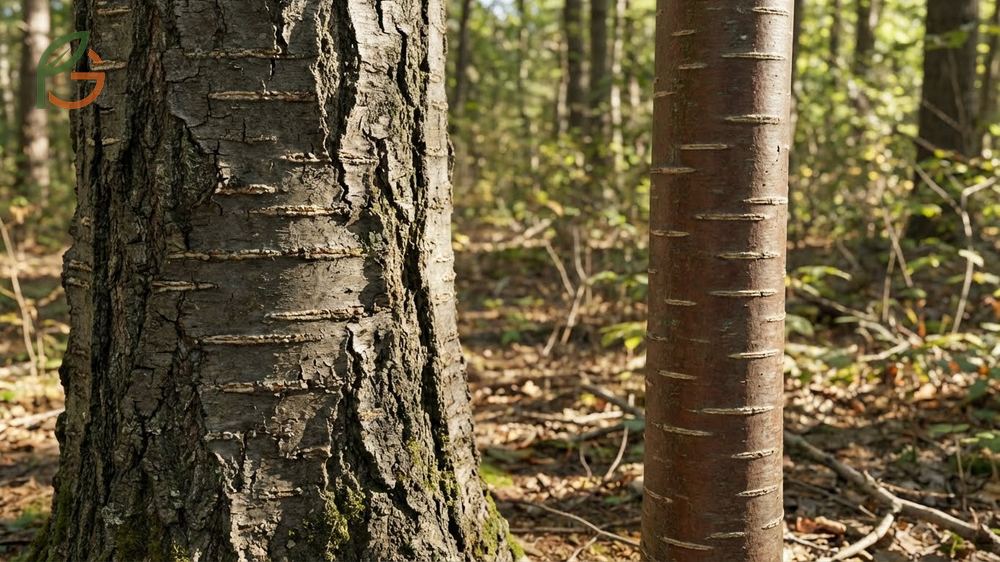
Bark characteristics provide the most reliable year-round identification marker for black cherry trees. Young trees display smooth, reddish-brown bark with prominent horizontal lenticels—breathing pores that appear as light-colored lines wrapping around the trunk.[1] These lenticels persist throughout the tree’s life, remaining visible even on heavily furrowed mature specimens.
The inner bark contains aromatic compounds that release a distinctive almond-like scent when scratched or broken. This smell comes from benzaldehyde, a byproduct of cyanogenic glycosides stored in bark tissues. The bitter almond aroma serves as an instant field identification tool, distinguishing black cherry from similar species like chokecherry or pin cherry.
Bark Texture and Color Changes
The transformation from smooth young bark to rough mature bark occurs gradually over 8-12 years. As trees reach 6-8 inches in diameter, the outer bark begins cracking into irregular plates that curl outward at the edges. Agricultural data shows mature trees develop bark up to 1 inch thick with deep vertical furrows separating flat-topped ridges.[1]
Color shifts from reddish-brown to nearly black as tannins accumulate in older bark layers. When outer plates flake off, they often reveal hints of rusty orange or cinnamon tones underneath. This color variation intensifies in trees growing on dry, exposed sites compared to moist, protected locations.
Identifying Bark Patterns
The “burnt potato chip” description captures the irregular, crispy appearance of detaching bark plates on mature trees. Unlike the uniform peeling of birch or the blocky squares of persimmon, black cherry bark breaks into random, overlapping fragments. These plates measure 2-4 inches long and curve away from the trunk, creating a distinctly shaggy texture visible from a distance.
Important Note: Don’t confuse black cherry bark with black walnut—walnut ridges form diamond patterns while cherry creates irregular, horizontal breaks. Cherry bark also feels rougher and more brittle when pressed.
Wild Black Cherry Tree Identification
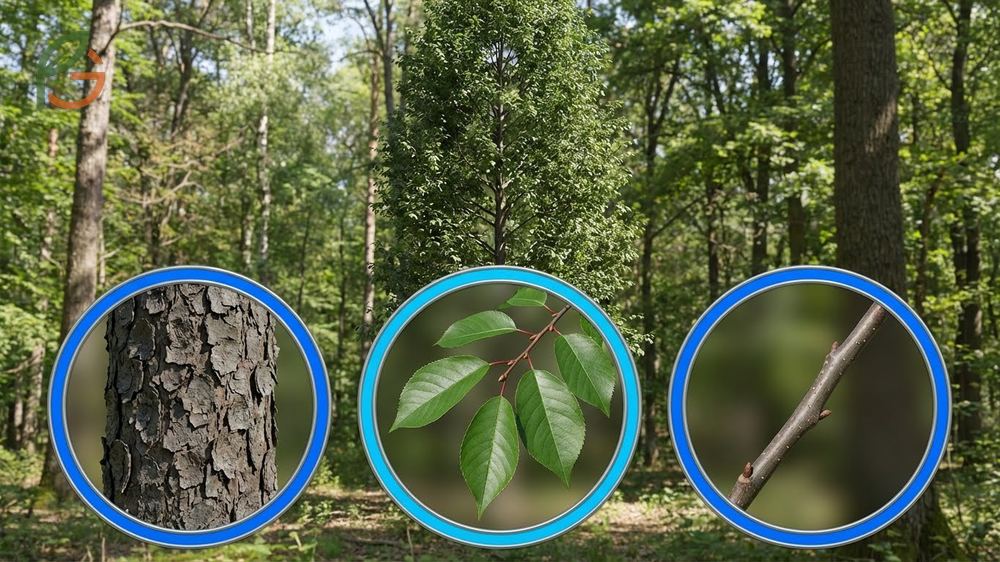
Accurate identification requires examining multiple features since individual characteristics can vary across the species’ wide range. Research shows combining bark, leaf, and twig observations reduces misidentification errors by over 80% compared to relying on single traits.[1] The tree’s growth form also offers clues—black cherry develops a narrow, oval crown with the main trunk extending straight through the canopy.
Seasonal timing affects which features you’ll examine. From May through September, leaves and fruit provide the easiest identification markers. During winter months, bark patterns and twig characteristics become primary identification tools. What matters most is learning to recognize the combination of features rather than depending on any single trait.
Leaf Characteristics
Black cherry leaves grow alternately along branches, measuring 2-6 inches long and 1-2 inches wide in an elongated oval shape. The leaf margins display fine, incurved teeth that feel sharp when rubbed from base to tip.[1] Upper leaf surfaces appear dark green and glossy, while undersides show paler green with rusty hairs along the midrib.
The leaf stalk (petiole) carries two distinctive reddish glands near where it joins the blade. These nectar-producing glands attract ants and other insects that help protect the tree from herbivores. Leaves emerge with a reddish tint in spring, mature to glossy green in summer, and turn yellow to crimson in fall.
- Narrow oblong shape, typically 3-4 times longer than wide
- Shiny upper surface that reflects light when tilted
- Fine serrations along margins with inward-curved teeth
- Two red glands at the base of the leaf blade on the petiole
- Rusty-brown hairs visible along the midrib on the underside
Winter Identification
During leafless months, twigs and buds become primary identification tools. Black cherry twigs grow slender and dark brown with a slightly bitter almond smell when scratched. The leaf scars (marks where leaves were attached) appear half-round with three tiny bundle scars inside—the vascular traces that connected leaves to branches.
Terminal buds at twig tips measure 1/4 inch long, pointed, and covered with dark reddish-brown scales. Side buds angle outward from the twig at about 45 degrees. Current guidance emphasizes checking multiple twigs since individual buds sometimes show damage or abnormal growth that obscures typical features.
Flowers and Fruit
White flowers appear in drooping clusters (racemes) 4-6 inches long during May or early June, after leaves have fully expanded. Each flower measures about 1/3 inch across with five rounded petals surrounding a center of numerous stamens. The late blooming period helps distinguish black cherry from other native cherries that flower before leaf-out.
Fruits ripen in August and September, transitioning from red to dark purple-black when fully mature. Each berry-like drupe measures 1/3 to 1/2 inch in diameter and contains a single hard stone. Birds consume the fruits eagerly, digesting the flesh while passing seeds intact—the tree’s primary dispersal mechanism.
Growth Characteristics and Size
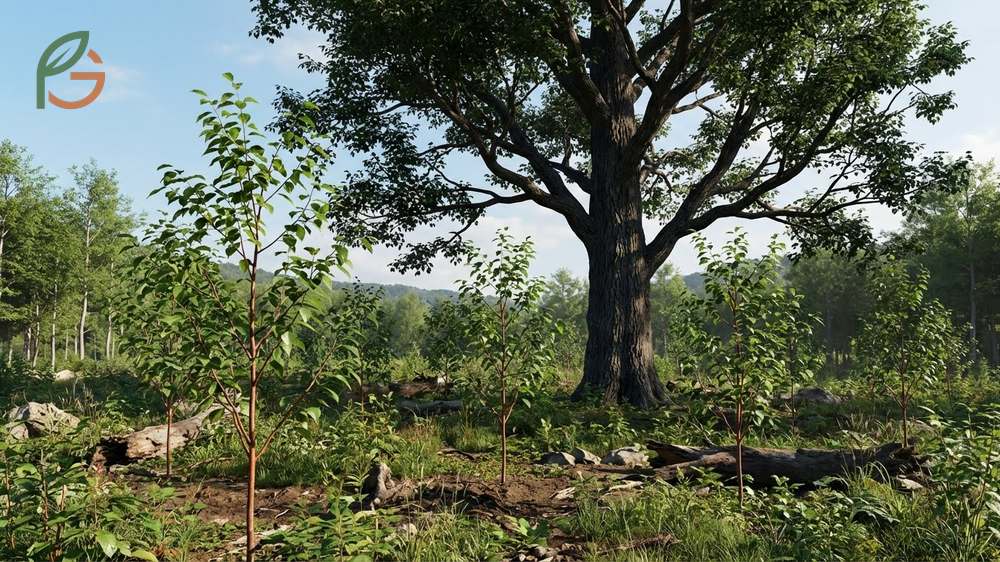
Mature black cherry trees reach heights of 50-80 feet with trunk diameters of 2-3 feet, though exceptional specimens can grow to 90 feet tall.[2] The crown spreads 30-60 feet wide, creating moderate shade with an irregular, somewhat open canopy. Young trees shoot up quickly, often adding 3 feet of height per year during their first 20 years under optimal conditions.[2]
This fast growth rate positions black cherry as an early successional species that colonizes disturbed sites but eventually gets outcompeted by shade-tolerant hardwoods. Research shows trees begin producing viable seeds around age 10, with peak seed production occurring between ages 30-100. Most individuals live 80-120 years, though protected specimens can survive 250 years.
The root system develops a deep taproot in youth, then transitions to a spreading lateral root network as the tree matures. This shift allows established trees to access soil moisture during droughts while also making them vulnerable to windthrow in shallow soils. Root suckers rarely form, unlike many other Prunus species that spread aggressively through underground shoots.
Growth Tip: Trees growing in open areas develop fuller, lower crowns compared to forest-grown specimens that self-prune lower branches to compete for canopy light. Site conditions dramatically affect final size and form.
Toxicity Risks to Livestock
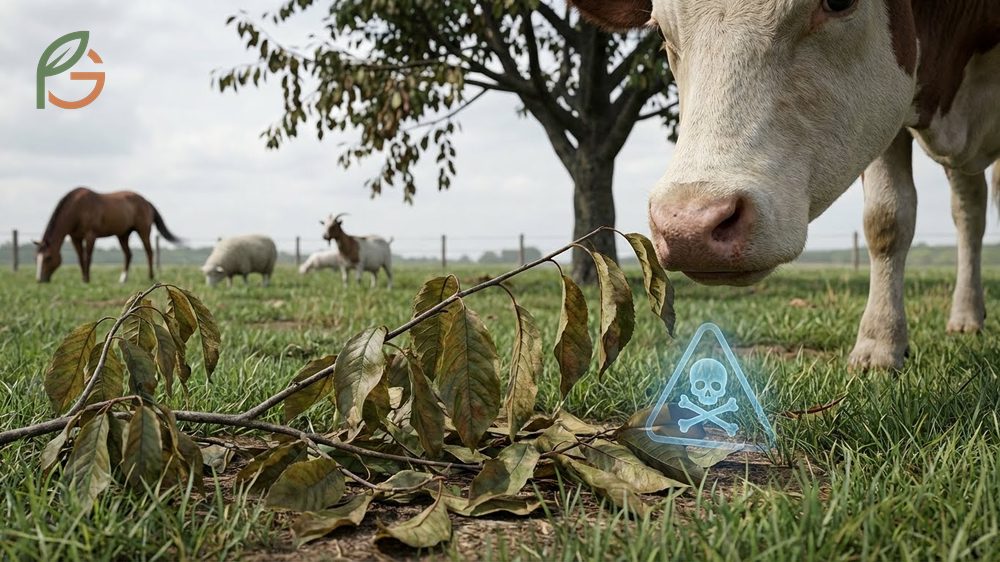
Wilted black cherry leaves pose extreme danger to cattle, horses, sheep, and goats through prussic acid (hydrogen cyanide) poisoning. Studies demonstrate that as little as 1.2-4.8 pounds of wilted leaves can kill a 1,200-pound dairy cow within hours.[3] Fresh green leaves contain lower toxin levels, while completely dried brown leaves lose most of their poisonous compounds.
The wilting process triggers the danger—when leaf cells rupture, enzymes mix with cyanogenic glycosides to produce deadly hydrogen cyanide gas. This reaction peaks 12-24 hours after leaves begin wilting, making storm-damaged branches the highest risk. Livestock show symptoms within 15-60 minutes of consuming toxic doses, including labored breathing, muscle tremors, and rapid collapse.
- Remove storm-damaged cherry branches from pastures within hours of wind events
- Fence off black cherry trees with at least 10 feet of clearance around the drip line
- Never pile fresh cherry prunings where livestock can access them during wilting
- Train yourself to identify black cherry trees along all fence lines and pasture edges
- Move animals to safe paddocks immediately after severe weather that breaks cherry limbs
The toxicity extends beyond leaves—bark, seeds, and fresh shoots also contain dangerous cyanide levels. Research shows autumn poses additional risk since cyanogenic compounds concentrate in leaves before they drop. Producers managing woodlots adjacent to grazing areas need vigilant awareness of black cherry locations throughout the growing season.
Emergency Warning: If animals consume wilted cherry leaves, contact a veterinarian immediately. Death can occur within 30-90 minutes, and treatment must begin quickly. Sodium nitrite and sodium thiosulfate injections can reverse cyanide poisoning if administered early.
Wood Uses and Value
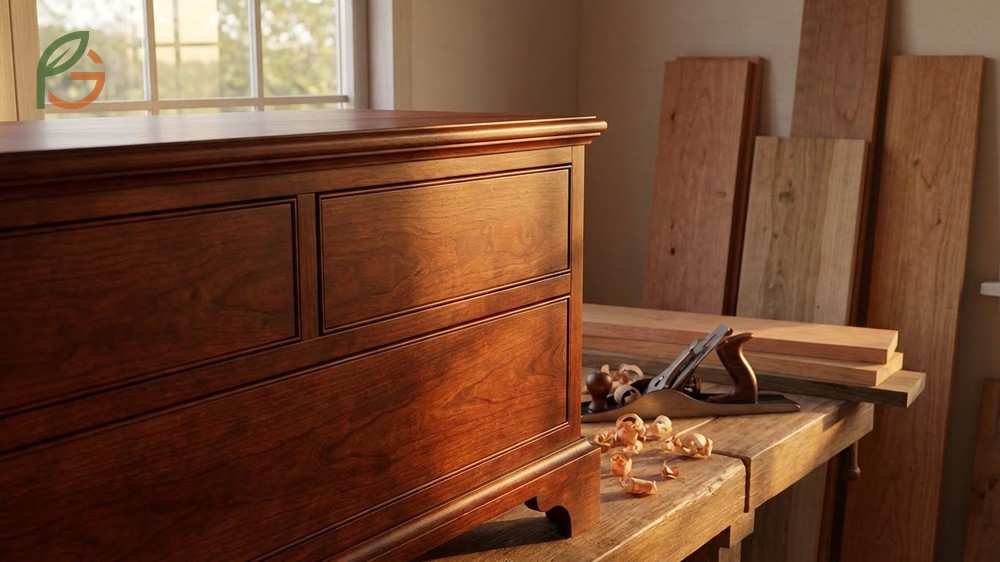
Black cherry wood ranks among the most valuable native hardwoods in North America, prized for its rich color and excellent working properties. The heartwood develops a warm reddish-brown tone that deepens with age and light exposure, creating a patina that woodworkers can’t replicate with stains on other species.[4] This natural aging process makes cherry furniture more attractive over time rather than fading like many woods.
The wood machines cleanly with sharp tools, holds crisp edges for detailed moldings, and accepts finishes evenly without blotching. Current market data shows premium cherry lumber sells in the upper price range alongside walnut and oak, with figured pieces (curly or quilted grain) commanding exceptional premiums. Trees with straight trunks and minimal branching in the lower 16 feet produce the most valuable veneer logs.
Lumber Applications
Fine furniture makers select black cherry for dining tables, bedroom sets, chairs, and built-in cabinetry where its warm color creates inviting spaces. The wood also appears in architectural millwork including stair treads, handrails, door frames, and wall paneling.[4] It turns well on lathes for spindles and bowls, carves cleanly for detailed work, and steam-bends successfully for curved furniture parts.
Specialty applications include musical instruments (particularly guitar backs and sides), precision tool handles, tobacco pipes, and clock cases. The wood’s moderate density and uniform texture allow fine detail work while remaining durable enough for functional objects. Veneer manufacturers produce both rotary-cut and sliced cherry veneers for doors, panels, and decorative surfaces.
Smoking Wood
Cherry wood generates mild, sweet smoke ideal for pork, poultry, and fish without overpowering delicate flavors. The smoke imparts subtle fruity notes and produces an attractive mahogany color on meat surfaces. Pitmasters often blend cherry with stronger woods like hickory or oak to balance sweetness with deeper smoke character.
The wood works especially well for longer smoking sessions since it burns steady without creating excessive heat or harsh flavors. Research shows cherry chunks maintain consistent smoke output for 2-3 hours per piece when properly seasoned. Most people find cherry smoke less intense than mesquite or hickory, making it forgiving for beginners learning temperature control.
- Season split wood for 6-12 months until moisture content drops below 20%
- Cut chunks 2-4 inches across for optimal burn time and smoke production
- Pair cherry with pork ribs, chicken, turkey, and salmon for complementary flavors
- Blend 50/50 with oak or hickory for beef and lamb that need stronger smoke
- Avoid cherry bark which can produce bitter smoke compounds
- Use 2-3 chunks at a time for standard offset smokers to prevent over-smoking
Medicinal Uses of Bark
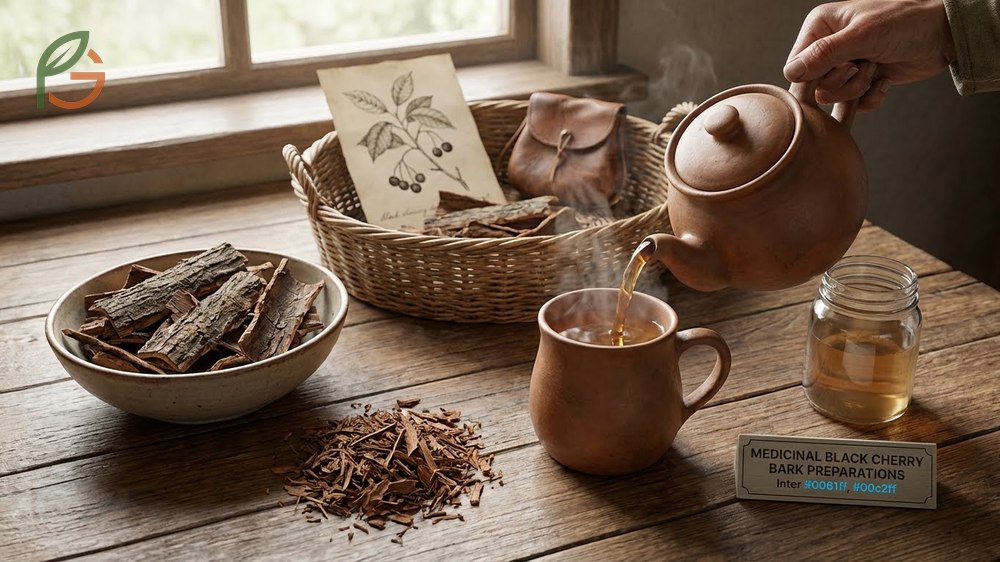
Native Americans and early settlers prepared medicinal teas from black cherry bark to treat coughs, colds, and respiratory ailments. The inner bark contains compounds that act as mild expectorants and cough suppressants, helping loosen phlegm and quiet persistent coughs.[5] Traditional preparations steeped bark in warm (not boiling) water to preserve active compounds that break down at high temperatures.
The bark also provided mild sedative effects, helping ease nervousness and promote sleep. Evidence suggests it was used during early labor stages to help manage discomfort, though modern medicine doesn’t recommend this application.[5] Herbalists harvested bark in autumn when cyanogenic glycoside levels peaked, then dried it for winter use.
Current medical consensus recognizes black cherry bark contains active compounds but advises caution due to cyanide content. The glycoside prunasin converts to hydrocyanic acid during digestion—the same toxin that makes wilted leaves deadly to livestock.[5] In small amounts, this compound may stimulate respiration and improve digestion, but incorrect dosing poses serious risks. Modern herbalism has largely moved away from black cherry preparations in favor of safer cough remedies.
Safety Warning: Don’t prepare home remedies from black cherry bark without expert guidance. The line between therapeutic and toxic doses remains unclear, and symptoms of cyanide poisoning develop rapidly. Commercial cough syrups once contained wild cherry flavoring, but most formulations now use artificial flavors instead.
Conclusion
The evidence is clear: wild black cherry tree identification hinges on recognizing dark, flaky bark with an almond scent, glossy elongated leaves with fine teeth, and white flower clusters that appear after leaves emerge. This native hardwood’s fast growth and valuable wood make it economically significant, while its cyanide-containing tissues demand respect around grazing livestock. Current forestry guidance emphasizes managing black cherry for either timber production or wildlife habitat, not both simultaneously on the same property.
Understanding these contrasts—beautiful wood versus toxic leaves, wildlife food versus livestock hazard—helps landowners make informed decisions about whether to protect, harvest, or remove individual trees. FruitGarden synthesizes current research to support sustainable management practices that balance economic value with safety considerations.
Frequently Asked Questions
How do you identify a wild black cherry tree in winter?
Look for dark, flaky bark with horizontal lenticels, slender dark brown twigs with a bitter almond smell when scratched, and pointed reddish-brown buds about 1/4 inch long. The leaf scars appear half-round with three bundle traces visible inside, and the overall form shows a narrow oval crown with the main trunk extending through the top.
What makes wild black cherry bark distinctive?
The bark transitions from smooth reddish-brown on young trees to deeply furrowed and nearly black on mature specimens, breaking into irregular flaky plates that resemble burnt potato chips. When scratched or broken, the inner bark releases a distinctive bitter almond scent from aromatic compounds called cyanogenic glycosides.
Is wild black cherry wood good for smoking meat?
Yes, cherry wood produces mild, sweet smoke that works exceptionally well for pork, poultry, and fish without overpowering delicate flavors. It burns steadily for 2-3 hours per chunk, imparts subtle fruity notes, and creates an attractive mahogany surface color on smoked meats. Many pitmasters blend it with hickory or oak for beef.
How toxic are wild black cherry leaves to cattle?
Wilted black cherry leaves are extremely dangerous—just 1.2-4.8 pounds can kill a 1,200-pound cow within hours through prussic acid poisoning. The toxin forms when wilting leaves release enzymes that convert glycosides into deadly hydrogen cyanide. Fresh green leaves contain lower toxin levels, while completely dried brown leaves lose most toxicity.
What are the main uses of wild black cherry trees?
Black cherry produces highly valued lumber for fine furniture, cabinetry, architectural millwork, and musical instruments due to its rich reddish-brown color and excellent working properties. The wood also serves as premium smoking wood for meats. Wildlife consume the fruits extensively, making the tree valuable for habitat management away from livestock areas.
How fast do wild black cherry trees grow?
Young black cherry trees grow rapidly, often adding 3 feet of height per year under optimal conditions for their first 20 years. Mature trees typically reach 50-80 feet tall with 30-60 foot crown spreads. Growth rate slows after age 30, with most trees living 80-120 years, though some protected specimens survive 250 years.
What are the medicinal uses of wild cherry bark?
Traditional medicine used wild cherry bark tea as a cough suppressant and expectorant to treat respiratory ailments, since the inner bark contains compounds that help loosen phlegm and quiet persistent coughs. However, the bark also contains cyanogenic glycosides that convert to toxic hydrogen cyanide, so modern herbalism has largely moved to safer alternatives. Never prepare home remedies without expert guidance.