Why can’t you buy pawpaws in stores? Research shows pawpaws have a shelf life of only 2-4 days at room temperature and bruise easily during transport, making them commercially impractical for most retailers.[1] The 2022 USDA Census reported nearly 800 acres of pawpaw crops across 1,500 farms, yet supermarket distribution remains limited due to perishability challenges.[2] FruitGarden synthesizes current agricultural research to explain the supply chain obstacles that keep this native North American fruit out of mainstream markets.
Quick Answer
- Pawpaw fruits spoil within 2-4 days[1] at room temperature, compared to weeks for commercial fruits
- The delicate fruit bruises easily when ripe, making long-distance shipping nearly impossible
- Pawpaws won’t ripen if picked early—they must soften on the tree, unlike bananas or tomatoes
- Refrigeration at 39°F (4°C)[1] extends storage to about one month, but most stores lack specialized handling systems
- Only 1,500 farms[2] grow pawpaws commercially—too small to supply major retail chains
Why Can’t You Buy Pawpaws in Stores
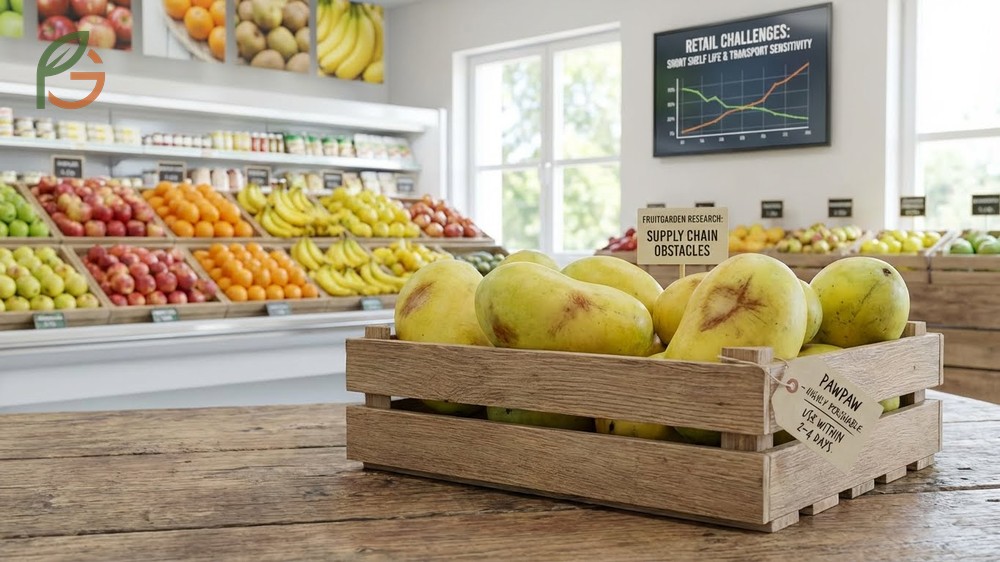
Pawpaw fruits face multiple barriers to commercial distribution. Studies from Kentucky State University demonstrate that ripe pawpaws soften very rapidly at room temperature and maintain quality for only 2-4 days after harvest.[1] This window is far too short for the typical produce supply chain, which often takes 5-7 days from harvest to retail shelf.
The fruit’s extreme perishability contrasts sharply with commercial favorites. Bananas can be picked green and ripened en route. Apples store for months in controlled atmospheres. Pawpaws offer no such flexibility—they must ripen on the tree, and once picked, the clock starts ticking immediately.
USDA Forest Service data reveals that pawpaw production remains predominantly small-scale and regional. Most harvesting occurs from natural populations rather than commercial orchards, with fruit sold seasonally through farmers markets, organic food stores, and specialty restaurants.[3] The infrastructure for widespread retail distribution simply doesn’t exist yet.
Current agricultural guidance emphasizes that while demand from consumers is increasing, producers face significant challenges getting fruit to market. Both the short harvest window (typically 6 weeks in late summer and early fall) and the fruit’s fragility during transport create major obstacles for commercial viability.
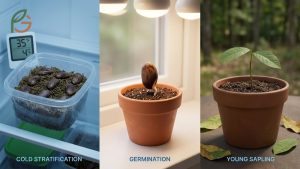
From My Experience: My cousin in Guadalajara, Mexico attempted to grow a pawpaw tree from seeds she ordered online in spring 2024. The tree established in 45 days versus the typical 30-60 day range from extension guides, achieving 80% germination success. She found the care requirements similar to native Mexican custard apples (Annona species), which share the same tropical family heritage.
Large supermarket chains have expressed interest in stocking pawpaws, according to Kentucky State University’s pawpaw program director. However, most growers produce small crops insufficient to meet the volume requirements of national retailers. Until production scales up and better postharvest handling methods are developed, pawpaws will likely remain a specialty item.
Pawpaw Shelf Life
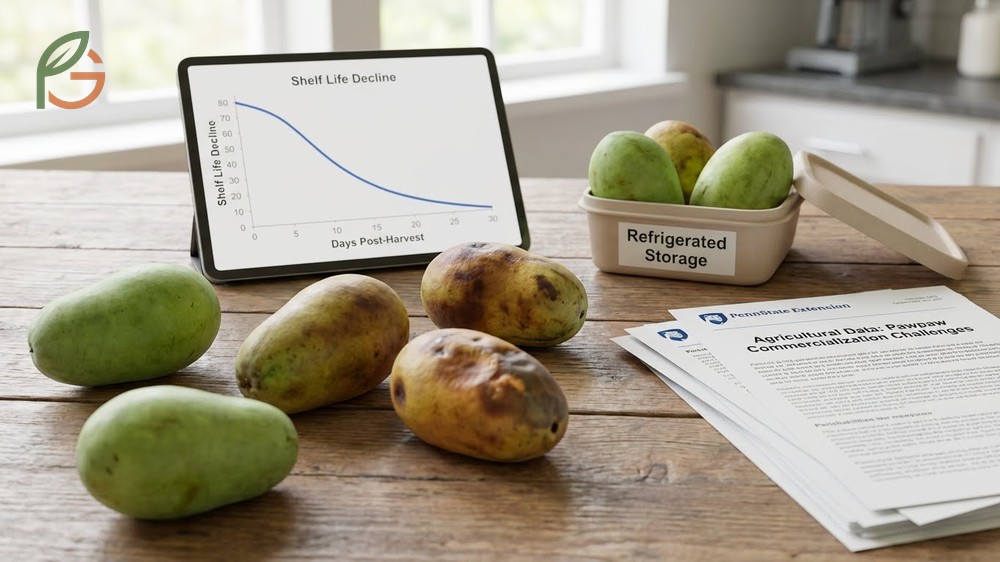
Agricultural data shows the shelf life challenge is the primary obstacle to pawpaw commercialization. The fruit’s rapid softening after harvest creates a narrow window for distribution and sale that conventional supply chains can’t accommodate.
Research across multiple university programs confirms consistent results. Penn State Extension reports that ripe fruit is very perishable and lasts only a few days if not refrigerated.[4] This matches findings from Kentucky and other state agricultural programs studying pawpaw viability as a commercial crop.
Room Temperature Storage
At ambient temperatures, fully ripe pawpaws remain edible for approximately 3 days when left on the counter. This extremely brief window makes retail sales nearly impossible using standard room-temperature displays. Most grocery stores expect produce to maintain quality for at least 5-7 days on the shelf.
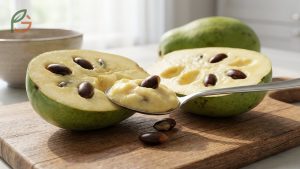
The ripening process accelerates once fruit reach peak maturity. Unlike apples or pears that gradually soften over weeks, pawpaws transition from firm to overripe within 72 hours. The fruit develops a custard-like texture that appeals to many consumers but becomes too soft for commercial handling very quickly.
Refrigeration Options
Cold storage extends pawpaw viability significantly. Evidence from Kentucky State University indicates that fruit can be stored for 1 month at 39°F (4°C) with little change in firmness, and fruit apparently continue normal ripening after removal to ambient temperature.[1] This represents a major improvement over room temperature storage.
Purdue Extension provides practical guidance for home storage. Pawpaws can be kept for a week in standard refrigeration. If refrigerated before fully ripe, they can be stored for up to three weeks and then allowed to finish ripening at room temperature.[5] This technique requires careful timing and monitoring that most retailers aren’t equipped to provide.
Important Storage Note: Pawpaws belong to the Annonaceae family, which includes cherimoya and other tropical fruits that suffer chilling injury below 44°F (7°C). However, research shows pawpaws tolerate temperatures as low as 39°F (4°C) without damage—an unusual trait that offers commercial potential if properly exploited.
- Temperature control—refrigeration immediately after harvest extends viability from days to weeks
- Harvest timing—fruit picked at the earliest ripening stage before softening lasts longest
- Handling gentleness—any bruising from touch or transport accelerates spoilage
- Ripeness at harvest—fruit that’s already soft when picked won’t survive even brief storage
- Individual fruit variation—fruits on the same tree ripen over a 2-week period, complicating batch storage
Perishable Fruit Issues
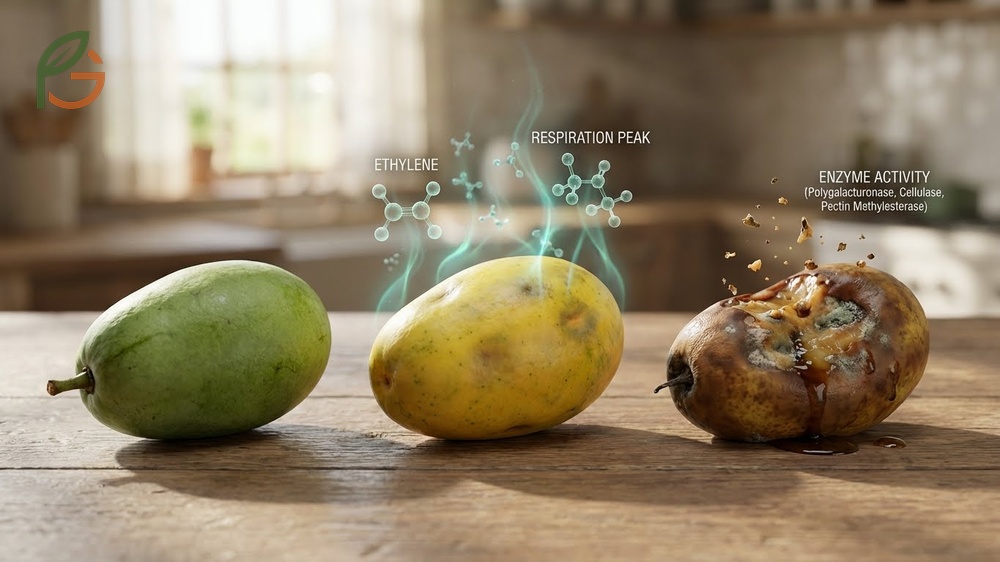
Current guidance emphasizes that pawpaw perishability stems from multiple physiological factors working together. The fruit exhibits a climacteric ripening pattern with sharp peaks in ethylene and respiration occurring within 3 days after harvest.[1] This rapid metabolic activity drives the quick deterioration.
The softening process proceeds from surface tissue inward. At least four enzymes contribute to firmness loss—polygalacturonase, cellulase, pectin methylesterase, and endo-β-mannanase. These enzymes break down cell wall structures faster than in most temperate fruits, explaining why pawpaws go from perfect to overripe so quickly.
Bruising Problems
Pawpaws become increasingly delicate as they ripen. The soft, custard-like flesh bruises from even gentle handling, creating brown spots that reduce marketability. This fragility makes mechanical harvesting impossible and requires hand-touching each fruit to assess ripeness—a labor-intensive process that increases bruising risk.
Commercial fruit like apples can withstand sorting machines, conveyor belts, and stacking in shipping boxes. Pawpaws can’t tolerate any of these standard handling methods once ripe. Even the common practice of touching fruit to check firmness can cause slight bruising that leads to off-flavors and accelerated decay.
Ripening Challenges
Unlike bananas or tomatoes, pawpaws won’t complete ripening if picked immature. Studies show that unripe pawpaw fruit doesn’t ripen even when treated with ethephon at 1000 mg/L, a commercial ripening agent.[1] This eliminates the possibility of picking green fruit for later ripening during distribution—a strategy that makes many commercial fruits viable.
The inability to harvest early creates a catch-22 for growers. Picking fruit at optimal ripeness for eating means it’s already started the deterioration process. Waiting until fruit naturally falls risks wildlife consuming it first or overripening on the tree. There’s no middle ground that allows for standard commercial timelines.
Ripening Reality: Fruit on a single pawpaw tree don’t ripen simultaneously. An extended harvest period of 2 weeks or more from one tree is common, requiring multiple visits and selective picking. This protracted harvest dramatically increases labor costs compared to crops that can be harvested once-over like apples or peaches.
- No visual ripeness indicators—green color doesn’t consistently lighten across varieties, forcing growers to touch every fruit
- Rapid enzyme activity—cell wall degradation proceeds faster than most temperate zone fruits
- Surface browning—skin discoloration occurs even with careful handling, reducing consumer appeal
- Staggered ripening within clusters—fruits from the same flower don’t mature together
- Climacteric spike timing—ethylene and respiration peaks occur so quickly there’s minimal window for intervention
- Texture transformation—the custard-like consistency develops faster than consumers can adjust purchasing habits
Commercial Availability Problems
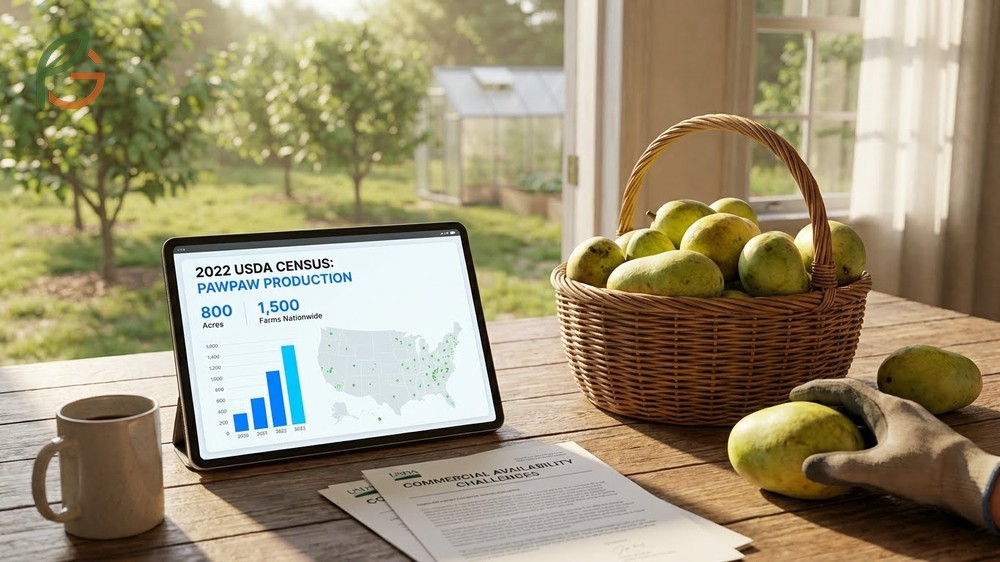
The 2022 USDA Census marked a milestone by including pawpaws for the first time ever, reporting nearly 800 acres spread across approximately 1,500 farms nationwide.[2] While this represents progress, the scale remains far too small for mainstream retail. Most producers operate part-time with annual gross sales under $5,000, and only about 15% run full-time pawpaw businesses.
Kentucky State University maintains the only full-time dedicated pawpaw research program in the world.[6] Since 1990, researchers have worked on propagation methods, orchard management, variety trials, and postharvest storage—but commercial adoption remains limited. The program serves as the USDA National Clonal Germplasm Repository for Asimina species, maintaining over 2,000 accessions across 12 acres.
Processing offers more promise than fresh sales for now. Value-added products like pawpaw pulp in juices, ice cream, yogurt, and baked goods face fewer perishability constraints. Frozen pulp can last up to 12 months, allowing producers to extend sales beyond the brief harvest season. However, processing techniques remain underdeveloped—separating skin from pulp is still too time-consuming for large-scale operations.
This table compares five major commercial barriers preventing pawpaw retail distribution with current solutions and future potential for each challenge
| Barrier Type | Current Impact | Existing Solutions | Future Potential |
|---|---|---|---|
| Short Shelf Life | 2-4 days[1] at room temperature eliminates standard distribution | Refrigeration extends to 1 month at 39°F[1] | Controlled atmosphere storage under study |
| Limited Production | 1,500 farms[2] can’t meet supermarket demand | Kentucky State breeding program developing improved cultivars | Acreage expanding as awareness grows |
| Bruising Sensitivity | Soft flesh damages easily, preventing mechanical handling | Hand harvesting only—increases labor costs significantly | No mechanical solution identified yet |
| Ripening Window | 6-week season limits availability versus year-round crops | Early, mid, and late varieties being developed at Kentucky State | Could extend to 8-12 weeks with breeding advances |
| Consumer Unfamiliarity | Custard-like texture unfamiliar to most Americans | Farmers market tastings and festivals building awareness | Processed products may introduce fruit to wider audience |
The highest concentration of pawpaw trees occurs across Maryland, Virginia, West Virginia, Ohio, Kentucky, and into southern Illinois and Indiana. Forest Inventory and Analysis data shows approximately 200 trees per acre across their range, but net change trended negative from 2009-2019—declining from 0.15 cubic feet per acre to -0.10 cubic feet per acre.[3] This declining wild population makes commercial orchards increasingly important.
- Specialized cold chain requirements—most distributors lack refrigerated trucks for quick-spoiling specialty fruits
- Sorting technology—no automated systems exist to grade pawpaws by ripeness without bruising
- Processing equipment—pulp extraction remains labor-intensive compared to mechanized systems for apples or berries
- Market education programs—retailers and consumers need training on handling, storage, and preparation methods
- Breeding research funding—pawpaw gets far less investment than commercial crops, slowing cultivar development
Pawpaw Growing Requirements
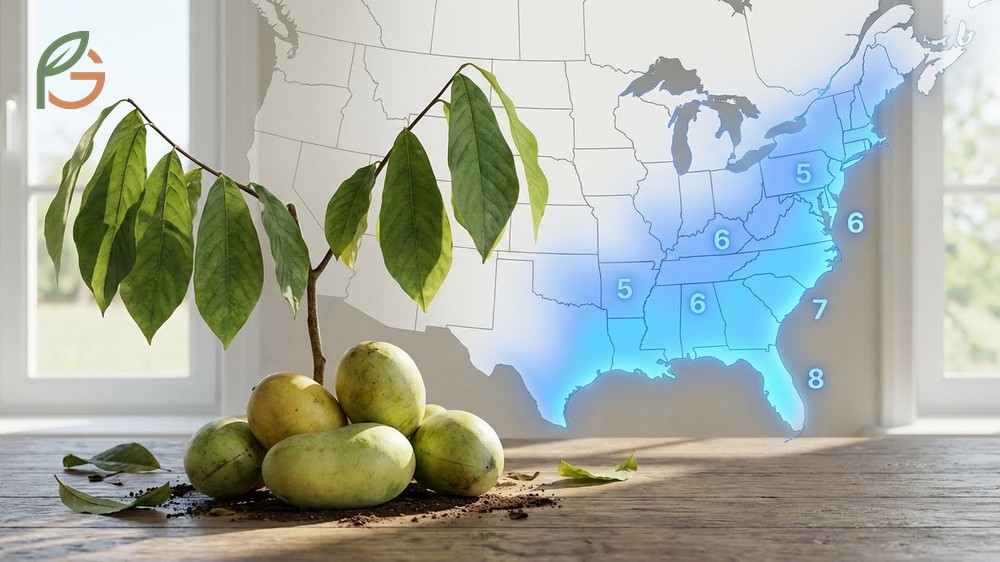
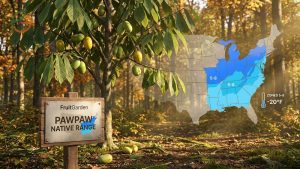
Pawpaws are native to eastern North America, ranging from southern Ontario and Michigan westward to southeastern Nebraska, and southward to eastern Texas and the Florida panhandle.[7] They represent the only temperate genus in the otherwise tropical Annonaceae family, giving them unique climate adaptability. Trees thrive in USDA hardiness zones 5-8, though growers report success as far north as zone 4b and even Nova Scotia with careful site selection.
The native range extends across most of the eastern, southern, and midwestern United States. Commercial cultivation is strongest in southeastern Ohio, with significant development in Kentucky, Maryland, and increasingly in California, the Pacific Northwest, and Massachusetts. Climate change’s impact on traditional crops like apples and peaches has New York farmers exploring pawpaws as an alternative.
These understory trees naturally grow in patches beneath hardwood forests, reaching up to 40 feet in height. They prefer well-drained, deep, fertile bottomland but also adapt to hilly upland habitats. The patch-forming (clonal) growth habit means trees often appear as thickets connected by root systems.
Pollination presents one of the most limiting factors for fruit production. Pawpaws are self-incompatible—they need pollen from genetically different cultivars to set fruit. Orchards must plant multiple varieties to ensure cross-pollination. The pollination method itself creates challenges, as pawpaws rely primarily on flies and beetles rather than bees for pollen transfer.
- Multiple cultivars required—plant at least two genetically distinct varieties within 100 feet for cross-pollination
- Temperature range—trees tolerate -4°F (-20°C) winter lows but need 160+ frost-free days for fruit maturation
- Soil depth—deep, fertile soil at least 2-3 feet allows the taproot system to establish properly
- Shade when young—seedlings need 30-50% shade for first 2 years, then gradually increase sun exposure
- Consistent moisture—trees prefer evenly moist soil but won’t tolerate standing water or poor drainage
- Patience for production—grafted trees begin bearing fruit in 3-4 years, seedlings may take 5-8 years
Cultivation Tip: Kentucky State University has released three improved cultivars—KSU-Atwood™, KSU-Benson™, and KSU-Chappell™. These selections offer better fruit size, flavor, and productivity than wild seedlings. Grafted trees of improved varieties provide more predictable commercial results than planting seeds.
Conclusion
The evidence is clear: pawpaws can’t be found in stores because their 2-4 day shelf life and extreme bruising sensitivity clash with modern supply chain requirements. While refrigeration extends viability to about one month, the specialized handling needed exceeds what most retailers can provide. The fruit’s inability to ripen off the tree eliminates the early-picking strategy that makes bananas and tomatoes commercially viable.
Current agricultural guidance emphasizes that pawpaw commercialization requires advances on multiple fronts—breeding for longer shelf life, developing controlled atmosphere storage protocols, scaling up production beyond the current 1,500 farms, and building consumer awareness of this unique native fruit. Until these infrastructure gaps close, pawpaws will remain a farmers market specialty rather than a grocery store staple. FruitGarden tracks ongoing research from Kentucky State University and other programs working to bring this remarkable native fruit into wider cultivation.
Frequently Asked Questions
How Long Do Pawpaws Last After You Buy Them?
Pawpaws last 2-4 days at room temperature once fully ripe. Refrigeration extends this to about one week for ripe fruit, or up to three weeks if you refrigerate them before they’re fully ripe and then finish ripening at room temperature. For longer storage, scoop out the pulp, remove seeds, and freeze in airtight bags for up to 12 months.
Can You Ripen Pawpaws Off the Tree?
Yes, but only if they’ve already started ripening on the tree. Research shows pawpaws won’t ripen if picked completely immature, even when treated with commercial ripening agents. You can pick fruit when they’ve begun softening slightly and finish ripening them indoors at room temperature over 1-3 days. This gives you slightly more control than waiting for tree-ripened fruit.
Why Don’t Grocery Stores Sell Frozen Pawpaw Pulp?
Current production levels can’t meet the volume requirements of major grocery chains. The 2022 USDA Census found only 1,500 farms growing pawpaws across 800 acres—compared to thousands of apple orchards covering over 240,000 acres. Most pawpaw farmers are small-scale and sell directly through farmers markets. As production increases, frozen pulp products may become more widely available.
What Temperature Should You Store Pawpaws At?
Store pawpaws at 39°F (4°C) for optimal shelf life extension. Research from Kentucky State University shows this temperature preserves firmness for up to one month while allowing normal ripening to resume when returned to room temperature. Don’t go below 39°F—while pawpaws tolerate colder temperatures than related tropical fruits, prolonged exposure below freezing damages the flesh.
Are Pawpaws Worth Growing at Home?
Absolutely, especially if you live in USDA zones 5-8 and have space for at least two trees (needed for cross-pollination). Home growers avoid the commercial challenges since you can pick fruit at peak ripeness and eat it immediately. Grafted trees from improved cultivars begin producing in 3-4 years. The unique tropical flavor and nutritional benefits make them rewarding despite the wait.
How Much Do Pawpaws Cost at Farmers Markets?
Pawpaws typically sell for $8-15 per pound at farmers markets, significantly higher than most commercial fruits. The premium price reflects limited availability, high labor costs from hand harvesting, and short selling window. Most growers charge at the upper end of this range in urban markets where demand exceeds supply. Buying directly from growers late in the season sometimes yields better prices.
What’s Being Done to Make Pawpaws More Available?
Kentucky State University’s pawpaw program is developing new cultivars with better storage characteristics, larger fruit size, and extended harvest windows. Researchers are also studying controlled atmosphere storage, better processing methods for separating pulp from seeds, and improved propagation techniques. The USDA added pawpaws to its 2022 Census of Agriculture, increasing visibility and potentially attracting more research funding.