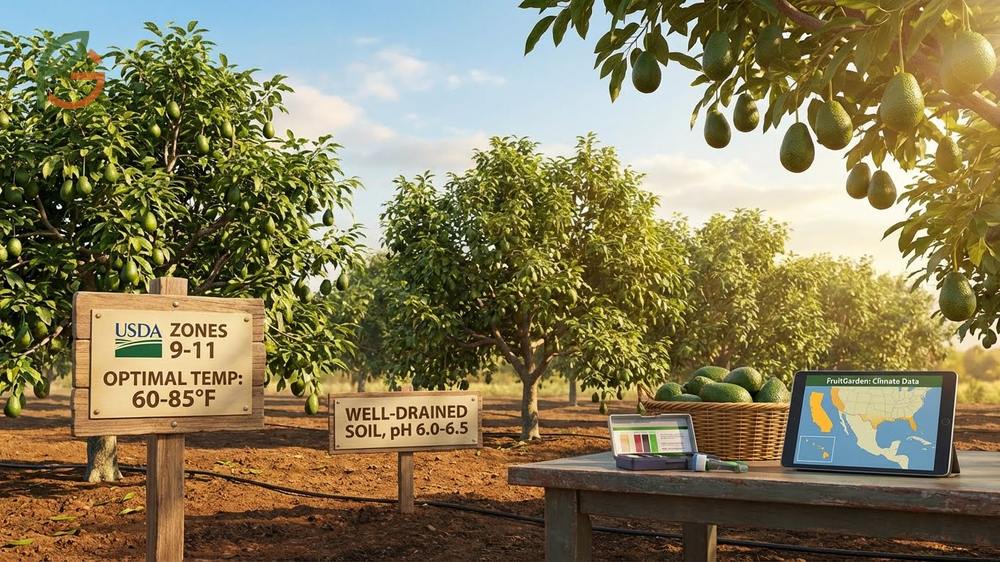
Where do avocados grow? Avocados thrive in USDA hardiness zones 9 through 11, with California producing 90% of U.S. avocados[1], followed by Florida and Hawaii. These warm-climate trees need temperatures between 60-85°F (16-29°C) and well-drained soil with a pH of 6.0-6.5. FruitGarden compiles research from university agricultural extensions and USDA climate data to help you determine if your region supports avocado cultivation.
Quick Answer
- Avocados grow best in USDA zones 9-11[2], with zone 8 possible for cold-hardy varieties
- Ideal temperatures range 60-85°F (16-29°C)[3] with minimal frost exposure
- California produces 183,500 tons annually[1], representing 90% of domestic production
- Plant from March to June for optimal root establishment before summer heat
Where Do Avocados Grow
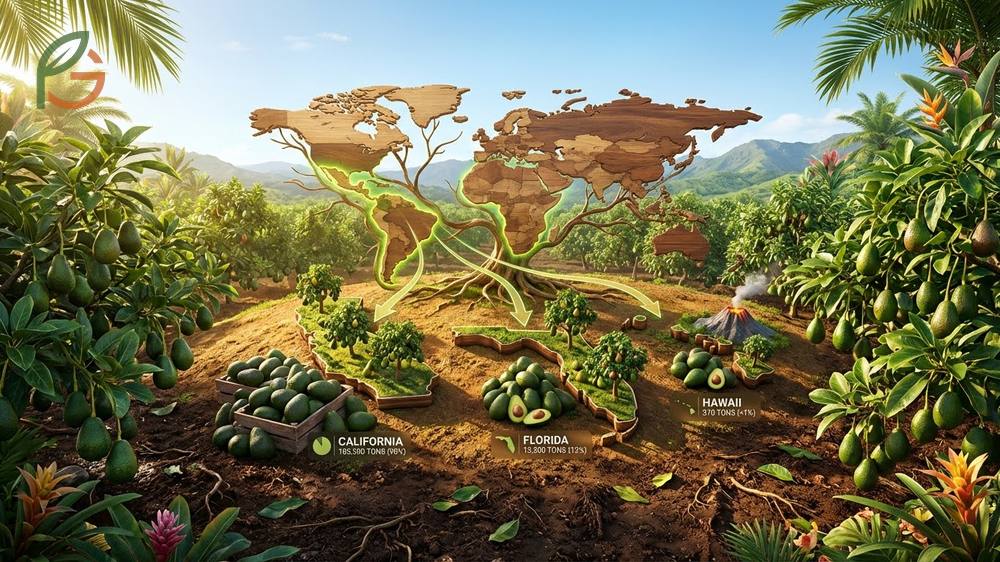
Avocados originated in Mexico and Central America but now grow commercially across tropical and subtropical regions worldwide. In the United States, production concentrates in three states with suitable climates.
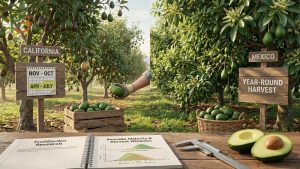
California dominates U.S. avocado production with 183,500 tons annually, representing 90% of domestic output[1]. Florida contributes 13,200 tons (12%), while Hawaii produces 370 tons (less than 1%). These regions provide the warm temperatures and frost-free conditions avocado trees require.
Commercial Production Regions
Commercial avocado cultivation in California focuses on coastal and inland valley regions of Southern California. San Diego County and southwestern Riverside County contain 59% of the state’s plantings, while Ventura and Santa Barbara counties account for 33%.
Florida’s avocado industry operates primarily in the southern regions where tropical varieties thrive. The state’s warmer, more humid climate supports West Indian avocado varieties that can’t survive California’s conditions.
From My Experience: My cousin in Guadalajara, Mexico grows Hass avocados in his backyard orchard. His trees started producing fruit in year three, which matches the typical 3-5 year timeline from grafted nursery stock.
Global Avocado Cultivation
Mexico leads global avocado production with over 1 million metric tons annually. The west-central Mexican states of Michoacán and Jalisco account for 78% and 8% of Mexican production respectively. Other major producers include Peru, Colombia, Chile, and Dominican Republic.
Avocados grow successfully in Mediterranean climates like Spain, Israel, and South Africa. Australia and New Zealand also produce commercial quantities in their subtropical regions.
Avocado Tree Growing Zones
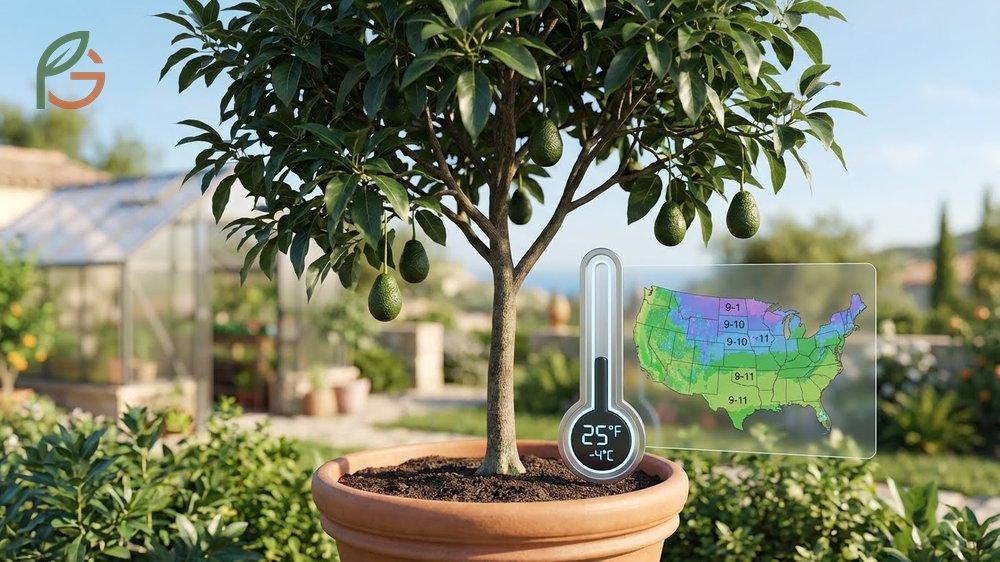
USDA hardiness zones provide the most reliable framework for determining if your location supports avocado cultivation. These zones map average annual minimum temperatures, which directly affect avocado tree survival.
Most commercial avocado varieties thrive in zones 9 through 11[2]. Zone 8 gardeners can grow cold-hardy varieties with proper protection during the first few winters.
USDA Hardiness Zones
Zone 9 experiences minimum temperatures of 20-30°F (-7 to -1°C). This zone includes parts of central and southern California, most of Florida, coastal Texas, southern Arizona, and all of Hawaii. Standard Hass avocados perform well in zone 9a and warmer.
Zone 10 maintains minimum temperatures of 30-40°F (-1 to 4°C). Southern Florida, coastal Southern California, and Hawaii fall into this category. Zone 11 stays above 40°F (4°C) year-round and includes only the southernmost parts of Florida and Hawaii.
Important Note: Young avocado trees (under 3-5 years) show greater sensitivity to cold than mature specimens. Protect young trees from temperatures below 32°F (0°C) with frost blankets or temporary shelters.
Zone 8 Possibilities
Zone 8 presents challenges for avocado cultivation but isn’t impossible. This zone experiences minimum temperatures of 10-20°F (-12 to -7°C), which exceeds most avocados’ cold tolerance. Success requires selecting Mexican avocado varieties bred specifically for cold hardiness.
Mexican avocado types tolerate temperatures down to 19-20°F (-7°C)[4] once established. Varieties like Mexicola Grande, Brogdon, Duke, and Lila have demonstrated survival in zone 8 conditions with proper site selection and winter protection.
This table compares cold hardiness, skin characteristics, and ideal growing zones for three main avocado race types
| Avocado Race | Cold Hardiness | Skin Type | Leaf Scent | Best Zones |
|---|---|---|---|---|
| Mexican | 19-20°F (-7°C)[4] | Thin, smooth | Anise-scented | 8-11 |
| Guatemalan | 30°F (-1°C)[5] | Thick, pebbly | No scent | 9-11 |
| West Indian | 33°F (1°C)[5] | Thin, smooth | No scent | 10-11 |
Best Climate for Avocado Trees
Avocado trees require specific temperature ranges, sunlight exposure, and soil conditions to produce healthy fruit. Understanding these climate factors helps you determine if your location can support successful cultivation.
The ideal climate combines warm temperatures, moderate humidity, well-drained soil, and protection from extreme weather events. Coastal California and southern Florida provide these conditions naturally, which explains their dominance in commercial production.
Temperature Requirements
Avocado trees perform best at temperatures between 60-85°F (16-29°C)[3] with moderate humidity. Young trees suffer damage at temperatures above 104°F (40°C), while established trees tolerate brief cold snaps down to 28-32°F (-2 to 0°C) with minimal damage.
Soil temperature affects root development significantly. Roots thrive in soil temperatures between 68-77°F (20-25°C), while temperatures below 50°F (10°C) or above 86°F (30°C) substantially impede growth. This explains why avocados struggle in regions with cold winters or extremely hot summers.
Flowering requires four weeks of cool weather (below 70°F/21°C) during fall and winter. However, temperatures below 50°F (10°C) during bloom periods can stunt flower development and reduce fruit set.
Sunlight and Humidity
Most avocado cultivars need six to eight hours of direct sunlight daily. Full sun exposure drives photosynthesis, which fuels healthy growth and abundant fruit production. Trees tolerate partial shade but produce fewer avocados in shaded conditions.
Moderate humidity levels work best for avocado cultivation. Excessive humidity promotes fungal diseases, particularly Phytophthora root rot, which devastates avocado orchards. This disease sensitivity makes well-drained soil absolutely critical.
- Annual rainfall between 30-50 inches (76-127 cm) distributed throughout the growing season
- Protection from strong winds that damage branches and reduce fruit set
- Frost-free growing season of at least 240 days per year
- Nighttime temperatures that don’t drop below 50°F (10°C) during flowering periods
- Consistent temperatures without extreme daily fluctuations that stress trees
- Low salinity in both soil and irrigation water (avocados show salt sensitivity)
- Afternoon shade in extremely hot climates to prevent sun scald on young trees
Growing Avocados Regionally
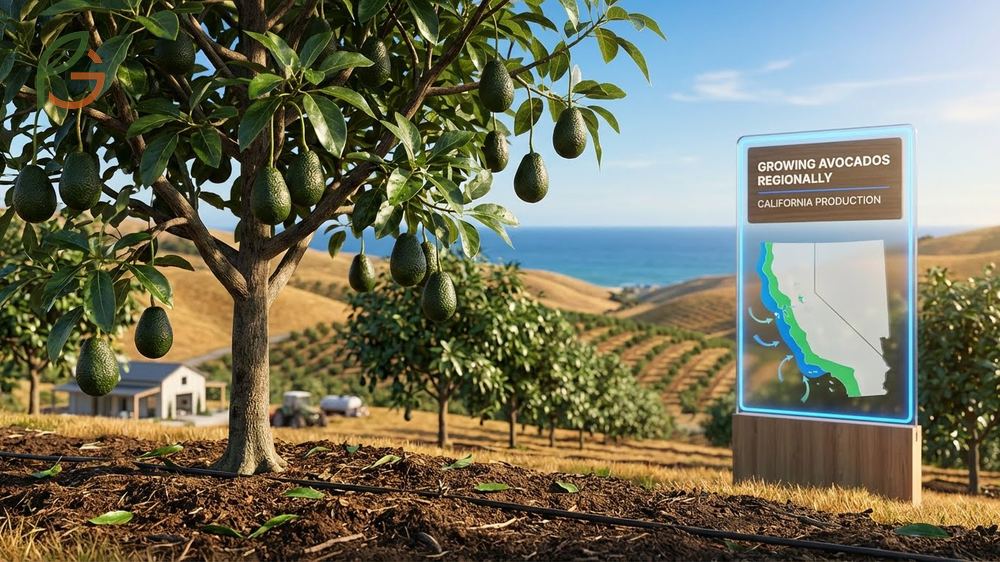
Different U.S. states present unique advantages and challenges for avocado cultivation. Climate patterns, soil types, and disease pressure vary significantly across regions.
California’s Mediterranean climate provides ideal conditions for Guatemalan and Mexican avocado varieties. The state’s coastal regions offer consistent temperatures, moderate humidity, and well-drained hillside soils. Hass avocados dominate California production because they tolerate the cooler nights and dry summers.
Florida’s subtropical to tropical climate supports primarily West Indian varieties that require warmer, more humid conditions. The state experiences higher disease pressure from Phytophthora root rot due to flat terrain, heavier rainfall, and less natural drainage. Florida growers often plant avocados on raised beds to improve drainage.
Texas avocado production remains limited despite suitable climate zones in the southern Rio Grande Valley. Commercial production is so small it doesn’t appear in USDA statistics. Home gardeners in southern Texas can successfully grow cold-hardy Mexican varieties with proper site selection.
From My Experience: When my friend in Oaxaca, Mexico planted Fuerte avocados in March 2023, the trees established strong root systems before summer heat arrived. This spring planting timing reduced transplant shock and water stress significantly.
Hawaii produces small quantities of diverse avocado varieties, with Sharwil being the most common commercial cultivar. The state’s year-round warm temperatures eliminate frost concerns but create challenges with consistent flowering cycles.
- California: Choose Hass, Fuerte, or Bacon for coastal regions; use drip irrigation to conserve water
- Florida: Select Monroe, Choquette, or Lula varieties bred for humidity tolerance; implement strict drainage management
- Texas: Plant Mexicola Grande or Brogdon in southern regions; provide frost protection for young trees
- Arizona: Limited to southern desert areas with frost protection; extreme heat requires afternoon shade
- Hawaii: All zones suitable; choose varieties based on elevation and rainfall patterns
Regional Tip: Contact your local university agricultural extension office for variety recommendations specific to your microclimate. They provide free soil testing and cultivation advice based on decades of regional research.
Cold Hardy Avocado Trees
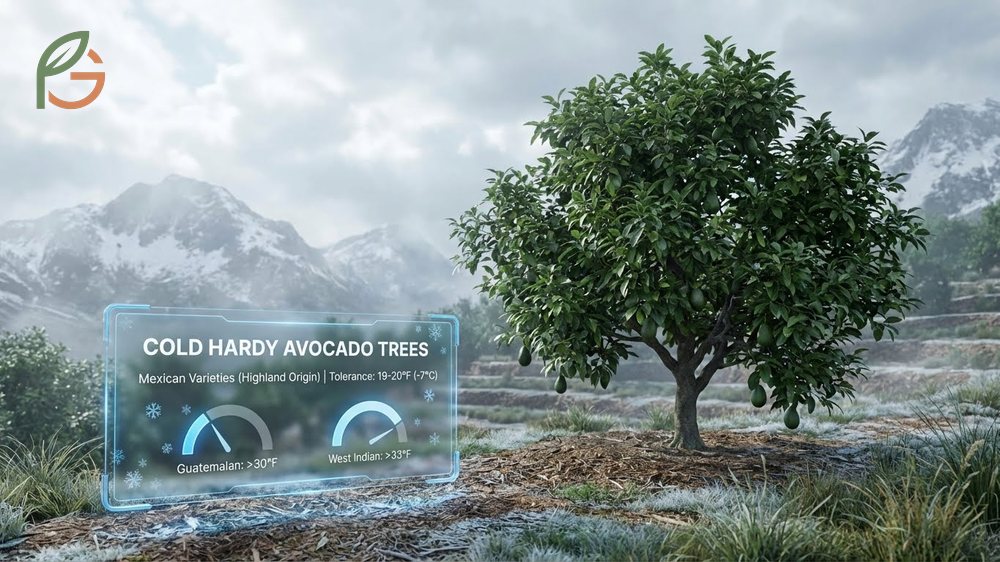
Cold-hardy avocado varieties extend cultivation possibilities into zone 8 and marginal zone 9 areas. These varieties descend primarily from Mexican avocado genetics, which evolved in highland regions with cooler temperatures.
Mexican avocados tolerate temperatures down to 19-20°F (-7°C) once mature[4], compared to Guatemalan varieties that suffer damage below 30°F (-1°C) and West Indian types that fail below 33°F (1°C). This 10-14°F difference in cold tolerance makes Mexican varieties the only viable option for zone 8.
- Mexicola Grande: Tolerates 20°F (-7°C); produces medium-sized fruits with smooth, thin skin; prefers dry climates
- Brogdon: Mexican hybrid tolerant to 20°F (-7°C); handles higher rainfall and humidity better than pure Mexican types
- Duke: Hybrid variety surviving to 18°F (-8°C) when mature; fruits have excellent flavor and medium size
- Lila: Cold-hardy to 20°F (-7°C); smaller tree size makes it suitable for home gardens and container growing
- Fantastic: Mexican variety tolerating brief drops to 15°F (-9°C) once established; requires dry conditions
Tree age significantly affects cold hardiness. First-year trees suffer damage at temperatures that wouldn’t harm five-year-old specimens. Protect young cold-hardy varieties from any frost during their first three winters using frost blankets, temporary greenhouses, or strategic placement near south-facing walls.
Site selection amplifies cold hardiness. Plant avocados on south-facing slopes where cold air drains downward. Avoid frost pockets in valley bottoms where cold air accumulates. Position trees where buildings or evergreen trees provide wind protection without excessive shade.
Cold Protection Strategy: Monitor weather forecasts during winter months. When temperatures below 28°F (-2°C) are predicted, wrap young trees with frost blankets and add string lights (not LED) under the canopy for supplemental heat. Remove coverings once temperatures rise above freezing.
Planting Avocado Trees
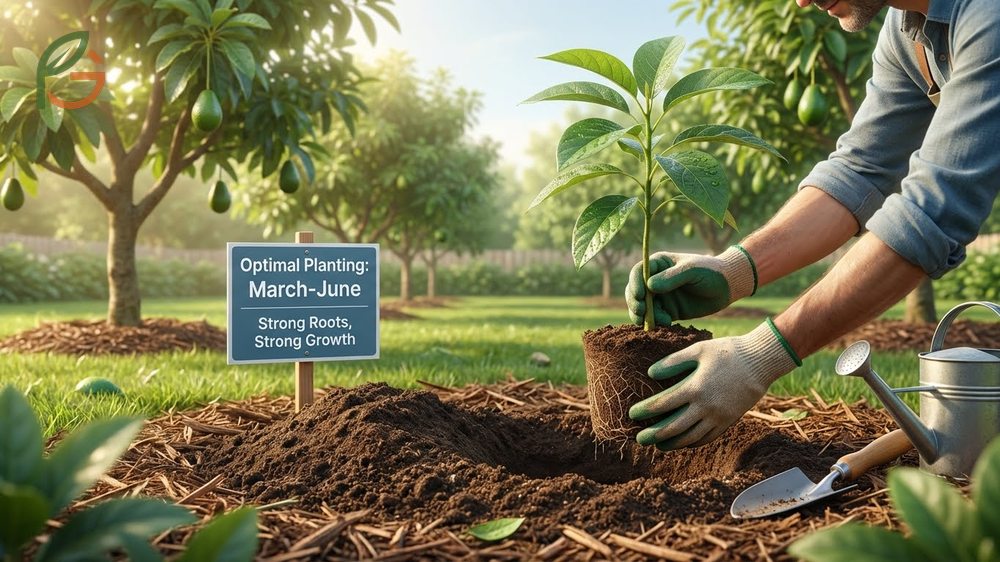
Successful avocado planting requires proper timing, site preparation, and attention to soil drainage. Research shows that planting during the wrong season or in poorly prepared sites causes most establishment failures.
Plant avocado trees from March through June for optimal results. This spring planting window allows trees to develop strong root systems before summer heat stress or winter cold. Avoid summer planting because young avocados absorb water poorly, which increases risk of sun damage and drought stress.
Soil Preparation
Avocados require well-drained soil with a pH between 6.0-6.5[6]. Heavy clay soils cause waterlogging and Phytophthora root rot, which kills avocado trees. Test your soil before planting and amend with organic matter if drainage is questionable.
If you have clay soil, plant avocados in raised mounds 12-18 inches (30-46 cm) high and 3-4 feet (91-122 cm) wide. This elevation improves drainage and reduces root rot risk. Mix native soil with compost at a 2:1 ratio when building mounds.
Dig planting holes three times wider than the root ball and two times deeper, approximately 24-36 inches (61-91 cm) deep. Backfill with native soil mixed with compost. Avoid adding fertilizer at planting time, which can burn sensitive young roots.
Planting Process
Remove container-grown trees gently without disturbing the root ball. Avocado roots are particularly fragile, especially in Hass varieties. Position the tree so the graft union sits 6 inches (15 cm) above the final soil level.
Water deeply immediately after planting to eliminate air pockets around roots. Apply 2-4 inches (5-10 cm) of organic mulch around the base, keeping it 6 inches (15 cm) away from the trunk to prevent collar rot.
- Water deeply 2-3 times weekly during the first growing season to encourage deep root development
- Reduce watering frequency to weekly once trees are established after 12-18 months
- Apply citrus and avocado fertilizer starting one year after planting, following package rates
- Prune only to remove dead or damaged branches during the first three years
- Monitor for signs of root rot including wilting despite adequate water and leaf yellowing
- Protect young trees from sunburn with diluted white latex paint on the trunk or tree wraps
Growing Avocado from Pit
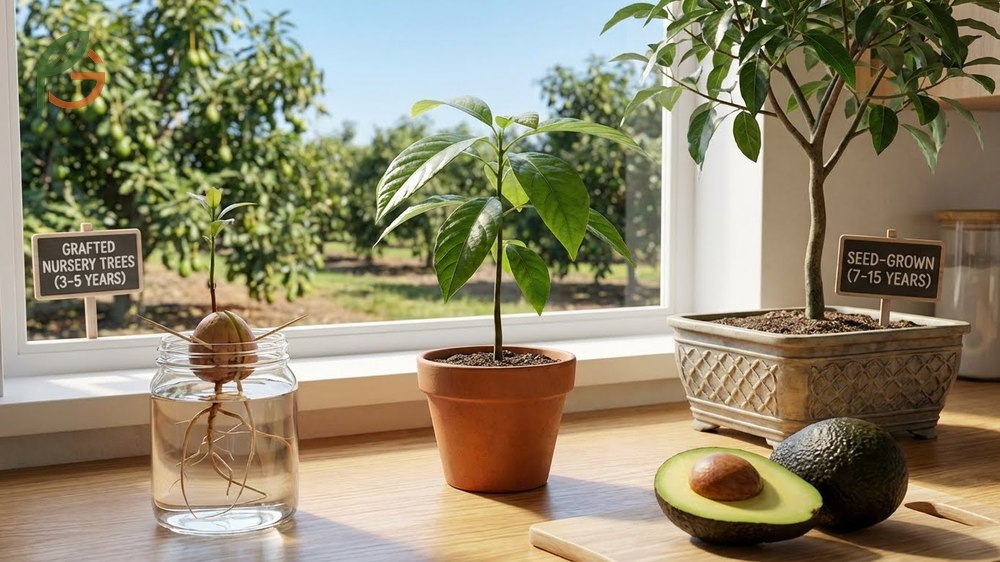
Growing avocado trees from seed provides an educational project for home gardeners, though seed-grown trees rarely produce quality fruit. Most seed-grown avocados take 7-15 years to produce their first fruit, compared to 3-5 years for grafted nursery trees.
Seed-grown avocados don’t replicate the parent fruit’s characteristics. A seed from a Hass avocado produces a genetically different tree with unpredictable fruit quality. Commercial growers exclusively use grafted trees to ensure consistent fruit characteristics.
Toothpick Method
Clean the avocado pit immediately after removing it from the fruit. Rinse off all flesh residue and let it air-dry for 8-12 hours. This drying period makes removing the brown seed coat easier, though the coat can remain on without preventing germination.
Insert three toothpicks evenly spaced around the pit’s equator at a 45-degree angle. These toothpicks suspend the pit over a glass or jar filled with water. Position the pit with the broader, flatter end down and the pointed end up.
Fill the container so water covers the bottom third of the pit. Place it in a warm location with bright, indirect light. Change the water every 5-7 days to prevent bacterial growth. Germination typically occurs within 2-8 weeks, though some pits take 12 weeks.
Paper Towel Method
The paper towel method accelerates germination compared to the water method. Wrap the cleaned pit in a damp paper towel using warm water. The towel should feel moist but not dripping wet.
Place the wrapped pit in an airtight plastic container or ziplock bag. Store it in a dark, warm location like a kitchen cabinet. Check weekly for root emergence and re-moisten the paper towel if it dries out.
Once the taproot reaches 2-3 inches (5-8 cm) long, transfer the germinated pit to a pot with well-draining potting soil. Plant it so the top half remains exposed above the soil line. Water regularly and provide bright, indirect light.
Indoor Growing Reality: Pit-grown avocados make attractive houseplants but rarely fruit indoors. They need full sun, large containers (25+ gallons), and hand pollination to produce fruit. Most indoor growers treat them as ornamental foliage plants rather than fruit producers.
- Choose pits from organic avocados when possible, as they haven’t undergone irradiation that can affect germination
- Use room temperature water for the water method to avoid shocking the pit with cold temperatures
- Maintain temperatures between 65-75°F (18-24°C) for fastest germination rates
- Once the stem reaches 6 inches (15 cm), pinch it back to 3 inches to encourage bushier growth
- Transplant to progressively larger pots as roots fill containers, moving up 2-4 inches in diameter
- Fertilize monthly with diluted liquid fertilizer once the tree has 6-8 mature leaves
Conclusion
The evidence is clear: where do avocados grow depends primarily on climate zones, temperature ranges, and soil conditions. California, Florida, and Hawaii dominate U.S. production because they provide USDA zones 9-11, temperatures between 60-85°F (16-29°C), and well-drained soils that avocados require.
Current agricultural guidance emphasizes matching variety selection to your specific hardiness zone and microclimate. Cold-hardy Mexican varieties extend cultivation into zone 8 for adventurous gardeners willing to provide winter protection, while commercial production concentrates in zones 9-11 where frost risk remains minimal. Whether you’re planting grafted nursery stock or experimenting with pit-grown trees, success requires understanding your local climate conditions and selecting appropriate varieties for your region.
Frequently Asked Questions
Can you grow avocados in Texas?
You can grow avocados in southern Texas, particularly the Rio Grande Valley in zones 9-10. Choose cold-hardy Mexican varieties like Mexicola Grande or Brogdon that tolerate brief temperature drops to 20°F (-7°C). Protect young trees from frost during their first three winters.
What climate do avocado trees need?
Avocado trees need temperatures between 60-85°F (16-29°C) with moderate humidity and 6-8 hours of daily sunlight. They require well-drained soil with pH 6.0-6.5 and protection from temperatures below 28°F (-2°C). The ideal climate provides frost-free growing seasons and consistent temperatures without extreme fluctuations.
How long does it take to grow an avocado tree from a pit?
Avocado pits germinate in 2-8 weeks using the toothpick or paper towel method. However, seed-grown trees take 7-15 years to produce their first fruit, compared to 3-5 years for grafted nursery trees. Most seed-grown avocados produce unpredictable fruit quality that differs from the parent tree.
Do avocado trees need cross-pollination?
Avocado trees benefit from cross-pollination between Type A and Type B varieties, which have flowers that open at different times. A single tree can self-pollinate during temperature fluctuations that cause flower overlap, but planting both types increases fruit set significantly. Hand pollination also works for home gardeners with limited space.
What’s the difference between Mexican and Guatemalan avocados?
Mexican avocados tolerate cold down to 19-20°F (-7°C), have thin skin, anise-scented leaves, and bloom in winter. Guatemalan avocados tolerate only 30°F (-1°C), have thick pebbly skin, no leaf scent, and bloom in spring. Mexican varieties work for zone 8, while Guatemalan varieties require zones 9-11.
Can you grow avocados indoors?
You can grow avocados indoors as ornamental houseplants, but fruit production indoors is extremely rare. Indoor trees need full sun (6-8 hours daily), large containers (25+ gallons), regular fertilization, and hand pollination. Most indoor growers enjoy them for attractive foliage rather than expecting fruit.
Where can I buy cold-hardy avocado trees?
Home Depot and local nurseries occasionally stock cold-hardy varieties like Mexicola Grande and Brogdon in zones 8-9. Specialty online nurseries offer wider selections of cold-hardy avocados including Duke, Lila, and Fantastic varieties. Order trees in late winter for spring planting to ensure best establishment success.