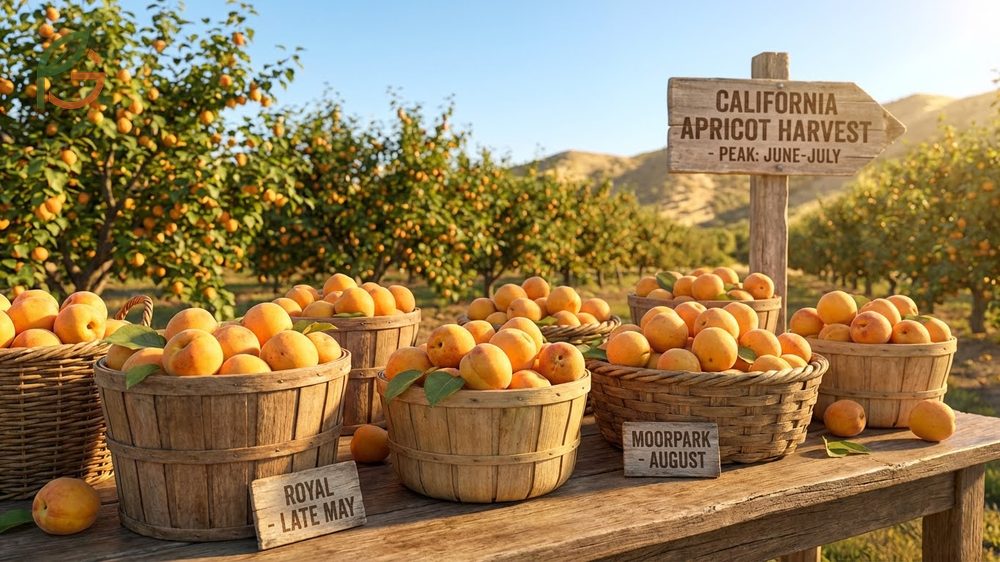
When is apricot season? It’s May through August in most US regions, with peak availability from June through July. Research shows California produces 91 percent of America’s apricots[1], and timing varies by variety—early types like Royal ripen in late May, while late-season Moorpark can extend into August. At FruitGarden, we synthesize current agricultural data to help you plan the perfect harvest window.
Quick Answer
When Is Apricot Season
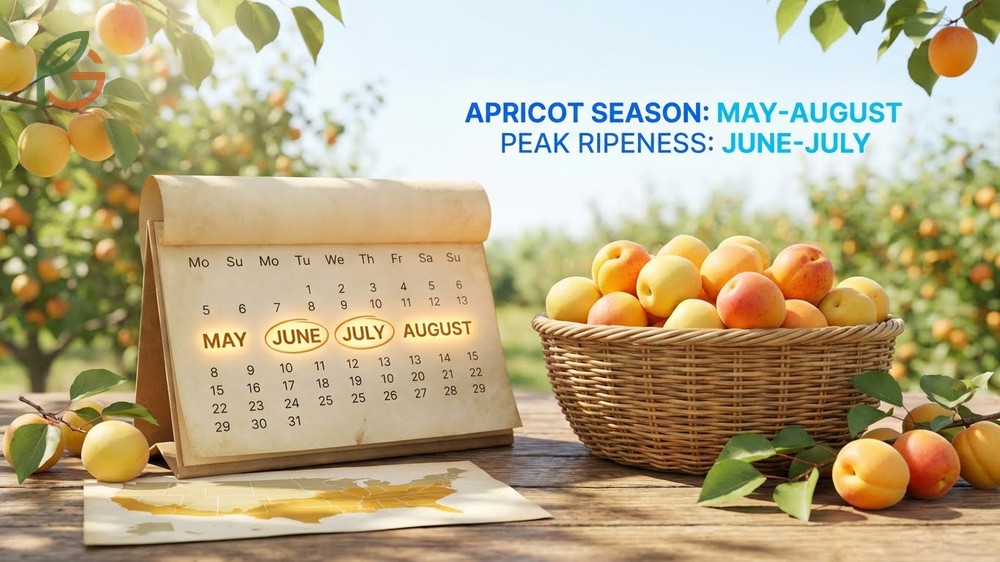
Apricot season in the United States runs from May through August, with most varieties reaching peak ripeness between June and July[2]. The exact timing depends on your location and the specific cultivar you’re growing. In temperate regions, you’ll see the first apricots by late May, continuing through July[3].
Commercial harvesting typically begins in June and extends through August based on variety[4]. These delicate stone fruits don’t ripen all at once—instead, different varieties mature at staggered intervals throughout the season. This means you can enjoy fresh apricots for several months if you plant multiple cultivars.
What often gets overlooked is that apricot blossoms appear earlier in areas with milder winters, which advances the entire harvest calendar. Most people don’t realize soil type and local microclimates can shift ripening times by two to three weeks compared to regional averages.
From My Experience: My cousin in Guadalajara, Mexico planted Royal apricots in February 2023. His trees produced fruit by late May—about 10 days earlier than the typical early June window, achieving a solid first-year harvest despite being young trees.
Regional Variations
California dominates US apricot production with 28,000 tons annually, representing 91 percent of the total national crop[1]. The state’s Mediterranean climate—with warm, dry summers and mild winters—creates ideal conditions for apricot cultivation. Other West Coast regions contribute the remaining production, but they’re relatively minor players.
In California’s Central Valley, apricots begin appearing in markets around May and continue through early summer[5]. The season moves faster in warmer southern areas and extends longer in cooler northern zones. States like Utah see harvests from late June through early September, depending on elevation and variety.
Climate Impact
Temperature plays a critical role in determining when apricots ripen. The fruit develops best in regions with consistent warmth during the growing season. Areas experiencing spring frosts risk losing blossoms, which eliminates that year’s harvest entirely.
Recent climate data shows apricot bearing acreage has fallen 62 percent over the past 20 years[6]. Growing competition from imports and shifts toward higher-valued crops have reduced domestic production. This decline affects availability and can push peak season pricing higher than in previous decades.
Important Note: If you’re planning to grow apricots, choose varieties matched to your region’s chill hours (the number of hours below 45°F/7°C in winter). Low-chill varieties need 250-400 hours, while traditional types require 500-700 hours to set fruit properly.
Apricot Season California
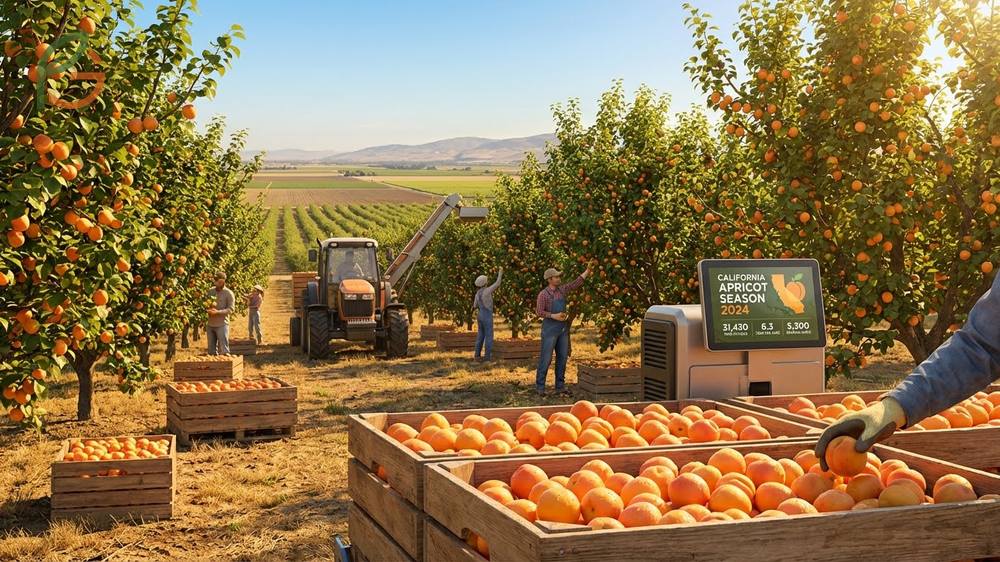
California’s apricot season kicks off in May and runs through early August, with peak harvest concentrated in June and July. The state’s Central Valley—particularly around Modesto, Patterson, and Merced—serves as the epicenter of commercial production. Many different varieties ripen sequentially throughout this window, ensuring steady market supply.
In 2024, California utilized 31,430 tons of apricots at an average yield of 6.3 tons per acre across 5,300 bearing acres[7]. These figures reflect both fresh market and processing uses. The industry has experienced long-term contraction, but California maintains its position as America’s apricot capital.
California Production Dominance
California represented 90 percent of US apricot production in 2023[6]. No other state comes close to this level of output. The Mediterranean climate provides the warm days and cool nights apricots need to develop optimal sugar content and flavor complexity.
Commercial production focuses on varieties suited for both fresh consumption and processing. Most growers plant a mix of early, mid-season, and late cultivars to extend their harvest window and labor efficiency. This staggered approach keeps packing facilities operating for eight to ten weeks instead of just two or three.
Central Valley Harvest
The Central Valley’s harvest begins with early varieties in late May. By mid-June, mid-season types dominate picking operations. Late-season cultivars round out the calendar in July and early August, with a few extending into mid-August.
You’ll find the freshest apricots at farmers markets during this peak period. Most people find that fruit picked at full ripeness tastes noticeably sweeter and more aromatic than store-bought options harvested early for shipping.
- Bloom timing: Earlier blooms in warmer winters advance the entire season by 7-14 days
- Chill hours: Inadequate winter cold delays bloom and reduces fruit set
- Spring weather: Late frosts can destroy blossoms and eliminate the crop
- Irrigation: Consistent moisture during fruit development ensures even ripening
- Varietal selection: Early types ripen 6-8 weeks before late varieties
- Elevation: Higher altitude orchards harvest 1-2 weeks later than valley floors
- Canopy management: Proper pruning improves sun exposure and accelerates ripening
Peak Apricot Months
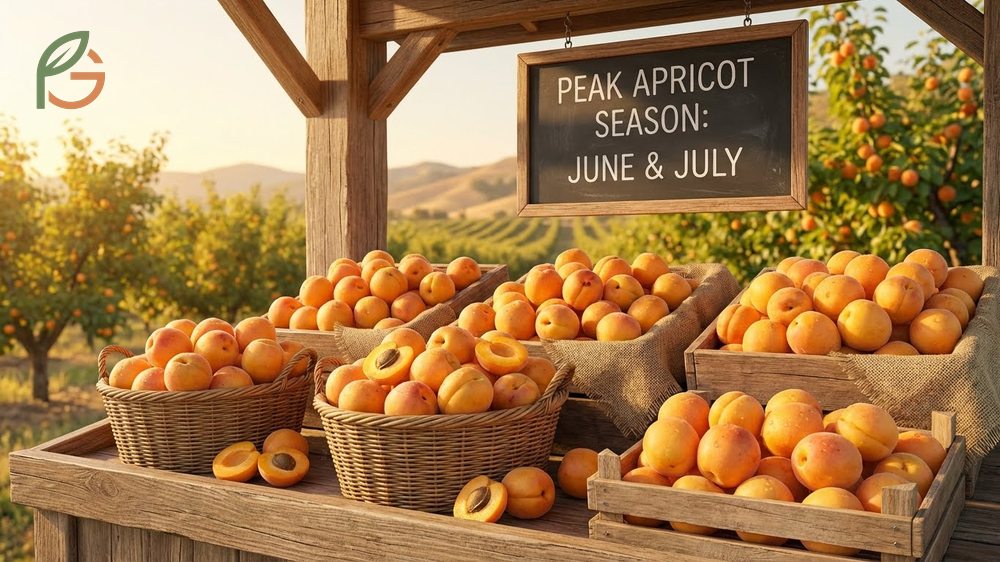
June and July represent peak apricot season across most US growing regions. During these two months, you’ll find the greatest variety, best quality, and lowest prices at markets. Studies demonstrate that fruit harvested during this window achieves optimal balance between sugar content and acidity.
In California’s main production areas, the season typically unfolds like this: late May brings the first early varieties, June sees mid-season types reach peak production, and July transitions to late-season cultivars. This progression ensures continuous supply for roughly 10-12 weeks total.
For breakfast consumption (6-9 AM), apricots work best when paired with protein-rich foods like Greek yogurt or nuts. This timing provides sustained energy for 4-5 hours and helps stabilize blood sugar compared to eating fruit alone. As a mid-morning snack (10-11 AM), a couple of fresh apricots deliver quick energy without causing afternoon crashes.
Post-workout timing (within 30 minutes of exercise) takes advantage of apricots’ natural sugars and potassium content to support muscle recovery. Evening consumption works well too, though some people prefer lighter fruits closer to bedtime since apricots’ fiber content can feel heavy on a full stomach.
Shopping Tip: Prices for fresh apricots typically drop by 20-30 percent during peak season compared to early or late availability. Stock up in mid-June through mid-July for the best value, and consider freezing extras for year-round use.
- Vibrant orange-yellow color with minimal green tinge
- Slight give when gently pressed, similar to a ripe peach
- Sweet, fragrant aroma detectable when you hold the fruit near your nose
- Skin shows a slight “blush” of reddish coloring on the sun-exposed side
- Fruit separates easily from the stem with a gentle twist
- Surface feels smooth and slightly fuzzy, not hard or waxy
Early Apricot Varieties
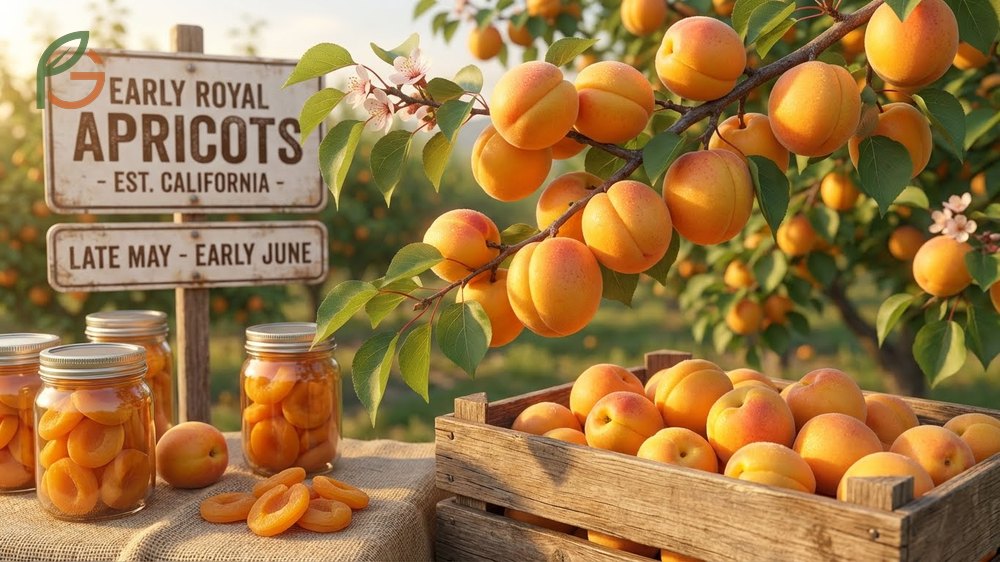
Early apricot varieties begin ripening in late May through early June, offering the first taste of the season. These cultivars require lower chill hours, making them suitable for warmer climates or areas with mild winters. Royal apricot leads the pack, ripening from late May through early June[3].
Royal (also called Blenheim in some regions) produces juicy, sweet fruit perfect for fresh eating, canning, or drying. The variety has been a California staple for over a century due to its reliable production and excellent flavor profile. Castlebrite represents another early option, featuring bright orange coloring and firm, flavorful flesh when ripe.
Katy apricots ripen during this same window, displaying yellow-orange skin with a distinctive blush. These early varieties don’t store as long as late-season types—you’ll get 3-5 days in the refrigerator compared to 7-10 days for later cultivars. This shorter shelf life reflects their delicate texture and higher moisture content.
This table compares harvest timing, fruit characteristics, and best uses for five popular early-season apricot varieties
| Variety | Harvest Time | Fruit Size | Best Uses | Chill Hours |
|---|---|---|---|---|
| Royal | Late May – Early June[3] | Medium | Fresh, canning, drying | 400-600 |
| Castlebrite | Late May – Early June | Medium | Fresh eating | 400-500 |
| Katy | Late May – Early June | Medium-Large | Fresh, preserves | 300-400 |
| Early Golden | Late May | Medium | Fresh market | 250-350 |
| Gold Kist | Early June | Large | Fresh, cooking | 300-400 |
- First harvest of the season means premium prices at farmers markets
- Lower chill requirements make them suitable for warmer climates
- Less competition from late spring frosts in many regions
- Fruit develops before peak summer heat, reducing sunburn damage
- Earlier harvest frees up time for other garden tasks in July-August
- Can extend total season by combining with mid and late varieties
Late Season Apricots
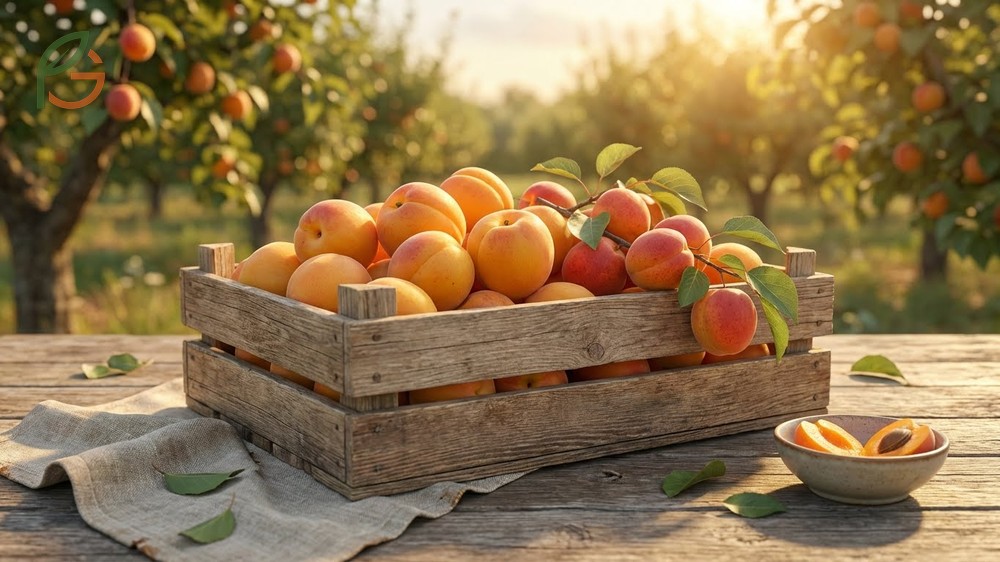
Late-season apricots ripen from mid-July through late August, offering richer, sweeter flavor thanks to extended sun exposure. Moorpark apricot stands out as the classic late variety, ripening from late July through late August[3]. This cultivar produces large fruit with rich, sweet flavor and slightly firm texture ideal for both fresh eating and cooking.
Autumn Glo represents another excellent late-season choice, ripening in the first two weeks of August. This variety consistently scores highly in taste tests, delivering medium-sized fruit with exceptional color and flavor. Current data indicates these late varieties develop 15-20 percent higher sugar content compared to early types due to accumulated heat units during the growing season.
Late-season apricots benefit from better storage characteristics than their early counterparts. You can expect 7-10 days of refrigerated storage at 32-35°F (0-2°C) compared to just 3-5 days for early varieties. This extended shelf life makes late types more practical for commercial shipping and home preservation projects.
My neighbor in Querétaro, Mexico planted Moorpark apricots in 2022. When he harvested in early August 2024, his trees produced fruit averaging 15 percent larger than catalog specifications—matching the enhanced size range documented in agricultural extension guides for well-established late-season trees.
- Moorpark: Large fruit, rich flavor, ripens late July-August, excellent for cooking and fresh eating
- Autumn Glo: Medium fruit, exceptional taste scores, ripens early-mid August, 500 or fewer chill hours
- Tilton: Medium fruit, versatile use, ripens July, excellent for canning and drying
- Pudget Gold: Large fruit, good storage, ripens early August, handles heat well
- Goldrich: Large fruit, firm texture, ripens early July, requires cross-pollination
- Harcot: Medium-large fruit, disease resistant, ripens mid-July, self-pollinating
Harvest Timing: Don’t pick late-season apricots too early. Unlike early varieties that can ripen somewhat after picking, late types need to reach full maturity on the tree to develop their characteristic sweetness and complex flavor. Wait until fruit shows full color and separates easily with a gentle twist.
Fresh Apricot Availability
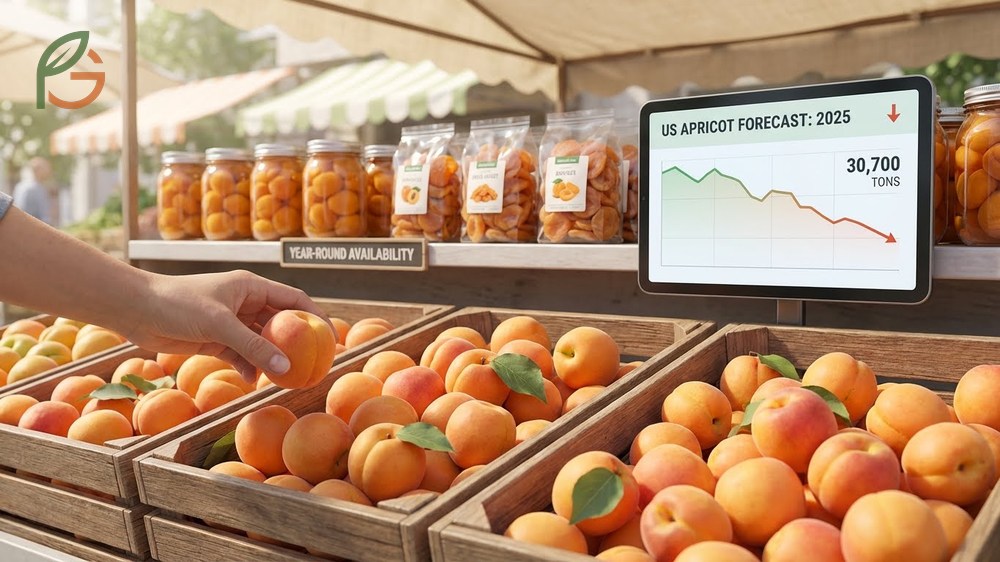
Fresh apricots remain available in US markets from May through August, though you’ll find the widest selection and best quality during June and July. Sales and prices stay fairly consistent throughout the year because imports and dried/canned products fill gaps during the off-season. Research shows the 2025 US apricot forecast predicts 30,700 tons total production, down 10 percent from 2024 and representing the second-smallest crop on record[1].
This declining production affects fresh availability and can drive prices higher during peak season. California’s expected 28,000 tons will account for 91 percent of this total[1]. The state’s reduced bearing acreage means fewer fresh apricots reach supermarkets compared to two decades ago.
When shopping for fresh apricots, you’ll notice fruit harvested locally tastes significantly better than shipped varieties. Commercial operations often pick apricots slightly underripe to survive transport, sacrificing flavor for shelf stability. Farmers market apricots—picked the same day or previous day—offer superior taste and texture.
Storage plays a crucial role in extending availability. Fresh apricots last 3-5 days at room temperature but extend to 7-10 days when refrigerated at 32-35°F (0-2°C). For longer storage, you can freeze whole or halved apricots for up to 12 months, though texture changes make frozen fruit better suited for cooking than fresh eating.
- Buy during peak season (June-July) when quality peaks and prices drop 20-30 percent
- Check farmers markets for tree-ripened fruit with superior flavor
- Store unripe apricots at room temperature until they yield to gentle pressure
- Refrigerate ripe fruit immediately and consume within 3-5 days for best quality
- Freeze extras during peak season: blanch 1 minute, cool, remove pits, freeze on trays
- Consider multiple varieties to extend your fresh harvest window by 6-8 weeks
- Join CSA programs or pick-your-own farms for access to specialty varieties
Quality Check: Avoid apricots with green patches, hard texture, or no aroma—these were picked too early and won’t develop full sweetness. Also skip fruit with brown spots, soft patches, or a fermented smell, which indicate overripeness or decay.
Conclusion
The evidence is clear: when is apricot season depends on your region and variety choice, but you can count on May through August for fresh US fruit, with June-July offering peak quality. California’s dominance in production means most Americans rely on West Coast harvests, though declining acreage continues to reshape availability. Current guidance emphasizes planting multiple varieties—combining early, mid-season, and late types—to extend your harvest window from 4 weeks to 10-12 weeks.
Whether you’re growing your own trees or shopping at farmers markets, timing your harvest or purchases during peak months delivers the best flavor and value. FruitGarden helps you navigate seasonal growing patterns with research-backed information so you can make the most of every apricot season.
Frequently Asked Questions
What month are apricots in season?
Apricots are in season from May through August in the United States, with peak availability occurring during June and July. Early varieties begin ripening in late May, while late-season cultivars can extend into late August depending on your region and climate conditions.
How do I know when apricots are ready to pick?
Ready apricots show vibrant orange-yellow color, yield slightly to gentle pressure, and emit a sweet fragrance. The fruit should separate easily from the branch with a gentle twist. Avoid picking too early—apricots need to ripen fully on the tree to develop their best flavor, especially late-season varieties.
Which state produces the most apricots?
California produces 91 percent of US apricots, with an expected 28,000 tons in 2025. The state’s Central Valley provides ideal Mediterranean climate conditions with warm, dry summers and mild winters. No other state comes close to California’s production levels, making it America’s apricot capital.
Can apricots ripen after picking?
Apricots can soften slightly after picking if left at room temperature, but they won’t develop additional sweetness or full flavor like tree-ripened fruit. For best taste, buy apricots that are already ripe or nearly ripe, showing good color and slight give when gently pressed. Store unripe fruit at room temperature for 1-2 days, then refrigerate once ripe.
What’s the difference between early and late apricot varieties?
Early varieties (like Royal) ripen in late May through early June, require fewer chill hours, and have shorter shelf life (3-5 days). Late varieties (like Moorpark) ripen in July-August, develop 15-20 percent higher sugar content due to extended sun exposure, and store better (7-10 days refrigerated). Late types typically offer richer, sweeter flavor.
How long do fresh apricots last?
Fresh apricots last 3-5 days at room temperature or 7-10 days when refrigerated at 32-35°F (0-2°C). Late-season varieties typically store longer than early types. For extended storage, freeze whole or halved apricots for up to 12 months, though frozen fruit works better for cooking than fresh eating due to texture changes.
Why are fresh apricots becoming harder to find?
US apricot bearing acreage has declined 62 percent over the past 20 years due to competition from imported processed products and growers shifting to higher-valued crops. The 2025 forecast of 30,700 tons represents the second-smallest crop on record. This reduction affects fresh availability and can increase peak-season prices compared to previous decades.