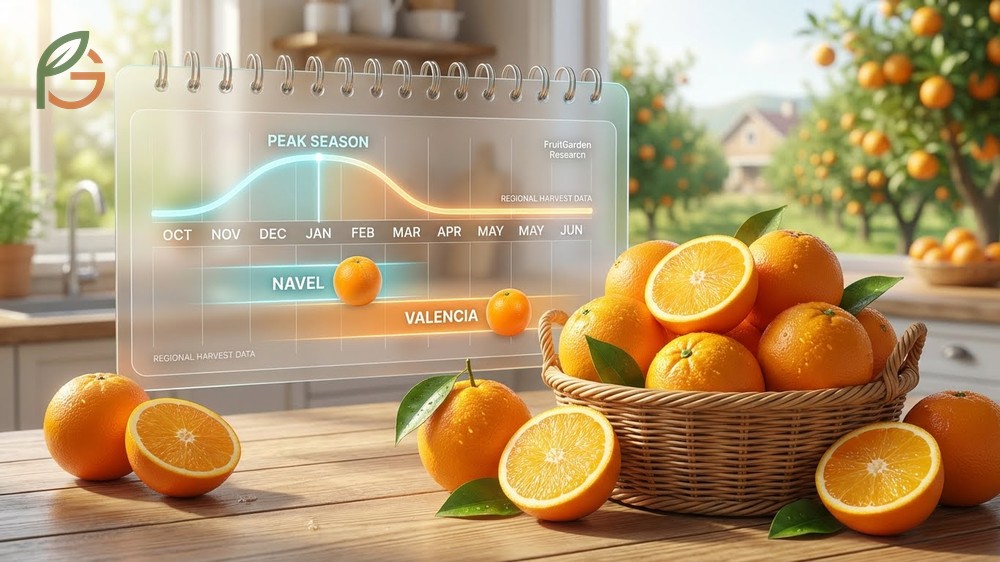
When are oranges in season? Research shows that oranges are available almost year-round in the United States, with peak season running from October through June[1]. Different varieties have distinct harvest windows—Navel oranges peak from November to March, while Valencia oranges dominate the summer months from March to September[2]. FruitGarden synthesizes current agricultural research and regional harvest data to help you select the freshest citrus.
Quick Answer
- Peak orange season spans October through June, with largest quantities available December through May[1]
- Navel oranges peak November to March for optimal sweetness and easy peeling[3]
- Valencia oranges are best April to June for juicing during summer months[4]
- Choose oranges that feel heavy for their size—this indicates higher juice content and better freshness[5]
When Are Oranges in Season
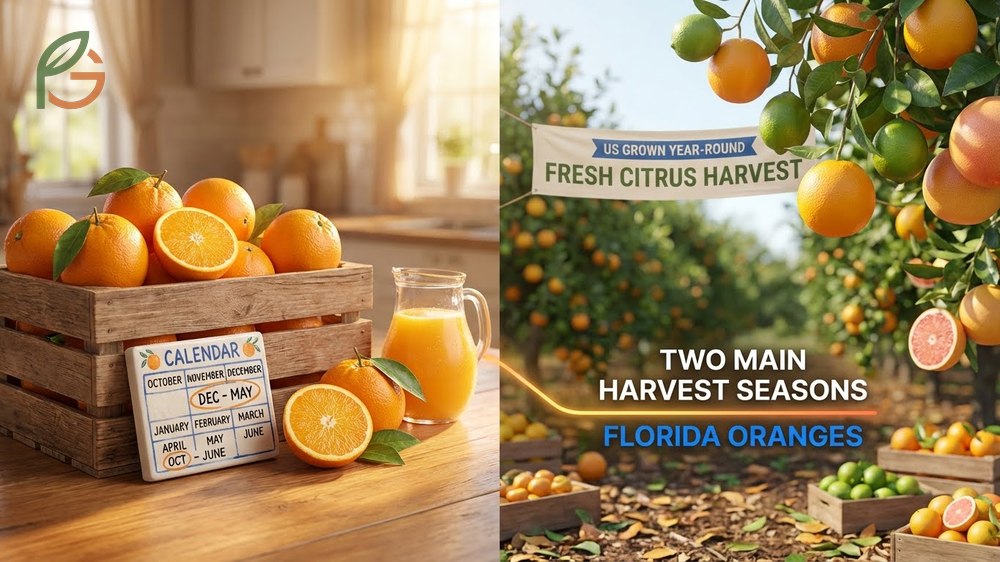
Studies demonstrate that the United States enjoys fresh oranges nearly year-round due to multiple growing regions and diverse varieties. Florida oranges are plentiful from October through June, with the largest quantities available from December through May[1]. This extended availability means you’re never far from fresh, locally grown citrus.
The orange harvest calendar divides into two main seasons. Winter brings sweet navel oranges, typically in season from October to February, while summer showcases juicy Valencia oranges available from March to September[2]. Most citrus fruits taste sweetest during winter months when vitamin C content peaks.
Evidence indicates that Florida citrus growers can harvest orange fruits all year round except for summer months[6]. This rotation of varieties ensures consistent supply while allowing each type to reach optimal ripeness.
Florida Orange Season
Florida’s subtropical climate creates ideal conditions for extended citrus production. The state’s orange season runs from October through June, peaking from December to May when fruit quality reaches its highest point[1]. Winter harvests deliver exceptional sweetness and juice content.
Current data indicates that tangerines, tangelos, and temple oranges are available from October to March depending on the variety[1]. Temple oranges specifically reach peak flavor from January to March with rich citrus notes and very few seeds.
California Orange Harvest
California’s Mediterranean climate supports near year-round orange production with distinct seasonal peaks. Research shows that the state is currently in peak harvest season for Navel oranges, which typically runs from November to April[7]. Valencia oranges thrive in California’s sunny climate from April through September.
Agricultural data shows Valencia oranges grow well in heat and are well-suited to summer harvesting[3]. These summer oranges provide fresh juice ideal for warmer weather consumption.
Orange Season Months by Variety
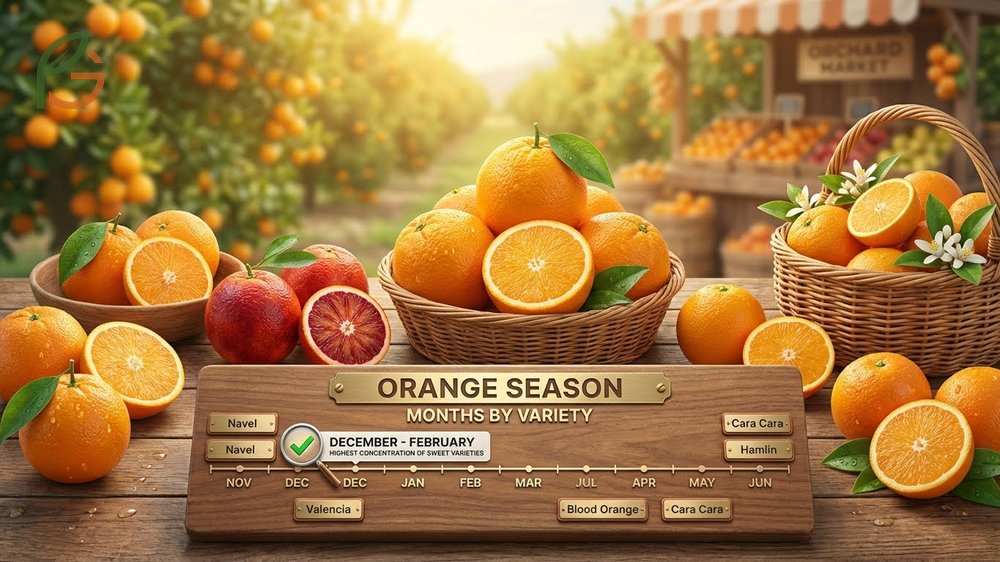
Different orange varieties have specific harvest windows that maximize their unique characteristics. Understanding these timing differences helps you select the best oranges for your intended use. The variation in seasonal availability means you can enjoy fresh oranges with distinct flavor profiles throughout most of the year.
Research across major growing regions reveals that winter months deliver the highest concentration of sweet citrus varieties. Navel oranges dominate from November to March, blood oranges peak from December to April, and Valencia oranges take over from March through September[3].
Navel Oranges Peak Season
Navel oranges are best from December to March when their sweetness peaks and they’re easiest to peel[3]. The classic Washington Navel is a seedless citrus fruit that gets its name from the undeveloped twin fruit at the blossom end. These oranges peak between November and January for optimal eating quality[8].
The Cara Cara Navel extends the season slightly, remaining available from November to April with its distinctive red flesh and unique flavor profile[9]. Red-fleshed navels contain different antioxidants because of their red pigments.
Valencia Oranges Harvest
Valencia oranges are the only orange variety with a peak summer season. They’re in season and available from March to September, but the best time to buy a Valencia orange is from April to June[4]. These oranges excel for juicing with high juice content, low bitterness, and smooth taste.
Agricultural data indicates Valencia oranges contain fewer seeds, making them easier to blend or eat without interruption[3]. Their extended season provides fresh juice options throughout summer months.
Specialty Orange Varieties
Blood orange varieties come into their own from December through April with bold flavors and hints of berry[3]. Tart, red-fleshed blood oranges are spectacular in recipes and salads. Hamlin oranges peak from November to January with a floral aroma and high vitamin C content[9].
Pineapple oranges reach peak season from February to April with darker orange color and flavor somewhere between a Hamlin and a Valencia[9]. Though very seedy, they make excellent juice oranges.
Important note: Clementines and tangerines peak from October to January, providing small, sweet options perfect for snacking during fall and early winter months.
Peak Orange Availability and Quality
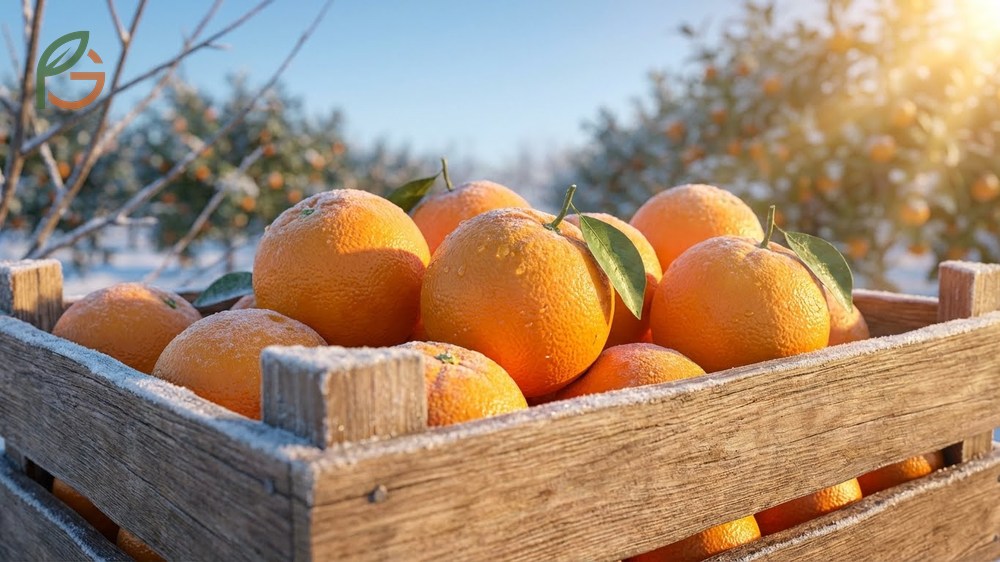
Prime harvest time for many citrus fruits falls between November and March when cold temperatures concentrate sugars and enhance flavor[10]. Winter delivers a “burst of sunshine” during cold months. Understanding quality markers helps you select the best fruit regardless of harvest timing.
Oranges reach acceptable ripening about 6-12 or even 14 months after flowering and may be harvested within 2-3 months before they over-ripen[6]. This extended window allows growers to time harvests for optimal sugar content and acidity balance.
Selecting Fresh Oranges
Choose oranges that feel heavy for their size and have firm, finely textured skin[11]. Heavier oranges contain more juice—some weigh significantly more than others even when similar in size. The fresher and more flavor-packed an orange is, the more pleasantly fragrant it will be[5].
Skin color isn’t a reliable indicator of flavor or ripeness. Oranges with greenish hues can be perfectly ripe and sweet. Go for pieces with the brightest color overall, but don’t reject fruit with minor green patches. The texture of the skin matters more than color—look for smooth, firm surfaces without soft spots.
- Heavy weight relative to size indicates higher juice content and freshness
- Firm, finely textured skin without soft spots or wrinkles
- Pleasant citrus fragrance when you smell the fruit
- Bright orange color with smooth texture (minor green is acceptable)
- No signs of mold, especially around the stem end
Orange Storage Tips
Store oranges at room temperature for up to 1-2 days if you plan to eat them quickly. Ripe oranges should be stored in the refrigerator for up to 2 weeks to maintain quality[11]. Always wash oranges before eating, even if you’re only consuming the flesh.
Research shows oranges should be stored at about 38°F to 48°F (3°C to 9°F). Warmer temperatures result in more rapid loss of quality while prolonged exposure to temperatures below 38°F may result in freeze damage[12]. Under ideal cooling and storage conditions, oranges have a shelf life of up to 2-3 months.
Storage tip: Oranges thrive at a relative humidity of about 90-95%. Store them in well-ventilated containers to allow good airflow. Cut or segmented oranges last 1-2 days when refrigerated and covered.
Fresh Orange Timing Strategies
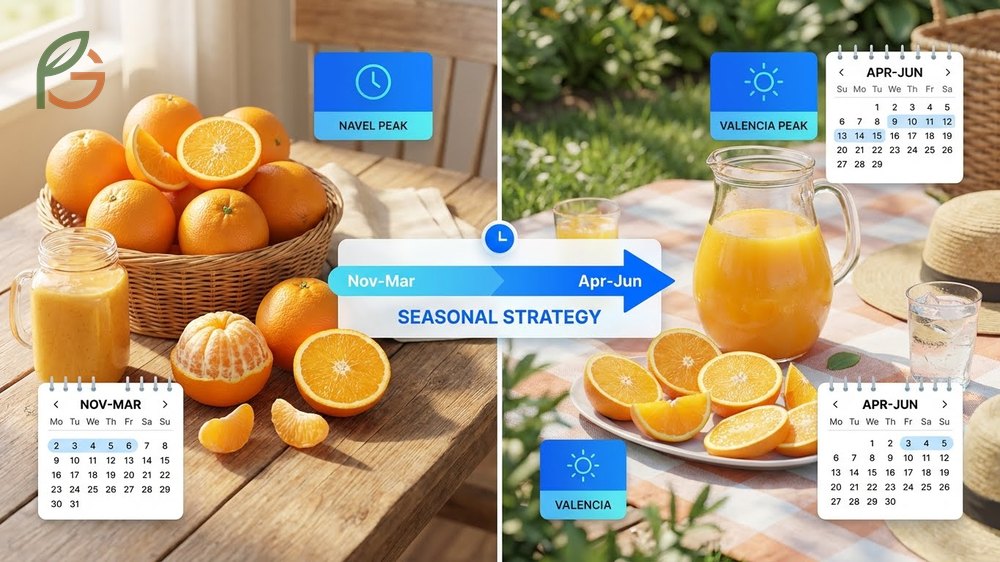
Timing your orange purchases with seasonal peaks delivers better flavor and value. For breakfast smoothies and fresh eating from November through March, stock up on Navel oranges when they’re at their sweetest and most affordable. Their easy-to-peel skin and seedless segments make them ideal for quick morning prep.
If you’re like most Americans planning summer gatherings, switch to Valencia oranges from April through June. Current data shows these months deliver peak juice quality with the highest sugar content and lowest bitterness[4]. Valencia oranges work better for fresh-squeezed juice at brunches and outdoor events.
For specialty recipes requiring blood oranges, plan your cooking between December and April when these varieties peak. The striking red flesh and berry-like notes won’t be available outside this window. Temple oranges offer rich citrus flavor from January to March if you need alternatives to standard varieties.
- November-March: Buy Navel oranges for snacking, lunch boxes, and fresh eating
- April-June: Choose Valencia oranges for juicing, smoothies, and summer beverages
- December-April: Select blood oranges for special recipes, salads, and cocktails
- October-January: Stock tangerines and clementines for easy-to-peel snacking options
- January-March: Try temple oranges for unique flavor profiles in cooking
You can tell it’s time to harvest oranges when you see a couple of mature oranges falling off the tree naturally[6]. This natural drop signals peak ripeness for that variety.
Conclusion
The evidence is clear: when are oranges in season depends on variety, but fresh options exist almost year-round in the United States. Navel oranges deliver peak sweetness from November through March, while Valencia oranges provide summer juice from April through June. Understanding these seasonal patterns helps you select the freshest, most flavorful citrus for your needs.
Current guidance emphasizes buying oranges during their specific peak months for optimal taste and nutritional value. FruitGarden provides comprehensive citrus information to help home gardeners and fruit enthusiasts make informed decisions about seasonal produce selection and cultivation timing.
Frequently Asked Questions
What months are oranges in season in the United States?
Oranges are in season from October through June in the United States, with peak availability from December through May. Different varieties have specific windows—Navel oranges peak November-March while Valencia oranges are best April-June.
When is Florida orange season?
Florida orange season runs from October through June, with the largest quantities available from December through May. Florida citrus growers can harvest oranges nearly year-round except during summer months, providing consistent supply of fresh fruit.
What’s the difference between Navel and Valencia orange seasons?
Navel oranges are winter citrus, peaking from November to March with sweet, easy-to-peel characteristics. Valencia oranges are summer citrus, available March to September with peak quality from April to June—they’re the only orange variety with a summer season and excel for juicing.
How can I tell if an orange is fresh at the grocery store?
Choose oranges that feel heavy for their size, indicating higher juice content. Look for firm, finely textured skin and a pleasant citrus fragrance. Skin color isn’t a reliable ripeness indicator—green patches don’t mean the orange isn’t ripe or sweet.
When are blood oranges in season?
Blood oranges are in season from December through April, with peak flavor and color intensity from January to March. These specialty oranges have distinctive red flesh and berry-like flavor notes that make them ideal for special recipes and salads during winter months.
How long do fresh oranges last after purchase?
Store oranges at room temperature for 1-2 days for immediate use. Refrigerated oranges last up to 2 weeks at optimal quality. Under ideal conditions (38-48°F with 90-95% humidity), whole oranges can last 2-3 months, though home refrigerators typically support 2-week storage.
What’s the best time to buy oranges for juicing?
The best time to buy oranges for juicing is April through June when Valencia oranges peak. These oranges have the highest juice content, lowest bitterness, and fewest seeds compared to other varieties. Their smooth taste and summer availability make them ideal for fresh-squeezed juice.