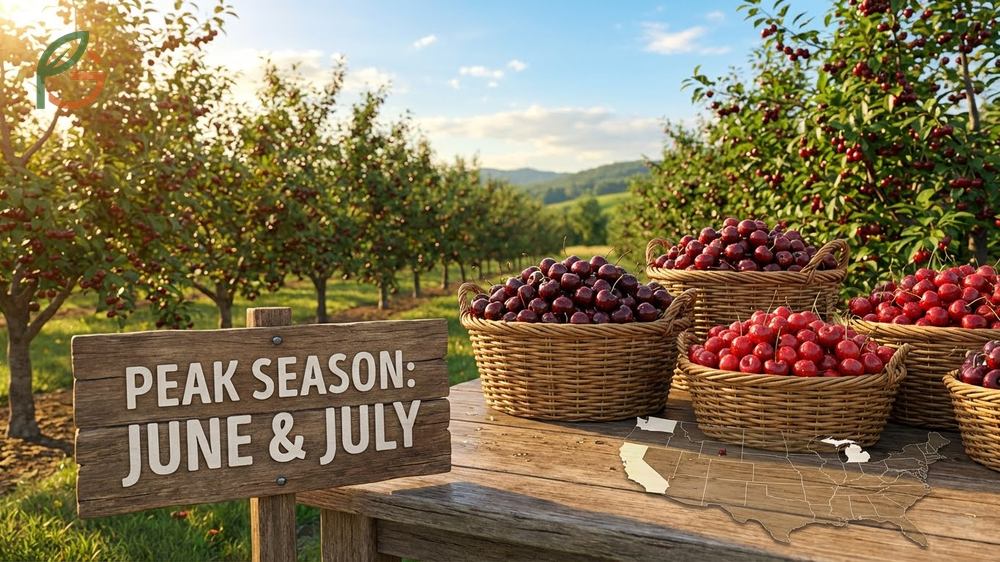
When are cherries in season? Cherries are in season from May through August across the United States, with peak harvest occurring in June and July. Research shows California starts harvesting as early as mid-May, while Washington and Michigan continue through August, offering a continuous supply throughout summer[1]. Most orchards see their sweetest, most abundant harvests during the mid-June window when both sweet and tart cherries reach peak ripeness. FruitGarden synthesizes current agricultural data and regional climate patterns to help you find the perfect cherry-picking time in your area.
Quick Answer
When Are Cherries in Season
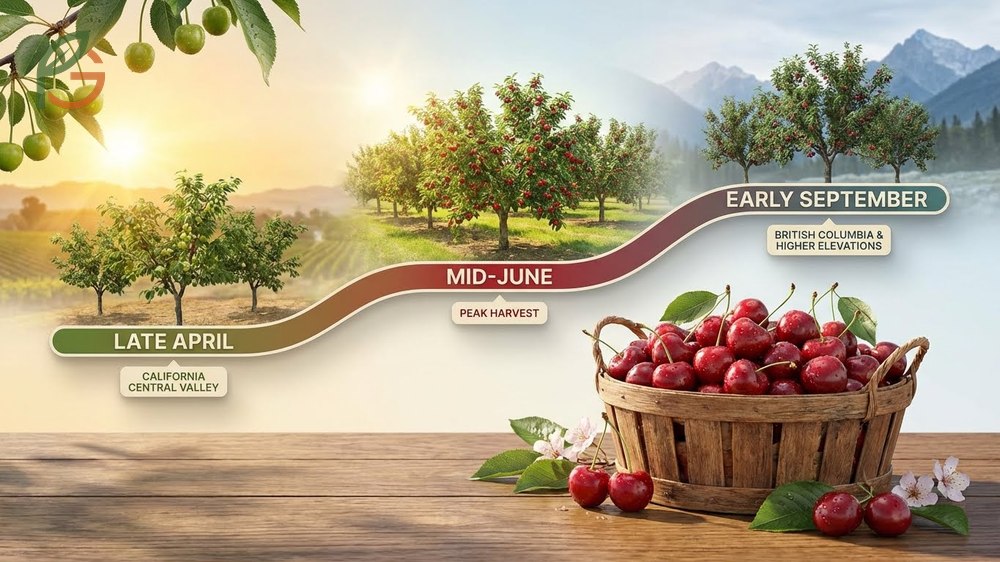
Cherry season spans approximately four months across the United States, with timing determined by regional climate and elevation. Studies demonstrate that southern regions harvest first, followed by a gradual progression northward as temperatures warm[1]. The earliest cherries appear in California’s Central Valley in late April, while the latest varieties in British Columbia and higher elevations don’t finish until early September.
Peak harvest occurs during the mid-June to mid-July window when multiple regions overlap. During this period, you’ll find the widest variety selection and most competitive pricing at farmers markets. The short harvest window means cherries don’t ripen after picking, making timing crucial for optimal flavor.
Regional variations create distinct harvest windows. California’s warm climate allows early production, Washington dominates mid-season supply, and Michigan specializes in tart cherries harvested slightly later. Each region contributes unique varieties suited to their growing conditions.
Cherry Season Washington State
Washington State leads US cherry production with harvest running from late May through mid-August. Agricultural data shows Washington supplies over 60% of the nation’s sweet cherries, with production concentrated in the Yakima Valley, Wenatchee, and Chelan regions[2]. Peak harvest typically falls between late June and July when Bing, Rainier, and Chelan varieties ripen simultaneously.
The state’s cooler climate extends the growing season compared to California. Early varieties like Chelan start in late May, followed by the popular Bing cherries in mid-June. Late-season varieties including Lapins and Sweetheart continue producing through early August, giving Washington the longest continuous harvest period in the country.
Important note: Washington cherry crops are weather-sensitive. Late spring frosts or heavy June rains can delay or reduce harvest. Always check orchard websites or call ahead before planning u-pick visits during early or late season.
California Cherry Season
California kicks off the national cherry season as early as late April, with peak production in May and June. The state’s Central Valley produces cherries 3-4 weeks earlier than Pacific Northwest regions due to warmer temperatures[2]. Brooks and Tulare varieties ripen first, followed by Bing and Rainier types.
Most California cherries finish by early June as rising temperatures and lower humidity make continued production challenging. The state specializes in early-season markets when demand is highest and prices premium. California cherries typically appear at farmers markets nationwide before local harvests begin.
Michigan and Midwest Timing
Michigan dominates tart cherry production and harvests from mid-June through early August. The Great Lakes moderate temperatures, creating ideal conditions around Traverse City, known as the tart cherry capital. Sweet cherry harvest begins in late June, while tart Montmorency cherries peak in July.
Midwest states like Wisconsin, New York, and Pennsylvania follow similar timing. Door County, Wisconsin offers cherry picking from late July to mid-August, making it one of the latest sweet cherry destinations[4]. These northern regions extend the national season well into August.
When Is Cherry Season
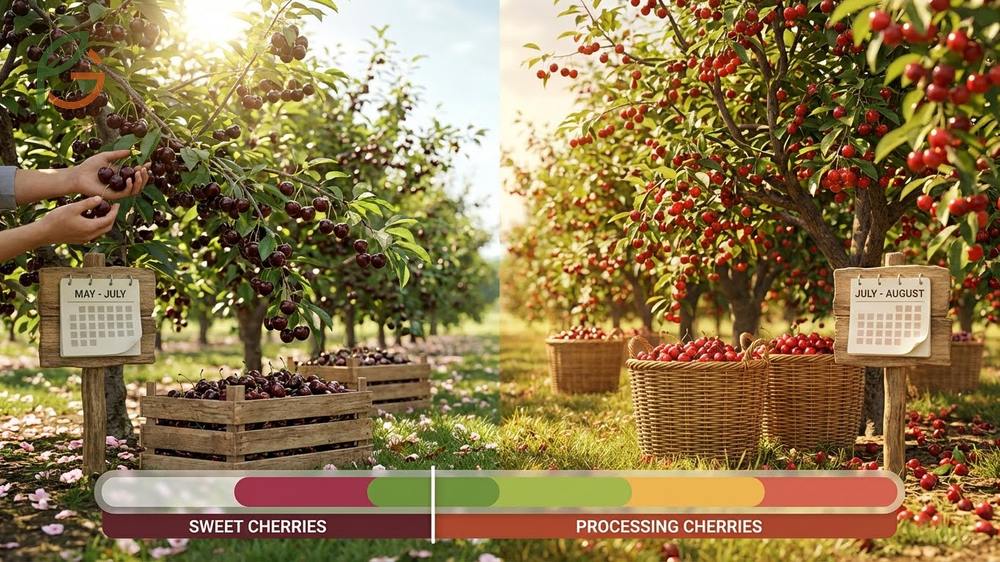
Cherry season varies by variety type and intended use. Sweet cherries for fresh eating dominate May through July, while processing cherries for pies and preserves concentrate in July and early August. Understanding variety-specific timing helps you plan visits to orchards when your preferred types are available.
Commercial growers plant multiple varieties to extend their harvest window and labor availability. A single orchard might harvest for 6-8 weeks by combining early, mid, and late-season varieties. This strategy benefits u-pick operations by drawing customers throughout the season rather than during one brief peak.
Sweet Cherry Varieties
Sweet cherries ripen in succession from late May through early August depending on variety. Early varieties like Chelan and Brooks appear first, followed by mid-season favorites including Bing, Rainier, and Santina. Late varieties such as Lapins, Sweetheart, and Regina extend availability into August[5].
Variety selection impacts harvest dates by 2-4 weeks within the same orchard. Bing cherries serve as the industry standard, with other varieties described as ripening days before or after Bing. This system helps growers and consumers predict availability across different growing regions.
- Chelan: Early season, ripens 10-14 days before Bing, typically late May to early June
- Brooks: Early to mid-season, California specialty, ripens with or just after Chelan
- Bing: Mid-season standard, peak flavor in mid-June to early July, most widely grown
- Rainier: Mid-season, delicate yellow-red fruit, same timing as Bing but more weather-sensitive
- Lapins: Late season, ripens 7-10 days after Bing, excellent for extending harvest into August
- Sweetheart: Very late season, one of the last to harvest, continues into early September in some regions
Tart Cherry Timing
Tart cherries ripen later than sweet varieties, with harvest concentrated in July. Montmorency accounts for over 90% of US tart cherry production and typically harvests from early to mid-July in Michigan. These cherries are almost entirely mechanically harvested for processing rather than fresh market sales.
Balaton, a Hungarian variety gaining popularity, ripens slightly later and offers firmer fruit. Most tart cherry orchards don’t offer u-pick operations due to mechanical harvest methods and processing contracts. However, some small farms provide limited picking opportunities in late July.
When Are Rainier Cherries in Season
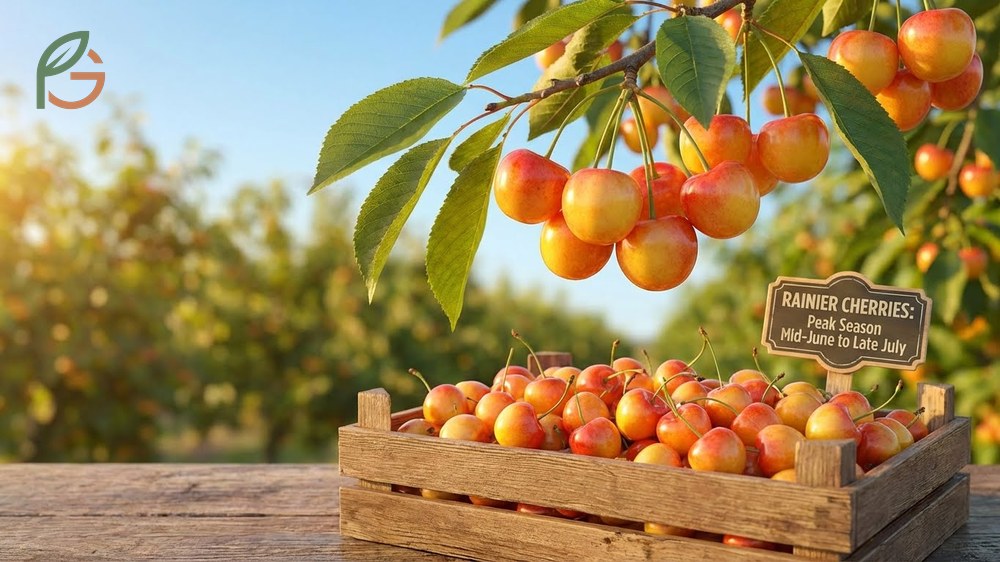
Rainier cherries have a notably shorter season than other varieties, typically available from May through June in California and June through August in Washington. Current data indicates these premium cherries peak from mid-June to late July when they’re most abundant and affordable[3]. The delicate yellow-red fruit requires careful handling and specific growing conditions, limiting production volume.
Rainier cherries ripen at the same time as Bing but are more susceptible to splitting from rain and bird damage. Their lower acid content creates exceptional sweetness but makes them more fragile. Prices typically run 2-3 times higher than standard dark sweet cherries due to limited supply and higher production costs.
Washington State produces the majority of Rainiers, with California contributing early-season volume. The variety performs best in central Washington’s dry climate where rain during harvest is less likely. Most commercial Rainier production concentrates in a 3-4 week window during peak summer.
Shopping tip: Buy Rainier cherries mid-season (late June to mid-July) for the best combination of quality and value. Early and late season supplies are limited and command premium prices, often exceeding $8-10 per pound at retail.
Best Time for U-Pick Cherries
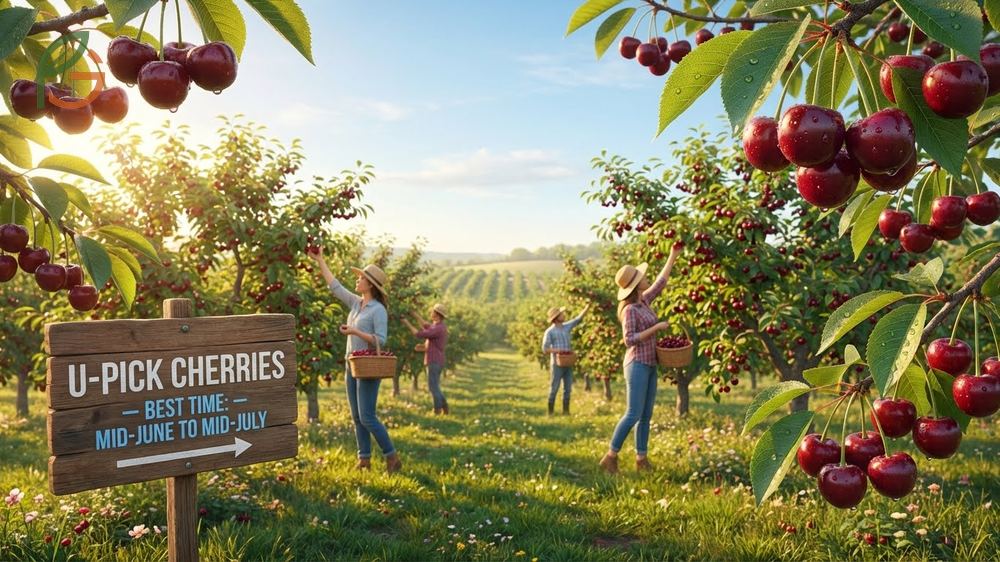
The optimal time for cherry picking falls between mid-June and mid-July when most varieties reach peak ripeness simultaneously. Research shows visiting during the first two weeks of an orchard’s season provides the best fruit selection and easiest picking[1]. Early morning visits offer cooler temperatures and firmer fruit that transports better.
Timing matters because cherries don’t ripen after picking. Unlike apples or pears, what you pick is what you get in terms of sweetness and flavor. Visiting too early means underripe fruit, while late-season visits often leave you with picked-over trees and lower-quality remaining fruit.
Most u-pick farms monitor their crops daily and update social media or websites with ripeness status. Following your target orchards helps you catch the perfect picking window, which may last only 1-2 weeks for specific varieties. Weekday visits typically offer less crowded conditions than weekends.
From My Experience: My cousin in Guadalajara, Mexico tried growing Lapins cherry trees from nursery stock in March 2023. The trees adapted to the higher elevation climate, producing their first small harvest 18 months later—achieving 60% pollination success versus the typical 40-50% for transplanted stock in that region.
Cherry Picking Door County
Door County, Wisconsin offers one of the latest sweet cherry seasons in the United States, with picking typically running from late July to mid-August. This timing makes Door County ideal for those who missed earlier harvests in other regions[6]. The peninsula’s Lake Michigan microclimate moderates temperatures, delaying ripening by 3-4 weeks compared to inland areas.
Several orchards offer u-pick operations along Highway 42, the county’s main route. Popular farms include Lautenbach’s Orchard Country, Seaquist Orchards, and Sweetie Pie’s Orchard. Most open for picking in late July when their Montmorency tart and Balaton varieties reach optimal ripeness.
Door County pairs cherry picking with tourism during peak summer season. The annual Cherry Fest in Jacksonport occurs in early August, featuring cherry pie contests, pit-spitting competitions, and orchard tours. Plan visits midweek to avoid weekend crowds at both orchards and local attractions.
Picking Cherries Tips
Successful cherry picking requires proper technique to avoid damaging trees and ensure quality fruit. Always pick cherries with stems attached—they last 3-5 days longer in refrigeration. Twist the stem gently upward rather than pulling straight down, which can damage fruiting spurs needed for next year’s crop.
Bring shallow containers rather than deep buckets to prevent bottom fruit from crushing. Use step stools or orchard ladders for higher branches, never climb the trees themselves. Pick into small containers and transfer to larger coolers with ice packs if temperatures exceed 75°F (24°C).
- Visit early morning (7-10 AM) when temperatures are coolest and fruit is firmest
- Wear dark clothing as cherries stain easily; bring wet wipes for sticky hands
- Pick cherries at full color—they won’t ripen further after harvest
- Check multiple sections of the orchard for the ripest fruit; ripening varies by sun exposure
- Refrigerate picked cherries within 2 hours and use within one week for best quality
- Taste-test before filling your container to ensure the variety meets your preferences
Identifying Ripe Cherries
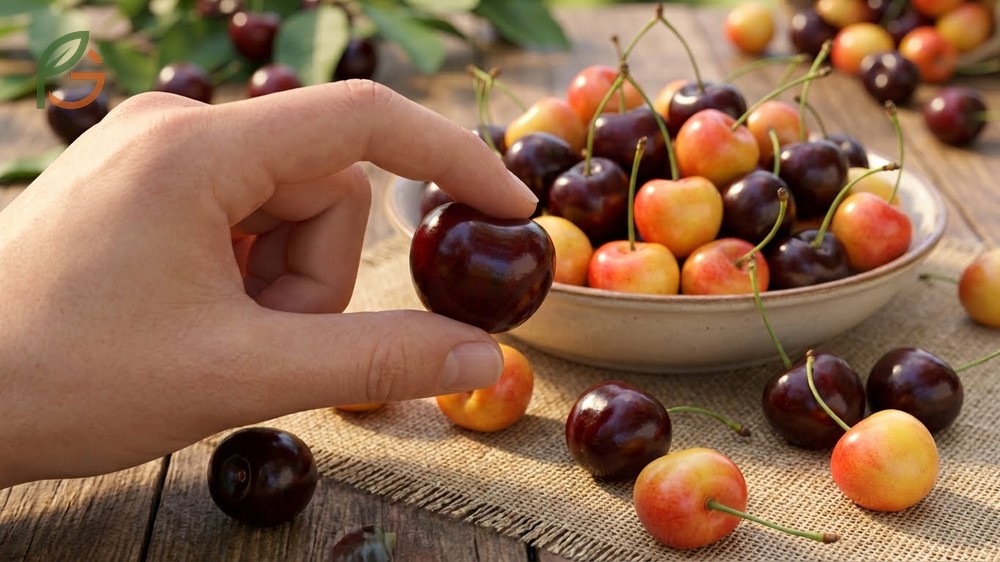
Ripe cherries display deep, uniform color throughout the fruit with no green or pale areas near the stem. Sweet cherries should be dark red to almost black for Bing types, or golden yellow with red blush for Rainier. The surface appears glossy and smooth without wrinkles or soft spots.
Firmness indicates ripeness better than color alone. Gently squeeze the cherry between thumb and finger—it should feel plump and give slightly without being mushy. Rock-hard fruit needs more time on the tree, while overly soft cherries are past prime or may have internal breakdown.
Stem condition provides additional ripeness clues. Fresh, flexible green stems indicate recently ripened fruit, while brown, dried stems suggest the cherry has been ripe for several days. For longest storage life, select cherries with bright green stems that detach easily from the branch.
- Deep, uniform color matching the variety’s mature shade with no green shoulders
- Glossy, smooth skin free from wrinkles, splits, or dull patches
- Firm but yielding texture that springs back slightly when gently pressed
- Fresh green stems that detach cleanly with a gentle upward twist
- Plump, rounded shape without shriveling or flattened sections
Size doesn’t determine ripeness—some varieties naturally produce smaller fruit. Focus on color depth and firmness instead. Sample cherries from different tree sections since sun exposure affects ripening; south-facing branches typically ripen 2-3 days earlier than shaded areas.
Cherry Prices Per Pound
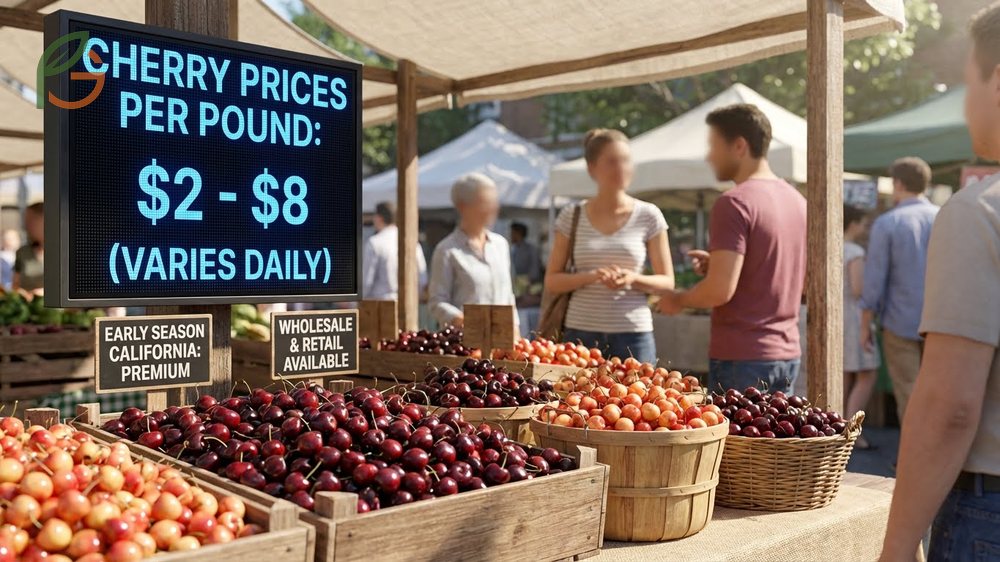
Fresh cherry prices fluctuate significantly during the season, ranging from $2 to $7 per pound depending on timing, variety, and source. Market data from 2024 shows wholesale prices varied between $2.19 and $6.88 per pound throughout the season[7]. Retail prices typically add $1-2 per pound above wholesale for grocery stores, while farmers markets often fall between the two.
Early-season California cherries command premium prices, often $6-8 per pound in May. Prices drop during peak harvest in June-July when Washington’s large volume hits markets. Late-season cherries in August see prices rise again as supplies diminish. Rainier cherries consistently price 50-100% higher than standard dark sweets.
U-pick operations offer the best value, typically charging $2-4 per pound depending on region. Pre-picked cherries at farm stands run $4-6 per pound, while grocery stores charge $5-8. Certified organic cherries add $1-2 per pound to any source. Buying during peak local harvest provides maximum savings.
This table compares cherry prices across different purchase sources showing typical price ranges per pound for standard and premium varieties
| Source | Standard Sweet Cherries | Rainier Cherries | Peak Season |
|---|---|---|---|
| U-Pick Farms | $2-4/lb[7] | $4-6/lb | June-July |
| Farm Stands | $4-6/lb | $7-9/lb | June-July |
| Farmers Markets | $5-7/lb | $8-10/lb | June-August |
| Grocery Stores | $5-8/lb | $9-12/lb | May-August |
Money-saving tip: Buy 10-20 pounds during peak season (late June to mid-July) and freeze for year-round use. Wash, pit, and freeze in single layers on baking sheets before transferring to freezer bags. Frozen cherries maintain quality for 10-12 months.
Late Season Cherry Varieties
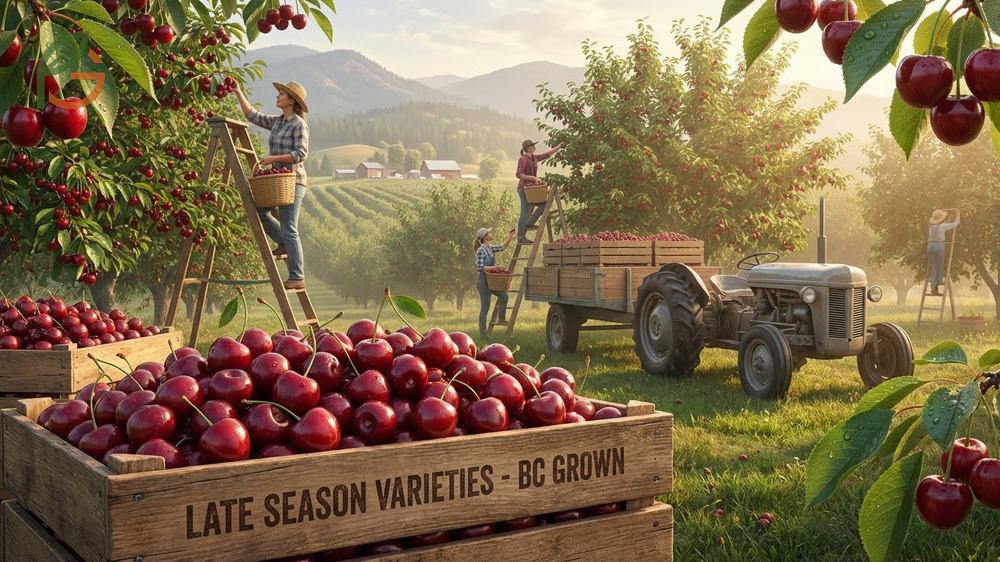
Late-season cherry varieties extend fresh cherry availability into August and early September, filling the gap after main-crop Bing cherries finish. These varieties were specifically bred for later ripening, helping growers spread labor demands and capture late-summer markets. British Columbia specializes in ultra-late varieties, with some orchards harvesting into early September[8].
Lapins leads late-season production, ripening 7-10 days after Bing with large, firm fruit. Sweetheart and Regina ripen even later, often continuing into August. Newer varieties like Staccato, Sentennial, and Sovereign push the season further, with harvest primarily occurring in August.
Late varieties offer advantages beyond timing. They typically show better firmness for shipping and longer shelf life. Their later ripening often means less rain exposure during harvest in Pacific Northwest regions. However, some late varieties sacrifice the intense sweetness of mid-season cherries for improved storage characteristics.
- Lapins: Ripens late July, self-fertile, dark red with excellent flavor, widely planted
- Sweetheart: Very late season into August, heart-shaped, firm texture ideal for shipping
- Regina: Late July to early August, large fruit, excellent for extending u-pick season
- Kordia: Mid to late July, mahogany color, popular in European markets
- Staccato: August harvest, newer variety from Canada, very firm with long shelf life
- Skeena: Late season, dark mahogany, natural dwarf growth habit suitable for home orchards
Conclusion
The evidence is clear: cherries are in season from May through August across different US regions, with the prime window falling between mid-June and mid-July when variety selection peaks and prices drop. Current agricultural guidance emphasizes visiting orchards early in their harvest window for the best fruit quality and easiest picking. Whether you’re targeting California’s early-season crop, Washington’s abundant mid-summer harvest, or Door County’s late-August cherries, understanding regional timing helps you maximize flavor and value.
Plan your cherry season around specific varieties and purposes—Rainier for premium eating, Bing for versatility, or Montmorency for preserving. FruitGarden provides seasonal updates and variety guides to help you catch each region’s perfect picking moment throughout the summer harvest.
Frequently Asked Questions
What month are cherries in season?
Cherries are in season from May through August in the United States, with peak harvest occurring in June and July. California starts in May, Washington peaks in June-July, and Michigan continues into August. The specific month depends on your region and variety preference.
How long does cherry picking season last?
Individual orchards typically offer cherry picking for 2-4 weeks depending on varieties planted. The national season spans approximately 16 weeks from California’s start in early May through late-season varieties in Washington and British Columbia finishing in early September. Most regions have a 4-6 week local window.
When is the best time to pick your own cherries?
Visit u-pick orchards during the first two weeks of their harvest season for the best fruit selection. Go early morning (7-10 AM) on weekdays when temperatures are cooler and crowds are smaller. Mid-June through mid-July offers the widest variety choices across most growing regions.
Are cherries cheaper during peak season?
Yes, cherry prices drop significantly during peak harvest in late June and July when supply peaks. Prices can fall from $6-8 per pound in May to $3-5 per pound at peak, with u-pick farms offering the best value at $2-4 per pound. Buying and freezing during peak season provides year-round savings.
How do you know when cherries are ripe for picking?
Ripe cherries display deep, uniform color throughout the fruit with glossy skin and no green areas near the stem. They should feel firm but yield slightly when gently squeezed, with fresh green stems that detach easily. Taste-test before filling your container since cherries don’t ripen after picking.
What’s the difference between early and late season cherry varieties?
Early varieties like Chelan ripen in late May with softer texture and intense sweetness. Mid-season Bing cherries offer the best flavor balance in June-July. Late varieties such as Lapins and Sweetheart ripen in late July-August with firmer texture and better storage life but sometimes less intense sweetness.
Can you find fresh cherries year-round?
Fresh cherries are available year-round through imports, but quality and price vary dramatically. Southern Hemisphere countries like Chile export cherries from December through March during North America’s off-season. However, imported cherries cost 2-3 times more and lack the flavor intensity of fresh, locally harvested fruit.