What is desiccated coconut? It’s finely grated coconut meat that’s been dried to remove nearly all moisture, creating a shelf-stable ingredient with concentrated coconut flavor. Research shows it packs 667 calories per 100g with 80% fat content, making it energy-dense and perfect for baking. FruitGarden brings you this comprehensive guide on understanding, buying, and using desiccated coconut for your culinary needs.
Quick Answer
- Dried, finely shredded coconut meat with 2-3% moisture content[2] (vs 50% in fresh coconut)
- Contains 80% fat, 16% carbs, 4% protein[1] with high medium-chain triglycerides (MCTs)
- Fine, snow-white texture that’s drier than shredded coconut[3]
- Lasts 6-12 months[4] at room temperature in airtight containers
What Is Desiccated Coconut
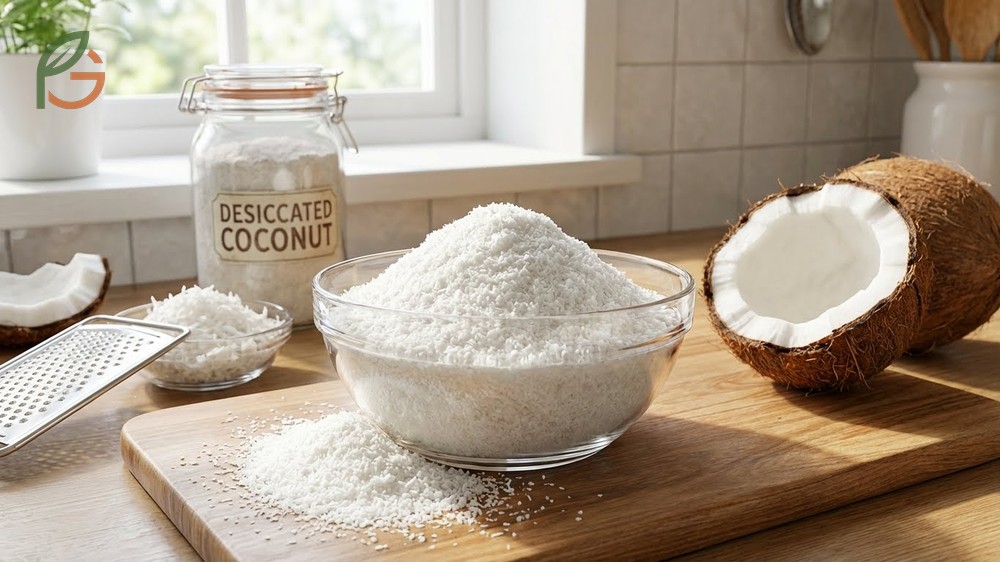
Desiccated coconut is coconut flesh that’s been shredded or ground, then dried to remove approximately 97-98% of its moisture content[2]. The drying process preserves most nutritional content while creating a shelf-stable product. It’s typically unsweetened, though sweetened varieties exist for specific baking applications.
The texture distinguishes desiccated coconut from other coconut products—it’s fine and powdery, resembling snow in appearance[3]. This fine grind makes it ideal for mixing into batters and doughs where larger coconut pieces won’t work.
Current nutritional data shows desiccated coconut contains high levels of medium-chain triglycerides (MCTs), which your body metabolizes differently than other fats[5]. These MCTs can provide quick energy and may support metabolic function.
Production Process
Production begins with mature coconuts that are cracked open and have their meat extracted. The coconut meat is then grated into fine particles using industrial graters. This grated coconut undergoes dehydration at controlled temperatures to achieve the desired moisture level without destroying nutrients.
The drying process typically occurs at temperatures between 140-175°F (60-80°C)[6]. This gentle heat removes moisture while maintaining the coconut’s natural oils and flavor compounds. Commercial producers use specialized equipment to ensure consistent particle size and moisture content across batches.
Nutritional Profile
A 100g serving delivers 667 calories with a macronutrient split of 65g fat, 24g carbohydrates, and 7g protein[1]. The fat content is predominantly saturated fat, specifically lauric acid, which research suggests may have antimicrobial properties. The fiber content reaches approximately 16g per 100g, supporting digestive health.
Mineral content includes notable amounts of iron, potassium, and magnesium. Studies demonstrate that desiccated coconut provides essential minerals that contribute to overall nutritional needs, particularly for plant-based diets.
- High fiber content: 3g per 2 tablespoon serving[1] aids digestion and promotes satiety
- MCT-rich fats: Medium-chain triglycerides that convert quickly to energy
- Low carbohydrate: Only 4g net carbs per 2 tablespoons makes it keto-friendly
- Mineral source: Contains iron, potassium, magnesium, and copper for bodily functions
- Zero cholesterol: Plant-based fat profile without dietary cholesterol
- Naturally gluten-free: Safe for celiac disease and gluten sensitivities
Important Note: The calorie density means portion control matters. Two tablespoons (15g) contain 100 calories—useful for energy but significant if you’re watching calorie intake.
Where to Buy Desiccated Coconut
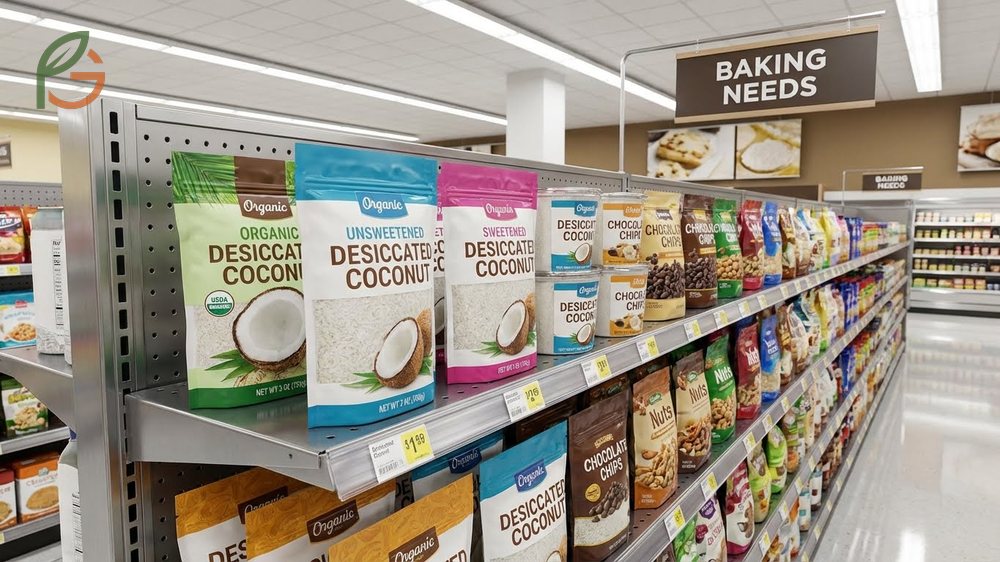
Most US grocery stores stock desiccated coconut in the baking aisle near other specialty ingredients like chocolate chips and nuts. You’ll find it in both sweetened and unsweetened varieties, with unsweetened being more versatile for both sweet and savory recipes.
Organic options have become increasingly available as demand for clean-label products grows. These typically cost 20-30% more than conventional varieties but offer assurance of pesticide-free production methods.
Retail Stores
Major supermarket chains carry desiccated coconut as a standard baking item. Whole Foods and Trader Joe’s stock organic unsweetened varieties at competitive prices. Ethnic markets, particularly Asian and Indian grocery stores, often sell larger quantities at lower per-ounce costs than mainstream supermarkets.
Health food stores and co-ops frequently offer bulk bins where you can purchase exactly the amount you need. This option reduces packaging waste and lets you inspect the product quality before buying.
From My Experience: My cousin in Puebla, Mexico runs a small bakery and sources organic desiccated coconut from a local supplier. She gets 5kg bags at roughly 40% less cost than buying small retail packages, with consistent quality that meets her commercial baking standards.
Online Retailers
Amazon offers dozens of desiccated coconut brands with customer reviews to guide purchasing decisions. Bob’s Red Mill, Let’s Do Organic, and CocoGoods Co rank among top-rated options with verified purchase feedback.
Specialty online retailers like Nuts.com and Thrive Market provide bulk purchasing options that reduce per-pound costs significantly. These sites often run sales that drop prices 15-25% below retail, making them economical for frequent bakers.
- Bob’s Red Mill: Available at Target, Whole Foods, and Amazon with consistent fine grind
- Let’s Do Organic: Certified organic, found at natural food stores and online retailers
- CocoGoods Co: Offers multiple grades (fine, shredded, flakes) with organic certification
- Great Value: Walmart’s budget-friendly option with decent quality for everyday baking
- Trader Joe’s: Organic unsweetened at competitive pricing for TJ’s members
- Anthony’s Goods: Bulk quantities on Amazon with batch testing certificates
Desiccated Coconut vs Shredded Coconut
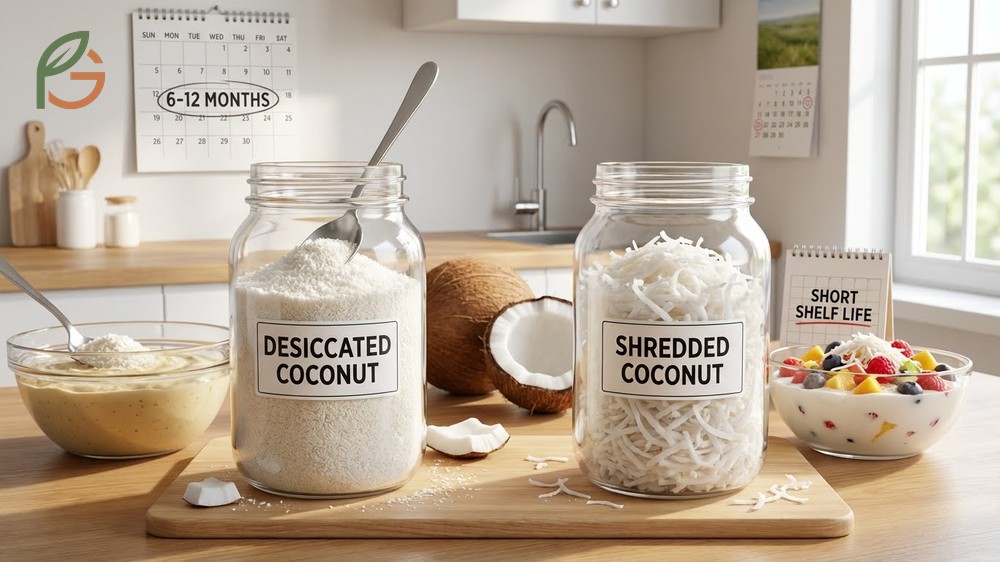
The primary difference lies in moisture content and texture. Shredded coconut retains more natural moisture, creating larger, softer flakes that work well as toppings[3]. Desiccated coconut’s drier texture and finer grind make it better for incorporating into batters.
Shelf life differs substantially between the two products. Desiccated coconut’s minimal moisture content prevents spoilage and allows room-temperature storage for 6-12 months[4]. Shredded coconut requires refrigeration after opening and lasts only 4-6 months due to higher moisture levels that encourage mold growth.
This table compares moisture content, texture, shelf life, and best uses between desiccated and shredded coconut varieties
| Feature | Desiccated Coconut | Shredded Coconut |
|---|---|---|
| Moisture Content | 2-3%[2] | 15-20% (retains more natural moisture) |
| Texture | Fine, powdery, snow-white[3] | Larger flakes, softer, chewier |
| Shelf Life (Unopened) | 6-12 months[4] at room temperature | 4-6 months (requires refrigeration) |
| Best For | Baking batters, macaroons, pastry fillings | Toppings, granola, decorative purposes |
| Sweetening | Usually unsweetened | Available sweetened or unsweetened |
Recipe substitution between the two isn’t always straightforward. If a recipe calls for shredded coconut but you only have desiccated, the result will be drier and less chewy. Adding a tablespoon of coconut oil or water per cup of desiccated coconut can approximate shredded coconut’s moisture level.
Substitution Tip: When replacing shredded with desiccated coconut in recipes, reduce the amount by about 15% since desiccated is more concentrated. The finer texture means you’ll need less volume to achieve the same coconut flavor.
How to Make Desiccated Coconut
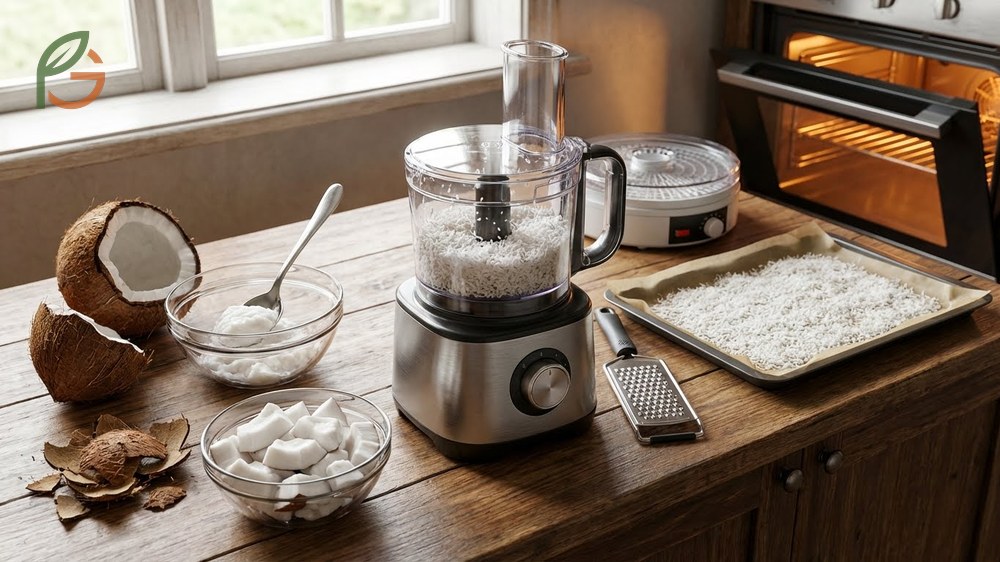
Making desiccated coconut at home requires just fresh coconuts and an oven or dehydrator. Start by cracking open mature coconuts and extracting the white meat with a spoon or specialized coconut tool. Remove any brown skin for the whitest final product.
Grate the coconut meat using a food processor’s grating attachment or a manual grater for finer control. Pulse the grater briefly—3-5 one-second pulses—to achieve fine, even pieces without turning it into paste. Spread the grated coconut in a thin layer on parchment-lined baking sheets.
Preheat your oven to 212°F (100°C) and bake for 20-25 minutes, stirring every 5-7 minutes[7]. The coconut should feel completely dry and crumbly when done. If any moisture remains, continue baking in 5-minute increments until thoroughly dried.
Let the desiccated coconut cool completely before storing—warm coconut will create condensation in storage containers, undoing your drying work. Once cooled, it should feel light and powdery with no sticky clumps.
- Crack and extract: Open mature coconuts using a hammer, drain water, remove meat from shell
- Remove brown skin: Peel away any brown outer layer for whitest appearance
- Grate finely: Use food processor with grater attachment, pulse 3-5 times for fine texture
- Spread thin layer: Arrange on parchment-lined baking sheets in single layer
- Bake low and slow: 212°F (100°C) for 20-25 minutes, stirring every 5-7 minutes[7]
- Test dryness: Should be completely crumbly with no moisture when squeezed
- Cool completely: Let reach room temperature before storing to prevent condensation
Alternative methods include sun-drying in hot, dry climates or using a food dehydrator at 140°F (60°C) for about an hour[6]. The dehydrator produces more consistent results since you can control temperature and airflow precisely.
Coconut Flour vs Desiccated Coconut
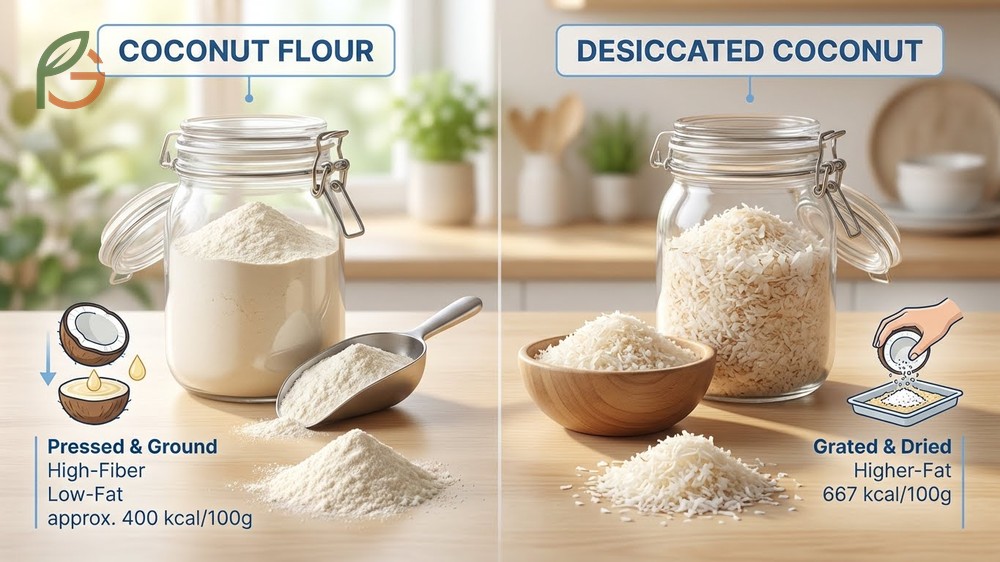
Coconut flour and desiccated coconut come from the same source but serve different culinary purposes. Coconut flour results from pressing coconut meat to extract oils, then grinding the remaining solids into ultra-fine powder. This process creates a high-fiber, low-fat product with dramatically different properties.
The calorie difference is substantial—coconut flour contains approximately 400 calories per 100g compared to desiccated coconut’s 667 calories[8]. This 40% calorie reduction comes from removing most of the fat during oil extraction. Coconut flour’s fiber content reaches around 40g per 100g, making it extremely absorbent in recipes.
You can’t substitute coconut flour for desiccated coconut cup-for-cup in recipes. Coconut flour’s high absorbency means it soaks up 3-4 times more liquid than regular flour. Using it in place of desiccated coconut will result in dry, crumbly baked goods unless you significantly increase liquids and eggs.
This table compares calories, fat content, fiber, and culinary uses between coconut flour and desiccated coconut
| Property | Coconut Flour | Desiccated Coconut |
|---|---|---|
| Calories (per 100g) | 400 cal[8] | 667 cal[1] |
| Fat Content | Low (most oil extracted) | High (65g per 100g) |
| Fiber Content | 40g per 100g[8] | 16g per 100g |
| Texture | Ultra-fine powder, highly absorbent | Fine shreds, slightly chewy |
| Best Uses | Gluten-free baking, flour substitute | Macaroons, toppings, texture in baking |
If you’re looking for a gluten-free flour substitute, coconut flour works well but requires recipe adjustments. For adding coconut flavor and texture to baked goods without replacing flour entirely, desiccated coconut is the better choice.
Storing Desiccated Coconut
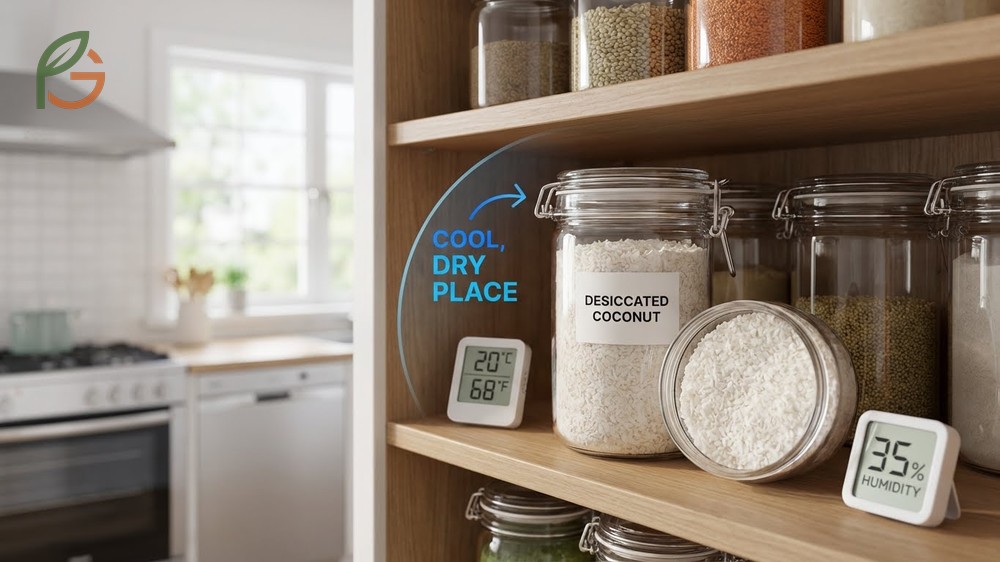
Proper storage extends desiccated coconut’s shelf life significantly and maintains its quality. The low moisture content makes it less perishable than fresh coconut, but it still requires protection from humidity, heat, and light to prevent rancidity.
For short-term storage up to 3 months, an airtight container in a cool, dry pantry works perfectly well. Keep it away from the stove, dishwasher, and other heat sources that create temperature fluctuations. Once you open the package, transfer contents to a glass jar or plastic container with a tight-sealing lid.
Refrigeration extends shelf life to 6 months[9], while freezing can preserve it for a year or more. When refrigerating or freezing, use moisture-proof containers or resealable freezer bags to prevent the coconut from absorbing odors from other foods. Frozen desiccated coconut doesn’t clump and can be used straight from the freezer without thawing.
- Airtight containers: Glass jars or plastic containers with rubber-sealed lids prevent moisture exposure
- Cool, dry location: Pantry temperature below 75°F (24°C) maintains freshness
- Away from light: UV exposure degrades fats and causes off-flavors over time
- Refrigerate after opening: Extends life to 6 months[9] in sealed containers
- Freeze for long-term: Up to 1 year[9] in freezer-safe bags or containers
- Check for spoilage: Discard if you notice rancid smell, yellowing, or moisture inside container
Spoilage Warning: Rancid desiccated coconut smells paint-like or soapy. Even if it looks fine, trust your nose—the high fat content means oils can oxidize and turn rancid without visible signs. Fresh desiccated coconut should smell sweet and nutty.
Desiccated Coconut Recipes
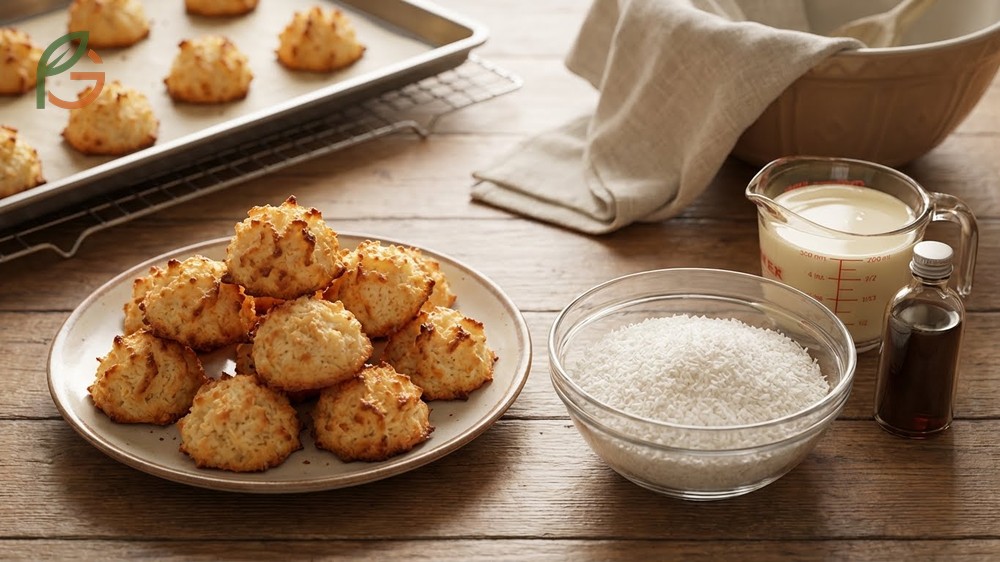
Desiccated coconut shines in recipes where you want coconut flavor throughout rather than as distinct pieces. Its fine texture distributes evenly in batters and doughs, creating consistent coconut taste in every bite.
Coconut macaroons represent the quintessential desiccated coconut recipe. The traditional Filipino version combines 7 ounces desiccated coconut with condensed milk, eggs, and vanilla extract[10], baked at 350°F (177°C) for 10-13 minutes until golden. These chewy treats have crispy edges and soft centers that showcase coconut’s natural sweetness.
Beyond macaroons, desiccated coconut adds tropical flavor to muffins, cookies, and quick breads. It works particularly well in breakfast baked goods like banana-coconut muffins or coconut scones. The fiber content helps create tender crumb structure while adding subtle sweetness without extra sugar.
Savory applications deserve attention too. Indian and Southeast Asian cuisines use desiccated coconut in curries, chutneys, and rice dishes. Toasting it briefly in a dry pan intensifies the nutty flavor and adds golden color that enhances visual appeal.
- Classic coconut macaroons: Chewy cookies perfect for holidays and gift-giving
- Lamingtons: Australian sponge cake squares coated in chocolate and coconut
- Coconut cream pie filling: Adds texture to custard-based pie fillings
- Granola and energy bars: Provides tropical flavor and helps bind ingredients
- Coconut breading: Mixed with breadcrumbs for coating fish or chicken
- Indian coconut chutney: Blended with spices, chilies, and tamarind
- Smoothie bowls: Sprinkled on top for crunch and tropical notes
- No-bake truffles: Combined with dates and nuts for healthy dessert bites
When baking with desiccated coconut, toast it first for deeper flavor. Spread it on a baking sheet and bake at 325°F (163°C) for 5-7 minutes, stirring frequently until light golden. Watch carefully—it burns quickly once it starts browning.
Conclusion
The evidence is clear: what is desiccated coconut comes down to understanding it as dried, finely shredded coconut meat with 2-3% moisture that delivers concentrated flavor and nutrition. It’s more shelf-stable than shredded coconut, packs higher calories than coconut flour, and lasts 6-12 months when stored properly.
Current guidance emphasizes buying unsweetened varieties for versatility across sweet and savory recipes, storing in airtight containers away from heat and light, and checking expiration dates when purchasing. Whether you’re making traditional macaroons or experimenting with modern applications, desiccated coconut offers consistent quality and tropical flavor that FruitGarden readers can rely on for successful baking.
Frequently Asked Questions
Can I substitute desiccated coconut for shredded coconut in recipes?
Yes, but reduce the amount by 15% since desiccated coconut is more concentrated. The finer texture means you’ll get stronger coconut flavor per volume. For best results when substituting in recipes that call for shredded coconut, add a tablespoon of coconut oil or water per cup of desiccated coconut to approximate the moisture level of shredded varieties.
Is desiccated coconut healthy for daily consumption?
Desiccated coconut provides healthy MCTs and fiber, but it’s calorie-dense at 667 calories per 100g. A serving of 2 tablespoons (15g) containing 100 calories makes a reasonable daily portion for most people. The high saturated fat content means moderation is key—research shows MCTs metabolize differently than other saturated fats, but portion control still matters for weight management.
How long does desiccated coconut last after opening?
Stored in an airtight container at room temperature, opened desiccated coconut lasts 3-4 months. Refrigeration extends this to 6 months, while freezing preserves it for up to a year or more. Check for rancid smell (paint-like or soapy odor) before using—this indicates the natural oils have oxidized and it should be discarded regardless of the date.
What’s the difference between sweetened and unsweetened desiccated coconut?
Unsweetened desiccated coconut contains no added sugars and works for both sweet and savory recipes, while sweetened varieties have sugar added during processing specifically for desserts. Unsweetened is more versatile since you can control sweetness in recipes. Most baking recipes assume unsweetened unless specified otherwise, so check your recipe carefully before purchasing.
Can you make desiccated coconut without an oven?
Yes, you can use a food dehydrator at 140°F (60°C) for about an hour, or sun-dry grated coconut in hot, dry climates by spreading it on trays and leaving it in direct sunlight for 6-8 hours. Sun-drying works best in temperatures above 90°F (32°C) with low humidity. Stir every hour and bring indoors at night to prevent moisture reabsorption from evening dew.
Is desiccated coconut keto-friendly?
Yes, desiccated coconut fits keto diets well with only 4g net carbs per 2-tablespoon serving. The high fat content (80% of calories from fat) and moderate protein make it ideal for ketogenic eating. The MCTs in coconut support ketosis by providing quick energy that doesn’t spike blood sugar, making it a popular choice for keto baking and fat bomb recipes.
Where is the best place to buy organic desiccated coconut?
Whole Foods, Trader Joe’s, and natural food co-ops offer reliable organic options at competitive prices. Online retailers like Thrive Market, Amazon, and Nuts.com provide bulk quantities that reduce per-pound costs by 20-30%. For the best value, compare prices per ounce rather than package price—bulk options from ethnic markets or online specialty stores often beat mainstream supermarket pricing significantly.