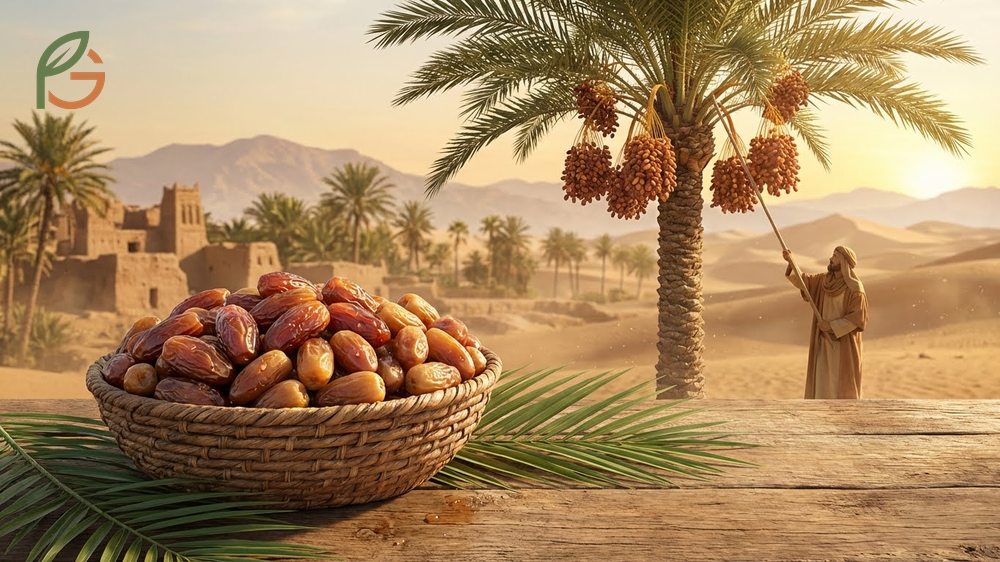
What is a date fruit? It’s the sweet, chewy fruit of the date palm tree (Phoenix dactylifera), cultivated for over 6,000 years in Middle Eastern and North African regions.[1] Research shows this ancient crop originated in Mesopotamia around 4000 BC and now thrives in over 38 countries worldwide.[2] FruitGarden compiles global agricultural research and cultivation data to help US gardeners understand this remarkable desert fruit.
Quick Answer
- Date fruits come from the date palm tree, domesticated in 4000 BC in ancient Mesopotamia[1]
- Global production exceeds 9 million metric tons annually, with Egypt leading at 1.7 million tons[3]
- In Spanish, date fruit translates to “dátil” (masculine noun)[4]
- Date palms thrive in temperatures between 77-95°F (25-35°C) with minimal humidity[5]
What Is a Date Fruit?
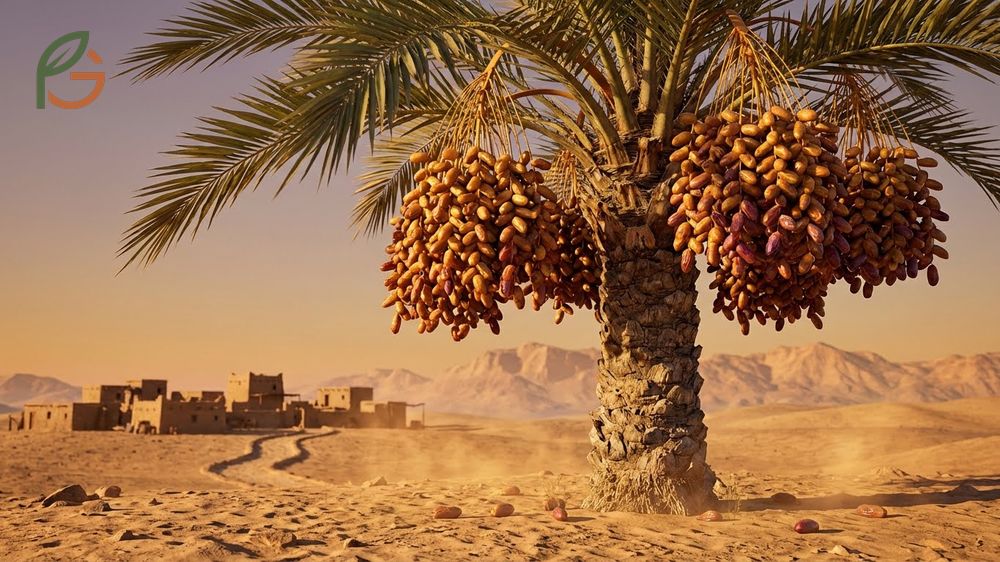
A date is the edible fruit produced by the date palm tree, scientifically known as Phoenix dactylifera. The name “dactylifera” comes from the Greek word “daktylos,” meaning finger, which describes the fruit’s elongated shape.[6] These sweet fruits grow in large clusters, with each mature tree producing 150 pounds or more annually.
Date palms can reach heights equivalent to a five-story building and live for over 100 years when provided proper care. The trees thrive in hot, arid climates with minimal rainfall. Most commercial production occurs in regions where summer temperatures consistently exceed 90°F (32°C).
Dates contain natural sugars, fiber, and essential minerals that make them valuable both nutritionally and economically. The fruit transitions through distinct ripening stages from hard and green to soft and caramel-colored. Fresh dates contain about 60% water, while dried varieties retain only 25% moisture.[7]
History and Origins
Archaeological evidence confirms date palm cultivation began around 4000 BC in Mesopotamia, near modern-day Iraq. Ancient builders used date palm materials for constructing the temple of the moon god near Ur.[1] The ancient Egyptians incorporated dates into their culture around 3000-2000 BC, using the palm frond as a hieroglyphic symbol for “month.”
Fossilized remains show date palm ancestors flourished 50 million years ago, though human domestication occurred much more recently. The crop spread from Mesopotamia throughout North Africa, the Arabian Peninsula, and eventually to Mediterranean regions. Today’s cultivated varieties trace their genetic lineage back to these ancient Mesopotamian palms.
From My Experience: My cousin in Mexicali, Mexico started growing Medjool date palms in March 2023. The palms adapted surprisingly well to the desert climate, producing their first fruit clusters within 18 months—matching the 1.5-2 year timeline documented in cultivation studies.
Botanical Characteristics
Date palms are dioecious plants, meaning individual trees are either male or female. Only female trees produce fruit, while male trees provide pollen necessary for pollination. Commercial growers typically maintain one male tree for every 50 female trees to ensure adequate pollination.
The fruit develops in large hanging clusters called “bunches,” with each bunch containing 200-1,000 individual dates depending on variety and growing conditions. Dates transition through four distinct ripening stages: kimri (green and hard), khalal (full-size but still firm), rutab (soft and brown), and tamar (fully ripe and dried on the tree).
- Trunk diameter ranges from 12-20 inches with a distinctive rough, scaly texture
- Fronds (leaves) grow 10-20 feet long with sharp spines near the base
- Root systems extend 20-30 feet deep to access underground water sources
- Trees begin producing fruit at 4-8 years old, reaching peak production at 15-20 years
- Pollination occurs in spring when temperatures reach 95°F (35°C) or higher[8]
Types of Dates Fruit
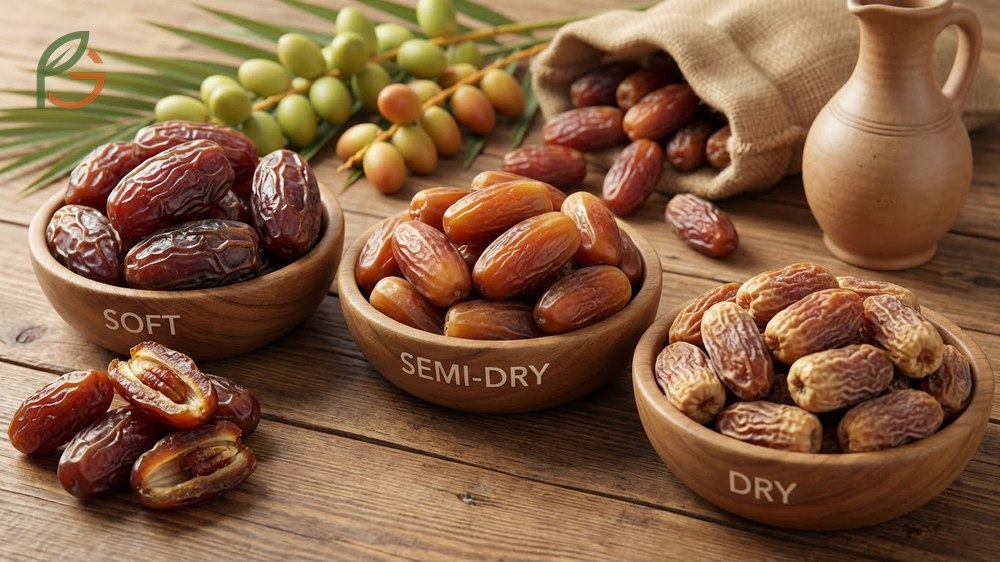
Over 3,000 date varieties exist worldwide, but commercial production focuses on a dozen popular cultivars. The two most common types in US markets are Medjool and Deglet Noor, which account for approximately 95% of dates sold domestically. Each variety offers distinct texture, flavor, and culinary applications that appeal to different consumer preferences.
Date varieties are classified by moisture content into three categories: soft (over 30% moisture), semi-dry (20-30% moisture), and dry (under 20% moisture). This classification affects how dates are harvested, stored, and used in cooking. Soft varieties like Medjool require refrigeration, while dry varieties can be stored at room temperature for months.
Important Note: Date varieties grown outside their native regions may develop slightly different flavor profiles due to soil composition, temperature variations, and humidity levels. The same Medjool cultivar grown in California versus Morocco can taste noticeably different.
Medjool Dates
Medjool dates originated in Morocco and are often called the “king of dates” due to their large size and premium pricing. These soft dates measure 1.5-2 inches long with a deep amber to dark brown color when fully ripe. Their texture is notably moist and chewy, with a rich caramel-like sweetness that makes them ideal for eating fresh as snacks.
The sugar content in Medjools exceeds that of most other varieties, which contributes to their intense sweetness but also higher calorie density. Each date contains approximately 66 calories. Medjools work exceptionally well as natural sweeteners in smoothies, energy balls, and dessert recipes where their soft texture blends easily.
Deglet Noor Dates
Deglet Noor dates are semi-dry varieties with a firmer texture that holds up better in cooking and baking applications. These dates are smaller than Medjools, measuring about 1 inch long with a translucent amber color that allows light to pass through. Their flavor profile includes subtle nutty and caramelized notes that complement both sweet and savory dishes.
Commercial bakeries prefer Deglet Noors because their firm texture prevents them from becoming mushy when exposed to heat or moisture during baking. They’re commonly chopped and added to cookies, bread, and granola bars. Deglet Noors also convert easily into date sugar, syrup, and paste for commercial food manufacturing.
- Barhi dates: Small, round, and exceptionally sweet when eaten at the khalal stage (yellow and crunchy)
- Zahidi dates: Semi-dry with a mild, nutty flavor and golden-brown color ideal for cooking
- Halawi dates: Medium-sized soft dates with honey-like sweetness and smooth texture
- Khadrawy dates: Soft variety with exceptionally creamy texture, popular in Middle Eastern markets
- Thoory dates: Dry variety often called “bread dates” that can be stored without refrigeration for years
Date Fruit in Spanish
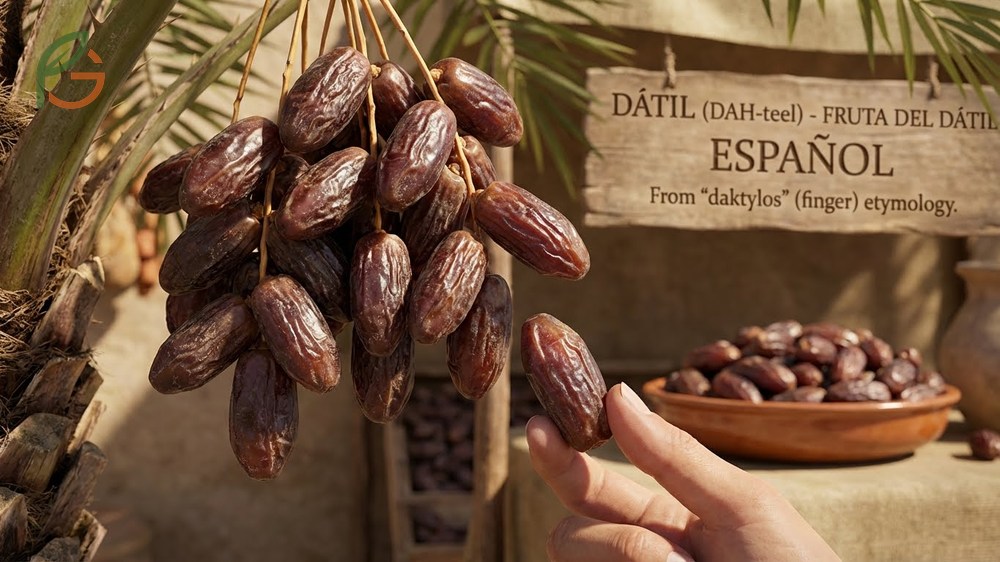
The Spanish word for date fruit is “dátil” (pronounced DAH-teel), which functions as a masculine noun in Spanish grammar. When referring to multiple dates, the plural form “dátiles” is used.[4] This term applies specifically to the fruit of the date palm, distinguishing it from the calendar-related meaning of “fecha” (date).
The Spanish word “dátil” derives from the same Latin and Greek roots as the English “date”—the Greek “daktylos” meaning finger. This etymology reflects the fruit’s finger-like shape. In botanical contexts, the date palm tree itself is called “palmera datilera” or “palma datilera” in Spanish.
Regional variations exist throughout Spanish-speaking countries for date-related terminology. In some Latin American regions, you’ll encounter terms like “minimito” (Honduras) for date fruit, though “dátil” remains the standard and most widely understood term. When shopping for dates in Spanish-speaking markets, asking for “dátiles” will be universally understood whether you’re in Spain, Mexico, or South America.
Language Tip: Don’t confuse “dátil” (date fruit) with “dátil de mar” (date mussel), a completely different edible product. The context usually makes the meaning clear, but when purchasing at markets, specify “dátiles de fruta” if there’s potential confusion.
- “Dátiles Medjool” – Medjool dates (brand names typically remain unchanged)
- “Dátiles secos” – dried dates
- “Dátiles frescos” – fresh dates
- “Pasta de dátiles” – date paste
- “Jarabe de dátiles” – date syrup
- “Azúcar de dátiles” – date sugar
Where Are Dates Grown
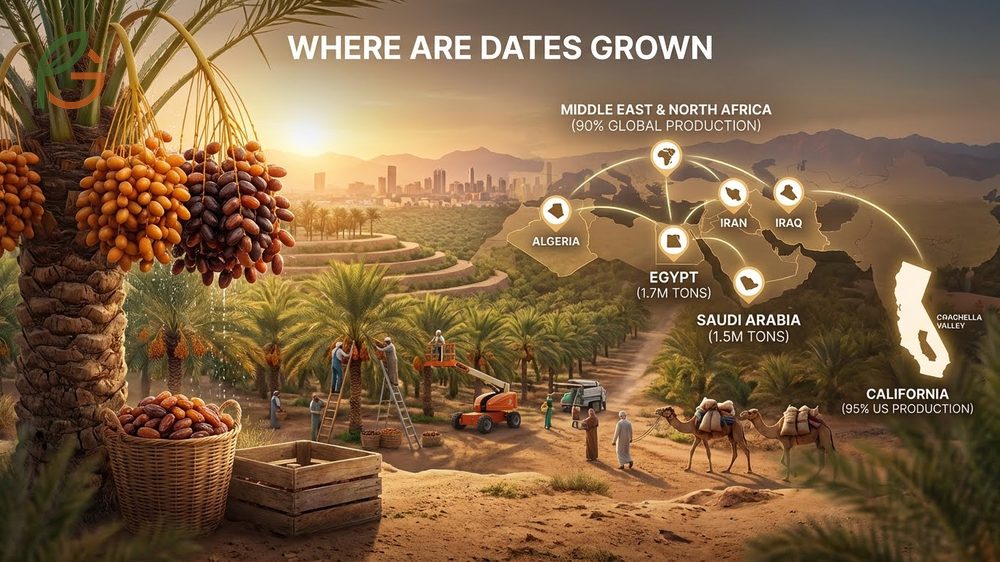
Date palm cultivation spans across 38 countries, with the Middle East and North Africa accounting for approximately 90% of global production. Egypt leads worldwide production with 1.7 million metric tons annually, representing 16.6% of total global output.[3] Saudi Arabia ranks second at 1.5 million tons, followed by Iran, Algeria, and Iraq.
In the United States, California dominates domestic production with approximately 95% of the country’s date harvest. The Coachella Valley region provides ideal conditions with scorching summer temperatures, minimal rainfall, and well-draining sandy soil. US production totaled 55,700 metric tons in 2019, with production increasing at an annual rate of 12.9%.[2]
The Arabian Peninsula produces 1.9 million tons annually across 365,000 hectares, representing 29% of global production and 33% of worldwide date palm acreage. Iraq maintains the largest harvested area globally with 276,000 hectares dedicated to date cultivation. Countries like Mexico, Peru, and Spain have developed small but growing date industries in recent decades, expanding the crop beyond its traditional geographic range.
This table compares annual production volumes in metric tons for the world’s top five date-producing countries based on FAO data
| Country | Annual Production (Metric Tons) | Global Share | Primary Growing Regions |
|---|---|---|---|
| Egypt | 1,603,762[2] | 16.6% | Nile Valley, Eastern Desert |
| Saudi Arabia | 1,539,756[2] | 15.9% | Riyadh, Qassim, Medina |
| Iran | 1,307,908[2] | 13.5% | Southern provinces |
| Algeria | 1,136,025[2] | 11.7% | Saharan oases |
| Iraq | 639,315[2] | 6.6% | Basra, Babylon regions |
- Annual rainfall must remain below 6 inches during fruiting season
- Summer daytime temperatures should consistently exceed 95°F (35°C)
- Minimum 3,000 hours of heat accumulation above 65°F (18°C) needed annually
- Winter temperatures can drop to 20°F (-6°C) briefly without killing mature trees[8]
- Soil must drain rapidly; standing water kills date palm roots within 48 hours
How Do Dates Grow
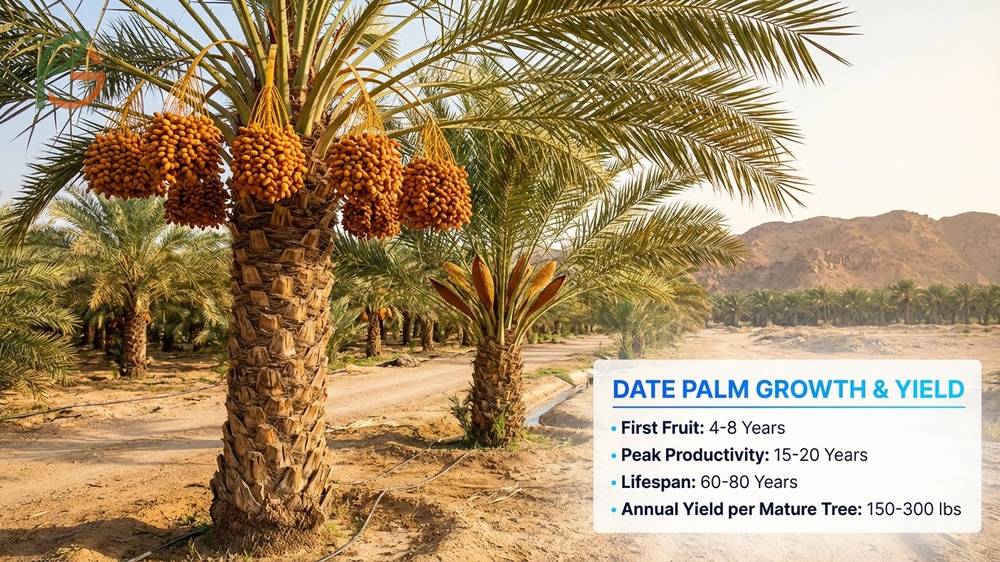
Date palms require 4-8 years after planting to produce their first fruit, with commercial production beginning around year 5. The trees reach peak productivity between ages 15-20 and can continue bearing fruit for 60-80 years under optimal conditions. Each mature female tree produces 150-300 pounds of dates annually, depending on variety, care practices, and environmental conditions.
The growing process begins in early spring when flower spathes emerge from the crown of the tree. Female trees produce cream-colored flower clusters, while male trees develop larger, more abundant flowers containing pollen. Natural pollination by wind is unreliable, so commercial growers practice artificial pollination to ensure consistent fruit set and quality.
Artificial pollination involves collecting pollen from male flowers, then manually distributing it onto receptive female flowers within 24-48 hours. Growers cut fresh male inflorescences and dry them slightly to release pollen. This pollen is then dusted directly onto female flowers or mixed with flour for easier distribution. Modern operations use mechanical dusters or drones to apply pollen efficiently across large orchards.
After successful pollination, the fruit develops through four distinct ripening stages over 5-7 months. The kimri stage features hard, green dates with astringent flavor. During khalal, fruits reach full size and turn yellow or red depending on variety. The rutab stage brings softening and color change to brown as sugars concentrate. Finally, tamar represents the fully ripe stage where dates naturally dry on the tree.
Harvesting timing depends on variety and intended market. Soft varieties like Barhi are often picked at khalal stage for fresh consumption. Semi-dry varieties like Deglet Noor are harvested at rutab stage. Dates intended for drying are left on the tree until reaching tamar stage. Harvest occurs from late summer through fall, typically August through November in California.
- Deep watering every 7-10 days during growing season, reducing to monthly in winter
- Fertilization three times yearly with balanced formula plus micronutrients
- Annual pruning to remove dead fronds and maintain 12-15 healthy green fronds
- Fruit thinning to reduce bunch weight and prevent branch breakage
- Bunch covering with paper bags to protect ripening dates from rain, birds, and insects
- Soil testing every 2-3 years to monitor salinity levels and nutrient status
Fresh Dates vs Dried Dates
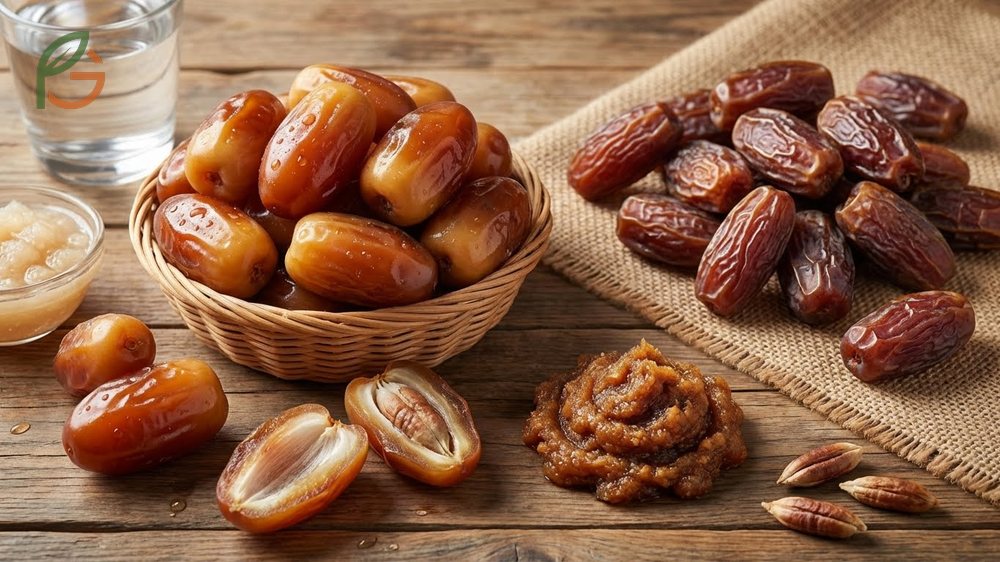
Fresh dates contain approximately 60% water content, resulting in a soft, moist texture and lower calorie concentration. A 100-gram serving of fresh dates provides about 142 calories with naturally occurring sugars that deliver quick energy.[7] Dried dates have only 25% water content, concentrating their nutrients and increasing calorie density to approximately 277 calories per 100 grams.
The drying process significantly impacts nutritional composition beyond just calorie concentration. Dried dates contain higher levels of fiber, calcium, and potassium compared to fresh dates. However, the heat exposure during drying reduces certain vitamins and antioxidants. Fresh dates retain higher concentrations of vitamin C, B vitamins, and various antioxidant compounds that diminish during dehydration.
Storage requirements differ dramatically between fresh and dried varieties. Fresh dates must be refrigerated and typically last 1-2 months before quality declines. Dried dates can be stored at room temperature in airtight containers for 6-12 months, making them more practical for year-round availability. This explains why most dates sold in US supermarkets are semi-dried or fully dried varieties.
Texture and flavor profiles create distinct culinary applications for each type. Fresh dates work exceptionally well in salads, cheese boards, and fresh fruit arrangements where their soft, juicy texture shines. Dried dates excel in baking, energy bars, and smoothies where their concentrated sweetness and chewy texture add depth. Rehydrating dried dates by soaking them in warm water for 10-15 minutes can restore some of their fresh-date characteristics.
Selection Tip: When buying fresh dates at farmers markets, look for plump fruits with smooth, unbroken skin and no crystallized sugar on the surface. For dried dates, avoid packages with visible white coating, which indicates sugar crystallization from improper storage conditions.
- Fresh dates pair perfectly with soft cheeses like goat cheese or brie on appetizer boards
- Dried dates blend smoothly into nut butters, creating natural sweetened spreads
- Fresh dates add moisture to grain salads like quinoa or couscous dishes
- Dried dates can be ground into powder for a natural sugar substitute in baking
- Fresh dates work well stuffed with nuts or cream cheese as an elegant dessert
- Dried dates create rich, caramel-like flavor when simmered into sauces for meat dishes
Conclusion
The evidence is clear: what is a date fruit extends far beyond a simple botanical definition. These ancient fruits represent 6,000 years of cultivation history, from Mesopotamian temples to modern California orchards. Current agricultural data shows dates thriving across 38 countries, with production exceeding 9 million metric tons annually and steady growth in non-traditional regions like the Americas.
Whether you’re cultivating date palms in your backyard or simply enjoying these naturally sweet fruits, understanding their origins, varieties, and growing requirements enhances appreciation for this remarkable crop. FruitGarden synthesizes global research to help US gardeners make informed decisions about growing and enjoying dates in their local climate zones.
Frequently Asked Questions
Are dates a fruit or a nut?
Dates are classified botanically as fruits, specifically drupes or stone fruits similar to cherries and peaches. The date has a single seed surrounded by sweet flesh and a thin outer skin. Unlike nuts, which are hard-shelled seeds, dates develop from the ovary of the date palm flower and contain significantly higher moisture and sugar content.
How do you eat dates fruit?
Dates can be eaten fresh right from the cluster or rehydrated if dried. Remove the single pit from the center before eating, or slice the date lengthwise to extract it. Popular preparations include stuffing dates with nuts or cheese, chopping them into salads or oatmeal, blending them into smoothies, or using them as natural sweeteners in energy balls and dessert recipes.
What’s the difference between Medjool and Deglet Noor dates?
Medjool dates are larger, softer, and sweeter with a moist, chewy texture ideal for snacking. Deglet Noor dates are smaller, firmer, and semi-dry with a subtle nutty flavor that works better in cooking and baking. Medjools typically cost 2-3 times more than Deglet Noors due to their premium quality and labor-intensive harvesting requirements.
Can I grow date palms in my backyard?
You can grow date palms successfully if you live in USDA hardiness zones 9-11 with hot, dry summers and minimal rainfall during fruit ripening. The trees need full sun exposure, well-draining soil, and temperatures consistently above 95°F (35°C) during pollination. Expect 4-8 years before fruit production begins, and you’ll need both male and female trees for pollination unless you perform artificial pollination.
Are dates considered dried fruit?
Most dates sold commercially are technically semi-dried or fully dried, having lost 35-75% of their original water content. However, dates naturally dry on the tree during the final ripening stage called tamar. Fresh dates are available seasonally but require refrigeration, while shelf-stable dried dates undergo additional dehydration processing for extended storage.
What does “dátil” mean in Spanish?
“Dátil” is the Spanish word for date fruit, pronounced DAH-teel. It’s a masculine noun derived from the same Greek root as the English word—”daktylos” meaning finger. The plural form is “dátiles.” This term is universally understood across Spanish-speaking countries, though some regions have local variations like “minimito” in Honduras.
Where do most dates in the US come from?
Approximately 95% of US-grown dates come from California’s Coachella Valley region, which produces about 55,700 metric tons annually. The valley’s extreme heat, minimal rainfall, and sandy soil create ideal conditions for date cultivation. Arizona produces small quantities as well. The US also imports dates from Middle Eastern and North African countries to meet consumer demand year-round.