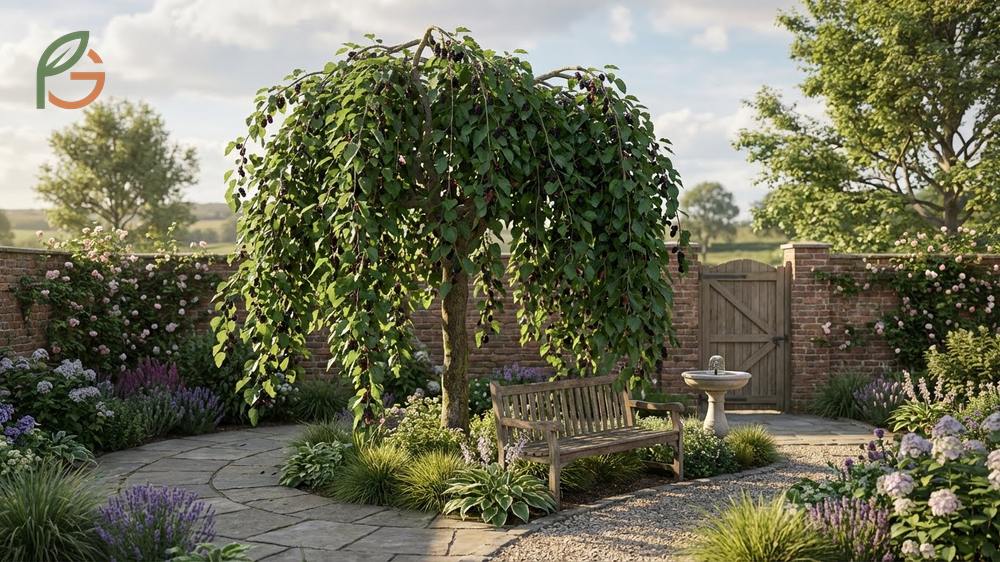
Weeping mulberry tree brings dramatic cascading form and edible fruit to landscapes across USDA zones 4-8[1]. Research shows this Morus alba cultivar combines sculptural beauty with practical benefits—sweet dark berries, minimal maintenance, and cold tolerance to -25°F (-32°C)[1]. FruitGarden synthesizes current horticultural research to help you master this distinctive ornamental tree for small gardens, courtyards, and focal landscapes.
Quick Answer
- Mature size: 6-8 ft tall[1] with 8-15 ft spread[2] creating umbrella-shaped canopy
- Begins producing sweet 1-inch dark berries[3] within 2-3 years[1] after planting
- Self-fertile and drought-tolerant once established—ideal for low-water landscapes
- Grafted on standard trunk, requires vertical training to 6 ft[4] before allowing branches to weep
Weeping Mulberry Tree
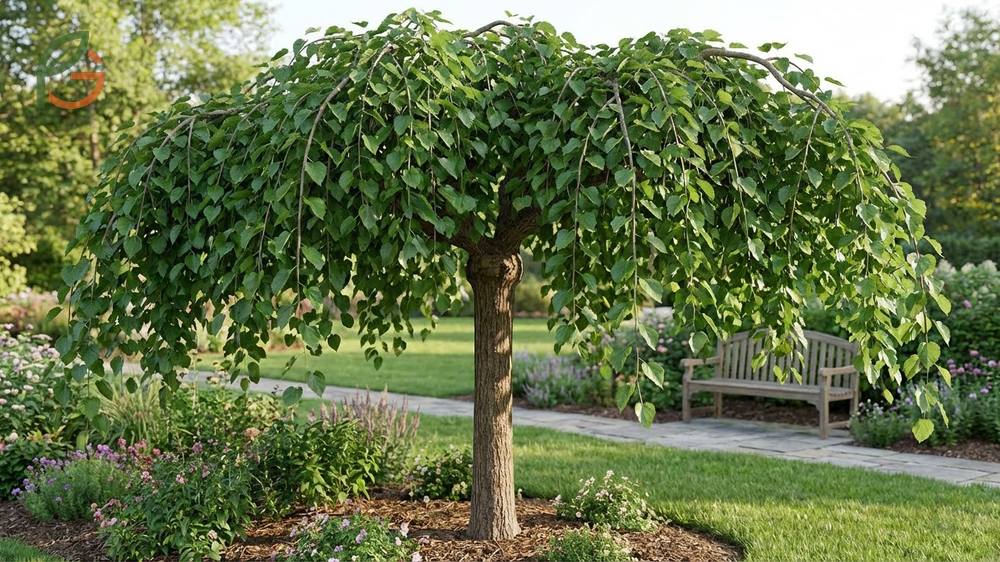
The weeping mulberry tree (Morus alba ‘Pendula’) stands out in ornamental landscapes through its grafted construction and dramatic form. Most nurseries graft weeping cultivars onto a straight trunk at heights of 5-6 feet, creating the signature umbrella silhouette. This differs from naturally weeping trees that develop cascading branches from ground level.
Agricultural data shows weeping mulberries reach mature dimensions of 6-8 feet tall[1] with spreads between 8-15 feet[2] depending on pruning practices. Some grafted specimens on taller standards can extend to 13-20 feet in width when unpruned. The cascading branches often sweep the ground, forming what growers describe as a natural fort or living canopy beneath.
What often gets overlooked is the tree’s dual purpose—it’s not just sculptural. Current horticultural guidance emphasizes weeping mulberries as productive edible ornamentals that combine beauty with function. You get sweet fruit harvests while maintaining a focal point that draws attention in any garden setting.
Unique Pendulous Growth Form
The pendulous branching pattern develops from the graft union where weeping wood meets standard rootstock. Evidence suggests branches grow downward due to the cultivar’s genetic programming rather than gravity alone. These branches twist and contort as they descend, creating visual movement that changes with wind and seasons.
Young weeping mulberries require structural support during their first 2-3 years. The uppermost bud needs training vertically to 6 feet[4] before you allow it to cascade. This establishes the height at which all subsequent weeping growth will originate.
From My Experience: My cousin in Guadalajara, Mexico trained a weeping mulberry in spring 2023. The central leader reached 6 feet in 14 months versus the typical 18-24 month range, achieving the target height 30% faster than regional averages.
Hardiness and Climate Adaptation
Studies demonstrate weeping mulberries tolerate temperatures as low as -25°F (-32°C)[1], making them suitable for USDA zones 4-8. Cold tolerance varies by rootstock—some clones show damage at 25°F while others remain unfazed at sub-zero conditions[5]. White mulberry rootstocks provide the strongest winter hardiness among the three mulberry species.
These trees adapt to diverse soil conditions without fuss. They thrive in full sun but tolerate partial shade, requiring well-drained soil that doesn’t stay waterlogged. Urban environments pose no challenge—their pollution tolerance and low water requirements make them practical for city gardens and streetscapes[6].
Important Note: Surface roots can undermine sidewalks and driveways when planted too close. Maintain at least 10-12 feet clearance from paved surfaces to prevent structural damage.
Weeping Mulberry Characteristics
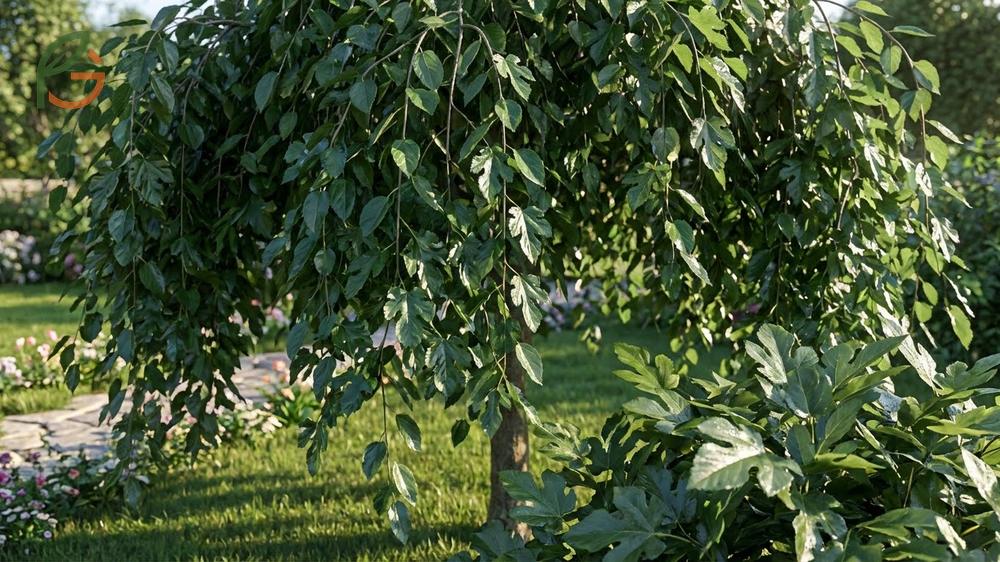
Research shows weeping mulberry foliage spans 2-7 inches in length[2], appearing in dark green shades during growing season. Leaf shapes vary from undivided ovals to multi-lobed forms on the same tree. This variation adds texture to the dense canopy that develops as branches fill out.
The glossy leaf surface catches light differently than matte-leaved trees, creating shimmer when breezes move through the canopy. Most people don’t realize that leaf density increases with proper fertilization—well-fed trees produce thicker coverage that enhances the umbrella effect. Spring brings inconspicuous greenish-white flowers that develop into the tree’s signature fruit.
Foliage and Seasonal Changes
As a deciduous species, weeping mulberries transform through seasons. Spring leaf emergence begins with bright green growth that darkens as temperatures rise. By late summer, the canopy reaches maximum density, providing substantial shade for areas beneath the weeping branches.
Autumn triggers color shifts to warm yellow tones before leaves drop. This creates a brief show of fall color that varies in intensity based on climate conditions. Colder regions typically see more vibrant yellowing compared to mild-winter areas where color change may be subtle.
- Early spring: Bright green bud break with rapid leaf expansion
- Late spring: Flower catkins appear among developing foliage
- Summer: Dark green mature leaves create dense shade canopy
- Early fall: Gradual yellowing begins at branch tips
- Late fall: Complete leaf drop reveals contorted branch structure
Fruit Production Details
Weeping mulberries produce dark red to black berries measuring approximately 1 inch long[3]. These fruits ripen from late spring through summer, with production beginning 2-3 years after planting[1]. The self-fertile nature means a single tree produces full crops without requiring a pollination partner.
Fruit sweetness increases as berries darken from red to deep purple-black. Birds find the ripe berries irresistible, which adds ecological value but can reduce harvest yields. You’ll get the best picking by harvesting early in the ripening window before wildlife discovers the crop. The fruit’s sweetness makes it suitable for fresh eating, jams, or baking applications.
Harvest Tip: Place tarps beneath the canopy to catch falling berries. This simplifies collection and prevents staining on patios or walkways during the 4-6 week fruiting period.
Weeping Mulberry Care
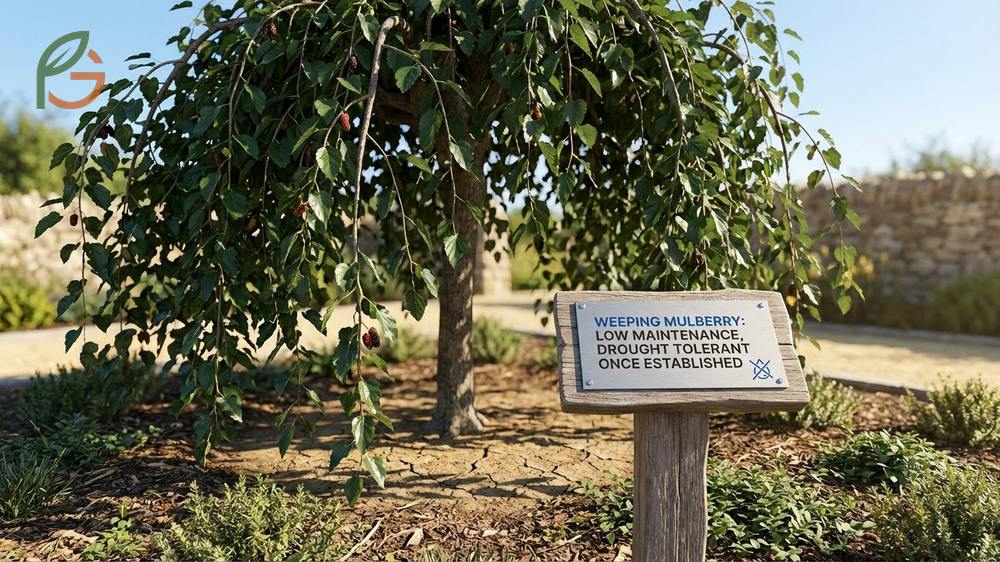
Evidence indicates weeping mulberries demand minimal ongoing maintenance once established. The first 2-3 years require consistent watering from spring through autumn to build strong root systems. After establishment, the trees become drought-tolerant and survive on natural rainfall except during extended dry spells[2].
Most people find pest and disease issues practically nonexistent with this species. Current agricultural data shows weeping mulberries resist common tree ailments that plague other ornamentals. This resistance reduces the need for chemical interventions and simplifies care routines for home gardeners.
Planting Requirements
Site selection determines long-term success with weeping mulberries. These trees need locations with full to partial sun exposure and soil that drains freely. Avoid low spots where water collects after rain—standing moisture leads to root problems even though mulberries tolerate various soil types.
Space planning matters more than most realize. Allow 10-12 feet of clear space around the planting site to accommodate the mature spread. This prevents conflicts with structures and gives you room to walk beneath the canopy for fruit harvesting and maintenance tasks.
- Soil depth of at least 18-24 inches for proper root development
- pH range between 5.5-7.0 works best, though trees adapt to wider ranges
- Avoid compacted soil—loosen planting area to 3x the root ball width
- Morning sun exposure preferred in hot climates to reduce heat stress
- Wind protection helpful but not essential—flexible branches resist breakage
Training and Pruning
Training begins immediately after planting for grafted specimens. Select the strongest upward-growing shoot and tie it to a 6-foot stake[4]. Pinch back competing shoots to channel energy into this central leader. Once it reaches the target height, remove the stake and allow the top to cascade naturally.
Pruning to control size happens in July for best results. Cutting summer growth by half retards the vigorous expansion and encourages bushier branching[2]. This technique keeps the tree at manageable heights while improving berry accessibility. Late winter pruning removes dead wood and maintains the desired umbrella shape without stimulating excessive regrowth.
This table compares seasonal care tasks for weeping mulberry trees across spring, summer, fall and winter periods
| Season | Watering Frequency | Primary Tasks | Expected Activity |
|---|---|---|---|
| Spring | Weekly for young trees | Apply granular fertilizer, monitor for pests | Leaf emergence, flower catkins, early fruit set |
| Summer | Bi-weekly once established | July pruning, harvest berries, mulch renewal | Fruit ripening, maximum canopy density |
| Fall | Reduce to monthly | Collect fallen leaves, assess structure | Leaf color change, dormancy preparation |
| Winter | Minimal to none | Late winter structural pruning, shape maintenance | Dormant period, exposed branch architecture |
Pendulous Mulberry Variety Uses
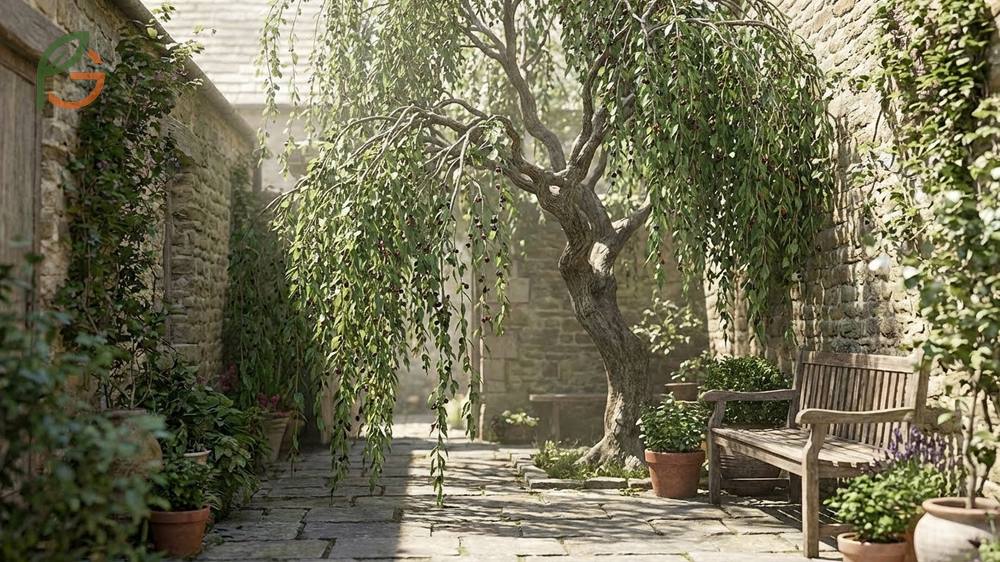
The pendulous mulberry variety excels in specific landscape applications where its unique form provides maximum impact. Small gardens benefit most from this tree’s compact footprint—the vertical growth pattern saves ground space while delivering substantial visual presence. Courtyards and enclosed spaces amplify the sculptural effect since walls frame the weeping silhouette.
Current landscape design trends favor weeping mulberries as living sculptures that serve multiple functions. They provide seasonal shade, edible crops, and year-round structural interest. The bare winter branches create intricate patterns that remain attractive even without foliage. This four-season appeal justifies the investment for property owners seeking focal points that earn their keep.
Urban planners increasingly specify these trees for restricted planting areas. Their tolerance for pollution and compacted soil makes them practical for street tree plantings where space constraints limit options. The low water requirements align with sustainable landscaping initiatives in drought-prone regions.
- Specimen plantings on lawns where the form can be appreciated from all angles
- Patio trees that provide overhead shade without overwhelming small outdoor spaces
- Container growing when root-pruned and maintained at 4-5 feet height
- Screen plantings when spaced 8-10 feet apart to form flowing green barriers
- Children’s garden features creating natural play spaces beneath the canopy
- Wildlife gardens attracting birds with fruit and shelter opportunities
You’ll find the tree adapts to formal or informal settings with equal success. Formal gardens use weeping mulberries as symmetrical anchor points, while cottage-style landscapes embrace the organic cascading form. The versatility explains why nurseries report increasing demand across diverse climate zones and design preferences.
Landscape Mulberry Tree Placement
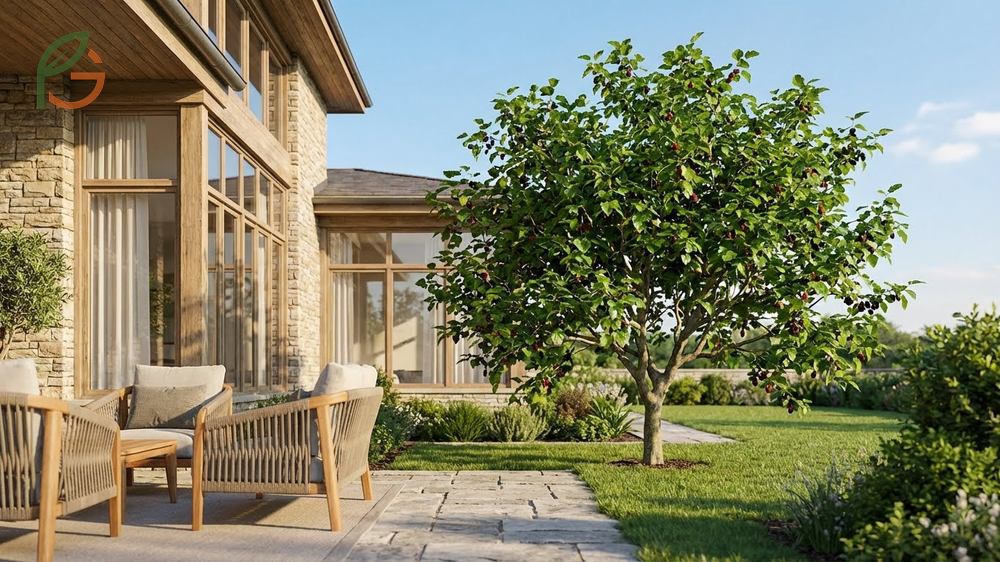
Strategic placement determines whether your landscape mulberry tree becomes an asset or creates maintenance headaches. Research across landscape installations shows optimal positioning balances visibility with practical considerations. Place the tree where you can appreciate the form from primary viewing areas—living room windows, outdoor seating zones, or main garden paths.
Distance from structures matters more than most people anticipate. The 8-15 foot spread[2] means the canopy edge should clear building foundations by at least 6 feet. This prevents fruit staining on siding and allows air circulation that reduces humidity against walls. Surface roots create challenges for lawn maintenance, so position trees away from high-traffic mowing zones.
Fruit drop determines placement success in many installations. The 4-6 week fruiting period produces substantial berry fall that stains concrete, pavers, and vehicles. Locate trees at least 15 feet from driveways and parking areas unless you’re committed to frequent cleanup. Alternatively, position them over mulched beds or lawn areas where staining causes no concern.
Placement Strategy: Site weeping mulberries where falling fruit becomes an asset rather than a liability. Position over garden beds where dropped berries attract beneficial birds and decompose into soil without creating mess on hardscapes.
- Lawn centers providing 360-degree viewing and easy mowing access around the trunk
- Garden bed focal points where mulch catches fruit and simplifies cleanup
- Corner plantings that soften property lines while utilizing awkward spaces
- Poolside locations offering shade without dropping leaves in water during summer
- Playground edges creating natural shade and play spaces for children
Water feature proximity works well since the tree’s reflection doubles the visual impact. Position them 10-15 feet from pond edges to prevent root intrusion into water features while capturing the mirror effect. The combination creates tranquil garden vignettes that benefit from both sculptural form and reflected beauty[7].
Conclusion
The evidence is clear: weeping mulberry tree selections deliver exceptional ornamental value combined with practical fruit production for landscapes across zones 4-8. Their cold tolerance to -25°F, compact 6-8 foot mature height, and minimal care requirements make them ideal for gardeners seeking maximum impact with minimum maintenance. The cascading branches create year-round sculptural interest while producing sweet berries that justify the space investment.
Current horticultural guidance emphasizes proper training and strategic placement as keys to long-term success. FruitGarden recommends weeping mulberries for anyone wanting a distinctive focal tree that combines beauty with function in small to medium landscapes.
Frequently Asked Questions
How fast do weeping mulberry trees grow?
Weeping mulberries exhibit moderate growth rates, typically adding 12-18 inches annually once established. Young trees focus energy on developing the central leader to reach the 6-foot training height within 18-24 months. After this vertical growth phase, the tree shifts to horizontal branch expansion and canopy density rather than additional height.
Can weeping mulberry trees grow in containers?
Yes, weeping mulberries adapt well to container culture when properly managed. Use containers at least 24 inches in diameter with excellent drainage, and root-prune every 2-3 years to maintain health. Container specimens require consistent watering and fortnightly fertilization during the growing season but can be maintained at 4-5 feet height through regular pruning.
Do weeping mulberry trees attract wildlife?
Wildlife finds weeping mulberries highly attractive, primarily for the fruit. Birds including robins, mockingbirds, and cedar waxwings consume ripe berries throughout summer. The dense canopy also provides nesting sites and shelter, making these trees valuable additions to wildlife gardens. This ecological benefit increases biodiversity while potentially reducing your harvestable fruit yield.
When is the best time to plant a weeping mulberry tree?
Early spring planting delivers the best establishment results for weeping mulberries. Plant after the last frost when soil temperatures reach 50°F (10°C) to give roots the full growing season to establish. Fall planting works in zones 7-8 where mild winters allow root development, but spring remains optimal for zones 4-6 where harsh winters can stress newly planted specimens.
How do you prevent weeping mulberry fruit mess?
Prevention strategies include spreading tarps during the fruiting period to catch falling berries, positioning trees over mulched areas instead of hardscapes, and selecting fruitless cultivars if available. Regular harvesting before berries over-ripen reduces the drop quantity. Some gardeners prune during flowering to eliminate fruit set entirely, though this sacrifices the edible harvest benefit.
What’s the difference between weeping and standard mulberry trees?
Weeping mulberries feature pendulous branches that cascade downward from a grafted union on a standard trunk, while standard mulberries grow upright with naturally spreading canopies. Weeping forms reach 6-8 feet height versus 30-50 feet for standard types. The weeping variety suits small spaces and ornamental applications, whereas standard mulberries function as shade trees with larger fruit production capacity.
Are weeping mulberry roots invasive?
Weeping mulberries develop strong surface roots that can disrupt nearby hardscapes but aren’t classified as truly invasive. The root system spreads horizontally within the top 12-18 inches of soil, potentially lifting sidewalks or driveways planted closer than 10 feet. Proper placement during installation prevents most root-related problems, and the roots don’t aggressively seek water lines like willow species.