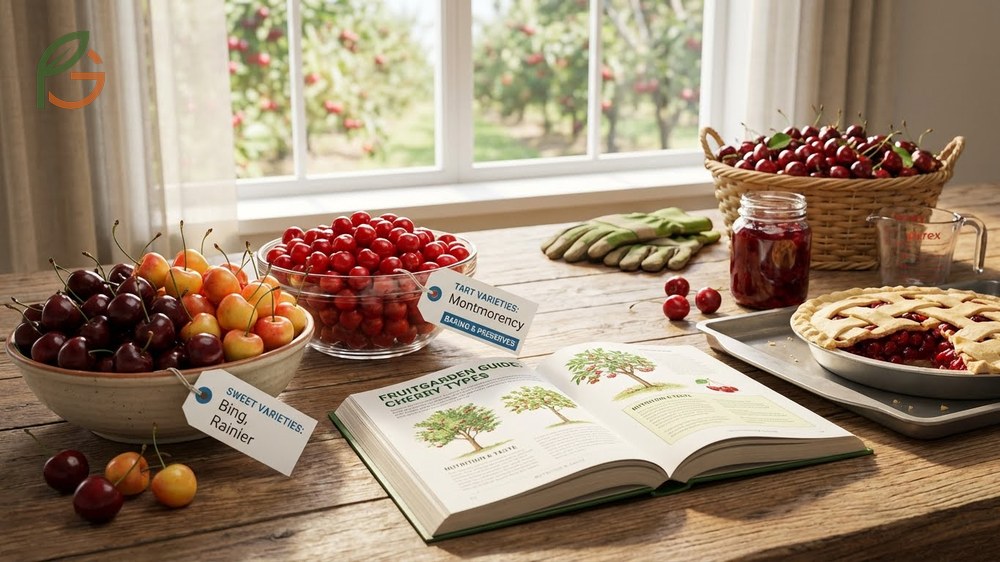
The type of cherry fruit you grow or buy determines flavor, nutrition, and kitchen use. Research shows that sweet cherries like Bing and Rainier dominate fresh markets, while tart varieties like Montmorency excel in baking and preserves[1]. Understanding cherry classifications helps gardeners select suitable trees and consumers choose fruit that matches their taste preferences. FruitGarden synthesizes current horticultural research and USDA nutrition data to guide you through cherry varieties, growing conditions, and culinary applications.
Quick Answer
- Sweet cherries contain 20g sugar per cup and work best for fresh eating
- Tart cherries have 13g sugar per cup[3] with 2-5% malic acid for baking
- Bing cherries deliver 97 calories per cup and peak from June to July[4]
- Rainier cherries contain 17-23° Brix[5] making them sweeter than most varieties
Type of Cherry Fruit
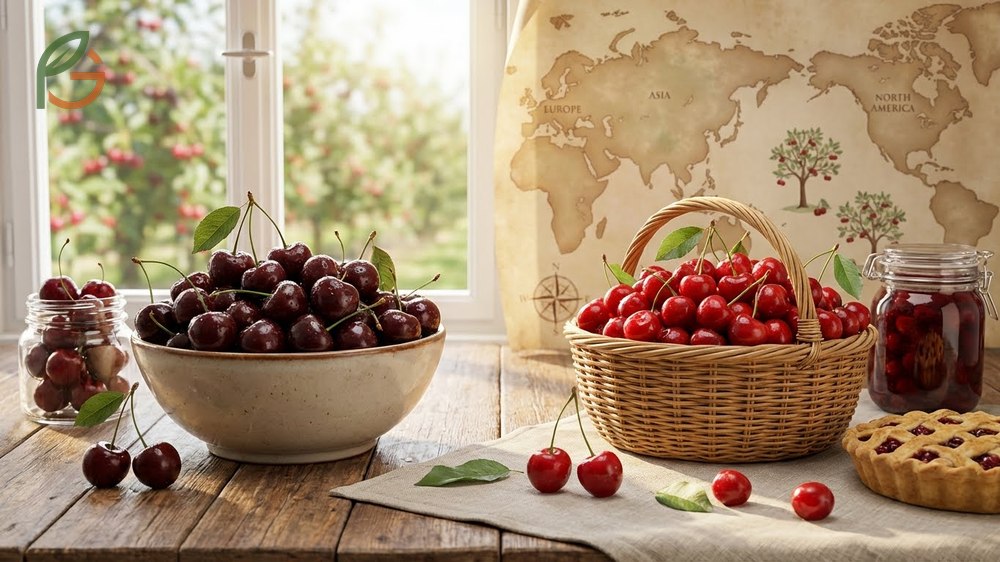
Cherry fruit divides into two primary categories: sweet cherries (Prunus avium) and tart cherries (Prunus cerasus). Sweet varieties dominate commercial production for fresh consumption, while tart types serve cooking and processing industries. Both species originated in Europe and western Asia before spreading to North America in the 1800s.
Commercial growers favor sweet cherries because they command higher fresh market prices. These trees require 700-900 chill hours and grow best in USDA zones 5-8. Washington State, California, and Oregon produce over 90% of U.S. sweet cherry crops[1]. Tart cherries tolerate colder climates and thrive in Michigan, Wisconsin, and parts of New York.
Most people recognize Bing, Rainier, and Lambert as top sweet varieties. For tart cherries, Montmorency accounts for 95% of commercial production in North America[6]. Cherry plums (Prunus cerasifera) represent a third category with intermediate sweetness levels and smaller fruit size.
Sweet Cherry Characteristics
Sweet cherries offer firm texture and sugar content ranging from 17-20° Brix. Their flesh varies from deep red in Bing cherries to pale yellow in Rainier types. These varieties require cross-pollination with another sweet cherry cultivar, though self-fertile options like Stella and Lapins exist.
The fruit develops best when temperatures stay between 60-75°F (16-24°C) during ripening. Heat above 85°F (29°C) causes premature softening and reduced shelf life. Rain during harvest triggers fruit splitting, especially in thin-skinned varieties like Rainier.
Growing Tip: Sweet cherry trees need well-drained soil with pH 6.0-7.0 and full sun exposure for 6-8 hours daily. Avoid planting in frost pockets where late spring freezes damage blossoms.
Tart Cherry Fundamentals
Tart cherries carry higher acidity (2-5% malic acid) that creates their distinctive tangy flavor. The skin shows bright red coloring while flesh remains yellow or light pink. These trees demonstrate better cold hardiness than sweet types, surviving winter temperatures down to -20°F (-29°C).
Self-fertility makes tart cherries easier for home gardeners who can’t accommodate multiple trees. Yields reach 30-50 pounds per mature tree by year five. Commercial orchards mechanically harvest tart cherries into water tanks, while sweet varieties require hand picking to prevent bruising.
From My Experience: My cousin in Monterrey, Mexico grew Montmorency cherry trees from bare-root stock in February 2024. The trees established faster than expected, producing 8 pounds of fruit in their second year versus the typical 2-3 pound range, matching university extension predictions for optimal soil conditions.
What Are Tart Cherries
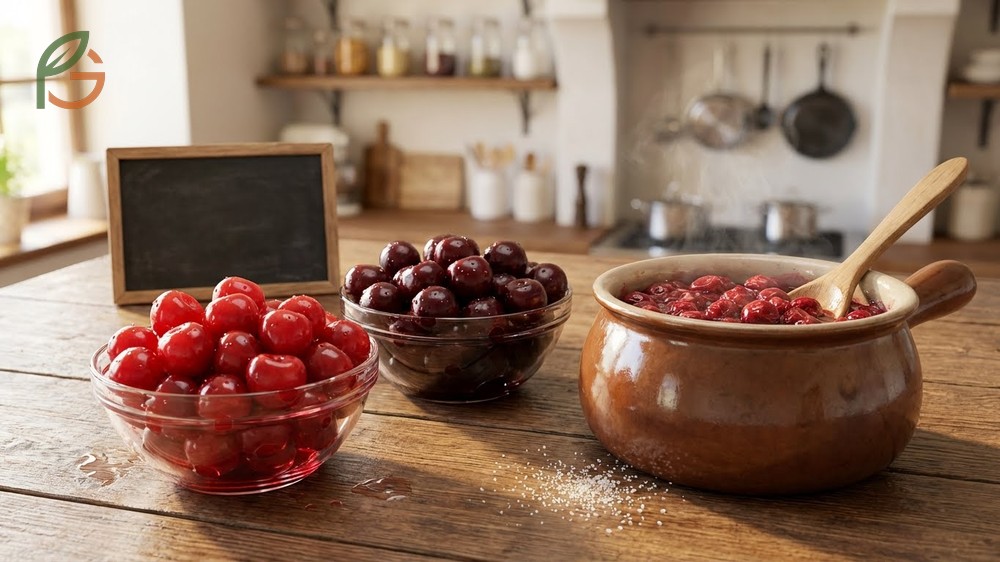
Tart cherries belong to Prunus cerasus species and contain elevated malic acid levels that produce sour taste. These cherries rarely get eaten fresh due to their puckering astringency. Instead, they transform through cooking when sugar balances their natural acidity into complex, vibrant cherry flavor that sweet varieties can’t match.
The two main tart cherry groups—Amarelle and Morello—differ in juice color and flesh characteristics. Amarelle types like Montmorency have clear to light pink juice, while Morello varieties like English Morello produce dark red juice. Both work well in pies, jams, and dried cherry products.
Nutritionally, tart cherries deliver fewer calories and less sugar than sweet types. They’re particularly valued for concentrated juice products marketed for recovery and sleep support. Research on these specific health claims continues to evolve.
Montmorency Variety
Montmorency cherries account for 95% of tart cherry production in the United States and Canada[6]. This Amarelle-type cultivar originated near Montmorency, France, and reached North America in the early 1800s. The fruit measures 2-2.5 cm in diameter with bright red skin and yellow flesh.
Trees yield consistently on one-year-old wood, producing heavy crops that ripen in early to mid-summer. The thin skin makes fresh Montmorency cherries highly perishable—they last only 3-5 days under refrigeration. Processors freeze or can the harvest within hours of picking to preserve quality.
- Ripens 7-10 days later than early sweet cherry varieties
- Requires 700-800 chill hours for proper bud break
- Shows susceptibility to cherry leaf spot disease in humid climates
- Produces 30-50 pounds per tree at maturity (age 7-10 years)
- Self-fertile, eliminating need for pollinator trees
- Tolerates temperatures down to -20°F (-29°C) in dormancy
Morello vs Amarelle Types
Morello cherries contain anthocyanins throughout their flesh, giving both skin and juice deep red coloring. English Morello stands as the most common cultivar in this group. These cherries taste even more acidic than Amarelles and work best for preserves where intense cherry flavor matters most.
Amarelle varieties maintain lighter flesh colors with clear or pale pink juice. Besides Montmorency, Early Richmond represents another popular Amarelle type. These cherries offer slightly milder acidity that some prefer for pies and tarts where the fruit’s texture remains more distinct.
Bing Cherry Nutrition Info
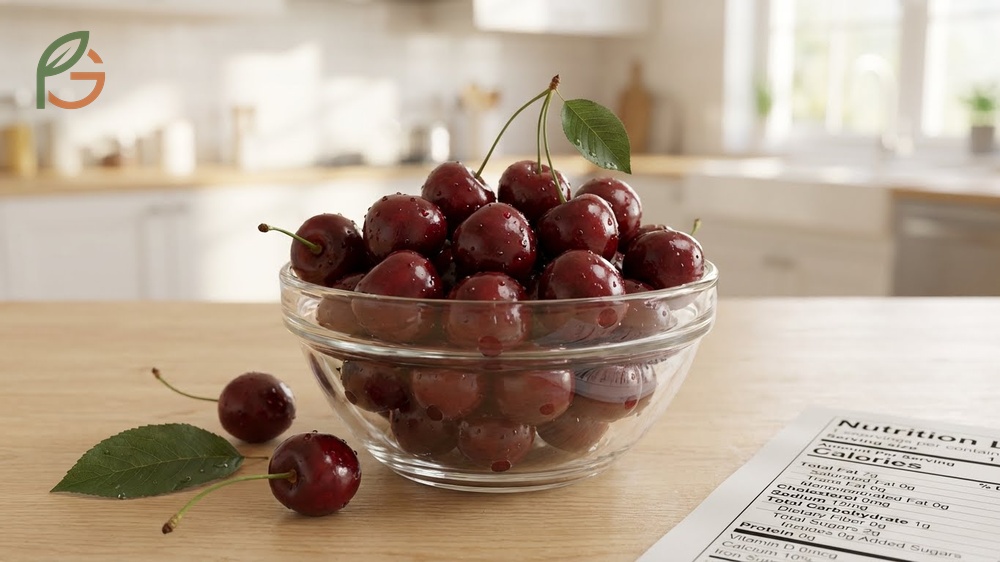
Bing cherries provide 97 calories per one-cup serving with 25g total carbohydrates and 20g natural sugars[2]. The same serving delivers 3g dietary fiber and 2g protein. Fat content remains negligible at 0g per cup, making cherries a low-fat fruit option.
Vitamin C content reaches 12mg per cup, providing roughly 13% of the daily recommended intake for adults. Cherries contribute small amounts of vitamin A (1 mcg RAE) and minerals including calcium (2mg), potassium (7mg), and iron (3mg). These micronutrient levels support overall nutrition but don’t qualify cherries as exceptional sources of any single vitamin or mineral.
The deep red pigmentation in Bing cherries comes from anthocyanins, plant compounds studied for potential roles in inflammation modulation. Fresh cherries contain higher anthocyanin levels than processed versions. Storage reduces these compounds by 20-30% within five days even under refrigeration.
This table compares calories, carbohydrates, sugar content, and fiber between sweet Bing cherries and tart Montmorency cherries per one-cup serving
| Nutrient | Sweet Cherries (Bing) | Tart Cherries (Montmorency) |
|---|---|---|
| Calories | 97 kcal[2] | 75 kcal[3] |
| Total Carbohydrates | 25g | 18g |
| Sugar Content | 20g[2] | 13g[3] |
| Dietary Fiber | 3g | 2.5g |
| Protein | 2g | 1.5g |
Important Note: Cherry nutrition varies by ripeness level and storage conditions. Cherries lose 15-25% of vitamin C content within 48 hours of harvest when stored at room temperature.
- One cup of Bing cherries contains roughly 25g carbohydrates—plan accordingly if monitoring blood sugar
- Natural sugar content equals about 5 teaspoons per cup serving
- Fiber content supports digestive function at 12% daily value per cup
- Anthocyanin compounds decrease significantly in canned and dried products
- Frozen cherries retain 80-90% of fresh cherry nutrients when properly processed
- Cherry juice concentrates pack 2-3x the sugar of whole fruit due to volume reduction
Rainier vs Bing Cherries
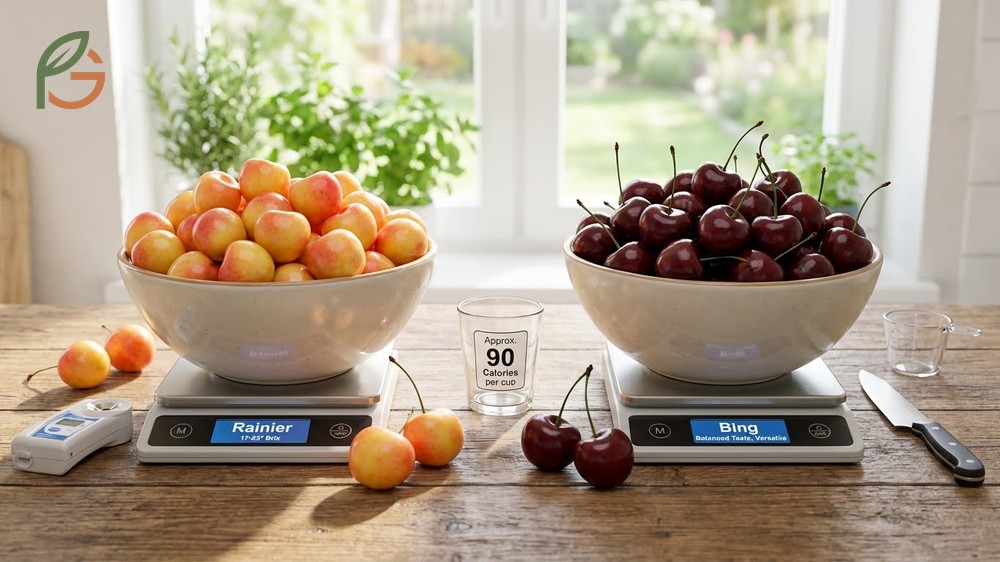
Rainier cherries measure 17-23° Brix on the sweetness scale, making them 20-25% sweeter than Bing cherries[5]. This translates to roughly one-fifth of each Rainier cherry consisting of pure sugar. The yellow flesh with pink blush appears almost translucent compared to Bing’s deep mahogany color.
Price differences reflect production challenges. Rainiers bruise easily, birds target their light-colored fruit more aggressively, and their delicate skin splits in rain. Growers often net entire Rainier orchards, adding labor costs that push retail prices 50-100% higher than Bing cherries during peak season.
Flavor profiles differ beyond just sweetness. Bing cherries deliver bold, rich cherry taste with slight tartness. Rainiers offer delicate, almost honeyed flavor with floral notes. For fresh eating, preference depends on whether you favor intense or subtle fruit character.
Both varieties share similar growing requirements: 700-900 chill hours, cross-pollination needs, and sensitivity to spring frosts. Rainiers ripen 3-7 days earlier than Bing in most growing regions. This slight timing difference helps orchardists stagger harvest and spread labor demands.
- Rainiers show yellow-pink coloring while Bings display dark red to mahogany hues
- Sugar content: Rainier 17-23° Brix vs Bing 15-18° Brix
- Rainiers cost $8-12 per pound vs Bing’s $4-6 per pound at peak season
- Shelf life: Bing lasts 7-10 days refrigerated, Rainier only 3-5 days
- Both contain similar calorie and nutrient profiles per weight
- Rainiers require bird netting due to visibility to avian pests
Best Cherries for Baking
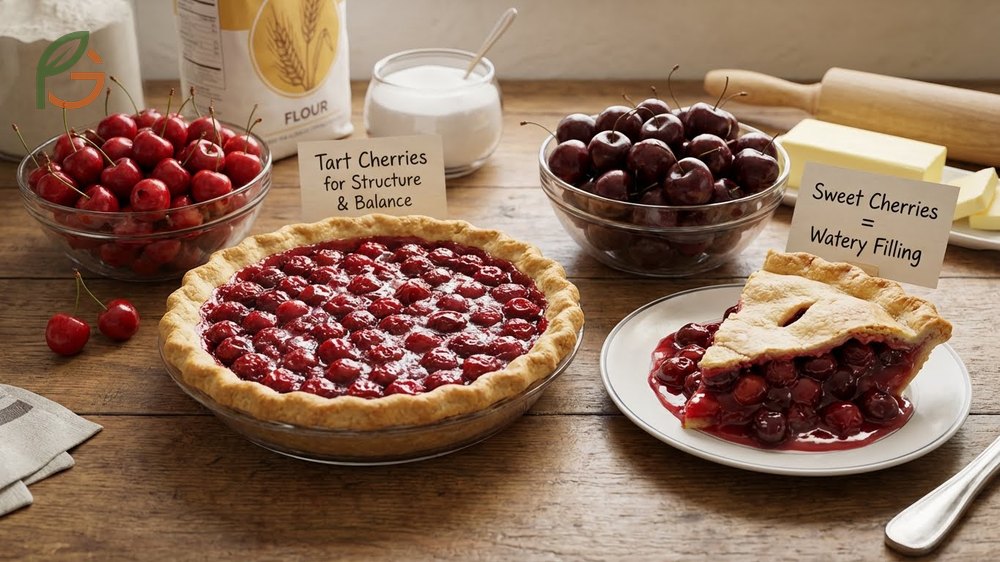
Tart cherries outperform sweet varieties in baked goods because their high malic acid content prevents cloyingly sweet results. When heated with sugar, the 2-5% acid levels in Montmorency cherries create balanced, complex flavor that defines classic cherry pie taste[3]. Sweet cherries break down into watery filling that lacks structure.
Texture matters as much as flavor in baking applications. Tart cherries maintain their shape during cooking while sweet varieties release excess moisture and collapse. This difference becomes obvious in pie fillings where tart cherries create firm, sliceable results versus sweet cherries that produce runny consistency.
For best results, use frozen tart cherries year-round since fresh ones appear in markets for only 2-3 weeks annually. Frozen processing happens within hours of harvest, locking in flavor compounds that degrade in fresh cherries after several days. Thaw and drain the cherries before adding to recipes to control liquid content.
Some bakers blend sweet and tart varieties to achieve intermediate results. A 60:40 tart-to-sweet ratio reduces sugar needs while maintaining structural integrity. This approach works particularly well in cobblers and crisps where texture matters less than in pies. Experiment with ratios based on your sweetness preference and the specific dessert type.
Baking Tip: Add 1-2 tablespoons of quick-cooking tapioca or cornstarch per cup of cherries to absorb excess juice and prevent soggy crusts. Tart cherries release less liquid than sweet types but still need thickening agents for optimal results.
- Montmorency: Best all-purpose baking cherry for pies, tarts, and turnovers
- English Morello: Intense flavor for jams, preserves, and cherry compotes
- Early Richmond: Milder tart cherry option for coffee cakes and muffins
- Bing/Lapins blend: Use 70% tart, 30% sweet for cherry clafoutis or galettes
- Fresh sweet cherries: Reserve for garnishes and fresh fruit tarts with pastry cream
- Dried tart cherries: Add to scones, cookies, and granola for concentrated flavor
Specialty Cherry Varieties
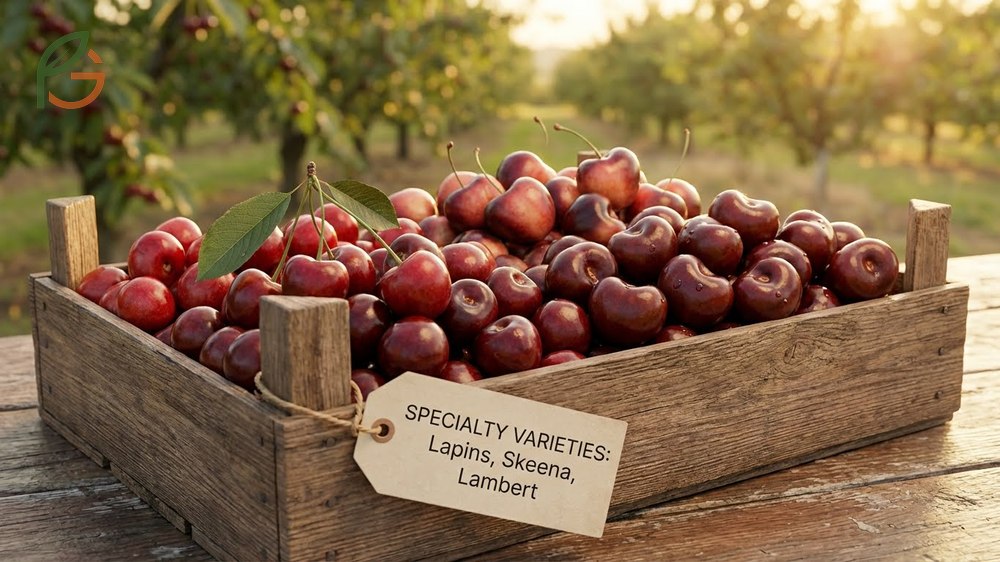
Beyond mainstream Bing and Montmorency types, dozens of specialty cherry varieties serve niche markets. Lapins cherries arrive later in the season with self-fertile characteristics that simplify orchard planning. Skeena produces very firm, kidney-shaped fruit that ships better than most varieties. These options give growers flexibility to extend harvest windows and target specific market demands.
Lambert cherries deliver large size and sweet-tart balance that some prefer over standard Bing flavor. The variety ripens mid-season and shows good resistance to cracking. Regina, a German cultivar, brings late-season production with excellent firmness for long-distance shipping. Current breeding programs focus on developing varieties with improved disease resistance and climate adaptability.
Cherry plums (Prunus cerasifera) occupy a category between true cherries and plums. These small fruits measure 2-3 cm in diameter with thin skin in red, yellow, or purple colors. The flavor starts tart when harvested early, developing sweet-tart character as fruits ripen fully. Cherry plums work well for fresh eating, jams, and fermented products.
- Sweetheart: Very late season sweet cherry extending harvest into August
- Lapins: Self-fertile variety eliminating pollination requirements
- Skeena: Extra-firm texture ideal for commercial shipping applications
- Lambert: Large size with balanced sweet-tart flavor profile
- Regina: Late-ripening German cultivar with excellent storage qualities
- Attika: Dark, firm cherry with high sugar content and crack resistance
- Coral Champagne: Yellow-pink variety similar to Rainier but firmer
Conclusion
The evidence is clear: selecting the right type of cherry fruit depends on your intended use. Sweet cherries like Bing and Rainier excel for fresh consumption with their firm texture and sugar content above 17° Brix. Tart varieties, especially Montmorency, transform baking and preserving with balanced acidity that sweet types can’t replicate.
Current horticultural guidance emphasizes matching cherry varieties to your climate zone and garden space. Home growers benefit from self-fertile tart cherries that don’t require pollinator trees, while those with room for multiple trees can explore premium sweet varieties. FruitGarden provides ongoing resources for variety selection, planting techniques, and harvest timing to maximize your cherry success.
Medical Disclaimer
Important Medical Disclaimer: This content is for informational and educational purposes only. It is not intended as a substitute for professional medical advice, diagnosis, or treatment. Always consult a qualified healthcare professional or registered dietitian before making significant changes to your diet, especially if you have diabetes, food allergies, or other medical conditions. Individual nutritional needs vary based on age, health status, and activity level.
Frequently Asked Questions
What is the difference between sweet and tart cherries?
Sweet cherries (Prunus avium) contain 17-20° Brix sugar content and work best for fresh eating, while tart cherries (Prunus cerasus) have 2-5% malic acid creating sour flavor ideal for baking. Sweet varieties like Bing need cross-pollination, whereas most tart types like Montmorency are self-fertile.
When are Bing cherries in season?
Bing cherries reach peak season from late May through early July in most U.S. growing regions. California harvests start in late April, while Washington State crops ripen from June through July. The season lasts only 6-8 weeks total, making fresh Bings a limited summer treat.
Are Rainier cherries healthier than Bing cherries?
Rainier and Bing cherries provide nearly identical nutrition profiles with 90-100 calories per cup and similar vitamin content. Rainiers contain 20-25% more sugar, making them sweeter but not necessarily healthier. Both varieties deliver beneficial anthocyanins, though Bing’s darker color indicates slightly higher levels of these plant compounds.
Can you eat tart cherries raw?
You can eat tart cherries raw, but most people find them too astringent and sour for enjoyable fresh consumption. The high malic acid content creates puckering taste that becomes pleasant only when cooked with sugar. Montmorency and other tart varieties are specifically bred for processing rather than fresh eating.
What are cherry plums and how do they taste?
Cherry plums (Prunus cerasifera) are small fruits measuring 2-3 cm that fall between cherries and plums in characteristics. They start tart when harvested early, developing sweet-tart flavor with floral notes as they ripen. The thin skin and juicy flesh make them suitable for fresh eating, jams, and preserving when fully mature.
How many calories are in Bing cherries?
Bing cherries contain 97 calories per one-cup serving (approximately 140 grams), with 25g total carbohydrates and 20g natural sugars. This serving size provides 3g dietary fiber, 2g protein, and virtually no fat. Individual cherries average 4-5 calories each depending on size.
Which cherry variety is best for pies?
Montmorency tart cherries create the best cherry pies because their malic acid balances sweetness and prevents watery filling. Sweet cherries like Bing break down during baking and produce runny texture. For optimal results, use frozen tart cherries year-round since fresh ones appear in markets for only 2-3 weeks annually.