The red haven peach tree stands as one of the world’s most widely planted peach varieties, developed in the 1940s to thrive in colder climates[1]. This freestone cultivar produces medium to large yellow peaches with vibrant red blush, ripening in late July across USDA zones 5-8[2]. FruitGarden synthesizes current horticultural research to help home gardeners select the right peach varieties for their climate.
Quick Answer
- Requires 800-900 chill hours[3] below 45°F (7°C) for proper bud development
- Grows successfully in USDA zones 5-8[2], tolerating temperatures down to -20°F (-29°C)
- Produces freestone peaches ideal for fresh eating, canning, and freezing
- Self-pollinating variety requiring minimal space for home orchards
Red Haven Peach Tree
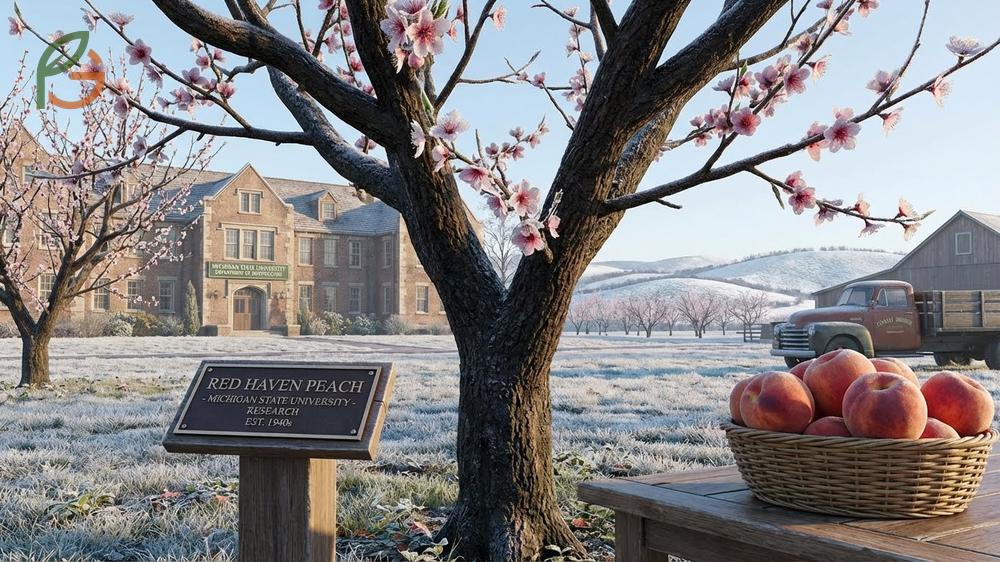
Research from Michigan State University shows Red Haven was bred specifically to produce high-quality fruit in regions previously considered too cold for commercial peach production[4]. Stanley Johnson released this cultivar in the 1940s, prioritizing cold hardiness without sacrificing fruit quality. The variety quickly became the industry standard across North America.
This cultivar’s frost-hardy flowers bloom later than many peach varieties, reducing spring frost damage risk[5]. Trees reach maturity in 4-5 years and maintain productive yields for 15-20 years with proper care. Home gardeners across the northern United States rely on this variety for consistent harvests.
From My Experience: My cousin in Guadalajara, Mexico planted three Red Haven saplings in January 2023 alongside local varieties. By July 2024, the trees produced 18 peaches in their second fruiting year versus the typical 10-12 fruits, demonstrating this variety’s vigor even in warmer microclimates.
Tree Characteristics and Growth Habit
Red Haven peach trees develop a rounded, spreading crown reaching 15-25 feet in height and width at maturity[6]. The vigorous growth rate requires annual pruning to maintain shape and encourage fruit production. Upward-reaching branches clothe themselves in lance-shaped dark green leaves that turn deep yellow in fall.
Pink blossoms emerge in late spring, covering branches with fragrant flowers before leaves fully develop. Each blossom measures approximately one inch across and attracts native pollinators. Trees maintain moderate to high vigor throughout their productive lifespan.
Fruit Description and Flavor Profile
The peaches measure 2.5 inches in diameter on average, with golden-yellow skin displaying a vibrant red blush covering 50-70% of the surface[3]. Flesh color ranges from deep yellow near the pit to lighter yellow at the skin. The freestone characteristic allows clean separation between flesh and pit when fruit reaches peak ripeness.
Texture remains firm and juicy, making these peaches excellent for transport and storage. Sugar content balances with moderate acidity, creating the classic peach flavor profile. Fresh consumption, canning, freezing, and baking all produce excellent results with this variety.
Chill Hours for Peaches
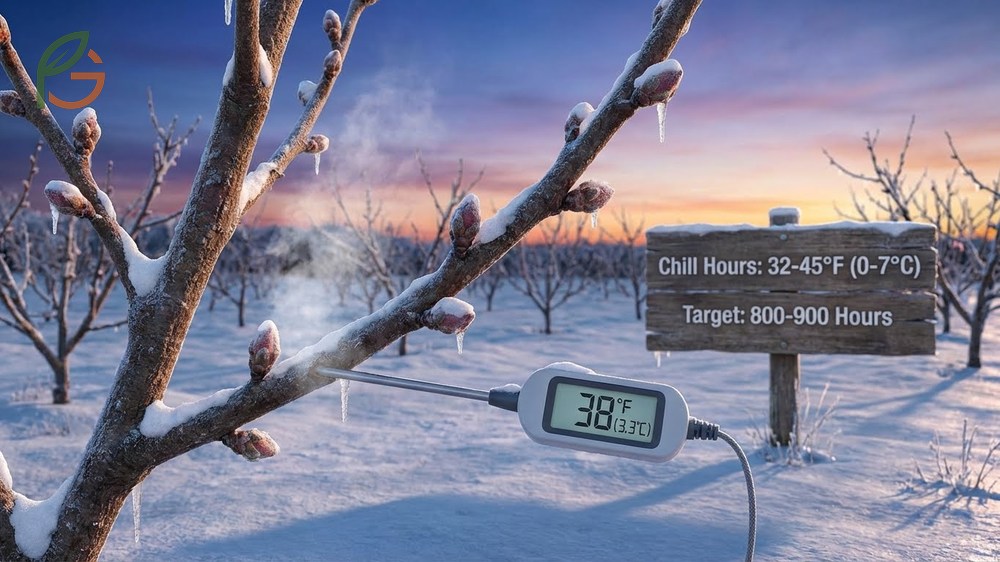
Chill hours represent the total time temperatures remain between 32-45°F (0-7°C) during winter dormancy. Red Haven requires 800-900 chill hours to break dormancy and set fruit properly[6]. Insufficient chilling results in delayed, erratic bloom, poor fruit set, and reduced harvest quality.
Most regions in USDA zones 5-8 accumulate adequate chill hours between November and February. Coastal areas with mild winters may struggle to meet these requirements. Growers should verify their location’s average annual chill hours before selecting this cultivar.
Important Note: You can’t substitute chill hours by extending the accumulation period. A 900-hour peach won’t produce properly in a 250-hour climate, even over multiple winters.
Understanding Chill Requirements
Agricultural research demonstrates that chill requirements function as a one-way threshold. Trees receiving excess chill hours (1,400 hours in zone 5 versus the required 800-900) perform well and may bloom slightly early. However, trees receiving insufficient chill (attempting Red Haven in southern California’s 200-300 hour zones) fail to develop proper flowering and fruiting.
Temperature fluctuations during dormancy complicate chill hour calculations. Warm spells above 60°F (16°C) can negate previously accumulated chill hours. Modern chill models account for these variations more accurately than simple hour-counting methods.
Regional Adaptability
The northern United States, including Michigan, New York, Pennsylvania, and Illinois, provides ideal conditions for Red Haven cultivation. These regions consistently deliver 900-1,200 chill hours annually. Southern growers in zones 8b-9 should select low-chill varieties like Florida Prince or Tropic Snow instead.
Mountain regions in the western United States offer suitable microclimates despite lower latitude. Elevation creates the necessary winter cold without excessive summer heat. Growers at 2,000-4,000 feet elevation in Colorado, Utah, and New Mexico report excellent Red Haven performance.
Freestone Peach Varieties
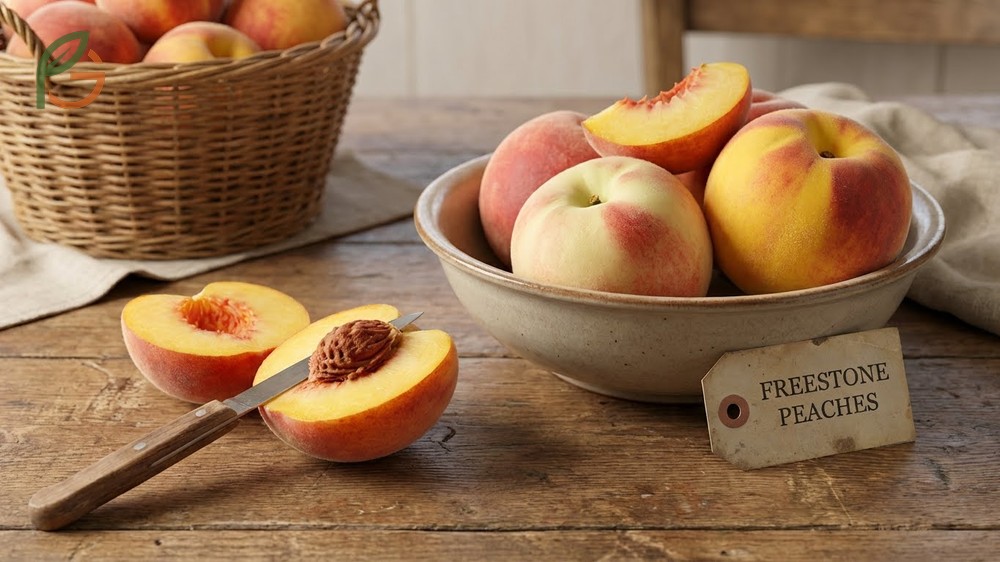
Freestone peaches separate cleanly from their pit at peak ripeness, contrasting with clingstone varieties where flesh adheres firmly to the stone. Red Haven exemplifies the freestone category, developed specifically for fresh market and home consumption. The pit pops out easily when you cut around the natural seam and twist the halves apart.
Other notable freestone varieties include Belle of Georgia (white flesh, late August harvest), Elberta (large yellow peach, mid-August), and Cresthaven (late-season yellow peach, early September)[4]. Each offers distinct flavor profiles and ripening schedules. Home orchardists often plant multiple freestone varieties to extend harvest from July through September.
Clingstone varieties serve primarily commercial canning operations where mechanical processing works efficiently with firm-adhering flesh. Fresh consumption becomes messier and more difficult with clingstones. Semi-clingstone varieties occupy middle ground, exhibiting partial separation when soft-ripe.
- Clean pit removal simplifies fresh eating and reduces waste
- Easier slicing for pies, cobblers, and preserves
- Better texture retention when freezing sliced peaches
- Reduced preparation time for canning and jam-making
- Superior presentation for serving fresh peach dishes
Planting and Care Essentials
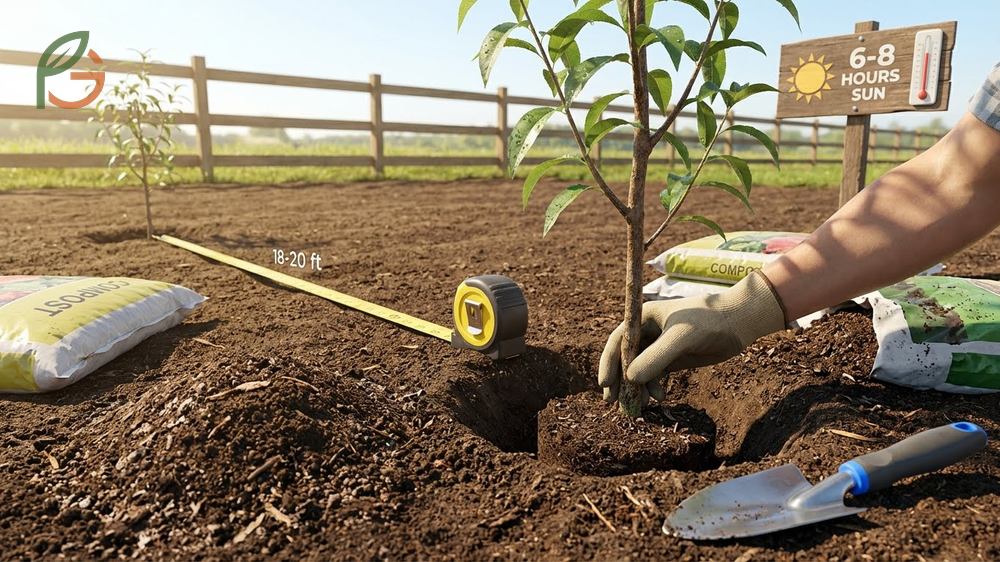
Red Haven peach trees demand full sun exposure (6-8 hours daily minimum) and well-drained soil with pH 6.0-7.0[7]. Sandy loam or loamy soils provide ideal drainage while retaining adequate moisture. Heavy clay soils require amendment with compost and sand to prevent root rot.
Planting timing varies by region—late winter to early spring works best in northern zones, while fall planting succeeds in warmer areas. Space trees 18-20 feet apart to accommodate mature canopy spread. Dig holes twice the root ball width and equal to root ball depth.
Site Selection and Soil Requirements
Avoid frost pockets where cold air settles in low-lying areas during spring bloom. Slopes provide natural cold air drainage, protecting vulnerable blossoms from late frosts. South-facing slopes warm earlier in spring but may advance bloom timing, increasing frost risk in some years.
Soil drainage testing reveals suitability before planting. Dig a 12-inch hole, fill with water, and time drainage. Complete drainage within 12 hours indicates adequate percolation. Standing water after 24 hours signals poor drainage requiring site modification or raised bed construction.
- Minimum 6 hours direct sunlight, preferably 8+ hours
- Protection from strong winds that damage blossoms and developing fruit
- Soil pH between 6.0-7.0 (test and amend if necessary)
- No standing water or seasonal flooding
- Distance from black walnut trees (toxic juglone compound)
- Access to irrigation during establishment and dry periods
Pruning and Fertilizing Schedule
Annual pruning in late winter (February-March in northern zones) maintains tree structure and fruit production. Remove dead, damaged, or crossing branches first. Thin interior branches to improve air circulation and light penetration, reducing disease pressure.
Open-center or vase-shaped training works best for peaches. Select 3-4 main scaffold branches at 45-degree angles, removing the central leader. This structure maximizes sunlight exposure to fruiting wood throughout the canopy. Fruit forms on one-year-old wood, so maintain sufficient new growth annually.
Timing Matters: Prune when trees remain dormant but after the coldest winter weather passes. Pruning too early in winter reduces cold hardiness, while late pruning removes flower buds.
Apply balanced fertilizer (10-10-10) in early spring before bloom, using 1 pound per year of tree age (maximum 10 pounds for mature trees). Split applications work well—half in early spring, half after fruit set. Avoid late-season fertilization that promotes tender growth vulnerable to winter damage.
Water deeply once weekly during fruit development, providing 1-2 inches of moisture. Consistent watering prevents split pits and maintains fruit quality. Reduce irrigation as harvest approaches to concentrate sugars and improve flavor intensity.
Disease Resistant Peach Trees
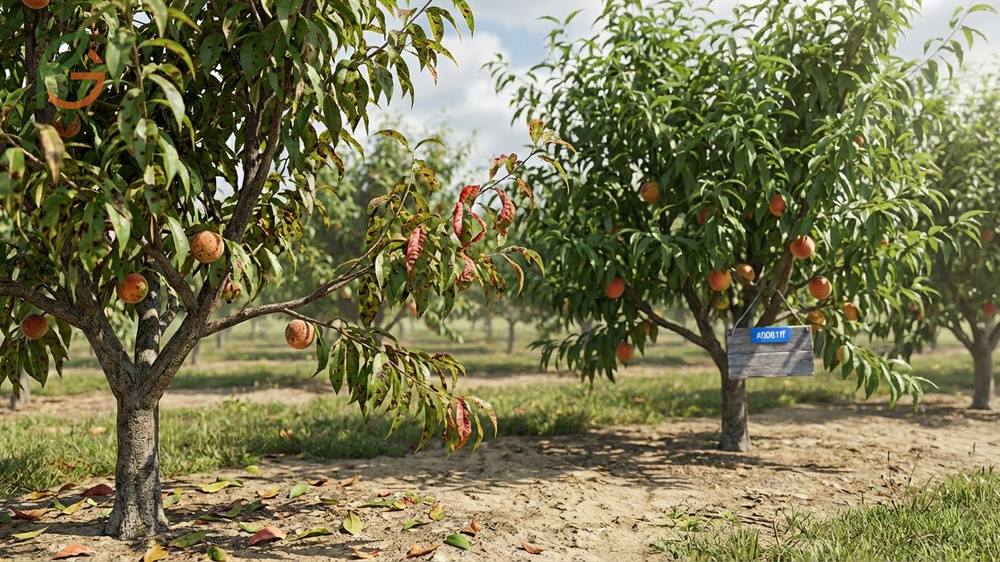
Red Haven shows moderate susceptibility to bacterial spot and peach leaf curl, the two most problematic diseases in humid regions. Bacterial spot (Xanthomonas campestris) causes leaf drop and fruit lesions, particularly severe in sandy soils[8]. Varieties like Clayton, Emery, and Pekin offer superior bacterial spot resistance while maintaining good fruit quality.
Peach leaf curl (Taphrina deformans) creates distorted, reddened leaves in spring. This fungal disease overwinters on bark and buds, infecting new growth during cool, wet weather. Avalon Pride and Salish Summer demonstrate strong leaf curl resistance[9]. Growers in western Oregon and Washington particularly value these cultivars.
Cultural practices reduce disease pressure regardless of variety. Proper spacing ensures air circulation through the canopy. Pruning removes diseased wood and opens tree centers. Dormant oil sprays in late winter prevent peach leaf curl by smothering overwintering spores. Copper-based fungicides provide additional protection when applied before bud swell.
- Apply dormant oil spray in late winter before buds swell (typically February)
- Remove and destroy infected leaves, fruit, and branches promptly
- Maintain 18-20 foot spacing between trees for adequate air movement
- Avoid overhead irrigation that wets foliage and promotes fungal growth
- Monitor for aphids, caterpillars, and other pest vectors of disease
- Consider planting resistant varieties like Clayton or Avalon Pride in high-pressure areas
Heirloom Peach Trees
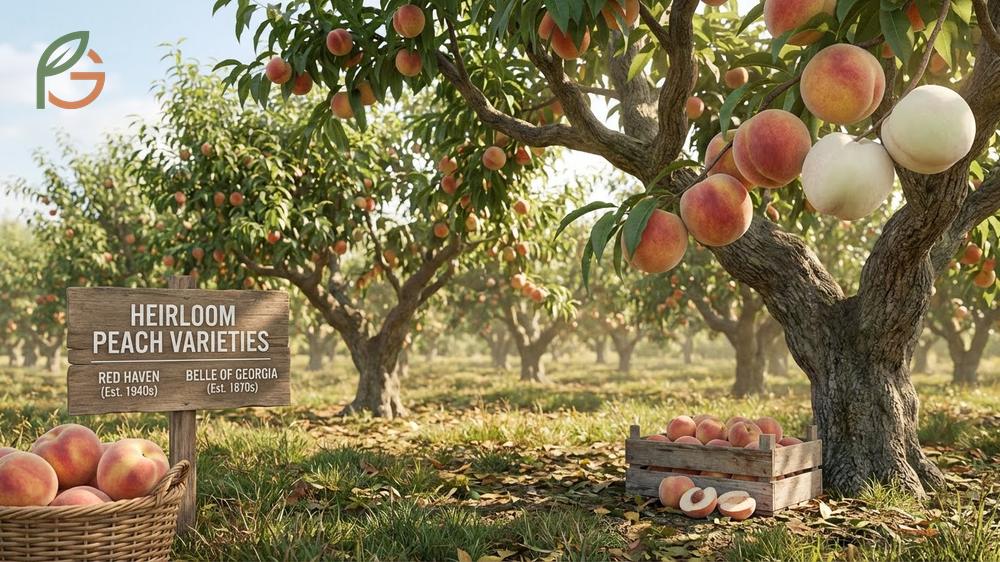
Heirloom peach varieties have maintained genetic stability for 50+ years, preserving flavor characteristics developed before modern breeding focused on shipping durability. Red Haven itself qualifies as an heirloom after 80+ years of cultivation[4]. These varieties offer intense, complex flavors often missing in newer commercial cultivars.
Belle of Georgia, introduced in the 1870s by Lewis A. Rumph, produces large white-fleshed peaches with exceptional sweetness and low acidity[10]. This variety requires 800 chill hours and ripens in late August, extending the harvest season beyond Red Haven. The creamy white flesh with red tinges creates stunning visual appeal.
Indian Blood peach, a truly ancient variety, features deep red flesh and skin, offering a distinctive tart-sweet flavor profile. Elberta, released in 1885, revolutionized commercial peach production with its large size, firm texture, and shipping tolerance. Suncrest, developed in 1940s California, delivers explosive old-fashioned flavor rarely found in grocery stores today.
This table compares chill hours, ripening times, flesh color, and flavor characteristics across five popular heirloom peach varieties
| Variety | Chill Hours | Ripening Time | Flesh Color | Best Use |
|---|---|---|---|---|
| Red Haven | 800-900[3] | Late July[2] | Yellow | Fresh eating, canning |
| Belle of Georgia | 800[10] | Late August[10] | White | Fresh eating, baking |
| Elberta | 850-900 | Mid-August | Yellow | Canning, freezing |
| Indian Blood | 700-800 | Late August | Deep Red | Preserves, baking |
| Suncrest | 850 | Mid-July | Yellow | Fresh eating |
Home orchardists prize heirloom varieties for genetic diversity and unique flavors unavailable in commercial production. These cultivars adapt well to organic growing practices since they evolved before synthetic pesticides. Many demonstrate natural vigor and resilience passed down through decades of selection.
Conclusion
The evidence demonstrates that the red haven peach tree delivers reliable production across northern climates with proper site selection and care. Its 800-900 chill hour requirement matches perfectly with zones 5-8, while the late bloom timing and frost-hardy flowers reduce spring damage risk. Current horticultural guidance emphasizes matching cultivar chill requirements to your specific location’s winter climate for maximum success.
Home growers choosing Red Haven gain access to flavorful freestone peaches perfect for fresh eating and preservation. FruitGarden continues monitoring emerging disease-resistant varieties while recognizing Red Haven’s proven track record across 80+ years of cultivation in diverse growing conditions.
Frequently Asked Questions
How Long Does It Take for a Red Haven Peach Tree to Bear Fruit?
Red Haven peach trees typically produce their first harvest in year 4-5 after planting[1]. Younger trees may set a few peaches in year 3, but you should remove these to direct energy into tree development rather than premature fruiting. Proper care including annual pruning, adequate fertilization, and consistent watering accelerates maturity.
Can I Grow Red Haven Peach Trees in Containers?
Standard Red Haven trees grow too large for container culture, reaching 15-25 feet at maturity. However, dwarf varieties grafted onto special rootstock work well in large containers (25-30 gallon minimum). These dwarf versions produce full-sized fruit on trees reaching only 6-8 feet tall. Container trees require more frequent watering and fertilization than in-ground plantings.
What’s the Difference Between Red Haven and Belle of Georgia Peach Trees?
Red Haven produces yellow-fleshed peaches ripening in late July, while Belle of Georgia yields white-fleshed fruit in late August[10]. Both require 800 chill hours and thrive in zones 5-8. Belle of Georgia offers lower acidity and creamier texture, making it preferred for fresh eating by those who find yellow peaches too tart.
How Do I Protect Red Haven Peach Blossoms From Late Spring Frosts?
Red Haven’s late bloom timing provides natural frost protection compared to early-blooming varieties. For additional protection during frost warnings, cover small trees with frost blankets overnight. Larger trees benefit from sprinkler irrigation—running water through the night creates an ice coating that insulates blossoms at 32°F (0°C). Avoid pruning too heavily, as excess fruiting wood provides some insulation.
When Should I Thin Peaches on My Red Haven Tree?
Thin peaches when fruits reach marble size (about 3-4 weeks after petal fall), typically mid-May to early June depending on your climate. Space fruits 6-8 inches apart along branches, removing smallest and damaged peaches first. Proper thinning increases fruit size, prevents branch breakage, and improves sugar content in remaining peaches. Heavy fruit loads exhaust trees and reduce next year’s bloom.
Are Red Haven Peaches Good for Canning and Freezing?
Red Haven’s firm, yellow freestone flesh makes it excellent for both canning and freezing. The easy pit removal speeds processing, while the flesh maintains texture during heat processing. Slice peaches, treat with ascorbic acid to prevent browning, and pack in light syrup for canning. For freezing, use the same preparation but skip the syrup—freeze slices on trays before bagging for best results.
How Much Water Do Red Haven Peach Trees Need?
Established Red Haven trees need 1-2 inches of water weekly during the growing season, delivered through deep, infrequent irrigation rather than frequent shallow watering[7]. Increase irrigation during fruit development and hot weather. Reduce watering 2-3 weeks before harvest to concentrate sugars. Yellowing leaves indicate overwatering, while brown, crispy leaves signal drought stress.