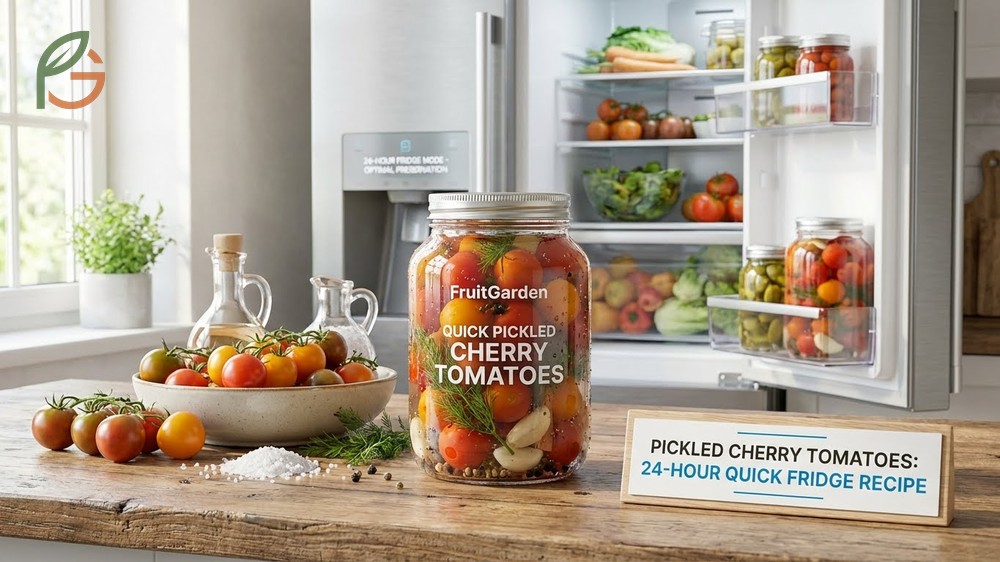
Pickled cherry tomatoes transform garden-fresh tomatoes into tangy refrigerator pickles in just 24 hours. Studies show the refrigerator pickle method preserves texture better than canning while requiring no special equipment. FruitGarden brings you this expert guide combining current food preservation research with practical home kitchen techniques.
Quick Answer
Pickled Cherry Tomatoes
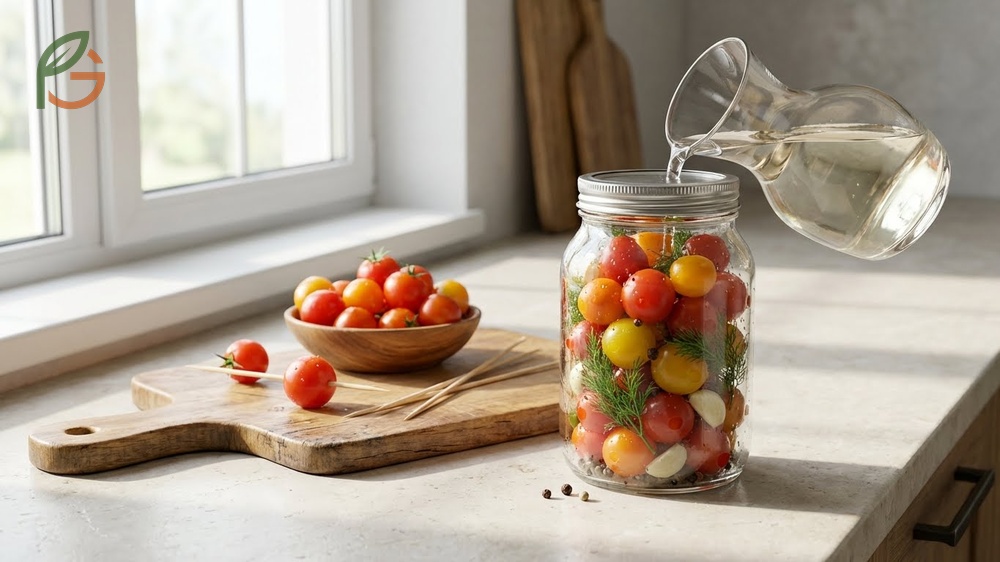
Research shows that cherry tomatoes retain superior texture when pickled using the refrigerator method compared to hot-pack canning. The cold brine penetrates slowly, creating crispy pickles without the mushiness that heat processing can cause. Most home picklers find this method ideal for small batches during peak tomato season.
The process starts with pricking each tomato 1-2 times with a toothpick or skewer. This allows the acidic brine to penetrate the skin and flavor the flesh. Unlike cucumbers, tomatoes have thicker skins that resist brine absorption without this preparation step.
Current food preservation data emphasizes maintaining proper acidity levels throughout the pickling process. The standard 1:1 vinegar-to-water ratio ensures pH levels stay below 4.6, preventing bacterial growth during refrigerated storage[2]. You can increase vinegar proportions, but never decrease them.
From My Experience: My cousin in Guadalajara, Mexico pickles cherry tomatoes from her rooftop garden every August. She discovered that yellow cherry tomatoes pickle faster than red varieties—they’re ready in 3 days versus the typical 5-7 day range for full flavor development.
Why the Refrigerator Method Works
The refrigerator pickle method skips heat processing entirely. You pour cooled or room-temperature brine over prepared tomatoes, seal the jar, and refrigerate. This preserves the tomatoes’ firm texture and bright color better than traditional canning.
Cold storage slows enzymatic activity that causes softening. Studies demonstrate that pickled vegetables stored at 35-40°F (2-4°C) maintain peak crispness for 8-12 weeks. Room temperature storage would require water bath canning for safety, which often makes tomatoes mushy.
Selecting the Right Tomatoes
Choose firm, ripe cherry or grape tomatoes without soft spots. Smaller tomatoes (under 1 inch diameter) pickle more evenly than larger varieties. Evidence suggests that slightly underripe tomatoes produce crispier pickles than fully ripe ones[4].
Mix colors for visual appeal—red, yellow, and orange varieties pickle identically. Wash tomatoes thoroughly and remove stems before pricking. One pint jar holds approximately 12-16 ounces of cherry tomatoes, depending on size.
Quick Pickle Recipe
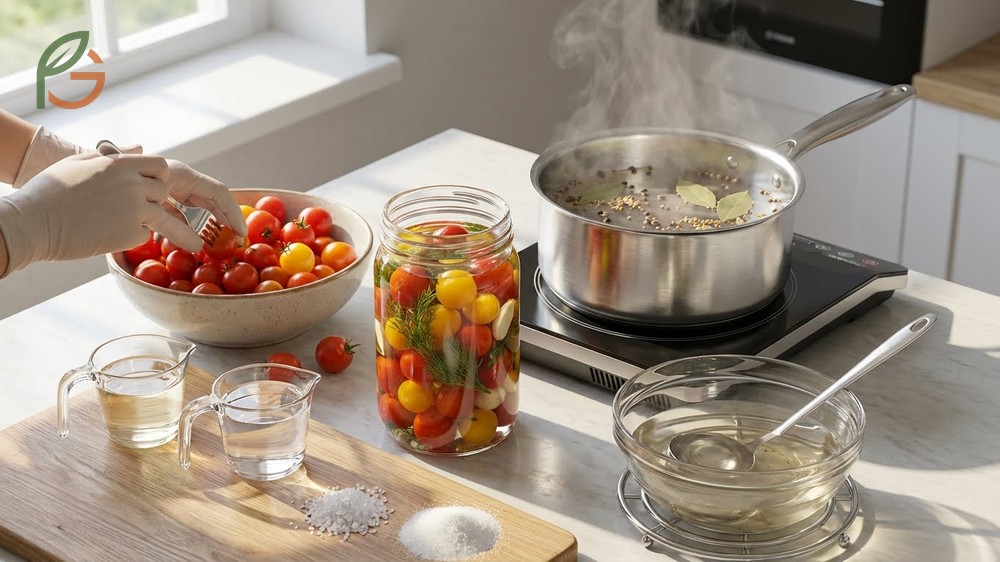
This tested recipe produces one pint of refrigerator pickled cherry tomatoes. The basic formula scales up easily—just maintain the 1:1 vinegar-to-water ratio and adjust spices proportionally. Most home cooks double or triple the recipe to preserve larger harvests.
Total preparation time runs 15-20 minutes, with most effort spent pricking tomatoes. The brine simmers for 5 minutes to dissolve salt and sugar, then cools before pouring. You’ll need one clean pint jar with a tight-fitting lid.
Ingredients You’ll Need
- 1 pint cherry tomatoes (12-16 oz), washed and stems removed
- ¾ cup white vinegar or apple cider vinegar (5% acidity)[3]
- ¾ cup water (filtered or tap)
- 1 tablespoon kosher salt or pickling salt
- 2 teaspoons granulated sugar (adjust to taste)
- 2-3 garlic cloves, peeled and halved
- 1 teaspoon whole black peppercorns
- 3-4 sprigs fresh dill, basil, or thyme
Important note: Don’t substitute homemade vinegar—commercial vinegar guarantees the 5% acidity needed for safe preservation. Check the label to confirm acidity percentage before purchasing.
Step-by-Step Instructions
Start by washing your pint jar and lid with hot, soapy water. Dry completely and set aside. Prick each cherry tomato 1-2 times with a wooden skewer or toothpick—this step is critical for brine penetration.
Place garlic halves, peppercorns, and half the fresh herbs in the bottom of the jar. Pack tomatoes into the jar, leaving ½ inch headspace at the top. Tuck remaining herb sprigs along the sides for better distribution.
Combine vinegar, water, salt, and sugar in a small saucepan. Bring to a boil over medium-high heat, stirring until salt and sugar dissolve completely (about 3-5 minutes). Remove from heat and let cool to room temperature—this prevents cooking the tomatoes.
Pour cooled brine over tomatoes until they’re completely submerged. Insert a chopstick or butter knife along the jar’s edge to release air bubbles. Top off with more brine if needed, maintaining ½ inch headspace.
Seal the jar tightly and refrigerate immediately. The tomatoes are technically safe to eat after 24 hours, but flavor develops best after 5-7 days of marinating[1]. Shake the jar gently every 1-2 days to redistribute spices.
Refrigerator Pickle Method
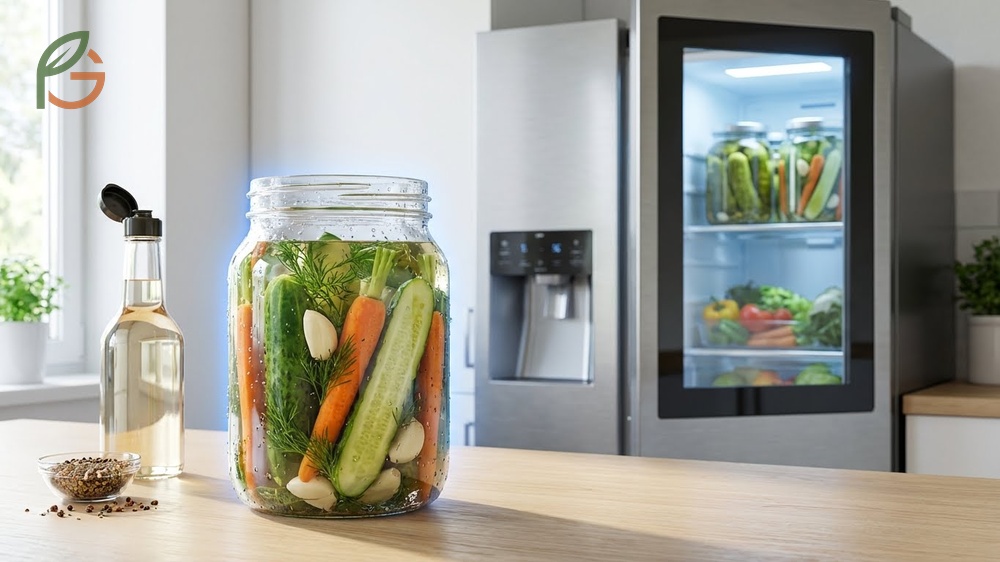
The refrigerator method represents the simplest preservation technique for pickled vegetables. Unlike water bath canning, it requires no pressure cooker, canning pot, or specialized equipment. You’re essentially creating a controlled acidic environment that inhibits microbial growth through refrigeration and vinegar.
Research demonstrates that refrigerator pickles maintain higher vitamin C content than heat-processed pickles. The cold method preserves heat-sensitive nutrients while still achieving food safety through acidity and cold storage. This makes refrigerator pickles nutritionally superior to their canned counterparts.
The trade-off is storage duration. Refrigerator pickles last 2-3 months versus 12-18 months for water bath canned pickles[1]. For most home gardeners with moderate tomato yields, this shorter storage window works perfectly.
Safety Guidelines
Always use clean jars and utensils to prevent contamination. Wash jars in hot, soapy water or run them through the dishwasher on the sanitize cycle. Dry completely before filling—moisture can dilute the brine and reduce acidity.
Keep pickled tomatoes fully submerged in brine at all times. Exposed portions can develop mold or off flavors. Use clean forks or tongs when removing tomatoes from the jar—never use fingers or previously used utensils.
- Maintain minimum 1:1 vinegar-to-water ratio for proper acidity[2]
- Use only 5-6% acidity commercial vinegar, never homemade[3]
- Store at 35-40°F (2-4°C) in the refrigerator at all times
- Discard if you notice cloudiness, mold, off-smells, or gas bubbles
- Label jars with the date pickled for rotation purposes
Equipment Needed
You’ll need pint or quart jars with tight-fitting lids. Mason jars work perfectly, but any clean glass jar with a non-reactive lid (plastic or coated metal) suffices. Avoid metal lids without coating—vinegar corrodes bare metal over time.
A small saucepan heats the brine. You’ll also need measuring cups, a wooden skewer or toothpick for pricking tomatoes, and a chopstick or knife for removing air bubbles. That’s the complete equipment list—no canning pot or special tools required.
Pro tip: Wide-mouth jars make packing tomatoes easier and allow better air bubble removal. Regular-mouth jars work fine but require more patience during filling.
Pickling Brine Recipe
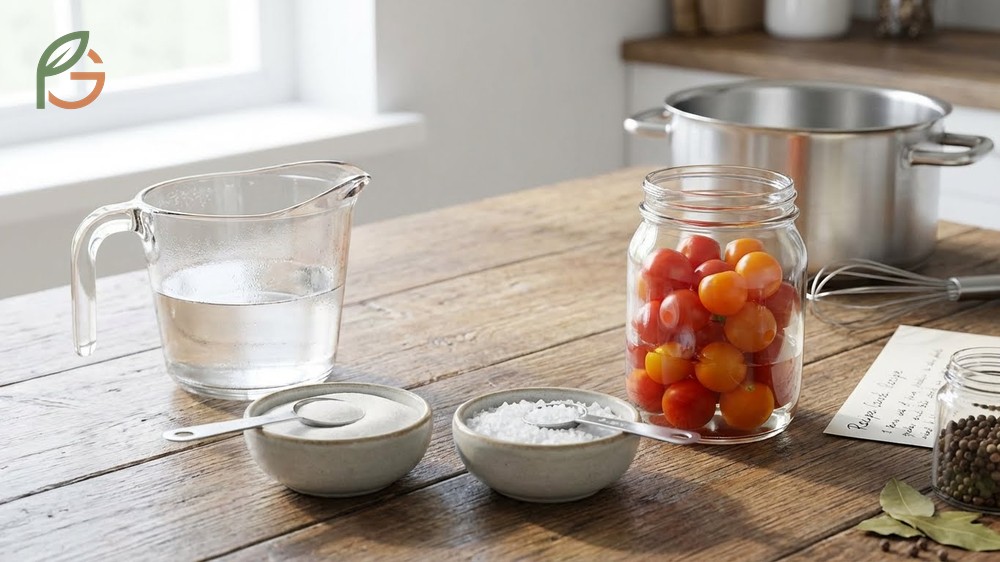
The standard pickling brine consists of equal parts vinegar and water, plus salt and sugar for flavor. This basic formula has been tested by university extension services nationwide for safety and quality. You can adjust sweetness and salt levels, but never reduce the vinegar proportion.
Most recipes call for 1-2 tablespoons salt per quart of brine. Sugar amounts vary from 1 teaspoon to ¼ cup, depending on desired sweetness. Cherry tomatoes are naturally sweet, so many picklers use minimal sugar to let the tomato flavor shine through.
Vinegar Choices
White distilled vinegar produces clear brine and sharp, clean flavor. It’s the standard choice for pickles where you want herb and spice flavors to dominate. Apple cider vinegar adds mellow, fruity notes and creates slightly amber-colored brine.
White wine vinegar or champagne vinegar work beautifully for gourmet pickles. Red wine vinegar colors the brine pink—use it if appearance isn’t a concern. Avoid balsamic vinegar in the brine (it’s too sweet and thick), though a splash can enhance serving presentation[1].
- White distilled: Sharpest flavor, clearest brine, most neutral base
- Apple cider: Fruity notes, amber color, slightly mellower acidity
- White wine: Delicate flavor, elegant finish, works with Mediterranean herbs
- Rice vinegar: Mild sweetness, good for Asian-inspired flavor profiles
- Red wine: Bold flavor, pink brine, pairs well with Italian herbs
Adjusting Sweetness and Salt
If the pickles taste too sour after your first batch, increase sugar rather than decreasing vinegar[3]. Adding 1-2 extra teaspoons of sugar balances acidity without compromising safety. Some recipes use up to 3 tablespoons sugar per pint for sweet pickles.
Salt serves both flavoring and preservation functions. Pickling salt or kosher salt work best because they lack anti-caking agents that cloud brine. If you’re watching sodium intake, you can reduce salt to ½ tablespoon per pint—the vinegar provides the actual preservation.
Storage Pickled Tomatoes
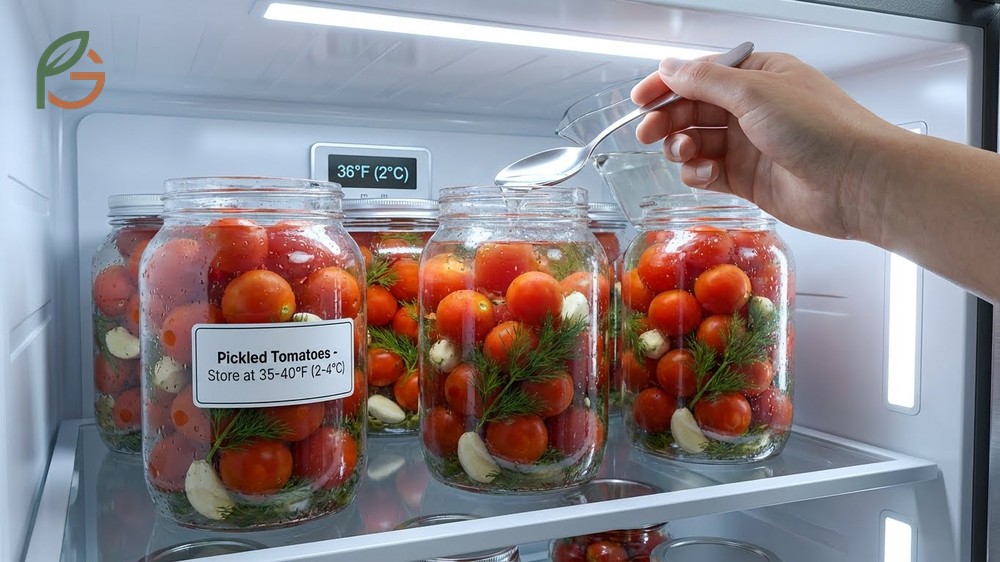
Store sealed jars in the refrigerator at 35-40°F (2-4°C) for optimal quality. Pickled cherry tomatoes maintain peak texture and flavor for 2-3 months when kept completely submerged in brine[4]. They remain safe to eat beyond this window, but texture gradually softens.
Check jars weekly for brine levels. If tomatoes become exposed, top off with fresh brine (same 1:1 vinegar-water ratio). This prevents mold growth on exposed surfaces. Always use clean utensils when adding brine or removing pickles.
Label jars with the pickling date. Rotate your stock by consuming older batches first. Most households find that pickled tomatoes disappear long before the 3-month mark—they’re that addictive as salad toppers, appetizers, or straight-from-the-jar snacks.
- Keep refrigerated at all times—never store at room temperature
- Store in the main refrigerator body, not the door (temperature fluctuates less)
- Use clean forks or tongs every time you remove pickles
- Return jar to refrigerator immediately after serving
- Discard entire jar if you see mold, cloudiness, or smell anything off
- Consume within 2-3 months for best texture and flavor
Warning: Never taste pickles that show signs of spoilage. When in doubt, throw it out—the ingredients cost less than a doctor visit.
Flavoring Pickled Tomatoes
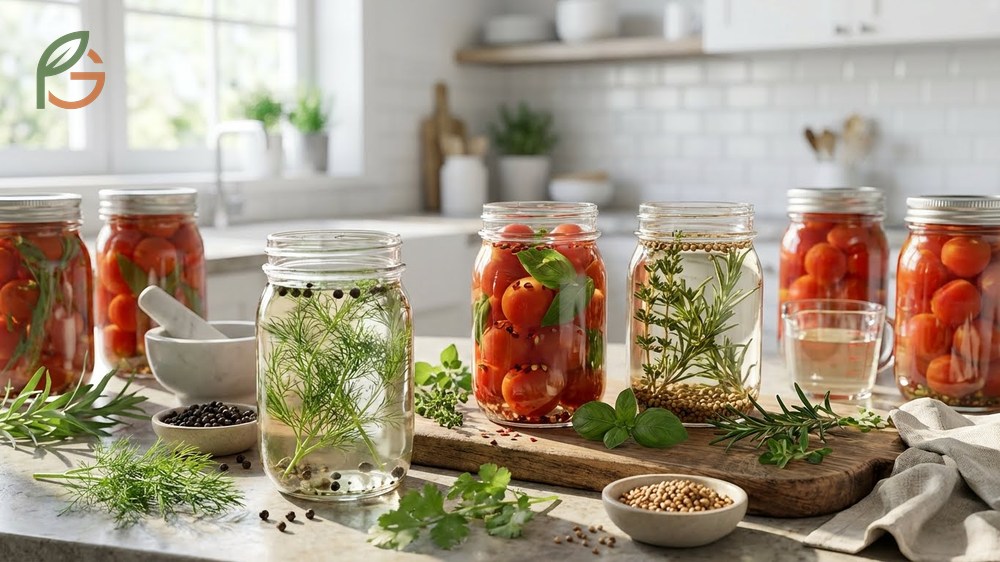
Fresh herbs transform basic pickled tomatoes into gourmet condiments. Dill creates classic dill pickle flavor, while basil adds Italian flair. Thyme, rosemary, oregano, tarragon, and cilantro all work beautifully[5]. Use 2-4 sprigs per pint jar, adding more if you want stronger herb presence.
Whole spices add complexity without overwhelming tomato flavor. Black peppercorns provide mild heat, while red pepper flakes bring serious kick. Coriander seeds add lemony notes, mustard seeds contribute sharpness, and fennel seeds impart subtle licorice flavor.
Garlic appears in nearly every pickled tomato recipe for good reason—it complements both the tomatoes and vinegar beautifully. Use 2-4 cloves per pint, peeled and halved or sliced. The garlic itself becomes deliciously pickled and works great in vinaigrettes or pasta dishes.
From My Experience: A friend in Oaxaca, Mexico adds dried chile de árbol to her pickled tomatoes. She uses 2-3 whole chiles per jar—they infuse the brine with smoky heat that intensifies over the 5-7 day marinating period, reaching perfect spice levels by day 7.
- Mediterranean: Basil, oregano, garlic, and lemon peel strips
- Classic dill: Fresh dill, garlic, mustard seeds, and black peppercorns
- Spicy: Red pepper flakes, jalapeño slices, garlic, and cilantro
- Herbes de Provence: Thyme, rosemary, lavender, and fennel seeds
- Asian-inspired: Ginger slices, garlic, Sichuan peppercorns, and rice vinegar
- Garden herb: Mix of parsley, chives, tarragon, and chervil
Experiment with different combinations to find your favorite. Start with the basic recipe, then adjust herbs and spices in subsequent batches. Keep notes on what you add so you can recreate winning combinations.
Conclusion
The evidence is clear: pickled cherry tomatoes deliver maximum flavor with minimum effort using the refrigerator pickle method. You’ll preserve your garden harvest in 15 minutes of active work, then enjoy tangy, crispy pickles for the next 2-3 months. Current food preservation guidelines emphasize the 1:1 vinegar ratio and 5% acidity requirements that keep these pickles safe without canning equipment.
Start with the basic recipe presented here, then customize with your favorite herbs and spices. FruitGarden encourages experimenting with different vinegar types and flavor profiles once you’ve mastered the fundamental technique—that’s when pickling transforms from preservation into culinary art.
Frequently Asked Questions
Do I need to blanch cherry tomatoes before pickling?
No, blanching isn’t necessary for refrigerator pickled cherry tomatoes. Simply wash, prick with a toothpick, and pack into jars. Blanching actually makes tomatoes mushy and is only required for certain canning methods.
Can I use tomatoes from the grocery store instead of homegrown?
Absolutely—grocery store cherry or grape tomatoes work perfectly. Choose firm, unblemished tomatoes regardless of source. The pickling process itself matters more than whether tomatoes are homegrown or store-bought.
How long do pickled cherry tomatoes last in the refrigerator?
Refrigerator pickled cherry tomatoes maintain best quality for 2-3 months when stored at 35-40°F (2-4°C) and kept submerged in brine. They remain safe beyond this timeframe but gradually lose crispness over time.
Can I reduce the vinegar to make them less sour?
Never reduce vinegar below the 1:1 ratio with water—this compromises food safety. Instead, increase sugar by 1-2 teaspoons to balance the sour flavor. Adding more herbs also mellows perceived acidity without changing the brine ratio.
What’s the best way to use pickled cherry tomatoes?
Pickled cherry tomatoes shine in green salads, grain bowls, charcuterie boards, and antipasto platters. They also work beautifully chopped into potato salad, pasta salad, or served alongside grilled meats and fish. The pickled garlic from the jar makes excellent additions to vinaigrettes.
Can I can pickled cherry tomatoes for shelf-stable storage?
Yes, but you’ll need to follow tested water bath canning procedures from sources like the USDA Complete Guide or Ball Blue Book. Process pint jars for 10-15 minutes (adjust for altitude). Research shows canning makes tomatoes softer than the refrigerator method.
Why do I need to prick each tomato before pickling?
Pricking cherry tomatoes allows brine to penetrate the thick skin and flavor the flesh. Without this step, tomatoes remain bland inside even after weeks of marinating. Pierce each tomato 1-2 times with a toothpick or skewer before packing into jars.