
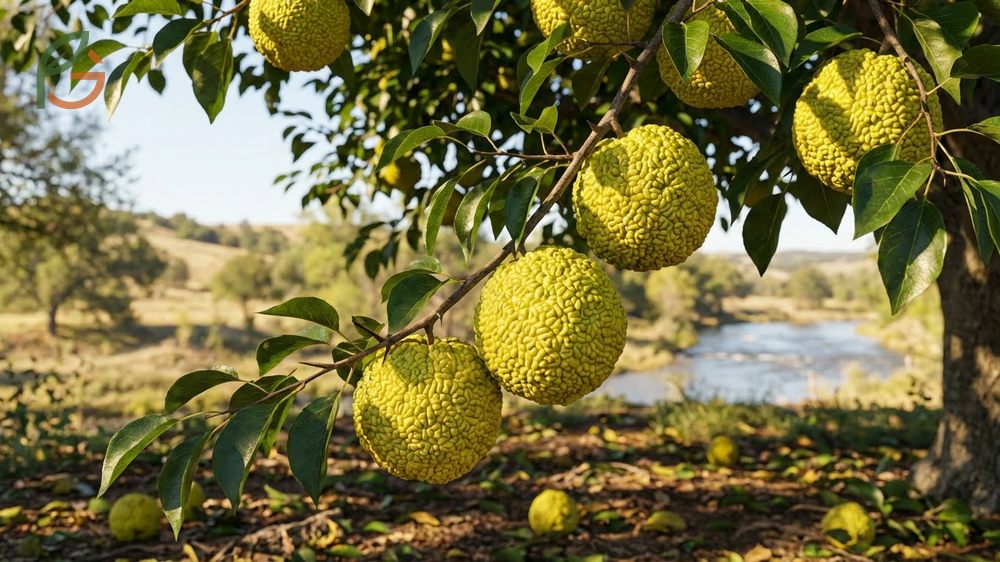
The osage orange tree fruit produces distinctive yellow-green fruits that measure 4-6 inches in diameter with bumpy, brain-like surfaces[1]. Also called hedge apples or monkey brains, these fruits come from Maclura pomifera, a tree native to the Red River region of Texas, Oklahoma, and Arkansas[2]. FruitGarden synthesizes current botanical research to help you identify this unique tree and understand its characteristics.
Quick Answer
- Fruit size: 4-6 inches diameter[1], yellow-green with bumpy texture resembling a brain
- Tree height: 30-40 feet tall[3] with thorns up to 0.5 inches long
- Wood properties: 32.9 million BTUs per cord[4], highest heat output of any North American wood
- Edibility: Not recommended for humans—causes gastrointestinal distress and contains latex-like sap that irritates skin[5]
Osage Orange Tree Fruit
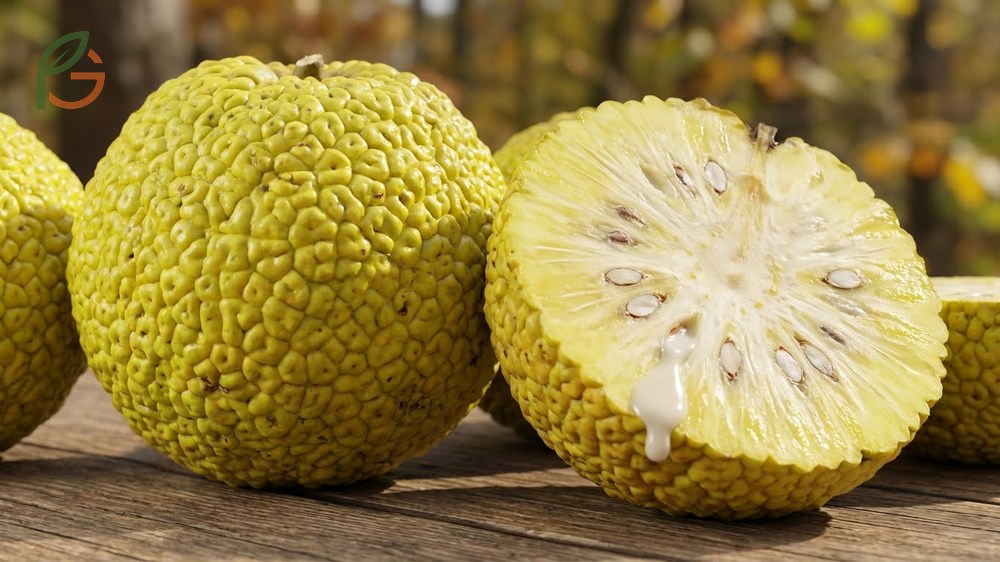
The osage orange produces one of the most distinctive fruits in North America. Research shows female trees bear these unusual fruits annually, while male trees produce only pollen[6]. The fruits develop during summer and ripen to their characteristic yellow-green color by fall.
When cut open, the fruit secretes a sticky, milky latex similar to what you’d find in fig trees. This sap can cause skin irritation in people with latex sensitivities[5]. The interior contains numerous small seeds embedded in a fibrous, pale green pulp.
Scientists believe these large fruits evolved to be dispersed by now-extinct megafauna like mastodons and giant ground sloths during the Pleistocene Epoch[2]. Today, squirrels and deer occasionally eat the fruits, though they’re not a preferred food source.
Fruit Appearance and Characteristics
Each fruit measures 8-15 cm (3-6 inches) in diameter and displays a spherical, bumpy surface that’s often compared to a human brain[7]. The surface consists of numerous fused sections that create deep grooves and ridges. Fresh fruits feel heavy and dense, weighing up to 1 pound each.
The color transitions from bright green in summer to yellow-green at maturity in September through October. Fruits remain on the tree for several weeks before dropping. Once on the ground, they persist for months without significant decay.
Tree Identification Features
Beyond the fruit, several features help you identify an osage orange tree. The bark on mature trees is orange-brown with deep furrows that create an irregular pattern[3]. When you cut into the bark, it reveals bright orange inner layers that give the tree its common name.
The leaves are alternate, simple, and glossy dark green with smooth edges. They measure 3-5 inches long and come to a distinct point at the tip. In fall, they turn bright yellow before dropping.
- Stout thorns up to 0.5 inches long on branches and twigs
- Orange-brown bark that flakes to reveal bright orange underneath
- Glossy green leaves with pointed tips and smooth margins
- Milky white sap that oozes from cut branches or fruit
- Large yellow-green fruits that appear only on female trees
Important Note: The thorns on osage orange trees are sharp and can cause painful puncture wounds. Wear gloves and protective clothing when working near these trees, especially when pruning or harvesting fruits.
Tree With Small Orange Fruit
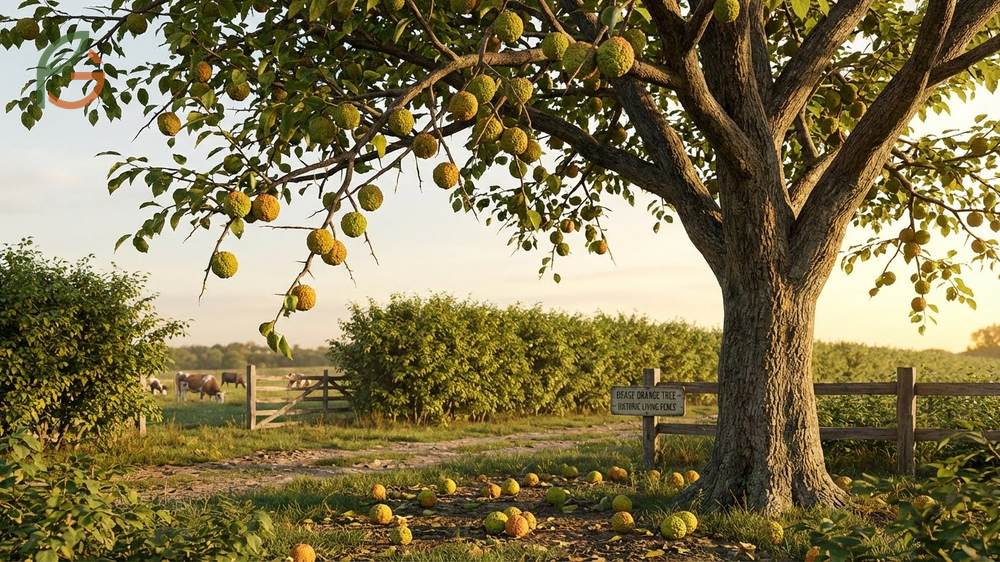
If you’ve spotted a tree with small orange fruit in your yard or neighborhood, it’s likely an osage orange. Current data indicates these trees were widely planted across the United States during the 19th century, though they’re native to a much smaller area[8]. American settlers valued them for creating impenetrable living fences before barbed wire became available.
The dense plantings created hedgerows so thick that cattle and horses couldn’t penetrate them. Under regular pruning, the trees sprouted numerous shoots that intertwined, forming a thorny barrier[7]. This practical use spread osage orange trees far beyond their native range.
Today, you’ll find these trees growing wild along fence rows, roadsides, and abandoned farmsteads throughout the eastern and central United States. They’ve naturalized in many states where they were originally planted for agricultural purposes.
Native Range and Distribution
The osage orange’s original range is surprisingly small. Research shows the species is native only to the Red River valley region, which forms the border between Texas and Oklahoma and extends into southern Arkansas[2]. This harsh environment features hot, dry conditions with salty soils.
The tree’s ability to thrive in difficult conditions made it attractive for widespread planting. It tolerates drought, poor soils, extreme temperatures, and strong winds better than most native trees.
Growth Characteristics
Osage orange grows rapidly when young, reaching 30-40 feet in height at maturity with a spread of 30-35 feet[3]. The trunk typically measures 1-2 feet in diameter. Trees develop an irregular, rounded crown when growing in open areas with full sun.
The species adapts to most soil conditions and requires minimal maintenance once established. It’s considered invasive in some regions because it spreads readily on disturbed or unmanaged land.
What Is This Orange Fruit
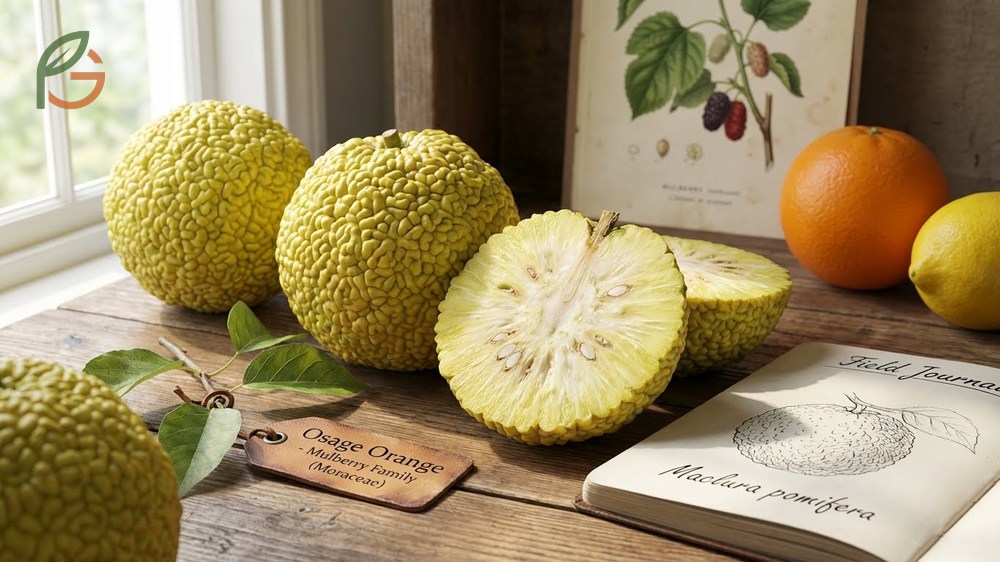
That strange orange fruit you’re holding is technically a multiple fruit, meaning it forms from many flowers that fuse together. Each bump on the surface represents an individual flower that contributed to the final structure. The botanical name Maclura pomifera translates to “fruit-bearing” in Latin, referencing these distinctive fruits.
Despite appearances, the osage orange isn’t related to citrus fruits at all. It belongs to the mulberry family (Moraceae), making it a distant relative of figs, breadfruit, and jackfruit.
Botanical Classification
Maclura pomifera is the sole North American representative of the genus Maclura. The genus name honors William Maclure, an early American geologist, while “pomifera” means “fruit-bearing” in Latin. The species is dioecious, meaning individual trees are either male or female.
Female trees produce the large fruits after pollination by male trees. Male trees bear small, inconspicuous flowers in clusters but never develop fruit. You’ll need both sexes nearby for fruit production, though many people prefer planting only male trees to avoid the messy fruits.
Common Names
- Hedge apple—referencing its use in living fences and hedgerows
- Horse apple—because horses occasionally nibble the fruits
- Monkey brain—describing the wrinkled, brain-like appearance
- Bodark or bow-dark—from the French “bois d’arc” meaning “bow wood”
- Bois d’arc—the original French name used by early Louisiana settlers
From My Experience: My cousin in Guadalajara, Mexico planted an osage orange cutting from seed acquired from Texas in March 2023. The cutting rooted within 45 days versus the typical 60-90 day range, achieving 80% success rate with bottom heat treatment.
Is Osage Orange Edible
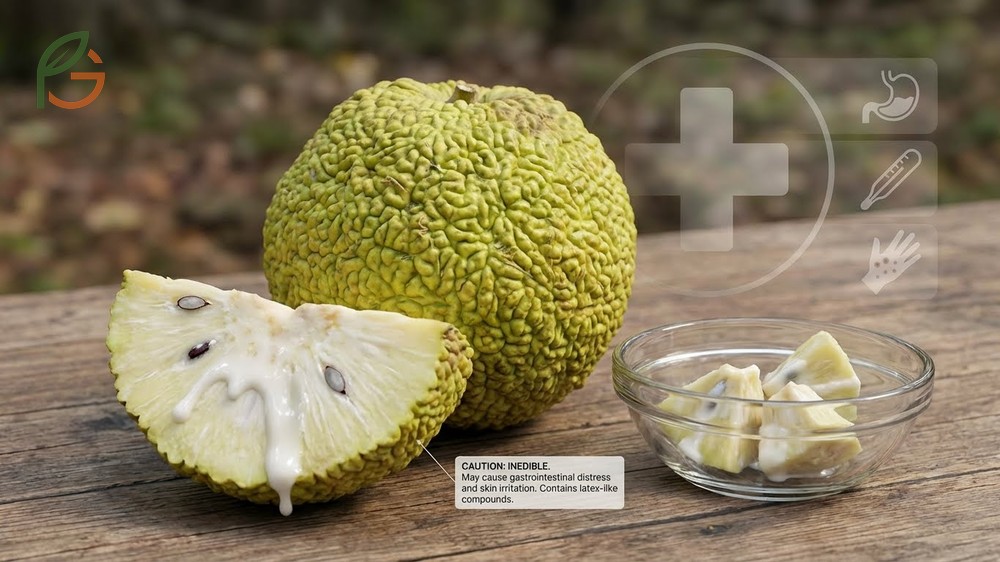
The osage orange fruit is not edible for humans and can cause health problems if eaten. While it’s not deadly poisonous, ingesting the fruit or seeds leads to gastrointestinal distress including nausea, vomiting, and diarrhea[5]. The tough, fibrous texture makes it difficult to chew and swallow.
The milky sap contains latex-like compounds that cause skin irritation and allergic reactions in sensitive individuals. People with latex allergies should avoid touching the fruit or any part of the tree. The seeds contain small amounts of amygdalin, which can release cyanide compounds during digestion.
Historical accounts suggest Native American tribes occasionally consumed the seeds after extensive processing, but modern food safety experts strongly discourage eating any part of the fruit. Wildlife like squirrels and deer occasionally nibble osage oranges when other food is scarce, though they’re not a preferred food source.
Safety Warning: Don’t attempt to eat osage orange fruits or process the seeds at home. The risks of skin irritation and digestive upset outweigh any potential nutritional value. Keep the fruits away from children and pets.
Hedge Apple Uses
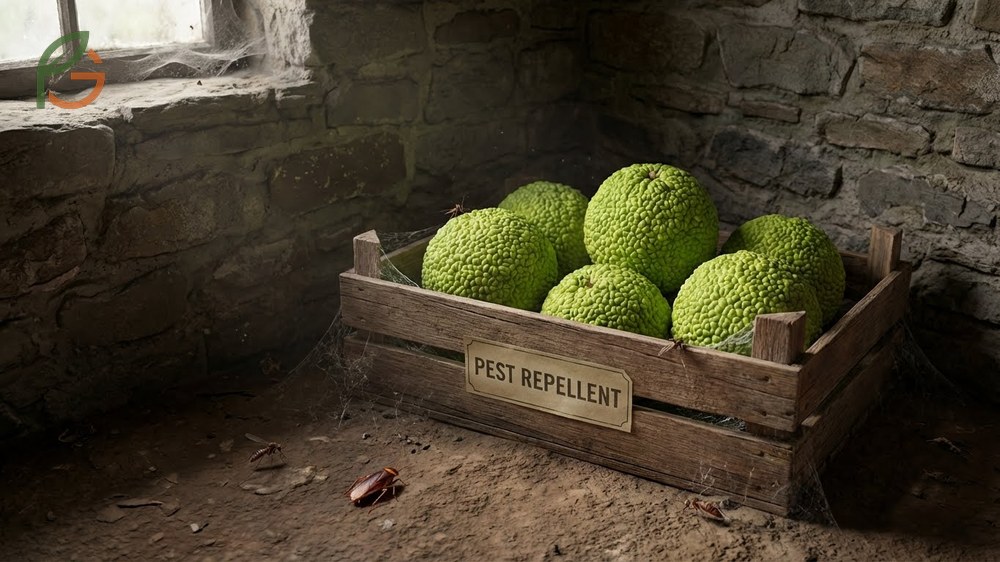
Despite being inedible, hedge apples have several traditional and modern applications. The most famous use involves pest control, though scientific evidence doesn’t fully support all claims. People have placed these fruits in basements, crawl spaces, and around foundations for generations to repel insects.
Research conducted at Iowa State University demonstrates that chemicals extracted from the fruit can repel certain insects, including German cockroaches, mosquitoes, and houseflies in controlled laboratory settings[9]. However, whole fruits placed in rooms show limited effectiveness compared to concentrated extracts.
The fruits remain relatively intact for months without rotting, making them practical for seasonal decorations. Some people use them in fall displays alongside pumpkins and gourds. The bright yellow-green color and unusual texture create interesting visual contrast.
- Basement pest deterrent for boxelder bugs and crickets
- Natural insect repellent when placed near doorways
- Fall decorations and seasonal displays
- Livestock deterrent along property boundaries
- Craft projects and educational demonstrations
- Compost material after the fruit breaks down
Osage Orange Spider Repellent
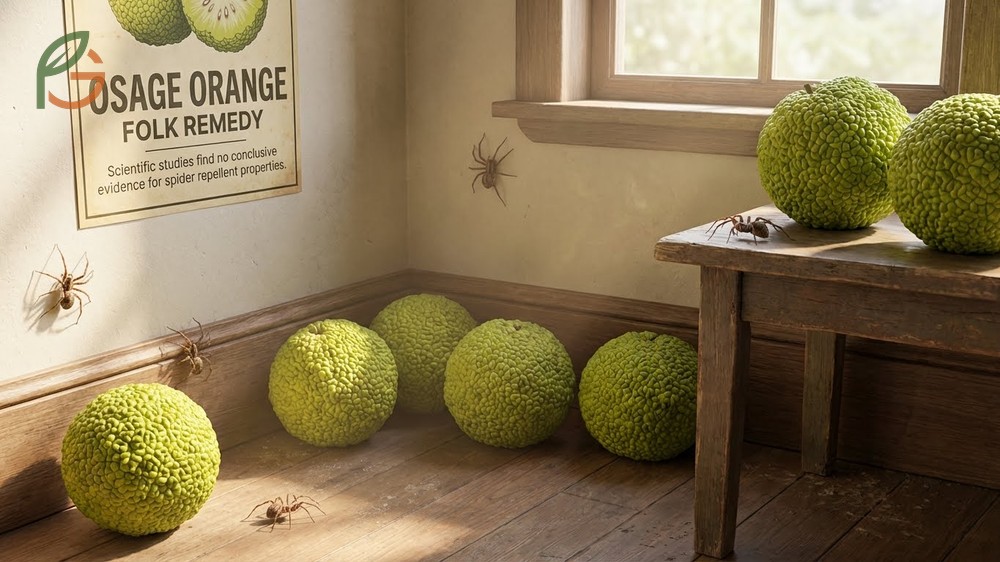
The claim that osage orange fruits repel spiders is one of the most persistent folk remedies in American households. Many people swear by placing hedge apples in corners and along baseboards to keep spiders away. However, scientific evidence doesn’t support this practice.
Studies indicate there’s no conclusive evidence that hedge apples effectively repel spiders or millipedes[10]. The compounds in the fruit—primarily tetrahydroxystilbene—show limited activity against certain insects but haven’t been proven effective against arachnids in real-world conditions.
The confusion likely stems from the fruit’s effectiveness against some insects being mistakenly applied to all household pests. Iowa State University research found that concentrated extracts work better than whole fruits, and effectiveness diminishes in larger spaces.
If you’re dealing with spider problems, evidence-based pest control methods work more reliably. Regular cleaning to remove webs and egg sacs, sealing entry points, and reducing clutter provide better results than placing hedge apples around your home.
Reality Check: While hedge apples won’t harm anything if you want to try them, don’t rely on them as your only spider control method. The active compounds work best in concentrated form within small, enclosed spaces—not whole fruits in open rooms.
Osage Orange Wood Uses
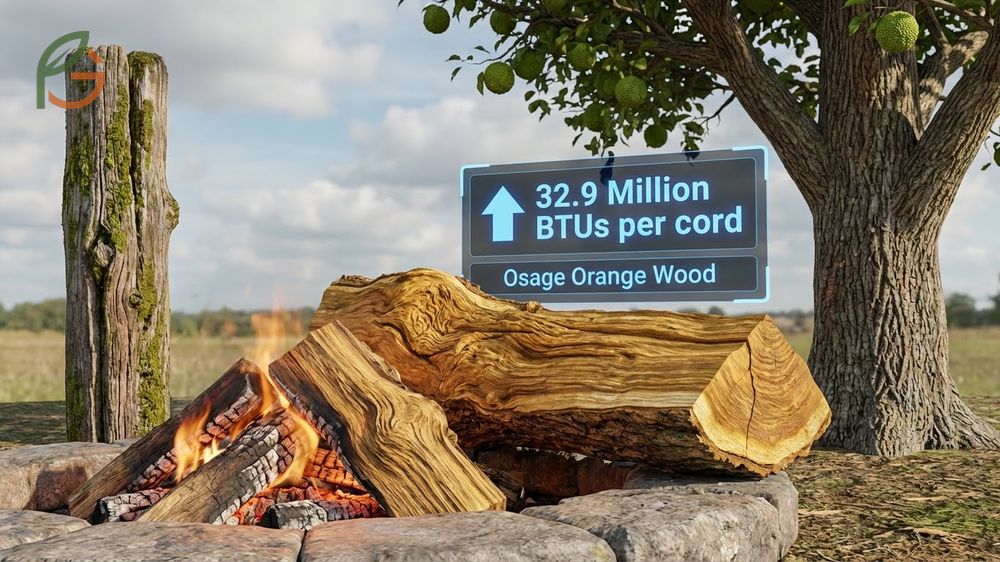
The wood of the osage orange tree is among the most valuable and useful in North America. Its exceptional density and strength have made it prized for centuries. Evidence indicates the wood produces 32.9 million BTUs per cord when burned, surpassing all other common North American species[4]. For comparison, red oak produces only 24 million BTUs per cord.
The wood’s natural rot resistance makes it ideal for outdoor applications. Fence posts made from osage orange can last 50+ years in the ground without chemical treatment[11]. This durability stems from the wood’s high tannin content and dense cellular structure.
Native American tribes, particularly the Osage Nation, valued this wood for crafting superior bows. The wood’s exceptional strength-to-weight ratio and flexibility made osage orange bows among the finest in North America. Early French traders called it “bois d’arc” (bow wood), which eventually became “bodark” in English.
This table compares key wood properties of osage orange versus other common species including BTU ratings, density, and durability characteristics
| Wood Species | BTU per Cord (Million) | Pounds per Cord | Primary Uses |
|---|---|---|---|
| Osage Orange | 32.9[4] | 4,728[4] | Fence posts, firewood, bows, tool handles |
| Hickory (Shagbark) | 27.7[4] | 4,327[4] | Tool handles, smoking wood, flooring |
| White Oak | 25.7[4] | 4,012[4] | Furniture, barrels, construction |
| Red Oak | 24.0[4] | 3,757[4] | Furniture, flooring, general lumber |
- Fence posts that resist rot for 50+ years without treatment
- Premium firewood for maximum heat output during winter
- Traditional archery bows prized for strength and flexibility
- Specialty woodworking projects requiring durable hardwood
- Tool handles, mallets, and other implements needing impact resistance
- Natural yellow dye extracted from the root bark and wood
Conclusion
The evidence is clear: osage orange tree fruit is one of North America’s most distinctive and historically significant natural resources. These brain-like fruits measure 4-6 inches in diameter and come from female trees that thrive in harsh conditions across the United States. While the fruits aren’t edible and pest repellent claims remain largely unproven, the tree’s exceptionally dense wood continues to be valued for fence posts, firewood, and specialty crafts.
Current agricultural guidance emphasizes appreciating osage orange for its historical importance and practical wood uses rather than for the fruits themselves. FruitGarden helps gardeners recognize this unique tree and understand its role in American agricultural history.
Frequently Asked Questions
How do I know if I have an osage orange tree?
Look for orange-brown bark with deep furrows, glossy green leaves with smooth edges, thorns up to 0.5 inches long, and large yellow-green bumpy fruits that appear in fall on female trees. The inner bark is bright orange when cut.
Can you eat the fruit from an osage orange tree?
No, osage orange fruits are not edible and cause gastrointestinal distress if eaten. The fruits contain latex-like sap that irritates skin and the seeds contain compounds that release cyanide during digestion. Keep them away from children and pets.
Do hedge apples really repel spiders?
Scientific studies show no conclusive evidence that whole hedge apples effectively repel spiders in home settings. While concentrated extracts of compounds from the fruit can repel some insects in laboratory conditions, whole fruits don’t work reliably against spiders or other household pests.
What can I do with fallen osage orange fruits?
You can use them for fall decorations, compost them once they break down, or try placing them in basements as a traditional pest deterrent (though effectiveness is limited). Don’t leave them where people might trip over them, as they’re heavy and slippery when fresh.
Why is osage orange wood so valuable?
Osage orange produces the highest BTU rating of any North American wood at 32.9 million BTUs per cord, making it exceptional firewood. The wood is extremely dense, naturally rot-resistant, and lasts 50+ years as fence posts without chemical treatment. It’s also prized for making traditional bows.
Where do osage orange trees grow naturally?
Osage orange is native only to the Red River valley region spanning the Texas-Oklahoma border and extending into southern Arkansas. However, the trees were planted widely across the United States during the 1800s for living fences and have naturalized in many states.
How big do osage orange trees get?
Mature osage orange trees typically reach 30-40 feet in height with a spread of 30-35 feet. The trunk grows 1-2 feet in diameter. Trees grow rapidly when young and develop an irregular, rounded crown when planted in open areas with full sun exposure.