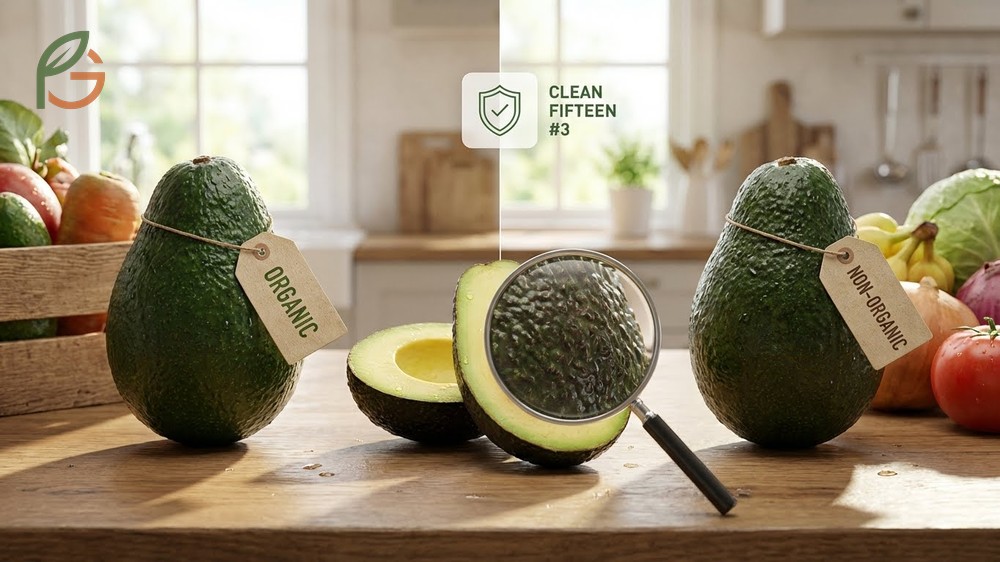
Organic vs. non-organic avocado differences are minimal when it comes to safety and nutrition. Research shows avocados consistently rank #3 on the Environmental Working Group’s Clean Fifteen list, with less than 2% of conventional samples showing any detectable pesticide residues[1]. What often gets overlooked is that the thick, inedible skin acts as a natural barrier that keeps pesticides from reaching the creamy flesh you actually eat. FruitGarden synthesizes current agricultural research and safety data to help you make informed decisions about which avocados deliver the best value for your garden and kitchen.
Quick Answer
- Conventional avocados are safe: less than 2% have detectable pesticide residues[1]
- Organic avocados cost 30-60% more than conventional varieties[2]
- Nutritional content is virtually identical between organic and conventional avocados
- The thick skin provides excellent protection, keeping pesticides away from the edible flesh
Organic vs. Non-Organic Avocado
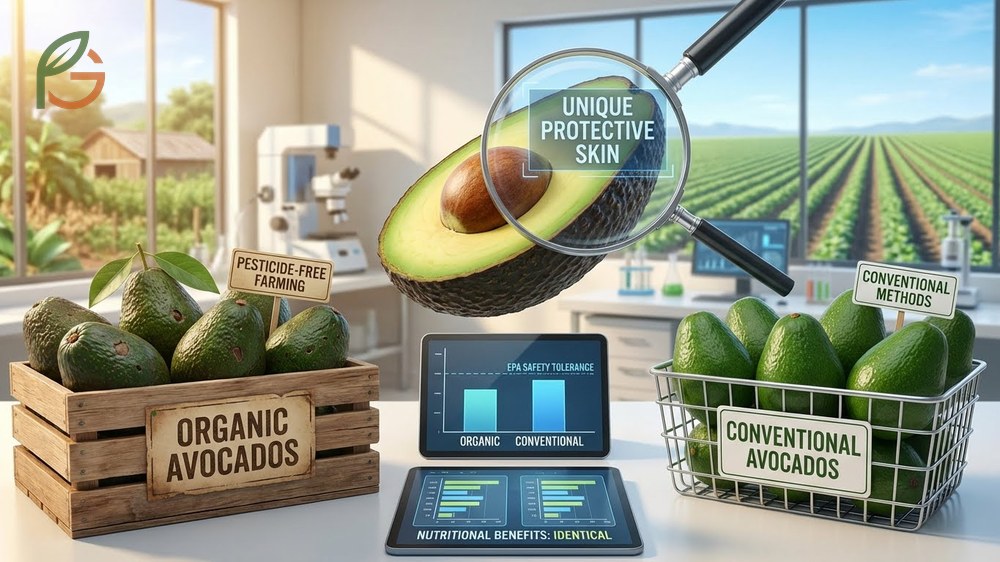
The debate between organic and conventional avocados centers on pesticide exposure, farming methods, and cost. USDA testing shows that over 99% of produce samples, including avocados, contain pesticide residues below EPA-established safety tolerances[3]. Current data indicates that both types deliver identical nutritional benefits.
What sets avocados apart from other produce is their unique protective skin. Unlike strawberries or spinach that top the Dirty Dozen list, avocados don’t absorb pesticides into the flesh you consume. This makes the organic versus conventional choice less critical from a health standpoint.
Most people don’t realize that farming practices differ more in approach than in final product quality. Organic avocado farms use natural pest control methods and organic fertilizers, while conventional farms rely on synthetic pesticides approved by the EPA. Both methods produce avocados that meet strict federal safety standards.
Nutrition Comparison
Studies demonstrate that organic and conventional avocados provide the same nutritional profile. You’ll get approximately 15 grams of healthy monounsaturated fats, 7 grams of fiber, and 485 milligrams of potassium per 100-gram serving regardless of which type you choose. The vitamins K, E, C, and B-complex content remains consistent across both varieties.
Some research suggests organic produce may contain slightly higher antioxidant levels, but for avocados, this difference is negligible. The reason is simple: the thick skin prevents most environmental factors from affecting the flesh’s nutrient composition during growth.
Farming Practices
Organic avocado cultivation prohibits synthetic pesticides, using only USDA-approved natural alternatives like neem oil or copper-based fungicides. Conventional farms can use a broader range of EPA-registered pesticides, applied according to strict timing and dosage regulations. Both systems require regular inspections and compliance with food safety standards.
Water usage differs between the two methods. Organic farms often implement drip irrigation and soil monitoring systems that optimize water consumption. Conventional operations use similar technologies but may also employ synthetic fertilizers that require less frequent application than organic alternatives.
Important Note: Whether you choose organic or conventional, always wash avocados under running water before cutting. This removes any surface residues and prevents bacteria from transferring to the flesh when you slice through the skin.
Pesticide Residue Avocados
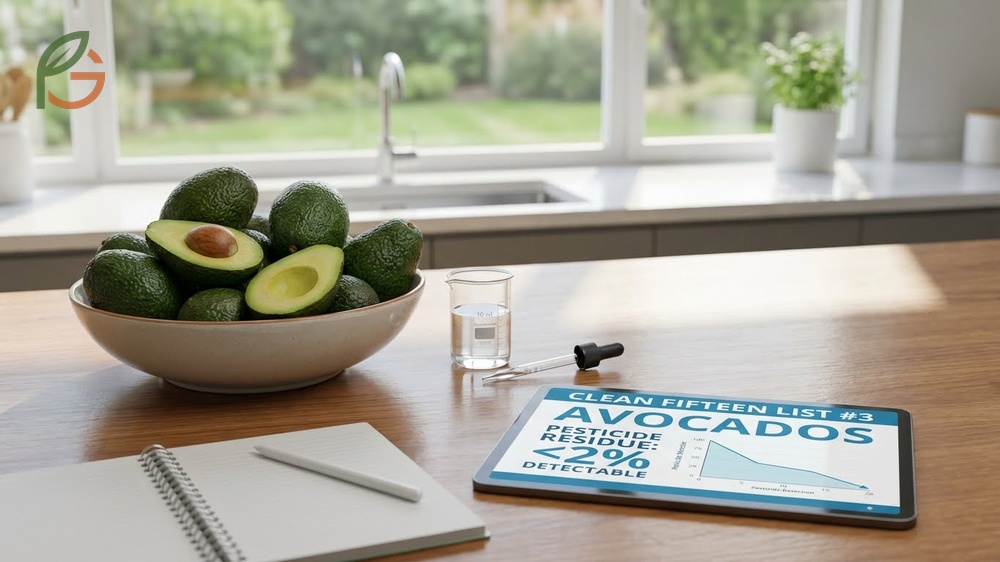
Research shows avocados rank among the cleanest produce items available in U.S. grocery stores. The Environmental Working Group’s 2025 analysis placed avocados at #3 on the Clean Fifteen list, meaning they’re among the 15 fruits and vegetables with the lowest pesticide contamination[4]. This ranking comes from testing over 53,000 samples of 47 different produce types.
Testing reveals that less than 2% of conventional avocado samples show any detectable pesticide residues at all[1]. When residues do appear, they’re found almost exclusively on the outer peel that gets discarded. The edible flesh consistently tests at extremely low or non-detectable levels.
Compare this to high-residue crops like strawberries, where 99% of samples contain detectable pesticides, or spinach, which averages 1.8 times more pesticide residue by weight than any other tested crop[1]. Avocados sit at the opposite end of this spectrum, making them one of the safest conventional produce choices available.
Clean Fifteen Ranking
The Clean Fifteen list evaluates produce using four key metrics: frequency of pesticide detection, number of different pesticides found, average concentration levels, and toxicity of detected pesticides. Avocados excel in all four categories. Nearly 70% of Clean Fifteen produce samples showed no detectable pesticide residues whatsoever[1].
The 2025 Clean Fifteen includes pineapples, sweet corn, and avocados in the top three positions. These fruits share a common trait: thick, inedible outer layers that you remove before eating. This natural barrier provides built-in protection against pesticide penetration.
When avocado samples do test positive for pesticides, they typically show three or fewer different pesticides per sample[1]. Compare this to kale, where single samples can contain residues from up to 21 different pesticides. The difference is dramatic.
Thick Skin Protection
That bumpy, dark green skin isn’t just for looks—it’s your invisible ally against pesticide exposure. The outer peel of an avocado measures 1-2 millimeters thick and contains oils that naturally repel water-based pesticide sprays. Studies consistently find the edible flesh virtually free of detectable residues, even in conventionally grown samples.
This protective barrier works because you peel away the skin before consuming the fruit. Washing under running water before cutting removes surface residues and prevents bacteria transfer. The real safety net, though, is that fortified border you toss straight into the compost bin.
- Thick, waxy cuticle layer prevents pesticide absorption into flesh
- Natural oils in the skin repel water-based chemical sprays
- Complete removal before eating eliminates surface residue exposure
- Bumpy texture creates air pockets that further reduce contact
- Skin-to-flesh ratio means pesticides never reach edible portions
Price Difference Organic
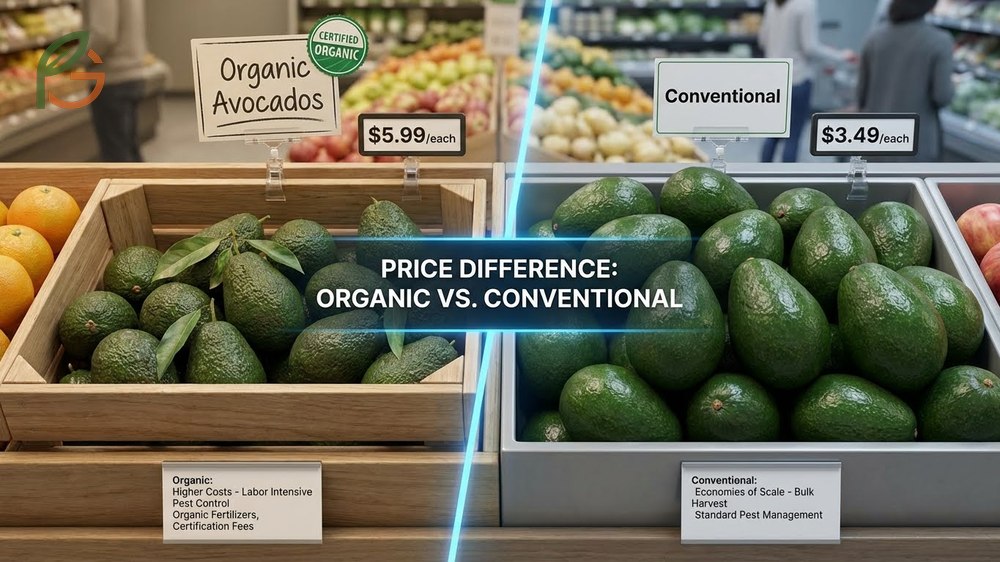
Organic avocados cost significantly more than conventional varieties. Current 2025 data shows organic produce averaging 52.6% more expensive than conventional counterparts across all categories[2]. For avocados specifically, you’ll typically pay 30-60% more at checkout when choosing organic.
This premium reflects higher production costs. Organic farms spend more on labor-intensive pest control, organic fertilizers, and certification fees. Conventional farms achieve economies of scale through synthetic inputs that reduce labor needs and increase yield per acre.
Price fluctuations hit organic avocados harder. When supply tightens, organic prices can spike dramatically—up to $80 per carton wholesale compared to $60 for conventional in mid-2025[5]. These wholesale costs translate directly to retail premiums you’ll see at the grocery store.
Cost Analysis
Breaking down the numbers reveals where your money goes. A single large Hass avocado averaged $2.49 for conventional and $2.99-$3.50 for organic in early 2025[2]. That 50-cent difference might seem small, but it adds up quickly for regular avocado consumers.
Calculate your annual cost if you eat two avocados per week. Conventional costs about $259 per year, while organic runs $311-$364 annually. That’s an extra $52-$105 spent for organic—money that doesn’t buy you additional nutrients or measurably lower pesticide exposure given avocados’ Clean Fifteen status.
This table compares weekly, monthly, and annual costs for conventional versus organic avocados at two avocados per week consumption rate
| Purchase Type | Conventional | Organic (Low) | Organic (High) |
|---|---|---|---|
| Weekly (2 avocados) | $4.98 | $5.98 | $7.00 |
| Monthly | $21.58 | $25.92 | $30.33 |
| Annual | $258.96 | $311.04 | $364.00 |
| Annual Premium vs. Conventional | — | +$52.08 | +$105.04 |
Budget Recommendations
For budget-conscious shoppers, conventional avocados deliver exceptional value. You’ll get all the heart-healthy fats, fiber, and micronutrients without the premium price. The safety profile is virtually identical given the minimal pesticide residue levels.
If you’re working with a limited grocery budget, prioritize spending on organic options for produce that actually needs it—strawberries, spinach, and kale from the Dirty Dozen list. Save money on avocados, pineapples, and sweet corn from the Clean Fifteen. This strategic approach maximizes your health benefits per dollar spent.
- Buy conventional avocados to save 30-60% on this Clean Fifteen fruit
- Allocate organic budget to Dirty Dozen items with high pesticide residues
- Purchase in bulk when conventional avocados go on sale
- Check Mexican imports for lower prices during peak season (March-August)
- Consider frozen avocado chunks for smoothies at reduced cost
Buy Organic Avocados
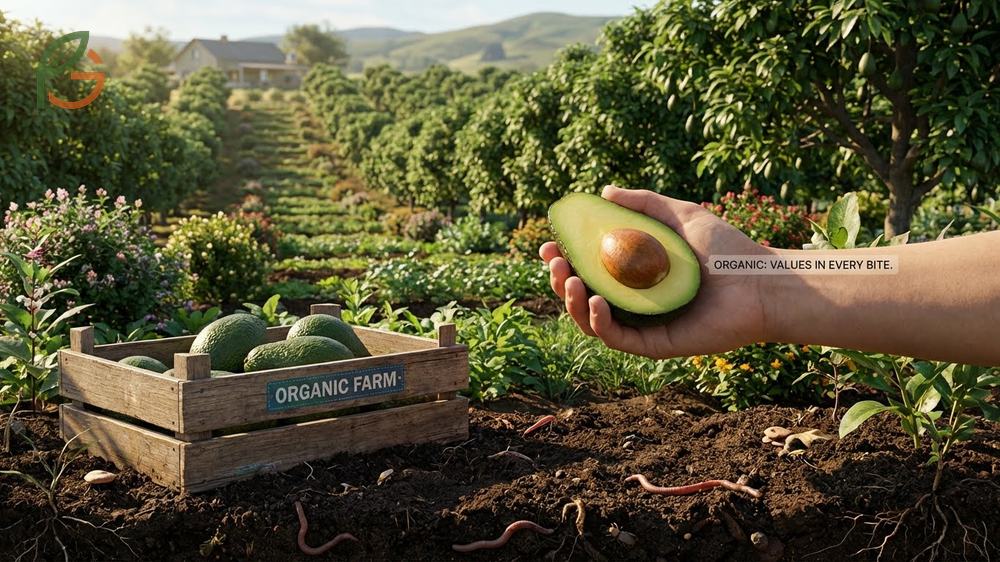
Despite the higher cost and minimal health differences, some situations justify buying organic avocados. Your personal values and priorities matter more than rigid rules. Agricultural data shows organic farming practices benefit soil health and biodiversity, even when the end product is nutritionally equivalent.
If supporting sustainable agriculture ranks high on your priority list, organic avocados align with those values. Organic certification requires farms to build healthy soil through composting, crop rotation, and cover cropping. These practices reduce erosion and support beneficial insects that conventional monoculture often eliminates.
Environmental impact extends beyond pesticide use. Organic avocado farms typically employ integrated pest management that minimizes chemical inputs overall. They use biological pest control—introducing beneficial insects that eat harmful pests—rather than relying solely on approved organic pesticides.
From My Experience: My cousin in Guadalajara, Mexico grows Hass avocados using organic methods on a small farm. She switched from conventional to organic in 2022 and noticed beneficial ladybugs returning within six months—natural pest controllers that disappeared under synthetic pesticide use. Her soil quality improved measurably, though the avocados themselves taste identical to conventional varieties.
When to Choose Organic
Choose organic avocados if your budget allows and environmental stewardship matters to you. The premium price supports farming practices that protect pollinators, preserve soil microbiomes, and reduce synthetic chemical runoff into local watersheds. These benefits accrue to the ecosystem rather than to your plate.
Parents who exclusively feed their children organic foods may prefer consistency across all produce purchases. While the safety data shows conventional avocados pose minimal risk, peace of mind has value that transcends pure nutrition science.
- You prioritize supporting certified organic farming systems
- Your budget comfortably absorbs the 30-60% price premium
- You want to reduce overall agricultural pesticide use through purchasing power
- You prefer consistency in buying only organic produce for your household
- You’re concerned about farmworker exposure to synthetic pesticides
Environmental Benefits
Organic avocado cultivation builds soil carbon over time through regular organic matter additions. Studies show organic farms sequester more atmospheric carbon dioxide than conventional operations. This contributes to climate change mitigation, though the effect per individual fruit is small.
Water quality improves in regions dominated by organic agriculture. Without synthetic fertilizer runoff, nearby streams and groundwater show lower nitrate levels. This protects aquatic ecosystems and drinking water sources for local communities.
Environmental Trade-off: Organic avocado farms typically yield 10-20% less fruit per acre than conventional operations. This means more land must be cultivated to produce the same total output, which can offset some environmental benefits through increased habitat conversion.
Conventional Avocado Safety
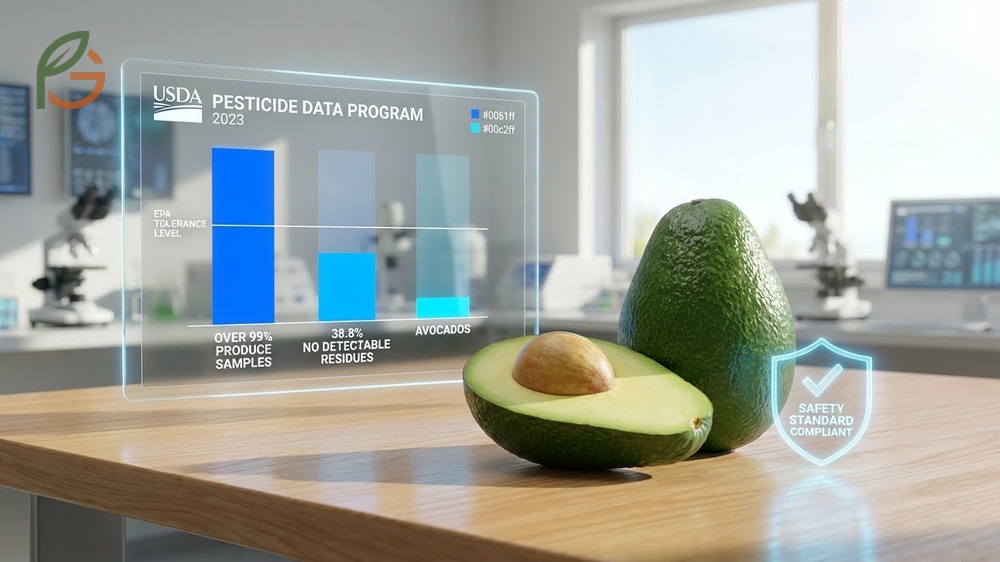
Conventional avocados meet rigorous federal safety standards that protect consumer health. The USDA’s Pesticide Data Program tested 9,832 produce samples in 2023, finding that over 99% contained residues below EPA tolerances, with 38.8% showing no detectable residues at all[3]. Avocados consistently perform better than these already-safe averages.
The EPA sets tolerance levels with built-in safety margins that account for vulnerable populations. Before approving any pesticide for use on food crops, the EPA requires companies to demonstrate that residues won’t pose unreasonable health risks. They consider exposure from all sources—diet, drinking water, and residential use—not just food alone.
Testing protocols simulate real-world consumption. USDA analysts wash samples for 15-20 seconds under gently running cold water before testing, just as you’d do at home. No special chemicals or produce washes are used. This means the detected residue levels reflect what actually reaches your body, not theoretical maximum exposure.
Current guidance from food safety experts consistently affirms that conventional produce, including avocados, poses no meaningful health risk from pesticide residues. The benefits of eating fruits and vegetables far outweigh any theoretical pesticide concerns, especially for Clean Fifteen items.
- EPA pesticide tolerances include 10-100x safety margins beyond harmful levels
- USDA tests avocados as consumed after washing, not straight from the field
- Less than 0.5% of all tested produce samples exceed EPA tolerances
- The thick skin blocks pesticide penetration to edible flesh
- Multiple independent safety reviews confirm conventional avocados are safe
- Washing before cutting removes any surface residues that might exist
Proper Preparation: Always wash avocados under running water for 15-20 seconds before cutting, even though you don’t eat the skin. This prevents knife blades from carrying surface bacteria or residues into the flesh when you slice through.
Conclusion
The evidence is clear: organic vs. non-organic avocado choices matter less for health and safety than for almost any other produce item. Conventional avocados deliver identical nutrition at 30-60% lower cost while maintaining an exceptional safety profile with less than 2% showing any pesticide residues. The thick, protective skin ensures that even when residues exist, they stay on the peel you discard.
Current agricultural guidance emphasizes that both organic and conventional avocado farming can be sustainable when managed properly. Your decision should reflect personal priorities—budget constraints favor conventional, while environmental values may justify organic premiums. Either choice supports a healthy diet rich in beneficial fats and nutrients. FruitGarden provides ongoing research updates to help gardeners and consumers navigate these decisions with confidence.
Frequently Asked Questions
Are organic avocados healthier than conventional ones?
No, organic and conventional avocados provide identical nutritional content. Both contain approximately 15 grams of monounsaturated fats, 7 grams of fiber, and the same vitamin and mineral profiles per 100-gram serving. The main differences lie in farming practices rather than the fruit’s health benefits.
Do conventional avocados have dangerous pesticide levels?
No, conventional avocados are extremely safe. Research shows less than 2% of avocado samples contain any detectable pesticide residues, and avocados rank #3 on the Clean Fifteen list of produce with the lowest contamination. The thick skin prevents pesticides from reaching the edible flesh you consume.
How much more do organic avocados cost?
Organic avocados typically cost 30-60% more than conventional varieties. In early 2025, conventional large Hass avocados averaged $2.49 each while organic versions cost $2.99-$3.50. This premium reflects higher production costs for organic certification, labor-intensive pest control, and organic fertilizers.
Should I wash avocados before cutting them?
Yes, always wash avocados under running water for 15-20 seconds before cutting. While the edible flesh remains protected by the thick skin, washing prevents your knife from transferring surface bacteria or residues into the fruit when you slice through. No special produce washes are necessary—plain water works effectively.
What makes avocados part of the Clean Fifteen list?
Avocados earn their Clean Fifteen ranking due to the thick, inedible skin that acts as a natural barrier against pesticide absorption. Testing of over 53,000 produce samples shows avocados consistently have less than 2% detectable pesticide residues, with nearly 70% of Clean Fifteen samples showing no residues at all.
Are there environmental benefits to buying organic avocados?
Yes, organic avocado farming builds soil health through composting and crop rotation, supports beneficial insect populations, and reduces synthetic chemical runoff into watersheds. However, organic farms typically yield 10-20% less fruit per acre, requiring more land cultivation to match conventional output. The environmental trade-offs depend on specific farming practices.
When should I choose conventional avocados over organic?
Choose conventional avocados when budget is a concern or when you’re prioritizing value. Save your organic budget for Dirty Dozen produce like strawberries and spinach that actually show high pesticide residues. Conventional avocados deliver all the same nutrients and health benefits at 30-60% lower cost with minimal pesticide exposure risk.