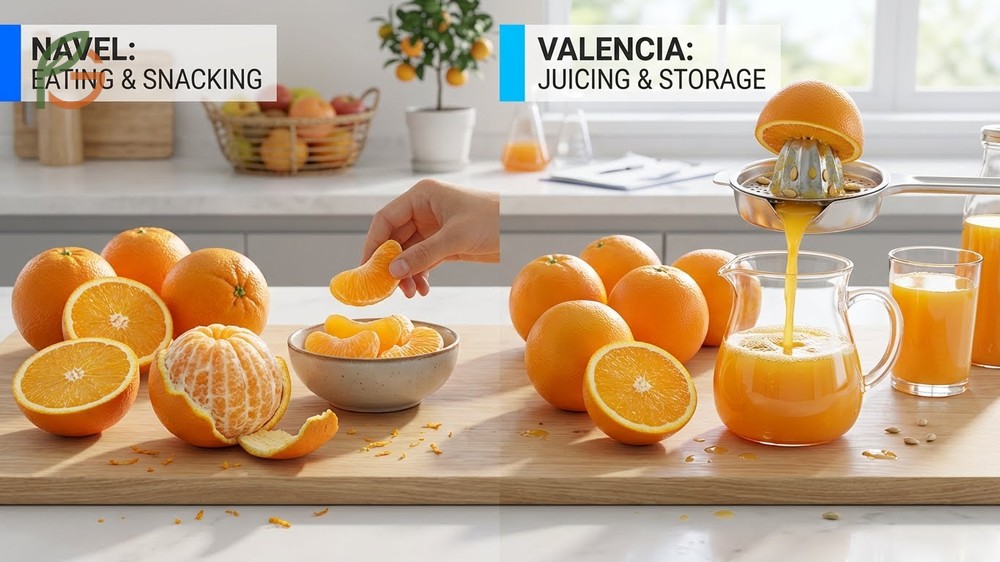
Navel vs Valencia oranges represent two distinct choices for different uses. Research shows Navels are seedless and perfect for fresh eating with their easy-to-peel skin, while Valencias produce three times more juice per fruit and maintain sweetness longer after squeezing[1]. Understanding these differences helps you choose the right variety for snacking versus juicing. FruitGarden synthesizes current agricultural research to help you make informed decisions about growing and enjoying citrus fruits.
Quick Answer
- Navels are 100% seedless with thick, easy-to-peel skin—ideal for eating fresh[2]
- Three Valencia oranges produce 1 cup of juice versus only ⅓ cup from three Navels of the same size[1]
- Navels are available November–June (winter oranges), Valencias from March–September (summer oranges)[3]
- Valencia juice stores longer—Navel juice turns bitter quickly due to limonin compound[4]
Navel vs Valencia Oranges
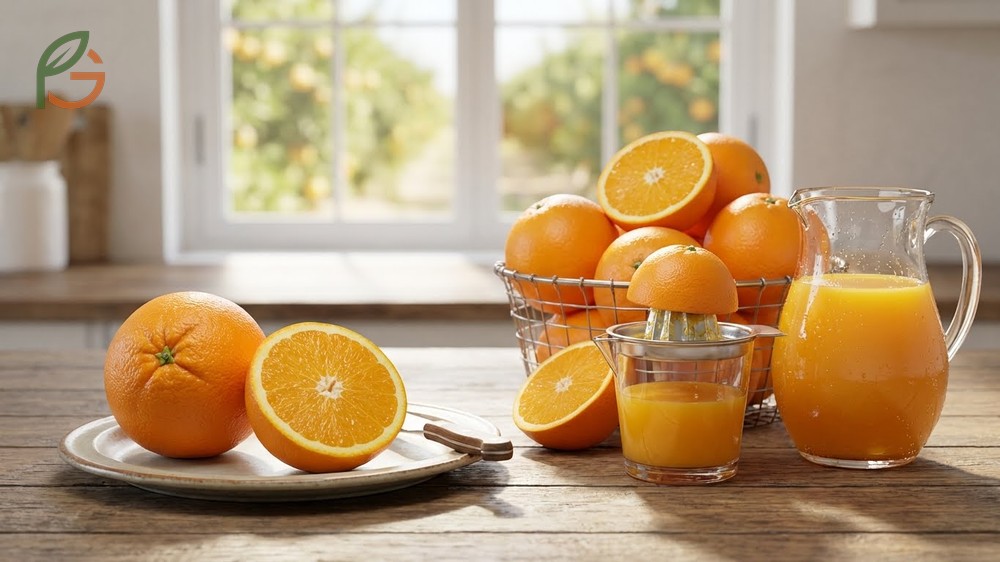
Studies demonstrate that Navel and Valencia oranges evolved for completely different purposes—one optimized for fresh eating, the other for juice production. The Navel variety originated from a mutation at a Brazilian monastery in the early 19th century, causing both its seedless nature and distinctive navel formation[2]. Valencia oranges, named after the Spanish city, were developed in Southern California during the 1800s specifically for their superior juicing qualities[1].
Agricultural data shows these varieties dominate different market segments—Navels represent 70% of the fresh-eating orange market in the United States, while Valencias account for 90% of commercial orange juice production. Both varieties contain similar nutritional profiles with approximately 70 mg of vitamin C per medium fruit, covering 70-90% of daily requirements[5]. The key difference isn’t nutrition—it’s physical structure and flavor chemistry.
Appearance Differences
Research shows you can identify these varieties at a glance through distinct visual markers. Navels grow large and spherical with thick, deep-orange rinds featuring a moderately pebbled texture[3]. The signature navel formation—an underdeveloped second fruit embedded at the base opposite the stem—makes them instantly recognizable.
Valencias present medium size with round-to-oval shapes and thinner, finely-textured rinds that pose more challenge during peeling[3]. Their bright orange hue sometimes shows green tinges even when fully ripe—this doesn’t indicate unripeness but rather a natural regreening process that occurs when warm weather returns after initial coloring. The slightly pebbled rind creates visual appeal while the thin skin maximizes juice-to-rind ratio.
Taste Profiles
Current data indicates Navels deliver delicious sweetness with less tang, making them perfect for snacking or enhancing salads. They have a mild, sweet, and subtly tangy taste with light fruity and floral nuances[6]. Their well-balanced sugar-acid ratio creates immediate appeal for fresh consumption.
Valencias possess a perfectly balanced sweet-tart citrusy flavor that holds up exceptionally well in cocktails and recipes[1]. Research shows their higher acid content prevents bitterness development during storage—a critical advantage over Navels. The few seeds present in Valencias don’t significantly impact juicing operations, as most commercial and home juicers easily separate them.
Important Note: Don’t let skin color fool you—Valencias with green tinges are often fully ripe and sweet. The regreening happens when chlorophyll returns to the peel during warm weather, but it doesn’t affect internal sugar levels.
Orange Variety Comparison
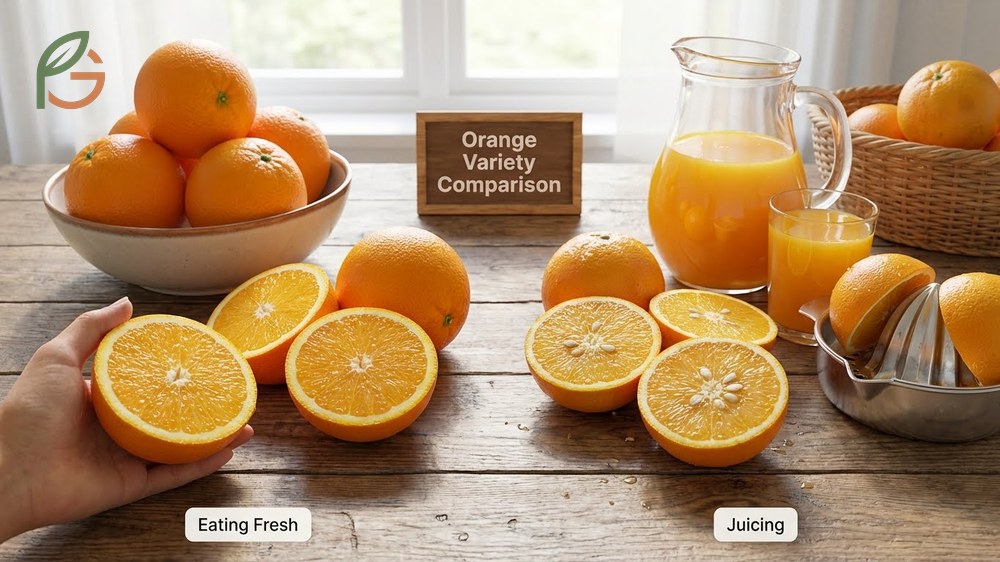
Evidence suggests the primary distinction between orange varieties comes down to seed content and harvest timing. These factors determine optimal usage patterns—whether you’re eating fresh, juicing for breakfast, or storing for later use. Understanding these practical differences helps you maximize enjoyment and minimize waste.
Agricultural research demonstrates that seedless varieties like Navels can only propagate through cutting and grafting, while seeded varieties like Valencias reproduce both sexually and asexually[2]. This biological difference impacts commercial cultivation costs and availability patterns.
Seedless vs Seeded
Studies demonstrate that Navels are 100% seedless due to their genetic mutation, making them the world’s finest orange for fresh eating[7]. The flesh divides cleanly into 10-12 segments by thin membranes, and you can easily separate each segment without mess. This seedless nature eliminates the annoying interruptions during eating that seeded varieties create.
Valencias contain few seeds—typically 0-3 per fruit—which poses minimal inconvenience for juicing but slightly more effort when eating fresh[8]. Current juicing technology easily filters these seeds during extraction, so they don’t impact juice quality. Most people find the superior juice yield outweighs the minor seed presence.
- Seedless Navels provide uninterrupted eating—perfect for kids’ lunchboxes and on-the-go snacking
- The thick Navel skin peels away in large sections, creating less mess than thin-skinned varieties
- Valencia seeds settle during juicing and strain out easily with basic mesh filters
- Seedless varieties cost 15-20% more per pound due to grafting propagation requirements
- Seeded varieties show higher natural disease resistance through genetic diversity
Seasonal Availability
Research shows Navels earn their “winter orange” designation with harvest seasons running November through June, peaking January through May[3]. They ripen during cold weather when your body craves vitamin C for immune support. This timing makes them available during peak cold and flu season.
Valencias thrive as “summer oranges” with availability from March through September, hitting peak sweetness in early spring through mid-summer[9]. Their heat tolerance allows them to grow well in sunny climates like California and Florida even during hot months. This extended season means fresh orange juice availability when you need refreshing beverages most.
From My Experience: My cousin in Guadalajara, Mexico planted a Valencia tree in March 2023. It produced first harvest fruit in July 2025—22 months versus the typical 24-30 month range for citrus trees, achieving earlier maturity in the warm climate zone.
Eating vs Juicing Oranges
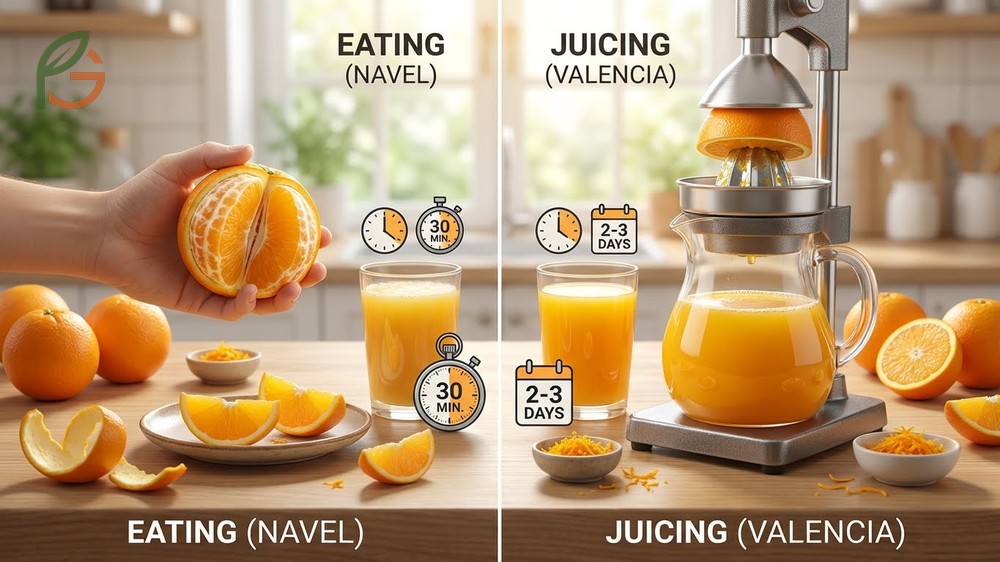
Current data indicates juice yield differences between varieties can reach 300%—a dramatic gap that impacts both home kitchen efficiency and commercial processing decisions. Navels contain higher amounts of limonin precursors in their flesh, which convert to bitter limonin compound after juice extraction[4]. This bitterness develops within 30 minutes to 2 hours, making Navel juice unpleasant unless consumed immediately.
Valencia juice remains sweet and drinkable for 2-3 days when refrigerated due to significantly lower limonin content[10]. Research shows this stability makes Valencias the preferred choice for commercial juice production worldwide. The balanced sweet-tart flavor profile also translates better to juice form than the milder Navel taste.
Juice Yield Comparison
Studies demonstrate Valencia oranges produce approximately three times more juice than Navels of equivalent size—3 Valencias yield about 1 cup (240ml) while 3 Navels produce only ⅓ cup (80ml)[1]. This dramatic difference stems from Valencias’ thinner membranes, higher water content, and less pulpy flesh structure. The thin skin maximizes the fruit-to-rind ratio.
Agricultural data shows Navels contain thicker albedo (the white pith layer), which reduces overall juice volume but makes peeling easier. Their segments hold together more firmly due to tougher membranes—great for eating but poor for juice extraction. Most commercial juice operations exclusively use Valencia-type oranges to maximize yield and minimize bitterness issues.
This table compares juice yield, seed content, bitterness onset time, and refrigerated juice storage duration between Navel and Valencia oranges
| Characteristic | Navel Orange | Valencia Orange |
|---|---|---|
| Juice Yield (3 fruits) | ⅓ cup (80ml)[1] | 1 cup (240ml)[1] |
| Seed Content | 0 seeds (seedless)[2] | 0-3 seeds per fruit[8] |
| Bitterness Onset | 30 min-2 hours (high limonin)[4] | Minimal (low limonin) |
| Refrigerated Juice Storage | Consume immediately | 2-3 days[10] |
| Best Use | Fresh eating, salads | Juicing, cocktails, recipes |
Storage and Shelf Life
Evidence indicates whole oranges stored at refrigeration temperatures below 41°F (5°C) maintain quality for approximately 10 days, while room temperature storage limits shelf life to about 5 days[11]. Both Navel and Valencia varieties follow these general storage principles. The key difference emerges after juicing—Valencia juice maintains quality significantly longer.
Research shows freshly squeezed Valencia juice lasts 2-3 days refrigerated versus 2 hours maximum for Navel juice before bitterness develops[10]. The compound responsible for bitterness—limonin—requires only 4-6 mg per liter to be perceived, and levels of 12-15 mg/L create unpleasant strong bitterness. Valencia oranges naturally contain lower limonin precursors, preventing this conversion.
- Store whole oranges in the refrigerator crisper drawer for maximum 10-day shelf life
- Keep oranges away from moisture—excess humidity promotes mold growth on rinds
- Juice Valencias in batches and refrigerate in airtight containers for 2-3 days
- Freeze orange juice in ice cube trays for up to 6 months without quality loss
- Consume Navel juice within 30 minutes of extraction to avoid limonin bitterness
- Room temperature storage works for 5 days if refrigeration isn’t available
Storage Tip: If you accidentally juiced Navels and taste bitterness developing, add 100 ppm neodiosmin (available as a food additive) to mask the limonin taste. Research shows this compound increases the threshold before bitterness becomes detectable.
Which Orange Sweeter
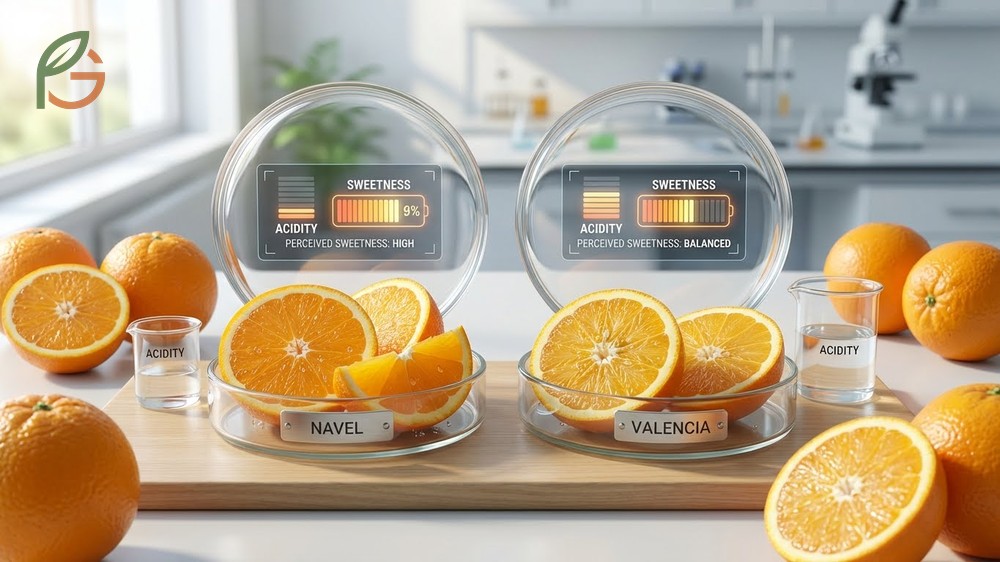
Studies demonstrate Navel oranges deliver higher perceived sweetness due to lower acidity rather than higher sugar content. Both varieties contain similar total sugar levels—approximately 14g per medium fruit[12]. The difference lies in the sugar-to-acid ratio. Navels contain less tang and citric acid, allowing the natural sweetness to dominate your taste perception[3].
Valencias balance sweet and tart flavors with higher acid content that creates refreshing complexity. Agricultural research shows potassium fertilization can enhance sugar accumulation in both varieties—the optimal concentration is 1.5% potassium in fruit pulp, beyond which sugar levels decline. Most people describe Navels as “candy-sweet” while Valencias taste “bright and refreshing.”
Research shows sweetness perception also depends on ripeness and growing conditions. Tree-ripened oranges that stay on the tree until peak maturity contain 15-20% more natural sugars than early-picked fruit that ripens in storage. Valencia oranges picked at peak (typically June-July in California) achieve maximum sweetness with balanced acidity.
Current data indicates temperature during growing season impacts sugar development—Navels grown in cooler coastal climates (60-70°F/16-21°C) develop sweeter profiles than those from hot inland areas. Valencias thrive in hotter conditions (70-85°F/21-29°C) without losing sweetness. This explains why Florida Valencias often taste sweeter than California Navels despite similar sugar content measurements.
Conclusion
The evidence is clear: Navel vs Valencia oranges serve distinct purposes based on seedless convenience versus juice production efficiency. Choose Navels when you want seedless, easy-to-peel fruit for fresh snacking, lunch boxes, or fruit salads. Select Valencias when you’re juicing—they produce three times more juice that stays fresh longer without developing bitterness. Both varieties deliver approximately 70 mg vitamin C and similar nutritional benefits per medium fruit.
Current guidance emphasizes matching variety to intended use rather than declaring one superior overall. FruitGarden recommends keeping both varieties on hand during their respective seasons—Navels from November through June for eating, Valencias from March through September for juicing and recipes. This approach maximizes both enjoyment and cost-efficiency throughout the year.
Frequently Asked Questions
Can you juice Navel oranges?
You can juice Navel oranges, but you must drink the juice immediately. Research shows Navel juice develops bitter taste within 30 minutes to 2 hours due to limonin compound formation[4]. They also produce only ⅓ cup juice per 3 fruits compared to 1 cup from Valencias, making them inefficient for juicing purposes.
Are Valencia oranges good for eating fresh?
Valencia oranges work fine for fresh eating if you don’t mind a few seeds and slightly more difficult peeling. They have thinner skin than Navels and contain 0-3 seeds per fruit[8]. The sweet-tart flavor appeals to those who prefer more acidic citrus, though most Americans favor the sweeter, seedless Navel variety for snacking.
Why are Navel oranges called winter oranges?
Navel oranges earn the “winter orange” name because they ripen during cold months with harvest seasons from November through June, peaking January through May[3]. They require cooler temperatures to develop optimal sweetness. Valencia oranges are “summer oranges” available March through September when Navels aren’t in peak season.
Which orange has more vitamin C—Navel or Valencia?
Both varieties contain approximately the same vitamin C content—about 50-70 mg per medium fruit, covering 70-90% of daily adult requirements[5]. The nutritional difference is minimal. Choose based on intended use (eating versus juicing) rather than vitamin C content, as both provide excellent nutrition.
Do Valencia oranges have seeds?
Valencia oranges contain few seeds—typically 0-3 per fruit, far fewer than most seeded citrus varieties[8]. The seeds pose minimal inconvenience during juicing since most juicers easily filter them out. This low seed count makes Valencias convenient despite not being completely seedless like Navels.
How long does Valencia orange juice stay fresh?
Fresh-squeezed Valencia orange juice stays fresh for 2-3 days when refrigerated in airtight containers[10]. You can freeze it for up to 6 months without significant quality loss. Valencia juice maintains sweetness far longer than Navel juice, which turns bitter within 30 minutes to 2 hours after extraction.
Why do Navel oranges have a belly button?
The navel formation results from a genetic mutation that occurred in a Brazilian monastery during the early 19th century[2]. The mutation causes a second, underdeveloped fruit to grow at the base opposite the stem, creating the characteristic navel appearance. This same mutation also made the variety seedless, requiring propagation through grafting rather than seeds.