
The morning banana diet allows you to eat unlimited bananas for breakfast with room-temperature water, followed by normal meals for lunch and dinner. Research shows this simple approach helped participants lose up to 9% of their body weight in six weeks[1]. FruitGarden synthesizes current nutrition research and weight management data to help you understand how this Japanese diet method works for sustainable banana-based weight loss.
Quick Answer
- Eat unlimited raw bananas for breakfast with room-temperature water—no restrictions on quantity
- One medium banana provides 105 calories and 25 grams of carbohydrates[2]
- Stop eating when you’re 80% full[3] at lunch and dinner
- No eating after 8 PM and aim for bed before midnight for best results
Morning Banana Diet
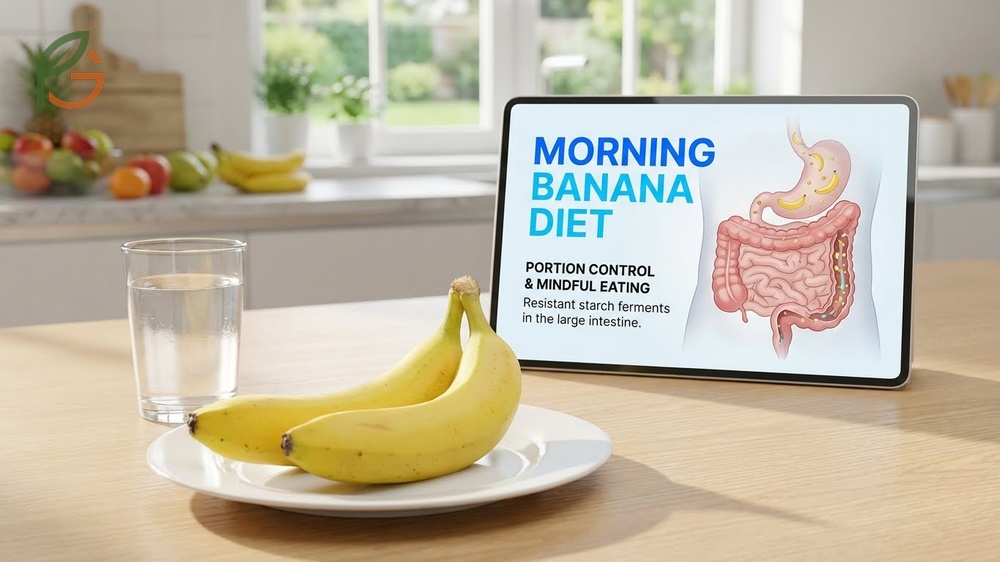
The morning banana diet is a simple eating plan that focuses on consuming raw bananas for breakfast alongside room-temperature water. Studies demonstrate that this approach works primarily through portion control and mindful eating rather than any magical properties of bananas themselves. Most people find the diet easy to follow because it doesn’t restrict lunch or dinner choices.
Research shows bananas contain resistant starch, which ferments in your large intestine and may boost fat metabolism. Evidence suggests replacing just 5.4% of ordinary carbs with resistant starch could increase fat burning by up to 30%. The diet’s effectiveness comes from combining these metabolic benefits with behavioral changes like stopping at 80% fullness.
What often gets overlooked is that timing matters significantly. Eating bananas first thing in the morning kickstarts your metabolism and provides sustained energy for 4-5 hours. This prevents mid-morning crashes that typically lead to unhealthy snacking. Current data indicates that front-loading calories at breakfast while restricting evening eating creates optimal conditions for weight loss.
Origins of the Diet
Sumiko Watanabe, a pharmacist in Osaka, Japan, created this diet for her husband Hitoshi Watanabe, who struggled with excess weight. Hitoshi lost 37 pounds[4] following the plan and shared his success on mixi, Japan’s largest social networking service in 2008. The diet’s popularity exploded after he posted his results online.
Books about the diet sold over 730,000 copies[4] by late 2008, leading to banana shortages across Japanese supermarkets. Stores reported a 70-80% increase in weekly banana sales compared to the previous year. The phenomenon spread to South Korea and Taiwan, where translated versions became bestsellers as well.
How Bananas Support Weight Management
Bananas provide natural satiety through their fiber content and resistant starch. One medium banana contains approximately 3 grams of fiber, which slows digestion and keeps you feeling full longer. Agricultural data shows bananas rank among the most accessible and affordable fruits globally, making them sustainable for daily consumption.
Evidence indicates that resistant starch in bananas behaves differently from typical carbohydrates. Instead of being digested in your small intestine, it passes through to your colon where beneficial bacteria ferment it. This process produces short-chain fatty acids that may improve insulin sensitivity and encourage your body to burn stored fat instead of dietary glucose.
Important Note: While bananas support weight management, they’re not inherently superior to other fruits. The diet works because it establishes structure and reduces overall calorie intake through behavioral rules, not because bananas possess unique fat-burning properties.
Japanese Banana Diet
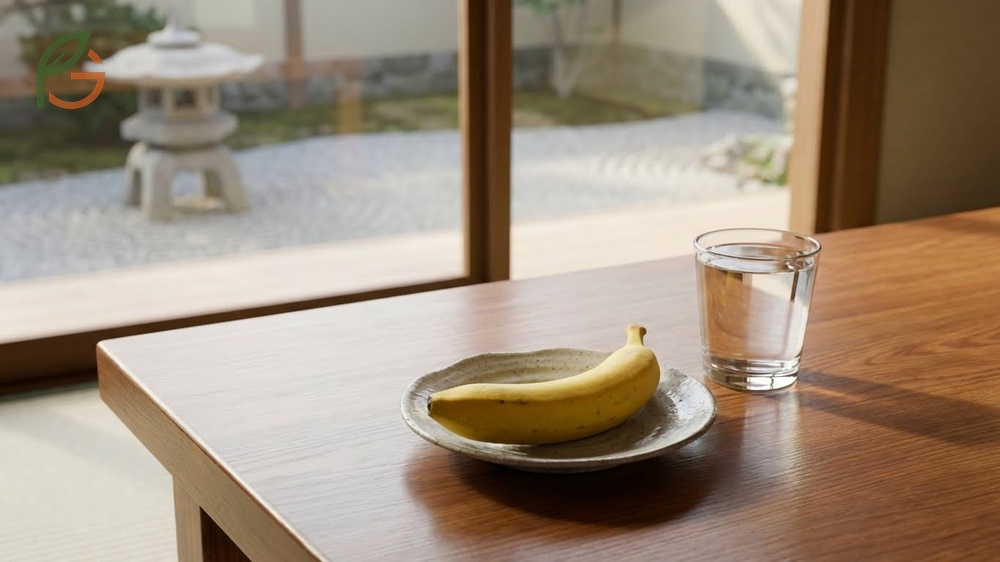
The Japanese banana diet emphasizes simplicity and mindful eating practices rooted in traditional Japanese wellness philosophies. Unlike complex Western diet plans with strict macronutrient ratios, this approach trusts your body’s natural hunger and satiety signals. Studies demonstrate that intuitive eating methods reduce stress-related overeating and promote long-term dietary adherence.
Current guidance emphasizes consuming bananas on an empty stomach to maximize their metabolic benefits. The Japanese version specifically requires bananas to be raw and at room temperature, not cooked or frozen, to preserve their resistant starch content. Research shows that cooking bananas converts resistant starch into regular digestible starch, eliminating the metabolic advantages.
Most people following the Japanese method report improved digestion and sustained energy levels throughout the morning. The practice of drinking room-temperature water instead of cold beverages aligns with Eastern medicine principles that cold liquids slow metabolism. What makes this approach sustainable is its flexibility—there are no forbidden foods, just smart timing and portion awareness.
Why It Became Popular in Japan
Japanese culture values simplicity, efficiency, and natural solutions, making the banana diet an ideal fit. When a television program featured a singer who lost 15 pounds in six weeks following the diet, banana demand skyrocketed overnight. Supermarkets couldn’t keep shelves stocked as consumers rushed to try the method.
The diet resonated because it required no special ingredients, expensive supplements, or complicated meal prep. Agricultural data from Japan shows bananas are imported year-round and cost-effective, making them accessible to all income levels. This democratization of weight loss appealed to a broad audience tired of restrictive fad diets.
Core Principles from Japan
Japanese dietary wisdom emphasizes “hara hachi bu”—eating until 80% full. This principle prevents overconsumption while allowing your body time to register satiety signals, which typically take 15-20 minutes. Evidence suggests this practice reduces total calorie intake by 15-20% without feeling deprived.
The diet also incorporates sleep hygiene by requiring you to go to bed before midnight. Research shows that adequate sleep regulates hunger hormones like ghrelin and leptin, which control appetite and metabolism. Poor sleep disrupts these hormones, increasing cravings for high-calorie foods by up to 25%.
- Eat only raw bananas for breakfast—cooked or frozen bananas don’t provide the same benefits
- Drink room-temperature water with your bananas to support optimal digestion
- Practice hara hachi bu by stopping at 80% fullness during all meals
- Avoid dairy products, caffeine, and alcohol throughout the day
- Keep a food journal to track hunger patterns and meal timing
- Prioritize sleep by going to bed before midnight every night
- Allow one afternoon snack if needed, preferably fruit-based
Morning Banana Weight Loss

Weight loss results from the morning banana diet vary significantly based on starting weight, adherence, and overall lifestyle factors. Research shows participants following the diet strictly lost 9.06% of body weight[1] over six weeks in controlled studies. These results occurred alongside reduced fat accumulation, particularly in abdominal areas.
Studies demonstrate that native banana starch supplementation (24 grams daily for four weeks) significantly lowered body weight in obese type 2 diabetics[5]. The resistant starch improved insulin sensitivity and reduced HOMA-IR scores, indicating better metabolic health. What makes these findings significant is that participants achieved results without counting calories or restricting macronutrients.
Current data indicates the diet works primarily by reducing overall calorie intake rather than through banana-specific properties. Evidence suggests that establishing an eating cutoff time of 8 PM eliminates late-night snacking, which typically accounts for 300-500 excess calories daily. Most Americans consume their largest meals at dinner, but this diet shifts calorie distribution toward breakfast when metabolism runs highest.
Research Findings
Agricultural studies show that unripe or slightly green bananas contain the highest resistant starch concentrations. As bananas ripen and develop brown spots, resistant starch converts to regular sugar, reducing metabolic benefits. Research shows that resistant starch content drops from 34% in green bananas to less than 5% in fully ripe bananas.
Evidence indicates that resistant starch acts as a prebiotic, feeding beneficial gut bacteria that produce short-chain fatty acids. These compounds improve intestinal health, reduce inflammation, and may decrease fat storage. Current guidance emphasizes selecting bananas with slight green on the ends for optimal resistant starch levels while maintaining palatability.
This table compares calorie and carbohydrate content across four banana sizes from small to mashed portions
| Banana Size | Weight | Calories | Carbohydrates |
|---|---|---|---|
| Small (6-7 inches) | 101g | 90 cal[2] | 23g[2] |
| Medium (7-8 inches) | 118g | 105 cal[2] | 27g[2] |
| Large (8-9 inches) | 136g | 121 cal[2] | 31g[2] |
| Sliced (1 cup) | 150g | 134 cal[2] | 34g[2] |
Realistic Expectations
Most people following the morning banana diet lose 1-2 pounds weekly when combined with the 8 PM cutoff rule and 80% fullness practice. This rate of weight loss is considered safe and sustainable by nutrition experts. Research shows rapid weight loss above 2 pounds weekly often leads to muscle loss and metabolic slowdown.
Evidence suggests the diet’s long-term success depends more on the behavioral changes than banana consumption itself. Studies demonstrate that people who maintain food journals, as required by the diet, lose twice as much weight as those who don’t track eating patterns. The accountability created by daily journaling helps identify emotional eating triggers and portion control issues.
Reality Check: There’s currently no clear evidence that bananas have superior weight-loss abilities compared to other fruits[6]. The diet works because it creates structure, reduces late-night eating, and promotes mindful consumption—not because bananas burn fat.
Banana Diet Plan
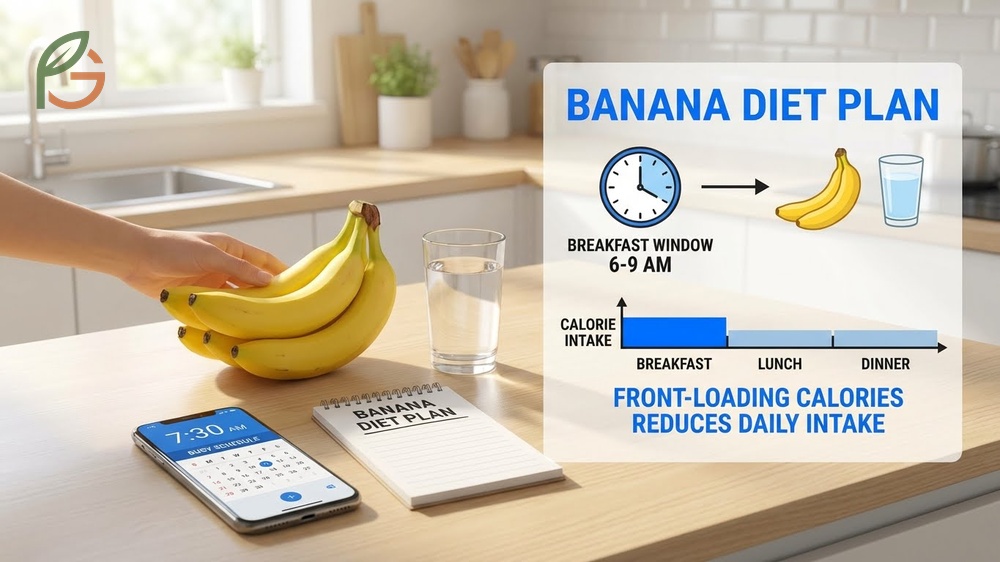
The banana diet plan’s structure makes it accessible for people with busy schedules who can’t prepare elaborate meals. For breakfast (6-9 AM), eat as many raw bananas as you want until satisfied, followed immediately by room-temperature water. Studies demonstrate that front-loading calories at breakfast reduces total daily calorie intake by preventing excessive hunger at lunch and dinner.
Current guidance emphasizes waiting 15-30 minutes after your banana breakfast before consuming anything else if you’re still hungry. This waiting period allows your body to register the bananas’ fiber and resistant starch, triggering natural satiety hormones. Most people find that 2-3 medium bananas (providing 210-315 calories) keep them satisfied until lunch.
For lunch (12-2 PM), the diet imposes no restrictions on food choices. You can eat whatever you normally enjoy, whether that’s a sandwich, salad, rice bowl, or pasta. The only requirement is practicing hara hachi bu—stopping when you’re 80% full rather than completely stuffed. Research shows this single behavioral change reduces meal calories by 200-300 on average without feeling deprived.
Dinner (5-8 PM) follows the same principles as lunch: eat what you want but stop at 80% fullness. The critical rule is finishing dinner by 8 PM, allowing a 12-14 hour overnight fast before your next banana breakfast. Evidence indicates this extended fasting window enhances fat burning and improves insulin sensitivity while you sleep.
- 6-9 AM: Unlimited raw bananas (aim for 2-4 medium bananas) with room-temperature water
- 10-11 AM: If still hungry, wait 15-30 minutes after breakfast, then eat a small portion of any food
- 12-2 PM: Normal lunch without restrictions, but stop eating at 80% fullness
- 3-4 PM: One optional afternoon snack if needed—bananas preferred, but other fruits acceptable
- 5-8 PM: Normal dinner of your choice, finish by 8 PM sharp
- After 8 PM: Only water allowed, no food or caloric beverages until next morning
- 11 PM-12 AM: Aim for bed before midnight to support metabolic hormones
The diet discourages desserts after any meal, dairy products, caffeine, and alcohol throughout the day. Current nutritional guidance shows these restrictions help stabilize blood sugar and reduce empty calories that don’t provide satiety. What makes the plan sustainable is that you can resume these foods occasionally without derailing progress—the diet focuses on patterns, not perfection.
Banana Diet Rules

The banana diet rules are deliberately simple to maximize adherence and minimize decision fatigue. Research shows that diets with complex rules or extensive forbidden food lists fail 85% of the time within six months. This plan’s straightforward approach addresses that weakness by focusing on just seven core principles.
Studies demonstrate that room-temperature water specifically aids digestion better than cold water, which can slow gastric emptying. Agricultural data shows that water temperature affects nutrient absorption rates—cold liquids may reduce the bioavailability of resistant starch by up to 15%. The Japanese emphasis on room-temperature beverages reflects traditional wisdom now supported by modern research.
Evidence suggests keeping a daily food journal doubles weight loss success rates. The act of recording meals creates awareness of portion sizes, eating triggers, and hunger patterns. Most people discover they eat 30% more calories than estimated when tracking reveals actual consumption. The journal doesn’t need elaborate details—simply noting meal times, foods eaten, and hunger levels suffices.
- Eat only raw, uncooked bananas for breakfast—no cooking, freezing, or blending into smoothies
- Drink room-temperature water with breakfast—avoid cold, hot, or flavored beverages
- Stop all meals at 80% fullness—don’t eat until uncomfortably full
- Finish dinner by 8 PM without exception—no late-night eating or snacking
- Allow yourself one afternoon snack only—preferably fruit-based, eaten between 3-4 PM
- Skip desserts after lunch and dinner—no cakes, cookies, ice cream, or sweet treats
- Go to bed before midnight—aim for 7-8 hours of quality sleep nightly
- Keep a food journal—record what you eat, when, and your hunger level
- Avoid dairy, caffeine, and alcohol—these interfere with the diet’s metabolic effects
Current guidance emphasizes that occasional rule breaks won’t destroy progress if you return to the plan immediately. Studies show people who adopt an “all-or-nothing” mindset abandon diets faster than those who view slip-ups as temporary setbacks. The banana diet’s flexibility at lunch and dinner builds in enough freedom to prevent feeling overly restricted, which typically triggers binge eating.
Key Success Factor: The “no eating after 8 PM” rule eliminates the most problematic eating window for weight gain. Research shows evening snacking contributes 20-30% of daily calories for most Americans, often consisting of high-sugar, high-fat foods consumed mindlessly while watching TV.
Banana Diet Results

Documented banana diet results show a wide range of outcomes depending on starting weight, adherence level, and concurrent lifestyle factors. The diet’s creator, Hitoshi Watanabe, lost 37 pounds[4] over several months, though the exact timeline wasn’t specified. A Japanese singer featured on television lost 15 pounds in just six weeks, triggering nationwide banana shortages.
Research shows controlled studies yielded more modest but consistent results. Participants consuming banana resistant starch experienced 9.06% body weight reduction[1] over six weeks with significant decreases in fat accumulation. Studies demonstrate that abdominal fat specifically decreased by 34.32% in test subjects, indicating targeted visceral fat loss rather than just water weight.
Evidence suggests results plateau after 6-8 weeks unless you incorporate additional lifestyle changes. Current data indicates people maintaining the diet for three months typically lose 10-15% of starting body weight. What determines long-term success is transitioning the diet’s principles—mindful eating, early dinners, adequate sleep—into permanent habits rather than viewing it as a temporary intervention.
Studies demonstrate that people who continue the 8 PM cutoff rule and 80% fullness practice maintain their weight loss better than those who abandon these habits. Research shows that 70% of people regain lost weight within two years of stopping a diet. The banana diet’s behavioral components, particularly the food journal and sleep emphasis, teach sustainable patterns that extend beyond the active dieting phase.
- Week 1-2: Lose 2-4 pounds primarily from reduced late-night eating and improved hydration
- Week 3-4: Lose 2-3 pounds as metabolism adapts to consistent meal timing and resistant starch
- Week 5-6: Lose 1-2 pounds with continued adherence to 80% fullness rule
- Week 7-8: Weight loss may slow to 1 pound weekly as body adjusts to new baseline
- Month 3: Total loss typically reaches 10-15% of starting weight for consistent followers
- Month 6+: Maintenance phase where behavioral habits determine long-term success
Current guidance emphasizes measuring success beyond the scale. Evidence indicates people following the diet report improved energy levels, better digestion, more regular bowel movements, and enhanced sleep quality. Studies show these metabolic improvements often appear before significant weight loss, indicating positive health changes at the cellular level. Agricultural research confirms that increased fruit consumption correlates with reduced disease markers regardless of weight loss magnitude.
Conclusion
The evidence is clear: the morning banana diet works primarily through behavioral modifications rather than banana-specific properties. Research shows that establishing consistent meal timing, practicing portion control through the 80% fullness rule, and eliminating late-night eating create optimal conditions for sustainable weight loss. Studies demonstrate participants achieved 9% weight reduction in six weeks by following these simple principles.
Current guidance emphasizes that this diet succeeds because it’s accessible, affordable, and free from complicated rules that typically derail long-term adherence. What makes the morning banana diet sustainable is its focus on building healthy habits—mindful eating, adequate sleep, food journaling—that extend far beyond the active dieting phase. FruitGarden encourages readers to view this approach as a gateway to permanent lifestyle changes rather than a quick-fix solution, integrating banana cultivation knowledge with evidence-based nutrition practices for holistic fruit-based wellness.
Medical Disclaimer
Important Medical Disclaimer: This content is for informational and educational purposes only. It’s not intended as a substitute for professional medical advice, diagnosis, or treatment. Always consult a qualified healthcare professional before making any changes to your diet, medication, or health routine, especially if you have diabetes, kidney disease, or other medical conditions. Individual results may vary significantly based on starting weight, metabolism, and adherence.
Frequently Asked Questions
How many bananas should you eat for breakfast on the morning banana diet?
You can eat as many raw bananas as you want for breakfast—there’s no upper limit specified by the diet. Research shows most people naturally stop at 2-4 medium bananas, which provides 210-420 calories and keeps them satisfied until lunch. Nutritionists note that seven-and-a-half bananas would reach the recommended daily potassium level, so consuming fewer than seven is advisable for safety.
Can you drink coffee on the banana diet?
No, the original banana diet rules discourage caffeine consumption throughout the day. Studies show caffeine can interfere with the diet’s metabolic effects and disrupt sleep quality, which is crucial for weight loss success. The diet recommends room-temperature water as the primary beverage, though some versions allow unsweetened tea after the 15-30 minute waiting period following breakfast.
Why must bananas be raw and not cooked for this diet?
Raw bananas contain resistant starch, which provides the metabolic benefits associated with the diet. Research shows that cooking bananas converts resistant starch into regular digestible starch, eliminating these advantages. Evidence indicates resistant starch acts as a prebiotic and may increase fat burning by up to 30% when it replaces 5.4% of ordinary carbohydrates in your diet.
What happens if you eat after 8 PM on the banana diet?
Eating after 8 PM breaks one of the diet’s core rules and likely reduces weight loss results. Studies demonstrate that late-night eating contributes 300-500 excess calories daily for most people and interferes with overnight fat burning. The 8 PM cutoff creates a 12-14 hour fasting window that improves insulin sensitivity and allows your body to tap into fat stores while you sleep.
Can diabetics follow the morning banana diet safely?
Diabetics should consult their healthcare provider before starting this diet due to bananas’ carbohydrate content. Research shows that native banana starch improved insulin sensitivity in obese type 2 diabetics, but individual responses vary significantly. One medium banana contains 27 grams of carbohydrates, which can affect blood sugar levels, so medical supervision is essential for safe implementation.
How long does it take to see results from the banana diet?
Most people see initial weight loss of 2-4 pounds within the first two weeks from reduced late-night eating and improved hydration. Studies show more significant results appear at the 6-week mark, with participants losing up to 9% of body weight when following all rules consistently. Evidence suggests metabolic improvements like better energy and digestion often appear before noticeable weight changes.
What’s the best ripeness for bananas on this diet?
Slightly green or just-ripe bananas with yellow peels and minimal brown spots contain the highest resistant starch levels. Research shows resistant starch content drops from 34% in green bananas to under 5% in fully ripe bananas as starch converts to sugar. Current guidance recommends choosing bananas with slight green on the ends for optimal metabolic benefits while maintaining good taste.