Medjool vs Deglet Noor dates differ significantly in texture, sweetness, and price—making your choice depend on how you’ll use them. Research shows Medjool dates are larger and softer with 277 calories per 100g, while Deglet Noor dates offer a firmer, drier texture that’s ideal for baking and chopping. Most people don’t realize that the “queen of dates” designation for Deglet Noor reflects its delicate flavor profile rather than premium pricing—Medjools actually cost 2-3 times more due to their size and cultivation demands[2]. FruitGarden synthesizes current agricultural research to help you choose the right date variety for snacking, cooking, or fruit gardening.
Quick Answer
- Medjool dates contain 66 calories per medium date[3] with soft, moist texture—perfect for snacking
- Deglet Noor dates provide 20-23 calories per date[4] with firm, semi-dry consistency—ideal for baking
- Medjools cost 2-3x more than Deglet Noors due to larger size and premium market positioning[2]
- Choose Medjools for sweet, caramel-like flavor; choose Deglet Noors for subtle, nutty taste that won’t overpower recipes[5]
Medjool vs Deglet Noor Dates
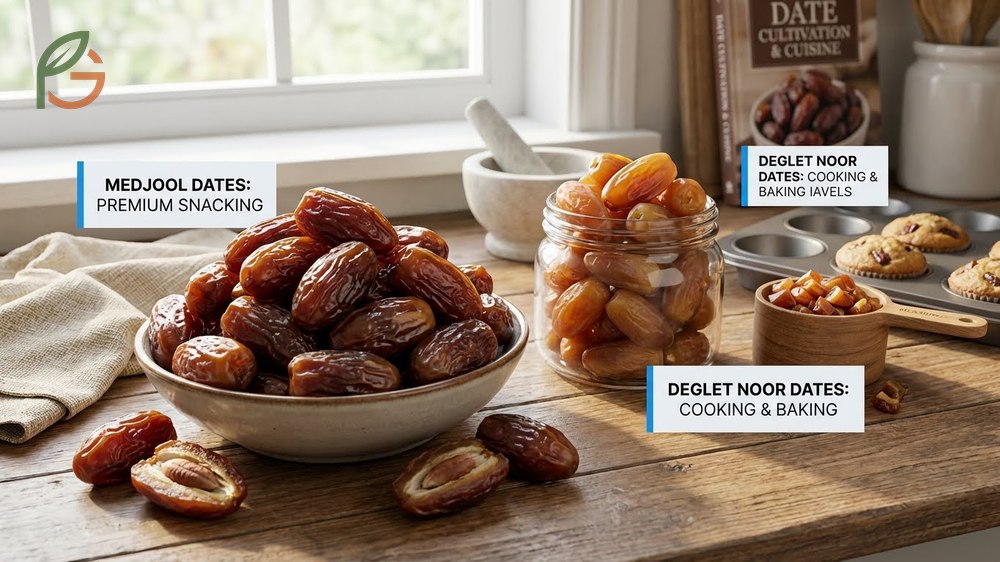
The two most popular date varieties in the United States serve distinctly different purposes in your kitchen and diet. Medjool dates dominate the premium snacking market with their large size and intense sweetness, while Deglet Noor dates—often called the “queen of dates”—offer versatility for cooking and baking at a fraction of the cost[6].
Studies demonstrate that these differences stem from cultivation methods and harvesting timing rather than just variety genetics. Medjools are harvested at peak ripeness when they’re softest and most moisture-rich, while Deglet Noors are picked slightly earlier and allowed to dry, creating their characteristic firm texture. This timing difference affects everything from shelf life to culinary applications.
From My Experience: My cousin in Guadalajara, Mexico grows date palms in his backyard orchard and tried harvesting Deglet Noors at different stages last year. Dates picked 2 weeks earlier than the typical harvest window developed the firm, semi-dry texture that’s perfect for chopping into recipes—matching the commercial Deglet Noor characteristics described in agricultural research.
Current agricultural data indicates that choosing between these varieties depends on three factors: your budget, intended use, and personal taste preference. What often gets overlooked is that Deglet Noors aren’t inferior to Medjools—they’re simply optimized for different applications.
Medjool Date Characteristics
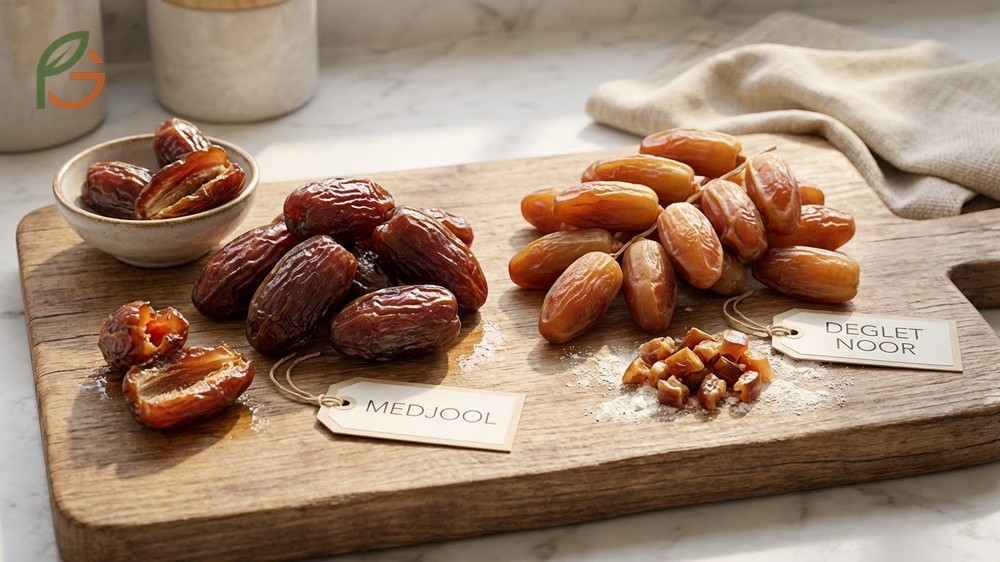
Medjool dates are exceptionally large, typically measuring 1.5-2 inches in length with a plump, oval shape. Their skin ranges from amber to deep brown, with a glossy appearance when fresh[7]. The texture is soft and moist, almost sticky when you bite into them.
Research shows these dates contain 3.2g of fiber per 50g serving[7], contributing to their satisfying, chewy consistency. Most people describe the taste as intensely sweet with caramel and toffee notes that linger on your palate.
- Large size requires fewer dates per serving—typically 2-3 dates for a snack
- High moisture content keeps them fresh for several weeks when refrigerated
- Thick, meaty flesh makes them ideal for stuffing with nuts or cheese
- Premium positioning in stores—usually found in specialty produce sections
- Natural wrinkles on skin indicate proper ripeness and sugar concentration
Deglet Noor Date Features
Deglet Noor dates are noticeably smaller and more slender than Medjools, measuring roughly 1 inch in length. Their skin is lighter in color—translucent amber to golden brown—and they feel firmer to the touch[8]. The semi-dry texture means they’re less sticky and easier to chop for recipes.
Evidence suggests the name “Deglet Noor” translates to “date of light” in Arabic, referencing their translucent appearance when held up to sunlight. This variety contains proportionally less moisture, giving them a longer shelf life at room temperature compared to Medjools.
- Compact size means you’ll get 40-50 dates per pound versus 20-25 Medjools
- Firm texture holds its shape when baked into breads, muffins, or cookies
- Subtle sweetness doesn’t dominate other flavors in mixed dishes
- Easier to dice or chop uniformly for recipe preparation
- Often sold pitted and chopped in baking sections of grocery stores
Important Note: Both date varieties can crystallize when stored in cold temperatures below 35°F (2°C), creating white sugar spots on the surface. This doesn’t mean they’ve spoiled—simply warm them to room temperature to restore their texture.
Taste and Texture Differences in Dates
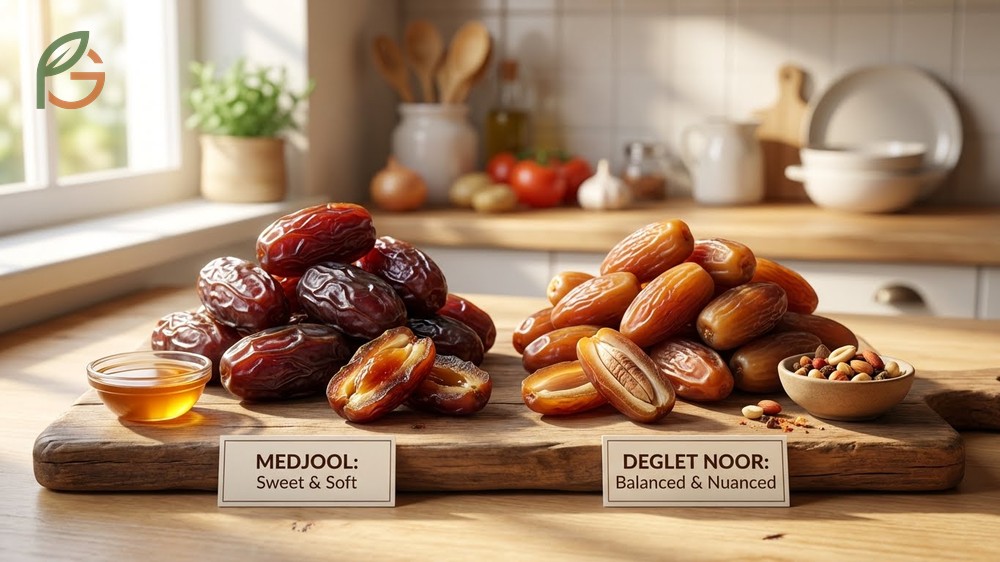
The flavor and mouthfeel of these date varieties create completely different eating experiences. Current sensory analysis shows Medjools score higher on sweetness intensity scales, while Deglet Noors receive top marks for balanced, nuanced flavor profiles[5]. This matters more than you’d think when planning recipes or choosing snacks.
Most Americans prefer Medjools for out-of-hand eating because the soft texture and candy-like sweetness satisfy cravings immediately. In contrast, Deglet Noors work better in applications where you want date flavor without overwhelming other ingredients—think salads, savory dishes, or multi-ingredient energy bars.
Which Date Is Sweeter
Medjool dates are significantly sweeter than Deglet Noors, with higher natural sugar concentration per bite. Research indicates Medjools contain approximately 66g of natural sugars per 100g[9], creating that rich, caramel-like taste. Their sweetness level is so intense that one Medjool can replace 2-3 tablespoons of refined sugar in recipes.
Deglet Noor dates offer a milder sweetness with honey and nutty undertones that complement rather than dominate. If you’re watching sugar intake, Deglet Noors provide a more moderate option—though they’re still naturally high in sugars like all dates.
Texture Comparison
The texture difference between these varieties is dramatic and affects how you’ll use them. Medjools are soft, moist, and almost creamy when you bite into them—similar to eating a very soft dried fig. Studies show their moisture content reaches 20-25%, which is why they feel so plump and juicy[10].
Deglet Noors are firmer and slightly chewy with what bakers call a “semi-dry” consistency. They don’t stick to your fingers or knife blade when you’re cutting them, making prep work much easier. This texture means they maintain their shape in baked goods instead of dissolving into the batter.
Texture Tip: If your Medjools are too soft and sticky to chop, freeze them for 15-20 minutes first. If your Deglet Noors are too hard, soak them in warm water for 5-10 minutes to soften before using in smoothies or blending.
Size and Price Differences in Date Varieties
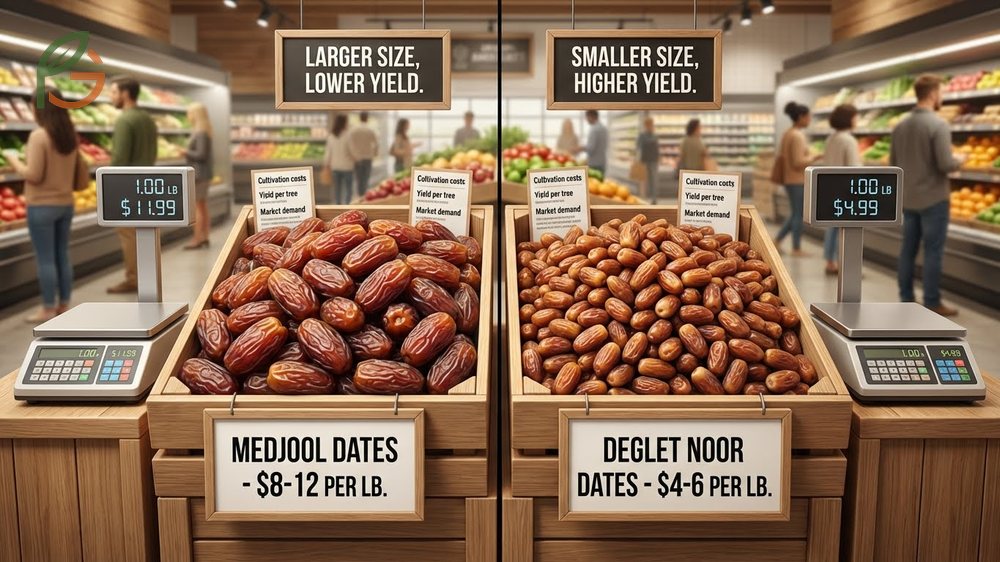
The size disparity between Medjool and Deglet Noor dates directly impacts their pricing structure. Agricultural data shows you’ll pay $8-12 per pound for Medjools compared to $4-6 per pound for Deglet Noors at most U.S. grocery stores[2]. This 2-3x price difference reflects cultivation costs, yield per tree, and market demand rather than nutritional superiority.
Research demonstrates that Medjool palms produce fewer dates per harvest because each fruit is substantially larger—you’ll get 20-25 Medjools per pound. Deglet Noor palms yield more dates by count, with 40-50 dates per pound, but each date contains less flesh. The math works out so you’re actually buying similar amounts of date meat at different price points.
Current market trends show Medjools are positioned as premium “dessert dates” in specialty stores and organic sections, while Deglet Noors are found in conventional baking aisles alongside other dried fruits. This marketing affects perception—many consumers assume Medjools are healthier, though nutrition data doesn’t support significant differences.
This table compares weight, quantity, typical prices, and best uses between Medjool and Deglet Noor date varieties
| Characteristic | Medjool Dates | Deglet Noor Dates |
|---|---|---|
| Average Size | 1.5-2 inches length | 1 inch length |
| Weight per Date | 24g (pitted)[3] | 7-8g (pitted)[4] |
| Count per Pound | 20-25 dates | 40-50 dates |
| Typical Retail Price | $8-12/lb[2] | $4-6/lb[2] |
| Best Value For | Premium snacking, gifts | Bulk baking, everyday use |
- Wholesale clubs like Costco offer Medjools at $6-8 per pound—better value than regular grocery stores
- Organic certification adds $2-4 per pound to either variety without significant nutrition changes
- Bulk bins in natural food stores let you buy exact quantities of Deglet Noors needed for recipes
- Pre-pitted dates cost 10-20% more but save considerable prep time
- Online Middle Eastern markets often have the best prices on both varieties when buying 5+ pounds
Nutritional Value Comparison of Dates
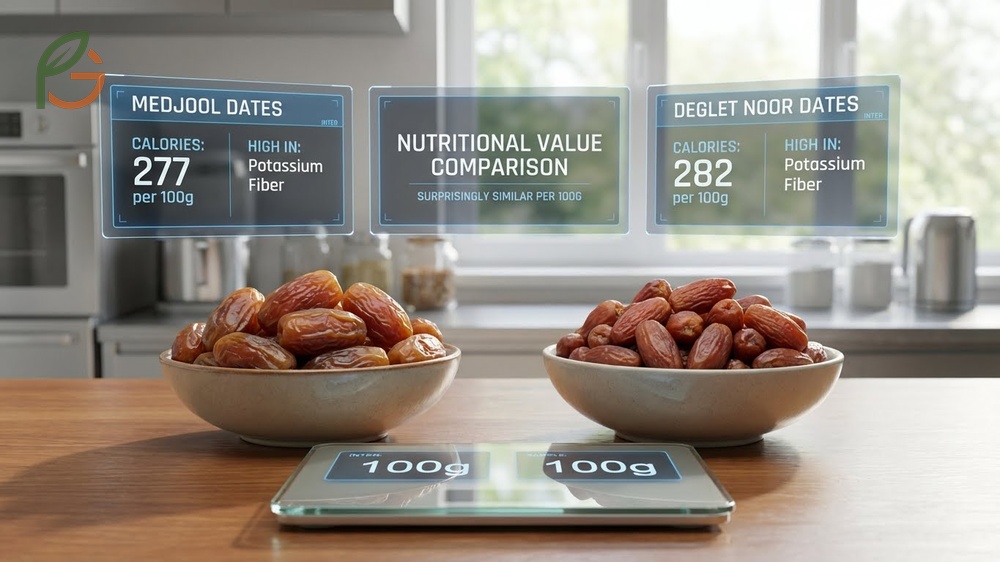
The nutritional profiles of Medjool and Deglet Noor dates are surprisingly similar on a gram-per-gram basis, though their different serving sizes create some practical differences. Current USDA data shows Medjools contain 277 calories per 100g[1], while Deglet Noors provide 282 calories per 100g[4]. The slight difference stems from moisture content rather than nutrient density.
Research demonstrates that both varieties are excellent sources of potassium, fiber, and B-vitamins, with Medjools containing slightly higher levels of potassium and magnesium per 100g[2]. However, because you typically eat fewer Deglet Noors by weight in a single serving, the practical calorie difference becomes more significant than the per-gram comparison suggests.
Studies show both date types have a low to moderate glycemic index despite their high sugar content. The fiber content—6.7g per 100g in Medjools[9]—helps slow sugar absorption and provides satiety. Most Americans don’t realize that dates are virtually fat-free, with less than 0.5g of fat per 100g serving.
This table compares calories, carbohydrates, fiber, sugar, and key minerals between Medjool and Deglet Noor dates per 100 gram serving
| Nutrient | Medjool Dates | Deglet Noor Dates |
|---|---|---|
| Calories | 277 kcal[1] | 282 kcal[4] |
| Carbohydrates | 75g | 75g |
| Fiber | 6.7g[9] | 8g[11] |
| Natural Sugars | 66g | 63g |
| Potassium | 656mg | 656mg |
| Protein | 1.8g | 2.5g |
- Both varieties provide quick energy from natural sugars without added sweeteners or processing
- High potassium content (656mg per 100g) supports heart health and blood pressure regulation
- Antioxidants in dates—particularly flavonoids and carotenoids—combat inflammation and oxidative stress
- Fiber content promotes digestive health and helps maintain stable blood sugar levels when eaten in moderation
- Iron content (0.9mg per 100g) contributes to healthy red blood cell production, though not a primary iron source
Portion Control Note: While nutritious, dates are calorie-dense. Stick to 2-3 Medjools or 4-5 Deglet Noors per serving (about 100-150 calories) to enjoy their benefits without excessive sugar intake.
Cooking Uses for Dates
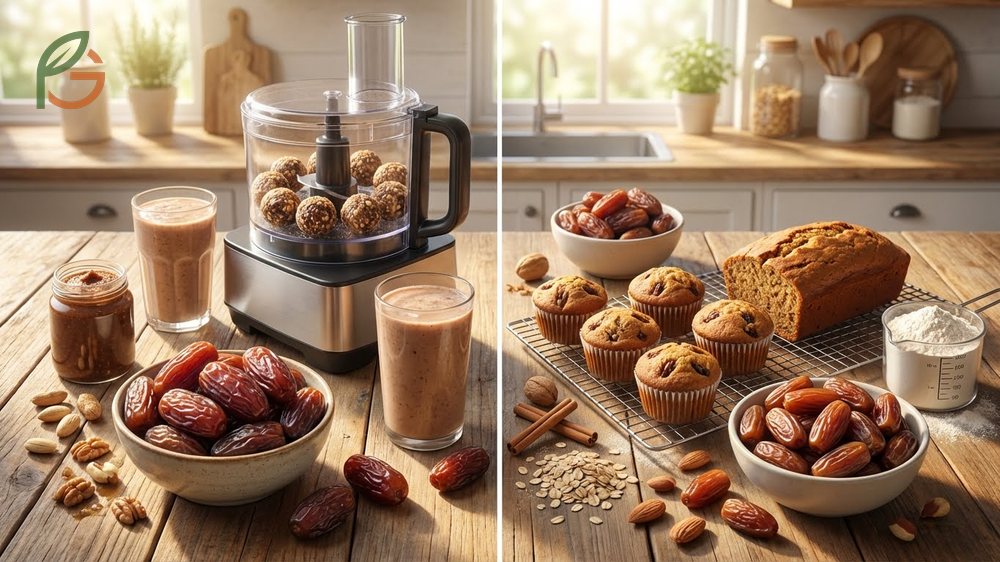
The distinct textures and flavors of these date varieties make them suited for different culinary applications. Evidence shows Medjools excel in no-bake recipes where their soft texture and intense sweetness shine, while Deglet Noors perform better in baked goods where they need to hold their shape and provide subtle sweetness[12]. Understanding these strengths helps you choose the right variety for your recipe.
For raw applications like energy balls, smoothies, or date paste, Medjools blend smoothly because of their moisture content and create a creamy consistency. My friend in Oaxaca, Mexico makes date-sweetened horchata using Medjools that blend into the rice milk without any grittiness—the soft texture breaks down completely in about 30 seconds of blending.
Deglet Noors work best when you need dates to maintain structure during cooking. Research on baking applications shows their firm texture prevents them from dissolving into batters, creating pleasant pockets of sweetness in muffins, scones, and breads. They’re also easier to dice uniformly for even distribution throughout recipes.
- Medjool Date Applications: Stuffed dates with goat cheese and walnuts as appetizers
- Energy balls and protein bars where dates bind ingredients together
- Smoothies and shakes that need natural sweetness and creamy texture
- Date caramel sauce by blending soaked Medjools with vanilla and salt
- Whole date snacks wrapped in bacon or filled with nut butter
- Deglet Noor Date Applications: Chopped into cookie dough, banana bread, or oatmeal bars
- Savory dishes like Moroccan tagines or Middle Eastern rice pilafs
- Salads where you want sweetness without mushiness—they stay firm when tossed
- Homemade granola where dates need to maintain texture through baking
- Date sugar substitute by processing dried Deglet Noors in a food processor
For breakfast applications, most people find Medjools work better in overnight oats or chia pudding where they soften further during soaking. Deglet Noors are better for sprinkling over yogurt bowls or mixing into granola where you want them to stay intact. Both varieties can replace refined sugar in recipes—use a 1:1 ratio by volume, but reduce liquid by 2 tablespoons per cup of dates since they contain moisture.
Current baking guidance emphasizes chopping dates into small, uniform pieces (about 1/4 inch) for even distribution in batters[12]. Coat the chopped dates lightly in flour before folding into batter—this prevents them from sinking to the bottom during baking. This technique works for both varieties but is especially helpful with heavier Medjools.
Recipe Swap Tip: If a recipe calls for Medjools but you only have Deglet Noors, use 1.5-2x the number of Deglet Noors to match the sweetness and volume. Conversely, if substituting Medjools for Deglet Noors, reduce the quantity by about one-third and add a tablespoon of water to compensate for moisture differences.
Conclusion
The evidence is clear: Medjool vs Deglet Noor dates aren’t competing varieties—they’re complementary options suited for different purposes. Choose Medjools when you want premium snacking dates with intense sweetness and soft texture, accepting the higher price point for special occasions or raw preparations. Choose Deglet Noors for everyday cooking, baking projects, and budget-conscious shopping where their firm texture and subtle flavor provide better value.
Current guidance emphasizes keeping both varieties in your pantry if you frequently cook with dates, since each excels in specific applications where the other falls short. Most Americans can reduce refined sugar intake significantly by incorporating either variety into their diet strategically—using them to sweeten breakfast bowls, energy snacks, and baked goods naturally. FruitGarden provides research-based insights to help you make informed choices about fruit varieties for your garden and kitchen.
Frequently Asked Questions
Are Medjool dates healthier than Deglet Noor dates?
No, Medjool and Deglet Noor dates are nearly identical nutritionally per 100g, both providing around 280 calories with high fiber and potassium content[1]. Medjools have slightly more potassium and magnesium, but the differences aren’t significant enough to call one healthier. The main health consideration is portion size—since Medjools are larger, you might consume more calories per date if you’re not paying attention.
Why are Medjool dates so much more expensive?
Medjool dates cost 2-3x more because they’re larger, require more careful handling during cultivation, and have premium market positioning[2]. Date palms produce fewer Medjools per harvest since each fruit is substantially bigger, and the soft texture makes them more delicate to transport and store. The premium pricing also reflects consumer demand for “luxury” dried fruits in specialty markets.
Can I substitute Deglet Noor dates for Medjool dates in recipes?
Yes, but you’ll need to adjust quantities and preparation. Use 1.5-2x as many Deglet Noor dates to match Medjool sweetness, and soak them in warm water for 10 minutes first if the recipe calls for blending or making date paste. For baking, Deglet Noors actually work better than Medjools since they hold their shape and don’t create overly dense, sticky results. The substitution works best in recipes where dates are chopped or diced rather than used whole.
How should I store Medjool and Deglet Noor dates?
Store Medjool dates in the refrigerator in an airtight container for up to 6 months, or freeze them for up to a year. Deglet Noor dates can stay fresh at room temperature in a sealed container for several months due to their lower moisture content, though refrigeration extends their life to 6-12 months. Both varieties can develop harmless sugar crystals when cold—just bring them to room temperature before using. Don’t store dates near strong-smelling foods since they absorb odors easily.
What does “Deglet Noor” mean and why is it called the queen of dates?
“Deglet Noor” translates to “date of light” in Arabic, referring to its translucent, golden-amber appearance when held up to light. It’s called the “queen of dates” because of its delicate, refined flavor profile rather than size or price—think of it as elegance over boldness[6]. This variety is prized in Middle Eastern and North African cuisine for its subtle sweetness that complements savory dishes without overwhelming them.
Are dates good for weight loss despite being high in sugar?
Dates can support weight loss when eaten in moderation (2-3 per day) because their fiber content promotes satiety and their natural sugars provide stable energy without the crash from refined sugars[3]. The 6-8g of fiber per 100g slows sugar absorption and keeps you feeling full longer. However, they’re still calorie-dense (277-282 calories per 100g), so portion control is essential—treat them as a nutrient-rich sweet treat rather than unlimited snacking food.
Which date variety is better for making energy balls or protein bars?
Medjool dates are significantly better for energy balls and no-bake protein bars because their soft, sticky texture acts as a natural binder that holds ingredients together. Their high moisture content lets them blend smoothlyinto a uniform paste without requiring added liquids. Deglet Noors are typically too dry for this purpose unless soaked for at least 20 minutes, and even then, they often produce a grainier texture rather than the creamy consistency needed for raw desserts.