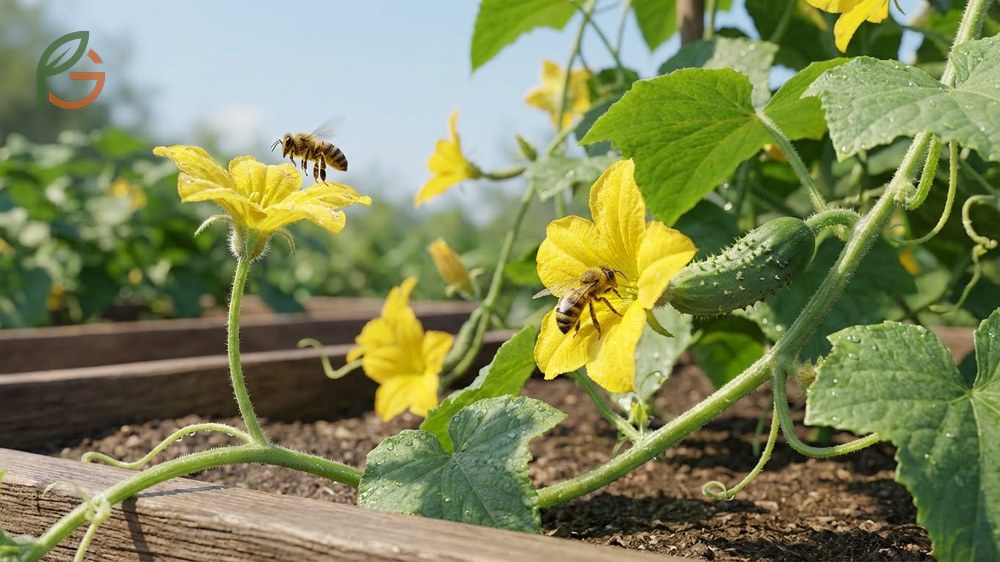
Male vs female cucumber flowers serve different roles in producing your harvest. Research shows that cucumber plants produce 10 to 20 male flowers for every female flower[1], and each female flower needs 8 to 12 pollinator visits in a single day to develop marketable fruit[2]. Understanding these differences helps you maximize your cucumber yield, whether you’re relying on bees or pollinating by hand. FruitGarden synthesizes current horticultural research to help you grow more productive cucumber plants.
Quick Answer
- Male cucumber flowers have thin stems and produce pollen through visible stamens, appearing in clusters of 3-5 blooms
- Female flowers grow individually with a miniature cucumber (ovary) at the base and require 8-12 bee visits[2] for proper fruit development
- Honey bees account for 98% of pollinator visits[2] to cucumber flowers in commercial fields
- Hand pollination takes 5-10 minutes in early morning (6-10 AM) when pollen is most viable and stigmas are receptive
Male vs Female Cucumber Flowers
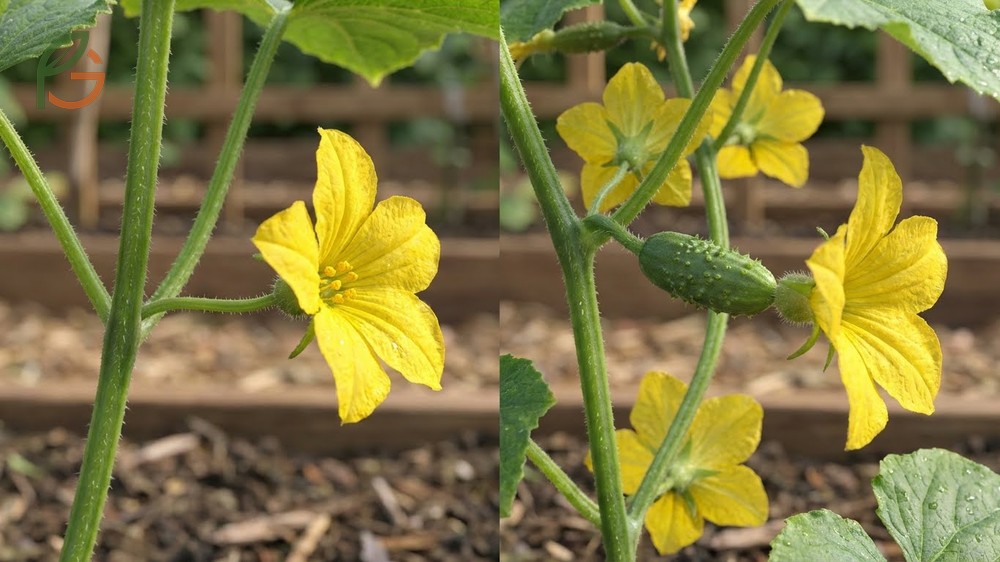
Cucumber plants produce two distinct flower types that work together for reproduction. Male flowers develop first and in greater numbers to ensure pollen availability when female flowers emerge. Studies show the male-to-female ratio ranges from 10:1 to 20:1[1], though this varies based on growing conditions and variety.
Research demonstrates that temperature and day length influence flower gender expression. Higher temperatures and longer days promote more male flowers, while cooler conditions favor female flower development. This natural balance ensures plants don’t waste energy producing fruit until adequate pollen sources exist.
The first 10 to 20 flowers on a standard cucumber plant are typically male[1]. Female flowers appear later as the plant matures and establishes sufficient foliage to support fruit production.
Structural Differences
Male cucumber flowers attach to the vine with thin, straight stems measuring 2-3 inches long. They display bright yellow petals around a central column containing stamens with visible pollen-producing anthers. The flower opens flat with five distinct petals.
Female flowers have thicker stems and feature the most recognizable difference: a miniature cucumber at the base. This swollen ovary sits between the stem and flower, appearing as a tiny fruit even before pollination occurs. The flower center contains a multi-lobed stigma instead of stamens.
Blooming Patterns
Male flowers bloom approximately 10 days before female flowers on the same plant[3]. This timing ensures mature pollen is available when females become receptive. Both flower types open in early morning and remain viable for only one day.
Cucumber flowers are most receptive to pollination between 6 AM and 10 AM[4]. Stigmas lose receptivity as temperatures rise throughout the day, and pollen becomes less viable after midday.
Flower Density and Location
Male flowers grow in clusters of 3 to 5 blooms along the main vine and side shoots. This clustering maximizes pollen availability and attracts more pollinators through concentrated color and scent signals.
Female flowers develop individually on shorter stems along the vine sides. They space themselves to allow adequate resources for fruit development if pollination succeeds. Each female flower represents a potential cucumber in your harvest.
Important Note: Don’t remove male flowers thinking they’re unproductive. Your plant needs those males to pollinate the females, and you’ll see no fruit development without adequate pollen transfer.
Identifying Cucumber Flowers
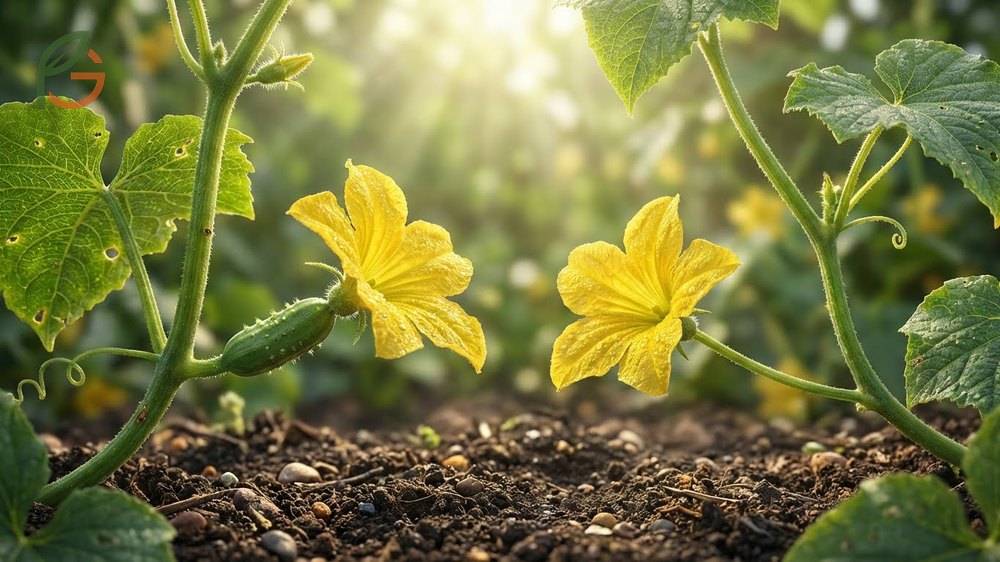
The quickest identification method requires no close examination. Look at the base of each flower where it connects to the stem. Any flower with a small, cucumber-shaped swelling beneath it is female.
Male flowers attach directly to thin stems with no swelling or fruit structure. This visual check works from several feet away and doesn’t require touching the delicate blooms. Most gardeners master this identification within days of observing their plants.
Visual Identification Methods
Size provides another identification clue, though it’s less reliable than checking for the basal fruit. Female flowers often appear slightly larger and darker yellow than males. They also feel heavier when you gently lift them due to the developing ovary.
Flower clustering offers a third identification approach. Groups of 3-5 flowers on the same node are always male. Single flowers growing alone are typically female, especially if they appear on the vine’s sides rather than tips.
- Male flowers have plain, thin stems with no fruit structure visible at the base
- Female flowers display a miniature cucumber (ovary) between the flower and stem
- Male blooms appear in tight clusters of 3-5 flowers on the same stem
- Female flowers grow individually, spaced along the vine rather than clustered
- Both flower types open in early morning and close or wilt by late afternoon
Reproductive Parts
Looking inside the flower reveals the definitive identification. Male flowers contain a central column (stamen) with a visible anther covered in bright yellow, powdery pollen. You can see and feel this pollen when you touch the center gently.
Female flowers have a different center structure called the pistil. The top features a sticky, multi-lobed stigma designed to catch and hold pollen grains. Below the stigma, a style connects to the ovary that will become your cucumber.
From My Experience: My cousin in Guadalajara, Mexico grows Armenian cucumbers and noticed female flowers appearing 8 days after the first males in spring 2024—slightly earlier than the typical 10-day gap[3], likely due to ideal temperatures around 75°F (24°C).
Hand Pollination Cucumbers
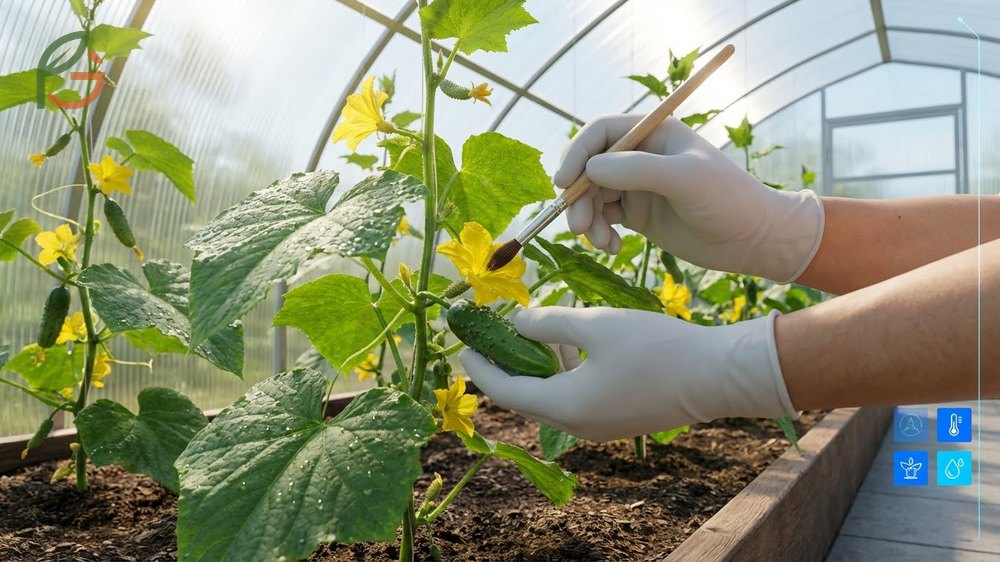
Hand pollination becomes necessary when bee populations are low, when growing in screened areas, or when you want to guarantee fruit set on specific female flowers. The process takes 5-10 minutes and significantly increases your harvest in environments with limited natural pollinators.
Research shows that each female stigma should receive several hundred pollen grains for optimal fruit development[4]. Hand pollination allows you to control this transfer directly, ensuring complete coverage of the stigma surface.
When to Pollinate
Pollinate between 6 AM and 10 AM when flowers have just opened. Morning provides the best conditions because pollen is fresh, stigmas are most receptive, and flowers haven’t begun wilting from heat. Pollen viability drops significantly after midday[4].
Check your plants daily during the flowering period. Both male and female flowers open for only one day, so you can’t delay pollination until tomorrow. The window for successful pollination closes when flowers begin to wilt in late morning or early afternoon.
Pollination Technique
Select a fresh male flower with visible yellow pollen on the central anther. Either remove the entire male flower and strip away the petals, or use a small paintbrush or cotton swab to collect pollen from the anther. Fresh pollen appears powdery and bright yellow.
Locate an open female flower and gently brush or rub the pollen onto the sticky stigma in the center. Cover all lobes of the stigma with pollen for best results. One male flower provides enough pollen for 2-3 female flowers[5].
- Gather supplies: small paintbrush, cotton swab, or pick male flowers directly
- Identify fresh male flowers with visible yellow pollen on the central stamen
- Collect pollen by swirling brush/swab in the male flower or removing petals from picked flower
- Locate open female flowers with miniature cucumbers at the base
- Transfer pollen to the female stigma by brushing all lobes thoroughly
- Pollinate multiple females to increase chances of fruit set and account for potential failures
- Check pollinated flowers after 2-3 days—successful pollination shows cucumber growth while failed flowers yellow and drop
Timing Tip: Female cucumber flowers can fall off the stem easily when handled. Support the flower gently from below while pollinating to prevent accidental breakage at the stem connection point.
Cucumber Flower Types
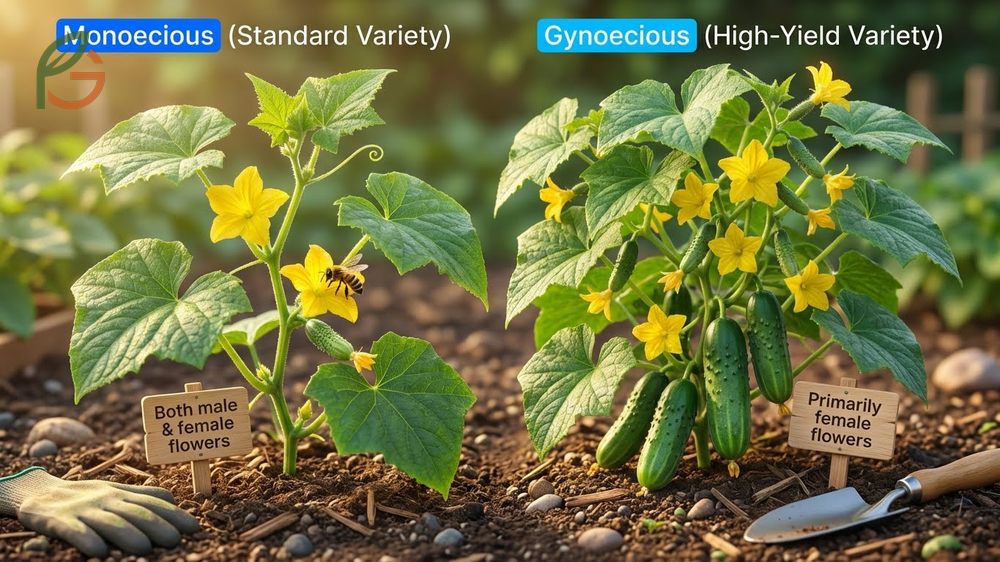
Standard cucumber varieties produce monoecious flowers, meaning both male and female flowers grow on the same plant. This is the most common type in home gardens and requires pollination for fruit development. These plants follow the typical pattern of producing many males before females appear.
Gynoecious varieties are bred to produce primarily or exclusively female flowers. These varieties dramatically increase yield potential since nearly every flower can become a cucumber. However, seed packets often include a small percentage of standard seeds to provide necessary male flowers for pollination.
Parthenocarpic cucumbers represent a third type that produces fruit without pollination. All flowers are female and develop seedless cucumbers without requiring pollen transfer. These varieties work well in greenhouses or areas with few pollinators. Popular parthenocarpic varieties include Diva, Passandra, and Picolino[6].
This table compares three cucumber flower types by pollination requirements, male to female flower ratios, and ideal growing environments
| Variety Type | Pollination Need | Male:Female Ratio | Best For |
|---|---|---|---|
| Monoecious (Standard) | Required | 10-20:1[1] | Open gardens with natural pollinators |
| Gynoecious | Required | Mostly female (2-5% male) | High-yield commercial production |
| Parthenocarpic | None (seedless fruit) | All female | Greenhouses and screened growing areas |
- Monoecious varieties suit traditional gardens where bees and other pollinators visit regularly
- Gynoecious types maximize production in commercial fields with managed pollinator populations
- Parthenocarpic cucumbers eliminate pollination concerns but produce seedless fruit
- Standard varieties tolerate cross-pollination with other cucumber types without affecting current season fruit
- Parthenocarpic varieties must stay isolated from standard types to prevent seeded, potentially misshapen fruit
Honey bees account for 98% of pollinator visits in commercial cucumber fields[2], making them essential for monoecious and gynoecious varieties. Native bees contribute less to cucumber pollination compared to other crops because cucumber flowers offer limited nectar rewards.
Fields using stationary bee colonies show 14% higher yields of grade 1-4 cucumbers compared to mobile colonies[2]. This demonstrates that consistent pollinator presence throughout the flowering period significantly impacts harvest quality and quantity.
Conclusion
The evidence is clear: understanding male vs female cucumber flowers directly impacts your harvest success. Male flowers provide essential pollen while females develop into the cucumbers you harvest, with each female requiring 8-12 pollinator visits or one thorough hand-pollination session to produce quality fruit.
Current gardening guidance emphasizes monitoring flower ratios and pollinator activity during peak bloom periods. Whether you’re growing standard varieties that depend on bees or choosing parthenocarpic types for controlled environments, matching your variety to your growing conditions ensures consistent cucumber production throughout the season.
Frequently Asked Questions
How do you tell if a cucumber flower is male or female?
Check the base where the flower connects to the stem. Female flowers have a miniature cucumber (swollen ovary) between the flower and stem, while male flowers attach with thin, plain stems and no fruit structure. This visual check works from a distance and requires no close examination of flower parts.
Should I remove male flowers from cucumber plants?
Never remove male cucumber flowers unless you’re growing parthenocarpic varieties that don’t need pollination. Standard cucumber plants need male flowers to pollinate females, and removing them eliminates your fruit production. Plants naturally produce 10-20 male flowers for every female to ensure adequate pollen availability.
What time of day should I hand pollinate cucumbers?
Hand pollinate between 6 AM and 10 AM when flowers have just opened. Morning hours provide the most viable pollen and receptive stigmas, with effectiveness dropping significantly after midday. Both male and female flowers remain open for only one day, so you can’t delay pollination until the next morning.
How many times do you pollinate a cucumber flower?
Pollinate each female flower once with thorough coverage of all stigma lobes using pollen from one fresh male flower. Research shows female stigmas need several hundred pollen grains for optimal fruit development. In nature, bees make 8-12 visits to achieve this coverage, but one complete hand-pollination session accomplishes the same result.
Why does my cucumber plant have flowers but no cucumbers?
Your plant likely has only male flowers at this stage, or female flowers aren’t getting pollinated. The first 10-20 flowers on cucumber plants are typically male, with females appearing later. If you see female flowers (with tiny cucumbers at the base) but no fruit development, insufficient pollination is the cause—either add hand pollination or attract more bees to your garden.
Can you use a male cucumber flower from one plant to pollinate a female on another?
Yes, you can transfer pollen between different cucumber plants of the same species without any problems. Cross-pollination between plants doesn’t affect the current season’s fruit quality or characteristics. However, if you save seeds from cross-pollinated fruit, next year’s plants might show combined traits from both parent plants.
Do all female cucumber flowers turn into cucumbers?
Not all female flowers develop into harvestable cucumbers. Unpollinated flowers yellow and drop within 2-3 days. Even pollinated flowers may abort if the plant experiences stress from inadequate water, extreme temperatures, or nutrient deficiencies. Healthy plants with proper pollination typically develop 60-80% of female flowers into mature cucumbers.