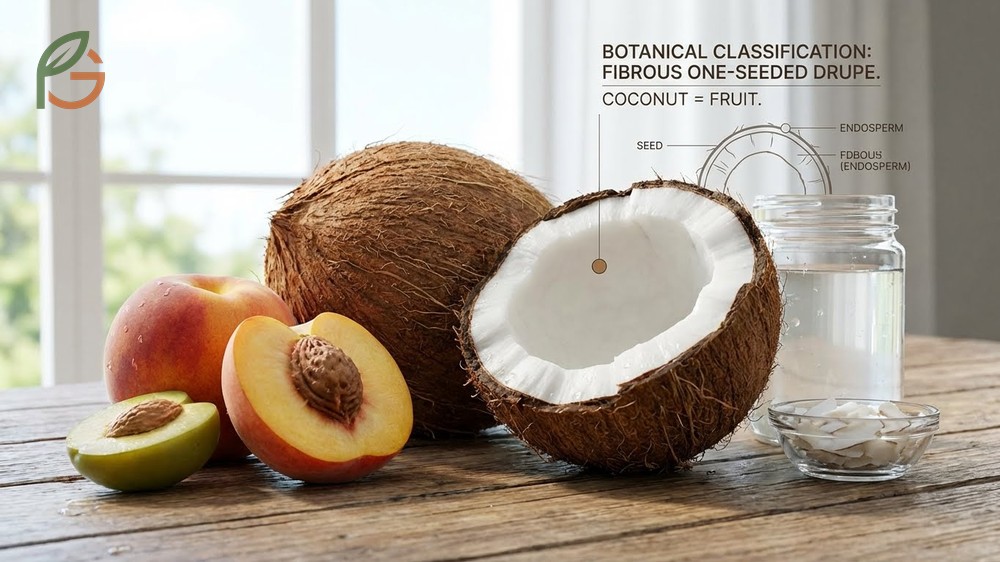
Is coconut a fruit? Yes, botanically speaking, coconuts are fibrous one-seeded drupes, just like peaches and olives. Research shows this tropical staple fits multiple definitions—it’s technically a fruit, but can also be called a nut or seed depending on how you classify it. FruitGarden synthesizes current botanical research to clarify what coconuts really are and why they’re so unique in the plant kingdom.
Quick Answer
- Coconuts are fibrous one-seeded drupes, not true nuts[1]
- They have three distinct layers: exocarp (outer skin), mesocarp (fibrous husk), and endocarp (hard shell)[1]
- Coconut palms belong to the Arecaceae family and are monocots, not dicots[2]
- The name comes from Portuguese “coco” meaning skull, referring to the three “eyes” on the shell[3]
Is Coconut a Fruit
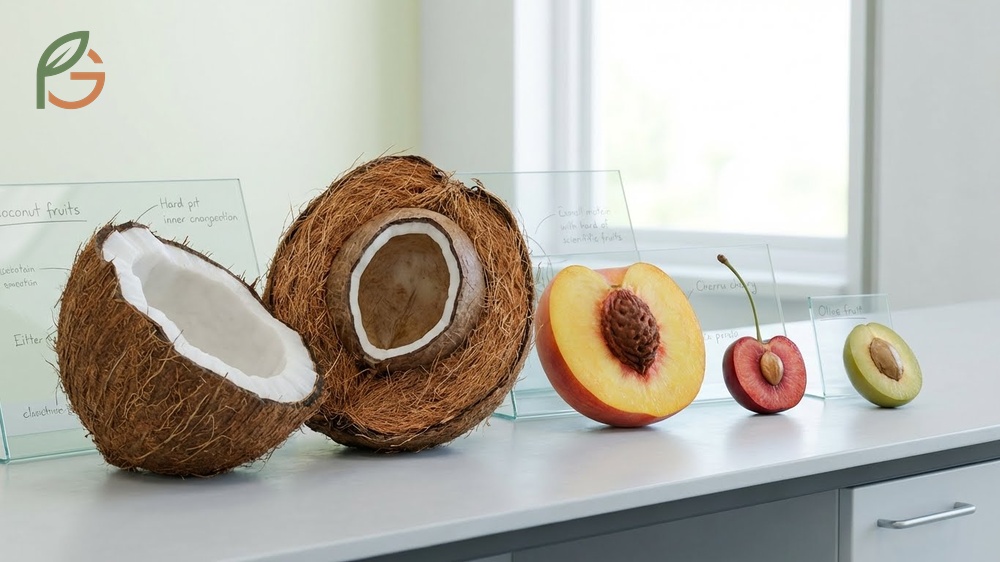
Botanically, coconuts are definitely fruits—specifically, they’re fibrous one-seeded drupes. Studies demonstrate that drupes develop from a single fertilized ovary and contain a hard stone surrounding the seed, just like cherries, peaches, and olives[1]. What makes coconuts unique is their dry, fibrous nature rather than the fleshy exterior we see in most drupes.
The confusion comes from everyday language versus scientific terminology. If you’re like most Americans, you’ve probably heard coconuts called nuts your whole life. That’s because loose definitions allow the coconut to fit multiple categories simultaneously—it’s a fruit by botanical standards, but also meets casual definitions of nuts and seeds.
Research across botanical databases confirms that coconuts belong to the palm family (Arecaceae) and are the only living species in the genus Cocos[2]. This classification matters when you’re growing coconut palms or studying tropical fruit cultivation. Understanding what coconuts really are helps you make better decisions about planting conditions and care requirements.
Botanical Definition of Coconut
Current botanical guidance defines coconuts as fibrous one-seeded drupes, also called dry drupes. Unlike fleshy drupes where you eat the mesocarp (think peach flesh), coconuts have a tough, fibrous mesocarp that most people never see. The part we buy at stores is actually just the inner seed with its hard endocarp shell still attached.
The botanical definition is based on how the fruit develops from the flower’s ovary. After pollination, the coconut palm’s female flower transforms into a drupe with three distinct layers protecting a single seed. This developmental pattern is what botanists use to classify coconuts as true fruits, regardless of what we call them in everyday conversation.
Is Coconut a Drupe
Yes, coconuts are classic examples of drupes. A drupe is any fruit with a hard, stony covering (endocarp) that encloses the seed—the term comes from the Latin word “drupa,” meaning overripe olive[1]. Evidence from fruit biology studies shows coconuts share this structure with peaches, plums, and almonds.
What sets coconuts apart from other drupes is their adaptation for water dispersal. The fibrous husk makes them buoyant, allowing them to float across oceans and colonize distant shores. This is why you’ll find coconut palms on tropical beaches worldwide—they’ve literally traveled the seas to get there.
Is a Coconut a Fruit
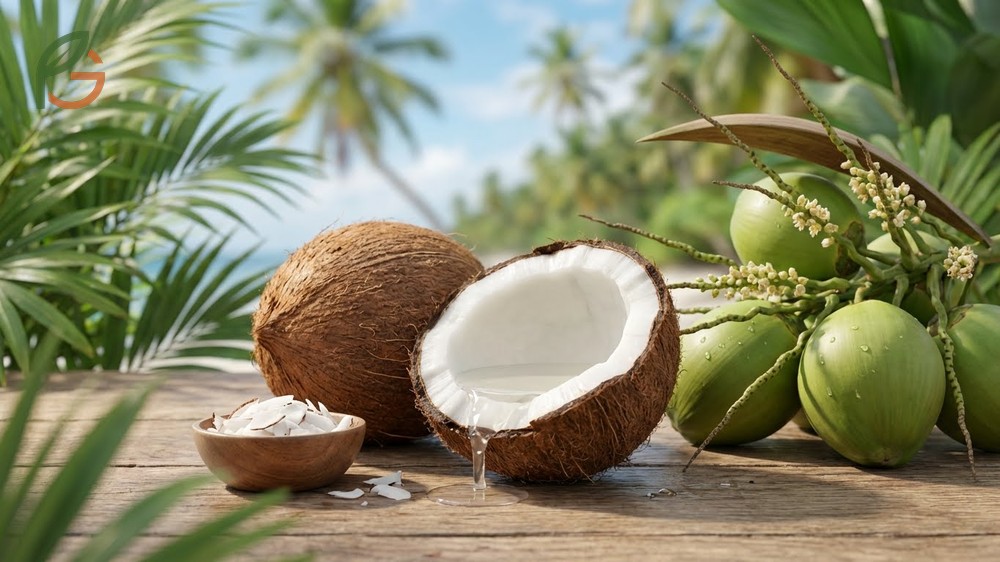
Yes, coconuts are fruits because they develop from the flower of the coconut palm and contain the plant’s seeds. The botanical definition of a fruit is simple: it’s the mature ovary of a flowering plant, usually containing seeds. Coconuts fit this definition perfectly, even though they don’t look like apples or oranges.
The white flesh you eat is actually the endosperm—a nutrient-rich tissue that feeds the developing embryo. Coconut water is also endosperm, just in liquid form. Together, these parts make up the seed that’s housed within the fruit’s protective layers.
From My Experience: My cousin in Guadalajara, Mexico planted coconut palms in her backyard in 2022. The trees took about 6-8 years to produce their first fruits—matching the typical 5-7 year range from agricultural studies—and now she’s getting steady harvests for her small tropical fruit garden.
Parts of a Coconut
Every coconut has three protective layers, though you usually only see one when shopping. The outermost exocarp is a smooth, thin skin that’s often green or yellow on fresh coconuts. Beneath that sits the mesocarp—the thick, fibrous husk that’s typically removed before coconuts reach stores.
The hard brown shell you crack open is the endocarp, the third and innermost layer. This woody covering is what makes coconuts so durable and able to survive months floating in saltwater. Inside the endocarp, you’ll find the seed, which consists of the white coconut meat (solid endosperm) and coconut water (liquid endosperm).
- Exocarp: Smooth outer skin, usually green or brown depending on maturity
- Mesocarp: Thick fibrous husk (coir) that provides buoyancy and protection
- Endocarp: Hard woody shell with three germination pores (the “eyes”)
- Seed coat (testa): Thin brown layer between shell and white flesh
- Endosperm: White coconut meat and water that nourish the embryo
- Embryo: Tiny plant that emerges from one of the three pores during germination
Important Note: When you buy coconuts at grocery stores, you’re getting just the endocarp and seed—the outer two layers have already been removed. Fresh coconuts straight from the tree weigh 3-4 times more because they include the heavy, fibrous husk.
Coconut vs True Nuts
Coconuts aren’t true nuts despite the name. A true nut is indehiscent, meaning it doesn’t open at maturity to release its seed—think acorns, chestnuts, or hazelnuts[1]. True nuts also develop from a compound ovary and have a hard shell that’s actually the fruit wall, not a seed covering.
Coconuts fail both tests. Their hard shell is the endocarp (part of the fruit), not the actual nut covering. They also open naturally through germination pores, whereas true nuts need to decay or get eaten by animals before their seeds are released.
Is Coconut a Nut
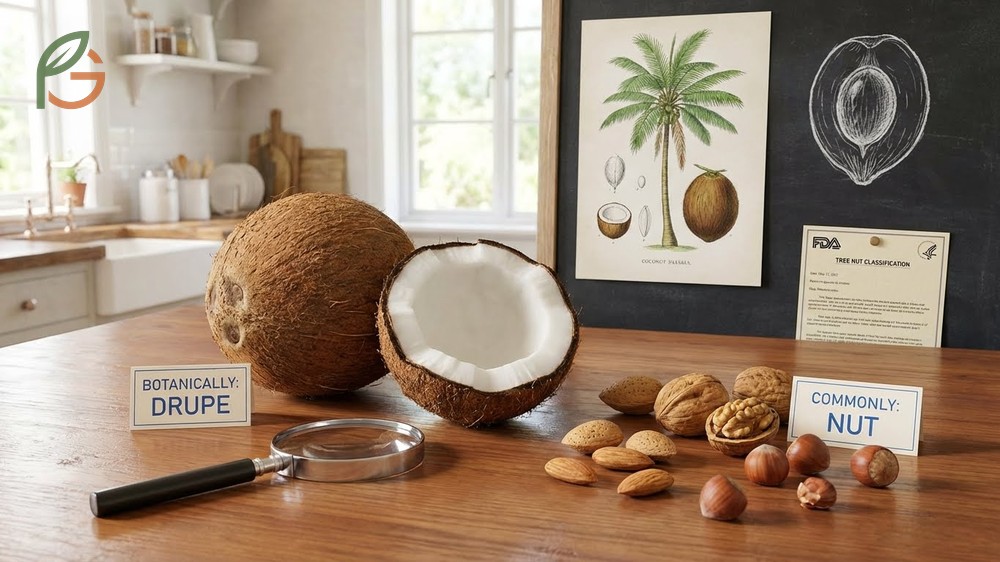
It depends on your definition. Scientifically, coconuts aren’t true nuts—they’re drupes with very different botanical structures. However, using loose everyday definitions, coconuts can be called nuts since they’re one-seeded fruits with hard shells. Agricultural data shows this confusion extends even to regulatory agencies.
The FDA in the United States classifies coconuts as tree nuts for food labeling purposes, even though botanists disagree with this categorization[4]. This matters for people with tree nut allergies—you can be allergic to walnuts or pecans without reacting to coconuts, since they’re not botanically related. Always check with your doctor if you’re uncertain.
The word “nut” in coconut is really just a naming convention from centuries ago, not a scientific classification. Portuguese and Spanish explorers called them “coco” nuts based on their skull-like appearance, and the name stuck even though modern botany has more precise terminology.
- True nuts (acorns, hazelnuts) don’t open at maturity; coconuts germinate through three visible pores
- True nut shells are the hardened ovary wall; coconut shells are the fruit’s inner layer (endocarp)
- True nuts come from trees with compound flowers; coconut palms are monocots with simple flower structures
- True nuts typically contain one seed with no additional layers; coconuts have endosperm (meat and water) plus an embryo
- True nuts grow in temperate climates; coconuts thrive exclusively in tropical zones between 26-30°C (79-86°F)
What Is a Coconut
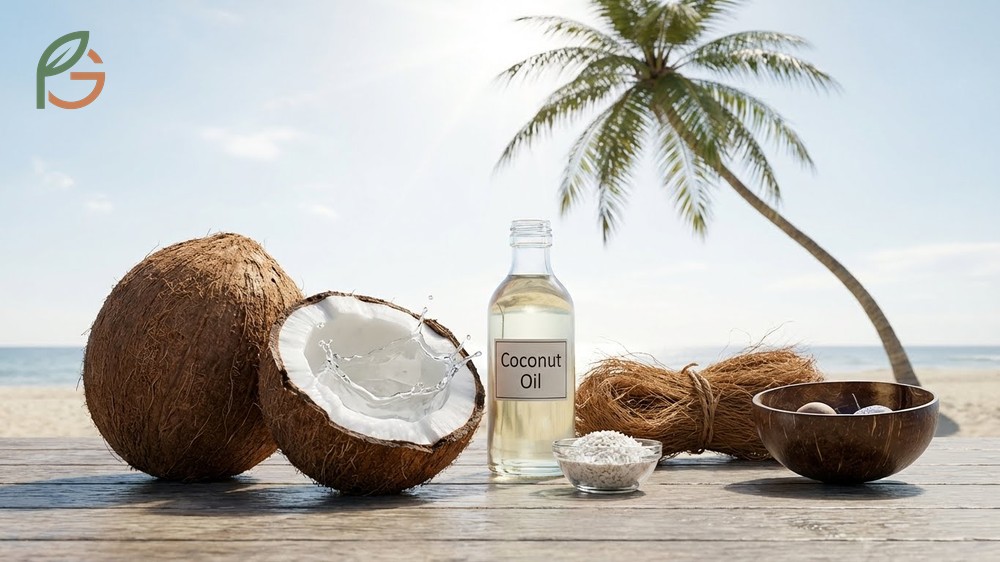
Coconuts are the fruit of Cocos nucifera, a tropical palm tree and the only living species in its genus. These palms are monoecious, meaning both male and female flowers grow on the same tree—specifically, on the same flower spike called a spadix[2]. This reproductive strategy helps ensure successful pollination even on isolated islands.
From a practical standpoint, coconuts are one of the world’s most versatile crops. You get food (meat, water, oil), materials (coir fiber, shells), and even fuel from a single harvest. This is why coconut palms are often called the “tree of life” in tropical regions—they provide almost everything a household needs.
Agricultural research shows coconut palms grow best in coastal areas with sandy, well-draining soil and consistent rainfall. They’re salt-tolerant and can handle brackish groundwater, which is rare among fruit trees. This makes them ideal for beachfront gardens if you live in USDA zones 10-11.
Why Is It Called Coconut
The name comes from 16th-century Portuguese and Spanish explorers who called them “coco,” their word for head or skull. Historical records show they chose this name because the three indentations (germination pores) on one end of the coconut shell resemble a human face—two eyes and a mouth[3]. The resemblance is actually quite striking once you look for it.
There’s another layer to the etymology. “Coco” also referred to el Coco, a ghost-monster from Iberian folklore who kidnapped and ate disobedient children. The face-like appearance of coconuts apparently reminded explorers of this frightening character’s mask. English speakers later added “nut” to “coco,” creating the modern word we use today.
Classification of Palm Family
Coconut palms belong to the Arecaceae family, which includes over 2,600 species of palms worldwide. Within this family, Cocos nucifera stands alone as the single species in its genus—all other close relatives have gone extinct. This makes coconuts botanically unique and worth preserving for biodiversity.
As monocots, coconut palms have different characteristics than dicot fruit trees like apples or peaches. Research on coconut root systems shows they produce adventitious roots from the stem base rather than a central taproot—typically 2,000-4,000 roots per palm, each about 1 cm in diameter[5]. This fibrous root system spreads horizontally and helps anchor palms in sandy beach soil.
This table compares key botanical differences between coconut palms as monocots and typical fruit trees as dicots across five characteristics
| Feature | Coconut Palm (Monocot) | Apple Tree (Dicot) |
|---|---|---|
| Root System | Fibrous, adventitious roots[5] | Taproot with lateral branches |
| Leaf Veins | Parallel venation | Branching, net-like venation |
| Flower Parts | Multiples of three | Multiples of four or five |
| Stem Growth | No cambium; can’t increase diameter | Secondary growth through cambium |
| Seed Structure | One cotyledon (embryonic leaf) | Two cotyledons |
Gardening Tip: Because coconut palms are monocots, they can’t heal damage to their single growing point (apical meristem) the way dicot trees can. If you’re growing coconuts, protect the crown from injury—any damage there can kill the entire palm.
Is Coconut a Seed
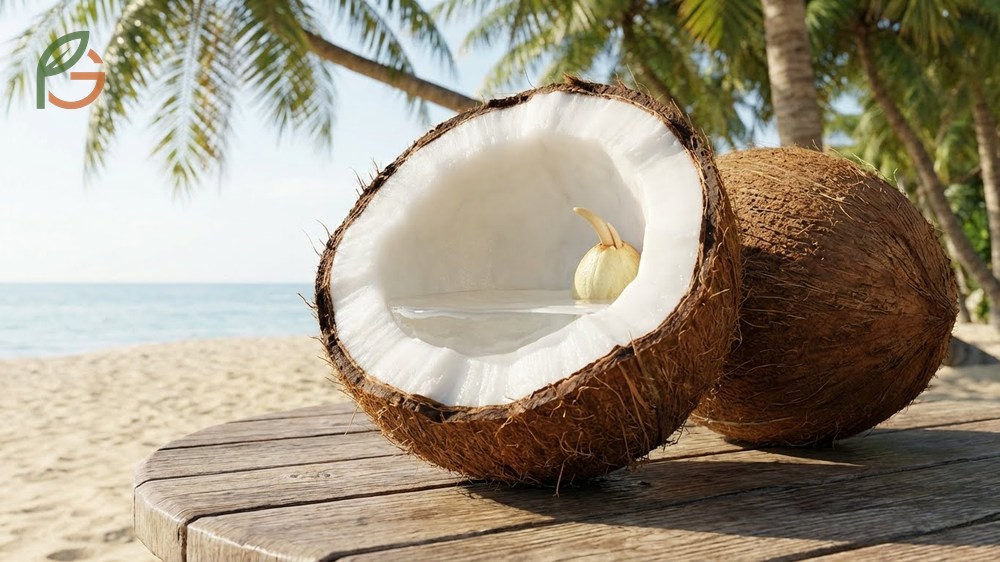
Yes, coconuts are also seeds—specifically, they’re the reproductive unit of the coconut palm. The entire structure you buy at the store (hard shell, white meat, and water) is actually a single large seed protected by the fruit’s endocarp. From a reproductive standpoint, seeds are defined as the “baby” plant plus its food supply, which is exactly what coconuts contain.
Current botanical data indicates that coconut seeds are among the largest in the plant kingdom. The embryo itself is tiny, but the nutrient reserves (endosperm) are massive—up to 500 grams of solid meat plus 200-1000 ml of coconut water depending on maturity. This abundant food supply gives coconut seedlings the energy they need to establish roots in nutrient-poor beach sand.
The seed consists of two main parts: the embryo root (hypocotyl) and embryo leaves (epicotyl). During germination, the hypocotyl emerges first through one of the three pores you see on the shell’s surface. Most people don’t realize that only one pore is functional—the other two are sealed shut and won’t produce shoots.
How Coconuts Reproduce
Coconuts reproduce through seed germination, typically after they fall from the palm and rest on the ground for 1-6 months. Agricultural studies show that 60-95% of naturally fallen coconuts successfully germinate under ideal conditions. The germination process begins when a shoot and roots emerge from the functional pore, drawing nutrients from the endosperm inside.
What’s fascinating is that coconuts can survive extended ocean voyages—sometimes months at sea—and still germinate when they wash ashore on distant islands. The thick, fibrous husk provides buoyancy and protects the seed from saltwater damage. This natural dispersal mechanism is how coconuts colonized Pacific islands thousands of years before humans arrived.
When you’re growing coconuts from seed, you don’t need to remove the hard shell. Just lay the coconut on its side in well-draining soil, keeping the bottom third buried. The shoot will find its way out through the germination pore within 3-6 months if temperatures stay consistently warm (26-30°C or 79-86°F).
- Month 1-2: Coconut absorbs moisture; internal changes prepare the embryo for growth
- Month 3-4: Shoot (plumule) emerges from functional pore; first root breaks through bottom of husk
- Month 5-6: Seedling develops 2-3 leaves; root system establishes in soil; still drawing nutrients from endosperm
- Month 7-12: Young palm reaches 30-60 cm tall; begins photosynthesis; endosperm fully depleted
- Year 2-3: Palm grows 1-2 meters; develops characteristic pinnate fronds; requires regular watering and fertilizer
- Year 5-7: Mature enough to produce first flowers and fruit; enters productive phase that can last 60-80 years
Conclusion
The evidence is clear: coconuts are fruits—specifically, fibrous one-seeded drupes with three protective layers. They’re not true nuts despite the name, though they can loosely be called nuts, seeds, or fruits depending on the context. Current botanical guidance emphasizes their classification as drupes within the palm family Arecaceae, making them monocots rather than dicots like most familiar fruit trees.
For gardeners and fruit enthusiasts, understanding coconut classification helps with cultivation decisions. These tropical palms thrive in sandy, well-draining soil at temperatures between 26-30°C (79-86°F), and they reproduce through large, buoyant seeds that can germinate months after falling. Whether you call them fruits, nuts, or seeds, coconuts remain one of nature’s most versatile and fascinating botanical creations. FruitGarden continues to provide research-based insights on tropical fruit cultivation for American gardeners exploring new growing possibilities.
Frequently Asked Questions
What is the coconut classified as?
Coconuts are classified as fibrous one-seeded drupes, which are a type of fruit. They belong to the palm family (Arecaceae) and are the only living species in the genus Cocos. While commonly called nuts, they’re not botanically true nuts like acorns or hazelnuts.
Is a coconut a fruit or a vegetable?
Coconuts are fruits, not vegetables. They develop from the flower’s ovary and contain seeds, meeting the botanical definition of fruit. Vegetables are typically other plant parts like leaves (lettuce), roots (carrots), or stems (celery), none of which apply to coconuts.
Is coconut a fruit, nut, or vegetable?
Coconuts are primarily fruits (drupes) in botanical terms. They can also be considered seeds since the whole structure is a reproductive unit. Using loose definitions, they qualify as nuts too—but they’re definitely not vegetables. The confusion comes from everyday language versus scientific classification.
Do coconuts have seeds?
Yes, coconuts contain one large seed—in fact, the entire coconut you buy at the store is the seed. The white meat is the endosperm (food supply), and the tiny embryo is located near one of the three pores. When the seed germinates, a shoot emerges from that pore to grow into a new palm.
Is a coconut a nut or a fruit?
Scientifically, coconuts are fruits (drupes), not true nuts. However, the FDA classifies them as tree nuts for labeling purposes, and casual definitions allow calling them nuts. The hard shell is the fruit’s endocarp, not a nut covering, which is why botanists insist they’re drupes.
Why is it called a coconut if it’s not a nut?
The name comes from 16th-century Portuguese explorers who called them “coco” (skull) because the three pores resemble a face. English speakers added “nut” later, creating “coconut.” The name stuck even though modern botany classifies them as drupes, not true nuts.
What is the difference between a drupe and a nut?
Drupes have three layers (exocarp, mesocarp, endocarp) protecting a seed and develop from a single ovary. True nuts are indehiscent (don’t open at maturity), have a hard shell that’s the fruit wall itself, and come from compound ovaries. Coconuts, peaches, and cherries are drupes; acorns and hazelnuts are true nuts.