Is avocado low FODMAP? Yes, when you stick to the right portion size. Recent research from Monash University shows that 60g servings are safe for people following a low FODMAP diet[1]. This means you can enjoy avocado’s creamy texture and health benefits without triggering IBS symptoms. FruitGarden compiles current digestive health research to help you make informed choices about fruit consumption.
Quick Answer
Is Avocado Low FODMAP
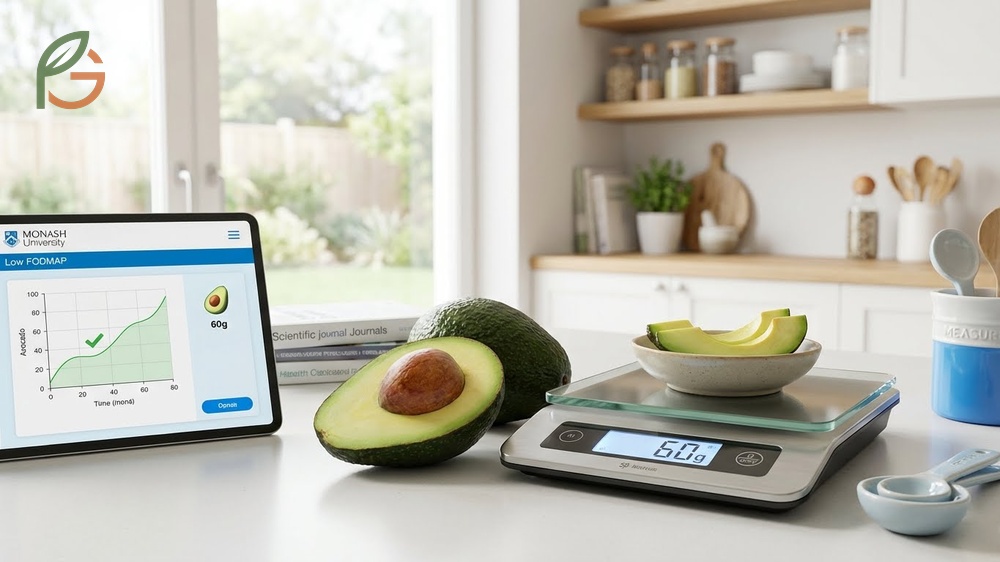
Research confirms that avocados can fit into a low FODMAP diet when you control portion sizes. Monash University, the leading authority on FODMAP research, recently updated their guidelines to show that 60g servings contain low levels of FODMAPs[1]. This represents a significant increase from the previous recommendation of 30g.
The key is understanding how avocados affect your digestive system. Unlike many fruits high in fructose, avocados contain a unique sugar polyol called perseitol that behaves differently in your gut. When you eat portions larger than 60g, this compound can draw water into your intestines and trigger IBS symptoms like bloating, gas, and cramping[4].
Current data indicates that avocados offer substantial nutritional value even in small servings. A 60g portion delivers approximately 4g of fiber and healthy monounsaturated fats that support heart health[5]. This makes them worth including in your IBS-friendly meal plan.
What Are FODMAPs
FODMAPs stands for Fermentable Oligosaccharides, Disaccharides, Monosaccharides, and Polyols—a group of carbohydrates that aren’t fully digested in your small intestine. Instead, they travel to your colon where gut bacteria ferment them, producing gas and drawing water into your digestive tract[6]. For people with IBS, this process triggers uncomfortable symptoms.
Studies demonstrate that reducing FODMAP intake can significantly improve digestive comfort. The low FODMAP diet involves three phases: elimination, reintroduction, and personalization. During the elimination phase, you limit high FODMAP foods for 2-6 weeks to establish a symptom baseline.
Research shows that 70-75% of IBS patients experience symptom relief on a low FODMAP diet. However, this approach isn’t meant to be permanent—you’ll gradually reintroduce foods to identify your specific triggers and create a personalized eating pattern.
Perseitol in Avocados
Perseitol is a rare sugar polyol naturally found in avocados that researchers at Monash University identified using high-performance liquid chromatography (HPLC)[2]. Previous testing suggested avocados contained sorbitol, but newer analysis revealed this mystery compound was actually perseitol.
The perseitol content varies based on ripeness. Unripe avocados contain higher concentrations than ripe ones, meaning the fruit becomes more digestible as it softens[2]. This explains why some people tolerate ripe avocados better than firm ones.
Like other polyols, perseitol can cause IBS symptoms by drawing water into your intestines when consumed in large amounts. This osmotic effect leads to looser stools and increased bowel frequency for FODMAP-sensitive individuals[4].
Low FODMAP Serving
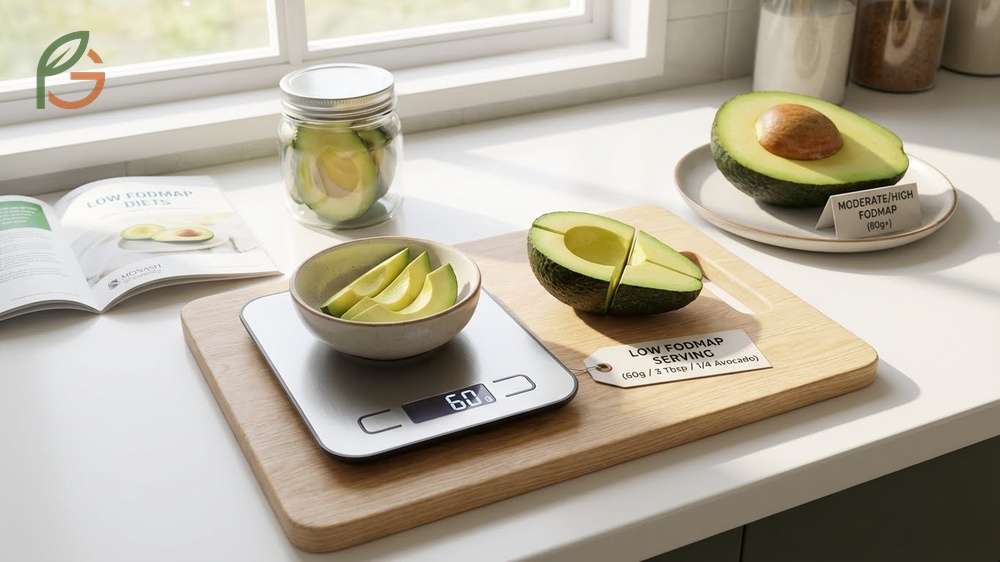
The recommended low FODMAP serving size for avocado has doubled from 30g to 60g based on updated Monash University testing[1]. This translates to approximately 3 tablespoons or one-quarter of a medium avocado. Research confirms this portion keeps perseitol levels low enough to prevent symptoms in most people following the elimination phase.
Larger servings shift into moderate and high FODMAP categories. Half an avocado (80g) contains a moderate amount of perseitol, while portions exceeding 100g are considered high FODMAP[7]. This gradual increase matters because it gives you flexibility once you’ve completed the reintroduction phase.
Evidence suggests that individual tolerance varies significantly. Some people handle larger portions without issues, while others need to stick strictly to the 60g guideline. Your personal threshold depends on your gut sensitivity and how many other FODMAP-containing foods you’ve eaten that day.
Important Note: Wait 3-4 hours between avocado servings to prevent FODMAP stacking. Eating multiple 60g portions too close together can overwhelm your digestive system and trigger symptoms even though each individual serving is technically low FODMAP.
Updated Serving Guidelines
Monash University’s 2024 update reflects more precise testing methods that can now detect and measure perseitol specifically. The new 60g recommendation represents approximately one-quarter of a medium Hass avocado or 3 level tablespoons of mashed avocado[1].
This change provides more flexibility for creating satisfying meals. You can now add a generous dollop to your gluten-free toast or include avocado in your lunch salad without worrying about exceeding safe limits. Research shows this portion delivers meaningful nutrition while staying within FODMAP thresholds.
Current guidance emphasizes checking the Monash FODMAP app for the most accurate information. The app updates regularly as new testing reveals more about how foods affect digestion. This ensures you’re working with evidence-based recommendations rather than outdated guidelines.
How to Measure Portions
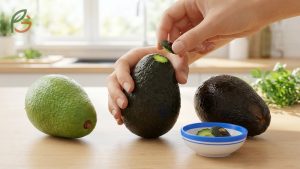
Using a kitchen scale gives you the most accurate measurement. Place your plate on the scale, zero it out, then add avocado until you reach 60g. This method works better than eyeballing because avocados vary significantly in size—some “medium” avocados weigh 200g while others reach 300g.
If you don’t have a scale, visual cues help. One-quarter of a typical Hass avocado approximates 60g. Three level tablespoons of mashed avocado also hits this target. For sliced avocado, think 4-5 thin slices.
Studies demonstrate that consistent portion control matters more than occasional overages. If you accidentally eat 80g one day, don’t panic—just return to the 60g guideline at your next meal. The cumulative effect of daily choices determines your symptom patterns.
- Weigh 60g on a digital kitchen scale for precision
- Use 3 level tablespoons of mashed avocado (20ml tablespoons)
- Cut one-quarter of a medium Hass avocado
- Count 4-5 thin slices from a medium avocado
- Mark your serving container at the 60g line for quick reference
Avocado IBS Diet
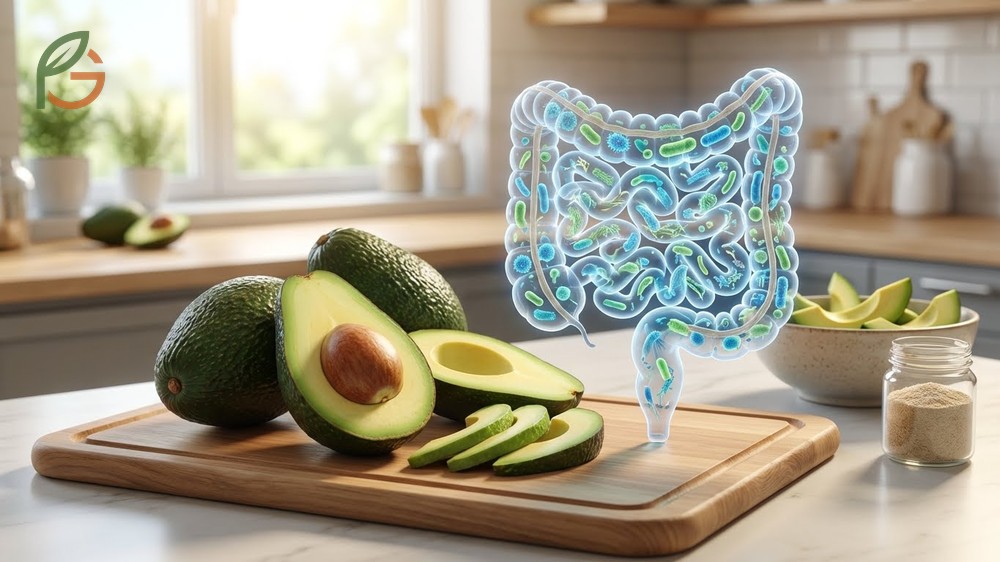
Avocados offer unique benefits for people managing IBS beyond their low FODMAP status. Research demonstrates that daily avocado consumption improves gut microbiome diversity and increases beneficial bacteria that break down dietary fiber[8]. This matters because a diverse microbiome supports better digestive function overall.
The fiber and healthy fats in avocados work together to promote digestive health. A 60g serving provides approximately 4g of dietary fiber—about 14% of your daily target[5]. This includes both soluble fiber that feeds beneficial gut bacteria and insoluble fiber that supports regular bowel movements.
Studies show that avocado consumption reduces bile acids and increases short-chain fatty acids (SCFAs) in the gut. SCFAs strengthen your intestinal lining and help maintain gut barrier function, which can reduce inflammation and improve symptoms for some IBS patients[8].
Digestive Benefits
The monounsaturated fats in avocados support nutrient absorption and help regulate digestive inflammation. These healthy fats slow down digestion, which helps you feel fuller longer and can prevent blood sugar spikes that sometimes trigger digestive discomfort. A whole avocado contains 22g of fat, with 15g from monounsaturated sources[3].
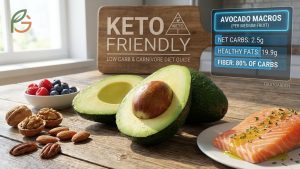
Research indicates that avocados contain approximately 80% dietary fiber in their carbohydrate content, with a 70-30 split between insoluble and soluble fiber[5]. This balance supports both gut motility and microbiome health without overwhelming your system.
The prebiotic fiber in avocados feeds beneficial bacteria like Lactobacillus and Bifidobacterium. Studies demonstrate that people eating avocado daily show increased microbial diversity compared to those who don’t, which correlates with better overall gut health and reduced IBS symptoms.
Timing Your Servings
Spacing avocado servings throughout your day prevents FODMAP stacking. If you eat 60g at breakfast, wait at least 3-4 hours before having another portion. This gives your digestive system time to process the perseitol before introducing more.
Evidence suggests that eating avocado with protein and other low FODMAP foods creates more balanced meals. Pair your 60g serving with scrambled eggs on gluten-free toast, or add it to a salad with grilled chicken and leafy greens. The protein and fat combination slows digestion and promotes satiety.
Current guidance emphasizes that avocado works best during the Elimination phase when you measure carefully. During Reintroduction, you can test larger portions to determine your personal tolerance. Some people discover they can handle 80-100g without symptoms, while others need to stick with 60g.
Timing Tip: Choose ripe avocados over unripe ones. Research shows ripe fruit contains less perseitol, making it gentler on your digestive system. Look for avocados that yield slightly to gentle pressure and have darker skin.
Avocado Portion Size
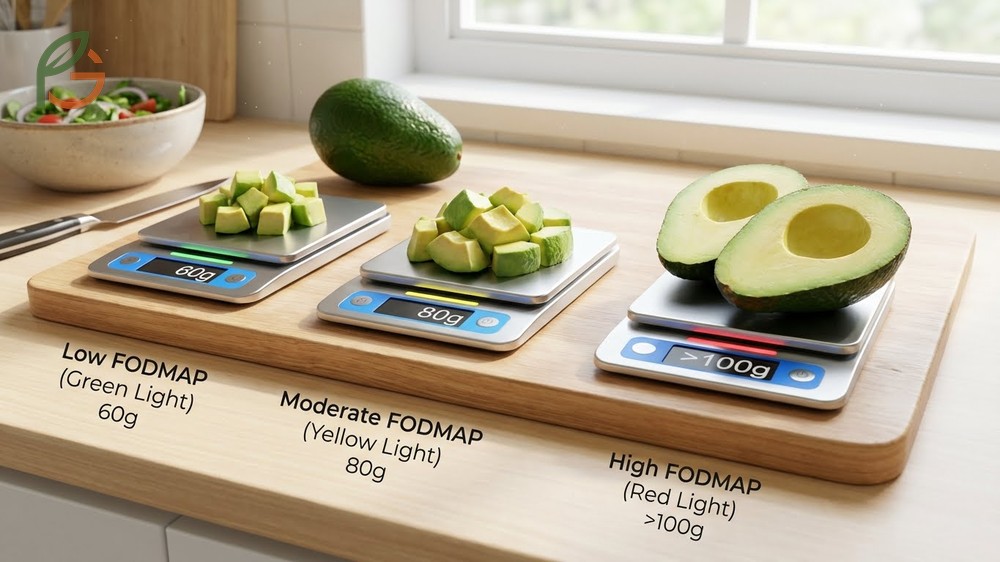
Understanding portion sizes across different FODMAP categories helps you make informed choices. Research from Monash University establishes clear thresholds: 60g is low FODMAP (green light), 80g is moderate (yellow light), and portions exceeding 100g are high FODMAP (red light)[7].
The nutritional density of avocados means even small portions deliver significant benefits. A 60g serving provides approximately 96 calories, 9g of healthy fats, and 4g of fiber. It also contributes potassium, vitamin K, folate, and vitamin E to your diet.
Studies show that most Americans actually consume about one-fifth of an avocado (30g) per serving when they eat it, though the official USDA serving size is also 30g[5]. The updated FODMAP guideline of 60g allows for more generous portions than typical consumption patterns.
This table compares serving sizes of avocado from very small to large, showing their FODMAP status, weight in grams, typical measurements, and perseitol levels
| Serving Size | Weight | Measurement | FODMAP Status | Perseitol Level |
|---|---|---|---|---|
| Very Small | 30g[9] | 1.5 tablespoons | Low FODMAP | Minimal |
| Small (Current Recommendation) | 60g[1] | 3 tablespoons / 1/4 medium avocado | Low FODMAP | Low |
| Medium | 80g[7] | 1/2 small avocado | Moderate FODMAP | Moderate |
| Large | 100g+ | 1/2 medium avocado or more | High FODMAP | High |
Research emphasizes that individual tolerance varies based on gut sensitivity, other FODMAPs consumed that day, and stress levels. What triggers symptoms for one person might be perfectly fine for another. This is why the reintroduction phase of the low FODMAP diet is essential—it helps you discover your personal thresholds.
Current data shows that the glycemic index of avocado sits at approximately 15, making it a low-glycemic food that won’t spike blood sugar[10]. This makes it suitable for people managing both IBS and blood sugar concerns.
FODMAP Friendly Foods
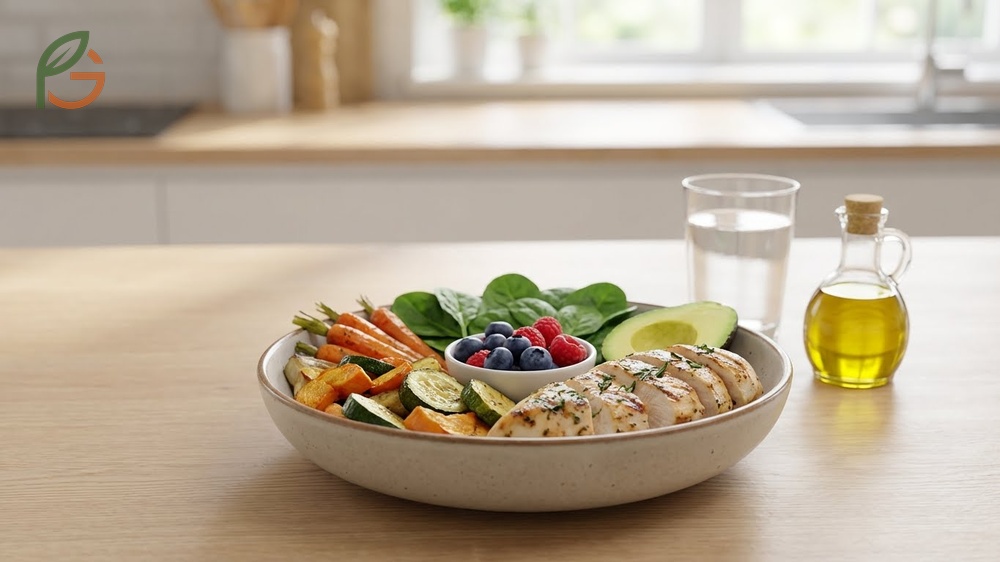
Building meals around FODMAP-friendly foods makes following the diet more sustainable. Research shows that combining low FODMAP proteins, vegetables, and healthy fats like avocado creates satisfying meals that support digestive health without triggering symptoms[6].
Studies demonstrate that diversifying your FODMAP-friendly food choices prevents nutritional gaps. While you’re limiting certain carbohydrates, you can still enjoy a wide variety of proteins, fats, and select fruits and vegetables. This variety supports both gut health and overall nutrition.
Current guidance emphasizes that the low FODMAP diet is a diagnostic tool, not a permanent eating pattern. Most people can reintroduce many foods after the elimination phase, creating a personalized diet that maximizes variety while minimizing symptoms.
- Lactose-free dairy products, aged cheeses, and plant-based milks like almond or rice milk
- Lean proteins including chicken breast, turkey, eggs, firm tofu, and most fish like salmon and cod
- Low FODMAP vegetables such as carrots, cucumbers, bell peppers, zucchini, tomatoes, and leafy greens
- Fruits including strawberries, blueberries, oranges, kiwi, and small bananas (half a medium banana)
- Gluten-free grains like rice, quinoa, oats, and corn tortillas
- Nuts and seeds in small portions, such as almonds (10 nuts), walnuts (10 halves), and pumpkin seeds (2 tablespoons)
- Herbs, spices, and condiments including ginger, chives, olive oil, vinegar, mustard, and most dried herbs
Research indicates that meal timing and portion distribution throughout the day affect symptom management. Eating smaller, more frequent meals rather than three large ones can reduce the FODMAP load at any given time and improve overall comfort.
Evidence suggests that staying hydrated supports the low FODMAP diet’s effectiveness. Water helps fiber move through your digestive system and can reduce bloating. Aim for 8-10 glasses daily, choosing low FODMAP beverages like filtered coffee, green tea, or peppermint tea.
Meal Planning Tip: Create a weekly rotation of 5-7 low FODMAP meals that include avocado in controlled portions. This prevents decision fatigue and ensures you’re not accidentally eating too much on days when you’re rushed or stressed.
Conclusion
The evidence is clear: avocado fits into a low FODMAP diet when you respect the 60g serving size guideline. Research from Monash University demonstrates that this portion provides valuable nutrition—including fiber, healthy fats, and essential vitamins—without triggering IBS symptoms for most people. Choose ripe fruit over unripe, measure portions carefully, and space servings 3-4 hours apart to prevent FODMAP stacking.
Current guidance emphasizes that individual tolerance varies, making the reintroduction phase essential for determining your personal threshold. FruitGarden synthesizes evidence-based digestive health research to help you navigate fruit choices confidently, supporting both gut health and nutritional goals.
Medical Disclaimer
Important Medical Disclaimer: This content is for informational and educational purposes only. It is not intended as a substitute for professional medical advice, diagnosis, or treatment. Always consult a qualified healthcare professional or registered dietitian before making any changes to your diet, especially if you have IBS, digestive disorders, or other medical conditions. Individual FODMAP tolerance varies significantly, and what works for one person may not work for another. The low FODMAP diet should be implemented under professional guidance to ensure nutritional adequacy and proper reintroduction protocols.
Frequently Asked Questions
How Much Avocado Can I Eat on a Low FODMAP Diet?
You can eat 60g (approximately 3 tablespoons or one-quarter of a medium avocado) per serving on a low FODMAP diet. This updated guideline from Monash University represents a safe portion that keeps perseitol levels low enough to prevent digestive symptoms. Wait 3-4 hours between servings if you want to eat avocado multiple times per day to avoid FODMAP stacking.
Does Avocado Ripeness Affect FODMAP Content?
Yes, ripe avocados contain less perseitol than unripe ones, making them easier to digest for people with IBS. Research from Monash University shows that perseitol content decreases during the ripening process. Choose avocados that yield slightly to gentle pressure and have darker skin for the most gut-friendly option. This can make a noticeable difference in symptom management for sensitive individuals.
Can I Eat a Whole Avocado if I Have IBS?
Eating a whole avocado (typically 150-200g) is considered high FODMAP and will likely trigger symptoms if you’re sensitive to polyols. A whole avocado contains significantly more perseitol than the recommended 60g serving. However, during the reintroduction phase of the low FODMAP diet, you might discover you can tolerate larger portions than 60g. Work with a registered dietitian to test your personal threshold safely.
What Are the Best Ways to Measure Avocado Portions?
The most accurate method is weighing 60g on a digital kitchen scale. Alternative measurements include 3 level tablespoons of mashed avocado, one-quarter of a medium Hass avocado, or 4-5 thin slices. Because avocado sizes vary significantly—some medium fruits weigh 200g while others reach 300g—using a scale provides the most reliable portion control and helps you stay within safe FODMAP limits.
What Foods Pair Well With Avocado on a Low FODMAP Diet?
Avocado pairs well with gluten-free bread, eggs, grilled chicken, salmon, lactose-free yogurt, rice, quinoa, tomatoes, cucumbers, carrots, and leafy greens. These combinations create balanced meals that support digestive health without exceeding FODMAP thresholds. Add 60g of avocado to scrambled eggs on sourdough toast, mix it into a quinoa salad with cucumber and bell peppers, or spread it on rice crackers with smoked salmon.
Can Avocado Help Improve Gut Health Despite Containing FODMAPs?
Yes, research shows that avocado consumption can improve gut microbiome diversity and increase beneficial bacteria even for people with IBS, as long as you stick to low FODMAP portions. Studies demonstrate that daily avocado intake increases short-chain fatty acids (SCFAs) that strengthen your intestinal lining and reduce inflammation. The fiber and healthy fats work together to support digestive function when consumed in the recommended 60g serving.
Is Avocado Better Than Other Fruits for IBS?
Avocado offers unique advantages for IBS management, including healthy fats that other fruits lack and a low glycemic index of 15. However, whether it’s “better” depends on your individual FODMAP tolerances and nutritional needs. Some people with IBS tolerate berries, citrus fruits, or kiwi better than avocado. The key is identifying which low FODMAP fruits work for your digestive system through the elimination and reintroduction phases of the diet.