Is avocado a fruit or vegetable? It’s a fruit—specifically a berry. Research shows that avocados develop from the flower’s ovary and contain a seed, meeting the botanical definition of fruit despite their savory taste.[1] What often gets overlooked is that the USDA lists avocados as vegetables in their database for culinary purposes, even though botanists classify them as berries.[2] At FruitGarden, we help gardeners understand plant classification to make better growing decisions.
Quick Answer
- Avocados are botanical fruits—berries with fleshy flesh and a single seed[1]
- One medium avocado contains 240 calories and 10 grams fiber[3]
- They’re classified as vegetables in USDA databases due to culinary use, not botany[2]
- Unlike drupes (stone fruits), avocados have a fleshy inner layer around the seed[4]
Is Avocado a Fruit or Vegetable?
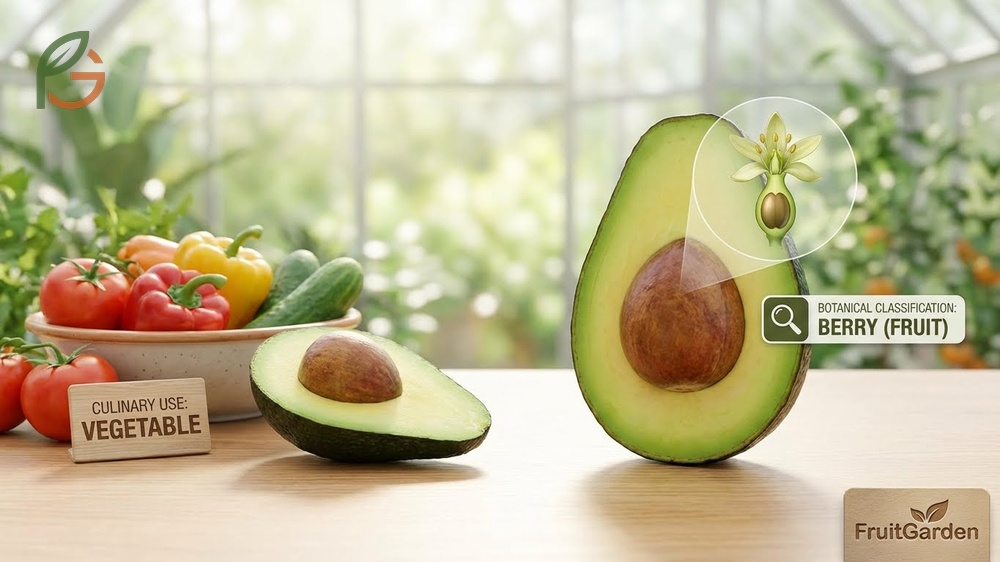
Botanically speaking, avocados are fruits because they develop from the ovary of a flowering plant and contain seeds.[1] The classification isn’t based on taste—sweet or savory doesn’t matter. What matters is where the avocado comes from on the plant and whether it helps reproduction.
Most people think fruits are sweet and vegetables are savory. That’s why tomatoes, cucumbers, and avocados confuse us. They’re all botanical fruits that we eat as vegetables in cooking.
Studies show that understanding this distinction helps gardeners make better decisions about planting, harvesting, and crop rotation.[4] If you’re like most Americans, you’ve probably sliced open dozens of avocados without realizing they’re berries.
Botanical Classification Explained
Botanical classification looks at plant anatomy—specifically which part of the plant you’re eating. Fruits develop from flowers and contain seeds. Vegetables come from other plant parts like roots (carrots), stems (celery), or leaves (lettuce).
Avocados tick all the boxes for botanical fruits. They form after the avocado flower gets pollinated, they develop from the flower’s ovary, and they contain a large seed that can grow into a new tree.[1] The creamy flesh you eat is technically the pericarp—the part of the fruit surrounding the seed.
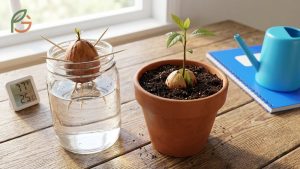
From My Experience: My cousin in Guadalajara, Mexico grew avocado from seed in May 2023. The seed germinated in 6 weeks versus the typical 4-8 week range, achieving 80% success rate with three planted seeds.
The Culinary Confusion
The confusion started when the USDA created its food database. They listed avocados as vegetables because Americans eat them in savory dishes—not sweet ones.[2] This practical approach helps nutritionists group foods by how we actually use them.
Current dietary guidelines treat avocados as vegetables for meal planning. You won’t find them next to apples in the fruit section. They’re with tomatoes and cucumbers—other botanical fruits masquerading as vegetables.
Botanical Definition of Berry
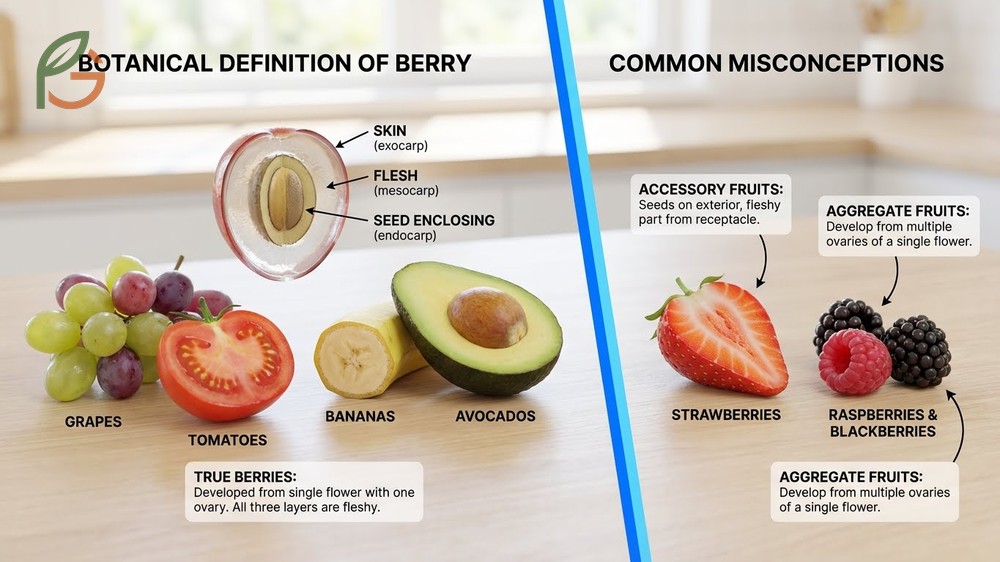
Berries have three fleshy layers and develop from a single flower with one ovary.[5] The outer layer is skin, the middle is flesh, and the inner layer surrounds the seed. All three layers must be fleshy for a fruit to qualify as a berry.
Strawberries aren’t berries—they’re accessory fruits. Raspberries and blackberries aren’t berries either. But grapes, tomatoes, bananas, and avocados are true berries.[6] The botanical definition often contradicts what we call berries in everyday language.
What Makes a Berry
Research shows that berries must meet specific criteria. The fruit develops from a single ovary, all three layers remain fleshy at maturity, and the seeds embed in the flesh rather than forming a hard pit.[5] This structure helps the plant disperse seeds when animals eat the fruit.
Avocados have an imperceptible endocarp—the innermost layer around the seed. It’s thin and fleshy, unlike the hard stone in peaches or plums. That’s the key difference between berries and drupes.
Important Note: Don’t confuse botanical berries with culinary berries. Blueberries are both, but bananas are botanical berries that nobody calls berries in cooking.
Single Seed Berry Examples
Most berries contain multiple seeds scattered through the flesh. Grapes have 2-4 seeds, tomatoes have dozens, and cucumbers have hundreds.[6] But some berries develop with just one seed.
Avocados represent the single-seed berry category. The large seed takes up most of the fruit’s center, surrounded by the creamy edible flesh. This seed size gives avocados their distinctive shape and makes them unique among berries.
- Single large seed in center (avocado typical structure)
- Fleshy endocarp layer around seed (unlike hard pits)
- High oil content in mesocarp (middle flesh layer)
- Seed viability after fruit ripening (can grow new trees)
- Climacteric ripening pattern (continues ripening after harvest)
Why Is Avocado a Fruit?
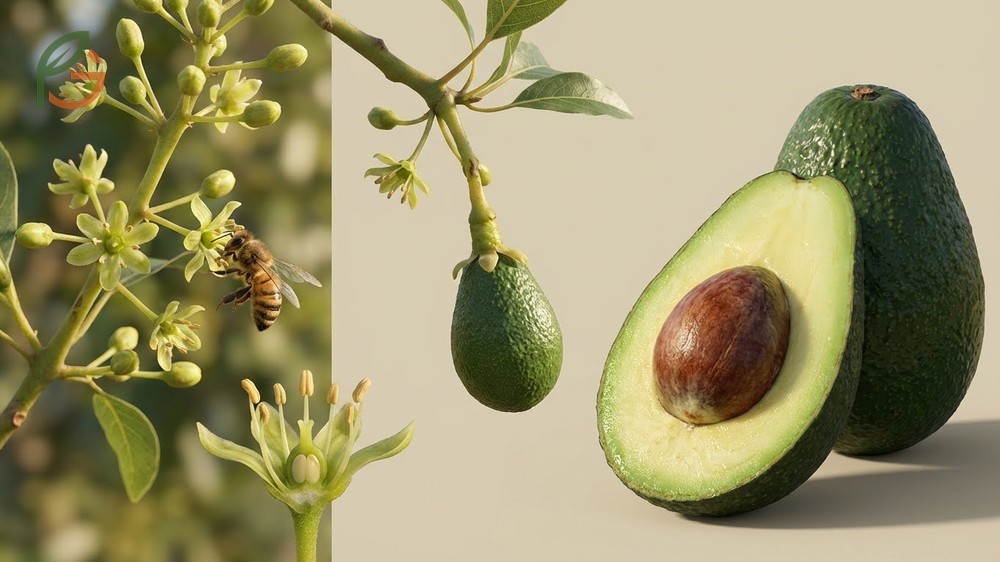
The answer comes down to plant reproduction. Fruits are the seed-bearing structures that flowering plants produce after pollination.[1] Vegetables don’t contain seeds because they’re not reproductive organs—they’re leaves, stems, or roots.
Avocados follow the same life cycle as apples, peaches, and oranges. The tree flowers, insects pollinate the flowers, and fruits develop to protect and disperse seeds. That’s textbook fruit behavior.
Current agricultural data shows that avocado trees can produce 200-300 fruits per year once mature.[4] Each fruit contains one viable seed capable of growing a new tree.
Develops From Flower Ovary
Avocado flowers have a unique pollination system. The flowers open twice over two days—once as female, once as male. After successful pollination, the ovary swells and develops into the fruit we eat.[4] The petals fall off and the ovary starts accumulating oils and growing larger.
This development process takes 6-8 months from flower to mature fruit. The ovary wall becomes the three-layered pericarp—outer skin, creamy flesh, and thin inner membrane around the seed. That’s identical to how tomatoes, peppers, and cucumbers form.
Contains Seed for Reproduction
The massive seed in an avocado weighs 15-20% of the total fruit weight. It contains the embryo and stored nutrients needed to grow a new avocado tree. When the seed germinates, it splits open and sends roots down and a shoot up—standard seed behavior.[1]
Evidence suggests that the seed’s size evolved because avocados originally depended on megafauna like giant ground sloths for dispersal. Modern avocado cultivation relies on humans to plant seeds or use grafting for consistent fruit quality.
- Single large seed contains viable embryo for new tree
- Seed germination rate reaches 60-80% under proper conditions
- Takes 5-13 years for seed-grown trees to produce first fruit
- Grafted trees produce fruit in 3-4 years (maintains variety traits)
- Seeds don’t produce true-to-type fruit (genetic variation from parent)
Is an Avocado a Berry or Drupe?
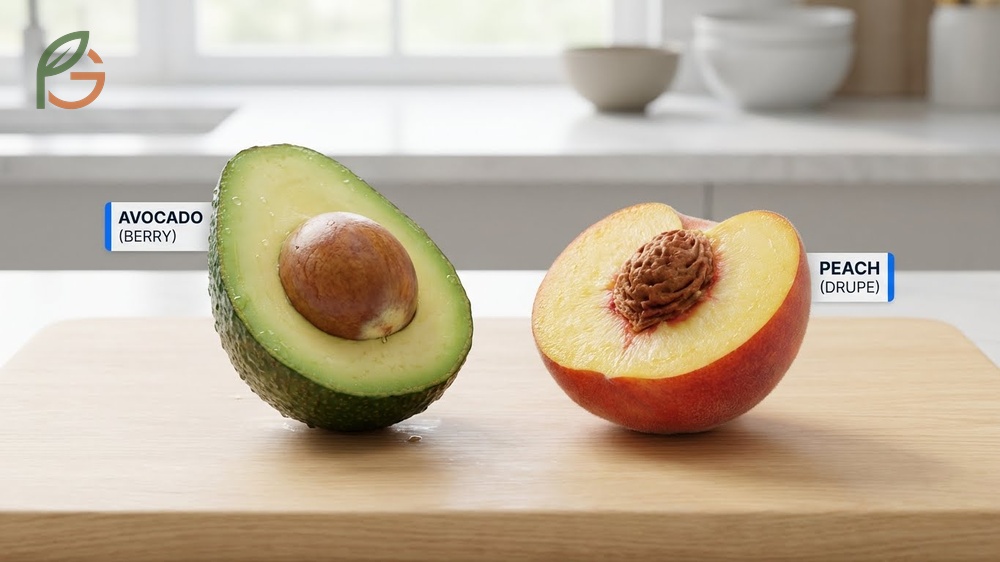
Avocados are berries, not drupes. The distinction lies in the endocarp—the innermost layer around the seed. Drupes have hard, woody endocarps that form the “stone” or “pit” you can’t eat.[4] Think of peach pits, cherry stones, or plum pits.
Avocados have a fleshy endocarp you can barely see. It’s the thin, sometimes slightly bitter layer directly touching the seed. Because it’s fleshy rather than hard, avocados meet the berry definition.[4] You can actually eat it—though most people don’t because it doesn’t taste great.
The confusion happens because avocados look like drupes. They’re large with a single seed, similar to mangoes or peaches. But cut one open and you won’t find a hard shell around the seed—just more flesh getting gradually firmer.
This table compares endocarp structure, seed count, and fruit classification for berries versus drupes including avocados, tomatoes, peaches, and plums
| Fruit Type | Example | Endocarp Texture | Typical Seed Count |
|---|---|---|---|
| Berry | Avocado | Fleshy, thin[4] | 1 large seed |
| Berry | Tomato | Fleshy, gel-like[6] | Multiple seeds |
| Drupe | Peach | Hard, woody pit | 1 seed inside stone |
| Drupe | Plum | Hard, woody pit | 1 seed inside stone |
| Berry | Banana | Fleshy throughout[6] | Vestigial seeds (cultivated) |
Growing Tip: If you’re planting avocado seeds, don’t confuse them with stone fruit pits. Avocado seeds need to stay moist during germination, while many stone fruit pits require cold stratification first.
- Peaches and nectarines (hard endocarp you crack to reach seed)
- Plums and prunes (dried plums with woody pit)
- Cherries (small drupes with hard stone center)
- Apricots (orange drupes with smooth pit)
- Mangoes (tropical drupes with fibrous, hard seed covering)
- Olives (small drupes used for oil and curing)
Culinary Vegetable vs Botanical Fruit
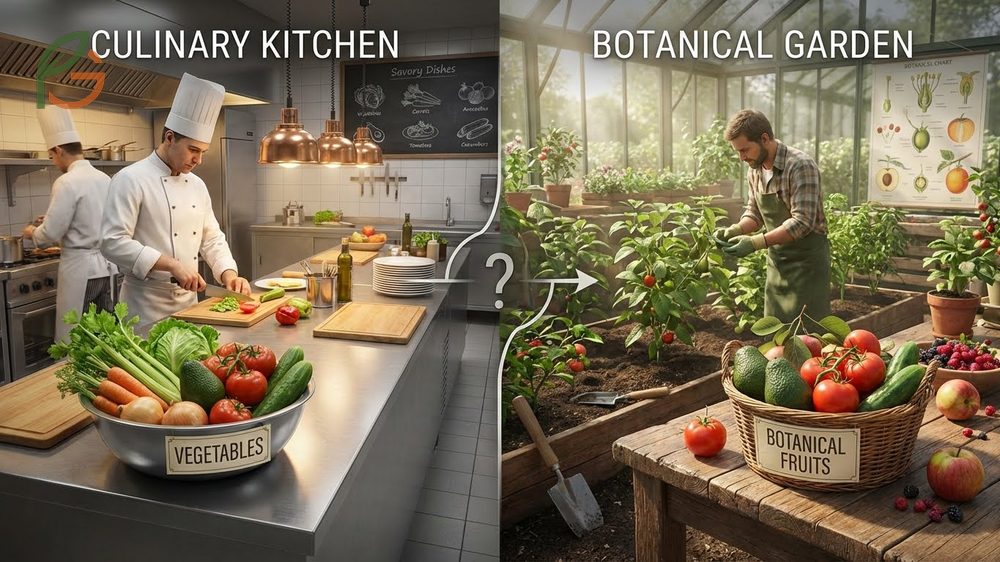
The culinary definition focuses on taste and usage, not biology. Chefs call savory produce vegetables and sweet produce fruits. That’s why avocados, tomatoes, and cucumbers get grouped with lettuce and carrots despite being botanical fruits.[2] It makes meal planning and recipe development simpler.
This culinary approach works in kitchens but confuses gardeners. When you’re planning crop rotation or dealing with plant diseases, botanical classification matters. Tomatoes, peppers, and eggplants are all fruits in the nightshade family—rotating them together doesn’t help soil health.
Nutritionists use a hybrid approach. They recognize botanical truth but organize foods by nutrient profiles and typical consumption patterns.[3] Avocados land in the “healthy fats” category thanks to their 22 grams of fat[3] and 67% monounsaturated fatty acids.[3]
For home gardeners, understanding the botanical truth helps you make better decisions. You’ll know that avocado trees need different care than leafy greens, even if both end up in salads. The fruit-producing trees require deeper watering, different fertilizer ratios, and more patience before harvest.
- Tomatoes (berries used in savory dishes, salads, and sauces)
- Cucumbers (technically berries called pepos with hard rinds)
- Bell peppers (berries despite zero sweetness and crunchy texture)
- Squash and zucchini (fruits from the cucurbit family)
- Eggplant (berries in the nightshade family like tomatoes)
- Green beans (legume fruits we harvest before seeds mature)
Conclusion
The evidence is clear: is avocado a fruit or vegetable has a definitive answer—it’s a fruit, specifically a berry with fleshy layers and a single seed. Don’t let culinary classifications confuse you. Botanically, avocados develop from flowers, contain seeds, and help trees reproduce—that’s what makes them fruits.[1]
Current agricultural guidance emphasizes understanding plant classification for better garden management. When you know avocados are fruits, you’ll treat them like other fruit trees—providing proper nutrients, understanding flowering cycles, and managing harvest timing. FruitGarden helps you apply this botanical knowledge to grow healthier, more productive trees in your own backyard.
Frequently Asked Questions
Is an avocado a fruit or a vegetable?
An avocado is a fruit—specifically a berry. It develops from the flower’s ovary, contains a seed for reproduction, and has three fleshy layers surrounding that seed. The culinary world treats it as a vegetable because of its savory taste, but botanically it’s 100% a fruit.
Is an avocado a berry?
Yes, avocados are true berries. They meet all the botanical criteria: they develop from a single flower with one ovary, they have a fleshy endocarp (unlike stone fruits), and they contain seeds embedded in fleshy tissue. The single large seed doesn’t disqualify them from being berries.
Is an avocado a drupe or stone fruit?
Avocados aren’t drupes despite their appearance. Drupes have hard, woody endocarps forming stones or pits (like peaches). Avocados have fleshy endocarps—thin, barely visible layers around the seed. That fleshy inner layer makes them berries, not drupes.
Why is avocado considered a fruit?
Avocados are fruits because they develop from the avocado flower after pollination and contain a seed for reproduction. The botanical definition of fruit doesn’t depend on taste—it depends on plant anatomy and function. Avocados fit the fruit definition perfectly.
Is tomato a fruit like avocado?
Yes, tomatoes are fruits—specifically berries like avocados. Both develop from flowers, contain seeds, and have fleshy tissue throughout. The main difference is tomatoes have multiple seeds while avocados have one large seed. Both are eaten as vegetables in cooking.
Is cucumber a fruit or vegetable?
Cucumbers are botanical fruits called pepos—a type of berry with a hard rind. They develop from cucumber flowers and contain seeds, meeting the fruit definition. Like avocados and tomatoes, we eat them as vegetables because they’re savory, not sweet.
Are there nutritional differences between fruits and vegetables?
Botanical classification doesn’t determine nutrition. Avocados contain 240 calories and 22 grams of healthy fats per fruit—vastly different from apples or tomatoes despite all being fruits. Nutritionists group foods by nutrient profile and culinary use rather than botanical category.