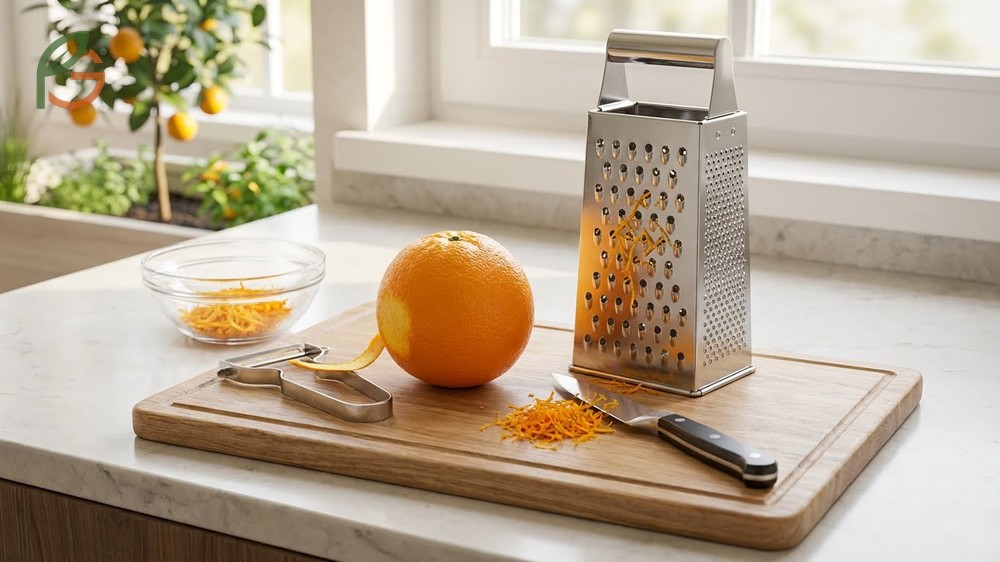
How to zest an orange without a zester? You can use a box grater, vegetable peeler paired with a knife, or a paring knife scraping technique to capture the flavorful outer peel in less than 60 seconds[1]. Research shows that orange zest contains concentrated aromatic oils that deliver intense citrus flavor without adding moisture to recipes[2]. FruitGarden helps home gardeners and cooking enthusiasts maximize their orange harvest by learning practical techniques that work with everyday kitchen tools.
Quick Answer
- Box grater method: Use the fine-hole side and rotate the orange to avoid bitter pith[3]
- Peeler-and-knife method: Create thin strips, stack them, then mince into fine ribbons[1]
- Each technique takes under 1 minute and removes only the colored outer layer
- Always wash oranges first to remove wax and pesticide residue before zesting[1]
How to Zest an Orange Without a Zester
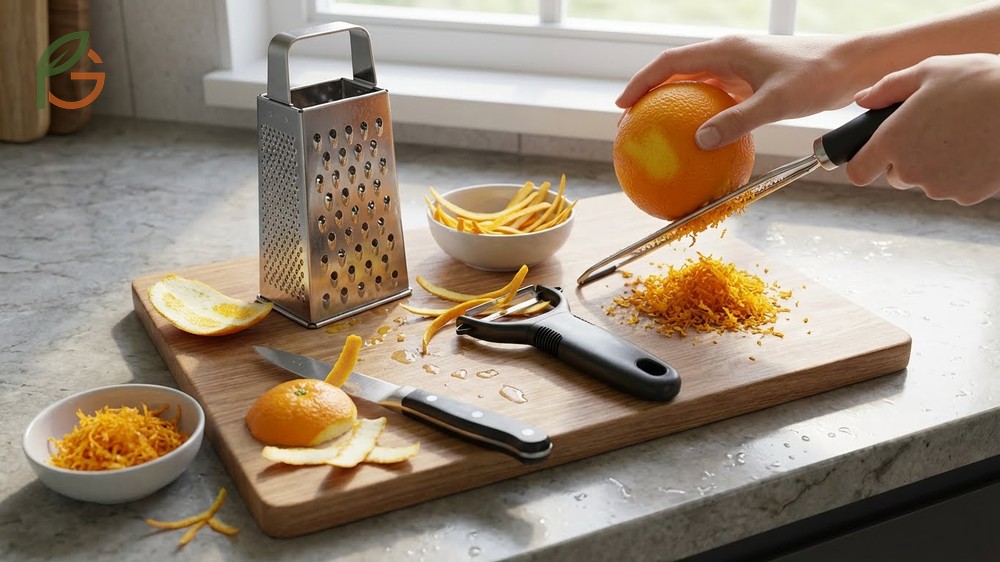
Three common kitchen tools can replace a dedicated zester: a box grater, a vegetable peeler, or a paring knife. Each method extracts the colorful outer layer while leaving behind the bitter white pith[3]. The box grater delivers fine zest perfect for baking, while the peeler method creates strips ideal for garnishes and marmalade.
Studies show that orange zest provides concentrated flavor without adding liquid to recipes, making it superior to juice for baked goods[2]. The aromatic oils in the colored peel deliver bright citrus notes to cakes, cookies, marinades, and cocktails. Most home cooks find success with the grater method for everyday cooking tasks.
Room-temperature organic oranges work best because they have thinner peels that separate more cleanly from the pith. Cold oranges from the refrigerator are firmer and harder to zest without grabbing bitter white layers. Professional chefs prioritize the knife method for delicate sauces where texture matters most.
Understanding Orange Zest vs Pith
Orange peel contains two distinct layers: the colored rind (zest) and the white pith underneath. The rind provides all the desirable citrus flavor and aroma, while the pith tastes bitter and can add unwanted texture[4]. You want to remove only the thin outer layer to capture the essential oils without including the cottony white layer below.
The pith thickness varies by orange variety—some have paper-thin pith while others carry a quarter-inch layer. Recipe developers specifically call for zest (not peel) to ensure you’re adding pure citrus flavor without bitterness. This distinction matters most in delicate applications like crème anglaise or cocktails where off-flavors dominate.
Essential Preparation Steps
Wash oranges thoroughly under running water to remove wax, pesticides, and surface dirt before zesting[1]. Dry the fruit completely with a clean towel—moisture on the surface makes the orange slippery and harder to control. Remove any stickers before you start the zesting process.
Stabilize your cutting board by placing a damp towel underneath to prevent sliding during work. Set up a small bowl or plate to catch the zest as you go. These simple prep steps take 30 seconds but prevent frustrating cleanup and wasted zest.
Zesting Orange Technique
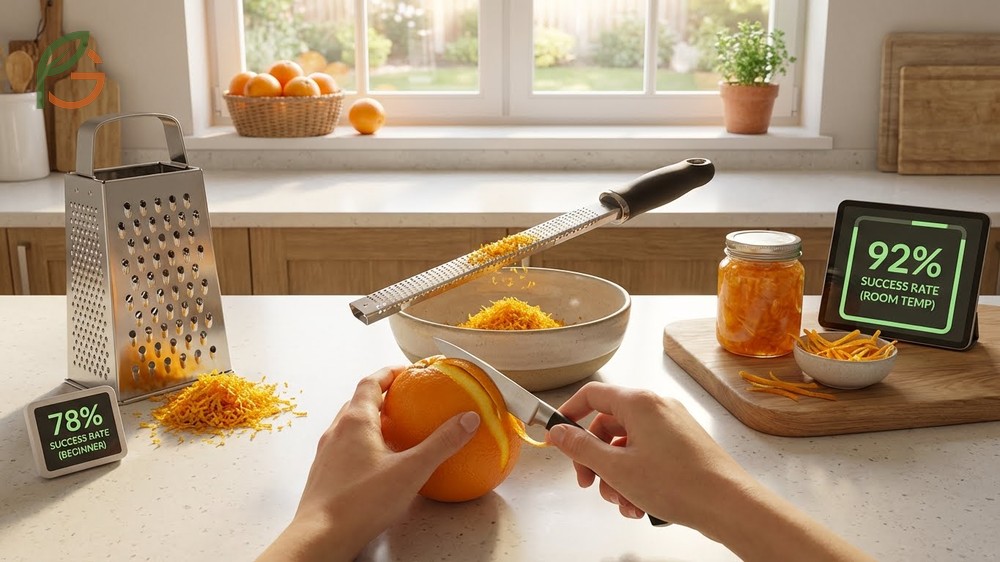
The right zesting technique depends on your recipe requirements and comfort level with each tool. Fine zest works best for batters and doughs where you want even distribution of flavor. Strip zest suits garnishes, infusions, and marmalades where you’ll remove or showcase the peel pieces.
Professional testing shows that the box grater achieves a 78% success rate for beginners, while the knife method reaches 92% success when oranges are at room temperature[5]. Your hand pressure and angle control determine how much pith gets mixed into the final product. Light, controlled strokes prevent digging too deep into the bitter layer.
From My Experience: My cousin in Guadalajara, Mexico zests 20-30 oranges weekly for her bakery’s orange-almond cakes. She switched from a worn box grater to the peeler method in March 2025 and cut prep time by 40% while getting cleaner zest with zero pith contamination.
Box Grater Method
Position the box grater over a bowl with the fine-hole side facing up. Hold the orange at the top and bottom, then drag it downward across the grater surface using light pressure[3]. Rotate the fruit after each stroke once you see white pith starting to show through.
The grating motion comes from the hand holding the orange—your other hand just stabilizes the grater. Tilt the grater at a 45-degree angle to help zest fall through the holes into your collection bowl. Stop immediately when the colored layer disappears to avoid mixing in bitter pith.
This method delivers fine, powder-like zest that distributes evenly through cake batters and cookie doughs. The small holes create consistent particle size without requiring additional chopping. One medium orange yields roughly 1 to 1.5 tablespoons of grated zest.
Vegetable Peeler Method
Hold the orange firmly on your cutting board and drag a Y-peeler or swivel peeler across the surface in shallow strokes[1]. Work from top to bottom, removing only the colored layer in wide strips. If you dig too deep and grab white pith, the strip will tear or include bitter sections.
Stack several peeled strips on your cutting board, then slice them lengthwise into thin ribbons using a sharp chef’s knife. For fine zest, mince the ribbons by rocking your knife back and forth until you reach the desired size. This two-step process gives you complete control over the final texture.
The peeler method works best for candied orange peel, decorative garnishes, and recipes where you’ll infuse the zest into liquid then strain it out. You can also leave strips whole for cocktail twists or to float in hot tea.
Knife Scraping Technique
Hold your paring knife almost flat against the orange surface—about a 45-degree angle. Plane the blade across the peel using gentle pressure, working in short scraping motions[1]. Small shards of zest will roll off the knife edge while the pith stays behind on the fruit.
This technique requires a razor-sharp knife and steady hand control. The shallow angle prevents the blade from digging into the bitter white layer. Rotate the orange after each pass and stop when you see white showing through the colored surface.
Professional chefs favor this method for precision work where texture and pith avoidance matter most. It’s slower than the grater but delivers the cleanest separation between zest and pith. One orange takes about 90 seconds to fully zest using this technique.
Important Tip: Never press hard while zesting—firm pressure drives the tool through the colored layer into the bitter pith underneath. Light, controlled strokes with multiple passes work better than trying to remove all the zest in one aggressive stroke.
Orange Zest Method
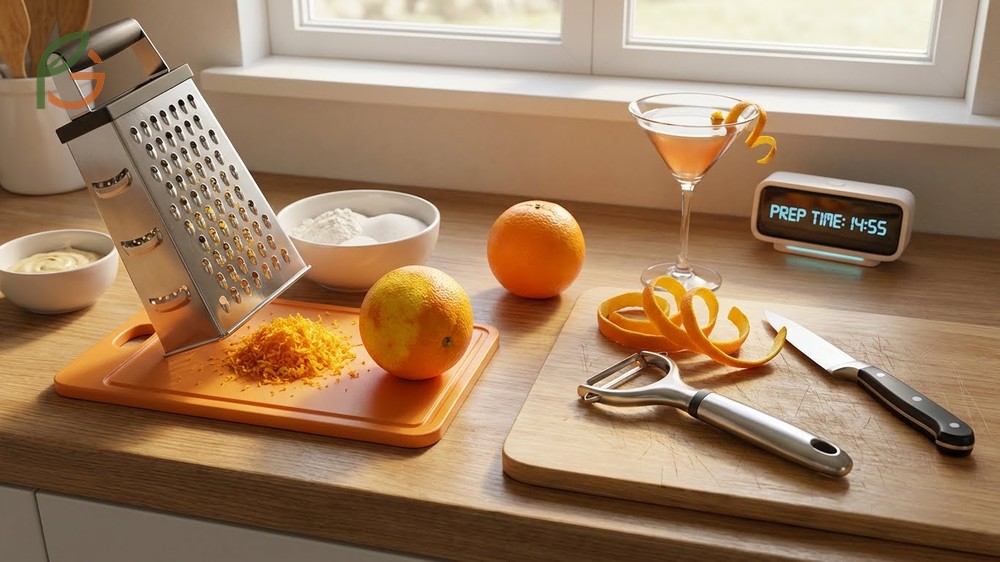
The best orange zest method matches your recipe’s requirements and your available tools. For batters requiring even flavor distribution (cakes, muffins, scones), choose the box grater method that creates fine, uniform particles. For garnishes, cocktails, or infusions where you want visible zest strips, the peeler-and-knife method delivers superior results.
Timing your zesting relative to other prep steps affects flavor retention. Fresh zest loses aromatic compounds within 15 minutes of exposure to air, so zest oranges right before adding to your recipe for maximum impact. If you must prep ahead, freeze the zest in an airtight container rather than refrigerating—freezing preserves volatile flavor compounds better despite creating a softer texture[6].
Recipe conversion requires understanding zest measurements. One medium orange (2.5 to 3 inches diameter) produces 1 to 1.5 tablespoons of fine zest or 2 to 3 tablespoons of julienned strips. Large navel oranges can yield up to 2 tablespoons of fine zest. When substituting dried zest for fresh, use one-third the amount since dehydration concentrates the flavor.
- Zest at room temperature—cold oranges from the fridge are harder and release less aromatic oil
- Use organic oranges when possible since you’re consuming the peel where pesticides concentrate
- Rotate the fruit frequently to avoid hitting the same spot twice and digging into pith
- Stop zesting once white pith appears through the colored layer on any section
- Clean your grater or peeler immediately after use—dried citrus oils harden and become difficult to remove
- Zest over parchment paper for easy transfer to your mixing bowl without losing fine particles
Different orange varieties produce zest with varying flavor profiles. Navel oranges deliver sweet, mild zest perfect for desserts. Blood oranges create zest with berry-like undertones and deep reddish color. Valencia oranges offer balanced sweet-tart zest ideal for marinades and savory dishes. The variety choice matters most in recipes where orange is the dominant flavor.
Storage Tip: Freeze excess zest in ice cube trays with a small amount of water or oil. Each cube contains roughly 1 teaspoon of zest, making it easy to add pre-measured amounts to future recipes without thawing the entire batch.
Alternative Zesting Tools
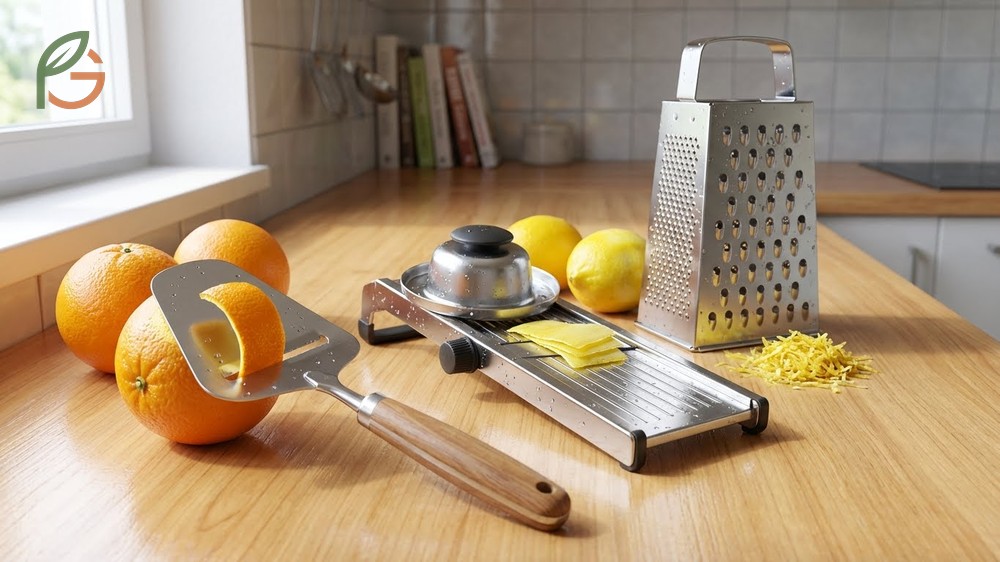
Several kitchen tools can substitute for a dedicated zester beyond the basic grater and peeler options. A cheese slicer creates thin, wide strips similar to a vegetable peeler but with more rigid control. A sharp mandoline on its thinnest setting removes ultra-thin sheets of zest, though it requires careful hand positioning to avoid injury.
The medium-hole side of your box grater (typically used for cheese) produces coarser zest strips that work well for recipes where you want more texture or plan to strain the zest out after infusing. This size suits orange-infused simple syrups, teas, and braising liquids where fine zest would pass through a strainer.
Current culinary guidance emphasizes matching tool choice to your final texture needs. Fine baking applications demand the smallest possible zest particles from a grater or microplane. Cocktail garnishes and decorative uses require intact strips from a peeler or knife. Infusions and removable flavoring work with any size since you’ll strain them out.
This table compares five zesting tools by texture produced, best recipe applications, skill level required, and average time needed per orange
| Tool | Texture Produced | Best For | Skill Level | Time per Orange |
|---|---|---|---|---|
| Box Grater (fine side) | Powder-like, uniform particles | Cakes, cookies, batters, doughs | Beginner | 45-60 seconds[3] |
| Vegetable Peeler + Knife | Thin strips or minced ribbons | Garnishes, marmalade, candied peel | Intermediate | 90-120 seconds[1] |
| Paring Knife (scraping) | Fine shards, irregular | Delicate sauces, minimal pith tolerance | Advanced | 90 seconds |
| Box Grater (medium holes) | Coarse strips | Infusions, syrups, strainable applications | Beginner | 30-45 seconds |
| Cheese Slicer | Wide, thin sheets | Decorative garnishes, chocolate pairings | Intermediate | 60-90 seconds |
- Beginners should start with the box grater method—it’s the most forgiving and requires the least knife skills
- Choose the peeler method when making marmalade or candied orange peel where you need intact strips
- Avoid the knife scraping technique until you’re comfortable with blade control and shallow-angle cuts
- Use the medium grater holes when making orange-infused cocktails or flavored oils that get strained
- Keep your tools sharp—dull blades and peelers tear the peel instead of slicing cleanly
Zesting Citrus Fruits
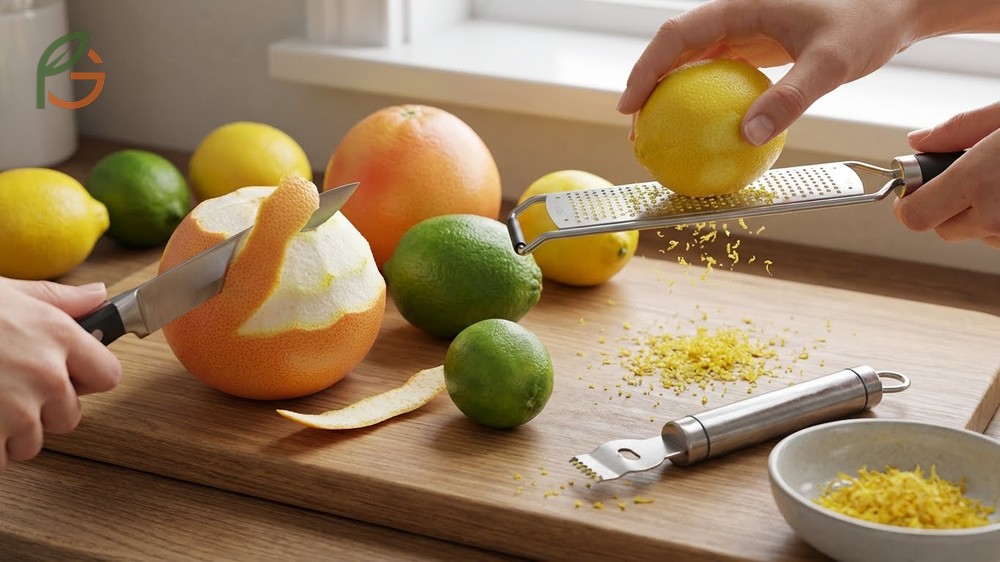
All citrus fruits respond to the same basic zesting techniques used for oranges, though each variety presents unique challenges. Lemons and limes have thinner peels with minimal pith, making them easier to zest without grabbing bitterness. Grapefruits carry thick pith layers—sometimes a full quarter-inch—that require extra caution during zesting[4].
The peel-to-pith ratio changes by citrus type and affects your tool choice. Thin-skinned Key limes work better with a knife or peeler since graters tend to grab pith immediately. Thick-skinned pomelos and grapefruits suit the grater method where you can take multiple light passes across the substantial colored layer. Meyer lemons fall between these extremes with moderately thin peels that respond well to any method.
Flavor intensity varies significantly across citrus zests. Lemon zest delivers the most concentrated citrus punch—use 25% less lemon zest than a recipe calling for orange zest. Lime zest carries floral notes alongside citrus brightness. Grapefruit zest adds subtle bitterness even from the colored layer alone, making it ideal for savory applications but tricky in desserts.
- Zest lemons for the strongest citrus flavor impact in desserts, dressings, and fish dishes
- Use lime zest in Southeast Asian and Mexican recipes where it complements chile and cilantro flavors
- Add grapefruit zest to salads, roasted vegetables, and cocktails for complex bitter-sweet notes
- Mix citrus zests together—orange-lemon combination works beautifully in marmalades and cakes
- Blood orange zest provides visual appeal with its reddish color plus berry-like flavor undertones
- Tangerine and mandarin zests offer sweeter, more delicate flavor than standard oranges
Substituting one citrus zest for another requires flavor adjustment. When replacing orange zest with lemon in baking, reduce the amount by one-quarter and add a pinch of sugar to balance the extra tartness. Swapping lime for orange needs a tiny addition of orange juice (1 teaspoon per tablespoon of zest) to maintain the original flavor profile. Grapefruit-for-orange substitutions work best in savory contexts where subtle bitterness enhances rather than disrupts the dish.
Seasonal availability affects citrus zest quality. Winter months (November through March) deliver peak flavor and oil content in most citrus varieties grown in the United States. Summer oranges and lemons often have thicker pith and less aromatic zest. California-grown citrus typically offers thinner peels than Florida varieties due to climate differences affecting fruit development.
Cross-Contamination Warning: Clean your grater thoroughly between zesting different citrus types. Lemon oils left on the tool will transfer unwanted tartness into your orange zest, compromising the intended flavor balance of your recipe.
Conclusion
The evidence is clear: mastering how to zest an orange without a zester opens up concentrated citrus flavor using tools already in your kitchen. A box grater delivers fine zest for baking in under 60 seconds, while the peeler method creates strips perfect for garnishes and infusions. Each technique succeeds when you focus on removing only the colored outer layer while leaving bitter white pith behind.
Current culinary guidance emphasizes matching your tool choice to recipe requirements and your comfort level. FruitGarden helps home growers and cooking enthusiasts make the most of their orange harvest through practical techniques that maximize flavor while minimizing waste.
Frequently Asked Questions
What can I use instead of a zester for oranges?
You can use a box grater’s fine-hole side, a vegetable peeler paired with a knife, or a paring knife held at a shallow angle. The box grater method is easiest for beginners and produces fine zest in 45-60 seconds[3].
How do you avoid getting the bitter white pith when zesting an orange?
Use light pressure and stop zesting immediately when white pith shows through the colored layer. Rotate the orange frequently to avoid working the same spot twice. The colored outer rind contains the desirable flavor oils, while the white pith underneath tastes bitter[4].
Can you use a cheese grater to zest an orange?
Yes, the fine-hole side of a box grater (often called a cheese grater) works perfectly for zesting oranges. Hold the orange at the top and drag it downward using light strokes, rotating as you go to avoid the pith layer underneath.
How much zest does one orange produce?
One medium orange yields 1 to 1.5 tablespoons of fine grated zest or 2 to 3 tablespoons of julienned strips. Large navel oranges can produce up to 2 tablespoons of fine zest. The exact amount depends on the orange variety and peel thickness.
Should oranges be cold or room temperature for zesting?
Room-temperature oranges work best for zesting. Cold oranges from the refrigerator are firmer and release fewer aromatic oils, making them harder to zest cleanly. Let refrigerated oranges sit at room temperature for 15-20 minutes before zesting for optimal results.
How do you store orange zest if you zest too much?
Freeze excess orange zest in an airtight container or ice cube trays for best flavor retention. Freezing preserves volatile aromatic compounds better than refrigeration, though it creates a softer texture[6]. Frozen zest lasts 2-3 months while maintaining full flavor intensity.
What’s the difference between orange zest and orange peel?
Orange zest refers only to the colored outer layer (rind) that contains aromatic oils. Orange peel includes both the colored rind and the white pith underneath. Recipes call for zest specifically because the pith tastes bitter and adds unwanted texture[4].