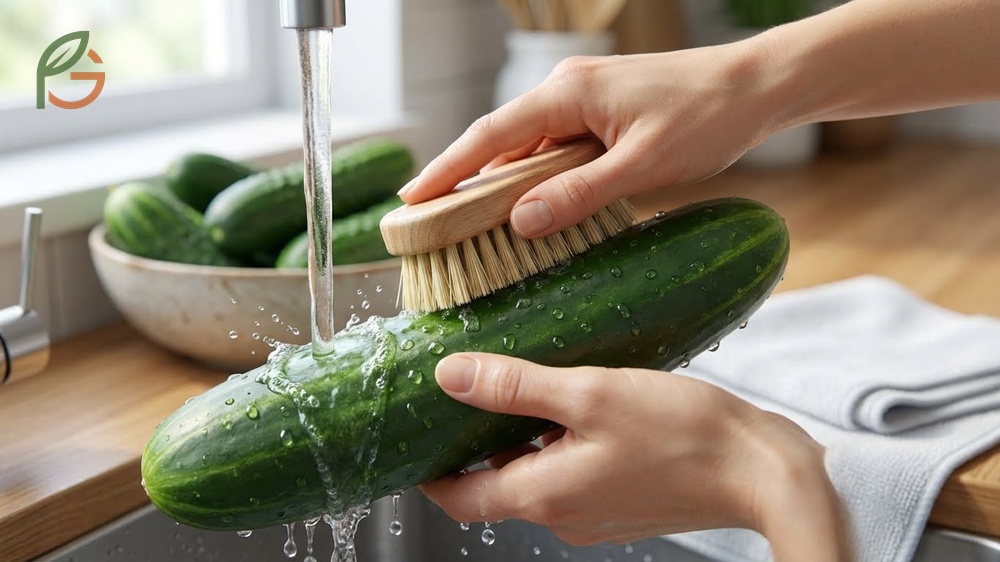
How to wash cucumbers properly starts with rinsing under running water for at least one minute while gently rubbing the surface.[1] Research shows that scrubbing firm produce like cucumbers with a clean brush removes the waxy coating that traps pesticides and dirt.[2] FruitGarden synthesizes current food safety data to help home gardeners and produce enthusiasts handle fresh vegetables with confidence.
Quick Answer
- Rinse cucumbers under running water for at least 60 seconds[1] while rubbing the surface
- Use a soft-bristled produce brush to scrub away the waxy coating that traps pesticides[2]
- Soak in baking soda solution (1 teaspoon per cup of water) for 10-15 minutes[1] to break down pesticide residue
- Don’t wash until right before use to prevent mold growth from excess moisture
How to Wash Cucumbers
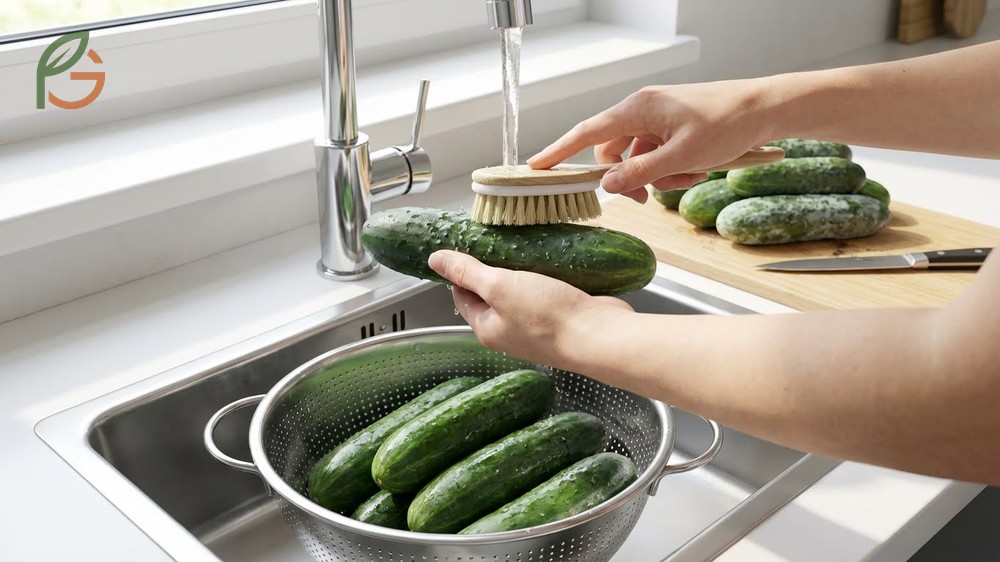
The FDA recommends washing all produce under running water before eating, even if you plan to peel it, since surface dirt and bacteria transfer during cutting.[2] Cucumbers require extra attention because of their waxy coating. This food-grade wax is FDA-approved and safe to eat, but it traps pesticide residue and dirt on the surface.
Most people don’t realize that timing matters when washing cucumbers. Washing too early introduces moisture that accelerates mold formation and spoilage. Current food safety guidance emphasizes washing produce right before you’re ready to use it, never in advance for storage.
Basic Water Rinse Method
Hold the cucumber under cool running water for at least 60 seconds. Use your hands to gently rub the entire surface in circular motions. This removes visible dirt and some pesticide residue.
Pay extra attention to both ends where dirt accumulates during growth. The FDA warns against using soap or detergent on produce because cucumbers are porous and absorb these substances, which can cause illness.[2]
Removing Wax Coating
The waxy coating on cucumbers feels tacky or slippery to touch. Registered dietitian Debbie Petitpain recommends using a soft-bristled vegetable brush to scrub conventionally grown cucumbers, especially since the wax traps pesticides.[1] Scrub in firm, consistent strokes along the length of the cucumber.
Research shows that combining vinegar and baking soda helps break down wax more effectively than water alone.[3] Mix half a tablespoon each of baking soda and vinegar in a quart of water. Soak the cucumber for 10 minutes, then scrub with a vegetable brush under running water.
Important Note: Don’t try the boiling water method you might see online. It takes 30 seconds to melt wax, but by then your cucumber becomes warm and mushy, ruining its crisp texture.[3]
Baking Soda Soak
For the deepest clean, soak cucumbers in a baking soda solution. Fill a bowl with water and add one teaspoon of baking soda per cup of water. Submerge the cucumber for 10 to 15 minutes.
Baking soda’s alkalinity breaks down some pesticide residue that water rinsing misses.[1] After soaking, rinse thoroughly under running water to wash away baking soda and loosened debris. Dry with a clean paper towel to reduce surface bacteria before cutting.
- Rinse under cool running water for at least 60 seconds while rubbing the surface
- Scrub with a soft-bristled produce brush, focusing on both ends
- Optional: Soak in baking soda solution (1 tsp per cup of water) for 10-15 minutes
- Rinse again under running water to remove all residue
- Dry with a clean paper towel or cloth before cutting
- Never use soap, detergent, or commercial produce wash
- Wait to wash until right before eating or preparing
From My Experience: My cousin in Guadalajara, Mexico grows Persian cucumbers in raised beds. She harvests them at 6 inches long and always rinses immediately before slicing—never pre-washing for storage. Her cucumbers stay crisp for 7-10 days in the crisper drawer versus 4-5 days when washed early, matching the food safety guidance about moisture and mold.
How to Cut a Cucumber
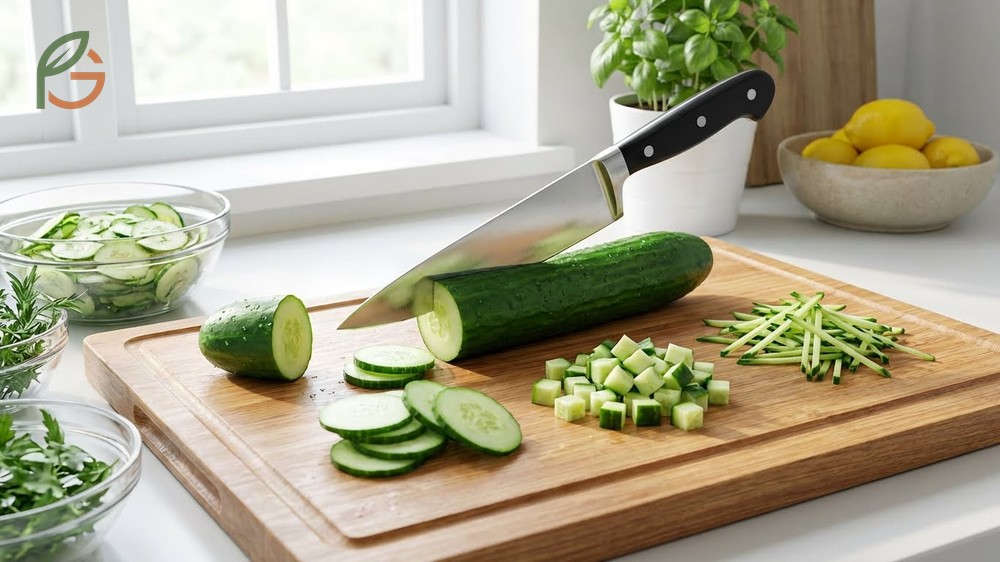
Proper cutting technique starts with trimming both ends using a sharp chef’s knife. This removes the stem end, which often contains bitter compounds. A sharp knife prevents crushing the cucumber’s cells, which keeps slices crisp and reduces sogginess in salads.
Different recipes call for different cuts. Rounds work best for quick pickles and simple salads. Diced cubes suit chunky salads and salsas. Julienne strips are ideal for spring rolls and Asian-style salads.
Basic Slicing Techniques
For rounds, hold the cucumber firmly with your non-dominant hand using a claw grip—fingertips curled inward, knuckles facing the blade. Cut crosswise into thin slices, typically ⅛ to ¼ inch thick. The knife blade should rest gently against your knuckles as you slice.
For half-moons, cut the cucumber in half lengthwise first. Place each half cut-side down on the cutting board. Slice vertically into ½-inch pieces. This cut works well for veggie trays and thicker salads where you want substantial cucumber pieces.
Dicing and Julienning
To dice cucumbers, start by cutting lengthwise in half. Place each half flat-side down and cut lengthwise into ¼-inch planks. Stack 2-3 planks together and cut lengthwise again into ¼-inch strips. Finally, cut crosswise to create uniform cubes.[4]
For julienne cuts, slice the cucumber into 2-inch sections for easier handling. Cut each section lengthwise into thin planks about ⅛ inch thick. Stack the planks and cut lengthwise again into matchstick-sized strips.[4] These work perfectly for fresh spring rolls or Asian cucumber salads.
Knife Safety Tip: Always use a claw grip when holding vegetables. Curl your fingertips inward so your knuckles guide the knife blade. This prevents accidental cuts while maintaining control over slice thickness.
Veggie Tray Presentation
For veggie trays, cut cucumbers on a deep bias to create long spears. Cut the cucumber in half lengthwise, then make ½-inch slices at a 45-degree angle. This creates elegant spears that are easy to grab and dip.
You can elevate presentation by using a crinkle cutter or channel knife to create decorative ridges. Run a channel knife down the length of the cucumber before slicing to create grooved rounds. These visual details make simple veggie trays look restaurant-quality.
- Rounds (⅛-¼ inch): Quick pickles, simple salads, sandwiches
- Half-moons (½ inch): Chunky salads, side dishes, meal prep
- Dice (¼ inch cubes): Salsas, grain salads, gazpacho
- Julienne (matchsticks): Spring rolls, Asian salads, garnishes
- Spears (bias cut): Veggie trays, crudités, dipping
- Decorative cuts (crinkle/channel): Party platters, garnishes
How to Peel a Cucumber
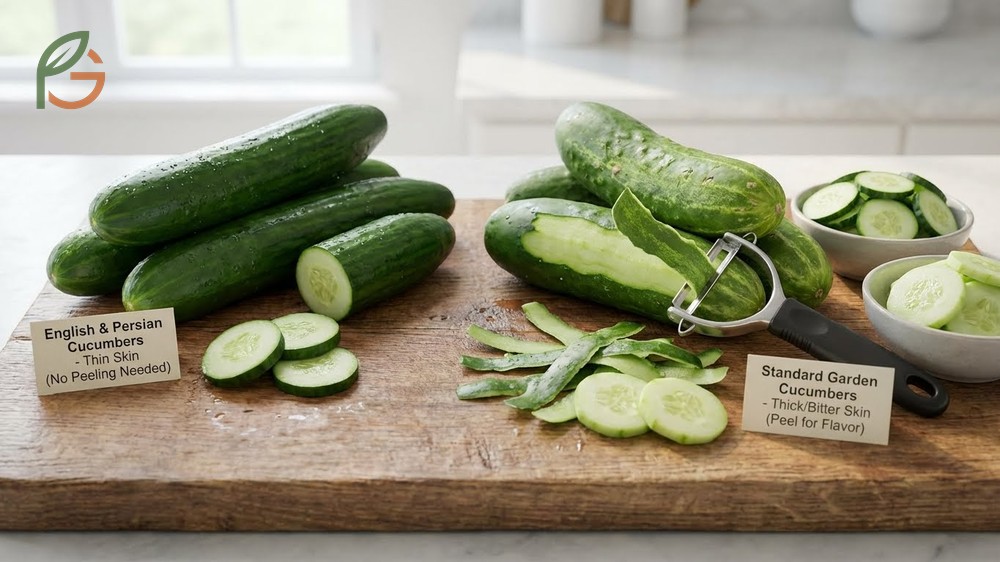
Whether to peel cucumbers depends on the variety and your recipe. English and Persian cucumbers have thin, tender skin that doesn’t need peeling. Standard garden cucumbers often have thicker, more bitter skin that benefits from removal.
Cucumber skin contains fiber and nutrients, so leaving it on adds nutritional value. One medium unpeeled cucumber provides about 1 gram of fiber and 40% of your daily vitamin K.[5] However, if the skin tastes bitter or feels tough, peeling improves the eating experience.
Use a Y-shaped vegetable peeler for the easiest results. Hold the cucumber in your non-dominant hand and pull the peeler toward you in long strokes. Rotate the cucumber as you work to peel evenly on all sides. For partial peeling, create vertical stripes by leaving alternating strips of skin—this removes some bitterness while keeping nutrients and visual appeal.
Test for bitterness before deciding to peel. Cut a thin slice from the stem end and taste it. Bitterness concentrates at the ends, especially in larger cucumbers. If it’s bitter, peeling the entire cucumber prevents unpleasant flavors in your dish.
- English cucumbers: Thin skin, no peeling needed
- Persian cucumbers: Tender skin, leave unpeeled
- Garden cucumbers: Often bitter, consider peeling
- Waxed cucumbers: Peel if you can’t remove wax coating
- For smoothies or cold soups: Peel for smoother texture
- For salads or pickles: Keep skin for fiber and color
- If cucumber tastes bitter: Always peel completely
How to Cut Cucumber Spirals
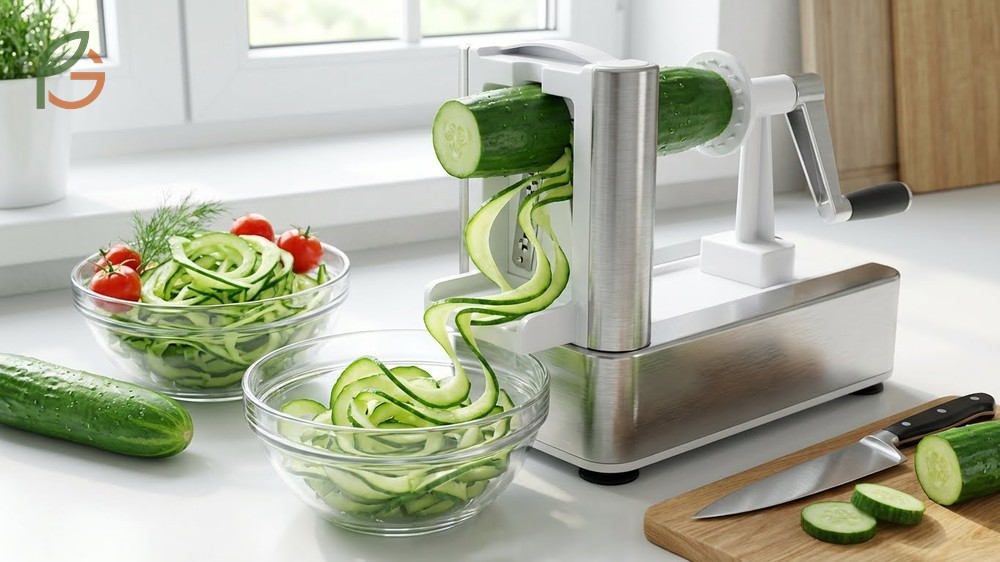
Cucumber spirals (also called cucumber noodles or “coodles”) are created using a spiralizer tool. These spiral cuts work well in cold noodle salads, as low-carb pasta alternatives, or as decorative garnishes. The key is choosing firm, straight cucumbers without too many seeds, which can clog the spiralizer blades.
Start by trimming both ends of the cucumber flat and even. This creates stable surfaces for the spiralizer’s grip. If using a countertop spiralizer, clamp it securely to your counter and insert the cucumber between the blade and the teeth. Turn the handle steadily to create consistent spirals.
Most spiralizers offer two blade options. The thick spiral blade creates sturdy noodles that hold up well in dressed salads. The thin spiral blade produces delicate angel hair-style strands perfect for light, fresh dishes. Some models also include a flat ribbon blade that creates wide fettuccine-style strips.
After spiralizing, you might notice excess water. Sprinkle the cucumber spirals lightly with salt and let them sit in a colander for 10-15 minutes. This draws out moisture and prevents watery salads. Rinse quickly and pat dry with paper towels before adding dressing.
Spiralizer Alternative: Don’t have a spiralizer? Use a julienne peeler to create thin ribbon strips, or a mandoline to slice thin planks that you can cut into noodle-like strips with a knife. The texture won’t be spiral, but the result works just as well in recipes.
- Choose firm, straight cucumbers with minimal seeds
- Trim both ends flat for stable spiralizer grip
- Use thick spiral blade for sturdy noodles (salads)
- Use thin spiral blade for delicate strands (garnishes)
- Salt spirals and drain for 10-15 minutes to remove excess water
- Rinse and pat dry before adding dressing
- Serve immediately or refrigerate up to 2 hours
How to Season Cucumbers
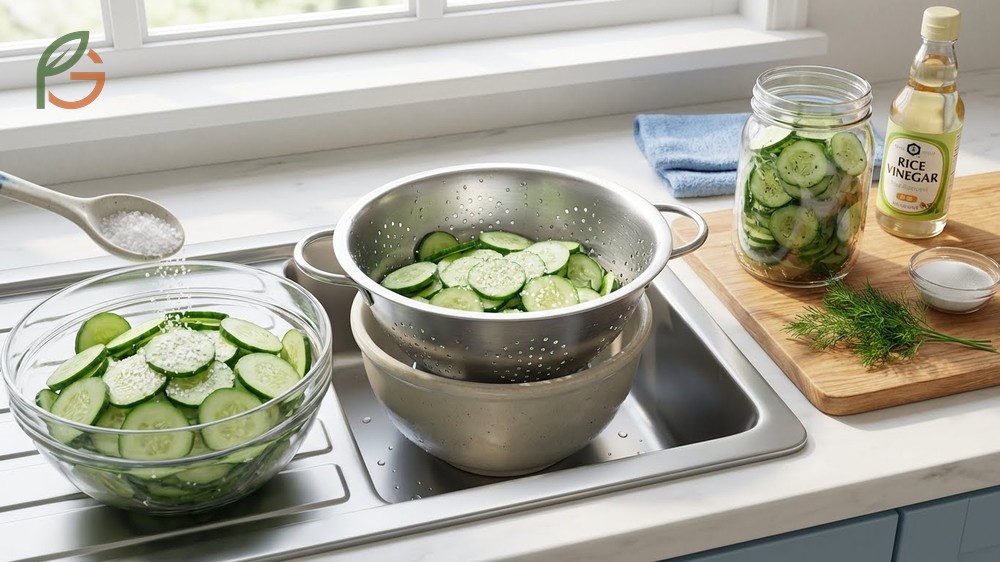
Seasoning cucumbers transforms them from bland to flavorful. The simplest method involves salting sliced cucumbers and letting them rest. Salt draws out excess water, concentrates flavor, and creates a crunchier texture. Sprinkle ½ teaspoon of kosher salt over 2 cups of sliced cucumbers and let them sit in a colander for 15 minutes.
After salting, shake off excess moisture and add your flavor base. For classic American-style cucumbers, combine rice vinegar or white vinegar with a touch of honey or sugar. This sweet-tangy combination works for quick pickles and simple side salads. Use a 3:1 ratio—3 tablespoons vinegar to 1 tablespoon sweetener.
Asian-inspired seasonings bring bold flavors. Mix light soy sauce, rice vinegar, sesame oil, and a pinch of sugar. Add minced garlic and red pepper flakes for heat. Finish with toasted sesame seeds. This combination creates the foundation for Korean cucumber salad or Chinese smashed cucumber dishes.
Mediterranean seasonings focus on fresh herbs and olive oil. Toss cucumbers with extra virgin olive oil, lemon juice, minced fresh dill, and cracked black pepper. Add crumbled feta cheese and sliced red onion for a Greek-style side dish. The key is using enough acid (lemon or vinegar) to brighten the cucumbers’ mild flavor.
This table compares four seasoning styles with their key ingredients and best uses for flavoring cucumbers
| Style | Key Ingredients | Flavor Profile | Best For |
|---|---|---|---|
| American Classic | Vinegar, sugar, dill | Sweet and tangy | Quick pickles, BBQ sides |
| Korean | Soy sauce, sesame oil, gochugaru | Savory and spicy | Rice bowls, banchan |
| Mediterranean | Olive oil, lemon, dill, feta | Fresh and herbal | Greek salads, mezze |
| Chinese | Black vinegar, garlic, chili oil | Bold and aromatic | Smashed cucumber, cold dishes |
- Always salt cucumbers first to draw out excess moisture
- Let salted cucumbers rest 10-15 minutes in a colander
- Use kosher or sea salt for better texture than table salt
- Add acid (vinegar or lemon juice) to brighten mild cucumber flavor
- Balance sweet and tangy with 3:1 vinegar to sweetener ratio
- Toast sesame seeds before adding for deeper nutty flavor
- Season cucumbers right before serving to maintain crunch
- Taste and adjust seasonings after mixing—cucumbers need assertive flavors
Conclusion
The evidence is clear: how to wash cucumbers properly makes a significant difference in food safety and taste. Rinsing under running water for 60 seconds while scrubbing with a produce brush removes most pesticide residue and wax coating. For deeper cleaning, the baking soda soak method breaks down stubborn contaminants without using harmful detergents.
Current food safety guidance from the FDA emphasizes washing right before use, never in advance. Master the basic cutting techniques—rounds, dice, julienne, and spirals—and you’ll have the skills to prepare cucumbers for any recipe. FruitGarden compiles agricultural research and kitchen techniques to help home gardeners make the most of their fresh produce from garden to table.
Frequently Asked Questions
Should you wash cucumbers before storing them?
No, don’t wash cucumbers before storing them. Moisture accelerates mold formation and spoilage. Wash cucumbers only right before you’re ready to eat or prepare them. Store unwashed cucumbers in the crisper drawer wrapped in plastic to preserve moisture content without introducing water.
Can you eat cucumber skin with wax on it?
Yes, food-grade wax on cucumbers is FDA-approved and safe to eat. However, the wax coating traps pesticides and dirt, so you should scrub cucumbers with a produce brush under running water. If you can’t remove the wax or dislike the texture, peel the cucumber—just know that you’ll lose some fiber and nutrients found in the skin.
What’s the best way to cut cucumbers for a veggie tray?
Cut cucumbers on a deep bias to create long spears for veggie trays. Slice the cucumber in half lengthwise, then make ½-inch cuts at a 45-degree angle. These spears are easy to grab and perfect for dipping. For fancier presentation, use a crinkle cutter or run a channel knife down the cucumber before slicing to create decorative ridges.
Do English cucumbers need to be peeled?
No, English cucumbers don’t need peeling. They have thin, tender skin without bitterness. The skin contains fiber and vitamin K, so leaving it on adds nutritional value. Simply wash English cucumbers under running water, scrub gently, and slice. Only peel if the individual cucumber tastes bitter when you test the stem end.
How do you make cucumber noodles without a spiralizer?
Use a julienne peeler to create thin cucumber ribbons by pulling it lengthwise down the cucumber. Alternatively, slice the cucumber into thin planks with a mandoline or sharp knife, then stack the planks and cut them into noodle-width strips. While these won’t have spiral shapes, they work perfectly in cold noodle salads and Asian dishes.
Why do you salt cucumbers before seasoning them?
Salting cucumbers draws out excess water through osmosis, which prevents watery, diluted dressings. It also concentrates the cucumber’s flavor and creates a crunchier texture. Sprinkle salt on sliced cucumbers, let them rest in a colander for 10-15 minutes, then shake off moisture before adding your seasonings and dressing.
Can you use dish soap to wash cucumbers?
No, never use dish soap on cucumbers or any produce. The FDA warns that cucumbers are porous and absorb detergent residues, which can cause illness even after thorough rinsing. Stick to plain running water and a produce brush. For deeper cleaning, use a baking soda soak (1 teaspoon per cup of water) instead of soap.