How to tell if passion fruit is ripe? Look for deep purple or yellow color (depending on variety), wrinkled skin texture, and heavy weight for its size. Research shows that passion fruit reaches peak ripeness when the skin changes from green to at least 75% purple or yellow coloration[1], with slight wrinkling indicating maximum sweetness. FruitGarden provides evidence-based guidance on selecting perfectly ripe tropical fruits for home gardeners across the United States.
Quick Answer
- Ripe passion fruit displays 75% or more purple or yellow color (no green)[1]
- Wrinkled skin indicates peak sweetness—the sweetest fruits show fine lines[2]
- Fruit feels heavy for its size (35-50g for purple, 60-90g for yellow varieties)[3]
- Harvest timing occurs 70-80 days after pollination during late summer to fall[4]
How to Tell if Passion Fruit is Ripe
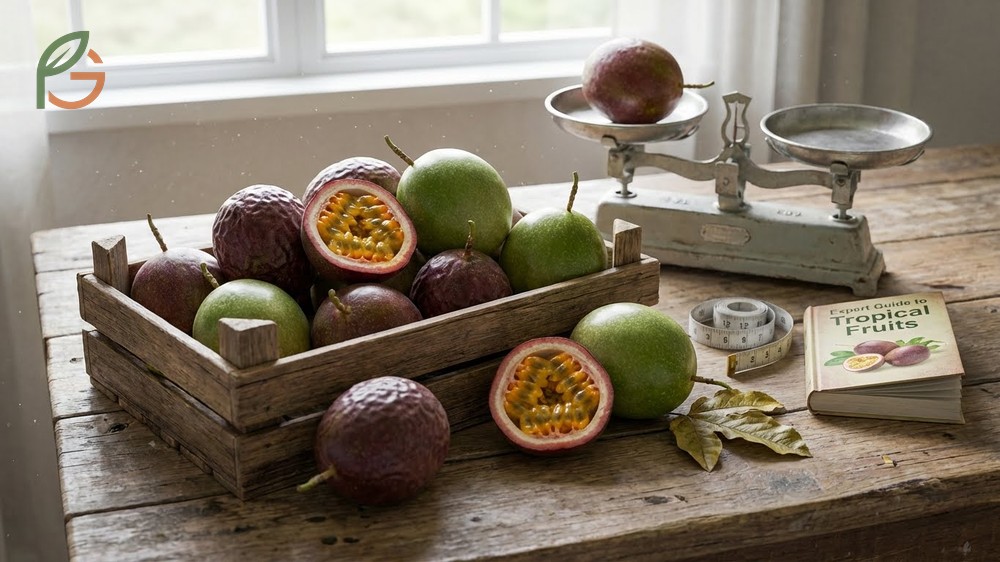
Determining passion fruit ripeness requires observing multiple visual and tactile characteristics. The fruit transitions through distinct maturity stages that signal readiness for harvest or consumption.
Purple passion fruit (Passiflora edulis) turns from green to deep purple or nearly black when ripe, while yellow varieties (Passiflora edulis flavicarpa) develop bright golden coloration[3]. Current agricultural data shows these color shifts occur around 70-80 days after pollination in optimal growing conditions[4].
Most home gardeners find success using the combination method—checking color, texture, and weight together rather than relying on a single indicator. This approach reduces the risk of harvesting underripe fruit that tastes excessively tart.
From My Experience: My cousin in Veracruz, Mexico grows purple passion fruit vines near the coast. She harvested fruit in August 2024 that reached full color at 74 days post-pollination—matching the 70-80 day range from research studies.
Color Transformation
Color change serves as the primary ripeness indicator for passion fruit. Research demonstrates that mature fruit exhibits at least 75% color transformation from green to the variety-specific hue[1].
Any remaining green patches on the skin signal incomplete ripening. These areas indicate the fruit hasn’t fully developed its sugar content or aromatic compounds.
Texture and Firmness
Ripe passion fruit yields slightly when you apply gentle pressure with your thumb. The skin should feel firm but not rock-hard, indicating optimal internal moisture content.
Studies show that mature passion fruit maintains approximately 80% moisture content at harvest[1]. This creates the characteristic plump feel that distinguishes ready-to-eat fruit from underripe specimens.
Weight Test
Holding two similar-sized passion fruits reveals ripeness through weight comparison. The heavier fruit contains more developed pulp and juice[2].
Purple passion fruits typically weigh 30-45 grams when ripe, while yellow varieties reach 60-90 grams[3]. Lightweight fruits often contain underdeveloped pulp cavities.
Passion Fruit Ripeness Indicators
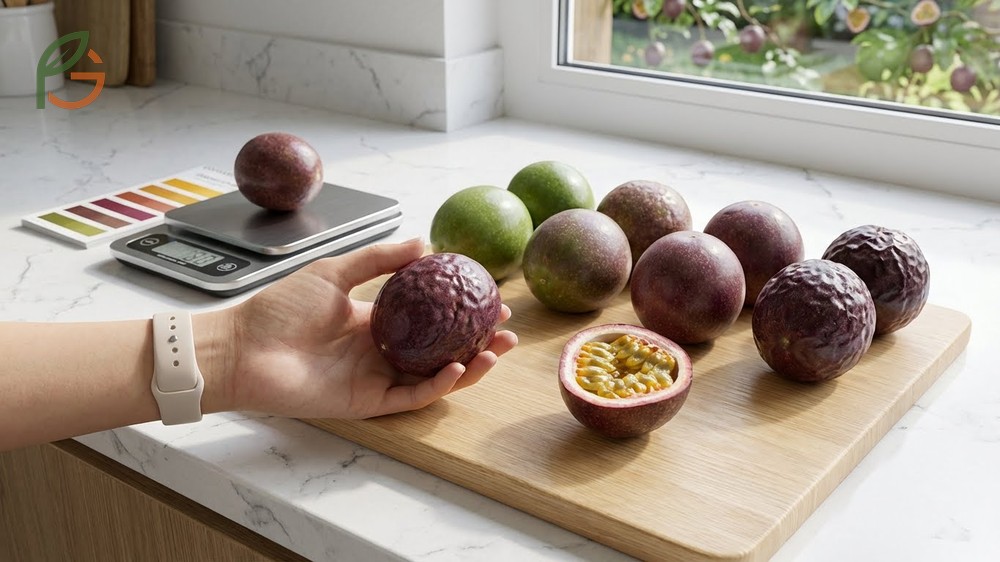
Beyond basic color and weight checks, advanced ripeness indicators help you pinpoint peak flavor timing. These secondary characteristics emerge as the fruit approaches maximum sweetness.
Professional growers monitor multiple physiological changes that occur during the final maturation phase. Understanding these signals prevents premature harvesting.
Wrinkled Skin Method
Contrary to typical fruit selection advice, wrinkled skin on passion fruit indicates superior ripeness rather than spoilage. The skin develops fine lines and slight dimpling as the fruit prepares for seed dispersal[2].
Research shows these wrinkles appear when the fruit reaches absolute peak sweetness. The slightly shriveled appearance results from water redistribution within the fruit rather than dehydration.
Smooth-skinned passion fruit remains edible but delivers less complex flavor profiles. If you’re selecting fruit at a farmers market, choose wrinkled specimens over perfectly smooth ones for the best eating experience.
Important Note: Don’t confuse slight wrinkling with severe shriveling. Fruit that’s extremely dehydrated with hard, sunken skin has passed peak ripeness and may taste fermented.
Aroma Development
Ripe passion fruit emits a strong tropical fragrance detectable when you hold it near your nose. This aroma intensifies as the fruit matures[1].
The scent resembles a combination of guava, pineapple, and citrus notes. Absence of aroma typically signals the fruit needs 3-5 more days to reach full maturity.
- Strong tropical scent detectable from 6 inches away
- Sweet fragrance with slight tangy undertones
- Uniform aroma across entire fruit surface
- Intensifies over 24-48 hours after harvest
- No fermented or alcoholic smell (indicates overripeness)
Ripe Passion Fruit Signs
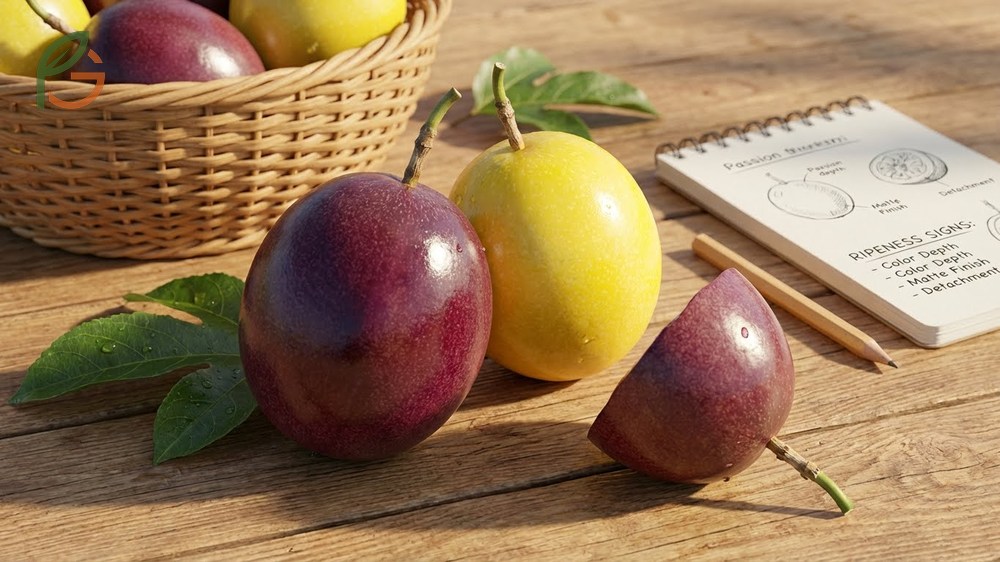
Recognizing the complete set of ripeness signals eliminates guesswork when selecting passion fruit. These observable changes occur in a predictable sequence as the fruit matures.
Commercial growers use standardized ripeness scales based on these visual and physical markers. Home gardeners can apply the same professional criteria.
- Color depth reaches variety-specific shade (dark purple or bright yellow)
- Skin transitions from glossy to slightly matte finish
- Fruit detaches easily from vine with gentle twisting motion
- Stems dry and brown at attachment point
- Surface develops subtle dimpling or fine wrinkle patterns
- Weight increases noticeably compared to immature fruit
- Slight give when squeezed without mushiness
The most reliable indicator combines three factors simultaneously: full color development, appropriate weight for variety, and slight skin wrinkling. When all three align, you’ve identified optimally ripe fruit.
This table compares physical characteristics and ripeness indicators between purple and yellow passion fruit varieties
| Characteristic | Purple Passion Fruit | Yellow Passion Fruit |
|---|---|---|
| Ripe Color | Deep purple to nearly black[3] | Bright golden yellow[3] |
| Weight Range | 30-45g[3] | 60-90g[3] |
| Size | Approximately 5cm diameter[3] | Approximately 6cm diameter[3] |
| Flavor Profile | Sweeter, stronger aroma[3] | Tangier, higher juice yield[3] |
| Best Use | Fresh consumption | Juice production |
Storage Tip: Store ripe passion fruit at room temperature for up to 7 days, or refrigerate for 2-3 weeks[5]. Place refrigerated fruit in plastic bags to prevent moisture loss.
Checking Ripeness Guide
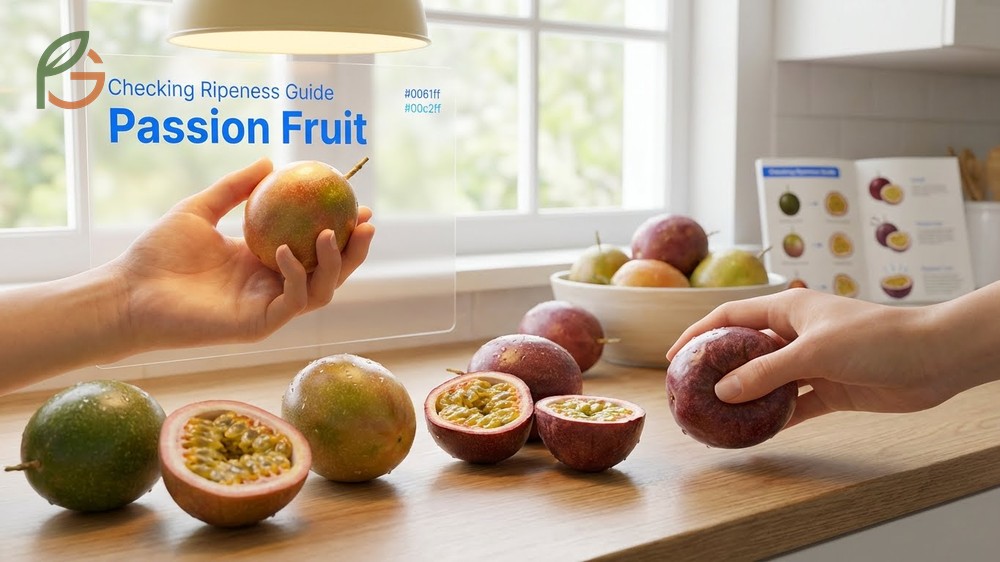
Follow this systematic approach to evaluate passion fruit ripeness with professional accuracy. This method works for both store-bought and homegrown fruit.
Start by examining the fruit under good lighting where you can clearly see color variations. Natural daylight reveals subtle color differences that artificial lighting might mask.
- Visual inspection: Confirm the skin shows 75% or more of the mature color with minimal green areas
- Gentle squeeze test: Apply light thumb pressure—ripe fruit yields slightly without feeling mushy
- Weight assessment: Compare similar-sized fruits by holding one in each hand
- Skin texture check: Look for slight wrinkling or fine lines indicating peak sweetness
- Aroma evaluation: Smell the stem end for tropical fragrance intensity
- Stem examination: Check if the attachment point appears dry and brown rather than green and fresh
If you’re growing passion fruit at home, the simplest method involves waiting for natural fruit drop. Fully ripe passion fruit detaches from the vine and falls to the ground[4].
Clear the area beneath your passion fruit vines daily during harvest season to collect fallen fruit. This eliminates ripeness guesswork entirely, though you’ll need to check dropped fruit promptly before ground insects discover them.
When Passion Fruit Ready
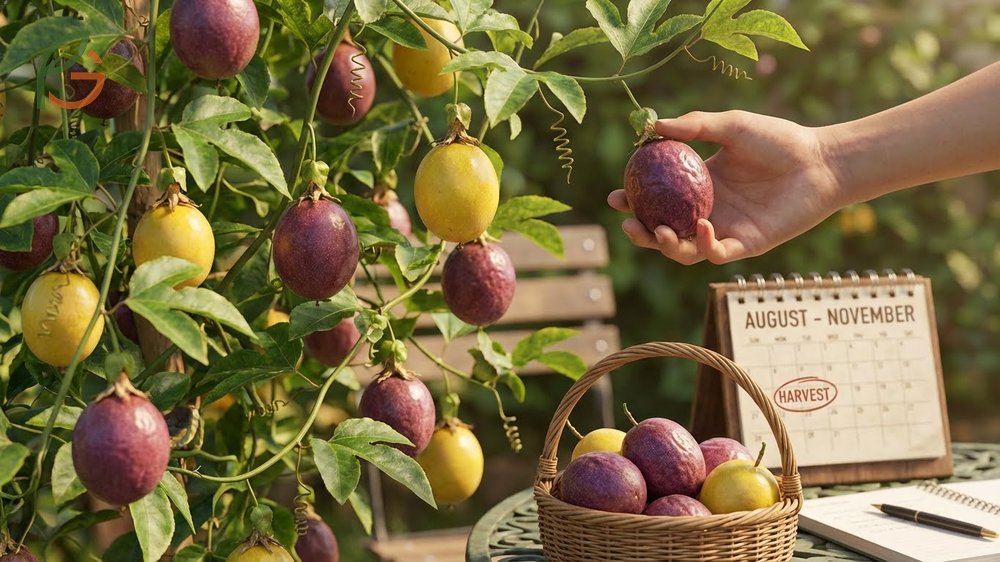
Timing your passion fruit harvest correctly maximizes flavor and nutritional value. Understanding seasonal patterns and development timeframes helps you anticipate ripeness.
In the United States, passion fruit vines typically produce ripe fruit from late summer through fall (August to November) depending on your growing zone. Yellow varieties may continue ripening into early winter in frost-free regions[4].
Commercial growers mark pollination dates on their calendar and count forward 70-80 days to predict harvest windows. Home gardeners can use the same tracking method by noting when flowers first appear on their vines.
- 70-80 days elapsed since pollination or flower drop
- Nighttime temperatures consistently above 50°F (10°C)
- Fruit diameter matches variety specifications (4-6cm)
- Stem connection begins drying and browning
- Other fruits on same vine showing similar color development
Don’t rush the harvest. Passion fruit picked too early never develops full sweetness even if left to ripen indoors. The fruit must complete its sugar accumulation phase while still attached to the vine.
If you’re uncertain about timing, wait 3-5 extra days beyond when you think the fruit looks ready. This buffer period ensures complete flavor development without risking overripeness.
Conclusion
The evidence is clear: how to tell if passion fruit is ripe involves checking three primary indicators—deep purple or yellow coloration covering at least 75% of the skin, slight wrinkling that signals peak sweetness, and appropriate weight for the variety (30-45g for purple, 60-90g for yellow types). Combining these visual and tactile assessments eliminates guesswork and ensures you harvest or purchase fruit at optimal maturity.
Current horticultural guidance emphasizes patience in allowing passion fruit to reach full maturity before harvest, whether you’re growing vines at home or selecting fruit at markets. FruitGarden provides research-backed information to help American gardeners achieve success with tropical fruit cultivation and selection.
Frequently Asked Questions
Can you eat passion fruit when it’s still green?
Green passion fruit is technically edible but tastes extremely tart and acidic because it hasn’t developed sufficient sugar content. Research shows the fruit needs to reach at least 75% color transformation to purple or yellow before achieving balanced sweetness. Wait until the fruit shows minimal green areas for the best eating experience.
How long does passion fruit take to ripen after picking?
Passion fruit won’t significantly ripen after harvest because it must complete sugar development while attached to the vine. If you’ve picked slightly underripe fruit, leave it at room temperature for 3-7 days to allow minor softening and aroma development, but don’t expect major sweetness improvements. Always harvest when fully colored for best results.
Should passion fruit be soft or hard when ripe?
Ripe passion fruit should feel firm with slight give when you apply gentle thumb pressure, similar to a ripe avocado. Studies indicate mature fruit maintains approximately 80% moisture content, creating a plump texture that yields slightly without feeling mushy. Rock-hard fruit needs more ripening time, while very soft fruit may be overripe.
What does wrinkled passion fruit mean?
Wrinkled skin on passion fruit indicates peak ripeness and maximum sweetness rather than spoilage. The fine lines develop as the fruit prepares for seed dispersal, with water redistributing within the fruit structure. Research confirms slightly wrinkled passion fruit delivers superior flavor compared to smooth-skinned specimens, making wrinkles a desirable characteristic.
How do you know if passion fruit has gone bad?
Bad passion fruit displays severely shriveled, hard skin with sunken areas, mold growth on the surface, or fermented alcoholic smell. The fruit may also feel unusually light due to excessive moisture loss. Normal ripe passion fruit shows slight wrinkling with plump texture and tropical aroma, so extreme dehydration signals the fruit has passed optimal eating quality.
Can you ripen passion fruit in the refrigerator?
No, refrigeration doesn’t ripen passion fruit—it only slows deterioration of already-ripe fruit. Cold storage at 50-59°F (10-15°C) maintains quality for 2-3 weeks by reducing respiration rates, but temperatures below 45°F (7°C) can cause chilling injury. Store underripe fruit at room temperature until it develops full color and slight wrinkling before refrigerating.
What’s the difference between ripe purple and yellow passion fruit?
Purple passion fruit weighs 30-45 grams when ripe and develops deep purple to nearly black coloration with sweeter flavor and stronger aroma, making it ideal for fresh eating. Yellow passion fruit grows larger at 60-90 grams, displays bright golden color, and has tangier taste with higher juice content suited for beverage production. Both varieties show slight wrinkling at peak ripeness.