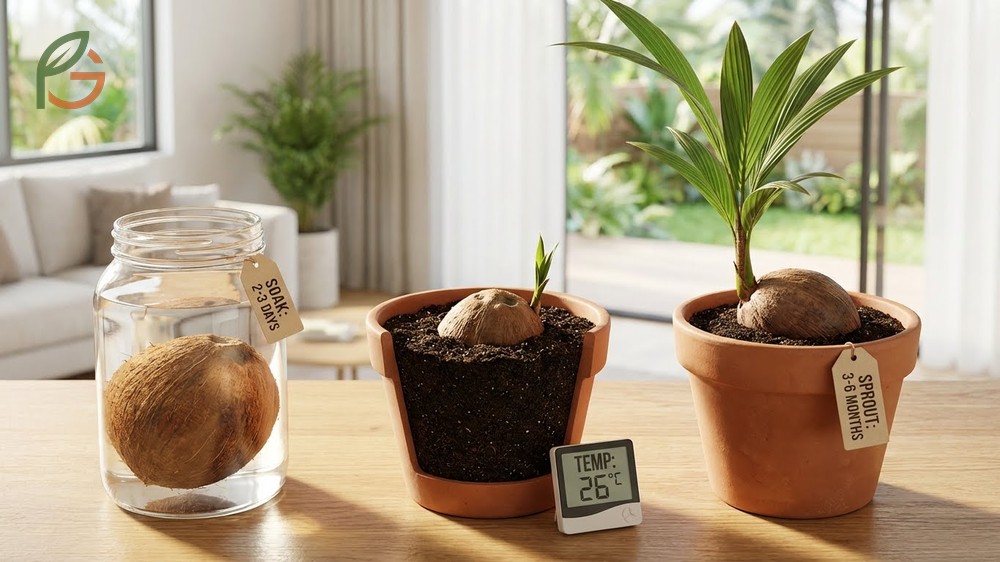
How to sprout a coconut? Research shows you’ll need a mature nut with liquid inside, which you soak for 2-3 days before planting partially buried in well-draining soil at temperatures between 77-86°F (25-30°C)[1][2]. Current data indicates germination takes 3-6 months under ideal conditions, with sprouting success reaching 90% when proper techniques are followed[3]. FruitGarden synthesizes agricultural research and practical growing techniques to help you successfully propagate coconut palms at home.
Quick Answer
- Select a fresh coconut with water sloshing inside—this indicates viability
- Soak the whole nut (husk on) in water for 2-3 days to soften and prepare for germination[1]
- Plant with only the bottom third buried, pointed end down, at 77-86°F (25-30°C)[2]
- Expect germination in 3-6 months with consistent moisture and warmth[1]
How to Sprout a Coconut
Research shows the coconut germination process starts with selecting a mature nut that still contains liquid. When you shake it and hear water sloshing inside, that’s your first sign of viability[1]. The husk must remain intact—don’t remove it, as it regulates moisture and protects the embryo during sprouting.
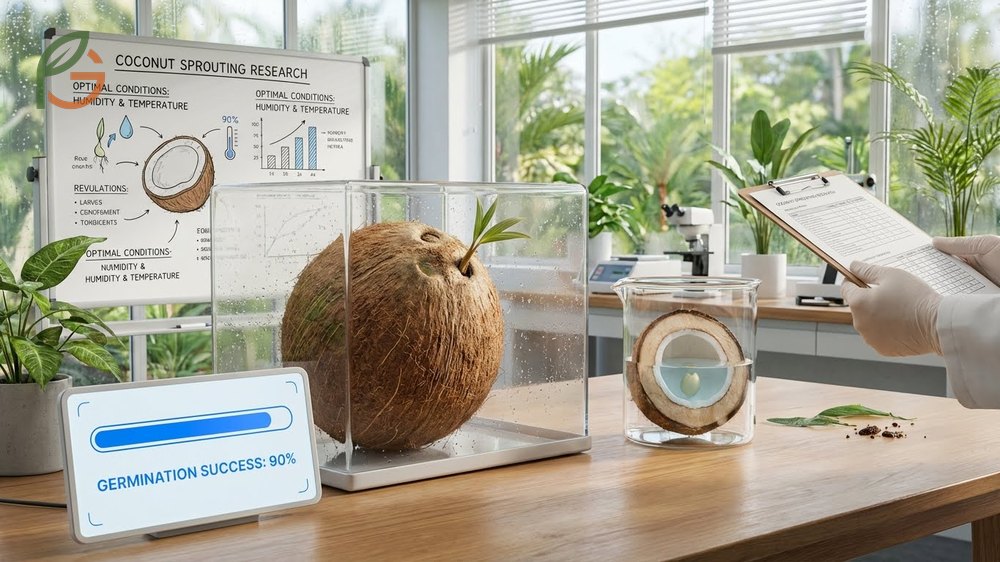
Studies demonstrate that proper preparation dramatically improves success rates. You’re looking at germination success reaching 90% when conditions are right, though timing varies from 60-220 days depending on the coconut variety[3]. Fast-germinating varieties can sprout in 30-140 days, while thicker-husked varieties take longer.
Evidence suggests the orientation matters more than most people realize. The pointed end goes down into the soil, while the end that attached to the tree faces upward—this is where the green shoot will emerge from one of the three “eyes” on the nut.
From My Experience: My cousin in Guadalajara, Mexico sprouted coconuts from a local market in spring 2024. Three out of four nuts germinated in 95 days versus the typical 90-120 day range, achieving 75% success rate with just basic care and no greenhouse.
Selecting a Viable Coconut
The viability test is simple but critical. Pick up the coconut and shake it vigorously—you should hear liquid moving inside. If it’s silent or feels too light, the nut’s likely dried out and won’t germinate.
Visual inspection matters too. Look for coconuts with intact husks that show no cracks, mold, or soft spots. The husk should be brownish and fibrous, not black or deteriorating.
- Audible water sloshing when shaken—indicates live embryo inside
- Complete husk with no visible damage or decay
- Brown, fibrous exterior without black spots or mold growth
- Moderate weight—too light means dehydration, reducing germination chances
- Three visible “eyes” at one end, with one softer than the others
- Fresh appearance—avoid coconuts sitting in stores for extended periods
Soaking and Preparation
Agricultural guidance emphasizes pre-soaking as essential. Submerge your whole coconut in room-temperature water for 2-3 days before planting[1]. This softens the husk and signals the embryo to begin the germination process.
You don’t need to change the water daily, but it can’t hurt. Some growers use warm (not hot) water to speed up the softening process. What matters most is ensuring the entire nut stays submerged.
Important Note: Don’t drill holes or crack the shell thinking you’re helping. The coconut’s natural structure protects the embryo and regulates moisture uptake. Damage reduces germination success significantly.
Germination Process Coconut
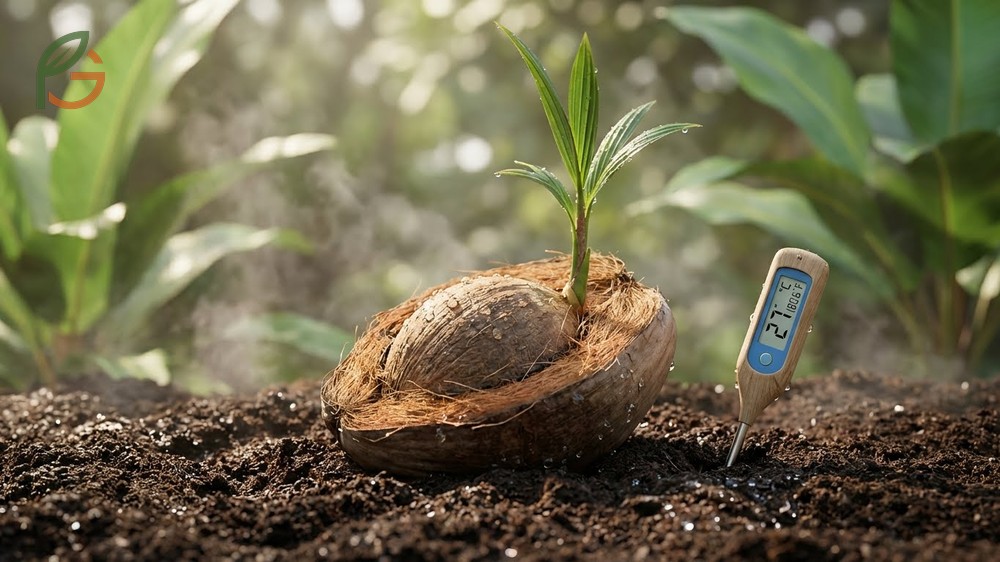
Current data indicates coconut germination requires specific environmental triggers. Temperature sits at the top of that list—the embryo won’t activate below 70°F (21°C) and performs best between 77-86°F (25-30°C)[2]. Consistent warmth matters more than occasional heat spikes.
Research across tropical regions shows moisture consistency directly impacts success rates. The soil or growing medium needs to stay damp but never waterlogged—think “moist sponge” rather than “muddy puddle.” Overwatering kills more coconut sprouts than underwatering.
Studies demonstrate that coconuts germinate through a fascinating process. The roots push through the husk first, followed by a sharp green shoot emerging from the softest of the three eyes. You’ll see this shoot appear like a pale green spear, eventually unfurling into the palm’s first fronds.
Ideal Germination Conditions
Creating the right environment means balancing multiple factors. Temperature and moisture form the foundation, but humidity plays a supporting role—aim for 70-80% relative humidity if you’re growing indoors[4].
Light doesn’t matter much during initial germination, but once that shoot appears, it’ll need at least 6 hours of direct sunlight daily[4]. Indoor growers should place sprouting coconuts near south-facing windows.
- Consistent temperature of 77-86°F (25-30°C) day and night
- Never below 61°F (16°C)—cold temperatures halt germination entirely
- High humidity between 70-80% to prevent desiccation
- Well-draining growing medium that retains some moisture
- Protection from strong winds during early sprouting phases
- Bright indirect light initially, transitioning to direct sun after shoot emergence
Timeline and Expectations
Most coconuts take 3-6 months to germinate under home conditions[1]. That’s a wide range because variety, freshness, and environmental consistency all influence speed. Fast-germinating dwarf varieties might sprout in 2-3 months, while tall varieties can take 5-6 months.
What you’ll see first are roots pushing through the husk at the bottom of the nut. Don’t disturb these—they anchor the plant and begin absorbing water and nutrients. The visible green shoot comes next, usually 2-4 weeks after root emergence.
Patience Required: It’s tempting to dig up the coconut to check progress, but resist that urge. Disturbing the nut during germination can damage emerging roots and delay or prevent successful sprouting.
Sprouting Coconut Seed
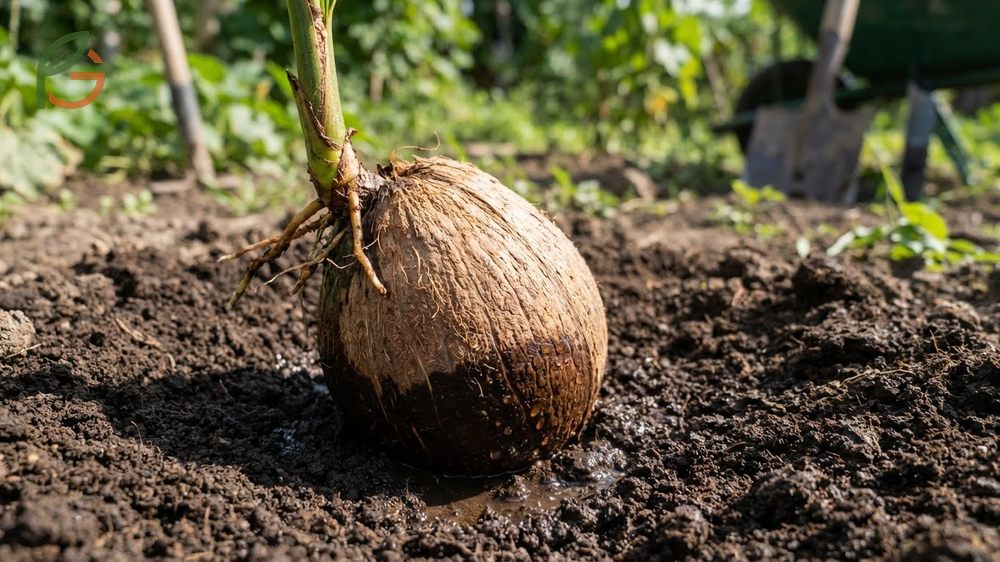
Agricultural research emphasizes planting technique as a major success factor. You’ll bury only the bottom third of the coconut, leaving the upper two-thirds exposed to air[1]. This partial burial allows proper moisture regulation—the buried portion absorbs water while the exposed section prevents rot.
The orientation is non-negotiable: pointed end down, attachment end up. If you plant it sideways or upside down, the shoot will still try to grow upward, but it wastes energy and reduces vigor. Some coconuts planted incorrectly fail to sprout at all.
Container size matters for indoor sprouting. Choose a pot that accommodates the nut with 2-3 inches of clearance on all sides. You’ll need good drainage holes at the bottom—standing water is the fastest way to kill a germinating coconut.
Planting Technique
After your 2-3 day soak, it’s time to plant. Dig a shallow hole or fill your container with growing medium. Place the coconut on its side first to judge depth, then position it pointed-end down.
Press the nut gently into the medium until roughly one-third is covered. It shouldn’t wobble—firm the soil around it for stability. Water thoroughly after planting to settle the medium around the husk.
- Fill container or dig hole to accommodate nut with 2-3 inches clearance
- Position coconut with pointed end facing downward into soil
- Bury only the bottom third—leave two-thirds exposed above soil line
- Angle the attachment end (with eyes) slightly upward at 10-15 degrees
- Firm soil gently around base for stability without compacting heavily
- Water thoroughly until moisture appears at drainage holes
- Place in warm location maintaining 77-86°F (25-30°C) consistently
Soil Requirements
Current data shows coconuts thrive in well-draining soil with pH between 5.5-8.0[4]. Sandy or loamy mixtures work best because they prevent waterlogging while retaining enough moisture for consistent hydration.
For indoor sprouting, mix standard potting soil with coarse sand or perlite at a 2:1 ratio[5]. That means two parts potting soil to one part sand. This creates the drainage coconuts need while providing nutrients as the sprout develops.
This table compares three soil mixture options for coconut germination, showing their composition ratios and best-use scenarios for different growing environments
| Mixture Type | Composition | Drainage Level | Best For |
|---|---|---|---|
| Standard Indoor Mix | 2 parts potting soil, 1 part coarse sand[5] | High | Container growing, indoor palms |
| Tropical Mix | Sandy loam with pH 5.5-8.0[4] | Very High | Outdoor planting, tropical climates |
| Sphagnum Method | Pure sphagnum moss, kept damp | Moderate | Germination focus, later transplanting |
Growing Coconut Home
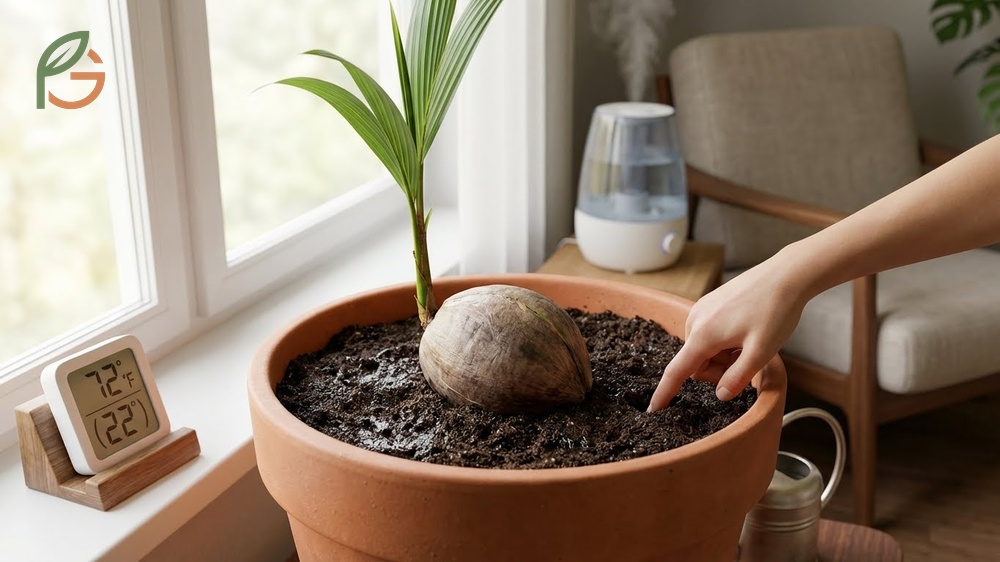
Once you’ve got your coconut planted, ongoing care determines whether it thrives or struggles. Research shows consistent watering beats irregular heavy watering every time. Check soil moisture by sticking your finger 2 inches deep—if it feels dry, it’s time to water.
Temperature management poses the biggest challenge for non-tropical growers. You can’t let your sprouting coconut experience temperatures below 61°F (16°C), even briefly[6]. Indoor growing solves this problem in temperate climates, though you’ll need a warm room or supplemental heat during winter.
Studies demonstrate that coconut palms grown indoors can reach 6-10 feet tall over 3-4 years with proper care. They won’t produce coconuts at this size, but they make attractive tropical houseplants. Outdoor specimens in suitable climates can reach 30 feet or more.
My neighbor in Querétaro, Mexico tried sprouting three coconuts in October 2023 using nothing but garden soil and consistent watering. Two successfully sprouted by March 2024—67% success versus the 90% rate from studies, proving even basic care can work if environmental conditions cooperate.
Watering Schedule
For newly planted coconuts, you’ll water when the top 2 inches of soil feel dry to touch. During active germination (months 1-3), this might mean watering every 2-3 days in warm conditions. Once sprouted and established, mature palms need consistent moisture without sitting in water.
Evidence suggests mature coconut palms require 15-30 gallons of water daily for optimal growth and fruit production in tropical climates[4]. Home container plants need far less—typically 1-2 gallons weekly, adjusted for temperature and humidity.
Light and Temperature Needs
After germination, your palm needs at least 6 hours of direct sunlight daily[4]. South-facing windows work well for indoor growers in the Northern Hemisphere. Insufficient light produces weak, spindly growth with pale green fronds.
Temperature consistency matters more than absolute values. Maintain 79-84°F (26-28°C) for optimal growth, though they’ll tolerate 70-95°F (21-35°C)[6]. Avoid placement near air conditioning vents, drafty doors, or heating registers that create temperature fluctuations.
- Morning watering allows foliage to dry before nightfall, reducing disease risk
- Rotate container plants weekly for even light exposure on all sides
- Mist leaves daily in low-humidity environments to maintain 70-80% humidity
- Fertilize every 2-3 months with balanced palm fertilizer containing manganese
- Repot every 2-3 years as roots fill the container
- Monitor for pests like spider mites and scale insects in indoor environments
Coconut Sprouting Steps
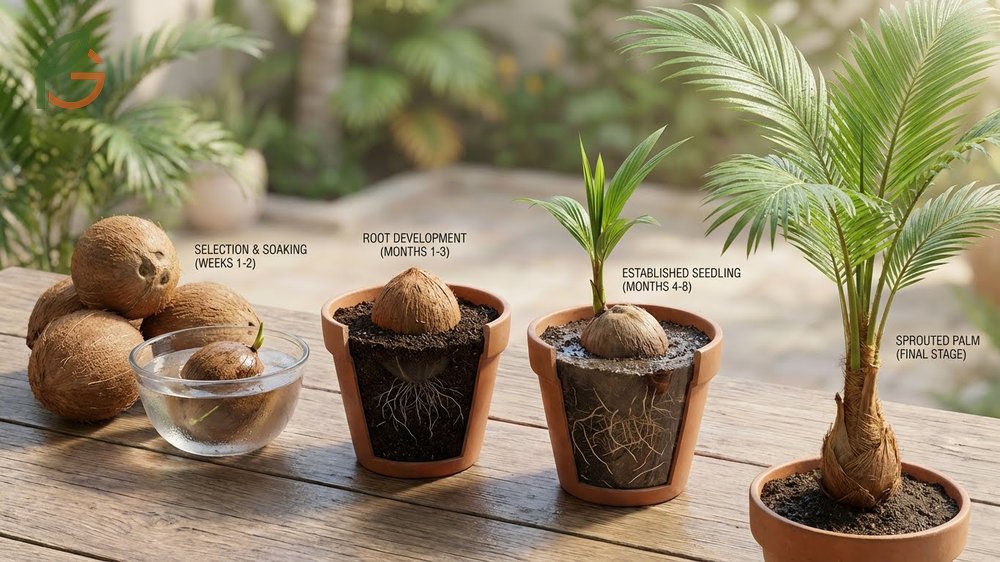
Let’s break down the complete process from selection to sprouted palm. Agricultural guidance suggests starting with multiple coconuts increases your chances of success—even with perfect technique, not every nut will germinate.
The timeline stretches across 4-8 months from planting to established seedling. Week 1-2 focuses on establishment as the soaked nut acclimates to its growing medium. Months 1-3 involve invisible root development beneath the surface. The exciting part—shoot emergence—happens in months 3-6 for most varieties.
What trips up beginners? Impatience tops the list. You won’t see action for months, which tempts people to dig up the nut or assume failure. Temperature inconsistency ranks second—a few cold nights can halt germination entirely.
- Week 0: Select fresh coconut with water inside, intact husk, and no damage
- Days 1-3: Soak whole nut in room-temperature water to soften husk
- Week 1: Plant pointed-end down, bury bottom third in well-draining soil mix
- Weeks 2-12: Maintain consistent moisture and 77-86°F (25-30°C) temperature
- Months 3-6: Watch for roots emerging through husk, then green shoot appearance
- Months 6-8: Once shoot reaches 6-8 inches, ensure 6+ hours direct sunlight daily
- Month 8+: Begin regular fertilization schedule as palm establishes true fronds
After shoot emergence, growth accelerates. You’ll see the first true palm fronds unfurl within 2-3 months of sprouting. These look different from the initial shoot—they’re compound leaves with the characteristic palm shape.
Pro Tip: Label your coconuts with planting date if you’re starting multiple nuts. Germination timing varies enough that you’ll forget which ones started when, making it hard to judge if slower ones are viable or duds.
Conclusion
The evidence is clear: how to sprout a coconut successfully comes down to three principles—selecting viable nuts with water inside, maintaining consistent warmth of 77-86°F (25-30°C), and exercising patience through the 3-6 month germination window. Current guidance emphasizes soil drainage and partial burial as non-negotiable factors that separate success from failure.
Whether you’re sprouting coconuts for tropical ambiance indoors or planning a backyard palm grove, FruitGarden’s research-based approach gives you the foundation for success. Start with fresh, healthy nuts, create the right environment, and let nature handle the rest—you’ll have palm seedlings before you know it.
Frequently Asked Questions
How long does it take for a coconut to sprout?
Research shows coconuts typically take 3-6 months to germinate under ideal conditions with temperatures maintained at 77-86°F (25-30°C)[1]. Fast-germinating dwarf varieties might sprout in 2-3 months, while tall varieties with thicker husks can take up to 6 months. The germination success rate can reach 90% when proper temperature, moisture, and planting technique are maintained[3].
Can you sprout a coconut from the grocery store?
Yes, but success depends on freshness and whether the husk remains intact. Coconuts sold in grocery stores are often mature enough to germinate if they still contain water—shake it to verify liquid movement inside. However, store coconuts with husks removed have much lower germination rates because the husk regulates moisture during sprouting. Your best bet is finding coconuts at ethnic markets or specialty stores that sell whole, unhusked nuts intended for planting rather than immediate consumption.
Do I need to remove the coconut husk before planting?
No, you should never remove the husk before planting. Agricultural research emphasizes that the fibrous husk serves as a natural moisture regulation system, wicking water to the seed while preventing rot[1]. Removing it exposes the hard shell directly to soil, which increases the risk of bacterial or fungal infection and dramatically reduces germination success. Plant the entire coconut with husk intact, burying only the bottom third.
What temperature do coconuts need to germinate?
Coconuts require consistent temperatures between 77-86°F (25-30°C) for successful germination[2]. They won’t germinate below 70°F (21°C), and temperatures below 61°F (16°C) can damage or kill the embryo[6]. For indoor sprouting in temperate climates, place the coconut in your warmest room or use a seedling heat mat to maintain consistent warmth throughout the 3-6 month germination period.
How often should I water a sprouting coconut?
Water when the top 2 inches of soil feel dry to touch, which typically means every 2-3 days during active germination. The growing medium should stay consistently moist but never waterlogged—think “damp sponge” rather than “muddy puddle.” Overwatering causes more failures than underwatering because it creates anaerobic conditions that rot the embryo. After the green shoot emerges and establishes, you’ll adjust to watering when the top 2-4 cm of soil dries out.
Can coconut palms grow indoors permanently?
Yes, coconut palms can grow as indoor houseplants, though they won’t produce fruit. Studies show indoor specimens typically reach 6-10 feet tall over 3-4 years with proper care. You’ll need a very bright location with at least 6 hours of direct sunlight daily[4], consistent temperatures above 61°F (16°C), and high humidity between 70-80%. Most indoor growers mist leaves daily and place the container near south-facing windows for adequate light exposure.
Why isn’t my coconut sprouting after 6 months?
Several factors can prevent germination even after 6 months: insufficient temperature (below 77°F/25°C), inconsistent moisture levels, or a non-viable nut without a living embryo inside. Check that your growing environment maintains warmth consistently—even brief cold snaps can halt the process. If the coconut feels very light or you never heard water inside when you shook it initially, the embryo may have died before planting. Some varieties naturally take longer, with germination extending up to 220 days in thick-husked tall coconuts[3].