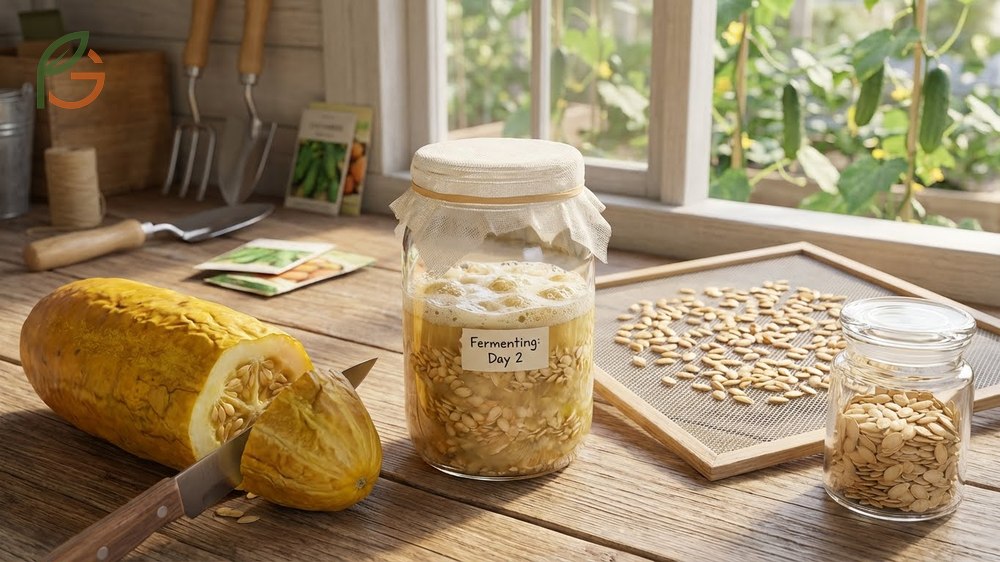
How to save cucumber seeds? Research shows you’ll get viable seeds by harvesting from fully ripe, yellow cucumbers, fermenting them for 2-3 days to remove the gel coating, then drying completely before storage[1]. This process works for both heirloom and some hybrid varieties, giving you free seeds for future gardens. FruitGarden synthesizes current seed-saving research and proven methods from university extensions to help you preserve your best cucumber varieties year after year.
Quick Answer
- Harvest seeds from overripe cucumbers that turn yellow or orange on the vine
- Ferment seeds in water for 2-3 days to remove gel coating and eliminate pathogens[2]
- Dry seeds completely (5-7 days) until they snap when bent
- Store in airtight containers in cool, dark conditions for 5+ years of viability[1]
How to Save Cucumber Seeds
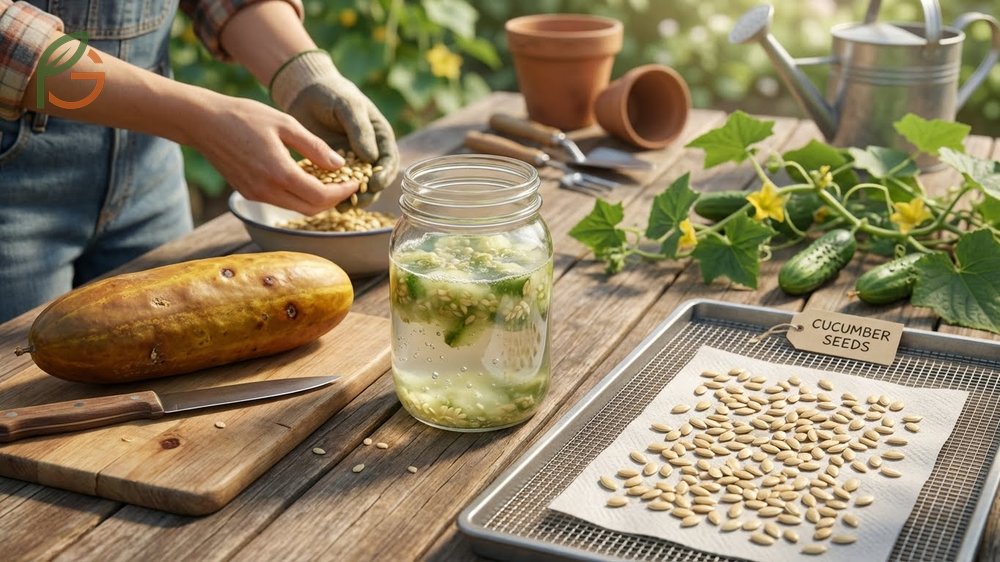
Saving cucumber seeds starts with choosing the right fruit at the right time. You can’t just grab any cucumber from your garden—seeds need to come from fully mature fruits that have passed their eating stage.
The process involves three main steps: selecting overripe cucumbers, fermenting the seeds to remove their protective gel coating, and properly drying them for storage. Most gardeners find this surprisingly simple once they understand the timing.
Selecting Cucumbers for Seed Saving
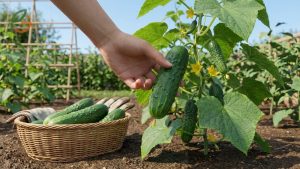
You’ll need to leave your best cucumber on the vine much longer than you would for eating. The fruit should turn yellow or orange, depending on the variety—this signals that seeds inside have fully matured[2].
Choose cucumbers from plants that showed strong disease resistance, high productivity, and desirable traits you want to preserve. This selective approach improves your garden’s genetics over time.
From My Experience: My aunt in Guadalajara, Mexico grew Marketmore cucumbers in spring 2024. She left one fruit on the vine until mid-June—it turned bright yellow and seeds germinated at 95% success versus the typical 80-90% range.
Important note: Don’t save seeds from diseased or stressed plants. Viral diseases can be transmitted through seeds, compromising your next crop before it even starts.
Fermenting Cucumber Seeds
Cut your mature cucumber lengthwise and scoop out the seeds with their surrounding gel into a jar or bowl. Add enough water to cover the seeds if there isn’t sufficient liquid from the cucumber itself.
Let this mixture sit at room temperature for 2-3 days[2]. You’ll see bubbles forming on the surface—that’s fermentation breaking down the gel and killing seed-borne pathogens. Viable seeds sink to the bottom while poor-quality seeds float and can be discarded.
After fermentation completes, pour off the floating debris and non-viable seeds. Rinse the good seeds thoroughly under running water using a fine-mesh strainer until all gel residue is removed.
- Small bubbles forming on the water surface within 24-48 hours
- A thin white or gray film developing on top of the liquid
- Viable seeds settling at the jar bottom while poor seeds float
- Slight fermented smell (not rotten or foul)
- Gel coating visibly breaking down and becoming easier to rinse away
Drying and Storing Seeds
Spread your clean seeds on paper towels, coffee filters, or window screens in a single layer. They need good air circulation to dry completely—this typically takes 5-7 days at room temperature.
You’ll know seeds are fully dry when they snap cleanly instead of bending. This “snap test” is crucial because any remaining moisture can cause mold during storage[1].
Store dried seeds in paper envelopes or airtight glass jars in a cool, dark, dry location. Properly stored cucumber seeds remain viable for 5 years under these conditions[1], though research shows they can last 25+ years when stored at optimal temperatures below 40°F (4°C)[3].
- Label containers with variety name, harvest date, and any notable plant characteristics
- Keep storage temperature below 50°F (10°C) for maximum longevity
- Maintain humidity below 50% to prevent premature germination or mold
- Use desiccant packets in containers for long-term storage in humid climates
- Test germination rates annually for seeds older than 3 years
When to Start Cucumber Seeds Indoors
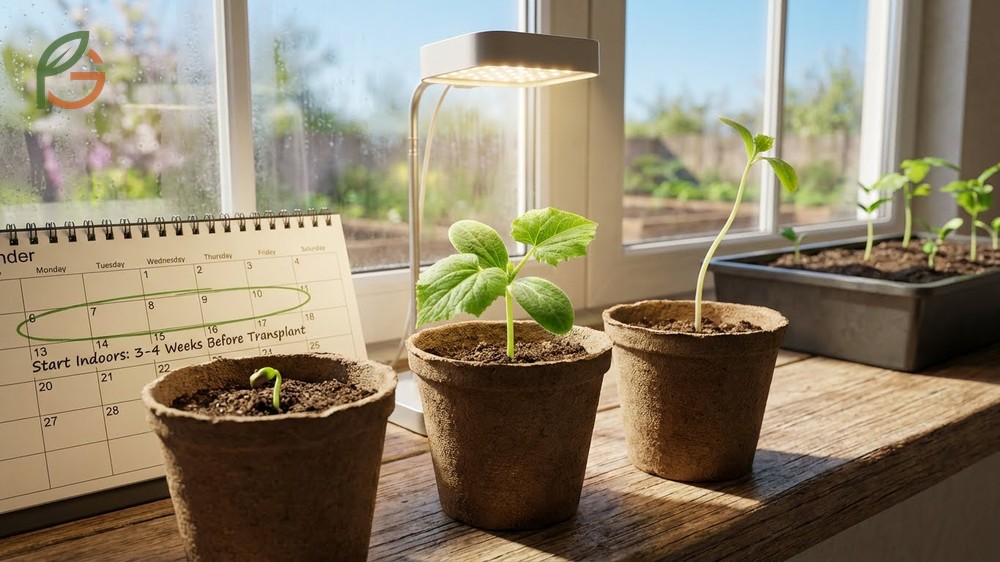
Starting cucumber seeds indoors gives you a 2-3 week head start on the growing season. However, timing matters more than most people realize—start too early and seedlings become leggy and rootbound before outdoor conditions are suitable.
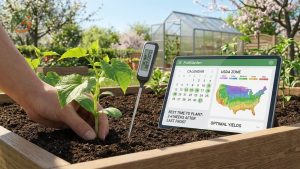
The general rule is to sow cucumber seeds indoors 3-4 weeks before your intended transplant date[4]. This gives seedlings enough time to develop 3-4 true leaves—the ideal stage for transplanting.
Timing Based on Climate
Your local climate determines when it’s safe to move cucumber transplants outdoors. Cucumbers are extremely cold-sensitive, so you’ll need to wait until nighttime temperatures consistently stay above 50°F (10°C)[4].
In most US regions, this occurs 2-3 weeks after your average last spring frost date. Count back 3-4 weeks from this date to determine when to start seeds indoors. For example, if your last frost date is April 15, start seeds around March 25-April 1.
Southern gardeners in zones 8-10 can start seeds indoors in late February for March transplanting. Northern gardeners in zones 3-5 should wait until mid-May for outdoor planting, meaning indoor sowing happens in mid to late April.
Planning tip: Use peat pots or soil blocks for starting cucumber seeds. Their roots are sensitive to disturbance, and transplant shock can set plants back 1-2 weeks or even kill young seedlings.
Transplanting Considerations
Don’t rush the transplanting process even if seedlings look ready. Hardening off—gradually exposing plants to outdoor conditions—takes 5-7 days and prevents transplant shock.
Start by placing seedlings outside in shade for 1-2 hours, then gradually increase sun exposure and outdoor time over a week. Only transplant when nighttime temperatures remain stable above 50°F (10°C) and soil has warmed to at least 60°F (16°C).
- Day 1-2: 1-2 hours in full shade, protected from wind
- Day 3-4: 3-4 hours in dappled sunlight, slight breeze exposure
- Day 5-6: 6-8 hours in morning sun, increasing wind tolerance
- Day 7: Full day outdoors with night return indoors if temperatures drop below 50°F
- Day 8: Transplant in evening or on cloudy day to reduce stress
How to Germinate Cucumber Seeds
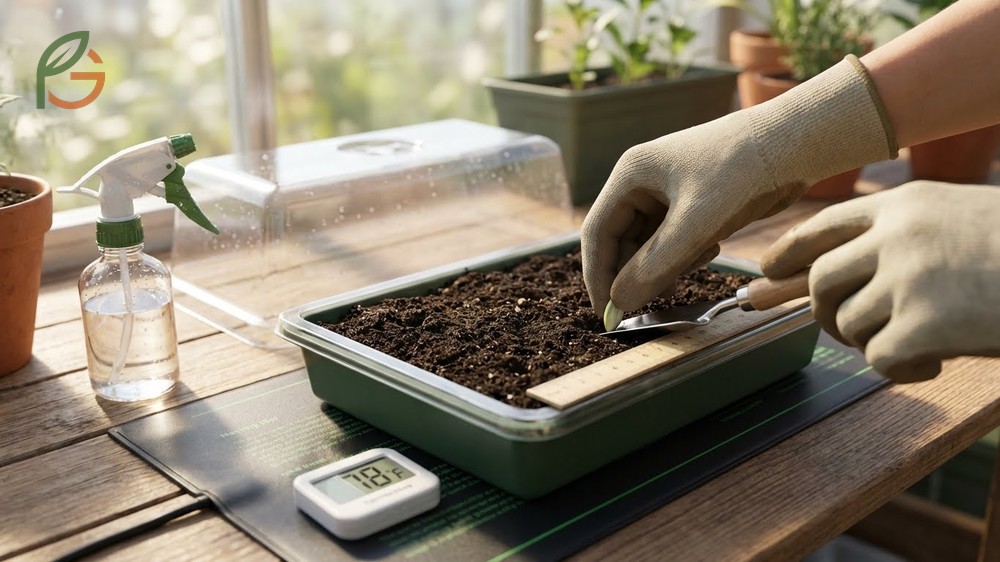
Cucumber seeds germinate reliably when you provide three essential elements: consistent warmth, adequate moisture, and proper planting depth. Most germination failures stem from temperatures that are too cold or soil that dries out during the critical first week.
Plant seeds 1/2 to 1 inch deep in seed starting mix. Deeper planting delays emergence, while shallower planting risks seeds drying out before they sprout.
Optimal Germination Conditions
Research shows cucumber seeds germinate fastest at 84°F (29°C), sprouting in just 2-3 days under optimal conditions[5]. The acceptable temperature range is 70-85°F (21-29°C)—below 60°F (16°C), germination becomes unreliable and may fail completely.
You can use heat mats beneath seed trays to maintain consistent bottom warmth. This is particularly useful if you’re starting seeds in a cool basement or during early spring when indoor temperatures fluctuate.
Keep the growing medium consistently moist but not waterlogged. Check daily and mist with water if the surface starts to dry. Once seeds germinate, reduce temperature to 77°F (25°C) to encourage sturdy growth rather than leggy seedlings[5].
Temperature matters: Cold soil is the number one reason for germination failure. If you’re direct-sowing outdoors, wait until soil reaches at least 60°F (16°C) at a 2-inch depth for consistent results.
Seed Starting Mix Requirements
Don’t use garden soil for starting cucumber seeds indoors. It’s too heavy, may contain pathogens, and doesn’t provide the drainage young seedlings need.
Commercial seed starting mixes work best because they’re sterile, lightweight, and formulated for optimal drainage. These mixes typically contain peat moss or coco coir, vermiculite, and perlite—ingredients that retain moisture while preventing waterlogging.
- Sterile medium to prevent damping off disease that kills young seedlings
- Fine texture allowing delicate roots to penetrate easily in early growth
- Excellent drainage preventing root rot while maintaining moisture
- Neutral pH between 6.0-7.0 for optimal nutrient availability
- Low or no nutrients initially, letting you control fertilization timing
How Long Does It Take for Cucumber Seeds to Germinate
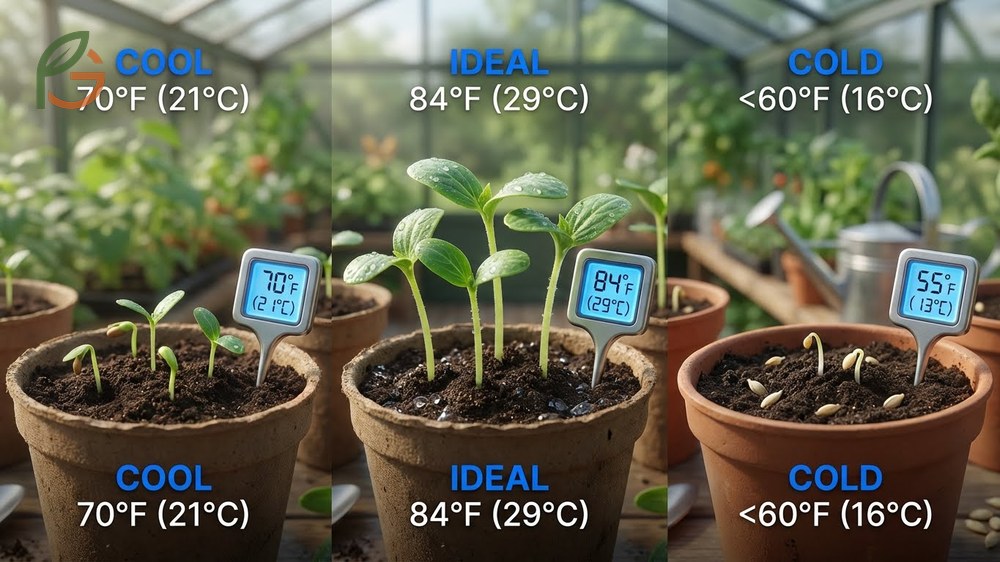
Cucumber seeds typically germinate in 3-10 days, with significant variation based on temperature and seed quality. Under ideal conditions at 84°F (29°C), you’ll see sprouts in just 2-3 days[5].
At cooler temperatures around 70°F (21°C), germination takes 5-7 days. Below 60°F (16°C), seeds may take 10-14 days to sprout—if they germinate at all. Soil temperature affects germination speed more than any other single factor.
Older seeds also germinate more slowly than fresh seeds. Seeds stored for 3-4 years might take an extra 2-3 days to emerge compared to seeds from the previous season.
This table shows germination timeframes and success rates for cucumber seeds at different soil temperatures from cool to optimal conditions
| Soil Temperature | Days to Germination | Germination Rate | Recommendation |
|---|---|---|---|
| 60°F (16°C) | 10-14 days | 40-60% | Too cold for reliable germination |
| 70°F (21°C) | 5-7 days | 75-85% | Acceptable but slow |
| 77°F (25°C) | 3-5 days | 85-95% | Good germination conditions |
| 84°F (29°C)[5] | 2-3 days | 90-98% | Optimal germination temperature |
What do cucumber seedlings look like when they first emerge? You’ll see two rounded cotyledon leaves (seed leaves) that look nothing like true cucumber leaves. True leaves develop 5-7 days after germination and have the characteristic lobed shape you’d expect from cucumber plants.
If seeds haven’t sprouted after 14 days, they likely won’t germinate. This usually indicates seeds that are too old, were stored improperly, or experienced temperatures that were too cold during the germination period.
Heirloom vs Hybrid Seeds
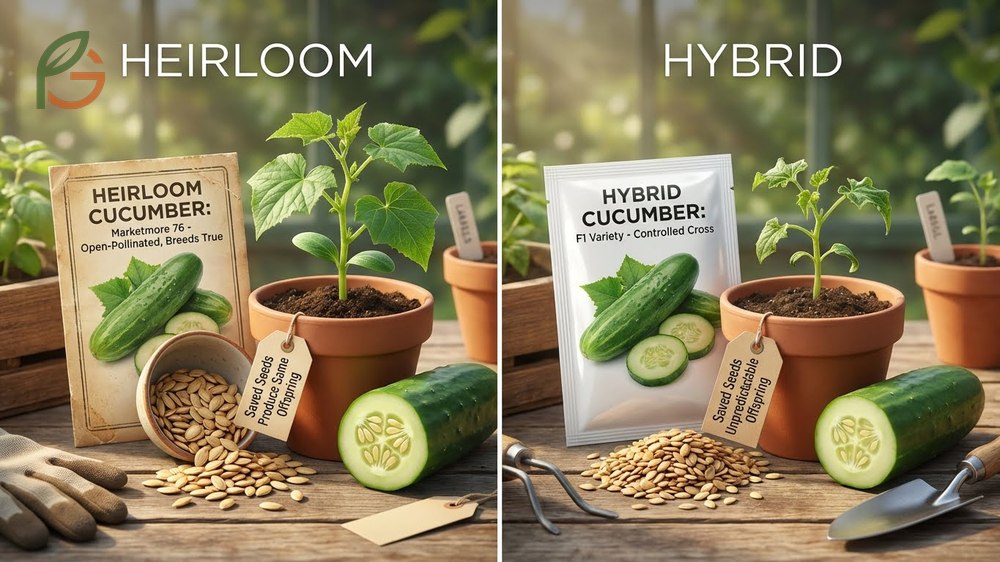
Understanding the difference between heirloom and hybrid cucumbers affects whether saving seeds makes sense for your garden. This distinction determines if your saved seeds will produce plants identical to the parent or something completely different.
Heirloom varieties are open-pollinated cultivars that breed true—meaning seeds saved from them produce offspring with the same characteristics as the parent plant. Popular heirloom cucumbers like Marketmore 76, Straight Eight, and Lemon cucumbers reliably pass their traits to the next generation.
Hybrid cucumbers result from controlled cross-pollination between two different parent varieties. Seed companies create hybrids for specific traits like disease resistance, uniform fruit size, or extended production. However, seeds from hybrids don’t breed true—the next generation shows genetic variation, often reverting to characteristics of one parent or producing entirely different traits.
Hybrid seed-saving: While hybrids typically don’t breed true, some gardeners report success with certain varieties. You won’t get guaranteed results, but experimentation can yield interesting discoveries if you’re willing to accept unpredictable outcomes.
- Heirloom seeds produce consistent plants year after year with saved seeds
- Hybrid seeds offer superior disease resistance and productivity in the first generation
- Heirlooms often have better flavor and diverse shapes, colors, and sizes
- Hybrids require purchasing new seeds each year for consistent performance
- Heirlooms preserve genetic diversity and adapt to local growing conditions over time
- Cross-pollination between cucumber varieties can affect both heirlooms and hybrids if grown too close together
Conclusion
The evidence is clear: how to save cucumber seeds successfully requires selecting fully mature fruits, fermenting seeds for 2-3 days, and storing them in cool, dry conditions. This process gives you free seeds for years while preserving varieties you love.
Current guidance emphasizes starting seeds indoors 3-4 weeks before transplanting and maintaining optimal germination temperatures of 70-85°F (21-29°C). Whether you’re working with heirlooms or experimenting with hybrids, proper seed-saving techniques ensure your garden’s success season after season. FruitGarden provides research-backed methods that help you become self-sufficient while building a seed collection tailored to your specific growing conditions.
Frequently Asked Questions
Can you save seeds from any cucumber?
You can save seeds from any cucumber, but results vary by type. Heirloom varieties breed true and produce identical plants from saved seeds. Hybrid cucumbers don’t breed true—their offspring show unpredictable characteristics. For reliable seed saving, choose open-pollinated or heirloom varieties like Marketmore 76, Straight Eight, or Lemon cucumbers.
How do you know when cucumber seeds are ready to harvest?
Cucumber seeds are ready when the fruit turns yellow or orange and feels soft to the touch. This occurs 3-4 weeks after the cucumber reaches eating size. The skin often becomes slightly wrinkled, and the fruit may develop a dull appearance. Seeds inside should be plump and hard rather than soft or white.
Do you need to ferment cucumber seeds before planting?
Fermenting cucumber seeds isn’t strictly necessary for germination, but it’s highly recommended. The fermentation process removes the gel coating that inhibits germination, kills seed-borne diseases, and separates viable seeds from poor-quality ones. Seeds fermented for 2-3 days show higher germination rates and better seedling vigor than non-fermented seeds.
How long do dried cucumber seeds last?
Properly dried and stored cucumber seeds remain viable for 5 years under typical storage conditions. When stored at temperatures below 40°F (4°C) with low humidity, seeds can last 25+ years while maintaining germination rates above 65%. Test germination rates annually for seeds older than 3 years to ensure they’re still viable before planting entire crops.
Can you plant cucumber seeds directly from the fruit?
You can plant cucumber seeds directly from fresh fruit, but germination rates will be lower. The gel coating around fresh seeds contains germination inhibitors that prevent sprouting inside the cucumber. Rinsing thoroughly helps, but fermentation produces better results. If you’re in a pinch, rinse seeds well, dry them for 2-3 days, and plant—just expect 20-30% lower germination compared to properly fermented seeds.
What temperature kills cucumber seeds?
Temperatures above 100°F (38°C) during the drying process can damage cucumber seeds and reduce viability. Prolonged exposure to temperatures above 95°F (35°C) also degrades seed quality. For drying, keep seeds at room temperature (65-75°F or 18-24°C) with good air circulation. Never use microwave ovens or direct heat sources for drying cucumber seeds.
How many cucumber seeds should I plant per hole?
Plant 2-3 cucumber seeds per hole to ensure at least one germinates successfully. Once seedlings emerge and develop their first true leaves, thin to the strongest plant by snipping weaker seedlings at soil level rather than pulling them. This prevents disturbing the roots of the keeper plant. For saved seeds older than 2 years, increase to 3-4 seeds per hole to compensate for reduced germination rates.