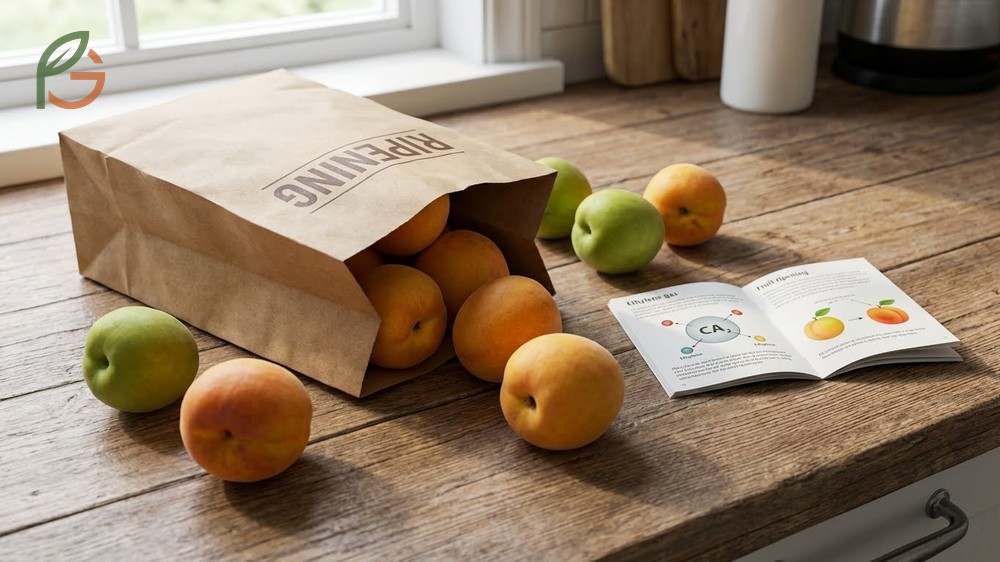
How to ripen apricots at home? Research shows that apricots ripen best when stored at room temperature, away from direct sunlight, and they’ll soften within 1-3 days using the paper bag method.[1] These climacteric fruits continue ripening after harvest because they produce ethylene gas, which triggers the conversion of starches to sugars.[2] FruitGarden synthesizes current horticultural research to help you achieve perfectly ripe apricots every time.
Quick Answer
- Place unripe apricots in a paper bag and fold it closed – they’ll ripen in 1-3 days at room temperature[1]
- Add a banana or apple to the bag to speed up ripening by 24-48 hours[3]
- Ripe apricots show a golden-orange color with slight softness and sweet aroma[4]
- Store at room temperature (68-72°F / 20-22°C) – never refrigerate unripe apricots[4]
How to Ripen Apricots
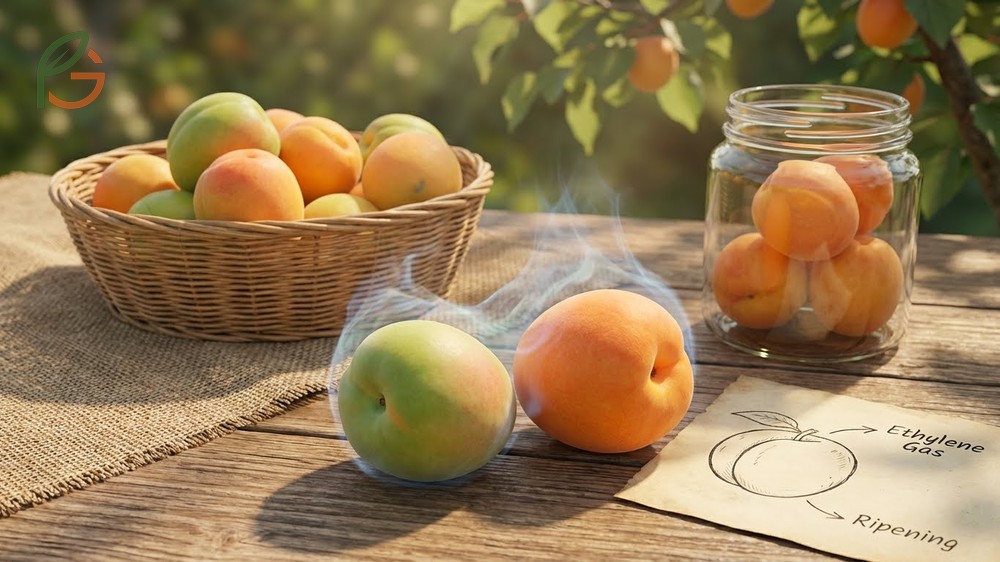
Apricots are climacteric fruits, which means they continue ripening after you pick them from the tree. Unlike non-climacteric fruits such as grapes or oranges, apricots produce ethylene gas that triggers ripening even after harvest.[5]
The key to successful home ripening is picking apricots at the right stage. Fruits must show at least some color change before harvest, as completely green apricots won’t ripen properly and will remain hard and flavorless.[3] Once picked at the right maturity, apricots need warmth and controlled ethylene exposure to soften and develop sweetness.
Research demonstrates that ethylene production in apricots increases significantly during the ripening stage, reaching peak levels when the fruit is fully mature.[2] You can harness this natural process at home by controlling the fruit’s environment.
Understanding Apricot Ripening
Ethylene acts as a ripening hormone in apricots. When fruits are enclosed in spaces like paper bags, the gas concentration increases and accelerates the ripening process. This happens because ethylene triggers the breakdown of cell walls and converts starches into sugars.
Temperature plays a crucial role in how quickly apricots ripen. Room temperature (68-72°F or 20-22°C) provides ideal conditions, while refrigeration halts the process completely. If you’re like most Americans trying to ripen grocery store apricots, you’ll find they’re often picked too early and need 2-4 days at room temperature.
When to Pick Apricots
If you’re harvesting from your own tree, pick apricots when they show full color development with no green patches. The fruit should be firm but starting to soften slightly near the stem area.[4]
Apricots picked with a slight give to the skin will ripen within 1-2 days. Rock-hard fruits need 3-5 days. Don’t pick completely green apricots, as they lack the necessary sugars and won’t develop proper flavor.
Paper Bag Method
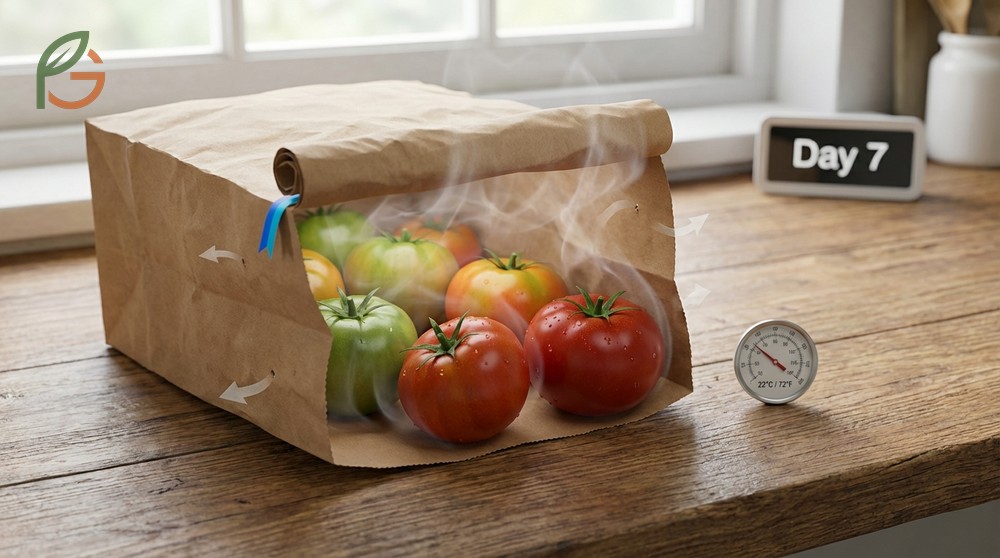
The paper bag method is the fastest way to ripen apricots at home. Studies show that paper bags trap ethylene gas while allowing just enough air circulation to prevent mold growth.[5] Plastic bags don’t work because they trap too much moisture, leading to rot instead of ripening.
Any clean paper bag works – grocery bags, lunch bags, or even large envelope-style bags. The size matters less than the material. You want something that’ll fold closed but isn’t airtight.
Most people find that apricots ripen 2-3 times faster in a paper bag compared to open-air counter ripening. This means turning rock-hard fruit into perfectly soft, sweet apricots in just 24-48 hours instead of 4-5 days.
Step-by-Step Process
Place 3-5 apricots in your paper bag – don’t overcrowd it. Fold the top of the bag over twice to close it loosely. Set the bag on your kitchen counter away from direct sunlight and heat sources.
Check the apricots once daily by gently pressing them. When they yield slightly to pressure and emit a sweet fragrance, they’re ready. This usually takes 1-3 days depending on how firm they were initially.[1]
Important Note: Don’t seal the bag with tape or clips. Paper bags need minimal airflow to prevent moisture buildup, which causes mold. A simple fold-over closure works perfectly.
Adding Ethylene Producers
Adding a ripe banana or apple to your paper bag dramatically speeds up apricot ripening. These fruits are ethylene powerhouses that can cut ripening time by 24-48 hours.[3]
Use one banana or apple for every 4-5 apricots. The extra ethylene gas creates a ripening chamber effect inside the bag. Check your apricots after just 24 hours when using this method, as they can go from perfect to overripe quickly.
- Bananas – produce the highest levels of ethylene gas
- Apples – steady ethylene producers that work consistently
- Pears – moderate ethylene output, good for gentler ripening
- Tomatoes – work well but may transfer slight flavor
- Avocados – effective but need similar ripening time themselves
Room Temperature Ripening
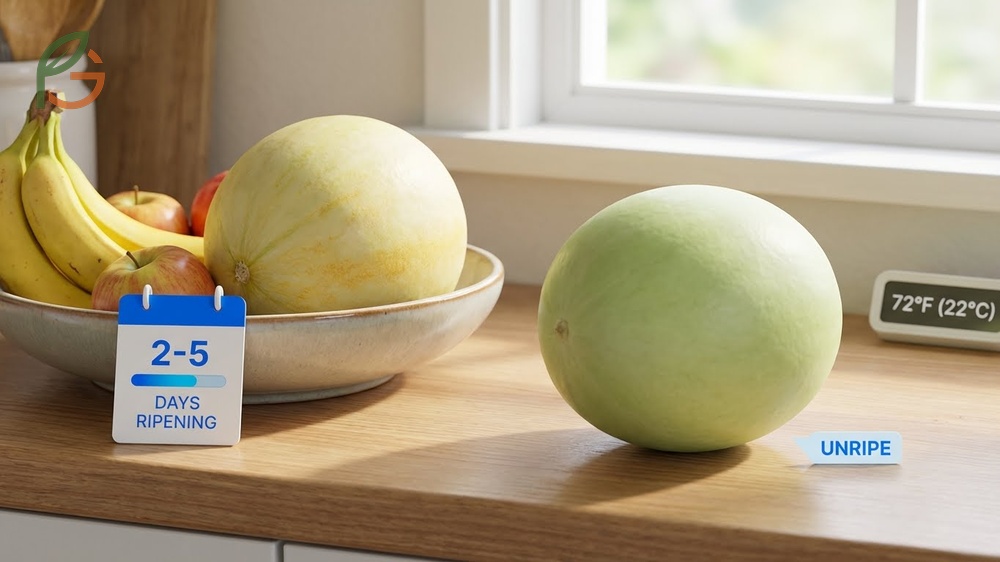
Counter ripening without a bag works fine if you’re not in a rush. Apricots left at room temperature will ripen naturally through their own ethylene production, though it takes 3-5 days for firm fruit. This method gives you more control over checking ripeness daily.
The biggest advantage of counter ripening is that you can monitor color changes and softness more easily. You don’t have to unwrap anything or disturb the fruit. Just give each apricot a gentle daily squeeze to track progress.
Research indicates that apricots stored at room temperature away from sunlight and heat maintain better flavor development compared to those ripened too quickly.[4] The slower pace allows sugars to develop more evenly throughout the flesh.
From My Experience: My cousin in Guadalajara, Mexico grows apricots in her backyard. Last summer she harvested 30 fruits and left half on the counter, half in paper bags. The counter apricots took 4 days versus 2 days for the bagged ones, but she said the counter-ripened fruit tasted slightly sweeter.
Ideal Conditions
Keep apricots in a single layer on your counter or in a shallow bowl. Don’t stack them, as pressure points can cause bruising. The ideal ambient temperature is 68-72°F (20-22°C).
Avoid windowsills or spots near stoves, ovens, or heating vents. Temperatures above 75°F (24°C) can cause uneven ripening where the outside softens too quickly while the inside stays firm. You’ll also want decent air circulation, so don’t place apricots in corners or closed cabinets.
Timeline Expectations
Slightly firm apricots with good color need 2-3 days at room temperature. Very hard fruit requires 4-5 days. If you see no softening after 5 days, the apricots were likely picked too early and won’t ripen properly.
Check your fruit twice daily after day 3. Apricots can go from perfectly ripe to overripe in just 12-18 hours. Once they’re soft and fragrant, eat them immediately or transfer to the refrigerator to slow further ripening.
- Color deepens from pale yellow to rich golden-orange within 48 hours
- Slight softening appears first near the stem end
- Sweet apricot aroma becomes noticeable from 1-2 feet away
- Skin develops a slight sheen or waxy appearance
- Fruit yields gently to thumb pressure without leaving indents
Apricot Ripeness Signs
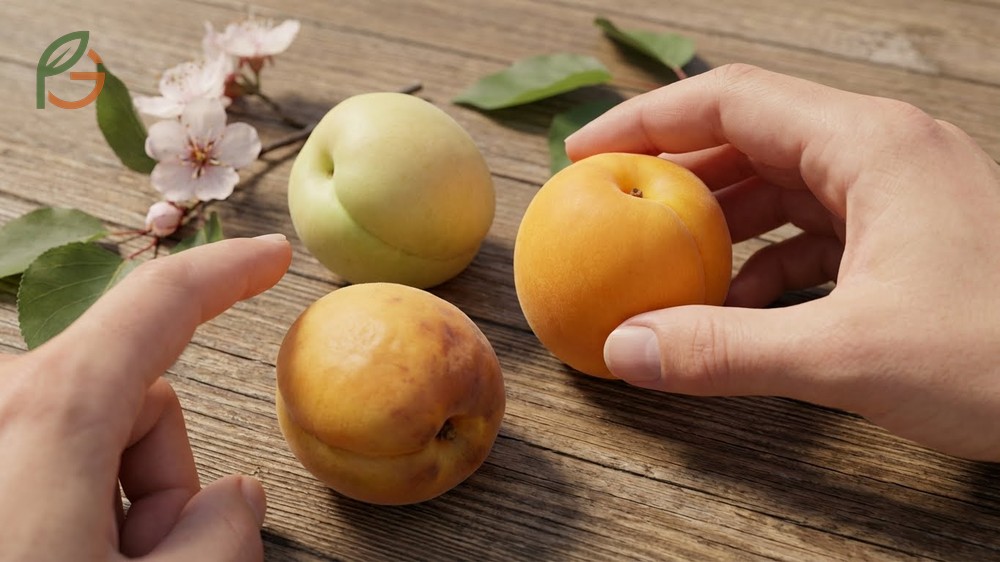
Knowing when apricots are perfectly ripe prevents the disappointment of biting into hard, flavorless fruit or mushy, overripe ones. Current guidance emphasizes using multiple indicators rather than relying on just one factor.[4]
The combination of color, texture, and aroma provides the most reliable assessment. Each variety has slight differences, but these general principles apply to all common apricot types sold in the United States.
What often gets overlooked is that apricots ripen unevenly. The side facing the sun ripens first, so you might see variations in color and softness across a single fruit. This is normal and doesn’t indicate poor quality.
Visual Indicators
Ripe apricots display a vibrant golden-orange color with no traces of green, especially around the stem area. Depending on the variety, you might see a rosy blush on the sun-exposed side.[4]
The skin should look smooth and slightly waxy. Wrinkled or shriveled skin indicates overripeness or dehydration. Small brown spots or freckles are fine, but large dark areas suggest bruising or decay.
Tip: If you see any green near the stem attachment point, give the apricot another 24 hours. That area is the last part to ripen and shows you it’s not quite ready yet.
Texture and Aroma
Gently squeeze the apricot between your thumb and forefinger. Ripe fruit yields slightly to pressure but springs back without leaving an indentation. If it feels rock-hard, it needs more time. If your fingers leave dents, it’s overripe.
Aroma is your best ripeness indicator. Hold the apricot near your nose – ripe fruit emits a distinct sweet, fruity fragrance. If you can’t smell anything or detect only a faint scent, the apricot isn’t ready.[4] A fermented or sour smell means the fruit has gone past its prime.
- Color: Deep golden-orange with no green patches
- Feel: Slight give when gently pressed, not rock-hard or mushy
- Smell: Sweet, fruity aroma detectable from 6-12 inches away
- Skin: Smooth with slight sheen, no major wrinkles
- Weight: Feels heavier than it looks due to juice content
Store Unripe Apricots
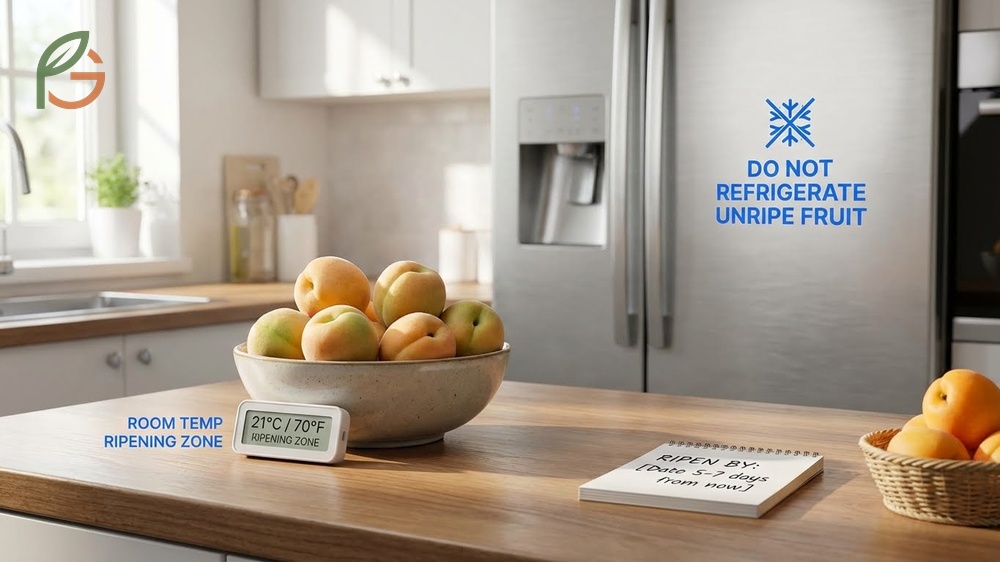
Proper storage of unripe apricots ensures they ripen evenly without spoiling. The most important rule is keeping them at room temperature – refrigeration completely stops the ripening process and can damage the fruit’s texture.[4]
Unripe apricots can sit at room temperature for up to 5-7 days before they must be eaten or refrigerated. This gives you flexibility if you’re not ready to consume them immediately after they ripen.
Storage location matters more than you might think. The wrong spot can cause uneven ripening, premature decay, or flavor loss. You want a balance of moderate temperature, low humidity, and gentle air circulation.
Best Storage Locations
Your kitchen counter away from direct sunlight is ideal for storing unripe apricots. A fruit bowl or shallow basket works well, allowing air to circulate around each fruit. Keep them in a single layer rather than piled up.
Pantries and cupboards are too dark and often too warm. Apricots need some ambient light and air movement to ripen properly. A dining room table or kitchen island provides better conditions than enclosed spaces.
- Place fruit stem-side down to prevent bruising at the attachment point
- Space apricots 1-2 inches apart to allow air circulation
- Keep away from heat sources like ovens, stoves, or sunny windows
- Store at 68-72°F (20-22°C) for optimal ripening pace
- Check daily for ripeness changes and remove any damaged fruit immediately
What to Avoid
Never store unripe apricots in the refrigerator. Cold temperatures below 50°F (10°C) halt ethylene production and prevent ripening entirely. You’ll end up with fruit that stays hard and never develops sweetness.[4]
Don’t use plastic bags or airtight containers for unripe apricots. These trap too much moisture, creating an environment where mold thrives. Stick with breathable materials like paper bags, woven baskets, or open bowls.
Avoid storing apricots near strong-smelling foods like onions or garlic. Apricots can absorb odors, which affects their flavor. Also keep them away from ethylene-sensitive produce like leafy greens, which will wilt faster if exposed to ripening apricots.
Warning: If you notice any apricot developing soft brown spots or white fuzzy mold, remove it immediately. Decay spreads quickly in stone fruits and can ruin neighboring apricots within 24 hours.
Conclusion
The evidence is clear: how to ripen apricots successfully comes down to three key factors – proper harvesting stage (no fully green fruit), room temperature storage (68-72°F), and controlled ethylene exposure through the paper bag method. You’ll get perfectly ripe apricots in 1-3 days using these techniques, compared to 4-5 days with counter ripening alone.
Current horticultural guidance emphasizes that apricots picked with at least some color change will ripen beautifully at home, while those harvested too early won’t develop proper sweetness regardless of method. Trust your senses – color, softness, and aroma together tell you when apricots are ready to eat. FruitGarden provides research-backed fruit growing and storage information to help home gardeners and fruit enthusiasts make the most of their harvests.
Frequently Asked Questions
How long does it take for apricots to ripen at room temperature?
Apricots typically ripen in 2-5 days at room temperature, depending on their initial firmness. Slightly soft fruit needs only 1-2 days, while rock-hard apricots require 4-5 days. Using the paper bag method cuts this time roughly in half.
Can you eat apricots that aren’t fully ripe?
You can eat slightly underripe apricots, though they’ll taste tart and lack sweetness. Completely green, hard apricots won’t ripen properly after picking and will remain flavorless. It’s best to wait until apricots show golden-orange color and slight softness before eating.
Why won’t my apricots ripen?
Apricots that won’t ripen were likely picked too early when still completely green. These fruits lack the necessary sugars and starches to complete the ripening process. Refrigeration also stops ripening entirely, so unripe apricots must stay at room temperature.
Should you wash apricots before ripening them?
Don’t wash apricots until you’re ready to eat them. Moisture promotes mold growth and can cause spoilage before ripening completes. Store unwashed fruit at room temperature and rinse just before consuming.
Do apricots ripen faster in a paper bag or on the counter?
Paper bags accelerate ripening by 2-3 times compared to counter ripening. The bag traps ethylene gas that apricots naturally produce, concentrating it around the fruit. Most apricots ripen in 1-3 days in a paper bag versus 3-5 days on the counter.
Can you ripen apricots in the refrigerator?
No, refrigeration stops apricot ripening completely. Cold temperatures halt ethylene production and prevent the fruit from softening or developing sweetness. Only refrigerate apricots after they’ve fully ripened to extend their shelf life by 5-7 days.
What’s the best way to speed up apricot ripening?
Place apricots in a paper bag with a ripe banana or apple. These fruits emit high levels of ethylene gas that accelerates apricot ripening by 24-48 hours. Check daily, as this method can ripen fruit in just 1-2 days.