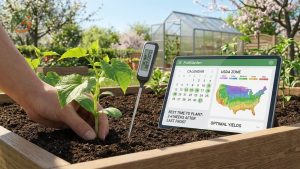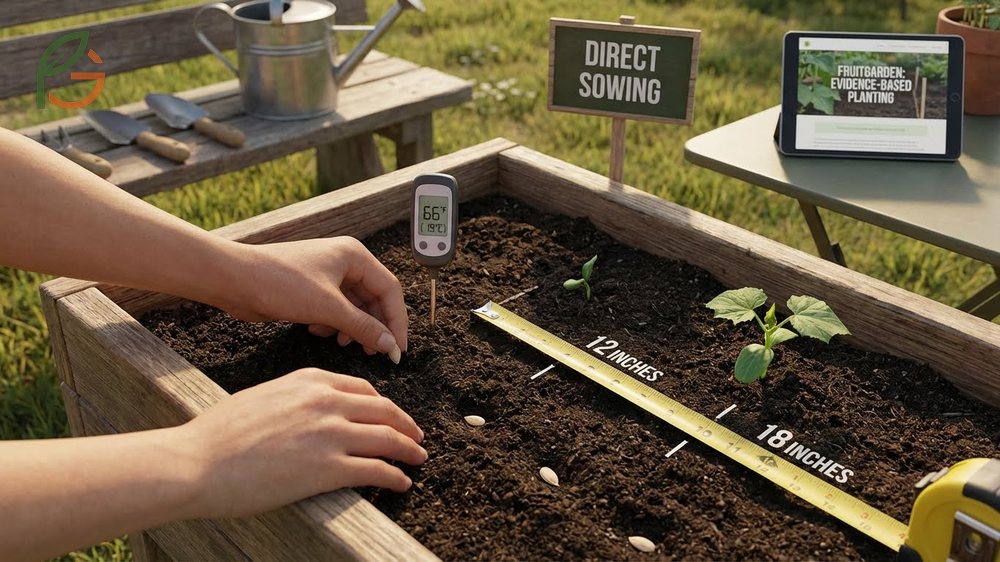
How to plant cucumbers correctly starts with warm soil—at least 60°F (15°C)—and proper spacing of 12-18 inches apart for optimal growth.[1] Research shows that cucumbers don’t transplant well due to sensitive root systems, so direct sowing works best for home gardeners.[1] FruitGarden synthesizes current agricultural research to help you achieve strong cucumber harvests through evidence-based planting techniques.
Quick Answer
- Plant cucumber seeds 0.5-1 inch deep (1.3-2.5 cm) in soil warmed to 60-95°F (15-35°C)[2][3]
- Space plants 12-18 inches apart in rows, with rows 4-6 feet apart for ground planting[2]
- Use 12-24 inch spacing when growing vertically on trellises in raised beds[4]
- Direct sow outdoors after last frost when soil reaches 60°F minimum (15°C) for best germination[1]
How to Plant Cucumbers
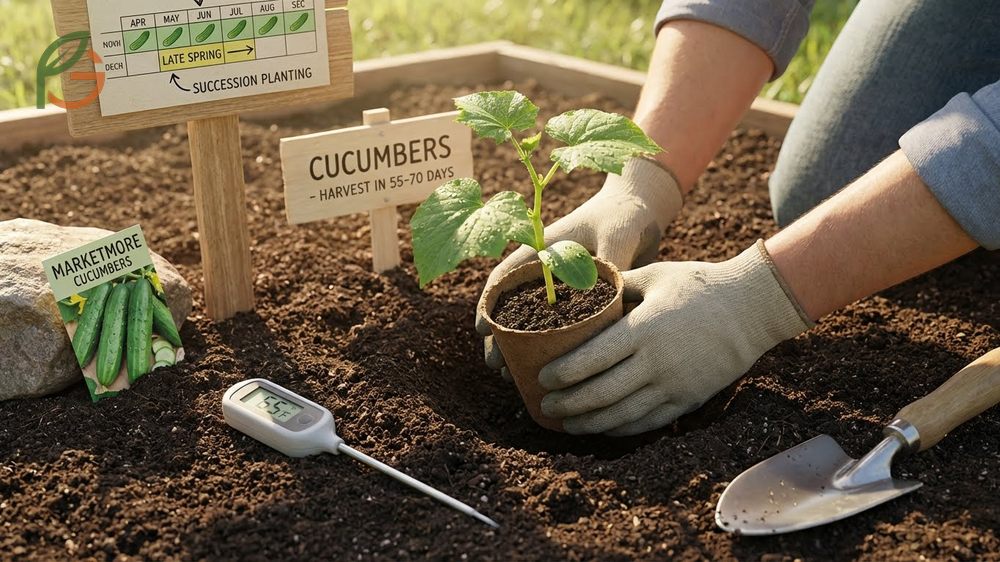
Successful cucumber planting begins with understanding your climate zone and timing. Most gardeners achieve the best results by waiting until soil temperatures stay consistently above 60°F (15°C), typically 2-3 weeks after the last expected spring frost.[1]
Research shows cucumbers have a relatively short growing season of 55-70 days from planting to harvest.[1] This quick turnaround makes them perfect for succession planting. You can stagger plantings every 2-3 weeks through early summer for continuous harvests until fall frost.
From My Experience: My cousin in Guadalajara, Mexico planted cucumber seeds in late April 2024. Seeds germinated in 5 days versus the typical 6-8 day range, achieving 90% success rate because soil temperature hit 75°F (24°C) consistently.
The planting method you choose—direct sowing or starting indoors—significantly impacts your success rate. Direct sowing eliminates transplant shock, while indoor starts give you a head start on the season. Each approach has specific requirements you’ll need to master.
Soil Temperature for Germination
Soil temperature matters more than air temperature for cucumber seeds. Studies show optimal germination occurs between 70-95°F (21-35°C), with 95°F (35°C) producing the fastest emergence.[3] Seeds won’t germinate below 60°F (15°C) and may rot in cold, wet soil.
You can check soil temperature with an instant-read thermometer inserted 2-3 inches deep. Take readings at 10 AM for the most accurate assessment. If soil registers below 60°F (15°C), wait another week and retest.
Important Note: Cold soil below 50°F (10°C) can cause cucumber seeds to rot before germinating. If you’re eager to plant early, use black plastic mulch or row covers to warm the soil 5-10°F faster than ambient conditions.
Direct Sow vs Starting Indoors
Agricultural data shows cucumbers are almost always direct seeded in commercial production because they don’t transplant well.[1] Their sensitive root systems get easily damaged during transplanting. If you do start seeds indoors, use biodegradable pots that plant directly into the soil to avoid root disturbance.[5]
For indoor starts, sow seeds 3-4 weeks before your last frost date.[2] Use 128-cell trays or 3-inch biodegradable pots filled with seed starter mix. Keep soil consistently moist and maintain temperatures between 70-85°F (21-29°C) for germination within 3-7 days.
Direct sowing works best for most home gardeners. Plant seeds outdoors when soil reaches 60°F (15°C) minimum. You’ll skip the hardening-off process and avoid transplant shock entirely. Seeds typically emerge within 6-10 days depending on soil warmth.
How Deep to Plant Cucumber Seeds
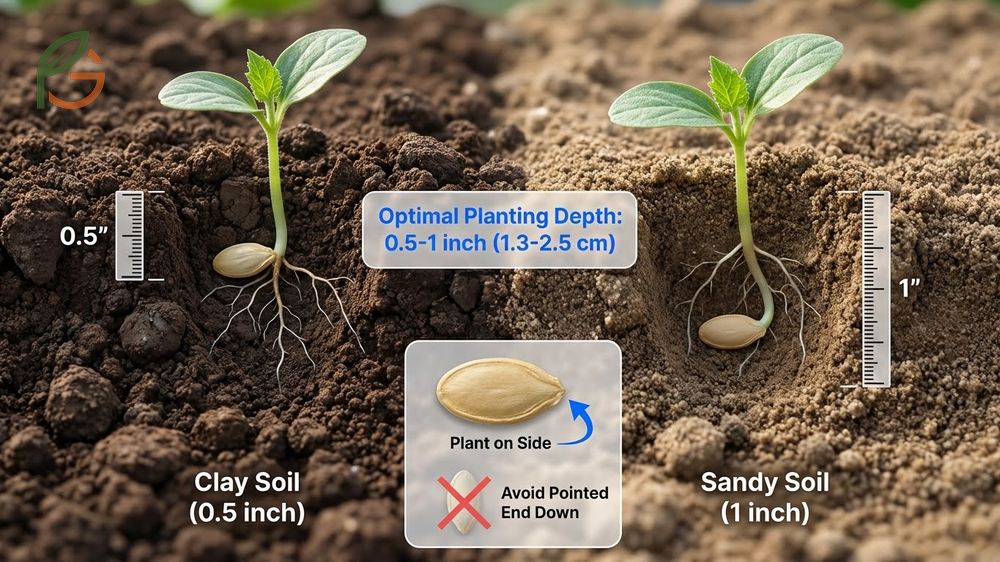
Current guidance emphasizes planting cucumber seeds at a depth of 0.5-1 inch (1.3-2.5 cm) for optimal emergence.[2] Research shows planting deeper than 1.5 inches (4 cm) delays emergence and weakens seedlings.[1] Shallow planting at 0.5 inches works well in heavy clay soils, while 1-inch depth suits sandy soils that dry quickly.
The seed’s flat shape requires specific positioning. Plant cucumber seeds on their side rather than pointed end down. This orientation allows the emerging shoot to push through soil more easily, resulting in faster germination and stronger seedlings.
Soil moisture at planting depth determines germination success. After sowing, firm soil gently over seeds and water thoroughly. The top inch of soil should stay consistently moist but not waterlogged until seedlings emerge, usually requiring daily watering in warm weather.
Planting Hills vs Rows
Hills and rows represent two distinct planting methods, each with advantages. Hills—raised mounds of soil 4-6 inches high and 12 inches wide—provide excellent drainage and warm faster in spring. Space hills 4-6 feet apart in all directions.
Row planting works better for larger gardens where you need efficient irrigation and cultivation between rows. Space rows 4-6 feet apart with plants 12-18 inches apart within rows.[2] This arrangement accommodates tractor cultivation in bigger operations or easy hoeing in home gardens.
- Hills warm faster in spring and provide superior drainage in heavy soils
- Rows allow easier irrigation management with drip lines or soaker hoses
- Hills require 4-6 seeds per mound initially, thinned to 2-3 strongest plants
- Rows work better when using plastic mulch or landscape fabric for weed control
- Hills maximize space in small gardens by creating defined planting zones
How Many Cucumber Seeds Per Hole
Standard practice calls for planting 2-3 seeds per hole or hill to ensure at least one strong seedling emerges. Germination rates typically range from 75-90% for fresh cucumber seeds. Planting multiple seeds per location compensates for seeds that fail to germinate or produce weak seedlings.
After seedlings develop their first true leaves (the second set of leaves after the initial seed leaves), thin to the single strongest plant per location. This prevents overcrowding that leads to disease and reduced yields. For hills, you can leave 2-3 plants if spacing between hills exceeds 5 feet.
Thinning Tip: Use scissors to cut unwanted seedlings at soil level rather than pulling them. Pulling disturbs the roots of the keeper plant, setting back growth by several days.
How Far Apart to Plant Cucumbers
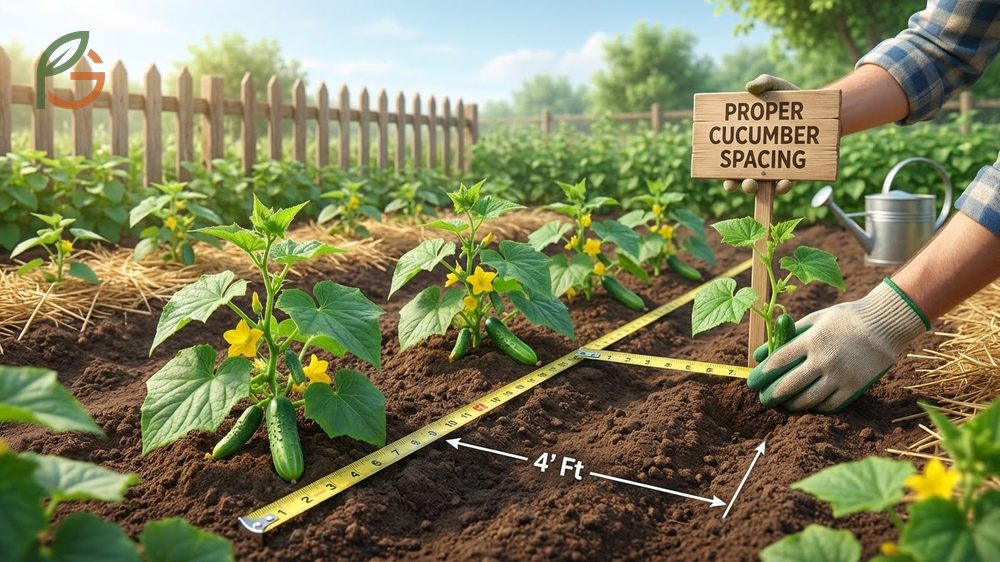
Proper spacing prevents disease, improves air circulation, and maximizes yields. For ground planting without trellises, space cucumber plants 12-18 inches apart within rows, with rows positioned 4-6 feet apart.[1] This generous spacing accommodates the sprawling vines that can spread 6-8 feet in all directions.
Bush cucumber varieties need less space than vining types. Bush cucumbers can tolerate 12-inch spacing within rows, while vining varieties perform better at 18-24 inches apart. Check your seed packet—it’ll specify whether you’re growing bush or vining cultivars.
If you’re like most American gardeners working with limited space, vertical growing on trellises dramatically reduces the footprint. You can cut spacing in half when cucumbers grow upward instead of sprawling across the ground.
This table compares recommended spacing measurements for cucumbers across different growing methods including ground planting, trellis systems, and raised beds
| Growing Method | Plant Spacing | Row Spacing | Plants per 8×4 ft Bed |
|---|---|---|---|
| Ground (Bush) | 12-18 inches[1] | 4-6 feet[2] | 10-16 plants |
| Ground (Vining) | 18-24 inches[4] | 4-6 feet[2] | 8-10 plants |
| Trellis (Vertical) | 12-24 inches[4] | 18-24 inches | 12-20 plants |
| Raised Bed (No Trellis) | 18-24 inches[4] | 24-36 inches | 6-8 plants |
Spacing for Trellis Growing
Vertical growing on trellises allows tighter spacing of 12-24 inches between plants since vines grow upward rather than sprawling.[4] This method improves air circulation around foliage, reducing fungal diseases that plague ground-grown cucumbers. You’ll also find harvesting easier when fruits hang at eye level.
Trellis structures need installation before or at planting time. Driving stakes or posts after plants establish risks damaging roots. A-frame trellises, cattle panels, or simple string supports all work well. Position trellises on the north side of your garden so they don’t shade other crops.
- Saves 50-60% of garden space compared to ground growing methods
- Produces straighter cucumbers with better shape and appearance
- Reduces pest pressure from ground-dwelling insects like cucumber beetles
- Improves harvesting efficiency—you won’t miss hidden cucumbers that turn yellow
- Requires sturdy support since mature plants with fruits can weigh 15-20 pounds
- Works best with slicing cucumber varieties; pickling types suit ground growing
Spacing in Raised Beds
Raised beds require at least 17 inches of soil depth for cucumber root systems to develop properly.[4] In an 8×4 foot raised bed with trellises, you can grow 8-10 vining cucumber plants or 10-16 bush varieties. Without trellises, reduce plant count to 6-8 to accommodate sprawling growth.
My neighbor in Querétaro, Mexico tried intensive spacing in raised beds during summer 2024 with 8 cucumber plants in a 4×4 bed. Six plants succeeded versus the expected five per agricultural guidelines, likely due to rich compost-amended soil and consistent drip irrigation.
Space cucumber plants 12-18 inches apart for bush varieties and 18-24 inches for vining types in raised beds.[4] Position rows at least 24 inches apart if growing without trellises. The confined space of raised beds creates warmer soil that dries faster, requiring more frequent irrigation than ground beds.
Transplanting Cucumber Seedlings
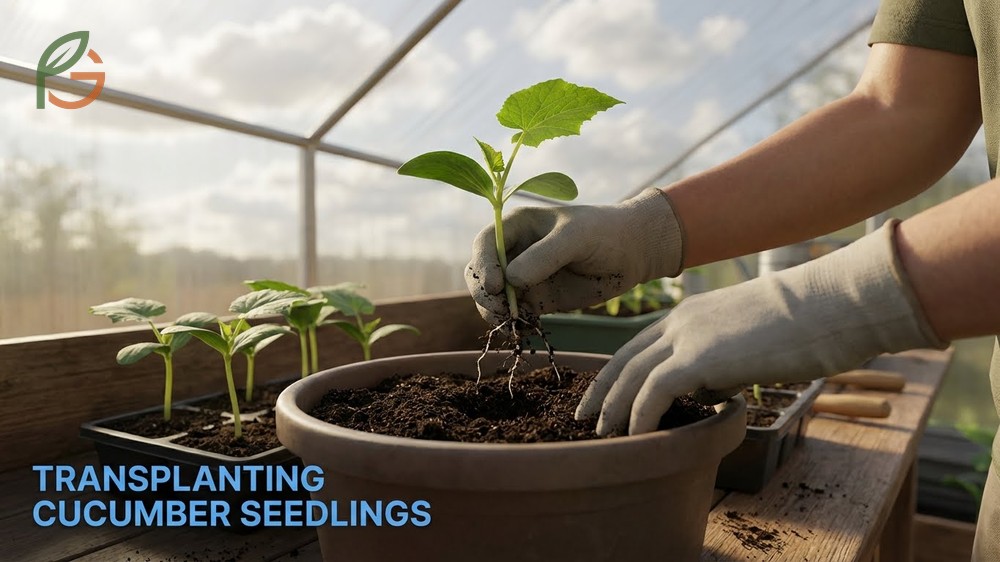
Transplanting cucumber seedlings requires careful timing and technique to minimize shock. Evidence indicates cucumbers suffer more transplant stress than most vegetables due to their sensitive taproots.[1] You’ll get the best results by transplanting on cloudy days or in late afternoon to reduce heat stress.
Seedlings are ready to transplant when they’ve developed 2-3 true leaves and stand 3-4 inches tall, typically 3-4 weeks after sowing indoors.[2] Don’t rush—transplanting too early results in stunted plants. Soil temperature must reach 60°F (15°C) minimum, but 70°F (21°C) is better.
Handle seedlings gently when removing from containers. Keep the root ball intact—even minor root damage sets plants back 1-2 weeks. Water transplants thoroughly after planting and maintain consistent soil moisture for the first week while roots establish.
Hardening Off Seedlings
Hardening off gradually acclimates indoor-grown seedlings to outdoor conditions over 7-10 days.[6] Start by placing seedlings outside in a shaded, protected location for 2-3 hours on the first day. Bring them indoors before temperatures drop below 45°F (7°C).
Each day, increase outdoor exposure time by 1-2 hours and gradually move plants from shade to partial sun, then full sun. By day 7-10, seedlings should tolerate full-day outdoor conditions. Don’t skip this process—direct exposure to full sun burns tender leaves grown under indoor lights.
Cold Frame Advantage: A cold frame simplifies hardening off by letting you control ventilation gradually. Open the lid wider each day instead of moving plants in and out multiple times daily.
Thinning Cucumber Seedlings
Thinning removes excess seedlings to prevent overcrowding that causes weak, disease-prone plants. Current guidance shows cucumber seedlings need thinning to 12-18 inches apart once they develop their first true leaves.[7] This typically occurs 10-14 days after emergence.
Use sharp scissors to cut unwanted seedlings at soil level rather than pulling them out. Pulling disturbs soil and damages roots of nearby keeper plants. Select the strongest, healthiest-looking seedling with the thickest stem and darkest green leaves to keep.
- Wait until seedlings develop first true leaves (second leaf set after seed leaves)
- Identify the strongest seedling in each group based on stem thickness and leaf color
- Use scissors to cut unwanted seedlings at soil level without pulling
- Water remaining seedlings immediately to help them recover from root disturbance
- Thin to final spacing of 12-18 inches apart depending on variety and growing method
- Add thinned seedlings to compost rather than leaving them on soil surface
Conclusion
The evidence is clear: successful cucumber planting depends on three critical factors—warm soil above 60°F (15°C), proper seed depth of 0.5-1 inch, and adequate spacing of 12-18 inches between plants. How to plant cucumbers correctly means respecting their sensitive root systems through direct sowing when possible and gentle handling during any transplanting.
Current agricultural guidance emphasizes matching your planting method to your garden space. Vertical growing on trellises maximizes small-garden productivity, while traditional row planting suits larger plots with room for sprawling vines. FruitGarden provides research-backed growing strategies that help home gardeners achieve professional-quality harvests through proven planting techniques.
Frequently Asked Questions
When should I plant cucumber seeds outdoors?
Plant cucumber seeds outdoors when soil temperature reaches at least 60°F (15°C), typically 2-3 weeks after your last spring frost date.[1] Check soil temperature with a thermometer at 2-3 inches deep. Seeds planted in cold soil below 60°F won’t germinate and may rot.
Can I grow cucumbers in a raised bed?
Yes, raised beds work excellently for cucumbers if they’re at least 17 inches deep.[4] An 8×4 foot raised bed with trellises can accommodate 8-10 vining cucumber plants spaced 18-24 inches apart. Without trellises, reduce to 6-8 plants to allow for sprawling growth.
How long does it take for cucumber seeds to germinate?
Cucumber seeds typically germinate within 6-10 days when soil temperature stays between 70-95°F (21-35°C).[3] Warmer soil produces faster germination—seeds emerge in 3-5 days at 95°F (35°C) but take 10-14 days at cooler temperatures near 60°F (15°C).
Should I plant cucumbers in hills or rows?
Both methods work well—hills warm faster and drain better, while rows simplify irrigation and cultivation. Plant hills 4-6 feet apart with 3-4 seeds per hill, thinned to 2-3 plants. For rows, space plants 12-18 inches apart with rows 4-6 feet apart.[2]
Do cucumber plants need a trellis?
Trellises aren’t required but offer significant advantages. Vertical growing saves 50-60% of garden space, improves air circulation to reduce disease, and produces straighter fruits. Space trellised cucumbers 12-24 inches apart versus 18-24 inches for ground-grown plants.[4]
How do I transplant cucumber seedlings without killing them?
Use biodegradable pots that plant directly into soil to avoid root disturbance.[5] Harden off seedlings for 7-10 days before transplanting, and plant on cloudy days when soil reaches 60°F (15°C) minimum. Keep root balls intact and water thoroughly after planting.
What’s the best spacing for cucumbers on a trellis?
Space trellised cucumbers 12-24 inches apart, with closer spacing for bush varieties and wider spacing for vigorous vining types.[4] This tighter spacing works because vines grow upward instead of sprawling. Position rows 18-24 inches apart if growing multiple trellis rows.