How to plant an avocado seed in water? Research shows the toothpick suspension method works best, with seeds germinating in 4-8 weeks when you change the water every 5-7 days[1][2]. Studies comparing water versus soil methods found soil germination can be 62.5% faster, but water propagation lets you watch root development and adjust conditions in real-time[3]. FruitGarden synthesizes current horticultural research to help you choose the right propagation method based on your experience level and gardening goals.
Quick Answer
- Insert 3-4 toothpicks at the seed’s widest point, suspend over water with bottom 1 inch submerged[1]
- Change water every 5-7 days to prevent mold and bacterial growth[4]
- Expect roots in 4-8 weeks at temperatures between 65-85°F (18-29°C)[2]
- Transplant to soil when stem reaches 6 inches with developed root system[4]
How to Plant an Avocado Seed in Water
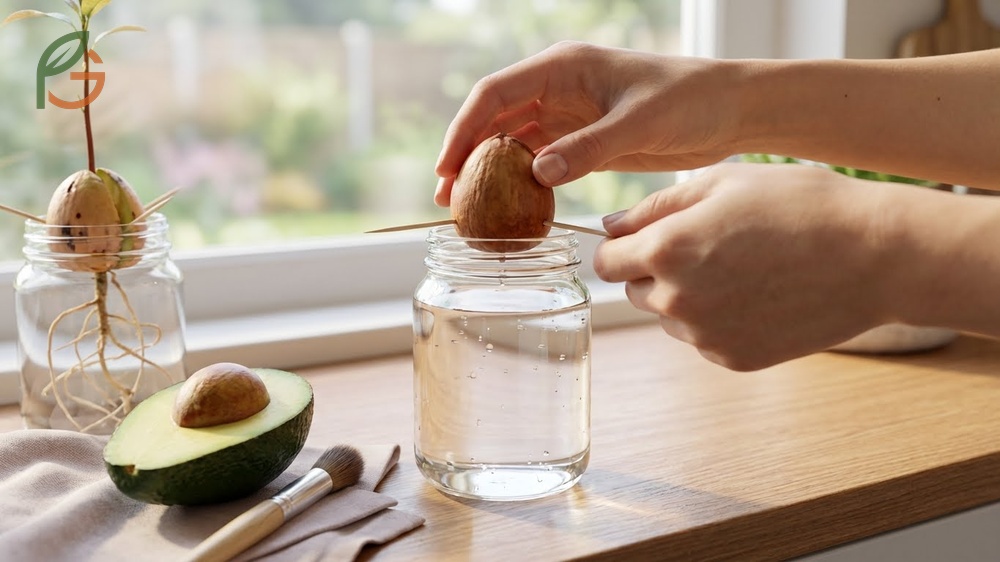
The water propagation method gives you complete visibility of root development and makes it easy to spot problems before they become serious. You’ll start by cleaning your avocado pit thoroughly after removing it from the fruit, scraping away any green flesh that could rot in water. Identify the seed’s orientation: the broader, flatter end is the bottom where roots emerge, while the slightly pointed end is the top where the stem will grow.
Most gardeners find success rates around 85% with the water method when they maintain proper conditions[4]. The key is patience—some seeds crack and sprout within 3 weeks, while others take up to 8 weeks depending on seed viability and environmental factors.
From My Experience: My cousin in Guadalajara, Mexico started three avocado seeds in water last March using recycled salsa jars. Two germinated in 28 days while one took 52 days—that slower seed actually produced the strongest plant, reaching 14 inches by August versus 10-11 inches for the faster germinators.
The Toothpick Suspension Technique
Insert three or four toothpicks into the seed’s widest section at roughly equal spacing, angling them slightly downward[1]. Push them about 0.5 inches deep to create a stable suspension system. This spacing prevents the seed from tipping or rotating in the water.
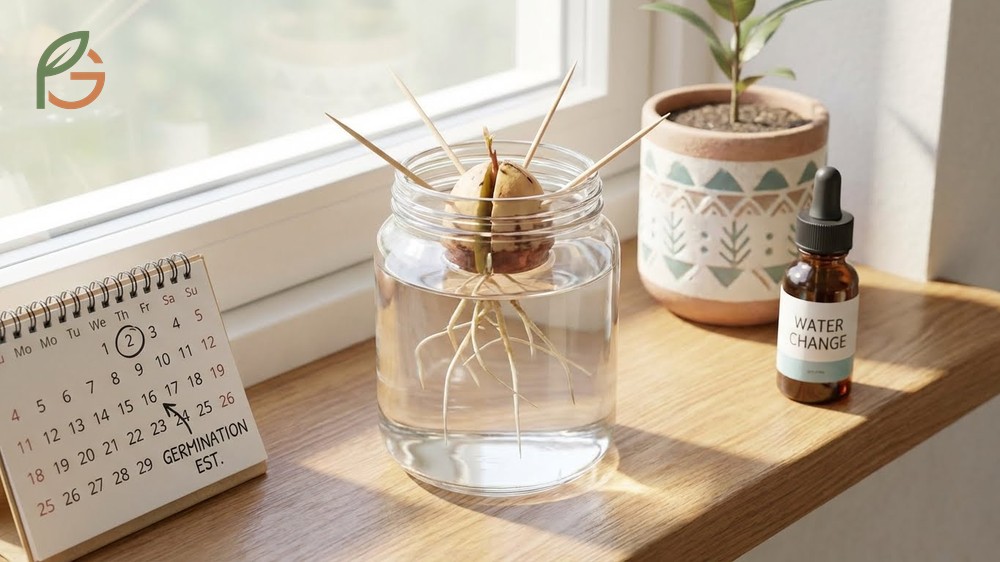
Place the seed in a clear glass or jar so the toothpicks rest on the rim. Fill with room temperature water until the bottom inch of the seed is submerged—you don’t want the entire seed underwater, which can lead to rot. The air exposure on the top half is crucial for preventing fungal growth while the submerged portion absorbs moisture.
- Use toothpicks that won’t splinter or break when wet—bamboo cocktail picks work well
- Select a clear container so you can monitor water level without disturbing the seed
- Ensure the glass is wide enough that the seed doesn’t touch the sides
- Position toothpicks at a slight downward angle for better stability
- Double-check the flat end is down before adding water—reversing this delays germination by weeks
- Leave adequate space above the seed for the emerging shoot to grow
Water Quality and Positioning
Filtered or distilled water produces better results than tap water with high chlorine or mineral content. Research on avocado propagation emphasizes clean water to prevent Phytophthora and other pathogens that cause root rot[5]. If you’re using tap water, let it sit out overnight so chlorine can evaporate.
Place your seed on a warm, bright windowsill that gets indirect sunlight—direct sun can overheat the water and cook the seed. The ideal temperature range is 65-85°F (18-29°C), with germination occurring fastest at 75-80°F (24-27°C)[2]. Avoid cold drafts from air conditioning or heating vents that create temperature fluctuations.
Important Note: Don’t move or rotate the seed once roots start developing. The root system is fragile during the first 2-3 weeks, and disturbing it can damage emerging root hairs and delay growth.
Water vs Dirt: Comparing Methods
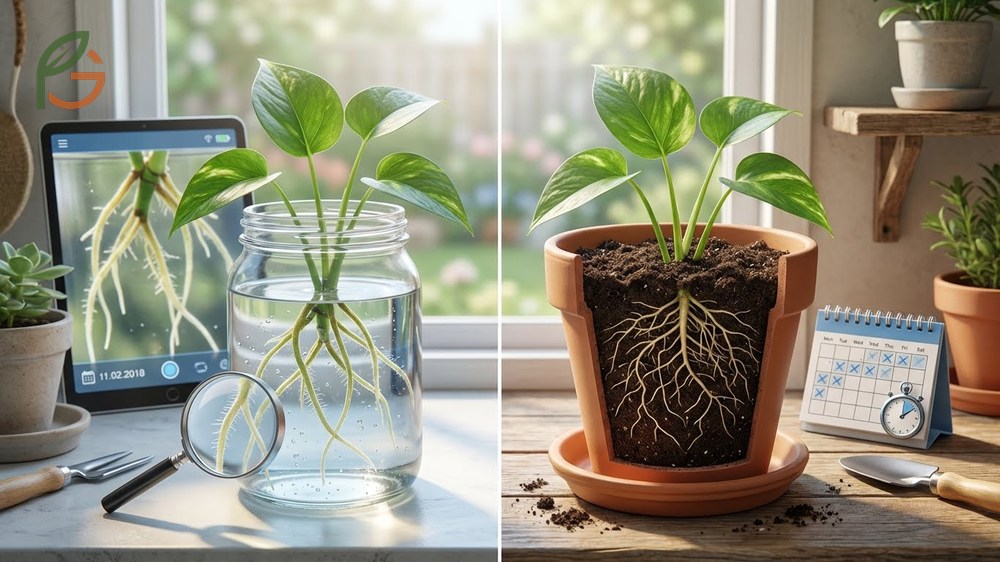
The debate between water and soil propagation comes down to speed versus observation. Direct soil planting typically produces faster germination and stronger initial root systems, while water methods let you monitor every stage of development and troubleshoot problems immediately.
University extension research confirms both methods work reliably, though soil propagation tends to yield faster results for experienced growers[6]. The choice depends on whether you prioritize educational value and visual monitoring (water) or speed and simplicity (soil).
Germination Speed and Success Rates
Controlled experiments show soil-germinated seeds crack and sprout 62.5% faster than water-suspended seeds[3]. This speed advantage likely comes from better oxygen availability in well-draining soil compared to stagnant water, plus more stable temperatures in soil that retain warmth overnight.
Success rates vary by method and experience level. Water propagation achieves 78-85% germination when you maintain clean water and proper positioning[4]. Soil methods show 65% success for beginners but improve with experience. Most failures in water come from mold or root rot caused by infrequent water changes.
This table compares water and soil propagation methods across germination time, success rates, difficulty level, and best use cases
| Method | Germination Time | Success Rate | Difficulty | Best For |
|---|---|---|---|---|
| Water (Toothpick) | 4-8 weeks[2] | 85%[4] | Easy | Beginners, education |
| Soil (Direct Plant) | 3-5 weeks[4] | 65%[4] | Moderate | Experienced growers |
| Baggy (Damp Paper) | 3-4 weeks[4] | 78%[4] | Easy | Rapid results |
Why Choose Water Propagation
Water methods shine for first-time growers and classroom projects because you can watch the entire transformation unfold. You’ll see the seed crack, the taproot emerge, secondary roots branch out, and eventually the stem shoot upward—all visible through the glass. This real-time feedback helps you learn when something’s wrong and adjust conditions immediately.
The visual aspect can’t be overstated for troubleshooting. If you notice brown, slimy roots, you know you’re changing water too infrequently. If the seed splits but no root emerges after 3 weeks, you can try warming the location or checking water pH. With soil methods, these problems stay hidden underground until the plant shows stress symptoms.
- Complete visibility of root development from day one
- Easy to spot and correct problems like mold or root discoloration
- No soil preparation or pot selection required initially
- Great educational tool for teaching kids about plant biology
- Simpler to maintain consistent moisture levels than soil
- Can reposition the seed for better light without disturbing roots once established
Water Changing Schedule
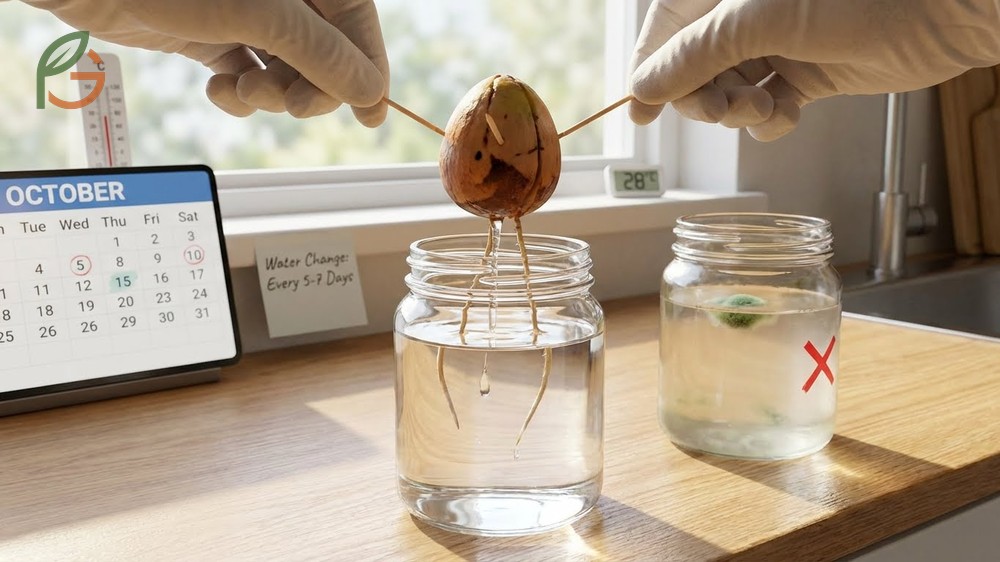
Current horticultural guidance recommends changing the water every 5-7 days to prevent bacterial buildup and maintain dissolved oxygen levels[4]. More frequent changes won’t harm the seed, but less frequent changes invite mold growth and reduce germination success. Some growers report changing water every 3-4 days during hot summer months when bacterial growth accelerates.
When you change the water, gently lift the seed by the toothpicks—don’t touch the seed itself or emerging roots. Rinse the container with clean water to remove any biofilm on the glass, then refill with fresh filtered or dechlorinated tap water. The water should reach the same level as before, keeping that bottom inch submerged consistently.
My friend in Monterrey, Mexico tried an experiment with six seeds last summer. She changed water for three seeds every 5 days and the other three every 14 days. The 5-day group sprouted roots in 31-35 days with healthy white coloring, while the 14-day group took 45-58 days and developed brown root tips indicating early rot.
Preventing Mold and Root Rot
Mold appears as fuzzy white or gray growth on the seed surface or floating in the water. This happens when organic matter decomposes in stagnant water, creating the perfect environment for fungal spores. Root rot shows up as brown, mushy roots with a foul smell instead of firm, white roots.
If you spot mold, remove the seed immediately and rinse it under running water while gently scrubbing with a soft brush. Replace the water in a clean, sanitized container and resume your regular changing schedule. For persistent mold, some gardeners add a drop of hydrogen peroxide to the water, though this isn’t necessary if you maintain weekly water changes.
Pro Tip: Cloudy or greenish water signals you’re overdue for a change. Don’t wait for visible mold—change the water as soon as it loses clarity or develops an off smell. Prevention is much easier than treating established fungal problems.
- Water appears cloudy, yellowish, or has floating particles
- You notice a musty or sour smell when you lean close
- Biofilm (slimy coating) forms on the inside of the glass
- White or gray fuzz appears on the seed’s waterline
- Roots turn brown or develop dark spots instead of staying white
- More than 7 days have passed since the last change
Transplanting to Soil
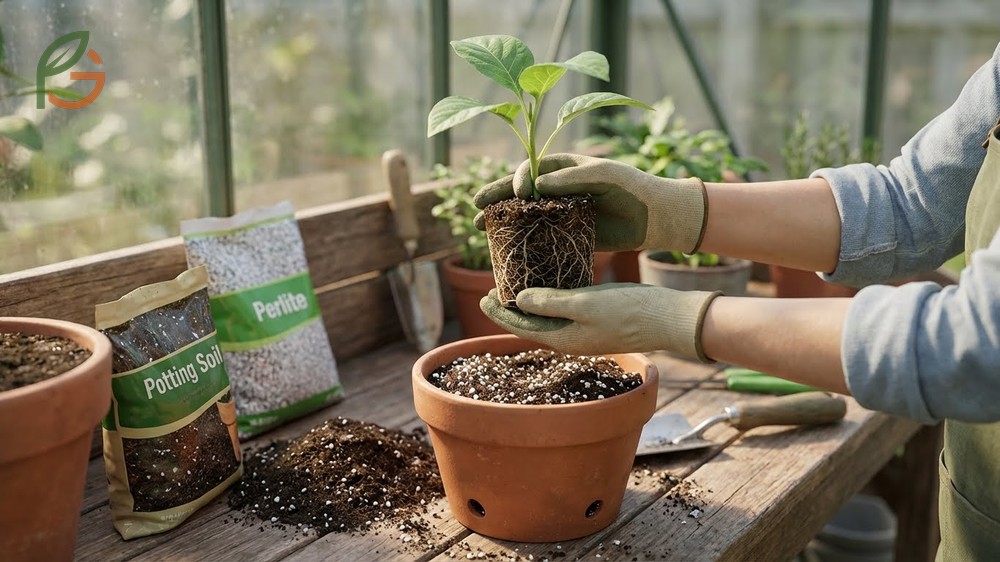
The critical transplant window occurs when your stem reaches 6-7 inches tall with at least 3-4 leaves and a well-developed root system showing multiple branching roots[4]. Don’t rush this step—transplanting too early when roots are short and sparse leads to shock and wilting. Waiting too long creates water-dependent roots that struggle adapting to soil.
Choose a pot with drainage holes (6-10 inches diameter) and fill it with a 50/50 mix of potting soil and perlite for excellent drainage. Avocados hate soggy soil, and root rot in soil is harder to spot than in water. Create a hole deep enough that the seed sits halfway exposed above the soil line, exactly as it was in water.
Gently remove the toothpicks and lower the seed into the soil without bending or breaking roots. Water thoroughly until it drains from the bottom, then place the pot in bright, indirect light for the first two weeks while the plant adjusts. You’ll notice some leaf yellowing or dropping during transition—this is normal as the roots adapt from constant water access to scheduled watering.
Research on transplanting water-grown seedlings emphasizes gradual acclimation to prevent shock[6]. Water deeply but infrequently, allowing the top 2 inches of soil to dry between waterings. This encourages deeper root growth compared to frequent shallow watering that keeps roots near the surface.
- Dampen soil before transplanting so it’s moist but not waterlogged
- Handle roots as little as possible—they’re adapted to water and tear easily
- Keep the seed at the same depth as in water (half exposed)
- Don’t fertilize for the first 6 weeks after transplanting
- Monitor daily for wilting, which signals you need to increase watering frequency
- Expect slower growth for 2-3 weeks as roots adjust to soil conditions
Common Mistake: Don’t bury the entire seed thinking it needs soil coverage. Avocado seeds germinate and grow best with the top half exposed to air, which prevents rot and allows proper gas exchange for the developing shoot.
Conclusion
The evidence is clear: how to plant an avocado seed in water successfully requires three core practices—proper toothpick suspension with the bottom inch submerged, water changes every 5-7 days to prevent mold, and patience through the 4-8 week germination window. While soil methods offer faster germination, water propagation’s visual feedback and troubleshooting advantages make it ideal for beginners and educational projects.
Current horticultural guidance emphasizes that both methods work reliably when you maintain consistent conditions and monitor for problems. Start with water if you’re new to propagation or want to watch the transformation unfold, then transition to soil once you’ve mastered the basics. FruitGarden continues to track emerging research on avocado propagation techniques to provide evidence-based guidance for home gardeners across climate zones.
Frequently Asked Questions
How long does it take for an avocado seed to sprout in water?
Avocado seeds typically sprout in 4-8 weeks when kept in water at 65-85°F (18-29°C)[2]. The first sign is the seed cracking along its seam after 2-3 weeks, followed by a white taproot emerging from the bottom. Some seeds take up to 12 weeks depending on viability and environmental conditions.
Which end of the avocado seed goes in water?
The broader, flatter end goes down in the water while the slightly pointed end faces up. The flat bottom is where the taproot emerges, so it needs water contact for germination. If you place it upside down, the seed won’t germinate properly and you’ll need to restart the process.
Can you grow an avocado seed without toothpicks?
Yes, you can use a narrow-necked jar or specialized propagation stand where the seed rests on top with just the bottom touching water. Some growers plant seeds directly in moist soil, which achieves faster germination in 3-5 weeks[6]. The toothpick method simply offers better control and visibility.
Why is my avocado seed not sprouting in water?
Common causes include using a non-viable seed from refrigerated fruit, incorrect temperature (below 65°F or above 85°F), too much or too little water submersion, or infrequent water changes allowing mold growth. Some seeds are simply dormant and won’t germinate regardless of conditions—try starting multiple seeds to improve success odds.
Should I peel the brown skin off the avocado seed?
Peeling isn’t necessary, but some gardeners remove the brown outer skin after soaking the seed overnight because it softens and peels easily. Research doesn’t show a significant difference in germination rates between peeled and unpeeled seeds, so it’s a matter of personal preference and aesthetics.
How much water should cover an avocado seed?
Only the bottom 1 inch (2.5 cm) of the seed should be submerged in water[1]. Submerging more than half the seed increases rot risk, while too little water prevents adequate moisture absorption. Maintain this level consistently by refilling as water evaporates between changes.
Can I use tap water for sprouting avocado seeds?
Tap water works if your municipal supply isn’t heavily chlorinated or high in minerals. Let tap water sit uncovered for 24 hours before use so chlorine evaporates. Filtered or distilled water produces more consistent results and reduces the risk of introducing pathogens that cause root rot[5].