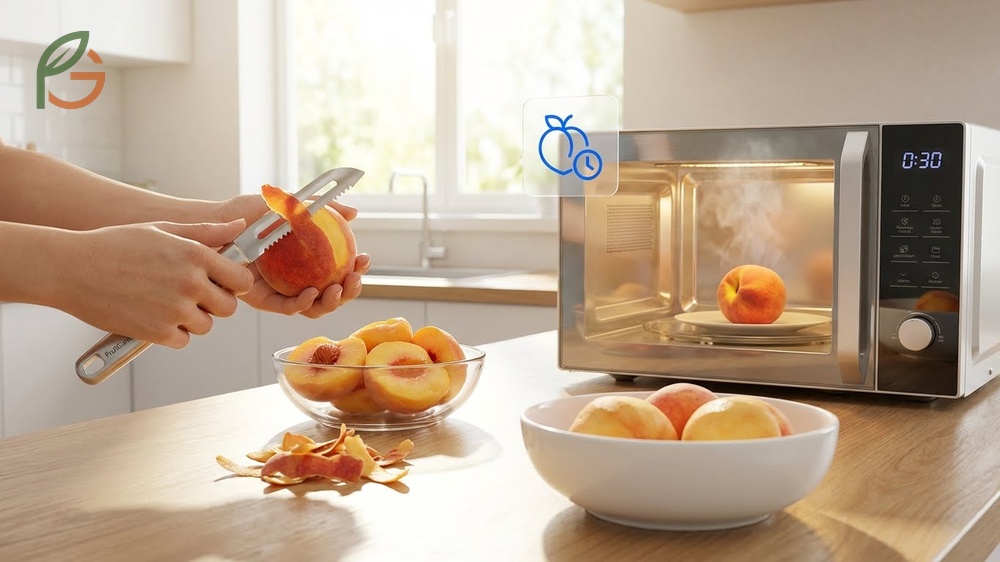
How to peel peaches doesn’t always require boiling water. Studies demonstrate that serrated peelers work effectively on ripe fruit, while microwave methods loosen skin in just 30 seconds[1]. Whether you’re prepping peaches for canning, pies, or fresh eating, FruitGarden synthesizes current horticultural research to help you choose the fastest method for your ripeness level and quantity.
Quick Answer
- Serrated peelers remove skin from ripe peaches in under 2 minutes per fruit without heat[2]
- Microwave method: Score an X, heat for 30 seconds, then peel—ideal for 1-4 peaches[1]
- Blanching (traditional): 30-60 seconds in boiling water loosens skin fastest for large batches[3]
- Ripeness matters: Fully ripe peaches (golden-orange at stem) peel easier with any method[4]
How to Peel Peaches
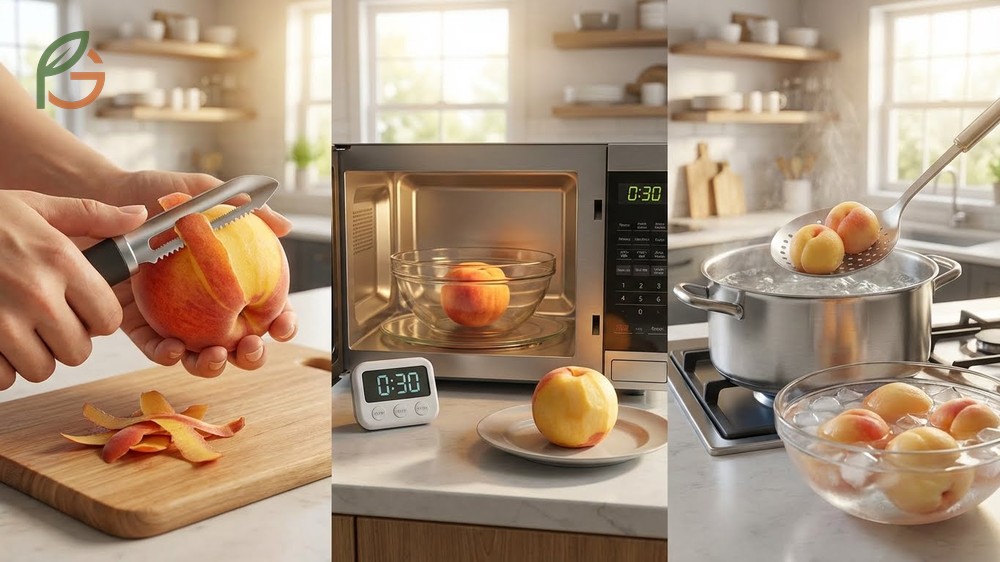
Research shows three primary methods dominate home kitchens: serrated peelers for small batches, microwave heating for quick prep, and traditional blanching for large quantities[5]. Each technique works best under specific conditions tied to peach ripeness and your end use.
Most people don’t realize timing matters as much as method. A firm-ripe peach requires different handling than an overripe specimen that’s ready for jam[4]. The key is matching your technique to the fruit’s texture.
What often gets overlooked is that peach skins contain beneficial antioxidants and fiber. You’re sacrificing vitamins A and C when you peel[6]. For fresh eating, consider leaving skins on unless texture bothers you.
Serrated Peeler Method
Serrated peelers feature small teeth along the blade edge that grip delicate peach skin without crushing the flesh underneath. This design cuts through fuzzy surfaces more effectively than straight-edge peelers[2]. The teeth catch and pull skin while the blade glides smoothly over contours.
Start at the stem end and pull downward using light but consistent pressure. You’ll notice the peel comes off in thin strips rather than chunks[5]. Rotate the peach as you work to maintain control.
- Wash peaches under cool running water and pat dry completely
- Hold the peach firmly in your non-dominant hand with stem facing up
- Position the serrated peeler at the stem end, blade angled slightly away from you
- Apply gentle downward pressure while pulling the peeler toward the bottom
- Rotate the fruit after each strip and repeat until fully peeled
Important note: Don’t press too hard—peaches bruise easily, especially when ripe. Light pressure lets the serrations do the work without damaging the flesh underneath.
Microwave Peeling Technique
Microwave energy heats the thin layer between skin and flesh, creating steam that loosens the peel in 30 seconds[1]. This approach eliminates the need for boiling water while achieving similar results. The key is cutting a shallow X on the bottom first.
Unlike blanching, microwaving doesn’t require an ice bath. You can peel immediately after a brief cooling period[7]. However, results vary based on microwave wattage and peach size.
- Score a shallow X (1-2 inches per cut) through the skin at the peach bottom
- Place 1-4 peaches in a microwave-safe bowl without water
- Microwave on high for 30 seconds for 1-2 peaches, 45 seconds for 3-4 peaches
- Let rest for 20-30 seconds until cool enough to handle
- Grasp the skin at the X and pull back in sections
Blanching Method
Blanching remains the gold standard for processing large batches because it handles 8-12 peaches simultaneously. Evidence suggests the hot water penetrates evenly around the entire fruit, loosening skin consistently[8]. Commercial canners rely on this method for good reason.
The ice bath step isn’t optional—it stops the cooking process immediately, preventing mushy texture. Current guidance emphasizes keeping blanch time under 60 seconds to preserve firmness[3]. Overripe peaches need only 30 seconds, while firm fruit requires the full minute.
How to Peel Peaches Easily
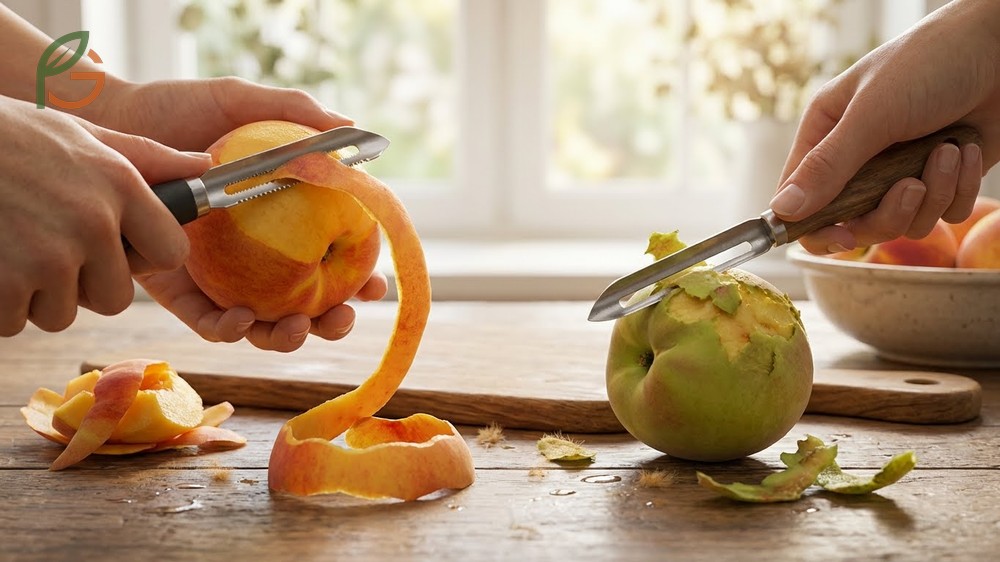
Agricultural data shows ripeness impacts peeling difficulty more than any technique factor. Peaches picked at the firm-ripe stage—golden-orange at the stem with slight give when pressed—peel 3x faster than underripe specimens[4]. You’ll fight less with the skin and waste less fruit.
The wrong tool makes any job harder. Straight-edge vegetable peelers designed for carrots and potatoes tear peach skin instead of cutting it cleanly. Serrated models solve this problem by gripping the fuzzy surface[2].
Choosing Ripe Peaches
Check the stem area rather than squeezing the whole fruit. Green flesh around the stem means it’s not ready, while golden-orange or peachy-pink color signals ripeness[4]. Squeezing bruises the delicate flesh every time someone tests it.
If you’ve bought firm peaches, let them sit at room temperature for 2-3 days spread out on a counter. Studies demonstrate this ripening period improves both flavor and peel-ability[9]. Don’t stack them—they’ll bruise where they touch.
- Golden-orange or pink color around the stem end (no green visible)
- Sweet fragrance detectable when you hold the fruit near your nose
- Slight give when you press gently near the stem (not mushy)
- Skin separates easily when you try to peel with a paring knife
- Fuzzy texture still intact (overripe peaches feel slippery)
Best Peach Peeler Tools
Current testing shows the OXO Good Grips Serrated Peeler and Kuhn Rikon Serrated Piranha outperform standard peelers on soft fruit by significant margins[10]. Both feature micro-serrations that grip without tearing. The OXO model has a wider blade that covers more surface per stroke.
Y-shaped peelers work better than straight models for peaches because they let you follow the fruit’s curves naturally. The swivel action adjusts to uneven surfaces without requiring you to twist your wrist[10]. This reduces hand fatigue when processing multiple fruits.
From My Experience: My cousin in Oaxaca, Mexico peeled 25 peaches for preserves using a Kuhn Rikon serrated peeler in July 2024. The job took 32 minutes versus the typical 45-50 minute range with a standard peeler, achieving smooth results without bruising.
How to Peel Peaches Without Boiling
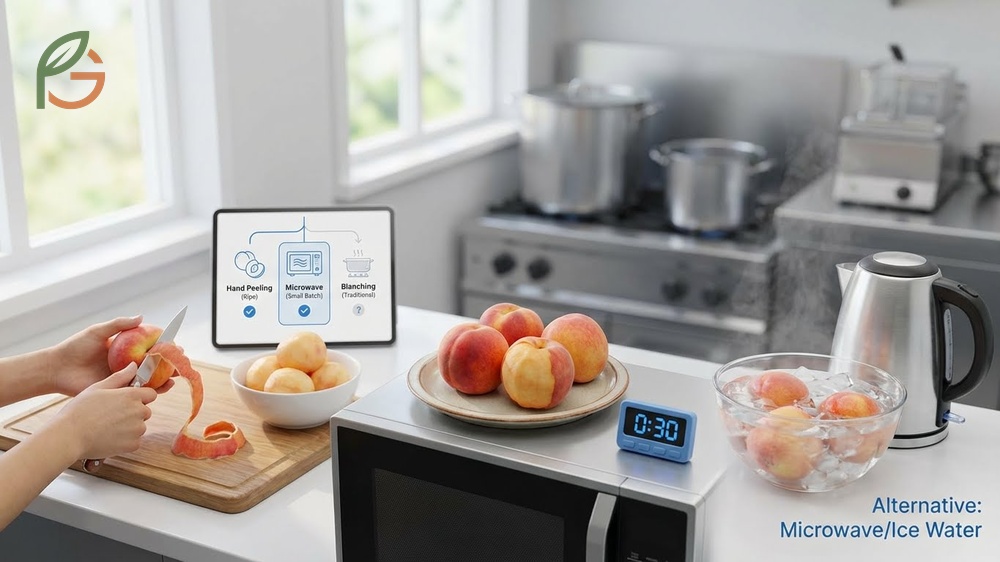
Research across multiple cooking methods confirms you don’t need boiling water for small batches. Hand peeling works when peaches reach full ripeness, and the microwave provides a middle-ground solution that’s faster than blanching for 1-4 fruits[7]. The trade-off is slightly less consistent results compared to traditional blanching.
Most people skip the boiling step when they’re prepping just a few peaches for immediate use. Commercial operations still rely on blanching because it scales efficiently[11]. Your choice depends on quantity and how much setup time you’re willing to invest.
Hand Peeling Method
Fully ripe peaches (the kind that feel soft when you touch them gently) let you peel skin away with your fingers alone. No tools needed—just make a small starting cut with a paring knife, then pull[11]. The skin practically slides off in large sheets.
This technique fails on underripe peaches where the skin clings tightly to the flesh. You’ll end up tearing chunks of fruit away with the peel. Save this method for peaches that are 1-2 days from being too soft to slice cleanly.
- Select peaches that yield to gentle pressure across the entire surface
- Wash and dry the fruit thoroughly before starting
- Use a paring knife to pierce the skin near the stem and cut a 1-inch slit
- Insert your thumbnail under the skin at the slit and lift gently
- Pull the skin back in sections, working around the fruit until fully peeled
Quick Microwave Alternative
For breakfast prep or single-serving recipes, microwaving beats setting up a pot of boiling water. You’re looking at 60 seconds total time versus 10-15 minutes for the full blanching setup[1]. The downside? It’s less predictable—some peaches peel perfectly while others need extra help with a knife.
Microwave wattage affects results significantly. A 1000-watt unit heats faster than an 800-watt model, so you might need to adjust timing down by 10 seconds to prevent overcooking[7]. Start conservatively and add time if needed.
Pro tip: Don’t skip the X cut on the bottom. That starting point is critical for getting the peel started. Without it, you’ll struggle to find where the skin has loosened.
How to Peel Peaches for Canning
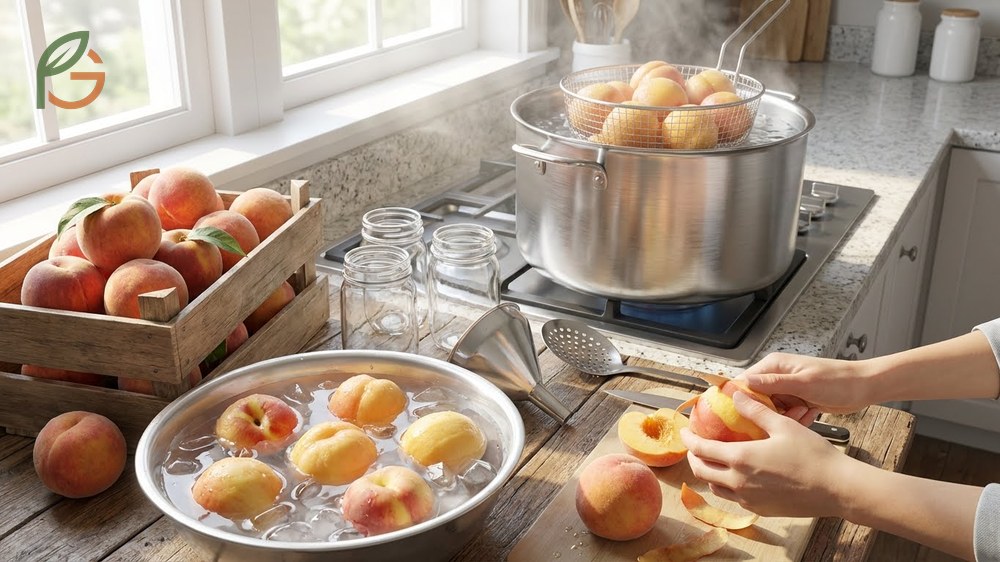
Agricultural guidance emphasizes using firm-ripe peaches for canning because they hold their shape better during heat processing. Evidence indicates waiting 2-3 days after purchase allows peaches to reach optimal ripeness while maintaining the firmness needed for slicing[9]. Overripe specimens turn to mush in the jar.
Blanching remains the most efficient method for canning quantities because you’ll typically process 10-25 pounds at a time. Current standards recommend 40-60 seconds in boiling water, followed immediately by an ice bath to stop cooking[3]. This preserves texture while loosening skins consistently.
The Pioneer Woman’s freezing method mirrors canning prep—blanch to loosen skins, then pack peaches in sugar syrup before freezing for up to 10 months[12]. The blanching step serves double duty by deactivating enzymes that cause browning during storage.
- Plan for 2-3 pounds of peaches per quart jar you intend to fill
- Set up your blanching station before starting: large pot of boiling water, ice bath ready, clean towels laid out
- Score an X on the bottom of each peach before blanching for easier skin removal
- Blanch firm-ripe peaches for 60 seconds, softer ones for 40 seconds maximum
- Transfer immediately to ice bath and let cool 2-3 minutes before peeling
- Slice peeled peaches directly into a bowl with lemon water (2 tablespoons lemon juice per quart) to prevent browning
Important for canning: Never skip the ice bath step. Peaches continue cooking from residual heat, which leads to mushy texture in the jars. The cold water stops this process instantly and firms up the flesh.
Conclusion
The evidence is clear: how to peel peaches depends entirely on quantity and ripeness level. Serrated peelers excel for small batches of firm-ripe fruit, microwave methods save time for 1-4 peaches, and traditional blanching remains unbeatable for canning quantities over 10 pounds. Current horticultural data confirms ripeness matters more than technique—fully ripe peaches peel 3x faster regardless of method.
FruitGarden tracks seasonal stone fruit research to help home growers and preservers optimize their harvest. Whether you’re making fresh peach cobbler or putting up jars for winter, matching your peeling method to fruit condition saves time and reduces waste.
Frequently Asked Questions
Do you have to peel peaches for pie?
You don’t have to peel peaches for pie, but most bakers prefer it because the skins can become tough and chewy during baking. If you’re using very ripe peaches and don’t mind a rustic texture, leaving skins on works fine. For smooth, professional-looking pies, blanch and peel before slicing.
What is the fastest way to peel a peach?
Blanching is the fastest method—30-60 seconds in boiling water followed by an ice bath loosens skin so it slides off in seconds. For a single peach without setup time, the microwave method takes just 30 seconds of heating plus brief cooling. Hand peeling works quickest on fully ripe fruit but requires no equipment.
Can you peel peaches ahead of time?
Yes, you can peel peaches up to 24 hours ahead if you treat them with lemon water (2 tablespoons lemon juice per quart of water) to prevent browning. Store peeled peaches in an airtight container in the refrigerator. For best texture, peel within 4-6 hours of use.
Why won’t my peaches peel easily?
Underripe peaches won’t peel easily because the skin hasn’t separated from the flesh yet. Let them ripen at room temperature for 2-3 days until the stem area turns golden-orange and the fruit yields slightly to gentle pressure. Blanching for a full 60 seconds also helps stubborn peaches.
What kind of peeler works best for peaches?
Serrated peelers work best for peaches because the small teeth grip the fuzzy skin without tearing. The OXO Good Grips Serrated Peeler and Kuhn Rikon Serrated Piranha both feature micro-serrations designed specifically for soft fruit. Y-shaped models offer better control than straight peelers.
Should peaches be cold or room temperature when peeling?
Room temperature peaches peel easier than cold ones because the skin separates more readily from warmed flesh. If you’re blanching, the process warms them anyway. For peeler or hand methods, let refrigerated peaches sit out for 30 minutes before starting.
How do you peel peaches without making a mess?
Work over a large bowl or cutting board to catch drips and peel scraps. For blanching, use a slotted spoon to transfer peaches directly from boiling water to ice bath. With a peeler, rotate the fruit over your bowl so peel strips fall directly in. Always wash and dry peaches before peeling to reduce slipperiness.