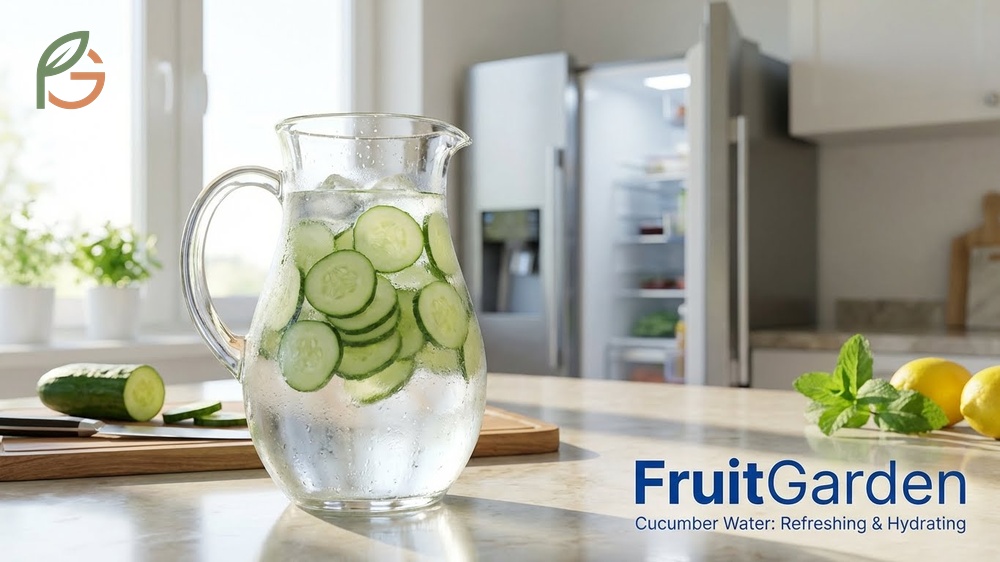
How to make cucumber water? Slice half a cucumber into thin rounds, add them to 8 cups of cold water in a pitcher, and refrigerate for at least 1 hour[1]. Research shows cucumbers contain 96% water, making them perfect for creating refreshing, hydrating drinks. FruitGarden brings you practical gardening insights and food preparation tips rooted in current agricultural research.
Quick Answer
How to Make Cucumber Water
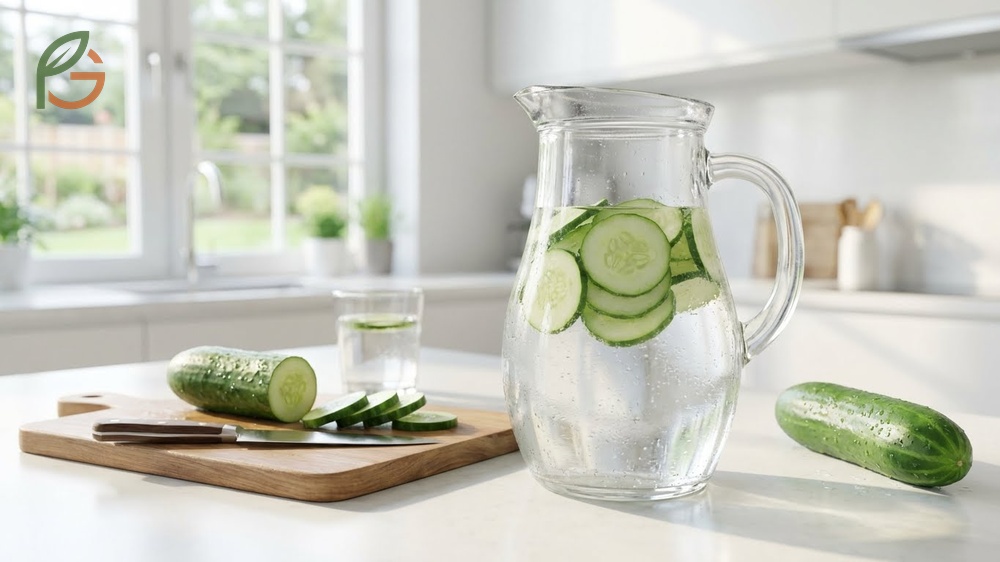
Creating cucumber water takes just minutes with minimal ingredients. You’ll need one medium cucumber and cold filtered water. The process involves slicing, muddling, and refrigerating to extract the cucumber’s natural flavors and nutrients.
Most people don’t realize that muddling the cucumber slices before adding water intensifies the flavor significantly. This technique releases the cucumber’s juices and essential compounds into the water faster than simple steeping alone.
Basic Recipe Method
Start by washing your cucumber thoroughly under cold running water[4]. Slice it into thin rounds about ⅛-inch thick—you should get approximately 24-30 slices from half a cucumber[1]. Thinner slices create more surface area for better flavor infusion.
Place the cucumber slices in the bottom of a clean pitcher. Use a wooden spoon to gently muddle them several times, releasing their juices without crushing them completely. Add 8 cups of cold water and refrigerate for at least 1 hour before serving[1].
From My Experience: My cousin in Guadalajara, Mexico grows cucumbers in her backyard garden and makes cucumber water weekly during summer. She discovered that using cucumbers harvested the same morning creates noticeably crisper flavor compared to store-bought ones that are 3-5 days old.
Flavor Variations
You can enhance basic cucumber water with complementary ingredients. Fresh mint leaves add a cooling sensation, while lemon or lime slices provide citrus brightness. Ginger slices contribute a subtle spicy warmth that pairs surprisingly well with cucumber’s mild taste.
For best results, add herbs and citrus at the same time as cucumber slices. However, if you’re steeping for more than 4 hours, citrus peels can become bitter[3]—remove them while keeping the cucumber for extended infusion.
- Classic: Cucumber + lemon slices + fresh mint
- Spa-style: Cucumber + lime + basil leaves
- Tropical: Cucumber + pineapple chunks + coconut water
- Ginger kick: Cucumber + fresh ginger slices + honey
- Berry fusion: Cucumber + strawberries + blueberries
Pro Tip: If you’re in a rush, cucumber water becomes drinkable after just 10 minutes with very cold water[1]. The flavor won’t be as strong, but it’ll still provide refreshing hydration.
How Long Does Cucumber Water Last
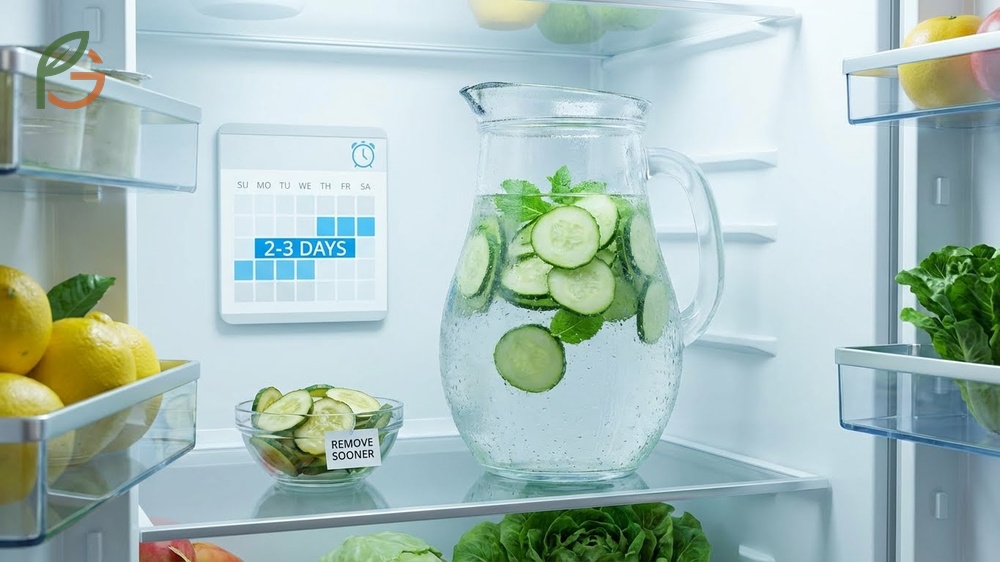
Cucumber water stays fresh for 2-3 days when stored properly in the refrigerator[3]. This shorter shelf life compared to plain water occurs because fresh produce introduces natural enzymes and potential bacteria into the water. Temperature control becomes critical for maintaining both quality and safety.
What often gets overlooked is that cucumber slices themselves should be removed much sooner than the water needs to be discarded. The cucumber pieces become waterlogged and mushy after 12-24 hours of soaking, which can affect the water’s taste and appearance.
Refrigerated Storage
Store your cucumber water in a covered pitcher at temperatures below 40°F (4°C) to slow bacterial growth. The infused water can last an additional 12-24 hours after you strain out the cucumber slices and any other fresh ingredients[3]. This technique helps prevent the soggy produce from degrading the water quality.
You can refresh your pitcher by adding new cucumber slices and fresh water to the existing batch. However, completely change out both water and ingredients every 2-3 days to maintain optimal flavor and safety standards.
- Use clean, sanitized pitchers and utensils before preparation[4]
- Keep the pitcher covered to prevent contamination and odor absorption
- Remove cucumber slices after 12-24 hours of infusing
- Never return leftover cucumber water from drinking glasses back to the pitcher
- Label your pitcher with the date you made it
Signs It’s Time to Discard
Watch for visual and sensory changes that indicate your cucumber water has gone bad. Cloudiness, slimy texture, or off-odors mean it’s time to discard the batch immediately. Fresh cucumber water should remain clear with a clean, vegetable-like scent.
The cucumber slices themselves provide early warning signs. When they sink to the bottom and appear translucent or discolored, they’ve released most of their flavor and begun deteriorating. At room temperature, infused water enters the “danger zone” (40-140°F/4-60°C) where bacteria multiply rapidly[4]—discard any cucumber water that’s been unrefrigerated for more than 2 hours.
Important Safety Note: Treat infused water like any perishable food. Don’t leave it on buffet tables or countertops for extended periods during parties or gatherings[4].
Should I Peel Cucumber for Water
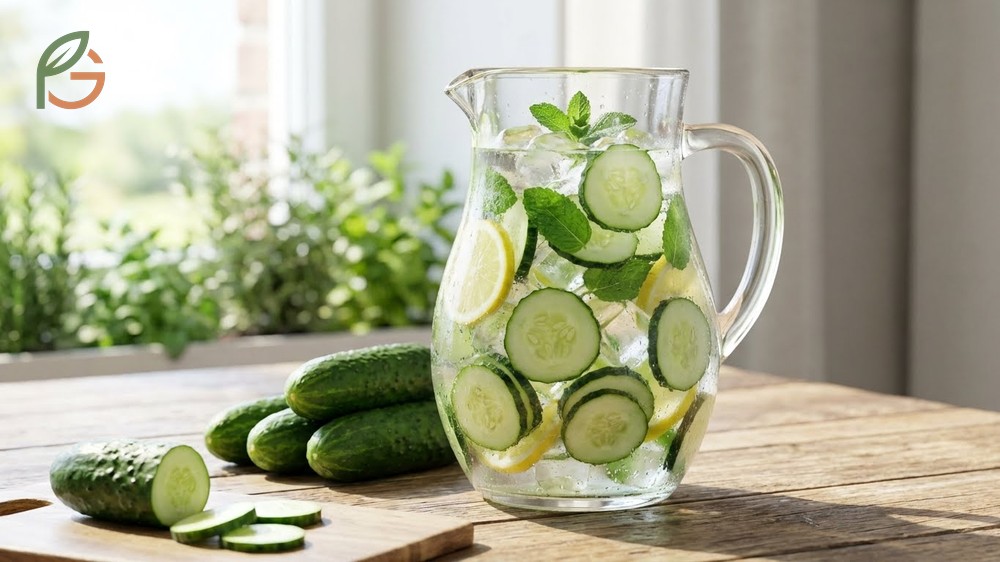
You don’t need to peel cucumbers for infused water—in fact, keeping the peel on is better. The skin contains concentrated vitamins, antioxidants, and beneficial compounds that enhance both nutrition and flavor[3]. Current agricultural guidance emphasizes consuming whole vegetables when safe to maximize nutrient intake.
The cucumber peel’s green color also contributes to the water’s visual appeal. Peeled cucumbers create paler, less attractive infused water that doesn’t look as fresh or appetizing in a clear pitcher.
What matters more than peeling is thorough washing. Scrub your cucumber under cold running water to remove any pesticide residues, wax coatings, or dirt[4]. If you’re concerned about chemicals, choose organic cucumbers or use a vegetable brush for extra cleaning power.
- Higher vitamin K content for bone health support[5]
- More fiber to support digestive health
- Concentrated antioxidants like flavonoids and tannins
- Enhanced visual appeal with vibrant green color
- Slightly stronger cucumber flavor infusion
The only time you should peel cucumbers is if they’ve been heavily waxed and washing doesn’t remove the coating. Some grocery store cucumbers have thick commercial wax that can affect taste. In these cases, peeling removes the waxy layer while sacrificing some nutrients.
Best Pitcher for Infused Water
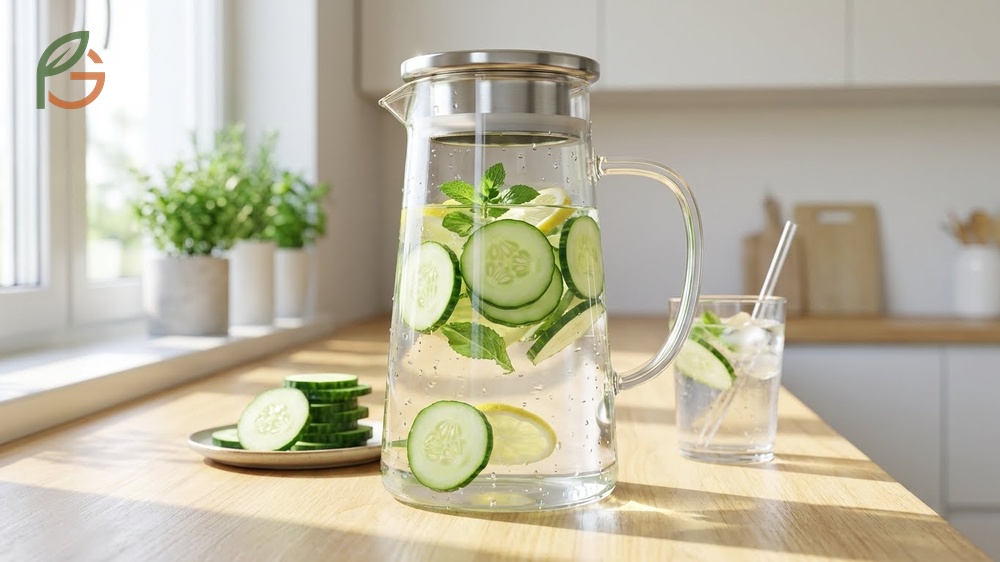
Glass pitchers outperform plastic options for making cucumber water. Glass doesn’t absorb flavors, won’t leach chemicals into your water, and allows you to see the infusion process clearly. For daily cucumber water preparation, invest in a quality glass pitcher with a tight-fitting lid.
Research shows glass containers don’t release BPA or other potentially harmful compounds that some plastic containers may contain[6]. This becomes especially important when storing acidic ingredients like citrus alongside your cucumber slices, as acids can accelerate chemical leaching from certain plastics.
This table compares glass versus plastic pitchers across five key attributes including durability, taste impact, chemical safety, visibility, and cleaning ease
| Feature | Glass Pitcher | Plastic Pitcher |
|---|---|---|
| Durability | Breaks if dropped; lasts years with care | Shatter-resistant; may scratch or discolor over time |
| Taste Impact | Zero flavor absorption; pure taste | Can absorb and transfer flavors from previous use |
| Chemical Safety | No BPA or chemical leaching concerns[6] | Potential BPA release if not labeled BPA-free |
| Visibility | Crystal clear; shows infusion progress | May cloud over time; harder to see contents |
| Cleaning | Dishwasher-safe; doesn’t stain | May develop stains; requires gentler washing |
- Capacity of 1.5-2 liters (50-68 ounces) for families or meal prep
- Wide mouth opening for easy cucumber slice insertion and cleaning
- Tight-fitting lid to prevent spills and contamination
- Slim profile that fits in most refrigerator door shelves
- Built-in infusion rod or strainer (optional but convenient)
If you’re preparing cucumber water for outdoor picnics or camping, plastic makes sense for its break-resistant properties. Just ensure it’s labeled BPA-free and specifically designed for food use. For home use where taste purity and chemical safety matter most, glass remains the superior choice.
Storing and Refreshing Tips
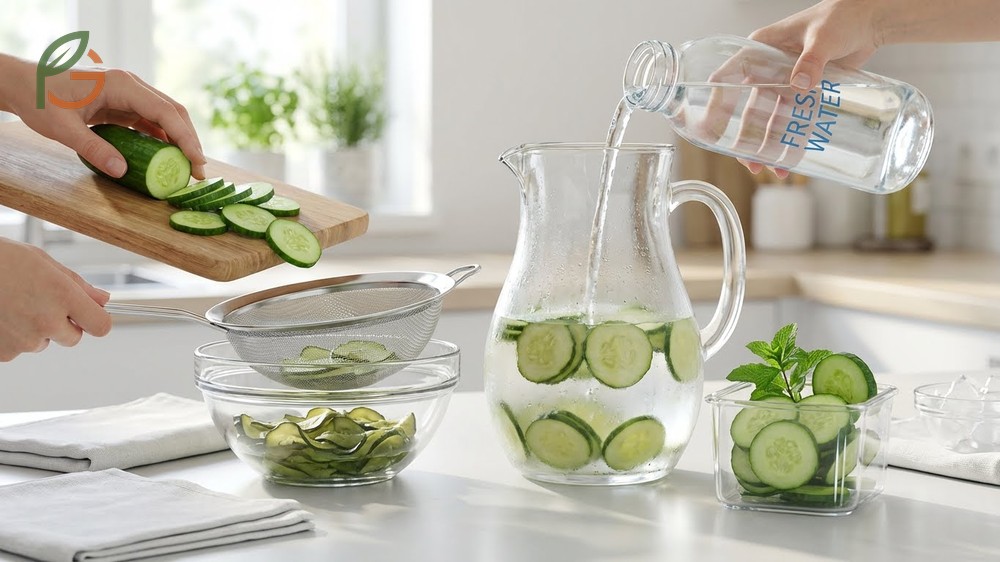
Proper storage extends your cucumber water’s shelf life and maintains its refreshing qualities. Always use clean containers and wash your hands thoroughly before handling ingredients[4]. These simple food safety practices prevent bacterial contamination that can shorten your infused water’s usable life.
You can refresh your pitcher without starting completely from scratch. After drinking half the pitcher, strain out the old cucumber slices and add fresh ones along with more cold water. This method saves time while maintaining flavor intensity throughout the day.
Freezing cucumber slices creates convenient flavor cubes for future batches. Slice cucumbers thinly, arrange them in a single layer on a parchment-lined tray, freeze until solid, then transfer to freezer bags. Frozen cucumber slices can be added directly to water pitchers—they’ll infuse flavor as they thaw while keeping the water cold.
- Make cucumber ice cubes by freezing thin slices in ice cube trays with water
- Store sliced cucumbers separately in the fridge and add fresh ones to water daily
- Pre-wash and slice cucumbers on meal prep day for week-long convenience
- Use mason jars for individual servings that seal tightly for on-the-go hydration
- Add a splash of sparkling water when serving for a fizzy spa-water experience
- Keep a dedicated cucumber water pitcher separate from other beverage containers
Flavor Boost Tip: Gently squeeze the cucumber slices with clean tongs before adding them to fresh water. This releases more juice and creates stronger flavor without the mess of muddling in the pitcher.
A friend who runs an organic farm near Oaxaca, Mexico shared that their farm stand offers free cucumber water to customers during summer. They prep 3-4 pitchers each morning using cucumbers harvested that day, refresh them at midday with new slices, and discard everything at closing—this rotation ensures consistent quality and safety.
Conclusion
The evidence is clear: how to make cucumber water involves just two ingredients and minimal effort, while proper storage ensures it remains safe and flavorful for 2-3 days[3]. With cucumbers containing 96% water[2], you’re essentially enhancing plain water with natural flavor and nutrients. Keep the peel on, use glass pitchers when possible, and follow the 2-hour room temperature rule for best results.
Current guidance emphasizes treating infused water as a perishable food product that requires the same safety precautions as fresh produce[4]. FruitGarden continues to provide research-backed insights for home gardeners and food enthusiasts seeking practical, science-based approaches to enjoying fresh produce.
Frequently Asked Questions
How do you make cucumber water taste better?
Muddle the cucumber slices gently before adding water to release more flavor compounds. Add complementary ingredients like fresh mint leaves, lemon slices, or a small amount of fresh ginger. Refrigerate for at least 2 hours instead of the minimum 1 hour to allow deeper flavor infusion.
Can I reuse cucumber slices for a second batch of water?
No, you shouldn’t reuse cucumber slices after they’ve been soaking for 12-24 hours. By that point, they’ve released most of their flavor and nutrients into the water. Waterlogged cucumber slices also become mushy and can introduce off-flavors or promote bacterial growth in a fresh batch.
What does cucumber water do for your body?
How long is cucumber water good for at room temperature?
Cucumber water should not sit at room temperature for more than 2 hours[4]. After that time, it enters the danger zone (40-140°F/4-60°C) where bacteria multiply rapidly. Always refrigerate infused water and add ice when serving at outdoor events or parties.
Can you make cucumber water with frozen cucumber slices?
Yes, you can use frozen cucumber slices to make infused water. They’ll release flavor as they thaw while simultaneously keeping the water cold. Freeze fresh cucumber slices in a single layer first, then transfer to freezer bags for storage. This method works well for meal prep and quick cucumber water preparation.
Should I use filtered or tap water for cucumber water?
Use whichever water you prefer drinking plain. If your tap water has off-flavors or strong chlorine taste, those characteristics will carry through to the infused water. Filtered water provides a neutral base that allows the subtle cucumber flavor to shine through more clearly.
How many cucumbers do I need for a gallon of water?
For 1 gallon (128 ounces) of water, you’ll need approximately 1 whole medium cucumber or 2 small cucumbers. Since most recipes call for half a cucumber per 8 cups (64 ounces), simply double that ratio. Adjust based on how strong you want the cucumber flavor to be.