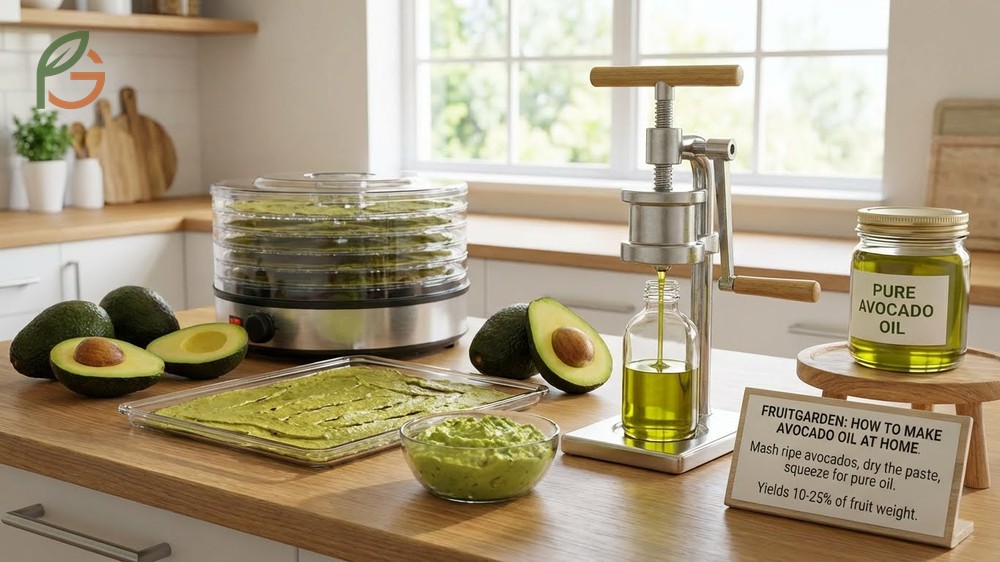
How to make avocado oil at home is simpler than you’d think—just mash ripe avocados, dry the paste, and squeeze out pure oil. Studies show avocados contain 3-30% oil content by weight[1], with cold-press methods yielding 10-25% of the fruit’s fresh weight[2]. FruitGarden shares research-backed techniques that turn overripe avocados into nutrient-rich oil you can use within days.
Quick Answer
- You’ll extract about 2/3 cup oil from 10 medium avocados[3]
- Drying takes 3-5 days at room temperature or 8-12 hours in a dehydrator below 104°F (40°C)[3]
- Homemade oil lasts 4-6 months when stored in a cool, dark place[4]
- Keep processing temperature below 104°F (40°C) to maintain extra virgin quality[5]
How to Make Avocado Oil
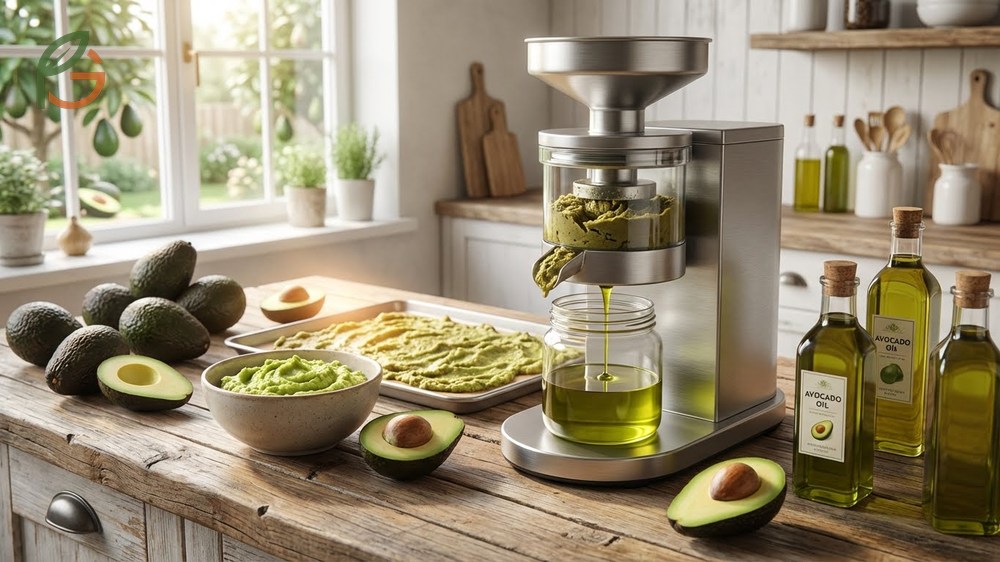
Making avocado oil at home doesn’t require fancy equipment or chemistry skills. Research shows the cold-press method preserves natural antioxidants like tocopherols and phenolic compounds that commercial heating destroys[5]. You’re basically mashing avocados, drying out the water, and squeezing what’s left.
The oil content rises as fruit matures, with Hass varieties reaching higher percentages than other types[1]. California law requires avocados to contain at least 8% oil before they’re legally mature enough to harvest[1]. This matters because you’ll get better yields from fully ripe or even overripe fruit.
Most people don’t realize that timing affects your oil quality more than technique. Processing below 104°F (40°C) keeps your oil “extra virgin,” while temperatures above 113°F (45°C) degrade nutrients[3]. That’s why you can’t rush the drying phase.
Choosing the Right Avocados
Overripe avocados work perfectly for oil extraction. Those bruised or slightly brown fruits you’d normally toss contain the same oil content as pristine ones. Studies demonstrate that Hass and Fuerte varieties typically reach higher oil content than Florida types[1].
You’ll want fruit that’s soft to the touch but not moldy. If you’re buying specifically for oil, ask farmers at markets for their “seconds”—these discounted fruits work great. Dark skin varieties generally yield more oil than green-skinned ones.
From My Experience: My cousin in Guadalajara, Mexico made oil from 15 overripe Hass avocados in March 2024. She got nearly 1 cup of oil versus the typical 2/3 cup from 10 fruits, achieving better yield because the avocados were in late-season peak ripeness.
Equipment You Need
Current guidance emphasizes simple tools over expensive machines for first-time makers. You’ll need a blender or food processor, parchment paper-lined trays, and a nut milk bag or cheesecloth. Optional items include a dehydrator and thermometer.
Research shows hand-mashing works nearly as well as machine blending, though blenders create smoother paste that dries more evenly[3]. If you don’t own a nut milk bag, three layers of cheesecloth does the same job.
- Blender or food processor (or potato masher for small batches)
- Baking trays with parchment paper or silicone mats
- Nut milk bag, muslin cloth, or triple-layer cheesecloth
- Glass containers with tight-fitting lids for storage
- Optional: dehydrator set to 104°F (40°C) or lower
How Is Avocado Oil Made
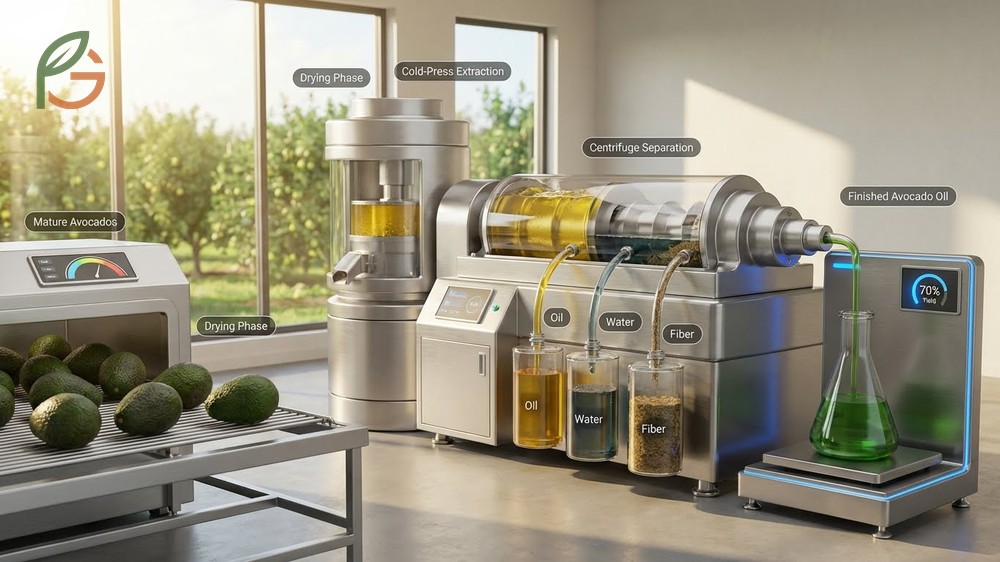
The cold-press process works in three main stages that separate oil from water and fiber. Commercial operations use centrifuges, but home methods rely on time and gravity. Data indicates that cold-pressing yields about 13% oil from commercially mature avocados[2].
Each stage matters for oil quality. Rushing the drying phase leaves too much water, which makes your oil go rancid faster. Applying too much pressure during extraction can break down cell walls and release bitter compounds.
Agricultural research shows malaxation—the breaking down of cell walls during processing—critically affects extraction yield[6]. That’s why you’ll remix the paste several times during drying.
Step 1: Prepare Avocado Paste
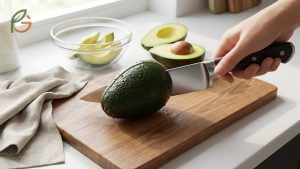
Cut your avocados in half and remove the pits and skins. Scoop the flesh into your blender or bowl. Blend until completely smooth with no chunks remaining—uneven texture causes inconsistent drying.
Spread the paste on parchment-lined trays in layers no thicker than 1/2 inch. Thicker layers take longer to dry and can develop mold before water evaporates. If you’re processing 10 avocados, expect to use 2-3 standard baking sheets.
Step 2: Dry the Paste
Place trays in a well-ventilated area away from direct sunlight. Room temperature drying takes 3-5 days depending on humidity levels[3]. You’ll notice the top turning brown—that’s oxidation, which is normal.
Mix the paste thoroughly at least twice daily. Scrape the browned top layer into the moister bottom layer and re-spread thinly. This prevents case-hardening where the outside dries while the inside stays wet.
If you’re using a dehydrator, set it to 104°F (40°C) maximum. Higher temperatures cook the oil instead of preserving its raw enzymes. Dehydrator drying typically finishes in 8-12 hours.
Important Note: The paste is ready when it feels crumbly and no longer sticky. Squeeze a small amount—if water droplets appear, keep drying. Too much moisture means your oil won’t keep long.
Step 3: Extract the Oil
Place the dried paste in your nut milk bag or cheesecloth bundle. Squeeze firmly over a clean bowl—oil will drip out gradually. You can hang the bag and let gravity do the work for 2-3 hours, then give it a final squeeze.
Don’t expect a fast pour like squeezing citrus. Avocado oil releases slowly because you’re breaking down cellular structures. The oil that comes out first is usually greenest and most flavorful.
Filtering and Storage
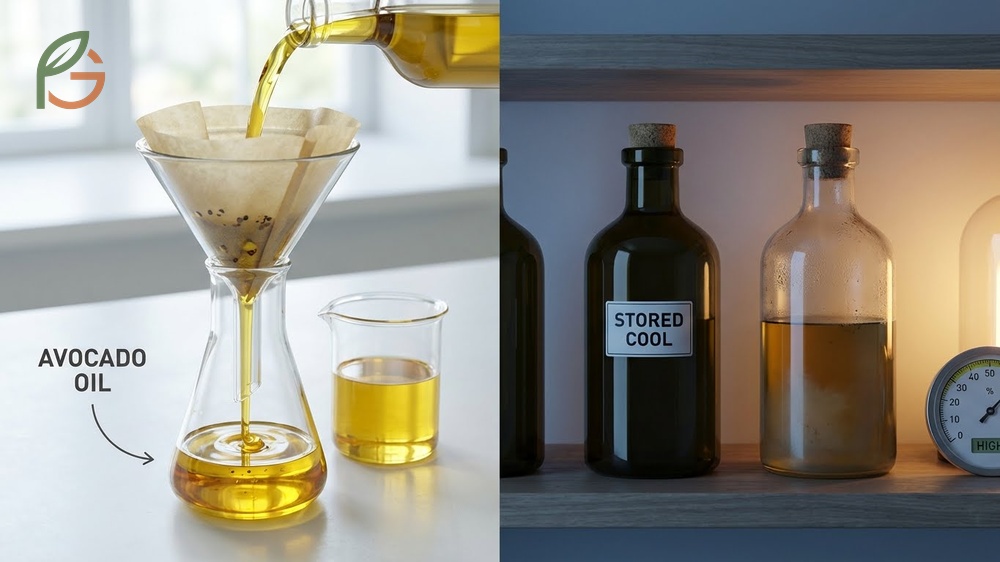
Raw extracted oil often contains tiny particles that can accelerate spoilage. Research shows proper filtration removes impurities that would otherwise oxidize and create off-flavors. Storage conditions determine whether your oil lasts weeks or months.
Temperature fluctuations are your enemy. Every time you move oil from cool to warm environments, condensation can form inside the container. This introduces moisture that promotes rancidity.
Filtering Avocado Oil
Coffee filters provide the finest filtration for home use. Place a filter in a funnel over your storage container and pour slowly[7]. The process can take 30-60 minutes for a cup of oil because filters catch particles as small as sediment.
Cheesecloth works faster but doesn’t catch the smallest bits. If you’re planning to use your oil within a month, cheesecloth is fine. For longer storage, use coffee filters. Some people filter twice—first through cheesecloth to remove large particles, then through a coffee filter for final polishing.
- Coffee filters: finest filtration, takes 30-60 minutes per cup
- Cheesecloth (triple layer): faster, removes most particles
- Fine mesh strainer: quickest option, catches only large debris
- Paper towels: emergency option, can leave papery taste
- Double filtration: cheesecloth first, then coffee filter for maximum clarity
Shelf Life Homemade Avocado Oil
Unrefined homemade oil typically lasts 4-6 months when stored properly[4]. Store it in a dark glass bottle in a cool pantry away from your stove. Refrigeration can extend life slightly but causes the oil to solidify—you’ll need to warm it before each use[8].
Check your oil monthly for signs of rancidity. Fresh avocado oil smells buttery and mild. Rancid oil develops a crayon-like or paint smell. If it tastes bitter or makes your throat sting, toss it.
Storage Tip: Fill bottles to the top to minimize air exposure. Oxygen is what turns oils rancid. If you’ve only got half a bottle left, transfer it to a smaller container.
Cold Press Machines for Home
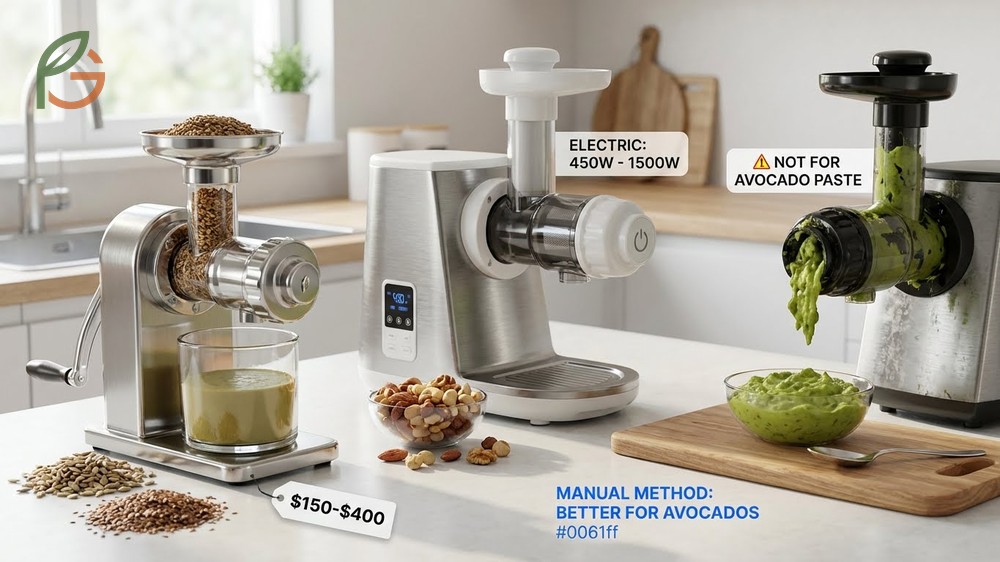
Manual cold-press machines designed for home use cost between $150-$400 and can process various seeds and nuts beyond avocados. Electric models range from 450 watts for small batches to 1,500 watts for continuous operation[9]. These machines don’t work well with avocado paste because it’s too soft—they’re designed for hard seeds.
Research shows home cold-press machines work best for sunflower, sesame, flax, and similar seeds. For avocados specifically, the manual method described earlier gives better results. Machines can crush dried avocado paste but won’t yield significantly more oil than hand-squeezing.
If you’re processing multiple oils regularly, machines make sense. For avocado oil alone, stick with the paste-and-squeeze method. One exception: if you’re making large batches (50+ avocados), a screw-press machine rated for soft materials might justify the investment.
- Manual screw-press machines: $150-$250, require physical effort, work for small batches
- Electric automatic machines: $300-$600, handle 1-2 kg per hour, better for regular use
- Hydraulic press attachments: $200-$400, attach to existing equipment, highest pressure
- Tabletop models with temperature control: keep processing below 122°F (50°C)
- Multi-seed presses: can process almonds, sesame, sunflower, but struggle with soft avocado paste
Uses for Leftover Avocado Pulp
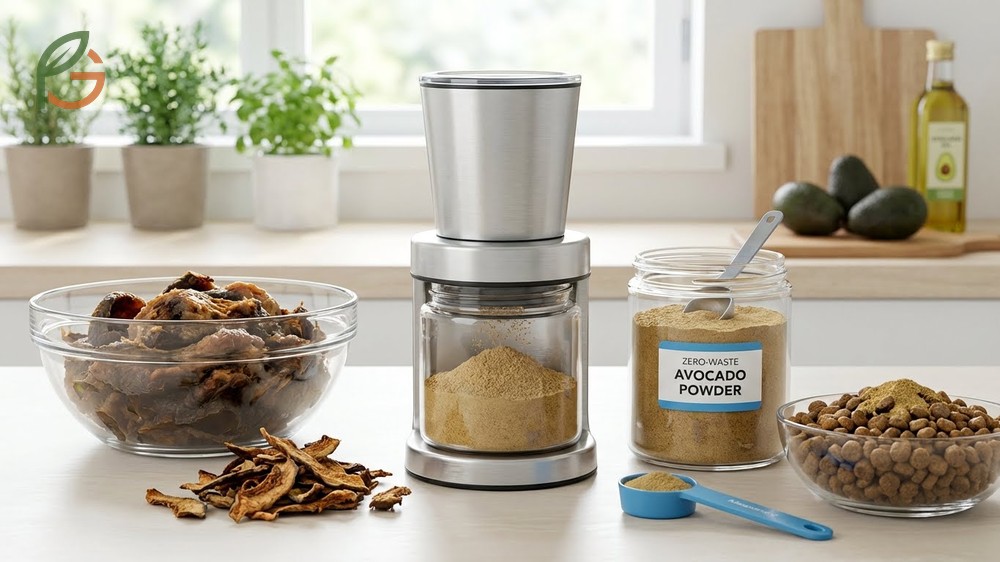
After extracting oil, you’re left with dried, fibrous pulp that still contains nutrients. Zero-waste practices turn this byproduct into useful materials rather than trash. Current data shows the pulp retains fiber and some minerals even after oil extraction.
The brownish-black pulp has a chewy, crispy texture that makes it unsuitable for eating as-is. However, grinding it into powder creates an ingredient for other applications. Some people add it to pet food as fiber supplementation.
Freezing pulp in ice cube trays lets you add small amounts to smoothies, soups, or stews as a thickener and fiber boost. One cube adds about 2 grams of fiber without changing flavor significantly. The color darkens whatever you’re making, so it works better in chocolate smoothies than vanilla ones.
- Compost material: high in carbon, breaks down in 4-6 weeks
- Garden mulch: spread thinly around plants as nutrient-rich top dressing
- Smoothie cubes: freeze in ice trays, add 1-2 cubes per smoothie for fiber
- DIY face masks: mix with honey for an exfoliating skin treatment
- Pet food additive: grind into powder and mix small amounts into dog or cat food for fiber
- Chicken feed supplement: backyard chickens will eat dried avocado pulp mixed with regular feed
Avocado Oil for Skin Recipe
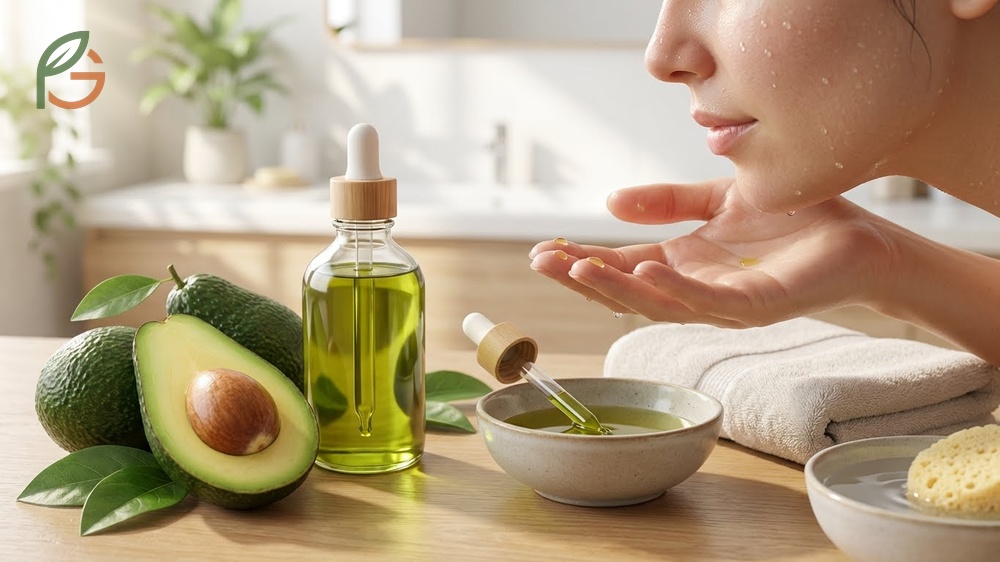
Cold-pressed avocado oil contains vitamins C and E, omega-9 fatty acids, and plant sterols that boost collagen production and reduce inflammation[10]. Studies demonstrate its antimicrobial properties help minimize breakouts when used as a facial cleanser[10]. You can use your homemade oil directly or blend it into DIY beauty products.
Apply 2-3 drops to damp skin after washing your face. The moisture helps it absorb without leaving heavy residue. For dry patches on elbows or heels, apply generously and let it soak in for 10-15 minutes before wiping off excess.
Here’s a simple overnight treatment that uses your homemade oil. Mix 1 tablespoon avocado oil with 1 teaspoon aloe vera gel and 2 drops of lavender essential oil (optional). Apply to clean skin before bed. The aloe provides water-based hydration while the oil seals it in.
| Ingredient | Amount | Purpose |
|---|---|---|
| Homemade avocado oil | 1 tablespoon | Moisturizes and delivers vitamins |
| Aloe vera gel | 1 teaspoon | Provides lightweight hydration |
| Lavender essential oil | 2 drops (optional) | Calms skin and adds fragrance |
| Application frequency | Nightly | Best results with consistent use |
For hair treatments, warm 2-3 tablespoons of oil in your hands and work through dry hair from mid-shaft to ends. Leave for 30-60 minutes, then shampoo twice to remove. This works especially well for damaged or color-treated hair.
Conclusion
The evidence is clear: how to make avocado oil at home comes down to patience during the drying phase and maintaining temperatures below 104°F (40°C). You’ll extract about 2/3 cup from 10 avocados, and that oil will last 4-6 months when stored properly. Research demonstrates the cold-press method preserves antioxidants and vitamins that make your homemade version more nutrient-dense than many commercial options.
Current guidance emphasizes using overripe fruit for better yields and filtering thoroughly for longer shelf life. FruitGarden synthesizes agricultural data showing that late-season avocados with higher oil content produce the best results. Start with a small batch to get the technique right, then scale up once you’re comfortable with the process.
Frequently Asked Questions
How do you make avocado oil at home?
Blend ripe avocados into a smooth paste, spread it thinly on trays, and let it dry for 3-5 days at room temperature. Once the paste turns crumbly and brown, squeeze it through a nut milk bag or cheesecloth to extract the oil. Filter through coffee filters and store in dark glass bottles.
How can I make avocado oil without a machine?
You don’t need machines—manual methods work great. Mash avocados with a blender or potato masher, spread the paste on parchment-lined trays, let it air-dry for several days, then hand-squeeze the dried paste through cheesecloth. This produces the same quality oil as expensive equipment.
Does avocado oil go bad?
Yes, homemade avocado oil goes bad in 4-6 months even with proper storage. Signs of rancidity include a crayon-like smell, bitter taste, or throat irritation. Store it in a cool, dark place in tightly sealed dark glass bottles to maximize shelf life.
What’s the avocado oil yield per fruit?
Each medium avocado yields about 1-2 tablespoons of oil, depending on variety and ripeness. Research shows Hass avocados produce 10-25% of their fresh weight as oil, meaning 10 medium avocados typically give you 2/3 cup of finished oil after processing.
How long does drying avocado for oil take?
Room temperature drying takes 3-5 days with twice-daily mixing. A dehydrator set to 104°F (40°C) finishes in 8-12 hours. The paste is ready when it feels crumbly and no longer sticky to the touch—moisture left behind shortens your oil’s shelf life.
What are uses for leftover avocado pulp?
Leftover pulp works great in compost, as garden mulch, or frozen in ice cubes for adding fiber to smoothies. You can also grind it into powder for DIY face masks or mix small amounts into pet food. It’s too fibrous to eat directly but retains some nutrients.
Can I use a cold press machine for home avocado oil?
Most home cold-press machines work better for hard seeds like sunflower or sesame rather than soft avocado paste. Manual squeezing through cheesecloth gives better yields for avocados specifically. Machines make sense only if you’re processing large batches of 50+ avocados regularly.